
加速进化

Search documents
业内称机器人扎堆发布进入“博流量”阶段,发改委“预警”风险
Di Yi Cai Jing· 2025-11-28 11:24
Core Insights - The development of humanoid robots in China is rapidly increasing, with over 150 companies currently in the market, more than half of which are startups or from other industries [1] - The government has raised concerns about the potential risks of product redundancy and compressed R&D space as the industry accelerates [1] - The introduction of humanoid robots is becoming more frequent, with around 10 new products launched each month from September to October [2] Group 1 - The government emphasizes the need to balance speed and innovation while being cautious of market saturation and product redundancy [1] - A technology leader from a humanoid robot company acknowledges the government's concerns, indicating that the industry is rushing to gain market share without fully exploring application scenarios [1] - In September, major companies like Zoomlion and Ant Group's Lingbo Technology showcased multiple humanoid robots, indicating a competitive landscape [2] Group 2 - The price of humanoid robots has dropped below 10,000 yuan, with new models like Bumi and Booster K1 being introduced at competitive prices [2] - Experts highlight the importance of thorough testing and iteration in hardware development, stating that a product typically requires 3-4 rounds of trial production before mass production [2] - The quality of humanoid robots varies significantly across different companies, with many products still needing to prove their engineering capabilities beyond showcase events [2][3] Group 3 - The industry must focus on achieving industrial-grade quality, stability, and consistency to succeed in real-world applications [3]



具身智能处于“ChatGPT时刻”还是寒冬将至?创始人们如是说
经济观察报· 2025-11-27 12:26
Core Insights - The industry of embodied intelligence is experiencing rapid growth, but it is still far from reaching a "ChatGPT moment" [1][3] - There is a potential upcoming "winter" in the market, leading to tightened financing and a comprehensive evaluation of business models and technology routes [3] Group 1: Market Dynamics - The embodied intelligence sector is being driven by two forces: a resurgence of capital investment and significant risks [2][3] - In the first three quarters of this year, domestic robot financing reached 38.624 billion, 1.8 times the total for 2024 [2] - Major companies are announcing large commercial orders, indicating a trend towards mass production [2] Group 2: Challenges in Production - The industry must discern between genuine demand and "pseudo-demand" driven by policy subsidies and investment hype [6] - Hardware stability remains a significant barrier, with many robots failing shortly after deployment [5][6] - The current state of embodied models is still in early stages, with issues in control precision and operational consistency [5][10] Group 3: Data Scarcity - High-quality data is extremely scarce, which poses a challenge for scaling applications [10][11] - The number of robots currently operating in real-world scenarios is likely under 1,000, insufficient for developing a robust model system [10] - The industry is shifting towards a model where robots generate their own data through real-world interactions [10][11] Group 4: Future Outlook - The industry is in a phase of rapid emergence, with many companies and technologies surfacing simultaneously [6][7] - The future of embodied intelligence is expected to be driven by new physical world foundational models, differing from language models [11] - The necessary conditions for a breakthrough in embodied intelligence—algorithm, computing power, and data quality—are not yet simultaneously mature [11]

形成3个万亿级消费领域!促消费新政剑指AI、机器人等赛道
2 1 Shi Ji Jing Ji Bao Dao· 2025-11-26 12:46
Core Insights - The implementation plan aims to enhance the adaptability of supply and demand for consumer goods, with a focus on optimizing the supply structure by 2027 and establishing a high-quality development pattern by 2030 [1][3] Group 1: Key Objectives - By 2027, the plan targets the formation of three trillion-level consumption sectors and ten hundred-billion-level consumption hotspots, promoting high-quality consumer goods with cultural significance [1][3] - The plan outlines 19 key tasks across five areas, including smart connected vehicles, generative artificial intelligence, and household service robots [1][3] Group 2: Technological Innovation - The plan emphasizes accelerating the application of new technologies and models, expanding the supply of unique and new products, and creating new consumption scenarios [3][4] - It highlights the promotion of generative AI and 3D digital design tools, encouraging the development of smart home devices and AI-enabled consumer products [4][5] Group 3: Rural and Leisure Consumption - The plan aims to enhance rural consumption by improving logistics and e-commerce infrastructure, which will benefit rural e-commerce [5][7] - It supports the development of leisure and sports products, including initiatives for aviation and low-altitude tourism, as well as the expansion of interest-based consumer products like pet-related items and trendy toys [7][8] Group 4: Market Trends - The rise of trendy toy brands such as Pop Mart and 52TOYS indicates a growing interest among younger consumers, with shopping centers increasingly incorporating these brands [7][8] - The global popularity of Chinese trendy toy brands is on the rise, with initiatives to promote "national trends going abroad" [8]

文化科技加速融合:2025大湾区文投会擘画创新新图景
2 1 Shi Ji Jing Ji Bao Dao· 2025-11-26 12:27
Core Insights - Cultural technology is emerging as a powerful growth engine for the cultural industry, driven by advancements in humanoid robots, AIGC, spatial intelligence, and low-altitude technology [1][5] - The Guangdong policy package launched in May covers six key areas, laying a foundation for cultural technology innovation and facilitating the flow of capital, resources, and talent [2][5] - The 2025 Guangdong-Hong Kong-Macao Greater Bay Area Cultural Industry Investment Conference showcased the latest explorations in cultural technology, highlighting the integration of technology, scene, and business [1][3] Policy and Market Environment - The policy package released in May includes measures for film, performing arts, animation, online games, e-sports, and online audio-visual sectors, which have led to smoother flows of funds and resources [2] - The Guangzhou Development Zone is positioning itself as a cultural industry hub, with 65% of cultural enterprises in the area focusing on cultural technology [2] Investment and Innovation - The conference featured a theme presentation on "AI + Culture," emphasizing the potential for AI to drive prosperity in the cultural sector [3] - Nine representative companies showcased their innovations in humanoid robots, embodied intelligence algorithms, low-altitude technology, and AI search optimization, demonstrating the diverse applications of cultural technology [4][5] Future Outlook - The integration of culture and technology requires a combination of hardware, software, and core talent, with expectations for more high-quality cultural products to emerge [5] - The Greater Bay Area is expected to leverage its comprehensive advantages in talent, industry, consumption, and innovation resources, positioning cultural technology as a strategic growth area [5][6]
硬科技与生物医药双线领跑,加速进化完成超亿元B轮融资
2 1 Shi Ji Jing Ji Bao Dao· 2025-11-26 06:39
Group 1: Financing Overview - The technology and manufacturing sectors saw over 30 financing cases and multiple transactions exceeding 100 million RMB, with significant investments in AI, semiconductors, and commercial aerospace [1] - A total of 36 financing events occurred in the domestic primary market from November 17 to November 23, with 31 disclosing amounts totaling approximately 4.55 billion RMB [1] Group 2: Sector-Specific Financing - The advanced manufacturing sector led with 10 financing cases totaling about 1.05 billion RMB, followed by the biomedicine sector with 7 cases at approximately 750 million RMB, and the artificial intelligence sector with 4 cases totaling around 760 million RMB [3] - The medical health sector showed robust activity with significant transactions, including 500 million RMB for Repu Morning and 60 million USD for Tuoji Medicine, focusing on regenerative medicine and innovative medical devices [1][24] Group 3: Regional Financing Distribution - The financing activities were primarily concentrated in Zhejiang, Shanghai, and Jiangsu provinces, with 9, 8, and 7 cases respectively [5] Group 4: Active Investment Institutions - Qiming Venture Partners and Sequoia China were notably active, with Qiming completing 4 financing cases and Sequoia completing 3, mainly in technology and healthcare sectors [8] Group 5: Notable Company Financing - Star Motion Era secured nearly 1 billion RMB in A+ round financing, led by Geely Capital, focusing on humanoid robot development [39] - Repu Morning achieved 500 million RMB in A+ round financing, emphasizing its disruptive regenerative medicine technology [24] - Mingche Bio completed several million RMB in A round financing, specializing in ophthalmic medical devices [13]

机构调研揭示行业矛盾:机器人爆单之后将迎交付大考
Bei Jing Shang Bao· 2025-11-25 01:32
Core Insights - Goldman Sachs' supply chain report highlights a significant gap between optimistic production capacity plans and actual confirmed orders in the humanoid robot industry, indicating a typical characteristic of the current market [1] - The report titled "Capacity Optimism Ahead of Actual Orders" suggests that while key supply chain companies have planned annual production capacities ranging from 100,000 to 1,000,000 units, none have secured large, confirmed orders [1] Group 1: Industry Challenges - The release of a production video by UBTECH, showcasing their humanoid robot Walker S2, has sparked controversy due to prior skepticism from Goldman Sachs and public doubts about delivery authenticity [3] - Criticism from industry peers, such as Brett Adcock from Figure AI, claims that parts of the video were digitally altered, raising questions about the credibility of the demonstration [3] - Despite these challenges, UBTECH claims to have established partnerships with major companies like BYD and Foxconn to promote the commercial application of humanoid robots in various sectors [3] Group 2: Positive Signals - The humanoid robot sector is witnessing a surge in orders and investment, with over 18 significant contracts exceeding 10 million yuan since 2025, indicating a shift from concept validation to industrialization [5] - Investment activity has intensified, with over 100 financing events in the first half of 2025, totaling more than 15 billion yuan, and major firms like JD and Alibaba making substantial investments in the sector [6] - UBTECH has publicly disclosed multiple large orders, including a 1.59 billion yuan project for a humanoid robot data collection center, although details on operational specifics remain vague [7] Group 3: Delivery Strategies - UBTECH aims for large-scale delivery by focusing on key sectors such as automotive manufacturing and logistics, with a production capacity plan targeting 5,000 units by 2026 and 10,000 units by 2027 [8] - In contrast, Accelerated Evolution adopts a "small steps" approach, prioritizing single-unit deliveries to refine production and service capabilities before scaling up [9] - The competition in the humanoid robot sector is expected to intensify by 2025, with a focus on achieving large-scale commercial deployment and improving cost efficiency [9]

清华孵化的机器人公司融资 10 亿,冲击独角兽;一汽为何 36 亿投资这家智驾公司? | 每周十大股权投资
Sou Hu Cai Jing· 2025-11-24 08:27
Group 1: xAI and Strategic Financing - xAI completed a strategic financing round of $15 billion, with undisclosed investors, focusing on using AI to solve complex scientific and mathematical problems to "understand the universe" [1] - The company aims to leverage synergies with Elon Musk's other ventures like SpaceX and Tesla, enhancing its potential in the research field [1] Group 2: Zhuoyue Technology and Investment - Zhuoyue Technology secured a strategic investment of 3.6 billion RMB from China FAW, achieving a valuation exceeding 10 billion RMB [1][2] - The investment indicates strong recognition of its "Chengxing Platform" solution by top automotive manufacturers, providing a solid foundation for technology implementation and commercialization in the competitive smart driving sector [1] Group 3: Star Motion Era and Robotics - Star Motion Era completed an A+ round financing of 1 billion RMB, with investors including BAIC Investment and Geely Capital [3] - The company, incubated by Tsinghua University, focuses on humanoid robotics and represents a significant step from laboratory technology to industrial application, highlighting strong synergies with the automotive industry [3] Group 4: United Aircraft and Drone Technology - United Aircraft completed an E round financing, amounting to hundreds of millions RMB, with investors like Keli Investment and Yueda Group [4][5] - The company is a leader in the unmanned helicopter sector, emphasizing its strategic value in the low-altitude economy and its role in national aviation infrastructure [4] Group 5: SenseTime Medical and AI in Healthcare - SenseTime Medical raised several hundred million RMB in a Pre-A round financing, with investors including Legend Capital and Lenovo Ventures [6] - The company aims to commercialize advanced computer vision technologies in the healthcare sector through its SenseCare platform, which is crucial for the profitability of AI in medical applications [6] Group 6: Ling Universe and Companion Robots - Ling Universe secured 200 million RMB in Pre-A round financing, with investors including GF Xinde and Didi Chuxing [7] - The company focuses on developing companion robots for home and personal use, utilizing multi-modal AI interactions to meet emotional needs, representing a challenging yet promising market [7] Group 7: Accelerated Evolution and Robotics - Accelerated Evolution completed a B round financing of 100 million RMB, led by IDG Capital and Shenzhen Capital Group [8] - The company specializes in high-mobility robotic bodies and control platforms, addressing the practical application of humanoid robots in complex environments [8] Group 8: Ruisi Chip and RISC-V CPUs - Ruisi Chip raised several hundred million RMB in a B+ round financing, with investors including Renjun Capital and Huaxu Fund [9] - The company focuses on high-end CPU design based on the RISC-V architecture, aiming to break the dominance of ARM and x86 in high-performance computing [9] Group 9: Kalshi and Predictive Markets - Kalshi completed a strategic financing round of $1 billion, with investors including Andreessen Horowitz and Sequoia Capital [10][11] - The platform innovatively reshapes the predictive market model through compliant "event betting," reflecting significant market interest in its data-driven economic model [10] Group 10: Lambda Labs and AI Cloud Services - Lambda Labs raised $1.5 billion in an E round financing, with investors including TWG Global and the U.S. Innovation Fund [12] - The company provides on-demand AI computing cloud services, positioning itself as a key player in the AI infrastructure sector amid rising demand for specialized AI cloud computing services [12]
东北证券:维持首程控股(00697)“买入”评级 机器人全链打造宇树科技等最优投资组合
智通财经网· 2025-11-24 01:31
Core Viewpoint - The company maintains a "buy" rating for Shoucheng Holdings (00697) due to strong performance in the first three quarters of 2025, with revenue and net profit increasing by 30% and 22% year-on-year respectively [1] Performance Summary - In the first three quarters of 2025, the company achieved revenue of HKD 1.215 billion (yoy +30%) and a net profit attributable to shareholders of HKD 488 million (yoy +22%) [1] - The company announced a new share buyback plan to repurchase up to HKD 1 billion worth of shares from the open market between November 17, 2025, and December 31, 2028 [1] Strategic Transformation - The company is committed to transforming into a comprehensive service platform for the robotics industry, focusing on "investment incubation, operational empowerment, and ecological co-construction" to enhance its full-cycle service capabilities [2] - Investments have been made in key enterprises within the robotics supply chain, including humanoid robots and flying robots, through various industry funds [2] Business Development - The company established the first regular operation robotics technology experience store, "Tao Zhu New Manufacturing Bureau," during the National Day holiday, with additional stores opening at Beijing Capital International Airport and Chengdu Chunxi Road [3] - The launch of the online robotics live streaming platform "Shoucheng W" aims to expand the consumer market for "new consumption + new technology" [3] Asset Management - The company has strengthened its asset management capabilities centered around REITs, completing strategic investments in multiple REITs covering technology innovation parks, data centers, and clean energy [4] - The company is actively expanding its asset reserves in quality rental housing and consumer infrastructure across key regions [4] Profit Forecast and Valuation - The company is expected to generate revenues of HKD 1.52 billion, HKD 1.71 billion, and HKD 1.89 billion for the years 2025 to 2027, with corresponding net profits of HKD 580 million, HKD 790 million, and HKD 960 million, leading to PE ratios of 30.7x, 22.4x, and 18.5x respectively [5]

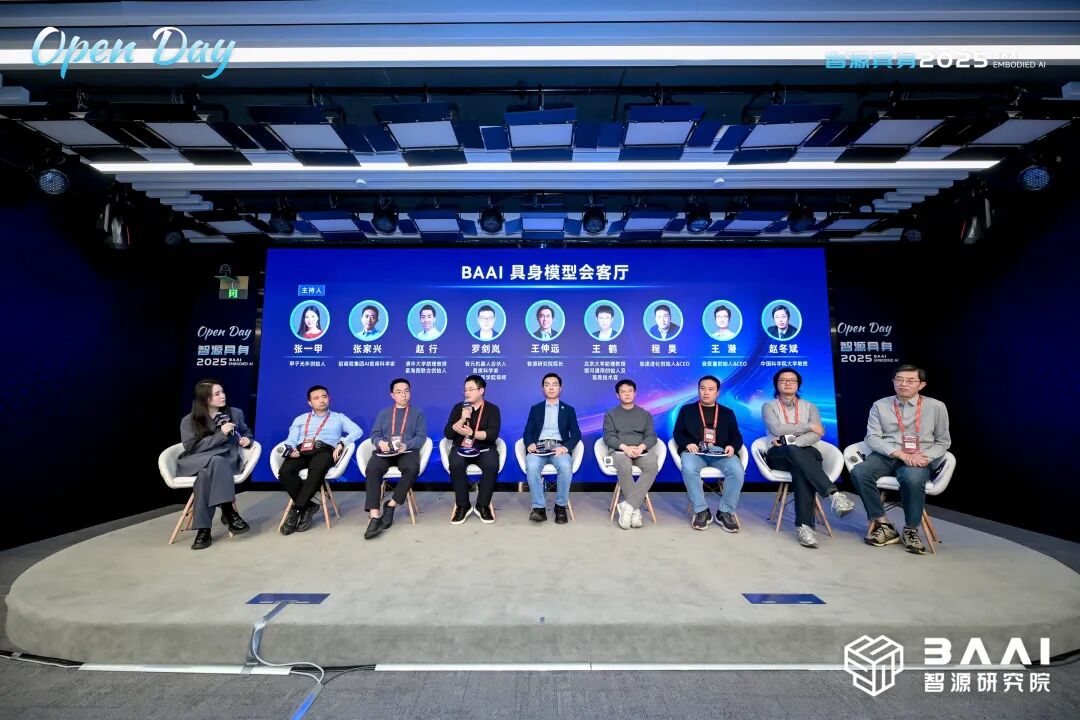
8位具身智能顶流聊起“非共识”:数据、世界模型、花钱之道
3 6 Ke· 2025-11-24 01:00
Core Viewpoint - The roundtable forum highlighted the importance of funding and data in advancing embodied intelligence, with participants discussing various strategies for utilizing a hypothetical budget of 10 billion yuan to drive development in the field [1][53]. Group 1: Funding and Investment Strategies - Participants expressed differing opinions on how to allocate 10 billion yuan for the advancement of embodied intelligence, with suggestions including investing in research institutions and building data engines [1][54][56]. - The CEO of Accelerated Evolution emphasized the need for collaboration, suggesting that 10 billion yuan may not be sufficient without partnerships [1][53]. - The focus on creating the largest self-evolving data flywheel was proposed as a key investment area [54]. Group 2: Data Challenges and Solutions - A significant discussion point was the scarcity of data, with varying opinions on the importance of real-world data versus synthetic data [2][29]. - The emphasis was placed on the necessity of high-quality, diverse data collected from real-world scenarios to enhance model training [30][32][36]. - The use of simulation data was also highlighted as a means to accelerate the development of embodied intelligence before sufficient real-world data can be gathered [43][44]. Group 3: World Models and Predictive Capabilities - The forum participants agreed on the critical role of world models in embodied intelligence, particularly in enabling robots to predict and plan actions based on future goals [5][12]. - There was a consensus that training data for these models should primarily come from the robots themselves to ensure relevance and effectiveness [5][12]. - The discussion included the potential for a unified architecture in embodied intelligence models, contrasting with the current fragmented approaches [7][15][27]. Group 4: First Principles and Decision-Making - Participants shared their foundational principles guiding decision-making in the development of embodied intelligence, emphasizing the importance of data scale and quality [48][49][51]. - The need for a physical world foundation model that accurately represents complex physical interactions was highlighted as essential for future advancements [26][27]. - The concept of a closed-loop model for embodied intelligence was proposed, contrasting with the open-loop nature of current language models [10][11].
机器人行业周报:Gemini 3.0 与π0.6 发布:具身大脑发育提速-20251123
GUOTAI HAITONG SECURITIES· 2025-11-23 12:46
Investment Rating - The report assigns an "Overweight" rating to the robotics industry [4]. Core Insights - The release of Gemini 3.0 and π*0.6 indicates accelerated development in embodied AI, with humanoid robot companies setting clear mass production targets and an increase in industry financing [2][3]. - The report highlights significant advancements in AI models and robotics, with Gemini 3 enhancing programming and application development capabilities, while π*0.6 demonstrates a doubling in throughput and success rates in task execution [4][6]. Industry News and Company Developments - Google announced the launch of the AI model Gemini 3 on November 18, 2025, which improves answers to complex problems and enhances programming capabilities [6]. - Physical Intelligence (PI) released its latest robot model π*0.6, achieving over 90% success rates in various tasks [6]. - Xiaopeng Motors aims to mass-produce advanced humanoid robots by the end of 2026, targeting sales of over 1 million units by 2030 [7]. - UBTECH Robotics plans to increase its annual production capacity to 5,000 units by 2026 and 10,000 units by 2027 [7]. - The Zhiyuan Expedition A2 robot completed a 100-kilometer journey from Suzhou to Shanghai, setting a Guinness World Record for the longest distance walked by a humanoid robot [7]. Investment Recommendations - The report suggests focusing on both complete robot manufacturers and core component suppliers, including: 1. Actuators and motors: Recommended companies include Zhaowei Electromechanical, with related companies such as Mingzhi Electric and Jiechang Drive [4][9]. 2. Reducers: Key companies include Ruide Zhijun and Haoneng Co., Ltd. [4][9]. 3. Lead screws: Recommended company is Hengli Hydraulic, with related companies like Zhejiang Rongtai and Best [4][9]. 4. Equipment for lead screws: Recommended company is Qin Chuan Machine Tool, with related companies such as Rifa Precision and Huachen Equipment [4][9]. 5. Bearings: Recommended company is Longxi Co., Ltd. [4][9]. 6. Sensors: Recommended companies include Donghua Testing and Keli Sensor [4][9]. 7. Complete machines: Related companies include UBTECH, Yuejiang, and Yijiahe [4][9].