
赛力斯

Search documents
8点1氪:微信回应安装包10多年膨胀几百倍;上海禁毒办回应霸王茶姬咖啡因争议;Meta宣布收购Manus
36氪· 2025-12-30 00:13
Group 1 - WeChat's installation package has increased several hundred times over the past decade due to the addition of more features, but the company assures that it is continuously optimizing the app and that the package size will not grow indefinitely [4][5] - The Shanghai Narcotics Control Office clarified that caffeine, a natural alkaloid found in tea, is not a drug when consumed in moderation, and the caffeine content in products like Bawang Chaji is within acceptable limits [5] - Meta has announced the acquisition of AI company Manus to accelerate its AI innovation, with Manus previously valued at $2 billion during its latest funding round [6] Group 2 - Zhihui plans to globally issue 37,419,500 H-shares at a price of HKD 116.20 per share, with trading expected to start on January 8, 2026 [7] - Huayi Brothers and its representatives have been restricted from high consumption due to a court case involving 74.73 million yuan [8][9] - BYD has denied rumors about launching a flying car, stating there are no such plans [10] Group 3 - Qbit has issued over 7 million cards and processed over 53 million transactions, focusing on fund management capabilities as cross-border payment competition intensifies [10] - Chen Rui has resigned from his position at Bilibili eSports, with changes in the company's management structure [11] - The price of 25-year-old Flying Moutai has increased to 1,575 yuan per bottle, reflecting a rise of 15 yuan from the previous day [19] Group 4 - Seven Fresh Kitchen has launched a nationwide partner recruitment plan, aiming to cover all first- and second-tier cities by 2026 [20] - Leap Motor has entered into an agreement with FAW to issue nearly 75 million shares at a price of 50.03 yuan per share [21] - Waymo has been spotted testing its autonomous taxis in London, although the vehicle was not operating in autonomous mode during the observation [22] Group 5 - *ST Panda has been investigated by the China Securities Regulatory Commission for suspected violations of information disclosure laws [22] - The company "Boryu Bio" has completed over 100 million yuan in Series A financing to expand its global presence and enhance its biosafety testing platform [30] - "Weifengqi" has completed several million yuan in Series B financing to enhance its AI platform and market share [31]

融资余额年内超2.5万亿元
Shen Zhen Shang Bao· 2025-12-29 22:59
Group 1 - The leverage funds have significantly increased their positions in A-shares this year, with the margin financing balance exceeding 2.54 trillion yuan, marking a historical high [1][2] - A-shares have seen a net financing inflow of over 6723 billion yuan in the past year, with a notable increase in the last month [2] - The technology sector has become the core allocation direction for leveraged funds, with significant net inflows in the electronics, power equipment, and communication industries [2][3] Group 2 - Individual stocks in the AI industry chain and leading new energy companies have attracted the most leveraged funds, with New Yisheng and CATL receiving substantial net inflows [3] - In the past month, CATL and other key players in the technology sector have continued to see strong net financing inflows, while several companies faced net outflows [3] - The current margin financing balance accounts for 2.58% of the A-share market's circulating market value, which is lower than the historical peak of 4.73% in 2015, indicating a more stable and mature market [4]
为中国硬科技国际化发展“架桥铺路”——证券行业服务科技创新调研之中金公司样本
Shang Hai Zheng Quan Bao· 2025-12-29 19:06
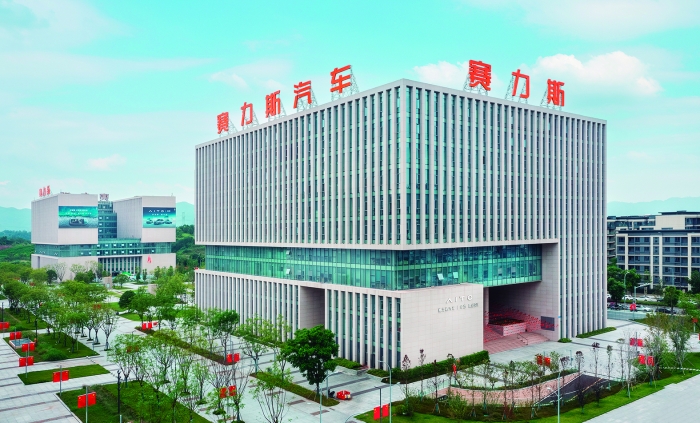
Core Insights - The article discusses the successful "A+H" dual listing of two Chinese companies, Sanhua Intelligent Control and Seres Group, highlighting their journey from manufacturing to global competitiveness in the context of China's transition from "Made in China" to "Intelligent Manufacturing" [5][6]. Group 1: Sanhua Intelligent Control - Sanhua Intelligent Control, which started as a refrigeration parts manufacturer, completed its dual listing in June 2025, marking a significant milestone in its 41-year history [6]. - The company managed to complete its listing process in just five months, capitalizing on a favorable market window as the Hong Kong stock market began to recover [6][9]. - The IPO attracted over 45 times institutional subscription, with foreign long-term cornerstone investors accounting for 45% of the total, indicating strong international confidence in Chinese hard-tech manufacturing [9]. Group 2: Seres Group - Seres Group, a technology-driven company focused on electric vehicles, became the first luxury electric vehicle company to achieve a dual listing in Hong Kong in November 2025 [7]. - The company aims to leverage its Hong Kong listing to expand its international market presence, having already entered over 70 countries with cumulative exports exceeding 550,000 vehicles [9][10]. - During its IPO process, Seres also executed a significant asset acquisition, purchasing 100% of Longsheng New Energy for approximately 8.164 billion yuan, integrating advanced manufacturing capabilities into its operations [8]. Group 3: Role of Investment Banks - China International Capital Corporation (CICC) played a crucial role in facilitating the listings of both companies, providing strategic advice and connecting them with international investors [12]. - CICC's efforts included organizing roadshows in major financial hubs to communicate the companies' growth stories and core competencies to potential investors [10][11]. - The investment bank's approach emphasizes the importance of understanding both the Chinese market and international investor preferences, acting as a bridge for Chinese companies seeking global expansion [11][12].

中国制造“十四五”成就展开幕 问界M9成为唯一入选新能源汽车
Sou Hu Wang· 2025-12-29 14:07
Group 1 - The "Building a Strong Country Road - Achievements Exhibition of China's Manufacturing during the 14th Five-Year Plan" showcases over 300 exhibits, highlighting the remarkable achievements of China's manufacturing sector during this period [1] - The AITO M9 is the only selected electric vehicle at the exhibition, symbolizing the historical leap of China's automotive industry from "catching up" to "leading" [3] - The exhibition features the AITO M9 alongside significant national projects like the C919 aircraft and Fuxing bullet train, emphasizing the leadership of domestic brands in the electric and intelligent transformation of the automotive industry [3] Group 2 - The AITO series has achieved cumulative deliveries exceeding 900,000 units, with the M9 alone surpassing 260,000 units since its launch, dominating the luxury car market for 20 consecutive months [5] - The AITO M9 ranks first in the domestic hybrid SUV resale value and has maintained the top position in the resale value of plug-in hybrid models for four consecutive months [5] - The AITO M9 has received the highest user net promoter score (NPS) in the new energy vehicle category for two consecutive periods, reflecting strong market recognition [5] Group 3 - The AITO M9's market leadership is attributed to the core technological breakthroughs in smart, electric, and connected vehicle domains by Seres [6] - The AITO M9 features the next-generation Seres Super Range Extender system, which boasts a 15% reduction in fuel consumption, a 90% decrease in noise perception frequency, and a thermal efficiency of 44.8% [8] - Seres also showcased innovative technologies such as the multi-in-one super range extender system and intelligent flexible welding workstation at the exhibition, demonstrating its technological strength [9] Group 4 - Seres aims to continue its "software-defined vehicle" philosophy, enhancing the integration of intelligence and electrification to lead the high-quality development of China's new energy vehicle industry [11]
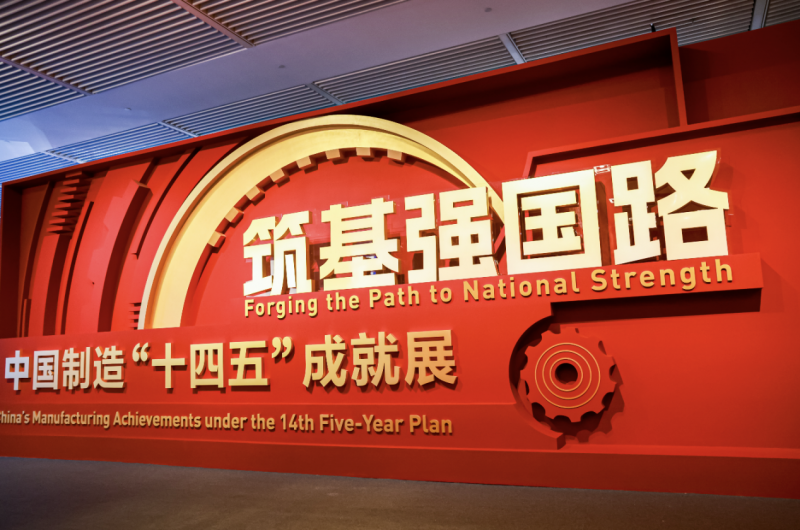
中国制造“十四五”成就展开幕 问界M9成唯一入选新能源汽车
Zheng Quan Ri Bao Wang· 2025-12-29 13:16
Group 1 - The "Building a Strong Nation Road - Achievements Exhibition of Chinese Manufacturing during the 14th Five-Year Plan" showcases over 300 exhibits, highlighting the remarkable achievements of China's manufacturing sector during this period [1] - The AITO M9 is the only selected electric vehicle in the exhibition, symbolizing the historical leap of China's automotive industry from "catching up" to "leading" [1][2] - The Chinese new energy vehicle (NEV) industry is projected to surpass 13 million units in production and sales in 2024, maintaining its position as the global leader for ten consecutive years [2] Group 2 - The AITO M9, designed by Seres in collaboration with Huawei, is displayed alongside major national projects, emphasizing the leading achievements of domestic brands in the transition to electrification and intelligence [2] - The AITO series has achieved cumulative deliveries exceeding 900,000 units, with the M9 alone surpassing 260,000 units since its launch, dominating the luxury car market for 20 consecutive months [2][3] - The AITO M9 ranks first in the domestic hybrid SUV resale value and has consistently held the top position in the plug-in hybrid vehicle resale value for four months [3] Group 3 - The AITO M9's market leadership is attributed to Seres' breakthroughs in core technologies related to intelligence, electrification, and connectivity [4] - The exhibition highlights innovative technologies such as the multi-in-one super range extender system and high-integration seven-in-one electric drive system, showcasing Seres' technological strength [4] - Seres has been a pioneer in range extender technology since 2016, with the latest generation of the super range extender system achieving a 15% reduction in fuel consumption and a thermal efficiency of 44.8% [4]

闪电快讯|中国制造“十四五”成就展开幕,问界M9成为唯一入选新能源汽车
Xin Lang Cai Jing· 2025-12-29 13:09
Core Insights - The "Building a Strong Nation Road - Achievements Exhibition of Chinese Manufacturing during the 14th Five-Year Plan" opened on December 29, showcasing over 300 exhibits across six major sectors, highlighting the achievements of Chinese manufacturing during this period [1] - The AITO M9 was the only selected electric vehicle at the exhibition, symbolizing the historical leap of China's automotive industry from "catching up" to "leading" [1][3] Group 1: Industry Development - The Chinese new energy vehicle (NEV) industry has experienced rapid growth during the 14th Five-Year Plan, with production and sales expected to exceed 13 million units in 2024, maintaining its position as the global leader for ten consecutive years [3] - The AITO M9 has achieved cumulative deliveries of over 900,000 units, with over 260,000 units delivered since its launch, and has been the sales champion in the 500,000-level luxury car market for 20 consecutive months [3] - The AITO M9 ranks first in the resale value among domestic extended-range hybrid SUVs and has consistently held the top position in the resale value of plug-in hybrid models for four months [3] Group 2: Technological Innovation - The exhibition featured innovative technologies from Seres, including a multi-in-one super range extender system and a highly integrated seven-in-one electric drive system, showcasing the company's commitment to technological advancement since 2016 [5] - The new generation Seres super range extender system offers industry-leading advantages, including a 15% reduction in comprehensive fuel consumption, a 90% decrease in noise perception frequency, and the ability to generate over 3.6 kWh of electricity from 1 liter of fuel, with a thermal efficiency of 44.8% [5] - Seres aims to continue its "software-defined vehicle" philosophy, enhancing the integration of intelligence and electrification to improve user experience and lead the development of China's NEV industry towards higher quality and standards [5]

2025年港股大爆发!IPO募资增224%狂揽近2800亿,400余只股翻倍
Sou Hu Cai Jing· 2025-12-29 12:11
本文来源:时代财经 作者:何秀兰 港股走强的背后,是资金、政策与制度的三重红利共振。南向资金作为 "压舱石",年内净流入超 1.3 万亿元;制度层面,港交所于5月推出 "科企专线",允许硬科技与生物科技企业保密递表,叠加18C章上市通道高效落地,制度红利推动港股IPO市场强势回暖。截至12月29日,港 交所年内IPO合计募资近2800亿港元,同比增长224.38%,助推港交所重回全球交易所募资榜首。 盘古智库高级研究员余丰慧向时代财经表示,2025年港股估值修复的核心驱动力主要来源于资金宽松、国内经济复苏预期增强以及政策支持。 特别是南向资金的持续流入,加上人民币汇率稳定,增强了市场信心。此外,新能源汽车、人工智能等产业的发展也促进了相关板块的业绩和 估值扩张。 图源:图虫创意 核心指数领涨全球,资金面共振推动港股复苏 2025年,港股核心指数集体爆发,全年表现领跑全球主要资本市场。 从具体表现来看,截至12月29日收盘,恒生指数从年初约19600点攀升至25635点,全年涨幅近28%;恒生科技指数同步走高,涨幅近23%;恒 生国企指数全年涨幅近22%,反映出央企国企板块的估值重塑成效。这一表现不仅创下港股五 ...
上一次港股IPO“大年”,股价是如何腰斩的?
Sou Hu Cai Jing· 2025-12-29 11:59
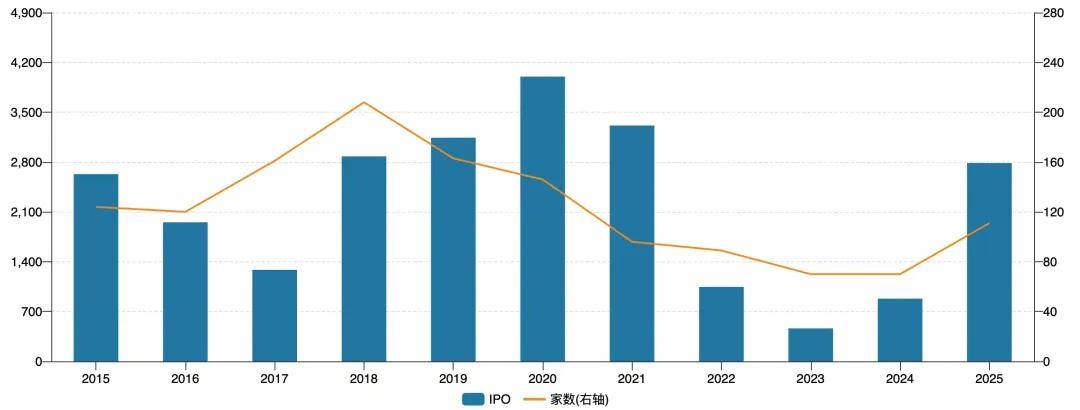
作者 | 范亮 编辑 | 张帆 2025年12月17日,市场传出消息,智谱华章、MiniMax双双通过港交所聆讯。 12月19日,港交所正式披露智谱华章聆讯后资料集。12月21日,MiniMax也正式披露聆讯后资料集。两家公司开启冲刺全球"大模型第一股"的争夺战。 但这仅仅是冰山一角,资本盛宴之下,是港交所IPO活跃度的大幅提升。2025年全年,港交所预计新增约108家新上市企业,累计募资金额约2800亿港元。 这一数据不仅意味着IPO数量和规模远超2023和2024年的水平,更标志着港股市场已逐渐回归2018-2021年的"IPO大年"梯队。 图:港交所历年IPO数量、IPO资金规模对比 资料来源:Wind、36氪整理 港股IPO为何活跃度再起? 抛开政策因素不谈,大盘点位和交易活跃度始终是左右企业IPO意愿的最核心变量。 这一规律在两轮行情中体现得淋漓尽致:无论是2018年至2021年的IPO高峰,还是2025年的热度回升,都对应着"高指数点位+高成交额"的市场组合。企业 在此时上市,不仅能获得理想的估值,充裕的市场流动性也让募资变得更加轻松。 图:恒生指数走势、港交所主板日均成交额 资料来源:Wind、 ...
新能源汽车指数上涨4.1%,磷酸铁锂平均报价上涨6000元/吨丨行业周报
2 1 Shi Ji Jing Ji Bao Dao· 2025-12-29 11:26
Market Overview - The new energy vehicle (NEV) index rose by 4.1% from December 22 to December 26, outperforming the CSI 300 index by 2.15% [1] - The best-performing sector within the automotive-related stocks was the electric motor index, which increased by 6.62% [1] - The lithium battery index, representing the battery-related segment, saw a rise of 5.55% during the same period [1] Company Performance - BYD closed at 100.01 CNY, while other notable companies included: - Haima Automobile at 8.82 CNY - Great Wall Motors at 22.78 CNY - Changan Automobile at 11.99 CNY - JAC Motors at 48.92 CNY - Seres at 120.67 CNY - GAC Group at 8.15 CNY - BAIC BluePark at 8.09 CNY [3] - In the electric motor sector, notable companies included: - Wolong Electric at 46.49 CNY - Fangzheng Electric at 13.68 CNY - Jiangte Electric at 10.1 CNY [4] Industry Data - In November, NEV production reached 1,880,000 units, a year-on-year increase of 20%, with cumulative production at 14,907,000 units, up 31.4% [36] - NEV wholesale sales were 1,706,000 units, reflecting an 18.7% year-on-year increase, while retail sales were 1,320,740 units, up 4.2% year-on-year [36] - The penetration rate for wholesale sales was 56.9%, and for retail sales, it was 59.3% [36] - The installed capacity of power batteries in November was 93,500 MWh, a 39.2% year-on-year increase [36] Lithium Prices - As of December 26, the average price of battery-grade lithium hydroxide was 107,600 CNY/ton, up 13,500 CNY/ton from December 19 [12] - The average price of battery-grade cobalt sulfate remained stable at 92,500 CNY/ton [14] - The average price of battery-grade nickel sulfate decreased by 650 CNY/ton to 26,900 CNY/ton [16] - The price of lithium iron phosphate increased by 6,000 CNY/ton to 45,100 CNY/ton [18] Battery Material Prices - The market price for ternary precursor 811 was 110,500 CNY/ton, down 2,000 CNY/ton [21] - The price for ternary materials 811 type rose by 4,500 CNY/ton to 171,500 CNY/ton [24] - The price of dry film for batteries remained stable at 0.42 CNY/sqm [27] - The price of lithium hexafluorophosphate was 180,000 CNY/ton, unchanged from the previous period [30]






赛力斯(09927) - 海外监管公告
2025-12-29 11:21
香港交易及結算所有限公司及香港聯合交易所有限公司對本公告的內容概不負責,對其準確性 或完整性亦不發表任何聲明,並明確表示概不對因本公告全部或任何部分內容而產生或因倚賴 該等內容而引致的任何損失承擔任何責任。 Seres Group Co., Ltd. 賽力斯集團股份有限公司 (於中華人民共和國註冊成立的股份有限公司) (股份代號:9927) 海外監管公告 本公告乃根據《香港聯合交易所有限公司證券上市規則》第13.10B條而作出。 茲載列賽力斯集團股份有限公司在上海證券交易所網站刊登的以下公告,僅供參 閱。 於本公告日期,本公司董事為:(i)執行董事張正萍先生、尹先知先生、申薇女士 及張正源先生;(ii)非執行董事張克邦先生、李瑋先生及周昌玲先生;及(iii)獨立 非執行董事李開國先生、張國林先生、景旭峰先生、黎明先生及魏明德先生。 证券代码:601127 证券简称:赛力斯 公告编号:2025-109 1. 賽力斯集團股份有限公司第五屆董事會第二十九次會議決議公告 2. 賽力斯集團股份有限公司關於增加2025年度日常關聯交易預計的公告 承董事會命 賽力斯集團股份有限公司 董事長兼執行董事 張正萍先生 香港,20 ...