
奈雪的茶

Search documents
新茶饮狂掀上市潮!“盛宴”还是“剩宴”?
Zhong Guo Ji Jin Bao· 2025-05-11 11:39
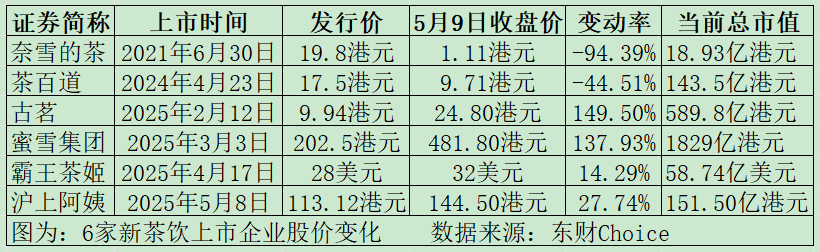
Core Insights - The new tea beverage industry is experiencing a significant wave of IPOs, with major companies like Gu Ming, Mixue Group, and others going public since February 2025, leading to notable stock price increases on their debut [1][4] - However, a clear differentiation in stock performance has emerged among these companies post-IPO, indicating a shift into a more competitive phase characterized by homogenization and excessive scaling [1][4][15] Group 1: IPO Performance - Gu Ming and Mixue Group saw stock price increases of 149.50% and 137.93% respectively since their IPOs, while other companies like Bawang Chaji and Hushang Ayi had more modest gains of 14.29% and 27.74% [2][4] - Naixue Tea and Chabaidao, which went public earlier, have faced significant declines in stock prices, with decreases of 94.39% and 44.51% respectively since their IPOs [10][14] Group 2: Market Dynamics - The new tea beverage industry is transitioning from a growth phase focused on market share acquisition to a more mature phase emphasizing differentiation and refined strategies [22][23] - The industry faces challenges such as product homogenization, oversupply of stores, and declining operational efficiency, which have led to a decrease in profitability for several companies [15][16] Group 3: Financial Performance - In 2024, Mixue Group, Bawang Chaji, and Gu Ming reported net profit growth rates of 39.8%, 213.3%, and 36.2% respectively, while Hushang Ayi and Chabaidao experienced declines of 15.2% and 58.55% [14] - Gu Ming's single-store GMV decreased by 4.3% year-on-year, and the average daily sales per store fell by 8.59%, indicating challenges in maintaining sales performance [16][17] Group 4: Strategic Responses - Companies are increasingly focusing on differentiation strategies, with Mixue Group leveraging its supply chain capabilities to gain competitive advantages [24][25] - The industry is also exploring international expansion, with several companies listing overseas to support their global business initiatives [28]

特朗普:对华关税145%到顶了,要降;持续套现!贝佐斯拟减持48亿美元亚马逊股票丨Going Global
创业邦· 2025-05-11 10:07
Core Insights - The article discusses significant events in the global market, particularly focusing on the impact of tariffs and trade negotiations between the US and China, as well as the expansion strategies of various companies in international markets [2][26][35]. Group 1: Major Events - Temu is shifting its focus to markets outside the US, particularly in the Middle East and Latin America, to reduce reliance on a single market [4]. - SHEIN and Temu experienced sales declines of 23% and 17% respectively due to increased tariffs, prompting both companies to raise retail prices [5][6]. - TikTok plans to build a €1 billion data center in Finland to enhance data security for its European users [10]. Group 2: Corporate Developments - Alibaba and 24 other US-listed Chinese companies face delisting risks due to alleged ties with the Chinese military [14]. - Jeff Bezos plans to sell up to $4.8 billion worth of Amazon stock over the next year [28]. - DoorDash is acquiring UK-based Deliveroo for £2.9 billion (approximately $3.85 billion) to strengthen its position in the European market [40]. Group 3: Investment and Financing - SAIC's ride-hailing brand, Xiangdao, completed over ¥1.3 billion in Series C financing and is preparing for international expansion [38]. - Uber is investing an additional $100 million in WeRide to expand its autonomous driving services into 15 international cities [39]. - Coinbase is set to acquire Deribit for nearly $2.9 billion to enhance its global derivatives strategy [44].





中国公司全球化周报|奈雪再改名,或与进军欧美相关/小马智行与优步合作,在中东部署Robotaxi
3 6 Ke· 2025-05-11 04:11
Group 1: Company Developments - Nayuki Tea is reportedly changing its logo and name, possibly related to its expansion into the European and American markets [3] - Dingdong Maicai has entered the Hong Kong market through a strategic partnership with DFI Retail Group, aiming for a sales target of 100 million HKD in the first year [3] - WeRide and Uber are expanding their strategic cooperation to deploy autonomous Robotaxi services in 15 new international cities over the next five years [6] - Ant Group plans to separately list its overseas unit Ant International in Hong Kong, with no current policy obstacles reported [6] - CATL is seeking a loan of approximately 1 billion USD for its business expansion in Indonesia [7] Group 2: Industry Trends - The European market is becoming a new battleground for cross-border e-commerce platforms, with SHEIN and Temu increasing their advertising spending significantly [4] - The global retail e-commerce market in Europe reached 631.9 billion USD in 2023, indicating substantial growth potential [4] - The Chinese B2B foreign trade financial platform XTransfer has obtained an electronic money institution license from the Netherlands, enabling it to provide local accounts and cross-border settlement services [12] - China's goods trade import and export value for the first four months of the year was 14.14 trillion CNY, showing a year-on-year growth of 2.4% [13] - The automotive goods import and export total for March was 23.82 billion USD, with a month-on-month increase of 32.1% [14]

外卖三国杀,得咖啡奶茶者得天下?
创业邦· 2025-05-11 03:25
Core Viewpoint - The article discusses the resurgence of competition in the food delivery market, particularly focusing on the intense rivalry among major players like JD, Meituan, and Ele.me, which has led to significant subsidies and promotional activities in the coffee and tea sector [3][5][12]. Group 1: Market Dynamics - The food delivery market has reignited competition, with JD and Meituan engaging in disputes over issues like exclusive partnerships and rider benefits [3]. - Ele.me has launched a substantial subsidy program, "Er Bu Chao Bai Yi," to attract customers without engaging in public disputes [5]. - The introduction of "Taobao Flash Purchase" has linked consumers directly to Ele.me's delivery services, resulting in a surge in orders [5][12]. Group 2: Impact on Coffee and Tea Brands - The ongoing delivery war has significantly increased traffic for coffee and tea brands, with some brands experiencing order volume growth of over 300% during peak periods [7][12]. - Brands like Kudi Coffee and Nayuki have seen their order volumes multiply, indicating a strong consumer response to the promotional activities [7][12]. - The competitive pricing strategies have forced many coffee and tea brands to engage in price wars, with some prices dropping to as low as 5.9 yuan [14][15]. Group 3: Consumer Behavior and Brand Strategies - Consumers are actively participating in the promotional offers, with many taking advantage of low prices and discounts [11][19]. - The article highlights the shift in consumer preferences towards lower-priced options, with a significant increase in the proportion of purchases under 10 yuan [14]. - Brands are adapting their strategies, with some opting to withdraw from aggressive price competition while focusing on enhancing brand presence through delivery services [15][22]. Group 4: Sustainability of Subsidy Models - The sustainability of the current subsidy model is questioned, as it relies on balancing the interests of consumers, merchants, and delivery personnel [21][22]. - The article emphasizes that for the delivery model to be viable, all parties must benefit, otherwise, the cycle of subsidies may not last [22]. - Companies like Luckin Coffee have shown that avoiding price wars can lead to stable revenue growth, suggesting a potential shift in strategy for other brands [22].




4家消费公司拿到新钱;小红书向天猫开通外链;果子熟了官宣全球代言人|创投大视野
3 6 Ke· 2025-05-11 01:52
Group 1: Investment and Financing - Pet food brand "Paitexiansheng" completed a $25 million angel round financing, with funds allocated for big data product innovation, efficient supply chain construction, and refined store operations [1] - AI coffee brand WinnCafe secured several million yuan in angel round financing, focusing on integrating AI technology with traditional coffee-making processes [2] - Gaming marketing solution provider Sett raised $15 million in Series A funding led by Bessemer Venture Partners, aimed at enhancing user engagement through AI-driven marketing solutions [3] - "Qianjue Robot" completed several million yuan in financing, with funds directed towards technology research and product iteration [4] Group 2: E-commerce and Strategic Partnerships - Taobao Tmall and Xiaohongshu launched the "Red Cat Plan," enhancing their advertising link and aiming to boost merchant sales by integrating their platforms [5][6] - Xiaohongshu's recent collaboration with Taobao Tmall marks a shift from its previous strategy of building a closed e-commerce loop, indicating a reevaluation of its development positioning [7] Group 3: Consumer Trends and Market Performance - During the "May Day" holiday, Hainan's offshore duty-free shopping reached 510 million yuan, with 79,100 shoppers participating [10] - Douyin's consumption report indicated a significant increase in group buying orders for accommodation and family meals, with hotel and scenic package orders growing by 116% [11] - The national sports equipment market is projected to reach 602.1 billion yuan by 2025, reflecting a 14.2% year-on-year growth driven by increased public interest in sports [12] - The clothing industry in China saw a nearly 23% year-on-year increase in actual investment in the first quarter, surpassing growth in several other popular sectors [13]
沪上阿姨上市次日股价大幅下跌 行业人士:估值偏高
Sou Hu Cai Jing· 2025-05-09 14:42
Core Viewpoint - The recent IPO of "沪上阿姨" on the Hong Kong Stock Exchange has shown a significant initial surge in stock price, but the subsequent decline raises concerns about the competitive landscape and financial performance of new tea beverage companies [1][3]. Group 1: Market Performance - "沪上阿姨" opened at HKD 190.6 per share, a 68.5% increase from the issue price, with a market capitalization exceeding HKD 18.4 billion, setting a record for first-day gains in the new tea beverage sector [1]. - On the second day, the stock price fell to HKD 160, closing at HKD 144.5, a decrease of 8.78% [1][3]. Group 2: Industry Competition - The new tea beverage market is highly saturated, with many established players like "奈雪的茶," "古茗," "茶百道," "蜜雪冰城," and "霸王茶姬" already in the space, leading to intense competition [4]. - The presence of over 40,000 stores for "蜜雪冰城" and nearly 10,000 for "沪上阿姨" indicates significant scale but also highlights the competitive pressures within the industry [4]. Group 3: Financial Performance - "沪上阿姨" is experiencing a decline in revenue and profits, with projections indicating a 15% drop in profit for 2024, which is significantly lower than competitors like "蜜雪冰城" [4]. - The valuation of "沪上阿姨" is considered high relative to its financial performance, especially when compared to "蜜雪冰城" and "霸王茶姬," which are viewed as having more reasonable valuations based on their earnings growth [4]. Group 4: Future Outlook - The industry is expected to see continued mergers and acquisitions as companies strive for efficiency and scale amidst fierce competition [5]. - The performance of new tea beverage companies post-IPO will heavily depend on their ability to grow profits, with significant disparities in valuations based on financial results [4][5].
新茶饮“五一”表现亮眼,有门店销量激增3000%
Nan Fang Nong Cun Bao· 2025-05-09 12:03
Core Insights - The new tea beverage industry experienced explosive growth during the "May Day" holiday, with some stores reporting sales increases of up to 3000% [4][10][12]. Group 1: Sales Performance - During the "May Day" holiday, the domestic tourism market saw 314 million trips, a year-on-year increase of 6.4%, with total spending reaching 180.269 billion yuan, up 8.0% [7]. - Key retail and catering enterprises reported a sales increase of 6.3% year-on-year, with new tea beverages performing particularly well in popular tourist cities [9]. - Specific stores, such as those in scenic areas, saw significant sales growth, with some locations reporting over 1700% increase in sales [11]. Group 2: Consumer Trends - The combination of tea beverages and cultural tourism has created new consumption scenarios, with promotional activities driving sales [10][14]. - Non-first-tier cities and scenic areas showed significant consumption potential, while first-tier cities remained popular [16]. - Foreign tourist spending at tea beverage stores increased by over 60% during the holiday, indicating a growing interest in Chinese-themed drinks [19][24]. Group 3: Product Innovations - New product launches, such as the "Wood Ginger and Papaya" series by Heytea, achieved daily sales of over 5000 cups in popular shopping districts [28]. - Sweetlala's "Watermelon Smoothie Bucket" became the top-selling product during the holiday, with sales exceeding 1.2 million cups [31]. Group 4: Delivery and E-commerce Impact - The competition among delivery platforms significantly boosted sales for new tea beverages, with some brands experiencing order increases of nearly 10 times [33][36]. - The overall tea beverage delivery volume increased by 106% during the holiday period [36].

资本疯抢沪上阿姨
36氪· 2025-05-09 10:12
Core Viewpoint - The article discusses the successful IPO of "沪上阿姨" (Hushang Ayi), a tea beverage company that has capitalized on the growing demand in lower-tier cities in China, highlighting its unique market positioning and growth strategy in the competitive new tea beverage sector [3][4][6]. Group 1: Company Overview - "沪上阿姨" is the largest milk tea company in Shanghai and ranks third in the new tea beverage industry by total number of stores, with over 9,000 locations [4][12]. - The company was founded by a couple, 单卫钧 and 周蓉蓉, who initially started their business in Shanghai but later expanded into lower-tier cities, particularly in northern China [18][19]. - The brand's unique selling proposition is its focus on the mid-range price segment (7-22 RMB) and its strong presence in lower-tier cities, where it has captured a significant market share [12][13]. Group 2: Market Position and Growth - The IPO of "沪上阿姨" occurred during a favorable market environment for new tea beverage companies, with significant investor interest reflected in a subscription rate of 3,400 times the offering [6][11]. - The company has experienced rapid growth, with revenue projections of approximately 21.99 billion RMB in 2022, increasing to 33.48 billion RMB in 2023, and a slight decline to 32.85 billion RMB in 2024 [11]. - The brand's expansion strategy includes a focus on franchise operations, with 99.7% of its stores being franchisee-operated, generating 96.5% of its revenue from franchise-related activities [11][12]. Group 3: Competitive Landscape - "沪上阿姨" faces stiff competition from established brands like "蜜雪冰城" (Mixue Ice City) and "古茗" (Guming), which have also expanded into lower-tier markets [13][21]. - The company has adapted its product offerings to include a lower-priced "轻享版" (Light Enjoyment Version) aimed at price-sensitive consumers, further enhancing its competitive edge in the market [13][14]. - Despite its growth, the company has seen a decline in average store sales and profitability, with average GMV per store dropping from 156 million RMB in 2023 to 137 million RMB in 2024 [29][31]. Group 4: Future Challenges and Strategies - The company is now tasked with maintaining its growth trajectory amid increasing competition and market saturation, particularly in northern China [32][33]. - "沪上阿姨" plans to leverage its recent IPO funding to enhance its market presence, develop new products, and improve its supply chain efficiency [32][33]. - The brand's future success will depend on its ability to differentiate itself in a crowded market and effectively utilize the capital raised from its IPO [33].

财报会说话:真实的茶饮出海现状
3 6 Ke· 2025-05-09 10:08
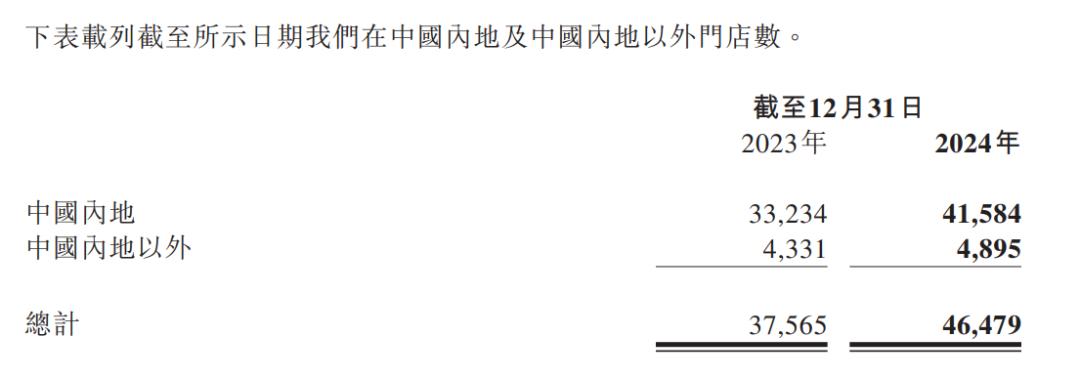
Core Insights - The tea beverage industry is experiencing a significant trend of international expansion, with Chinese brands making their presence felt globally, particularly in Southeast Asia and other regions [1][2][3] - The global ready-to-drink beverage market is projected to exceed $1.1 trillion by 2028, with a compound annual growth rate (CAGR) of 7.2% from 2023 to 2028. Southeast Asia's market is expected to grow from $20.1 billion in 2023 to $49.5 billion by 2028, with a CAGR of 19.8% [1] Group 1: Company Strategies - Several new tea beverage companies are at different stages of international expansion: Mixue Ice Cream and Tea (scale), Nayuki (premium), Cha Bai Dao (differentiation), and Gu Ming (regional focus) [3] - Mixue is leveraging its supply chain advantages to build a tea empire, while Nayuki is focusing on high-end urban areas for expansion [3] - Cha Bai Dao is using fruit tea to attract coffee drinkers in Korea, and Gu Ming is relying on a differentiated image and positioning [3] Group 2: Mixue Ice Cream and Tea - As of December 31, 2024, Mixue had 4,895 stores outside mainland China, an increase of 564 stores from the previous year, averaging 10 new openings per week [4][5] - The company maintains a competitive pricing strategy, with prices in Vietnam ranging from 3-6 RMB and in Indonesia from 3.7-4.6 RMB, significantly lower than mid-to-high-end brands [6] - Mixue's gross profit margin increased from 28.8% in 2023 to 31.6% in 2024, surpassing the industry average of 25% [7] Group 3: Nayuki - Nayuki is positioning itself as a luxury tea brand, with average order values in Thailand reaching 26.7 RMB and daily orders per store at 270.5 [13] - Despite its high-end positioning, Nayuki reported a revenue decline of 4.7% year-on-year, with a net loss of 919 million RMB in 2024 [11][16] - The company plans to adjust its strategy to focus on profitability and product line adjustments for 2025 [16] Group 4: Cha Bai Dao and Gu Ming - Cha Bai Dao opened its first store in Malaysia in November 2023, adapting its product offerings to local tastes and establishing a local operational team [17][18] - The company has developed a training system for tea drinkers in Korea and has tailored its product offerings to local preferences [19] - Gu Ming remains focused on domestic markets, with 80% of its stores in lower-tier cities, and is cautious about international expansion [22][23] Group 5: Market Challenges - The tea beverage industry faces challenges from new environmental regulations in various countries, increasing operational costs [25][26] - Local brands in Southeast Asia are responding aggressively to Chinese brands, often undercutting prices [26] - The competition is expected to intensify as companies must establish robust supply chains and adapt to local cultures to succeed in international markets [27][28]
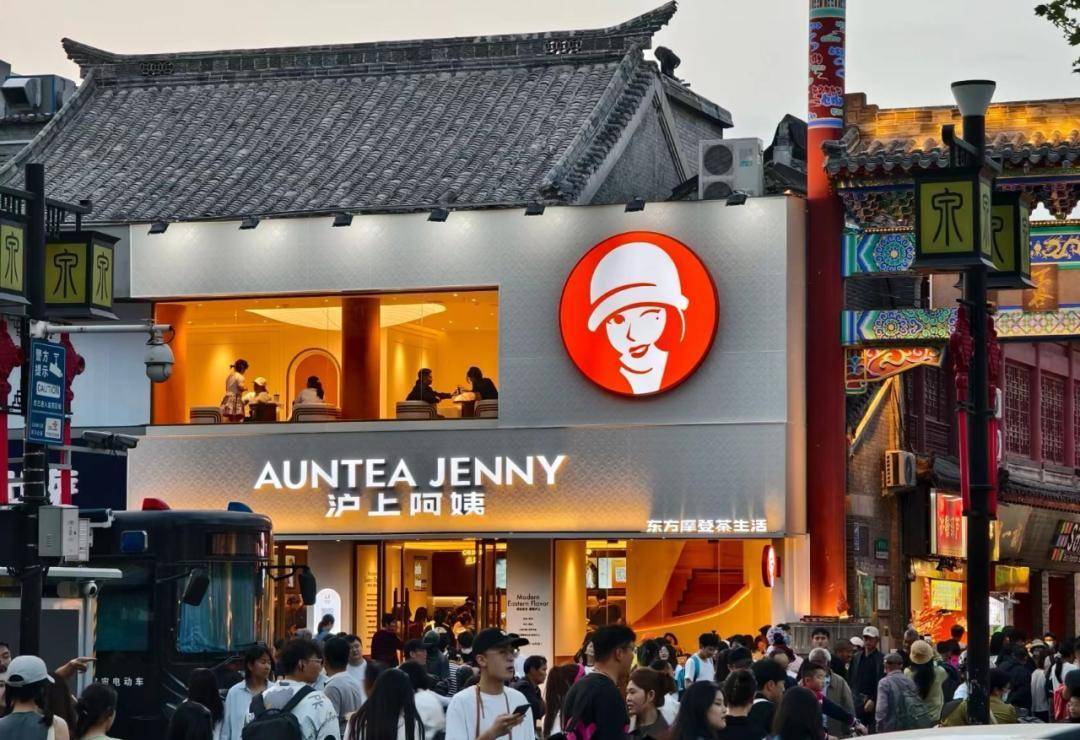
沪上阿姨登陆港交所,刷新新茶饮板块首日涨幅纪录
Bei Jing Ri Bao Ke Hu Duan· 2025-05-09 10:07
Core Viewpoint - Hu Shang A Yi officially listed on the Hong Kong Stock Exchange on May 8, becoming the fifth new tea beverage company in the Hong Kong market, with a significant first-day price increase of 68.5% from the issue price [1] Group 1: Company Performance - On its first trading day, Hu Shang A Yi opened at HKD 190.6 per share, reaching a market capitalization of over HKD 18.4 billion, setting a record for first-day gains in the new tea beverage sector [1] - The company's store count is projected to reach 9,176 by the end of 2024, representing a 73% increase from 2022, with 50.4% of stores located in third-tier cities and below [1] - Revenue for Hu Shang A Yi from 2022 to 2024 is forecasted at CNY 2.199 billion, CNY 3.348 billion, and CNY 3.284 billion respectively, with adjusted net profits of CNY 154 million, CNY 416 million, and CNY 418 million during the same period [1] Group 2: Market Context - The new tea beverage market in China is expected to exceed CNY 400 billion by 2028, but has shifted from an incremental market to a stock market since 2022, leading companies to focus on high-quality development rather than just expansion [1] - The stock performance of new tea beverage companies has shown significant divergence, with notable gains for Gu Ming, Mi Xue Ice City, and Ba Wang Tea Ji, while earlier entrants like Nai Xue's Tea and Cha Bai Dao have seen substantial declines in their stock prices [2] - The initial success of Hu Shang A Yi's listing is attributed to the confidence instilled in the market by Mi Xue Ice City, indicating a "domino effect" among new tea brands [2]