地平线

Search documents
汽车及出行设备-人形机器人与智驾双alpha共振
2025-04-15 14:30
Summary of Conference Call Notes Industry Overview - The discussion primarily revolves around the **automotive industry**, focusing on **autonomous driving** and **humanoid robots** as significant investment opportunities for the year [1][6]. Key Insights and Arguments 1. **Investment Opportunities in Autonomous Driving and Humanoid Robots** - The automotive sector is expected to see three major investment opportunities driven by advancements in AI, particularly in autonomous driving and humanoid robotics [1]. - The concept of "self-driving equity" is highlighted, indicating that as AI technology matures, the adoption of autonomous driving will become inevitable [2]. 2. **Market Dynamics and Competition** - The introduction of advanced technologies, such as BYD's "Tian Shen Zhi Ya" system, has significantly reduced the user base for intelligent driving from over 400,000 to 90,000, indicating a shift in market dynamics [3]. - The competition among automotive players is intensifying, with weaker companies likely to be eliminated due to slow technological iterations [4]. 3. **Growth Projections for Autonomous Driving** - The penetration rate for high-level autonomous driving is projected to increase tenfold, similar to the growth trajectory of electric vehicles, with an annual increase of approximately 10% [5]. - Current data shows that the penetration rate has risen from about 2% to 8%, with expectations of further rapid growth [5]. 4. **Humanoid Robots as a Future Investment Sector** - The humanoid robotics sector is anticipated to be a leading investment area over the next three to five years, despite high volatility in stock prices due to fluctuating market sentiment [8]. - The market for humanoid robots is expected to grow significantly, with a cumulative vehicle ownership of around 1 billion and annual sales of approximately 90 million vehicles [7]. 5. **Manufacturing and Production Challenges** - The production of humanoid robots faces challenges similar to those in the automotive sector, particularly in achieving mass production and maintaining quality control [10][11]. - The ability to scale production to millions of units is crucial, and automotive parts manufacturers are seen as key players in this transition [12]. Additional Important Points - The automotive sector is experiencing a significant investment wave, driven by the potential of autonomous driving and humanoid robots, with over 100 companies already involved in the robotics market [10]. - The historical context of technological advancements, such as the introduction of the iPhone and WeChat, is used to draw parallels with the current evolution of electric vehicles and autonomous driving technologies [2]. - The discussion emphasizes the importance of continuous research and tracking of these emerging sectors to identify viable investment opportunities [9].


给智能驾驶上保险 广汽升级安全体系
Jing Ji Guan Cha Bao· 2025-04-15 10:37
Group 1 - GAC Group launched its flagship SUV, Haobo HL, and introduced "Smart Driving Insurance" to address trust issues in the smart driving industry [1] - The Haobo HL features hardware redundancy and algorithm upgrades for enhanced safety, equipped with laser radar and Orin-X chips, capable of predicting road conditions in advance [1] - The introduction of "Smart Driving Insurance" offers up to 3 million yuan coverage for smart driving system liability accidents, aiming to shift the responsibility from users to the company [1] Group 2 - GAC's "technology + insurance" model may create a new commercial path for smart driving, marking a transition to reliability verification in the industry [2] - The release of 12 vehicle-grade chips indicates GAC's strategic ambition to reduce reliance on international chip manufacturers, as the domestic automotive chip import dependency is at 95% [2] - GAC's "Ecological Co-construction Plan" aims to collaborate with domestic chip companies to develop alternatives, positioning itself as a system integrator [2] Group 3 - The strategy includes diversifying supply chain risks by incorporating domestic chips, which are 30%-50% cheaper than imported ones, thus lowering procurement costs [3] - GAC's initiatives in smart driving insurance and chip ecosystem aim to enhance brand image and establish standards in the automotive industry [3] - The construction of the chip ecosystem faces challenges, including the need for a mature industry ecosystem and balancing cooperation with competition among technology providers [3]

中国汽研联合多家车企发布智驾五项行业倡议
Zhong Guo Xin Wen Wang· 2025-04-14 14:13
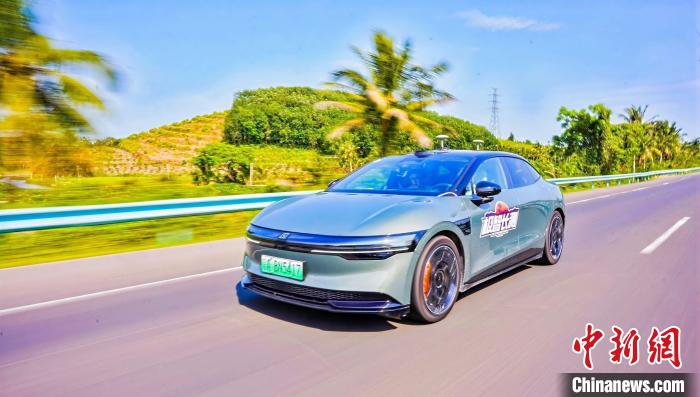
Core Viewpoint - The rapid development of intelligent driving technology has exposed various issues related to standards, safety, and marketing, prompting the China Automotive Engineering Research Institute (China Automotive Research) to launch five industry initiatives aimed at enhancing the safety of L2-level intelligent driving assistance systems [1][6]. Group 1: Industry Challenges - The penetration rate of L2-level passenger vehicles in China is projected to increase from 23.5% in 2021 to 55.7% in 2024, with an expected 65% in the current year [4]. - Analysis of 49 L2-level intelligent driving accidents revealed that 55% occurred on highways, 53% involved vehicle-to-vehicle collisions, and 76% happened under normal road conditions [4]. - Key causes of accidents include limitations in system functionality to handle complex road conditions and misuse or over-reliance on the system by drivers [4]. Group 2: Industry Initiatives - The five industry initiatives include establishing unified minimum safety requirements for L2 intelligent driving systems, enhancing driver monitoring and intervention mechanisms, creating transparent evaluation standards, regulating market promotion and user training, and promoting data sharing and iterative mechanisms [6][7]. - The initiatives align with the recent guidelines from the Ministry of Industry and Information Technology and the State Administration for Market Regulation, which emphasize the need for accurate marketing of intelligent driving systems [7]. Group 3: Testing and Evaluation - China Automotive Research has developed the "Extreme Intelligent Long Test" system, which includes a standardized evaluation framework for high-level intelligent driving assistance, with a testing route covering various complex terrains and traffic conditions across China [9]. - The first test of the "Extreme Intelligent Long Test" was conducted on April 12-13, 2023, in Hainan, evaluating over 20 mass-produced intelligent vehicle models across more than 20 different driving scenarios [9]. - The goal is to transition intelligent driving from experimental parameters to user value through rigorous testing in real-world conditions [9].


最前线|上汽集团与众多跨界合作伙伴合力打造产业新生态,做到“懂车更懂你”
3 6 Ke· 2025-04-14 07:36
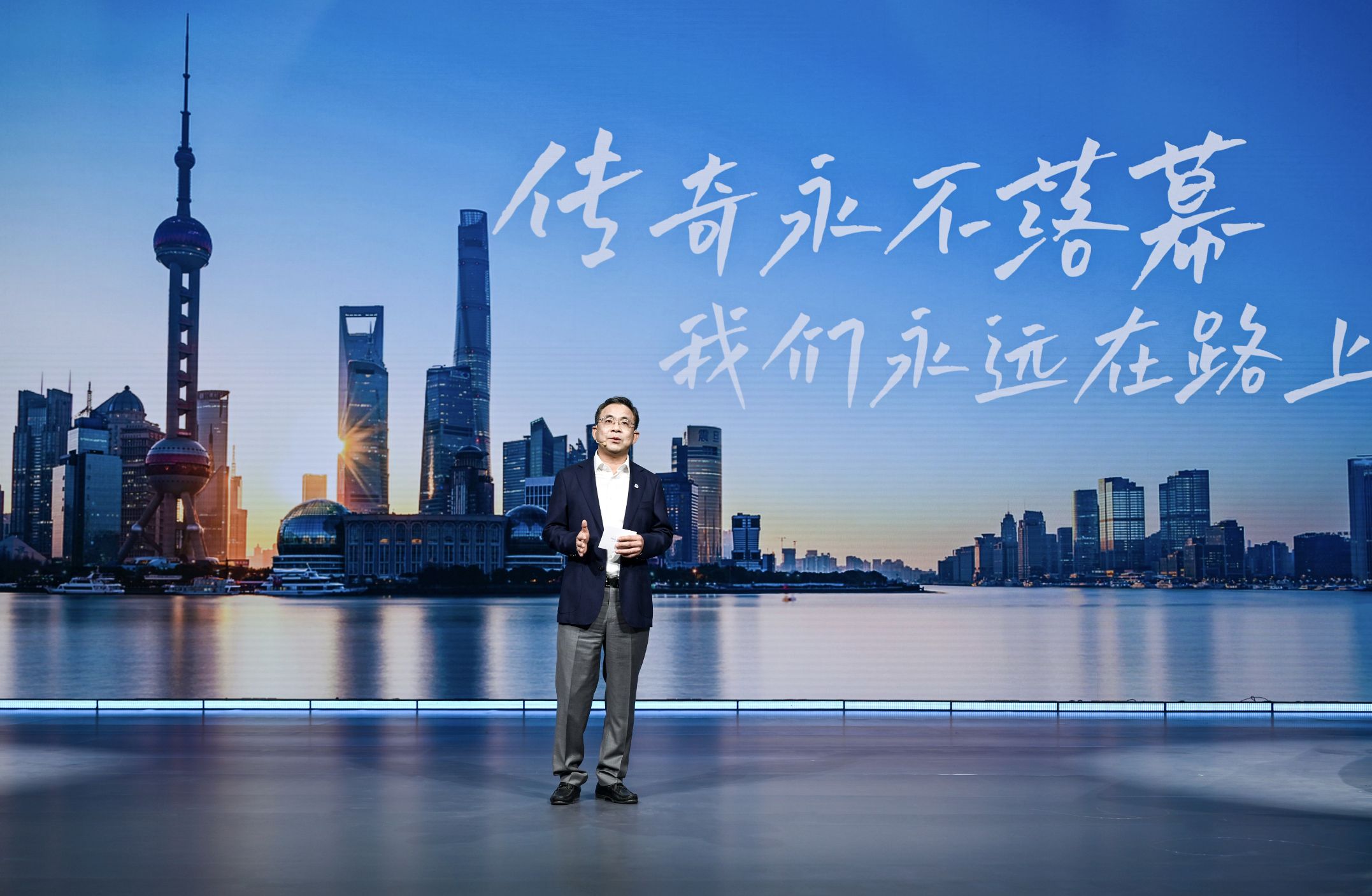
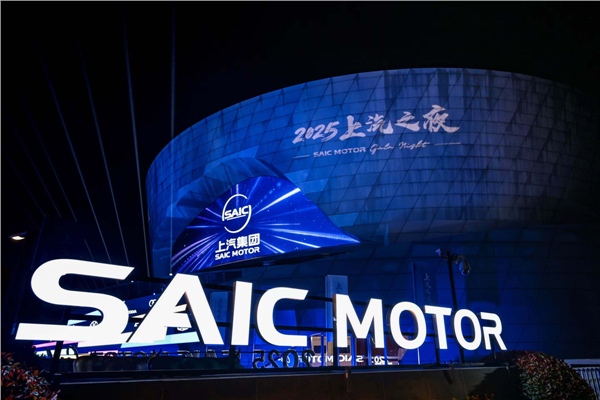
2025年4月10日,"懂车更懂你·2025 上汽之夜"在黄浦江畔的上汽荣威·上海儿童艺术剧场正式举行。本次活动展示了上汽集团与众多跨界伙伴合作的多方面 的创新成果和未来战略布局。 王晓秋发言 上海汽车集团股份有限公司党委书记、董事长王晓秋表示,通过"两个一手","进阶"实现"美好"。一手继续与老朋友大众、通用等合资伙伴共创,同时与华 为、魔门塔、地平线、字节跳动等跨界伙伴合力打造产业新生态,让全球顶尖技术加速落地应用,为美好出行赋能。一手继续与用户同行,从用户中来,到 用户中去,做到"懂车更懂你",努力满足并不断超越用户期望。 2025年2月21日,上汽集团与华为终端有限公司在上海签署深度合作协议。未来双方将在产品定义、生产制造、供应链管理、销售服务等领域展开战略合 作,实现技术共生、生态共创和价值共振,共同为行业高质量发展提供可持续的创新动力, 为用户带来更安全、更智能、更便捷的全新出行体验。 上海汽车集团股份有限公司党委书记、董事长王晓秋表示,上汽集团的传奇永不落幕,上汽人永远在路上。本次活动充分输出了上汽集团新时代格局,展示 了上汽集团在合作中创新,突破自身并引领行业向上。 Momenta是全球领先的 ...

事故频发,汽车智能化与安全要怎么平衡?业内专家开了个会
Nan Fang Du Shi Bao· 2025-04-13 03:43
Core Viewpoint - The automotive industry is undergoing a significant transformation characterized by electrification and intelligence, which brings new requirements and responsibilities for vehicle safety [3] Group 1: Industry Insights - The GAC Intelligent Safety Summit emphasized the need for a collaborative ecosystem to enhance automotive safety in the era of intelligence [1] - Experts highlighted that the core goal of automotive safety has shifted from "harm reduction" to "risk prevention" [3][4] - The industry consensus is that safety is a fundamental requirement, and strict regulations and standards are necessary to guide development [5] Group 2: Expert Opinions - Fu Yuwu stated that intelligent transformation must be based on safety, asserting that "intelligentization without safety is a false proposition" [3] - Zhao Fuquan pointed out that intelligentization and safety are not opposing forces but can achieve balance through ecological collaboration [6] - Wu Jian from GAC emphasized that safety is a non-negotiable baseline for products, and the company has conducted extensive testing to ensure safety [7] Group 3: Technological Development - The summit called for the industry to focus on user-centered approaches and safety as a baseline, promoting the collaborative development of intelligence and safety [4] - Yu Kai from Horizon highlighted the importance of hardware and software integration in achieving safety, indicating that chips are crucial for the foundational safety capabilities of intelligent vehicles [8]
差距仅0.3%!李飞飞:中美AI模型性能基本持平;秘密打造AI iPhone,苹果灵魂设计师的公司要被OpenAI收购丨AI周报
创业邦· 2025-04-12 03:02
Core Viewpoint - The article highlights significant developments in the AI industry, including advancements in AI technology, investment trends, and notable company activities, emphasizing the rapid growth and innovation within the sector. Group 1: Company Developments - Baichuan Intelligence's CEO Wang Xiaochuan emphasizes a focus on the medical field, outlining the company's future direction in AI pediatrics, general medicine, and precision healthcare [5][6]. - Yushun Technology showcases its humanoid robot G1 in a boxing video, demonstrating its capabilities and announcing plans for live robot fighting broadcasts [6][8]. - ByteDance's Doubao model team has open-sourced the Multi-SWE-bench dataset, enhancing the evaluation of AI models' bug-fixing abilities across multiple programming languages [6][10]. - Horizon Robotics and Volkswagen Group are collaborating on advanced intelligent driving solutions, leveraging Horizon's technology for Volkswagen's vehicle models [8][9]. Group 2: Investment Trends - The global AI financing events decreased to 15 this week, with a total disclosed financing amount of 60.98 billion RMB, averaging 5.54 billion RMB per event [41][42]. - In China, the AI financing total reached 11.16 billion RMB, with notable investments in companies like Qunche Intelligent, which focuses on embodied intelligence technology [52][54]. - Overseas, Runway AI, a provider of image and video editing software, completed a Series D financing round of 308 million USD [57][60]. Group 3: Market Insights - The humanoid robot market is projected to reach a scale of over 400 billion RMB by 2035, with significant growth expected in the coming years [28][29]. - The AI talent demand is surging, with Alibaba International's recent recruitment drive focusing 80% on AI positions, reflecting the increasing integration of AI in e-commerce [15][16]. - The EU is investing 200 billion euros to establish 13 AI super factories, aiming to enhance AI development and infrastructure across Europe [21][22].



平权驱动进阶,共创未来出行新生态——上汽集团“懂车更懂你”之夜释放转型强音
Zheng Quan Zhi Xing· 2025-04-11 07:18
Core Viewpoint - SAIC Motor Corporation is undergoing a significant transformation, focusing on user-centric values and technological equality to adapt to new industry demands and competition [3][4][6]. Group 1: User-Centric Approach - The company emphasizes the importance of "user genes," viewing users as "starting partners" rather than just "end payers" [4]. - SAIC's President, Jia Jianxu, highlighted that the competition in the automotive industry has shifted from mere product manufacturing to deeply exploring user value [6]. - The company has introduced a "smart safety system" that exceeds national standards by 30%, achieving industry benchmarks for battery safety with "zero self-ignition and zero thermal runaway" [8][9]. Group 2: Technological Equality - SAIC believes that technological equality is not just about universal access to features but involves open ecosystems and diverse collaborations to drive industry-wide upgrades [10]. - The company is expanding its partnerships with tech giants like Huawei and DJI to create a new industrial ecosystem, aiming for a comprehensive coverage of smart driving, cockpit, and chip technologies [10][12]. Group 3: Individualized Mobility - The company envisions a future where cars evolve into personalized mobility services, transitioning through software and hardware personalization stages [12][13]. - SAIC's self-developed Galaxy full-stack cockpit 3.0 is designed to integrate with major mobile operating systems, ensuring seamless connectivity across various devices [13]. Group 4: Strategic Response to Competition - To tackle fierce market competition, SAIC employs a "combination strategy" that integrates internal resources and deepens collaborations with partners [14]. - The company plans to launch over ten new models by 2025, covering a wide range of consumer needs, and aims to push "Chinese manufacturing" onto the global stage [14]. - In Q1 2025, SAIC achieved a wholesale vehicle sales volume of 945,000 units, a year-on-year increase of 13.3%, and expects a net profit of 3 to 3.2 billion yuan, reflecting a stable growth trend [14]. Conclusion - SAIC Motor's 70-year journey reflects the rise of Chinese industry, as it embraces "technological equality" and "user co-creation" to redefine its product logic and embark on a new chapter in the automotive sector [15].
地平线重要股东上汽、大众持续看好其长期发展,进一步加深业务合作
IPO早知道· 2025-04-11 02:45
本文为IPO早知道原创 作者| Stone Jin 重要战略投资方与主要早期财务投资方均高度看好地平线的长期发展。 微信公众号|ipozaozhidao 据 IPO早知道消息,作为上汽集团的长期战略合作伙伴、地平线创始人兼 CEO 余凯 博士 出席了日 前举行的 "2025上汽之夜"并上台发言。 余凯博士 在发言中指出, 地平线与上汽集团的合作, 是 国内汽车集团与科技创新公司的合作典 范。 " 地平线的发展成长过程中,既得到了上汽集团的投融资支持,又共同发挥创新优势,实现全 产业链的深度开放协作和能力共建。伴随上汽 2025智能化战略的公布,地平线最新征程6系列计算 方案将继续为上汽集团旗下车型产品提供底座支持,为上汽全场景高阶智驾方案添砖加瓦,赋能全场 景智驾平权。未来,地平线将发挥软硬结合的技术创新优势,与上汽集团持续深化合作,共同促进汽 车产业高质量发展。" 与前两大产业投资方进一步深化战略合作 事实上, 自 2017年启动战略合作以来,上汽旗下荣威、名爵、大通等多个车型品牌产品 现 均 已 搭载地平线征程家族方案 ;接下来, 上汽集团旗下 的 荣威、名爵等乘用车品牌 也 将搭载地平线新 一代征程 6 ...
英伟达雷神难产,蔚来:一颗更比四颗强
3 6 Ke· 2025-04-08 10:49
Group 1 - Nvidia's Thor chip production has been delayed to mid-2025, falling behind the original schedule by a year and only offering a low-performance version with 750 TOPS [1][2] - The initial promise for mass production was set for 2024, a critical year for Chinese automakers transitioning in the electric vehicle market, but technical issues and global chip supply chain constraints have caused delays [2][3] - The chip's design integrates multiple functions, including autonomous driving and infotainment, which presents significant technical challenges, compounded by reliance on advanced manufacturing processes from TSMC [3][4] Group 2 - Chinese automaker NIO has developed its own smart driving chip, the NIO Godson NX9031, which was officially launched in December 2023, aiming to reduce dependency on Nvidia and enhance software-hardware synergy [5][6] - The NX9031 chip utilizes a 5nm process, offering superior performance compared to Nvidia's Orin chip, and is designed to support NIO's autonomous driving system [6] - NIO plans to integrate the NX9031 into its ET9 model by Q4 2024, with large-scale production expected in 2025, while still using Nvidia's solutions as a transitional measure [6] Group 3 - The development of domestic smart driving chips in China has progressed, with companies like NIO and Horizon attempting to break the dominance of international giants like Nvidia and Qualcomm [7][8] - Despite advancements, domestic chips face challenges in technology maturity and market competition, with predictions indicating that by 2025, only 30% of the market will be occupied by self-developed chips from Chinese automakers [7][9] - The competitive landscape is stratified, with Nvidia's Drive Thor and Qualcomm's Snapdragon Ride Flex expected to dominate the high-end market, while domestic chips are primarily focused on mid-range and low-end segments [9][10]


全民智驾,芯片变局
远川研究所· 2025-04-03 14:01
Core Viewpoint - The article discusses the evolving landscape of the intelligent driving (智驾) industry, highlighting the shift in market dynamics and the competitive strategies of various companies, particularly focusing on the impact of BYD's recent initiatives on the mid-range intelligent driving chip market [3][12][24]. Group 1: Market Dynamics - The intelligent driving industry is witnessing a significant shift, with BYD's announcement of standardizing high-level intelligent driving across its models, which is expected to raise the baseline for intelligent driving features in the market [9][12]. - The demand for mid-range intelligent driving chips is projected to surge from tens of thousands to millions due to the competitive landscape created by BYD and other domestic brands [12][24]. - The market for low-computing (under 10T AI computing) intelligent driving chips exceeded 10 million units last year, while high-end chips like OrinX and Ascend 610 sold around 2.6 million units [5][6]. Group 2: Competitive Strategies - Companies are adopting a "barbell strategy" in intelligent driving chip selection, focusing on either low-cost entry-level chips for basic safety features or high-end chips for advanced functionalities, leaving mid-range chips in a precarious position [6][7]. - The competition among chip manufacturers is intensifying, with major players like NVIDIA, Huawei, and domestic firms like Horizon and Qualcomm vying for market share in the mid-range segment [14][15][20]. - The article notes that the competitive logic for mid-range chips differs from high-end chips, with a greater emphasis on cost-effectiveness and performance [14][15]. Group 3: Industry Challenges - The article highlights the challenges faced by Mobileye, which has lost its dominant position in the intelligent driving chip market due to increased competition and the rise of local players [24][25]. - The shift towards "全民智驾" (universal intelligent driving) is prompting car manufacturers to demand high-end driving experiences at mid-range prices, creating pressure on chip suppliers to innovate and reduce costs [27][30]. - The article suggests that NVIDIA's current strategy may be overly confident, as it faces competition from newer, more cost-effective solutions from other manufacturers [30][31].