宝马

Search documents
【2025年半年度报告点评/拓普集团】25Q2业绩环比改善,热管理业务向液冷拓展
东吴汽车黄细里团队· 2025-08-29 15:16
Core Viewpoint - The company reported a revenue of 12.95 billion yuan for the first half of 2025, reflecting a year-on-year decrease in net profit, indicating challenges in profitability despite a slight revenue growth [3][4]. Financial Performance - In H1 2025, the company achieved a revenue of 12.935 billion yuan, up 5.83% year-on-year, while the net profit attributable to shareholders was 1.295 billion yuan, down 11.08% year-on-year [3]. - The Q2 2025 revenue was 7.167 billion yuan, showing a year-on-year increase of 9.69% and a quarter-on-quarter increase of 24.26% [3]. - The net profit for Q2 2025 was 729 million yuan, down 10.04% year-on-year but up 29.00% quarter-on-quarter [3]. Profitability Metrics - The net profit margin for H1 2025 was 10.01%, a decrease of 1.9 percentage points year-on-year, while the gross profit margin was 19.55%, down 1.8 percentage points year-on-year [4]. - In Q2 2025, the net profit margin was 10.18%, with year-on-year and quarter-on-quarter changes of -2.23 percentage points and +0.37 percentage points, respectively [4]. Expense Ratios - The expense ratio for Q2 2025 was 8.36%, with year-on-year and quarter-on-quarter changes of +0.15 percentage points and -2.15 percentage points, respectively [5]. - The breakdown of expenses showed sales, management, financial, and R&D expense ratios of 0.88%, 2.62%, -0.20%, and 5.06%, respectively [5]. Segment Performance - Revenue from shock absorbers was 2.04 billion yuan, down 4.83% year-on-year, while interior functional components generated 4.366 billion yuan, up 11.72% year-on-year [6]. - The automotive electronics segment saw a significant revenue increase of 52.06% year-on-year, reaching 1.075 billion yuan [6]. Market Dynamics - The company's Q2 performance benefited from improved sales from downstream customers, with notable increases in sales from various clients, including a 46.95% year-on-year increase for Geely [7]. - The company secured a 1.5 billion yuan order in the thermal management business, indicating strong demand in international markets [8]. Future Outlook - The company adjusted its net profit forecasts for 2025-2026 to 3.358 billion yuan and 4.312 billion yuan, respectively, while maintaining a 2027 forecast of 5.652 billion yuan [9]. - The current market valuation corresponds to P/E ratios of 32, 25, and 19 for 2025-2027, respectively, reflecting ongoing confidence in the company's growth potential [9].



赵崇甫:“南极人”商标使用者看过来,懂商业规律且商业向善才可持久
Sou Hu Cai Jing· 2025-08-29 15:08
Group 1 - The core idea is that brands that attempt to cover too many categories become weak and lose consumer appeal, as they fail to represent any specific category effectively [1][3][4] - The article emphasizes that established brands like Mercedes, BMW, and Audi struggle in the electric vehicle market because they are primarily associated with traditional fuel vehicles, which limits their relevance in the new category [3][4] - It argues that successful branding requires a focus on a specific category, and that aspiring entrepreneurs should build their own brands from the ground up rather than relying on existing brands that lack integrity [4][5] Group 2 - The text critiques the practice of brands like "南极人" (Nanji Ren) that expand into multiple categories without a solid foundation, suggesting that this approach leads to a narrow path for success [5] - It highlights the importance of genuine brand development and warns against opportunistic strategies that exploit consumer hopes and fears for profit [6][7] - The article concludes that successful branding and marketing should be rooted in authenticity and a clear understanding of category representation, rather than manipulation of consumer emotions [6][7]
车展速递|预售价29.38万元起,全新现代帕里斯帝进军中大型SUV市场
Mei Ri Jing Ji Xin Wen· 2025-08-29 13:27
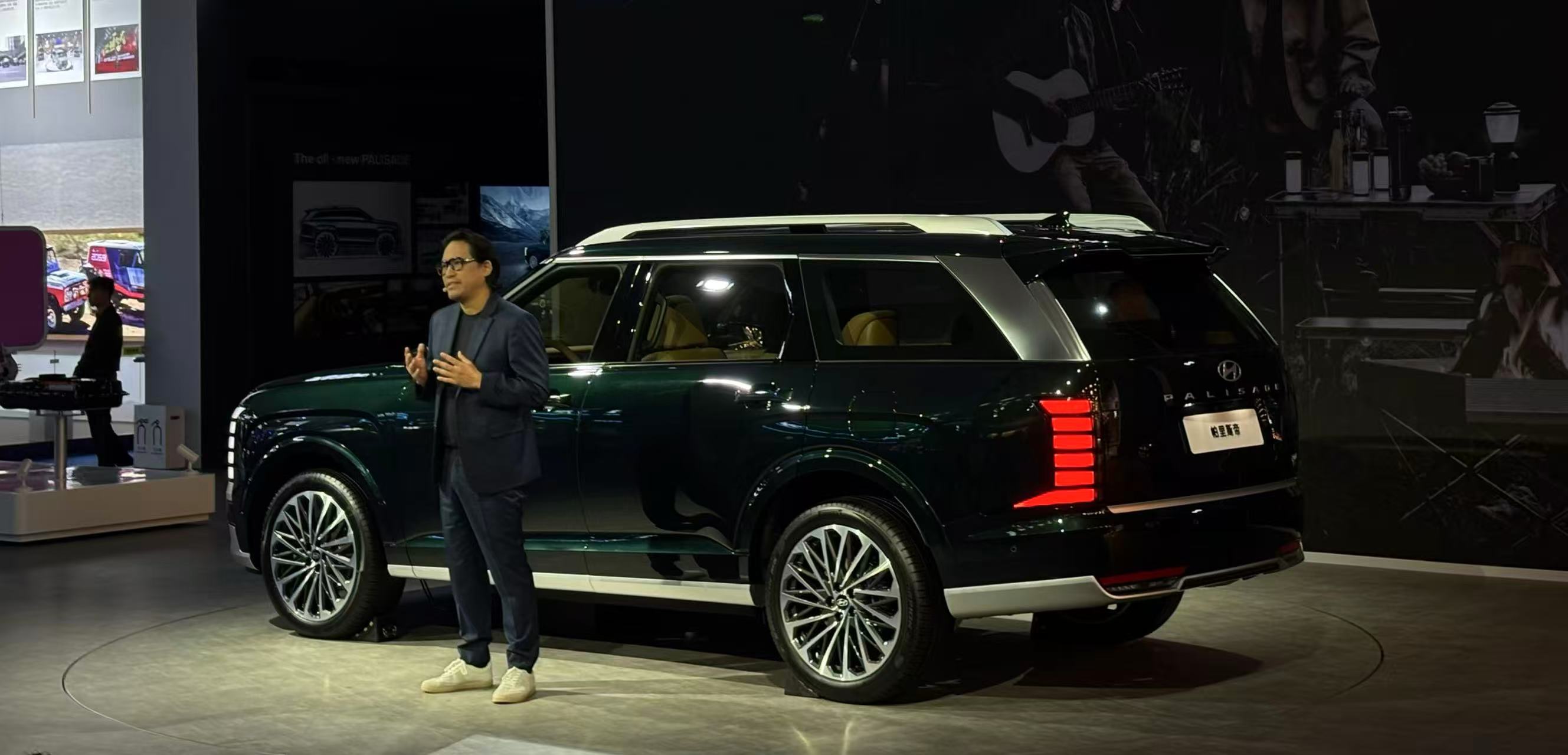
Group 1 - The all-new Hyundai Paris is launched for pre-sale with a price range of 293,800 to 363,800 yuan, expected to officially launch and start delivery by the end of September 2023 [1] - The vehicle offers six and seven-seat configurations and is equipped with a new generation 2.5T hybrid power system, achieving a maximum power of 334 horsepower [1] - Advanced intelligent features include HDA highway driving assistance, NSACC navigation smart cruise control, and LFA2 lane-keeping assistance [1] Group 2 - The large six-seat and seven-seat SUV market has become a strategic focus for major automakers in 2023, with a retail sales increase of 13.1% year-on-year in the domestic SUV market [2] - The mid-to-large SUV segment saw cumulative sales of 716,000 units from January to July 2023, reflecting an 8.6% year-on-year growth [2] - Domestic brands like Li Auto, Zhijie, and Wenjie dominate the sales rankings, while joint venture brands are losing market share, except for a few models like the BMW X5 [2] Group 3 - Despite Beijing Hyundai's sales exceeding 100,000 units in the first half of 2023, the new Paris faces significant challenges in the competitive mid-to-large SUV market dominated by domestic brands [4] - The sales growth of 66% month-on-month in June indicates a recovery trend for Beijing Hyundai, but the performance of the Paris in the market remains to be seen [4]
只会“窝里横” 一汽奥迪销量创新低:嘲讽上汽保正统
Xin Lang Ke Ji· 2025-08-29 03:49
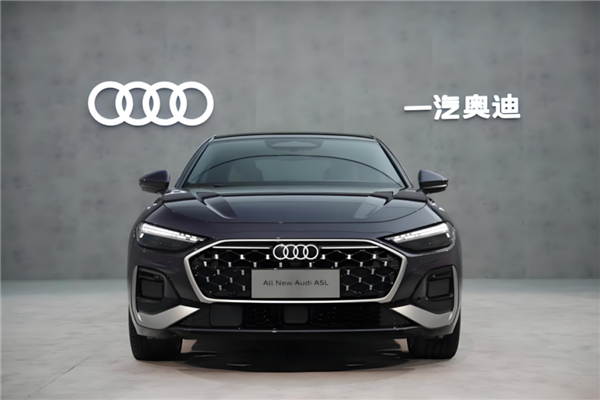
Core Viewpoint - Audi's pricing strategy has collapsed under intense competition, leading to a significant drop in sales and profits, particularly in the Chinese market, despite aggressive pricing tactics [1][12]. Group 1: Sales and Financial Performance - The 2025 model of the FAW Audi A3 has seen its base price drop to 112,400 yuan, equivalent to a 34% discount [1]. - FAW Audi's sales for 2024 are projected to plummet by 12.5% to 611,100 units, marking a new low [13]. - Audi's overall sales in China for 2024 are expected to be 649,400 units, with FAW Audi contributing 611,100 units, representing over 94% of total sales [13]. - Audi's financial report for the first half of 2025 shows a revenue increase of 5.3% to 32.57 billion euros, but a 37.5% decline in net profit to 1.346 billion euros [15]. Group 2: Competitive Dynamics - The competition between FAW Audi and SAIC Audi has intensified, with both brands targeting similar market segments but with different styling and branding strategies [6][8]. - SAIC Audi launched a new luxury electric brand, AUDI, which has further complicated the competitive landscape for FAW Audi [8][16]. - FAW Audi's recent statements emphasizing the "four rings" logo are perceived as a direct critique of SAIC Audi, highlighting the ongoing internal conflict [10][11]. Group 3: Strategic Responses - FAW Audi is attempting to revitalize its brand by introducing new models equipped with advanced technology, such as the Huawei QianKun driving system [17]. - The company has initiated a "fusion direct sales" model to streamline sales processes and pricing, which may disrupt traditional dealership operations [19][20]. - The pricing strategy for the FAW Audi A5L has been adjusted to remain competitive against SAIC Audi, with the A5L priced at 239,800 yuan, lower than SAIC Audi's A5L Sportback [7][8].
理想(LI.US/2015.HK)Q2:连续11个季度盈利,高研发投入夯实核心竞争力
Ge Long Hui· 2025-08-29 02:47
Core Viewpoint - The article highlights the significant growth potential in the electric vehicle (EV) market, with a forecast of 15.73 million units sold by 2025, representing a 29% year-on-year increase. However, the industry faces challenges due to intense price competition and profitability pressures among leading companies. In this context, Li Auto has demonstrated a unique performance, being the only new force in the industry to achieve profitability for 11 consecutive quarters [1][2]. Group 1: Li Auto's Financial Performance - In Q2 2025, Li Auto reported revenue of 30.2 billion RMB and an operating profit of 827 million RMB, marking a year-on-year increase of 76.7% and a quarter-on-quarter increase of 204.4% [1]. - Li Auto's sustained profitability amidst industry challenges showcases its effective business strategy and operational efficiency [1][6]. Group 2: R&D Investment and Technological Advancements - Li Auto's R&D investment reached 2.8 billion RMB in Q2 2025, with an expected total of over 12 billion RMB for the year, including over 6 billion RMB specifically for AI [2][3]. - The company is set to launch the world's first VLA driver model, which utilizes reinforcement learning and enhances user experience through advanced features [3]. - Li Auto's self-developed silicon carbide (SiC) chips and electric drive systems are now in mass production, improving efficiency and performance [4]. Group 3: Market Position and Sales Performance - As of July 2025, Li Auto led the market for SUVs priced above 200,000 RMB, with sales of 229,943 units and a market share of 12.31%, surpassing competitors like Tesla and AITO [6]. - The launch of the Li MEGA Home has positioned the company as a leader in the high-end MPV segment, achieving the highest sales in both the 500,000 RMB and pure electric categories [6]. Group 4: Financial Stability and Future Outlook - As of June 30, 2025, Li Auto's cash reserves stood at 106.9 billion RMB, providing a strong financial cushion for ongoing R&D and operational activities [7]. - The company is well-prepared for the anticipated competitive landscape in the automotive industry from 2025 to 2027, focusing on building technological barriers and enhancing brand competitiveness [8].

恒帅股份2025年上半年深耕车用核心部件 机器人技术突破、电子水泵定点与充电小门订单多点开花
Zheng Quan Shi Bao Wang· 2025-08-29 01:56
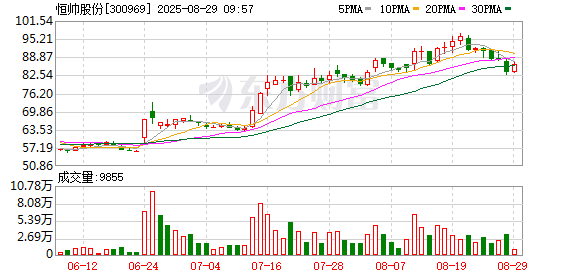
Core Business Progress - The company has made significant breakthroughs in robot technology research and development, focusing on harmonic magnetic field motor technology, which has advantages such as high power density, compact size, cost savings, low electromagnetic interference, and long lifespan [1] - The harmonic magnetic field motor technology has already achieved mass production in collaboration with Lenze on drum motors and is entering a ramp-up phase [1] - The company is customizing solutions for humanoid robots, including linear joint motors, rotary joint motors, and dexterous hand motors, aiming to create new growth areas in industrial automation and humanoid robots [1] Fluid Technology and Electric Pump Business - The electronic water pump business has become a core growth point, securing key customer contracts due to its efficient heat management and low power consumption [2] - The company is gradually configuring a production capacity of 1.5 million electronic water pumps to meet mass production demands [2] - The company is also expanding into integrated solutions in the thermal management field, enhancing product value and market competitiveness [2] Financial Performance - In the first half of 2025, the company achieved a revenue of 428 million yuan and a net profit of 84.65 million yuan, with a non-recurring net profit of 75.47 million yuan [4] - The company’s cleaning products generated a revenue of 201 million yuan, while motor products generated 192 million yuan during the same period [3] Research and Development - The company invested 15.49 million yuan in R&D in the first half of 2025, a year-on-year increase of 4.23%, focusing on harmonic magnetic field motors, new magnetic materials, electronic pump optimization, and intelligent cleaning systems [3] - The company holds a total of 64 patents, including 18 invention patents, showcasing its strong technical capabilities and product quality control [5] Future Outlook - The company plans to continue focusing on core automotive components, increase the industrialization of robot technology, and expand the market for electronic pumps and charging door assemblies [5] - The company aims to leverage global capacity layout and technological innovation to achieve performance recovery amid the trends of automotive electrification and intelligence [5]

外资企业深耕中国意愿强烈信心坚定
Ren Min Ri Bao Hai Wai Ban· 2025-08-29 00:42
Group 1 - The number of newly established foreign-invested enterprises in China continues to grow year-on-year in the first half of this year, indicating strong interest and confidence from foreign companies despite external uncertainties [1] - The China Council for the Promotion of International Trade (CCPIT) has engaged with nearly 100 multinational company leaders and organized 274 delegations to 55 countries and regions to strengthen international cooperation in supply chains and support foreign investment in China [1][2] - A survey by the German Chamber of Commerce reveals that 92% of German companies are willing to continue investing in China, with over half planning to increase their investments in the next two years [2] Group 2 - The CCPIT is focused on optimizing the business environment and promoting localized production in the pharmaceutical industry, holding 10 meetings to address foreign enterprises' needs and facilitate solutions [2] - The upcoming Shanghai Cooperation Organization summit in 2025 will be held in Tianjin, with various economic and trade activities planned to enhance cooperation among member states [2][3] - The number of foreign-invested entities in Yiwu, Zhejiang has surpassed 10,000, showcasing the growing foreign investment landscape in the region [4]

保隆科技2025年上半年业绩稳健增长 智能悬架与传感器业务成亮点
Quan Jing Wang· 2025-08-28 12:25
Core Insights - In the first half of 2025, Baolong Technology (603197) achieved operating revenue of 3.95 billion yuan, a year-on-year increase of 24.06%, while net profit was 135 million yuan, down 9.15% [1] - The company plans to distribute a cash dividend of 3.2 yuan per 10 shares, totaling approximately 67.56 million yuan, which accounts for 50.14% of the net profit attributable to the parent company [1] Revenue Breakdown - Revenue from the intelligent suspension system surged by 50.22% to 637 million yuan, marking it as the fastest-growing segment [1] - TPMS (Tire Pressure Monitoring System) and sensor businesses generated revenues of 1.209 billion yuan and 368 million yuan, reflecting year-on-year growth of 22.7% and 18.7% respectively [1] - Domestic main business revenue increased by 33.07%, with its proportion rising from 50.61% last year to 54.55% [1] Market Position and Partnerships - The company has established partnerships with leading new energy vehicle manufacturers such as BYD (002594), NIO, and Li Auto, and has entered the supply chains of major global automakers like Toyota, Volkswagen, and BMW [1] - The penetration rate of air suspension has increased to 5.7%, driving the company’s continued breakthroughs in the mid-to-high-end market [1] Future Outlook - Baolong Technology aims to continue investing in emerging businesses such as air suspension and ADAS (Advanced Driver Assistance Systems) to reinforce its "intelligent + lightweight" dual-drive strategy [1] - The second phase of the Hungarian factory construction has commenced, further enhancing production capacity in Europe [1]

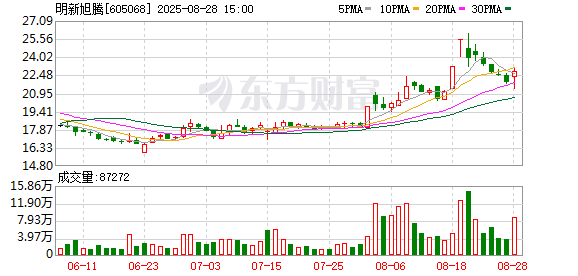
明新旭腾上半年营收同比增长29.26% 新能源汽车市场渗透率持续提升
Zheng Quan Ri Bao· 2025-08-28 08:13
Core Insights - Mingxin Xuteng New Materials Co., Ltd. reported a revenue of 603 million yuan for the first half of 2025, representing a year-on-year growth of 29.26% [2] - The company has deepened partnerships with major automotive manufacturers, including FAW-Volkswagen, SAIC-GM, BYD, NIO, and others, enhancing its supply relationships [2] - Mingxin Xuteng has established a "dual-drive" business expansion strategy focusing on high-end interior materials and innovative products to capture trends in new energy, lightweight, and smart technologies [2][3] Business Development - The company has set up a wholly-owned subsidiary, Mingxin Zhiyuan (Zhejiang) New Materials Technology Co., Ltd., to support the development of intelligent responsive materials for various applications [3] - Mingxin Xuteng has made significant investments in R&D, participating in the formulation of 34 national and industry standards and holding 289 valid patents as of June 2025 [3] - The company achieved successful upgrades in water-based PU leather technology, which has received infant-grade certification and is now in mass production for certain new energy vehicle models [3] Sustainability and ESG - Mingxin Xuteng has integrated ESG principles into its development strategy, achieving an upgrade in its Wind ESG Rating from A to AA, with a score of 8.2, reflecting its commitment to sustainable development [4] - The company is implementing "lighthouse factory" standards, utilizing technologies like cloud computing and industrial IoT to enhance production efficiency and reduce costs [4] - To foster a shared vision for growth, Mingxin Xuteng has introduced an employee stock ownership plan and reported a share increase by its controlling shareholder, demonstrating confidence in the company's future [4]

美国公司接手欧洲锂电池巨头后,无一车企愿与其合作
鑫椤锂电· 2025-08-28 07:55
Core Viewpoint - The acquisition of Northvolt by Lyten, an American lithium-sulfur battery manufacturer, has not attracted any automotive companies to support the restart of Northvolt's battery production lines after its bankruptcy [1][2]. Group 1: Northvolt's Bankruptcy - Northvolt, once the largest lithium battery manufacturer in Europe, filed for bankruptcy on March 12, 2023, marking the largest corporate bankruptcy in Swedish history [1]. - Prior to its bankruptcy, Northvolt raised approximately $15 billion (around 107.3 billion RMB) from government and investors, with total debts exceeding $8 billion (around 57.2 billion RMB) across its nine affiliated companies [1][2]. - The company faced significant operational challenges, including low production capacity and poor yield rates, with its Skellefteå factory achieving only 1% of its designed capacity in 2023 [2]. Group 2: Lyten's Acquisition Plans - Lyten announced on August 7, 2023, that it had signed an agreement to acquire all remaining assets of Northvolt in Sweden and Germany [2]. - The CEO of Lyten, Dan Cook, expressed that if the company can deliver quality products consistently, former Northvolt customers may return [3]. - However, automotive manufacturers have shown reluctance to re-engage, with comments from former investors and partners indicating that discussions about battery orders are premature [3]. Group 3: Future Production Goals - Lyten aims to leverage Northvolt's production facilities to accelerate the mass production of lithium-sulfur batteries by the end of 2028 [4]. - Experts have expressed skepticism about the feasibility of lithium-sulfur batteries being used in electric vehicles before 2030, highlighting the extensive time and investment required to reach current battery manufacturing levels [4].