海尔智家

Search documents
家电行业2026年1月投资策略:2026年家电国补政策延续,有望拉动内销需求企稳回升
Guoxin Securities· 2026-01-05 13:58
Core Insights - The 2026 home appliance national subsidy policy is expected to stimulate domestic demand and stabilize retail sales, particularly in the white goods sector [2][3][20] - The policy continues to support the replacement of old appliances with new ones, focusing on six major categories, including refrigerators, washing machines, and air conditioners, with a subsidy of 15% of the product price, capped at 1500 yuan per item [3][21][22] - The white goods production in January showed a positive trend, with a total output of 34.53 million units, representing a 6% year-on-year increase, driven by the national subsidy policy [4][24] Monthly Research Tracking and Investment Thoughts - The national subsidy policy for 2026 aims to boost the replacement demand for home appliances, which is expected to support domestic sales [20][21] - January's white goods production saw a recovery, with air conditioner production increasing by 11% year-on-year, indicating a potential stabilization in demand [4][24] - In November, the domestic sales of major appliances faced pressure due to high base effects from the previous year, but exports of refrigerators and washing machines showed good growth [5][32] Key Data Tracking - In December, the home appliance sector experienced a relative return of -1.06% compared to the Shanghai Composite Index, which rose by 2.28% [34] - The prices of raw materials such as copper and aluminum increased by 13.5% and 4.8% respectively in December, while cold-rolled steel prices decreased by 3.2% [36] - The shipping index for major routes showed a mixed performance, with the West America route down by 6.4% and the Europe route up by 4.8% [45] Key Company Announcements and Industry Dynamics - The report highlights key companies such as Midea Group, Haier Smart Home, TCL, and Gree Electric as strong performers in the white goods sector, with recommendations for investment based on their resilience and growth potential [14][15][54] - The home appliance industry is expected to face challenges due to high inflation in overseas markets and geopolitical tensions, but leading companies are adapting by enhancing local production capabilities [50][51]





研究了10000名消费者,我们为2026写下30条新消费暴利的秘密 |「万字长文」
新消费智库· 2026-01-05 13:23
Group 1 - The core consumption logic in China is shifting from "cost-performance" and "emotional value" to "quality-price ratio" and "comprehensive self-satisfaction" as consumers become more rational and discerning in their purchases [2][3] - The Z generation (ages 18-27) views consumption as a means of expressing identity and belonging, prioritizing "identity consumption" over mere "need consumption" [4][6][10] - The "谷子经济" (Guzi Economy) is emerging as a significant market, driven by emotional value and the willingness of consumers, especially the Z generation, to pay for intangible assets like fandom and community [10][11] Group 2 - The Z generation is increasingly skeptical of influencer marketing, with only 11% trusting recommendations from online personalities, preferring authentic and relatable brand interactions [12][13] - The trend of "micro-luxury" consumption is rising, where consumers seek small indulgences that provide immediate happiness and a sense of control over their lives [12][13] - The demand for convenience is leading to a rise in "extreme time-saving" solutions, with consumers willing to pay for products that simplify their daily routines [15][16] Group 3 - The second-hand market is gaining traction as consumers seek unique, high-quality items while also valuing sustainability, with platforms for vintage and second-hand goods becoming social hubs [16][17] - Digital assets are being accumulated for their potential future value, with consumers finding satisfaction in owning a vast array of digital content, even if unused [18][19] - A trend towards "aesthetic minimalism" is emerging, with consumers favoring simpler, less polished designs that emphasize authenticity over excessive packaging [20][23] Group 4 - The younger generation is increasingly seeking authentic experiences, often traveling to less commercialized areas to escape urban monotony and engage with local cultures [24][25] - The Z generation is characterized by "precise ambiguity," using specific labels to express their multifaceted identities, which brands must understand and respect [26][27] - The "小镇中年" (Small Town Middle-Aged) demographic is becoming a stable consumer base, relying heavily on community recommendations and valuing local pride [30][32] Group 5 - The "leisure economy" is thriving, with consumers prioritizing leisure activities that enhance their quality of life, such as local dining and short trips [33][34] - Social currency is becoming a key driver of consumption, where purchases are made not just for personal use but also to enhance social standing within local communities [35][36] - The preference for trusted national brands is evident, with consumers favoring mid-range products that offer reliability and value for money [36][37] Group 6 - The rise of service consumption reflects a shift towards valuing time and convenience, with consumers willing to pay for services that simplify their lives [46][47] - The "healing economy" is emerging as a significant market, with consumers regularly engaging in emotional wellness activities to cope with modern stressors [48][50] - Anti-aging products are evolving into a more systematic and scientific approach, with consumers investing in comprehensive anti-aging solutions [51][52] Group 7 - Membership-based shopping models are gaining popularity, as consumers seek curated selections that save time and ensure quality [52][54] - The revival of physical media, such as books and vinyl records, highlights a desire for tangible experiences and the ritualistic aspects of consumption [57][58] - The "new middle-class women" are redefining self-satisfaction, investing in holistic self-improvement across various aspects of life [61][62]


中国家电,再战世界杯
Xin Lang Cai Jing· 2026-01-05 11:45
Group 1 - The 2026 FIFA World Cup will take place in North America, with the opening match on June 11, 2026, in Mexico City and the final on July 19, 2026, in New York/New Jersey [2][21] - Hisense has secured its position as a global official sponsor for the 2026 World Cup, aiming to showcase matches across 16 cities in Canada, Mexico, and the USA [5][23] - The marketing strategies of Chinese home appliance brands like Haier and Midea are anticipated to be prominent in other major sports events leading up to the World Cup [5][23] Group 2 - Hisense's marketing investment during the 2018 World Cup exceeded $100 million, significantly enhancing brand recognition in China by 12 percentage points [6][24] - The brand's advertising slogan during the 2022 World Cup, "Hisense TV, China No. 1, World No. 2," sparked controversy regarding its accuracy in sales rankings [6][26] - Hisense's sponsorship of major football events has historically led to substantial increases in overseas sales, with an 83% growth following the 2016 European Championship [10][28] Group 3 - The 2026 World Cup may face challenges in viewer engagement due to the expansion of teams from 32 to 48, potentially diluting the quality of matches [12][30] - The match timings are less favorable for Chinese viewers, primarily scheduled between 3:00 AM and 11:00 AM Beijing time, which could impact viewership ratings [12][30] - The evolving entertainment landscape, including the rise of short video platforms, may reduce the attention span of casual fans, making it harder to engage them for full matches [14][32] Group 4 - Sponsorship of top-tier sports events has become a standard practice among Chinese home appliance brands, with Midea and Haier also engaging in significant sponsorship deals [16][33] - Hisense aims to leverage the World Cup to promote not only televisions but also other products, such as refrigerators, which have achieved leading market positions in several countries [18][35] - The effectiveness of sponsorship investments is viewed as a long-term strategy rather than a short-term financial calculation, emphasizing the importance of product quality and technological strength for international success [18][35]


科学与健康|AI遇上医疗 健康守护如何注入新活力?
Xin Hua She· 2026-01-05 11:28
Group 1 - The integration of AI in healthcare is accelerating drug development, enhancing clinical precision, and driving innovation in the medical industry, providing stronger technological support for public health [1][2] - The AI platform "AI Kongming" has been launched, offering free access to databases related to global health challenges, significantly improving candidate molecule hit rates and optimization efficiency by several times compared to traditional processes [1][2] - AI technologies are increasingly applied across various medical fields, including drug development, medical imaging, disease diagnosis, and health monitoring, showcasing their versatility and potential impact [2][3] Group 2 - Major pharmaceutical companies like Shijiazhuang Pharmaceutical Group and Hengrui Medicine are establishing AI research departments to accelerate drug target discovery and clinical trial processes [3][4] - The establishment of innovation platforms, such as the one in Suzhou Industrial Park, aims to facilitate the transformation of medical and engineering innovations, breaking down barriers between data, disciplines, and institutions [4][5] - National policies are being introduced to promote the integration of new information technologies with the pharmaceutical industry, enhancing the application of AI in clinical settings [4][5]
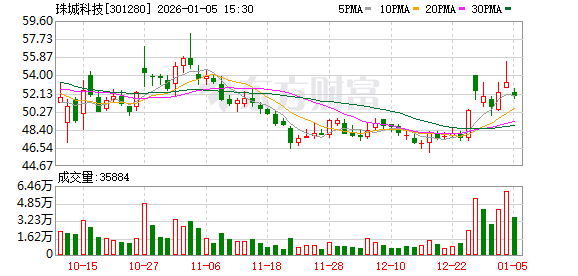
珠城科技:工业连接器主要销售给优必选、库卡等机器人制造商等
Mei Ri Jing Ji Xin Wen· 2026-01-05 11:09
Group 1 - The core product of the company is electronic connectors, which are categorized into "home appliance connectors," "automotive connectors," "industrial connectors," and "connectors for other fields" based on market and customer needs [2] - Home appliance connectors are primarily sold to major manufacturers such as Midea, Haier, Gree, Hisense, and Xiaomi, as well as component suppliers like Derun Electronics and Sanyuan Group [2] - Automotive connectors are mainly supplied to new energy vehicle component suppliers like Ruipu Lanjun and Jinkang New Energy, and automotive manufacturers including BYD, Chery, Changan, SAIC, and Leap Motor [2] Group 2 - Industrial connectors are primarily sold to robot manufacturers such as Ubtech and KUKA [2] - Connectors for other fields are mainly supplied to energy storage and photovoltaic equipment manufacturers like Dingke Energy and Yiyuan Holdings [2]

2025年度空气净化器实测排名盘点:核心除醛技术与消杀性能解析
Xin Lang Cai Jing· 2026-01-05 10:38
Core Insights - The demand for home air purification has evolved from "single haze removal" to "whole-house deep treatment" as of 2026, highlighting the need for advanced technologies in air purifiers [1][2] - The article reviews flagship models from ten major brands, focusing on "active formaldehyde removal" technologies and "human-machine coexistence" safety features, along with a full lifecycle cost analysis [1][2] Group 1: Key Parameters of Flagship Models - The top model, Telamon X99, has a formaldehyde CADR of 800 m³/h and utilizes manganese-based catalytic decomposition technology, achieving a removal rate of over 99.99% for various viruses [19][20] - IAM M8 features a CADR of over 750 m³/h and employs the "Carbon Cube" technology, making it suitable for families with a high budget seeking maximum filtration efficiency [21] - The 352 Z90 model, with a CADR of over 700 m³/h, uses FVTH-Fusion micro-pore technology, ideal for users sensitive to light pollution [23] Group 2: Detailed Analysis of Major Brands - Telamon X99 is positioned as the flagship choice for large spaces and families with infants, featuring an 11-layer purification system and a unique "buy one, get many" filter replacement policy [19][20] - Haier KJ920F emphasizes safety with its amino acid long-lasting formaldehyde removal technology, integrating well with Haier's smart home ecosystem [22] - Philips AC9008 stands out for its pure physical filtration approach, relying solely on high-precision HEPA filters to capture particles as small as 0.003 microns, catering to families that avoid electronic disinfection methods [29] Group 3: Expert Guidelines for 2026 Purchasing - When selecting an air purifier for new renovations, both CADR and CCM values are important, but the focus should be on "decomposition technology" in 2025 [31][33] - For households with infants, the safety of UV features depends on the design; closed UV systems are recommended to ensure safety during operation [35] - The cost of consumables can be significant, with high-performance filters typically priced between 500-800 yuan, making brands with generous filter replacement policies more economical in the long run [36][37]
绿色消费“20条”:支持购买新能源汽车、绿色智能家电
2 1 Shi Ji Jing Ji Bao Dao· 2026-01-05 09:56
21世纪经济报道记者张旭 北京报道 1月5日,商务部等9部门发布《关于实施绿色消费推进行动的通知》 (以下简称《通知》),对"十五五"时期绿色消费工作作出安排。《通知》提出7方面20条具体举措, 涵盖农产品、家电家装、餐饮住宿等多个领域,同时明确金融等支持政策,优化绿色消费环境,促进形 成绿色低碳的生产生活方式。 对于绿色消费的重要意义,国研新经济研究院创始院长朱克力向21世纪经济报道记者表示,绿色产品与 绿色消费是实现经济社会绿色转型的关键抓手。 "一方面,扩大绿色产品供给能倒逼产业链上下游加速低碳改造,比如绿色家电需求增长会推动上游芯 片、电机企业研发节能技术,助力制造业向高端化、绿色化升级。另一方面,绿色消费模式创新能培育 新的消费增长点,比如二手商品流通、绿色租赁等业态,既拉动消费规模扩张,又减少资源浪费,契 合'双碳'目标与高质量发展要求。"朱克力说。 《通知》提出,丰富绿色产品供给,促进汽车绿色消费,支持消费者购买新能源汽车。鼓励购买新能源 汽车,是我国十余年来政策导向的延续,也集中体现在2026年汽车以旧换新政策当中。 2024年以来,商务部会同各地区、各相关部门深入实施汽车以旧换新政策。截至2 ...
建筑材料行业跟踪周报:建筑业PMI回升符合季节性规律,值得关注-20260105
Soochow Securities· 2026-01-05 09:19
Investment Rating - The report maintains an "Overweight" rating for the construction materials industry [1]. Core Insights - The construction industry PMI has rebounded, aligning with seasonal trends, indicating a potential turning point for the real estate chain in 2026. The stability of infrastructure investment is deemed necessary amidst declining real estate investment expectations [4][5]. - The report highlights the importance of supply-side adjustments in the cement industry, with a focus on the exit of outdated capacities and the potential for improved profitability in 2026 [8][19]. - The glass market is experiencing price fluctuations, with a notable decline in average prices compared to the previous year, suggesting ongoing challenges in demand and supply dynamics [46][51]. Summary by Sections 1. Cement Market Overview - The national average price for high-standard cement is 352.8 RMB/ton, down 1.2 RMB/ton from last week and down 53.8 RMB/ton from the same period in 2024. Regions with price increases include Guangdong (+5.0 RMB/ton) and Central South (+1.7 RMB/ton), while declines were noted in the Yangtze River Basin (-2.1 RMB/ton) and Southwest (-9.0 RMB/ton) [14][15]. - The average cement inventory ratio is 60.4%, down 1.4 percentage points from last week but up 1.3 percentage points year-on-year. The average cement shipment rate is 40.3%, down 1.1 percentage points from last week and down 1.2 percentage points year-on-year [19][21]. 2. Glass Market Overview - The average price for float glass is 1121.3 RMB/ton, a decrease of 18.8 RMB/ton from last week and down 270.4 RMB/ton from the same period in 2024. The inventory of float glass in 13 provinces is 53.78 million heavy boxes, down 155,000 boxes from last week but up 1.361 million boxes year-on-year [46][51]. - The report indicates that the supply of float glass is under pressure, with production lines being shut down due to losses, which may lead to price rebounds in the future as demand stabilizes [45][46]. 3. Fiberglass Market Overview - The fiberglass market is expected to see stable growth in demand, particularly in wind power and thermoplastic applications, with effective capacity projected to reach 759.2 million tons in 2026, a year-on-year increase of 6.9% [8]. - The report suggests that the profitability of leading companies in the fiberglass sector may improve due to structural demand and new applications, enhancing their competitive advantages [8].
海尔智家(06690) - 截至二零二五年十二月三十一日止月份之股份发行人的证券变动月报表
2026-01-05 09:19
FF301 公司名稱: 海爾智家股份有限公司 呈交日期: 2026年1月5日 I. 法定/註冊股本變動 | 1. 股份分類 | 普通股 | 股份類別 | A | | 於香港聯交所上市 (註1) | | 否 | | | --- | --- | --- | --- | --- | --- | --- | --- | --- | | 證券代號 (如上市) | 600690 | 說明 | | 普通股- A股面值每股人民幣1元 (於上海證券交易所上市) | | | | | | | | 法定/註冊股份數目 | | 面值 | | | 法定/註冊股本 | | | 上月底結存 | | | 6,254,501,095 | RMB | | 1 RMB | | 6,254,501,095 | | 增加 / 減少 (-) | | | -1,472,684 | | | RMB | | -1,472,684 | | 本月底結存 | | | 6,253,028,411 | RMB | | 1 RMB | | 6,253,028,411 | | 2. 股份分類 | 普通股 | 股份類別 | 其他類別 (請註明) | | 於香港聯交所上市 (註 ...
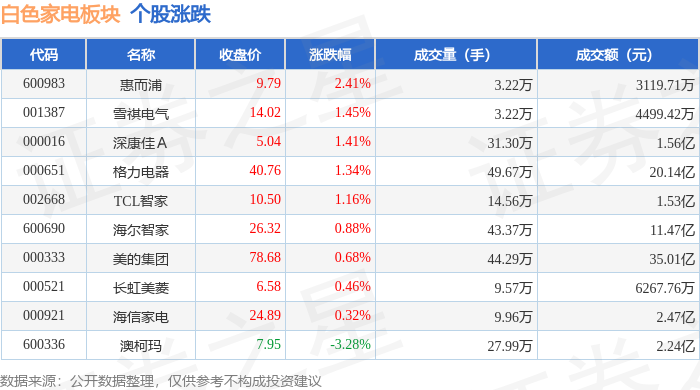
白色家电板块1月5日涨0.85%,惠而浦领涨,主力资金净流出1198.43万元
Zheng Xing Xing Ye Ri Bao· 2026-01-05 08:59
Market Performance - The white goods sector increased by 0.85% on January 5, with Whirlpool leading the gains [1] - The Shanghai Composite Index closed at 4023.42, up 1.38%, while the Shenzhen Component Index closed at 13828.63, up 2.24% [1] Stock Performance - Key stocks in the white goods sector showed the following closing prices and percentage changes: - Whirlpool: 9.79, up 2.41% [1] - Snowman Electric: 14.02, up 1.45% [1] - Deep Blue A: 5.04, up 1.41% [1] - Gree Electric: 40.76, up 1.34% [1] - TCL Smart Home: 10.50, up 1.16% [1] - Haier Smart Home: 26.32, up 0.88% [1] - Midea Group: 78.68, up 0.68% [1] - Changhong Meiling: 6.58, up 0.46% [1] - Hisense Home Appliances: 24.89, up 0.32% [1] - Aucma: 7.95, down 3.28% [1] Capital Flow - The white goods sector experienced a net outflow of 11.98 million yuan from institutional investors and 73.44 million yuan from retail investors, while retail investors had a net inflow of 85.43 million yuan [1] - Detailed capital flow for key stocks includes: - Gree Electric: 106 million yuan net inflow from institutions, but 30.02 million yuan net outflow from retail [2] - Hisense Home Appliances: 3.87 million yuan net inflow from institutions, with a net outflow of 9.75 million yuan from retail [2] - Whirlpool: 2.60 million yuan net inflow from institutions, with a net outflow of 1.50 million yuan from retail [2] - Aucma: 46.62 million yuan net outflow from institutions, but 37.85 million yuan net inflow from retail [2]