
低利率环境

Search documents
低利率环境下海外经验系列报告:固收增强收益的国际视野(海外固收+):从产品设计到负债把控
Shenwan Hongyuan Securities· 2026-03-05 07:07
证 券 研 究 报 告 固收增强收益的国际视野(海外固收+ ):从产品设计到负债把控 ——低利率环境下海外经验系列报告 证券分析师: 黄伟平 A0230524110002 栾强 A0230524110003 王哲一 A0230525100003 联系人: 王哲一 A0230525100003 2026.3.5 主要内容 ◼ 美国"固收+" 产品设计首先确定客户风险预算,再决定产品实现方式。 www.swsresearch.com 证券研究报告 2 风险提示:海外"固收+"基金梳理有疏漏,过去策略和行业的变化不代表未来,海外环境与国内有差异,发展成功的 模式在国内可能需要调整 ◼ 海外经验表明,低利率环境不等于低波动,债券资产风险调整后收益下降,博弈债券资本利得或可在中短期维度增厚总回报,但长期维度来看, 博弈资本利得或是零和博弈。现阶段我国面临固收类资管产品收益下降但投资者预期收益却没有下降的问题,如何增强产品收益并不仅仅是资产 配置层面的问题,还涉及到产品设计、负债端管理等多方面协同。本文从海外视角出发,探索海外固收+资管产品发展路径以及可借鉴的经验。 ◼ 低利率环境中欧美日"固收+"产品迎来发展,但由于美 ...
李若愚:用理财服务竞争代替价格“内卷”
Jing Ji Ri Bao· 2026-02-28 00:33
相较而言,我国银行理财业具有鲜明的中国特色。例如,业务开展以银行为依托,凭借母行固有的 渠道优势以及客户基础;产品以固收类为主,权益类占比低;行业发展路径受市场和监管双轮驱动;等 等。特别是近些年,我国利率水平不断走低,无论是货币和债券市场利率,还是存贷款利率均处于历史 低位。从长期因素看,我国老龄化等人口结构变化导致自然利率承压;从短期因素看,国内供强需弱矛 盾突出,央行把促进经济稳定增长、物价合理回升作为货币政策的重要考量,采取降息政策。低利率环 境在一定程度上压缩了银行盈利空间,也促使居民资产配置更加多元。各金融子行业间以及银行理财业 内部的竞争会加大,"存款搬家"与"存款争夺战"现象难以避免。 总体来看,我国银行理财业与国际成熟市场相比仍存在差距。例如,产品同质化现象仍较为突出, 差异化创新不足;费率调整多以短期营销为导向,部分理财机构存在"内卷式降费";等等。银行理财业 从容应对市场竞争,唯有通过高质量发展,走好金融为民之路。 一方面,要强化对银行理财高质量发展的监管和引导。防范行业降费"内卷式"竞争,鼓励机构建立 与业绩挂钩的科学收费模式。推动机构差异化发展,加强投研能力建设,开发适配不同客群的差 ...
低利率环境,红利投资需要择时
Orient Securities· 2026-02-26 14:46
Group 1 - The report concludes that in a low interest rate environment, dividend investments do not consistently outperform but rather exhibit rotational performance, similar to experiences in the US and Japan [5][19] - In the US, during low interest rate periods, the overall success rate of dividend investments did not exceed 50%, indicating a lack of significant advantage [8][10] - Japan's experience shows that while dividend investments can outperform in the long term, they also exhibit clear rotational characteristics rather than sustained superiority [13][19] Group 2 - Dividend investment strategies should be based on style analysis rather than solely on dividend yield, as there is no stable linear relationship between dividend yield and stock price performance [20][23] - The report categorizes dividend indices into five types based on risk levels, with classifications based on monthly return correlations and sample space considerations [25][28] - The risk ranking of dividend indices shows that A-share low volatility dividend indices have the lowest risk, while A-share quality dividend indices have the highest risk [30][29] Group 3 - Strategic allocation suggests that dividend indices perform best in a stock-weak, bond-strong environment, while high-risk dividend indices should be prioritized in a stock-strong, bond-weak environment [37][40] - Tactical enhancement strategies involve utilizing reversal effects for timing, with significant reversal signals observed in A-share dividend indices over a six-month period [41][46] - The report emphasizes the effectiveness of ETF-based dividend strategies, showing significant improvements in returns and risk control compared to single index investments [47][52]

狠拼资管!保险资管“吸金榜”:谁最赚钱、谁在掉队
Nan Fang Du Shi Bao· 2026-02-26 06:09
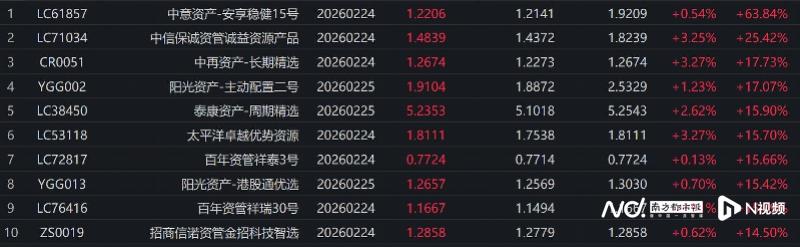
2026年开年,保险资管产品交出了一份亮眼的成绩单。 尽管固收类产品凭借稳健表现成为"压舱石",但真正的业绩亮点却集中在含权类产品上。据同花顺数据显示,截 至2月25日,今年以来区间收益率排名前10位的产品,区间涨幅在14.50%至63.84%之间,其中权益类产品占据一 半以上。上榜机构包括中信保诚资管、阳光资产、泰康资产等。 Wind数据显示,截至2月24日,今年以来已披露最新净值的1602只保险资管产品中,实现区间正收益的产品占比 高达93.2%,其中近20只权益类产品收益率突破10%。在固收收益率持续承压的背景下,权益类资产正成为保险资 管机构增厚收益的关键抓手。 多位业内专家在接受采访时指出,这一"开门红"并非偶然,而是低利率环境倒逼、监管政策引导、资本市场回暖 多重因素共振的结果,更折射出低利率时代下,保险资金这一"耐心资本"正加速从"稳健防御"向"价值进攻"转变 的配置逻辑。 谁最赚钱、谁在掉队? 固收托底,含权类成亮点 近年来,保险资管公司所管理的资金是险资重要组成部分,在支持资本市场和稳定经济方面,正逐渐成为一股不 可忽视的力量。 记者留意到,今年以来,保险资管产品业绩呈现鲜明的结构性特征。W ...

存银行不如买理财!2025年理财规模暴增11%,这波操作你看懂了吗
Sou Hu Cai Jing· 2026-02-26 01:58
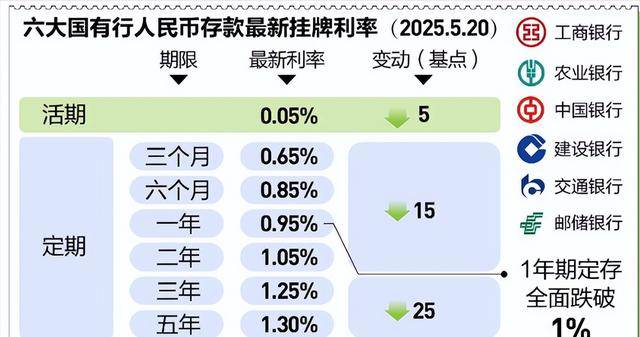
26年开年,存款利率普遍跌破1%了,这事儿去年就有风声,今年更严重了。 老百姓也不傻,存款利息这么低,谁还死守着银行? 聊个数据,2025年末银行理财市场规模突破33.29万亿元,比年初涨了11.15%,创了历史新高。 这是什么意思呢?存款不如理财了,当然老百姓也不是一股脑的进入股市这种高风险行业,而是开始在 银行内买理财产品。这量级是很大的,一年时间里新增个人投资者1769万个,相当于近1800万人把到期 的存款转投了理财产品。 去年开始,工商银行、农业银行这些国有大行的1个月、3个月期大额存单利率直接降到0.9%,等到翻 过年,以前一直用比较高的利息来吸存的中小银行,也绷不住了。比如云南腾冲农商行、隆阳农商行的 3个月期大额存单也跌进0字头。 曾经得抢才能买到的大额存单,现在不光收益缩水,品种还越来越少。 咋回事呢? 说白了就是银行自己撑不住了。2025年商业银行平均净息差降到1.42%,国有大行更惨,只有1.31%, 都快碰到监管红线了。 贷款那头因为要支持实体经济,利率一个劲儿往下降,存款这头成本又降不下来,银行两头挤压,只能 拿大额存单开刀。再加上监管也在引导银行降负债成本,所以咱们就开始看到了「短 ...
利率2.5%→1.75%,他的养老钱换了“新篮子”
Jing Ji Guan Cha Wang· 2026-02-20 01:32
Core Viewpoint - The article highlights the resurgence of participating insurance products, particularly in a low-interest-rate environment, as families seek options that provide both guaranteed returns and potential dividends [5][10]. Group 1: Market Dynamics - In July 2025, the insurance industry association reported a standard life insurance product interest rate of 1.99%, prompting a wave of announcements regarding interest rate reductions for various insurance products [3]. - Major insurance companies adjusted their maximum interest rates, with standard life insurance products dropping from 2.50% to 2%, and participating insurance products from 2% to 1.75% [3]. - The decline in interest rates has led to a renewed interest in participating insurance as a tool to hedge against low rates, allowing policyholders to benefit from potential excess returns [3][4]. Group 2: Product Features - Participating insurance offers two types of returns: guaranteed returns based on the predetermined interest rate and excess returns through dividends [6]. - Insurance companies are required to distribute at least 70% of their surplus earnings to policyholders, which can vary based on the company's profitability [6]. - The structure of participating insurance, with a guaranteed minimum return and potential for dividends, appeals to consumers facing uncertainty in business and declining interest rates [4][6]. Group 3: Historical Context - The first surge of participating insurance in China occurred in the late 1990s following a series of interest rate cuts, with the introduction of the first participating insurance product in 2000 [9]. - After 2013, the rise of traditional insurance products with higher guaranteed rates led to a decline in participating insurance sales, but recent low-interest trends have prompted a strategic shift back to these products [9][11]. - As of 2026, participating insurance is becoming a key focus for insurance companies, especially as consumer demand for stable investment options increases [11]. Group 4: Consumer Sentiment - Initial hesitations from consumers regarding participating insurance stemmed from past complaints about unmet dividend expectations and sales misrepresentations [10]. - Regulatory measures have been implemented to ensure clearer communication regarding the benefits and risks associated with participating insurance products [10]. - The current market environment, characterized by low interest rates and a shift in consumer investment preferences, is creating new opportunities for participating insurance products [11].

美联储降息预期延后至7月 低利率下国内非银存款占比达10.6% 各行业迎结构性机会
Sou Hu Cai Jing· 2026-02-12 03:55
Group 1 - The global market is experiencing significant changes in asset allocation logic and industry dynamics due to the ongoing low interest rate environment and fluctuating expectations regarding the Federal Reserve's interest rate cuts [1] - In January, the U.S. non-farm payrolls increased by 130,000, exceeding market expectations, which led traders to push back the anticipated rate cut to July [1] - The low interest rate environment is accelerating the financialization of residents' asset allocation, with a shift from low-risk assets like cash and deposits to equity assets in the U.S. [2] Group 2 - The banking sector is seeing a decline in the average interest rate for new loans, which has dropped to 3.15% as of December 2025, with expectations of stabilization at low levels [2] - The express delivery sector shows strong demand resilience, with industry leader Zhongtong Express enhancing shareholder returns through low-interest convertible bonds [2] - The construction and decoration industry is benefiting from improved bond issuance data, with increased financing for infrastructure projects supported by special bonds and state-owned enterprise orders remaining stable [3] Group 3 - The precious metals sector, particularly gold, is viewed positively in the medium to long term due to macroeconomic uncertainties and a weakening U.S. dollar [3] - The copper market is supported by a tight supply of copper concentrate and gradually recovering domestic demand [3] - The aluminum industry is characterized by a strong demand against weak supply, with clear expectations for price increases [3]
财富管理系列研究之五:居民资产再配置:低利率环境下的美日经验启示
Ping An Securities· 2026-02-08 11:49
Investment Rating - The report maintains an "Outperform" rating for the industry [1] Core Insights - The ongoing low interest rate environment is prompting a reallocation of household assets, with a notable trend of "deposit migration" observed. By the end of December, the proportion of non-bank deposits reached 10.6%, up 1.2 percentage points from the beginning of the year, while public fund assets grew by 14.9% year-on-year [2][8] - The report draws insights from the experiences of the US and Japan regarding household wealth allocation under low interest rates, suggesting potential paths for the evolution of domestic asset allocation structures [2][8] Summary by Sections 1. Low Interest Rate Environment and Asset Reallocation - The report highlights the sustained low interest rate environment, with both the 1-year and 5-year Loan Prime Rates (LPR) at historical lows. The downward trend in deposit rates is expected to continue, influencing household asset reallocation [6][8] 2. US Experience: Decline in Low-Risk Assets and Rise in Equity Assets - In the US, the share of low-risk assets has decreased while equity assets have significantly increased. By the end of 2024, equity assets accounted for 51.1% of financial assets, up 17.9 percentage points from 1987 [11][12] - The report notes that during various interest rate cuts, low-risk assets saw a decline in both scale and growth rate, indicating a shift towards higher-risk, higher-return investments [21][25] 3. Japan Experience: Persistent Low-Risk Preference with Slight Increase in Equity Allocation - Japan has maintained a low-risk preference in asset allocation, with equity assets slightly increasing to 17.1% by the end of 2023, a modest rise of 4.3 percentage points since 1987. However, cash and deposits still dominate the asset mix [3][5] - The report emphasizes that despite low interest rates, there has not been a significant outflow of deposits in Japan, indicating a different response to low rates compared to the US [3][5] 4. Summary: Impact of Low Interest Rates on Asset Allocation Behavior - The report concludes that low interest rates influence household asset allocation behaviors, with macroeconomic conditions playing a crucial role in determining the flow and scale of funds. The shift from low-risk to higher-return assets is a common trend observed in both the US and Japan [2][3]
Markets slip in early trade as IT stocks drag; FIIs turn net buyers
BusinessLine· 2026-02-05 04:39
Benchmark indices opened lower on Thursday morning, weighed down by weakness in information technology stocks, though select consumption-driven stocks provided support. The BSE Sensex, which closed at ₹83,817.69 in the previous session, opened at ₹83,757.54 and declined to ₹83,381.35 by 9:50 am, down 436.34 points or 0.52 per cent. The NSE Nifty 50 fell to ₹25,639.85 from its previous close of ₹25,776.00, losing 136.15 points or 0.53 per cent.“There are a few near-term market trends that are significant. Th ...

33万亿元银行理财市场大幅增配存款类资产
Jing Ji Wang· 2026-02-02 02:27
2025年,在存款利率下行、居民财富管理需求升级的背景下,理财市场规模显著增长,其大类资产配置 也出现新动向:大幅增配存款类资产以平抑波动。 展望2026年,受访市场机构和专家建议理财公司优化产品分层与资产配置,以多资产、多策略寻求收益 增强,提升对公募基金等工具产品的配置强度,并审慎增加权益资产暴露,以应对低利率环境下的收益 挑战。 2025年资本市场回暖,理财产品也逐渐加大含权产品布局。数据显示,截至三季度末,理财十大重仓公 募基金中,股票型基金、混合型基金占比较季初分别提升3个、0.4个百分点至4.1%、1.8%,债券型基金 持仓较季初下降5.2个百分点至81.8%,配置占比呈现明显的"跷跷板"效应。 "权益类资产配置下降主要是受到老产品整改扰动,如果处置老产品涉及相关权益类资产,很可能导致 总规模下降,这与股票持仓不直接相关。"王一峰称。 对公募基金仍将保持较高配置强度 33万亿元银行理财市场大幅增配存款类资产 近日,银行业理财登记托管中心发布的《中国银行业理财市场年度报告(2025年)》(以下简称《年度 报告》)显示,截至2025年末,银行理财市场存续规模为33.29万亿元,较年初增长11.15%。 ...