情绪价值

Search documents
段永平最新“改口”,密集谈论泡泡玛特:如何看待市场对财报用脚投票和王宁的“踩刹车”……
聪明投资者· 2026-03-31 07:19
Core Viewpoint - Pop Mart, the leading player in the trendy toy market, is facing significant market volatility despite reporting impressive financial results, leading to a reevaluation of its investment potential by notable investors like Duan Yongping [2][4][6]. Financial Performance - In its latest annual report, Pop Mart achieved a revenue of 37.12 billion yuan, representing a year-on-year growth of 184.7%, and an adjusted net profit of 13.08 billion yuan, up 284.5% [2]. - The LABUBU character alone contributed 14.16 billion yuan to revenue, marking a staggering growth of 365.7% and entering the "billion club" for trendy toy IPs [3]. Market Reaction - Following the financial report, Pop Mart's stock price plummeted by 22.51% on the announcement day and fell over 10% the next day, totaling a decline of more than 30% and erasing over 250 billion HKD in market value [5][6]. - The market's reaction is attributed to concerns over Pop Mart's heavy reliance on LABUBU, which accounted for 38.1% of revenue in 2025, up from 23.3% in 2024 [10]. Growth Guidance - The company's growth guidance for 2026 is set at "not less than 20%", which is perceived as a significant slowdown compared to previous years of triple-digit growth [11]. - This cautious outlook has raised doubts about the sustainability of growth driven by a single blockbuster product [11][12]. Investor Sentiment - Duan Yongping's recent change in stance towards Pop Mart, from skepticism to reconsideration, highlights a potential shift in investor sentiment amidst the company's current challenges [13][14]. - His acknowledgment of Pop Mart's ability to create "emotional value" products reflects a deeper understanding of the company's long-term potential [14]. Strategic Vision - Pop Mart's ambition extends beyond being a "blind box factory"; it aims to position itself as an IP operation company, focusing on integrating its characters into everyday life [16][25]. - The company plans to diversify its offerings by launching IP-based small appliances and expanding into content creation, including films and theme parks, to enhance brand engagement [25][26][28]. Long-term Perspective - The founder, Wang Ning, emphasizes the importance of respecting time and operational management, advocating for a long-term approach to business growth [29][31]. - Despite current market fears, the company maintains that it can continue to grow even without LABUBU, as other IPs have also shown significant revenue contributions [38]. Conclusion - Pop Mart's current strategy of slowing down for organizational refinement is not an exit from the market but a preparation for sustained future growth [39].

人生建议:千万不要有嘴甜羞耻症
洞见· 2026-03-29 12:38
Core Viewpoint - The article emphasizes the importance of expressing appreciation and compliments in social interactions, suggesting that being "sweet-tongued" is a valuable social skill that can lead to better relationships and opportunities [6][10][11]. Group 1 - The author reflects on a personal struggle with expressing compliments, realizing that this hesitation can lead to missed opportunities [4][5]. - In modern society, expressing praise is seen as a form of emotional value and a low-cost way to enhance social connections [6][7]. - The article provides examples of individuals who have benefited from being complimentary, illustrating how kind words can improve interpersonal relationships and lead to personal growth [10][19]. Group 2 - The article discusses a principle that stating good things can win over a significant portion of people, highlighting the effectiveness of positive communication in social settings [13]. - It shares a historical anecdote about a tailor whose business flourished after he learned to communicate positively with customers, demonstrating that effective communication can be more impactful than technical skills alone [14][15]. - The author argues that being sweet-tongued is a form of high-level productivity, as it fosters trust and goodwill, which can translate into unexpected opportunities [19][20]. Group 3 - The article offers practical tips for giving compliments, such as focusing on specific details rather than general praise, which shows genuine observation and appreciation [24][26]. - It suggests complimenting efforts rather than inherent talents to acknowledge the hard work of others [26][28]. - The author emphasizes the importance of sincerity in compliments, stating that genuine appreciation is more impactful than forced flattery [30][32].

「心价比」成为共识之后,生活服务正在发生什么
36氪· 2026-03-11 14:05
Core Insights - The article emphasizes a shift in consumer behavior towards a focus on emotional value and experience, termed "heart-price ratio," as consumers become more discerning in their spending decisions [1][4][5] Group 1: Consumer Behavior Changes - Consumers are not reducing spending but reallocating it towards experiences that provide emotional returns and memorable interactions [7][11] - Emotional value is becoming a new necessity, with consumers prioritizing experiences that enhance happiness and social connections [7][9] - The "heart-price ratio" is now central to consumer decision-making, as price alone no longer guarantees a competitive advantage [1][5] Group 2: Industry Trends - The report identifies three main sectors—dining, travel, and retail—experiencing a "centripetal evolution" where consumption is shifting inward towards emotional and experiential aspects [13][29] - In the dining sector, consumers seek not just food but an overall experience that aligns with their emotional state, leading to a rise in demand for unique atmospheres and personalized service [14][15] - The travel industry is moving from standardized services to immersive experiences, with consumers valuing participation and emotional engagement over mere sightseeing [23][25] Group 3: Retail and Service Sector Dynamics - In retail, the definition of "value" is evolving beyond low prices to include trust, interaction, and cultural identity, as consumers seek deeper connections with brands [30][41] - Successful retail strategies now involve building trust through authentic content and community engagement, rather than just price competition [33][34] - The integration of online content and offline experiences is crucial, as businesses leverage social media to enhance customer relationships and drive sales [42][50] Group 4: Business Growth and Strategy - The report highlights significant growth in the Douyin (TikTok) life service platform, with a 59% increase in GMV and a 22% rise in user numbers, indicating a shift towards sustainable growth through emotional engagement [43][45] - Businesses are encouraged to adapt their operational logic to focus on content expression and relationship building, rather than traditional metrics of location and product [49][56] - The ability to convert emotional and experiential value into scalable business opportunities is becoming a key differentiator in the competitive landscape [57][58]

团播上瘾的女孩们,在直播间购买明码标价的「爱情」
后浪研究所· 2026-03-09 07:15
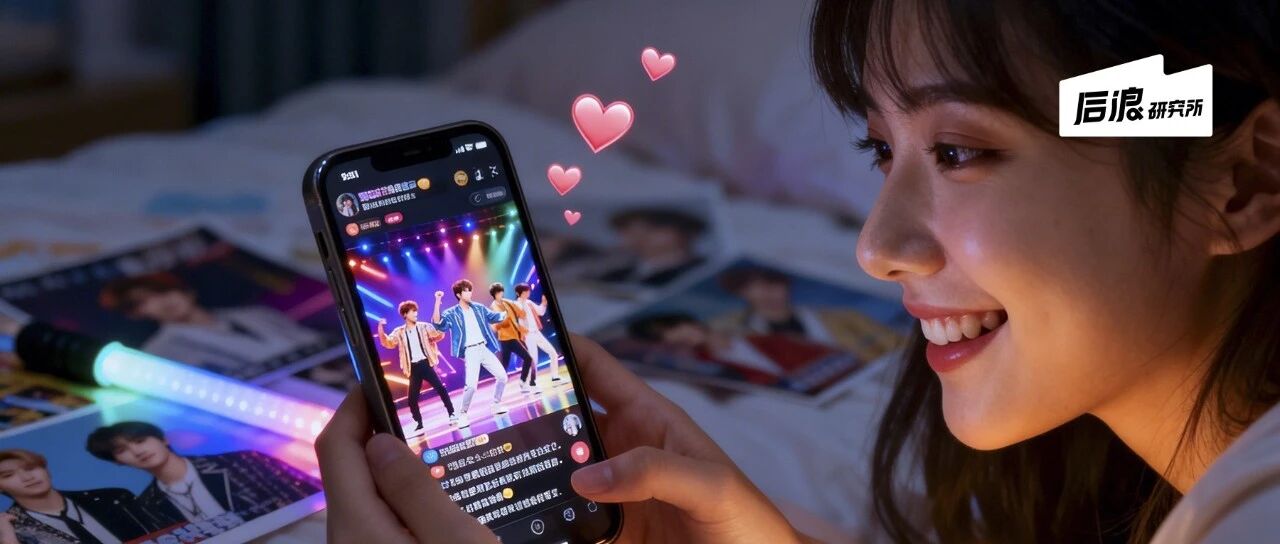
Core Viewpoint - The article explores the addictive nature of group broadcasting (团播) and its emotional implications for fans, particularly young women who engage in financial support for their favorite streamers, leading to a cycle of dependency and emotional investment [3][10][20]. Group 1: The Nature of Group Broadcasting - Group broadcasting has become a popular form of live streaming, characterized by high-value, attractive hosts performing together, with audience interaction determining their performance dynamics [3][6]. - The primary revenue for streamers comes from audience donations, known as "票" (tickets), which can unlock special interactions and rewards from the hosts [6][10]. Group 2: Emotional Investment and Addiction - Fans often develop a deep emotional connection with streamers, leading to compulsive spending on gifts and donations, sometimes exceeding tens of thousands of yuan [6][7]. - The emotional value derived from these interactions is often perceived as a quick and tangible reward compared to traditional fan culture, making it an attractive option for many [10][12]. Group 3: The Cycle of Dependency - As fans invest more emotionally and financially, they find it increasingly difficult to detach from the streamers, leading to unhealthy patterns of behavior and emotional distress [9][13]. - The relationship dynamics often resemble those of traditional fan culture but are intensified by the direct and personal interactions facilitated by the streaming platform [10][12]. Group 4: The Business of Addiction and Recovery - The phenomenon of addiction to group broadcasting has led to the emergence of "group broadcasting detox" services, where individuals share their experiences and seek support to break free from their compulsive behaviors [20][22]. - The industry has capitalized on this addiction, with some services offering emotional counseling and support for those looking to disengage from their financial commitments to streamers [20][22].
尚界Z7登场:年轻人要的,从来不只是快和帅
36氪· 2026-03-07 13:35
Core Insights - The article emphasizes that technology is a highlight while emotions are the essence in the automotive market targeting young consumers [2] - Young consumers are moving beyond merely seeking novelty in hardware to a more rational "value-for-money" era, where technology, personalization, brand strength, and cost are critical in their purchasing decisions [3] Group 1: Product Launch and Market Positioning - The launch of the Shangjie Z7 is timely, targeting the young market with its stylish design and vibrant color options, appealing to their pursuit of individuality and aesthetics [4] - Shangjie is not just introducing a single model but is simultaneously launching both the Z7 coupe and the Z7T shooting brake, addressing the diverse needs of young consumers for both style and practicality [5][7] - This dual-launch strategy is rare in the industry and effectively meets the complex demands of young consumers who desire both personality and utility in their vehicles [7][8] Group 2: Technological Advancements - The Shangjie Z7 and Z7T inherit advanced technologies from the Hongmeng Intelligent Driving family, including the latest laser radar system, which significantly enhances driving assistance capabilities [11] - The recent technology update event showcased multiple core technologies set to be released by Hongmeng Intelligent Driving by 2026, indicating that the Shangjie Z7 is just the beginning of a series of innovative products [13] - The vehicles will utilize the new Tuling platform, which incorporates AI and algorithmic optimizations to enhance chassis performance, demonstrating the brand's commitment to advanced technology [14] Group 3: Understanding Young Consumers - The younger generation is seen as the defining force in the smart electric era, with their preferences for technology being a crucial factor in market competition [10] - The article highlights that true emotional value goes beyond superficial features; it must resonate with young consumers' deeper desires for freedom, relaxation, and a sense of belonging [18][20] - Shangjie Z7's design includes features like the "inspiration window" that not only serves a functional purpose but also addresses emotional needs, showcasing a unique understanding of young consumers [21] Group 4: Emotional Engagement and Market Strategy - The article discusses the importance of emotional engagement, noting that young consumers appreciate a sense of ceremony and personalized experiences rather than generic features [22][26] - Shangjie aims to create a "transparent presence" for its vehicles, where technology supports emotional expression rather than overshadowing it, indicating a shift in competitive focus from mere technological superiority to genuine consumer understanding [26] - The brand's strategy is to establish a strong emotional connection with young consumers, which is essential for long-term loyalty and market presence [30]

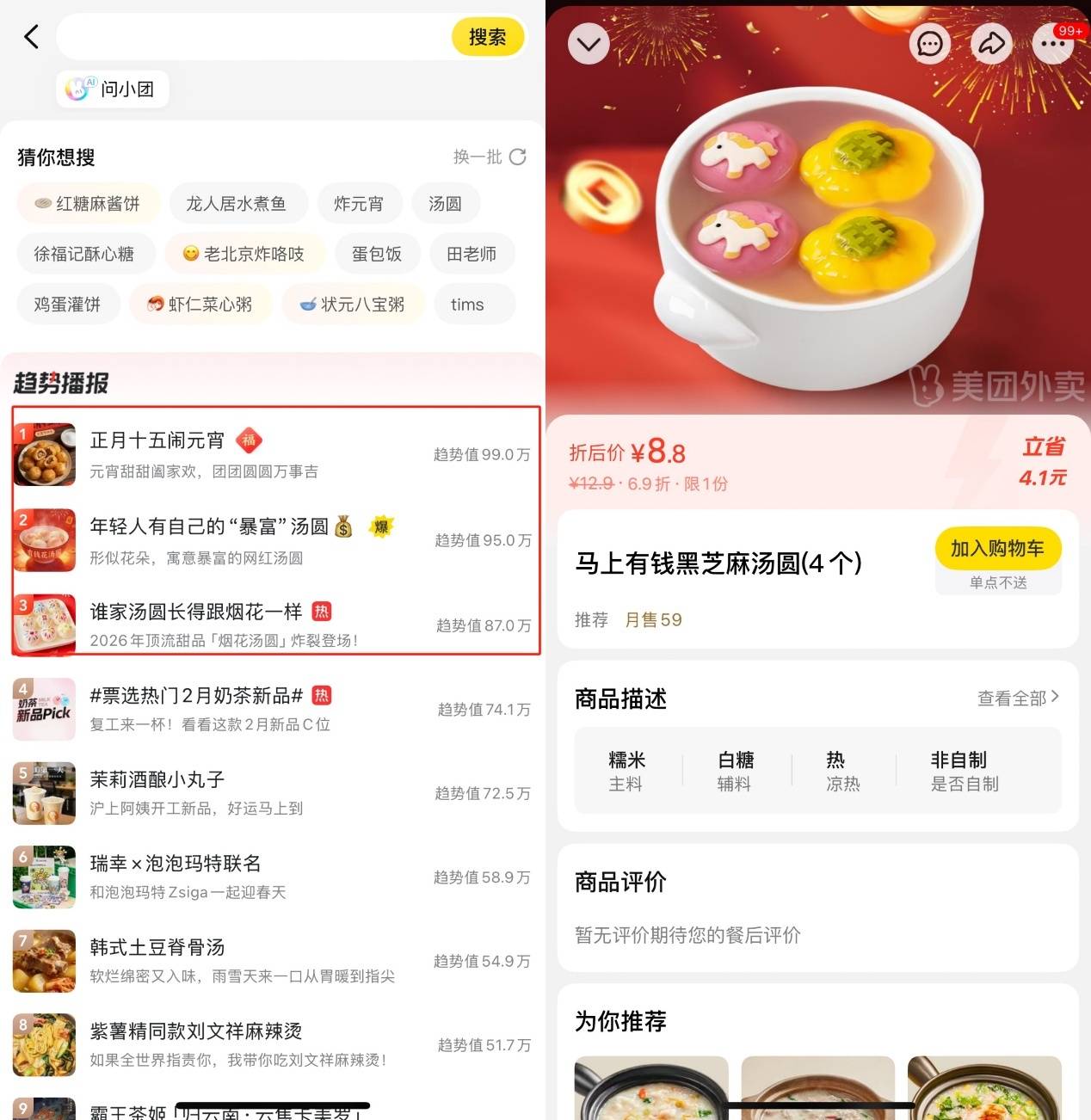
元宵点燃复工第一波消费热潮:超10万人在美团搜索“有钱花汤圆”
Sou Hu Cai Jing· 2026-03-04 06:49
Core Insights - The Lantern Festival has sparked a significant consumption wave post-resumption of work, with Meituan reporting a notable increase in sales of "wealthy" tangyuan [1][4] - Young consumers are increasingly valuing "emotional value" in their purchases, as evidenced by the rising popularity of creative tangyuan that express good fortune [1][4] - The trend of "flash purchase" for tangyuan has become mainstream, with a 470% increase in related product searches on Meituan compared to the previous week [3][4] Group 1 - Sales of "wealthy" tangyuan surged by 168%, with the search volume for "wealthy flower tangyuan" exceeding 100,000 [1][4] - The number of merchants selling tangyuan-related products on Meituan increased by 85% in the past week [3][4] - The popularity of tangyuan is complemented by a growing trend of "dessertification," with a threefold increase in comments for "Lantern Festival cakes" on Meituan [4] Group 2 - The Lantern Festival coincides with a rare lunar eclipse, enhancing the appeal of attending lantern displays, which are expected to attract large crowds [4][6] - The search heat for local lantern displays has increased significantly, with the top five displays including the Zigong International Dinosaur Lantern Festival and the Yuanmingyuan New Year Lantern Festival [6][7] - The Lantern Festival has become a pivotal event for boosting consumer confidence and fulfilling the public's desire for a better life, marking a successful conclusion to the Lunar New Year celebrations [7]

未来最值钱的不是商品,而是“人情味”!
东京烘焙职业人· 2026-03-01 08:33
Core Viewpoint - The article emphasizes that the restaurant industry is undergoing a fundamental shift where consumer values are transitioning from "functional satisfaction" to "emotional resonance," making "human touch" a critical asset in future business strategies [3][4][5]. Group 1: Value of Relationships - The consumption logic is shifting from "buying products" to "buying relationships," indicating a move towards relationship-based consumption [7][14]. - Emotional value has surpassed taste and price as the primary factor attracting consumers, with key motivations being pleasure, belonging, and feeling valued [11][12]. - Consumers now seek experiences that provide feelings of care and attention, transforming the nature of dining from mere transactions to meaningful interactions [13][14]. Group 2: Human Touch as Trust Currency - "Human touch" is not merely a marketing tactic but a form of trust currency in the current era, defined by three core dimensions: transparency, companionship, and presence [15][30]. - Transparency builds trust, as seen in practices like open kitchens and visible ingredient sourcing, which foster consumer confidence [15][26]. - Companionship is illustrated by establishments that become anchors in consumers' lives, providing a sense of warmth and familiarity [19][20]. - The experience of presence, such as home-cooked meals, offers unique emotional value that standardized services cannot replicate [21][22]. Group 3: Humanistic Care - The article highlights that true care in business goes beyond standard service protocols, focusing on genuine concern for customers [30][40]. - Examples from successful businesses show that investing in customer experience leads to loyalty and lower return rates, as customers feel respected and valued [34][37]. - The importance of employee well-being is emphasized, as happy employees are more likely to provide excellent service, creating a positive feedback loop [45][48]. Group 4: Long-term Commitment - The article advocates for a long-term approach in the restaurant industry, contrasting with the trend of rapid expansion and short-term gains [49][51]. - Building trust takes time, and businesses should focus on quality and detail rather than speed [51][52]. - The narrative concludes that the future of the restaurant industry lies in blending "smoky warmth" with "human touch," returning to the essence of dining as a means of comfort and connection [55][56][57].
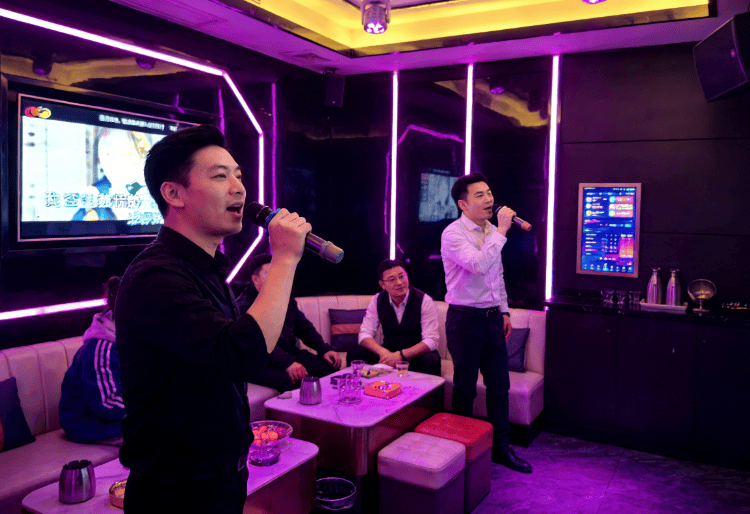
长沙、成都夜经济爆火背后:Z世代抛弃KTV,还是KTV没进化?
Sou Hu Cai Jing· 2026-02-28 03:19
Core Insights - The entertainment market is experiencing a significant shift, with the Z generation (born 1995-2009) preferring emotional value over traditional singing experiences, leading to a decline in KTV popularity among younger consumers [2][6] - The closure of major KTV chains like Haoledi highlights the disconnect between traditional entertainment models and the preferences of new generations [1][2] Group 1: Market Trends - Changsha ranks among the top ten cities in China for leisure consumption, with KTV transaction volume increasing by over 70% year-on-year, making it one of the fastest-growing cities in this sector [1] - The proportion of young consumers (ages 18-35) viewing KTV as a primary entertainment choice has dropped by more than half over the past five years [1] Group 2: Consumer Behavior - Over 90% of the Z generation recognizes the importance of emotional value, with nearly 60% willing to pay for it directly [2] - Young consumers are increasingly drawn to alternative entertainment options such as Livehouse, escape rooms, and mini KTVs, which offer more engaging experiences compared to traditional KTVs [2] Group 3: Industry Transformation - The transformation of the KTV industry requires a comprehensive overhaul rather than simple renovations, driven by digital solutions from companies like Juhai Technology [2][4] - Juhai Technology's integrated solutions, including IoT control systems and AI data engines, are redefining the operational standards of KTVs, enabling real-time updates to song libraries and personalized experiences based on user data [3][4] Group 4: Future Opportunities - The market for KTV and immersive entertainment spaces in China is projected to exceed 60 billion yuan, with over 50% penetration of smart systems in leading chain brands [4] - Successful transformation of KTV venues will see a resurgence of the under-30 demographic, potentially reaching over 70% of the customer base [4] Group 5: Challenges in Traditional KTV - Traditional KTVs face several pain points, including slow song library updates, social pressure from the performance format, cumbersome processes, and a lack of shareable experiences [5] - The outdated operational models, rather than the Z generation itself, are the primary factors leading to the decline of traditional KTVs [6]
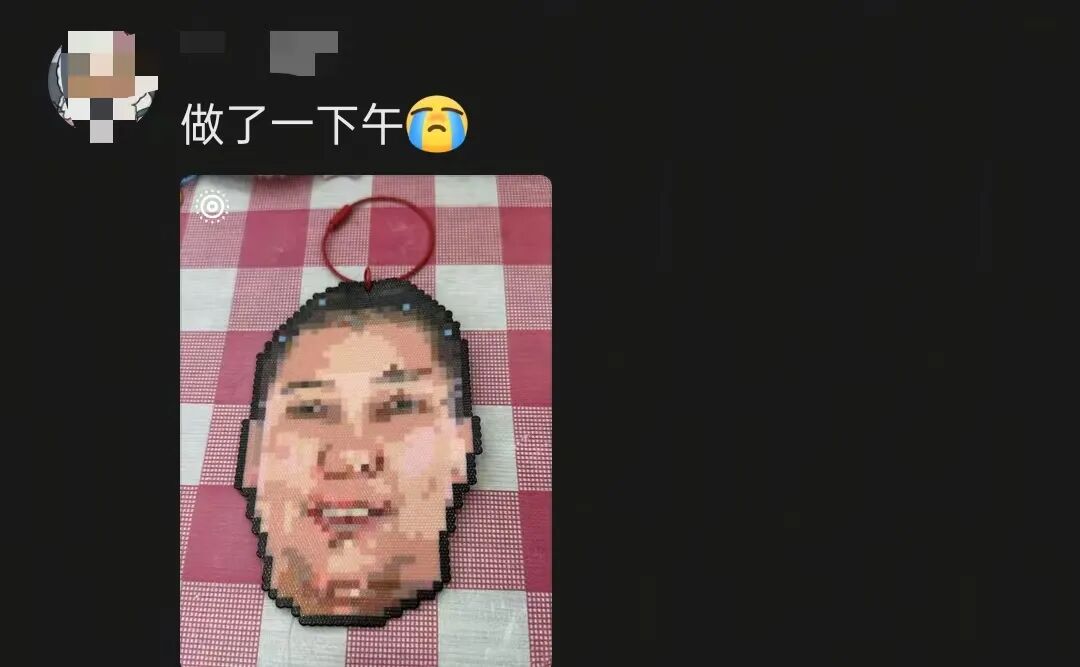
00后的塑料“十字绣”,赚走中国女人10个亿
3 6 Ke· 2026-02-27 09:33
Core Insights - The article discusses the resurgence of "bead art" (拼豆), a craft involving colorful plastic beads, which has gained immense popularity among younger generations, particularly the Z generation, leading to significant market growth and new business opportunities [9][12][43]. Group 1: Market Trends - The demand for bead art has skyrocketed, with a reported 9018% year-on-year increase in group purchases among the Z generation on Douyin, and a 500% surge in search volume on Taobao [9][43]. - The bead art market is projected to reach nearly 1 billion yuan by 2026, indicating a strong growth trajectory [43]. - Numerous bead art stores have emerged, with some generating substantial revenue, such as a DIY store in Jinan achieving monthly sales exceeding 10,000 yuan [45]. Group 2: Consumer Behavior - The appeal of bead art lies in its ability to provide emotional value and a sense of achievement, allowing participants to escape anxiety and engage in a flow state [36][57]. - The craft has transformed from a niche hobby to a mainstream trend, driven by social media influencers and fandom culture, where fans replicate items associated with their idols [12][16]. - The community aspect of bead art, where players share their creations online and engage in social interactions, enhances its attractiveness to younger consumers [56]. Group 3: Industry Dynamics - The production and supply chain for bead art materials have expanded significantly, with factories in Yiwu reporting doubled orders and a surge in demand for related products [41]. - The industry has seen the emergence of various tools and accessories, with some enthusiasts investing thousands of yuan in equipment and materials [29]. - The article highlights a shift in consumer focus from merely purchasing products to valuing the experience and community surrounding bead art [52][56].
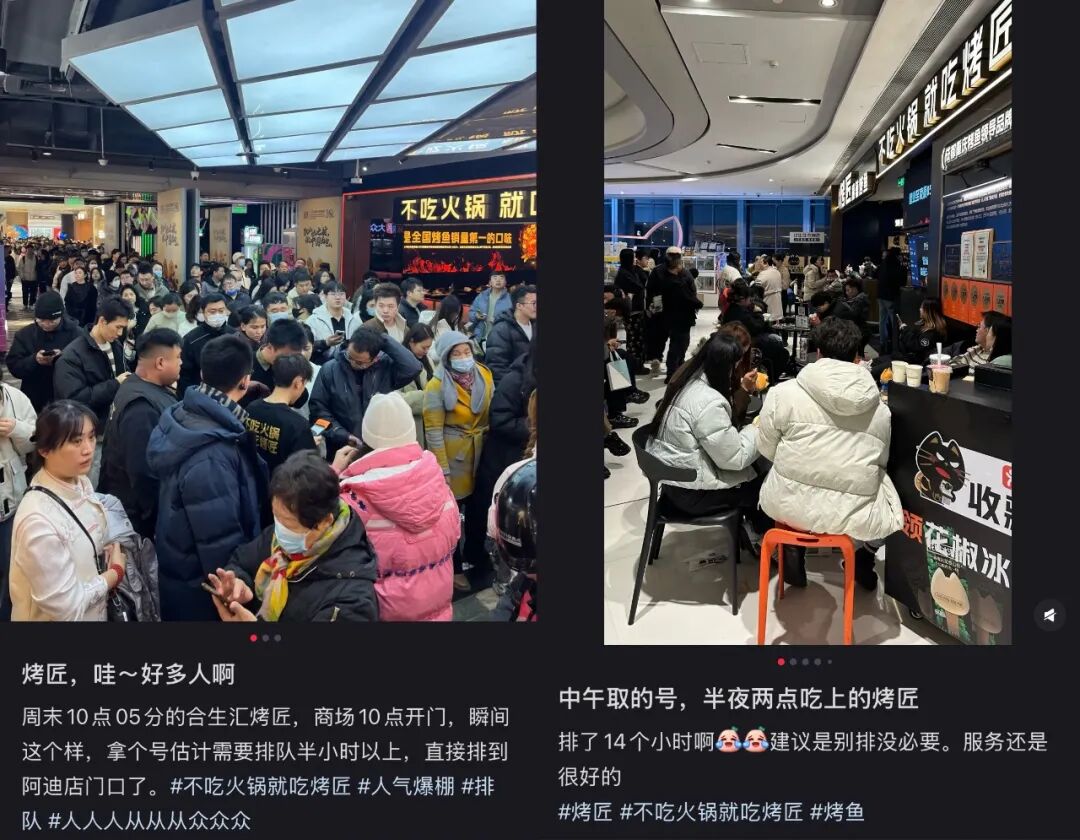
“中国版寿司郎”,排队15个小时等条鱼
3 6 Ke· 2026-02-25 10:28
Core Insights - The brand "Kaojiang" has generated significant consumer interest, with long queues at its Shanghai store, indicating a strong market presence and consumer demand [1][3][39] - Despite being a traditional product, Kaojiang's sales performance has been exceptional, with single-store revenue growth of 9.3%, 27.7%, and 15.6% from 2022 to mid-2024 [8] - The brand has successfully targeted the younger generation, creating a unique dining experience that emphasizes emotional value and social interaction [23][30] Consumer Behavior - On the opening day of the Shanghai store, over 6,300 tables were registered, with some customers waiting until 5 AM to dine [3][39] - The average spending per person at Kaojiang is higher than many competitors, with prices around 122 yuan in Shanghai and 114-116 yuan in Beijing, compared to the industry average of 80 yuan [9][10] - The brand has cultivated a "fan circle," with consumers actively promoting the restaurant on social media platforms, indicating strong brand loyalty [21][22] Market Position - Kaojiang operates in a highly competitive market, with a 48.9% closure rate in the restaurant industry, yet it has managed to thrive [7] - The brand's focus on classic flavors, particularly its signature spicy grilled fish, has allowed it to maintain a strong customer base despite the crowded market [12][13] - Kaojiang's innovative approach to dining, including late-night service and a focus on creating a comfortable atmosphere, has differentiated it from traditional competitors like Haidilao [28][29] Challenges and Risks - The restaurant industry is experiencing volatility, with market size fluctuating significantly from 2019 to 2024, indicating potential challenges ahead for Kaojiang [37] - Consumer feedback has highlighted issues related to food safety and service quality, which could impact the brand's reputation if not addressed [38] - The sustainability of Kaojiang's emotional value proposition is uncertain, as consumer preferences may shift over time, posing a risk to long-term customer retention [34][40]