端到端模型

Search documents
强化学习,正在决定智能驾驶的上限
3 6 Ke· 2026-02-10 04:45
Core Insights - The development of intelligent driving is not a linear technological curve but a result of the interplay between various technical paradigms, engineering constraints, and real-world scenarios [1] - As the industry moves beyond the proof-of-concept stage, single technical terms can no longer explain the real differences in capabilities [2] - Factors such as computing power, data quality, system architecture, and engineering stability are determining the upper and lower limits of intelligent driving [3] Group 1: Evolution of Learning Techniques - Recent discussions in intelligent driving technology reveal a trend where various paths, such as end-to-end, VLA, and world models, converge on the concept of reinforcement learning [5] - Reinforcement learning is transitioning from a "technical option" to a "mandatory option" in the industry [7] - The emergence of products like AlphaGo and ChatGPT has highlighted the effectiveness of allowing AI to learn through trial and error as the fastest evolutionary method [8][9] Group 2: Learning Methodologies - Understanding reinforcement learning requires a grasp of imitation learning, which was previously favored in intelligent driving [11] - Imitation learning allows AI to learn from human driving data but has limitations, such as inheriting bad habits and struggling with unfamiliar situations [14][16] - Reinforcement learning, as demonstrated by AlphaGo, allows AI to explore new strategies through self-play, leading to superior performance beyond human intuition [17] Group 3: Reinforcement Learning Mechanisms - Reinforcement learning operates on a trial-and-error basis, where the model learns to drive well through a cycle of feedback [26] - The design of reward functions is crucial, as it translates driving performance into quantifiable scores [30] - Balancing conflicting objectives, such as safety versus efficiency, is essential in reward function design [32] Group 4: World Models and Advanced Learning - The integration of world models with reinforcement learning enhances the training environment, allowing AI to simulate real-world scenarios [42][49] - High-fidelity virtual environments enable AI to consider long-term consequences of actions, improving decision-making [50] - The coupling of world models and reinforcement learning creates a feedback loop that accelerates model iteration and performance [52] Group 5: Industry Trends and Future Directions - The importance of data is being redefined, with a shift towards the ability to model the world rather than just relying on raw data [56] - Companies are focusing on enhancing the "modeling capacity" of their systems, which is crucial for intelligent driving [60] - The evolution of intelligent driving systems is moving towards a stage where AI can independently understand environments and refine strategies, marking a significant advancement in the industry [62]

量化投资新范式:中欧基金的AI进化密码
Xin Lang Cai Jing· 2026-02-02 03:27
2024年10月,在美国金融AI实验室Nof1主办的Alpha Arena AI交易大赛上,上演了一场引人注目的实盘 测试,主办方选出了市场上最领先的6个大语言模型,让它们真金白银管理了一笔资金。 事实证明,即便是全世界最智能的模型,也不能确保"做好投资这件事"——不同模型跑出的投资收益相 差巨大。那么,问题就来了:这是因为模型本身能力的区别还是其他原因? 在中欧基金量化投资部系统化投资组组长杨柳看来,这个实验是一种极致的尝试,即把大模型直接运用 到最终的投资决策当中,也就是我们常说的"端到端"。但大模型不是万能药,它还不能解决我们所有的 问题。 一.体系进化:从1.0到3.0的量化革命 自2016年推出首只量化产品——中欧数据挖掘混合,中欧基金便开启了"基本面量化"的1.0阶段。其核 心是将深度产业研究与逻辑转化为量化模型,力争前瞻性地捕捉行业拐点。 当时,团队80%的精力用于专家访谈、梳理行业核心逻辑,以研究的广度弥补深度,如同"雷达扫描"一 般,在不同行业中寻找被忽视的机会。 这一阶段的中欧量化已展现出差异化特征。2019年至2021年间,当市场资金集中涌向白酒与新能源赛道 时,中欧的量化模型却关注传统 ...
给机器人造一颗会思考的大脑,白惠源的“反共识”突围
财富FORTUNE· 2026-01-21 13:03
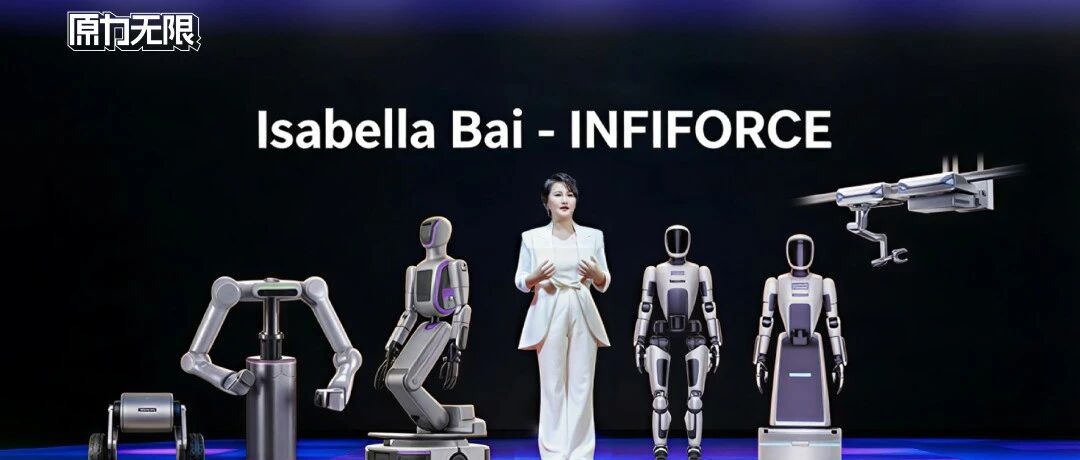
Core Viewpoint - The article emphasizes the need for robots to possess a "thinking" brain that understands the causal relationships of the world, rather than merely focusing on perfecting their physical forms. This perspective is articulated by Bai Huiyuan, the founder and CEO of Infiforce, who argues that the essence of embodied intelligence lies in the brain's ability to perceive and predict the physical world [1][2][3]. Group 1: Industry Context - In 2023, Bai Huiyuan left Alibaba to establish Infiforce amidst a competitive landscape where many companies were focused on hardware advancements, leading to a "body-making" arms race in the robotics industry [2]. - The robotics industry is currently characterized by a fascination with hardware, with companies competing on joint flexibility and human-like movements, while neglecting the cognitive capabilities of the robots [2][3]. - Infiforce aims to break this trend by focusing on developing a "thinking" brain that can adapt to various bodies and understand the physical world, rather than merely enhancing hardware specifications [3][12]. Group 2: Technological Approach - Infiforce's technological strategy involves a continuous learning model called Hyper-VLA combined with a causal world model, which contrasts with the mainstream AI approach that primarily relies on correlation [5][6]. - The existing AI models often depend on vast amounts of data for training, which is not feasible in the physical world, leading to issues of data scarcity and lack of robustness [6]. - Infiforce's approach integrates causal reasoning into its models, allowing robots to understand the implications of their actions, thus enhancing their decision-making capabilities in unfamiliar environments [6]. Group 3: Business Development - In 2025, Infiforce secured over 500 million yuan in commercial orders, signaling a significant milestone in the industry, although these orders are seen more as experimental partnerships rather than the launch of standardized products [8]. - The orders came from leading clients in various sectors, including cultural tourism, research, energy, and smart manufacturing, indicating a willingness to invest in the potential of robotics beyond mere demonstrations [8]. - Infiforce's AstroDroid AD series is transitioning from demonstration to pilot projects, where robots are actively engaging in real-world tasks, such as understanding visitor intentions in museums and performing household chores [8]. Group 4: Vision and Future Aspirations - Bai Huiyuan envisions Infiforce becoming an integral part of the robotics ecosystem, akin to "air" and "water," where the core intelligence of future robots will stem from Infiforce [13]. - The ultimate goal is to create robots that seamlessly integrate into human environments, making their intelligence so advanced that users forget they are interacting with machines [13].
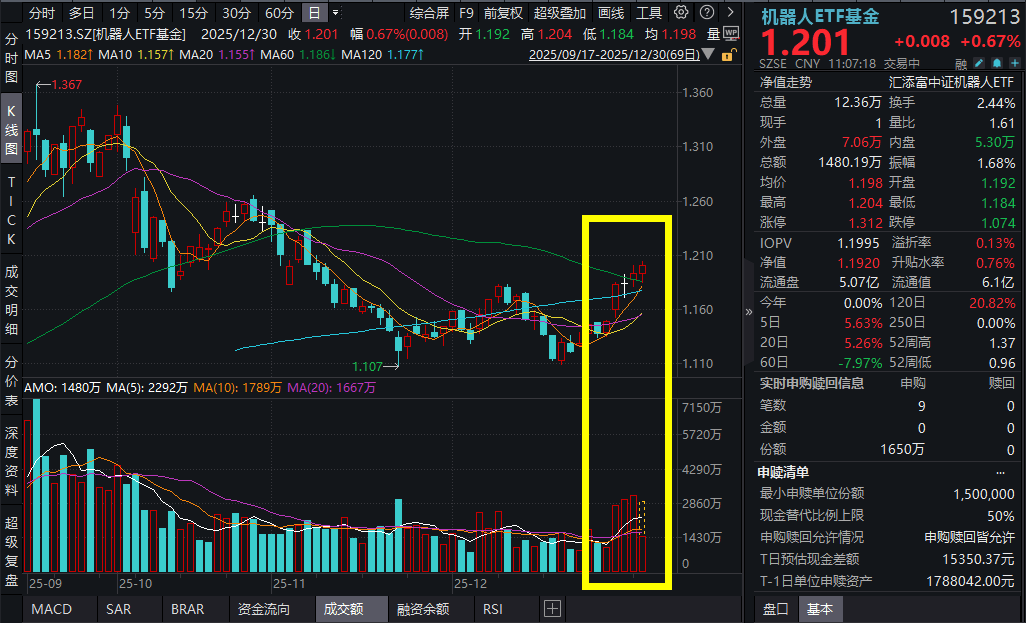
硬科技冲高,机器人行情火热,昊志机电涨超6%,机器人ETF基金(159213)冲击五连阳,连续3日强势吸金超6300万元!人形机器人"黄金十年"启幕?
Sou Hu Cai Jing· 2025-12-30 03:42
Core Viewpoint - The human-shaped robot and embodied intelligence industry is experiencing rapid growth, with the establishment of a standardization committee aimed at addressing the lagging standards and high collaboration costs in the sector [3]. Group 1: Market Performance - The Shanghai Composite Index opened lower but showed signs of recovery, with the Robot ETF Fund (159213) rising by 0.67%, marking a potential five-day winning streak and attracting a net subscription of 20 million yuan [1]. - The Robot ETF Fund has seen strong inflows, accumulating over 63 million yuan in the last three trading days [1]. - The index's constituent stocks exhibited mixed performance, with notable gains from companies like New Times reaching the daily limit and Haoshi Electric rising over 6% [6]. Group 2: Industry Developments - The establishment of the standardization committee for human-shaped robots and embodied intelligence is a significant step towards enhancing high-quality standard supply and promoting the maturation and application of related technologies [3]. - The committee will focus on developing industry standards across various domains, including common foundational technologies, components, systems, and safety, to guide healthy industry development [3]. Group 3: Future Outlook - The industry is expected to transition from "0-1" to "1-10" by 2025, focusing on technology convergence, with a shift towards mass production and commercialization anticipated in 2026 [4]. - Key milestones for 2026 include the completion of hardware platform design for Tesla's Gen2.5 robot and the initiation of large-scale manufacturing by August [8]. - The human-shaped robot sector is projected to experience a significant upward trend, driven by policy support and industry advancements, with potential IPOs for leading domestic companies in the first half of 2026 [8][10]. Group 4: Technological and Policy Insights - The evolution of models and hardware in the robotics sector is crucial, with real data becoming a core productivity driver and the VLA architecture expected to dominate applications by 2025 [9]. - The transition from industrial robots to general-purpose robots is underway, with applications expanding beyond data collection and education to include industrial and logistics sectors [9]. - Global policies are increasingly recognizing the importance of general-purpose robots, with major economies elevating the sector to a national strategic level, providing a clear development outlook and long-term certainty for the industry [10].

预估3万亿,特斯拉用AI攥住美股的话语权
3 6 Ke· 2025-12-27 08:14
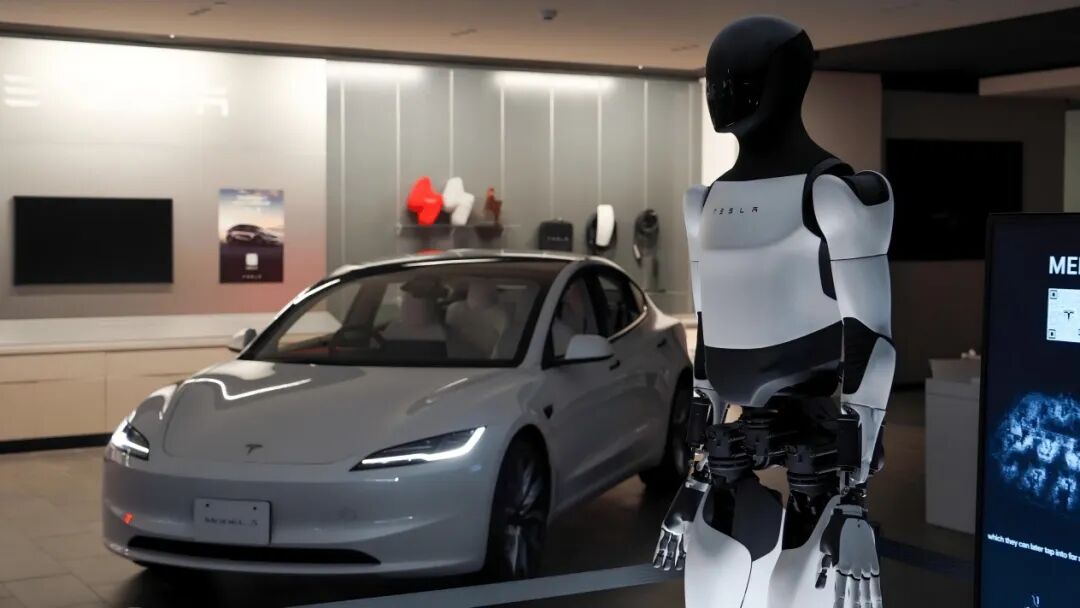
Core Viewpoint - Wall Street analysts are projecting a bullish target price for Tesla, suggesting a market cap of $3 trillion by the end of 2025, driven by the narrative of AI and robotics rather than traditional automotive metrics [1][4]. Group 1: Valuation Perspective - Traditional automotive sales now account for less than 30% of Tesla's total valuation in aggressive models from firms like Morgan Stanley and Ark Invest, indicating a significant shift in how investors view the company's revenue streams [4]. - The automotive business, once seen as a cash cow, is now viewed merely as a means to fund Tesla's AI initiatives, with the focus shifting to the high-margin potential of FSD (Full Self-Driving) software and Robotaxi services [4][5]. Group 2: Cost Structure and Profitability - The marginal cost of AI services, such as FSD subscriptions and Robotaxi operations, is nearly zero, contrasting sharply with the linear cost structure of traditional car manufacturing, which faces diminishing returns at scale [4][5]. - Analysts predict that if 30% of Tesla's global fleet subscribes to FSD, it could generate hundreds of billions in pure profit without the need for new manufacturing facilities [5]. Group 3: Technological Advancements - Tesla's FSD V13 represents a significant leap in AI capabilities, utilizing an end-to-end neural network approach that leverages vast amounts of data from its fleet of over 6 million vehicles, creating a competitive advantage in AI training [9][10]. - The deployment of advanced computing infrastructure, including thousands of GPUs and proprietary chips, positions Tesla as a leader in AI training capabilities, further enhancing its market position [9][10]. Group 4: Market Dynamics and Competition - The potential for Tesla's Robotaxi service to operate at a cost of less than $0.2 per mile presents a significant competitive edge over traditional ride-sharing services like Uber and Lyft [5][6]. - The integration of AI in both automotive and robotics sectors allows Tesla to leverage its existing technology across different applications, enhancing its overall market value [14]. Group 5: Regulatory and Operational Challenges - Regulatory hurdles in the U.S. and China pose significant challenges for the rollout of Robotaxi services, with strict scrutiny on FSD-related incidents impacting operational timelines [15]. - The ambitious goal of mass-producing the Optimus robot faces substantial engineering challenges, including the need for reliable components and manufacturing processes [15][16]. Group 6: Strategic Positioning - Tesla's unique position as a company that integrates energy, computing, manufacturing, and AI allows it to maintain a competitive edge, making it difficult for traditional automotive companies to replicate its business model [16]. - The company's ability to control pricing across its various segments, from energy to AI-driven services, underscores its strategic advantage in the evolving market landscape [16].

载具纪元新章系列1:Robotaxi白皮书:技术政策双轮驱动,行业正处高速增长阶段
Shenwan Hongyuan Securities· 2025-12-16 01:43
Investment Rating - The report maintains a "Positive" outlook on the Robotaxi industry, indicating a strong belief in its growth potential driven by technological advancements and supportive policies [1]. Core Insights - The Robotaxi sector is undergoing a transformation, leveraging L4 autonomous driving technology to replace human drivers, thereby reducing operational costs and enhancing profit margins. The industry is transitioning from a phase of technical validation to one of scalable operations, with significant growth expected in the coming years [2][3]. - The industry structure is evolving, comprising intelligent driving technology, hardware production, and terminal operations. Key players are focusing on data collection, vehicle manufacturing, and operational management to create a cohesive ecosystem [2][3]. - Policy frameworks are gradually improving, encouraging pilot programs while ensuring safety. This regulatory environment is facilitating the expansion of Robotaxi companies into international markets [2][3]. Summary by Sections 1. Robotaxi Background: Intelligent Driving Technology Reshaping the Mobility Service Industry - The demand for efficient, comfortable, and affordable travel experiences drives the evolution of the mobility service industry, with technological upgrades transforming supply models [15]. - The entry of autonomous driving technology is leading to a restructuring of the capacity value chain, moving from traditional taxi ownership to a more decentralized model [20][22]. - The feasibility of technology is improving, with leading companies demonstrating lower accident rates compared to human drivers, validating the safety and reliability of L4 systems [26][34]. 2. Industry Chain Structure: Intelligent Driving Technology + Hardware Production + Terminal Operations - The current industry participants are adopting a triangular cooperation model, where intelligent driving companies provide solutions, manufacturers supply vehicle chassis, and service platforms manage operations [47][48]. - The operational aspect is becoming increasingly important, with the efficiency of fleet management and scheduling emerging as new competitive barriers [2][3]. 3. Policy Guidance: Encouraging Pilot Programs While Ensuring Safety - Domestic policies are evolving to support pilot programs under safety assurances, while international markets are gradually opening up, allowing Robotaxi companies to expand their operations [2][3]. 4. Industry Growth Phase: A Trillion-Dollar Market with Potential for Billion-Dollar Enterprises - The industry is in a high-growth phase, with the penetration rate of autonomous driving services expected to rise significantly. Key catalysts in the coming years will include mass production of vehicles and global operational expansion [2][3]. - The market is anticipated to give rise to billion-dollar enterprises as leading companies optimize costs and scale operations [2][3].
明星公司全部员工停工放假,公司剩不到300人,高管曾放话“不存在死这件事”
2 1 Shi Ji Jing Ji Bao Dao· 2025-11-29 13:47
Core Viewpoint - The recent announcement by Haomo Technology regarding a complete shutdown and holiday for all employees starting November 24, 2025, marks a significant downturn for the company, which has seen a drastic reduction in workforce and challenges in maintaining its position in the intelligent driving sector [2][3][22]. Company Overview - Haomo Technology, incubated by Great Wall Motors in 2019, was once a leading player in the intelligent driving industry, primarily supplying Great Wall's brands with its driving systems [2][3]. - The company had a peak workforce of nearly 800 employees, focusing on the development of intelligent driving technologies for passenger vehicles [2][3]. Recent Developments - In late 2023, Haomo lost a key contract with Great Wall's Weipai brand, which shifted to a competitor, Yuanrong Qixing, for its intelligent driving solutions due to delays in Haomo's product development [3][9]. - Despite retaining contracts with Great Wall for mid- and low-tier models in 2024, Haomo is not the sole supplier for other major automakers like Beijing Hyundai, Toyota, and BMW [8][9]. Strategic Challenges - Haomo's initial strategy involved a heavy investment in high-level talent and technology, but the company struggled to keep pace with competitors who adopted more advanced technological approaches [5][12]. - The company's reliance on Qualcomm chips limited its ability to compete effectively in the high-performance segment of the intelligent driving market, as its AI computing power was insufficient for urban driving applications [11][12]. Financial and Operational Issues - Haomo's financial health has deteriorated, with a significant drop in valuation from $1 billion in 2021 to approximately 900 million yuan in 2024, reflecting limited growth and investor confidence [20][22]. - The company has faced challenges in converting its technological advancements into cash flow, leading to a reliance on external financing to sustain operations [18][20]. Conclusion - The trajectory of Haomo Technology illustrates the complexities of navigating the intelligent driving landscape, where strong initial backing from Great Wall Motors ultimately constrained its ability to diversify partnerships and adapt to rapid technological changes [22][23].


理想披露了一些新的技术信息
自动驾驶之心· 2025-11-28 00:49
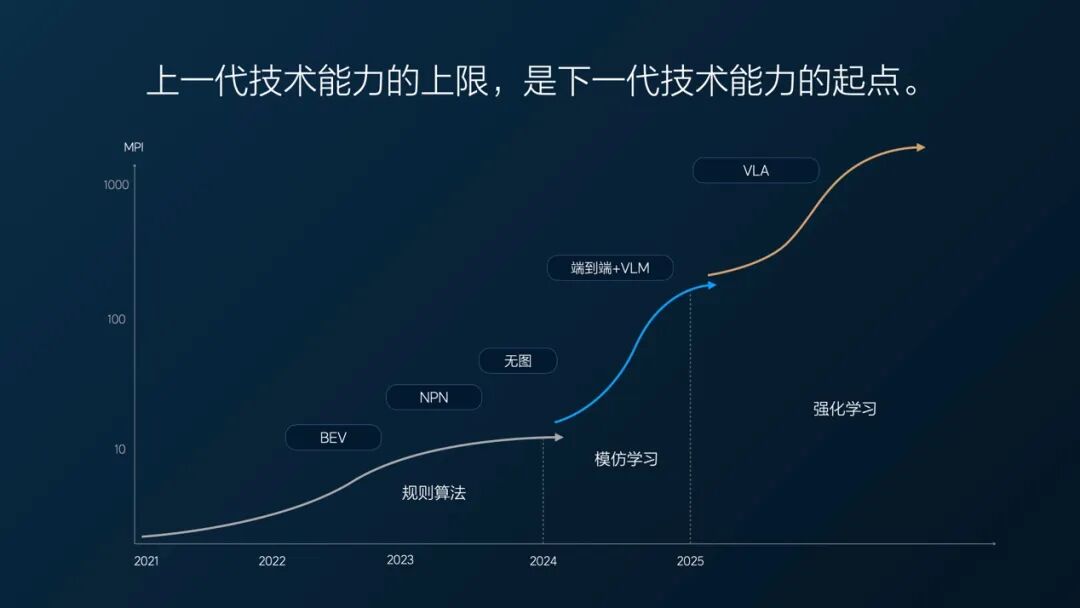
Core Insights - The article discusses the advancements and challenges faced by Li Auto in the development of its autonomous driving technology, particularly focusing on the end-to-end model and VLA (Vision-Language-Action) integration [2][5][9]. Group 1: Model Performance and Data Utilization - The performance improvement of end-to-end models slows down after reaching a certain amount of training data, specifically after 10 million clips, where the model's MPI (Miles Per Interaction) only doubled in five months [5]. - To enhance model performance, Li Auto adjusted the training data mix, increasing the quantity of generated data, including corner cases, and implementing manual rules for safety and compliance in special scenarios [5][9]. Group 2: VLA Integration and Decision-Making - The introduction of VLA aims to enhance the decision-making capabilities of the end-to-end model, addressing issues such as illogical behavior, lack of deep thinking in decision-making, and insufficient preventive judgment based on scenarios [5][6]. - VLA incorporates spatial intelligence, linguistic intelligence, and action policy, allowing the model to understand and communicate spatial information effectively, and generate smooth driving trajectories using diffusion models [6][9]. Group 3: Simulation and Testing Efficiency - Li Auto upgraded its model evaluation methods by utilizing a world model for closed-loop simulation and testing, significantly reducing testing costs from 18.4 per kilometer to 0.53 per kilometer [9][11]. - The closed-loop training framework AD-R1 was introduced, allowing for efficient data management and reinforcement learning, with high-value data being processed through a series of steps back to the cloud platform [11][12]. Group 4: Computational Power and Resources - Li Auto's total computational power is 13 EFLOPS, with 3 EFLOPS dedicated to inference and 10 EFLOPS for training, utilizing 50,000 training and inference cards [13]. - The emphasis on inference power is crucial in the VLA era, as it is necessary for generating simulation training environments [13].


在地平线搞自动驾驶的这三年
自动驾驶之心· 2025-11-24 00:03
Core Insights - The article discusses the transition from autonomous driving to embodied intelligence, highlighting the differences in challenges and solutions between the two fields [2] - It emphasizes the importance of documenting past experiences in autonomous driving, even if they did not receive widespread attention, as they may provide practical insights for others in the field [2] Research Areas Summary - **Sparse4D Series**: A multi-sensor fusion perception framework that challenges the conventional BEV (Bird's Eye View) approach, arguing that it does not significantly enhance information while incurring high computational costs. The Sparse4D series aims to achieve efficient perception through sparse queries and projections [6][7] - **SparseDrive**: An attempt to extend the capabilities of the Sparse4D model into end-to-end planning, integrating online mapping and motion planning tasks. It successfully executed five tasks, including detection and tracking, but faced challenges in closed-loop performance evaluation [13][15] - **EDA & UniMM**: EDA introduces a dynamic anchor strategy for trajectory prediction, improving model convergence and accuracy. UniMM unifies existing traffic flow simulation models, addressing key performance factors in agent simulation [16][20] - **DriveCamSim**: A sensor simulation system designed to evaluate autonomous driving models efficiently. It focuses on generating sensor signals with high fidelity and controllability, addressing the limitations of traditional physical engine-based simulations [22][24] - **LATR**: A foundational model for intelligent driving that leverages large datasets for unsupervised training, aiming to understand the semantics of driving scenarios. It integrates multiple tasks into a unified framework, demonstrating effective performance across various driving tasks [26][27] Conclusion and Future Outlook - The seven modules discussed form the core link of the autonomous driving system, indicating a correct technological path. The industry is moving towards maturity in end-to-end models, with significant performance improvements for companies adopting these approaches. Future developments should focus on efficient evaluation systems and the potential of reinforcement learning to enhance model performance [30][31]

理想主动安全负责人发文《主动安全之死》
理想TOP2· 2025-11-20 16:15
Group 1 - The core relationship between active safety and assisted driving is that both rely on similar underlying technologies to enhance user driving experience, with active safety focusing on preventing collisions regardless of who is driving [2][3] - Active safety aims to prevent accidents by providing alerts and taking control of the vehicle when necessary, while assisted driving systems follow navigation to transport users safely and efficiently [2][3] - The necessity of LiDAR in active safety is emphasized, as it significantly enhances safety by compensating for human limitations in various driving conditions [5][6] Group 2 - The active safety field has been expanding to cover high-frequency and high-risk driving scenarios over the past decade, but there are concerns about whether the current enumeration of accident scenarios is sufficient [7][8] - The complexity of real-world driving scenarios poses challenges for rule-based systems, which may struggle to account for unpredictable events [10][11] - The transition to model-based approaches in active safety could address these challenges by providing more effective responses to complex situations [15] Group 3 - The concept of "the death of active safety" is introduced, suggesting that as driving becomes safer through optimization and the advent of higher-level autonomous driving, the need for active safety may diminish [16] - Despite these challenges, the industry remains committed to improving active safety technologies, with a belief that advancements will lead to significant changes in the next few years [18] - The focus is shifting from competition to collaboration in creating a safer future, with ongoing efforts to reduce the probability and severity of accidents [18]