高频带低频

Search documents
外卖大战近一年,重新理解美团
Tai Mei Ti A P P· 2026-01-09 02:30
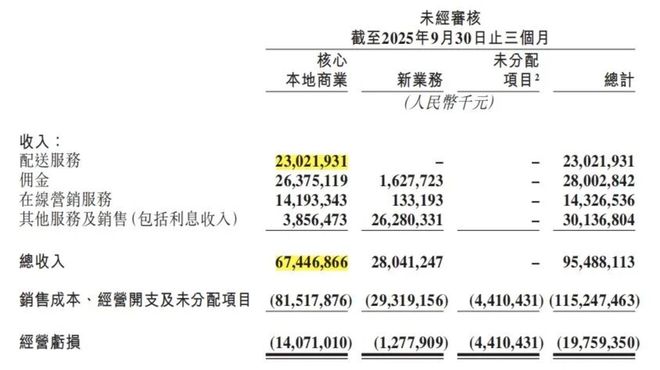
Core Viewpoint - 2025 is a pivotal year for Meituan, as it faces intensified competition in the food delivery market, necessitating a reevaluation of its business model and strategies to adapt to a changing landscape [1][2]. Group 1: Business Performance and Market Position - Meituan's Q3 financial report for 2024 exceeded market expectations in terms of revenue, profit, and reduced losses in new businesses, leading Morgan Stanley to highlight it as a key player in the Chinese internet sector for the upcoming year [1]. - The competitive landscape has shifted, with Meituan no longer operating independently within the local lifestyle market but rather in a larger consumer market where it faces stronger competition from major players [1][2]. - The delivery service revenue for Q3 2025 accounted for approximately 34% of core local revenue, down from around 40% in the same period of 2024, indicating a decline in the contribution of delivery services to overall revenue [7]. Group 2: Strategic Adjustments - Meituan's core challenge is to find a new "high-frequency to low-frequency" approach through various adjustments, including enhancing high-frequency traffic sources, improving operational efficiency, and increasing user retention for high-margin businesses [2][10]. - The company is focusing on revitalizing its high-frequency grocery business, which aligns with its operational logic and the trend towards integrated online and offline retail [10]. - Meituan is also targeting the lower-tier markets for food delivery, which, despite lower penetration rates, present significant growth potential for increasing traffic and expanding into more consumer sectors [11]. Group 3: Competitive Landscape and Challenges - The food delivery market's dynamics have changed, with Alibaba leveraging its larger scale and financial resources to offer lower prices, thereby increasing the competitive pressure on Meituan [5][6]. - Meituan's delivery business, which was previously profitable, is now projected to incur losses, with an estimated loss of approximately 1 RMB per order by 2025 [7]. - The competition has intensified with new entrants and existing players like Douyin and Xiaohongshu aggressively targeting the group buying and local services market, complicating Meituan's operational environment [19][20]. Group 4: Operational Enhancements - Meituan is enhancing its ground-level operational capabilities, focusing on local supply chain efficiency and service experience to differentiate itself in the competitive landscape [12][14]. - The company is also investing in personalized delivery services, such as the "1-to-1 urgent delivery" initiative, to attract higher-value consumers and improve service reliability [12]. - Meituan's supply chain capabilities are being strengthened through initiatives like promoting direct sourcing in its grocery business, which is essential for improving efficiency and product differentiation [17][18].


外卖大战还在继续,只是换了个战场
3 6 Ke· 2026-01-04 03:16
Core Viewpoint - The recent competition among food delivery companies has intensified, with significant financial incentives being offered to attract delivery riders, indicating a fierce battle for market share in the industry [1][2][3]. Group 1: Competition and Incentives - Meituan is offering a one-time transfer reward of 2888 yuan to active riders from Ele.me and JD with monthly orders exceeding 720 [1]. - Taobao Shanguo is providing a subsidy of 3000 yuan to riders who meet specific order criteria on competing platforms, along with additional rewards for referrals [1]. - JD has not engaged in direct recruitment but is investing 22 billion yuan over five years to create "JD Rider Homes" to retain its riders [2]. Group 2: Financial Implications - The total investment by the three major players in the food delivery battle has exceeded 100 billion yuan this year, with a notable increase in transfer subsidies compared to previous years [3]. - Despite the massive financial outlay, profits have not increased, with Alibaba and JD reporting net profit declines of 52% and 55% respectively, while Meituan recorded its largest loss since going public, with a net loss of 16 billion yuan in Q3 [3][4]. Group 3: Marketing and User Growth - Marketing expenses for Alibaba, JD, and Meituan have risen significantly, with year-on-year increases of 106%, 110%, and 91% respectively, despite growth in food delivery orders [4]. - JD's new user conversion rate for food delivery is nearly 50%, contributing to a 40% year-on-year increase in active users and shopping frequency [7]. - Meituan's app has also seen a user growth of over 20% [9]. Group 4: Long-term Outlook and Market Value - The substantial financial investments have not translated into significant improvements in e-commerce revenue growth, with Alibaba's e-commerce growth rate around 9% and JD's fluctuating between 20% and 11.4% [6]. - The value of food delivery remains questionable, as the increase in orders has not led to a corresponding increase in revenue or profitability for the companies involved [10]. - The expectation that high-frequency food delivery could drive low-frequency retail sales has not materialized, as evidenced by the low percentage of new users converting to significant e-commerce spending [10]. Group 5: Local Life Services and Ecosystem Development - The true value of food delivery may lie in its potential to drive local life services, as seen with Meituan's hotel bookings, where 90% of users originated from food delivery [11]. - The competition is not just about food delivery but also about establishing a broader ecosystem that includes various local services, as evidenced by the strategic moves of Alibaba and JD into local life services [14][28]. - Building a comprehensive ecosystem is essential for long-term success, as it requires time and user trust to develop beyond just food delivery [29].


刘强东和滴滴程维杀入家政市场,不拼司机拼上阿姨了?
Sou Hu Cai Jing· 2025-12-28 23:10
Core Insights - Didi has quietly launched a home service channel, offering services at competitive prices, indicating a strategic shift towards the home service market [2][4] - Major internet companies like Meituan and JD.com are also entering the home service sector, driven by slowing user growth and the potential for new revenue streams [4][5] - The home service market is projected to reach 1.23 trillion yuan in revenue by 2024, with a compound annual growth rate (CAGR) exceeding 18% [5][6] Market Overview - The home service industry is characterized by low concentration, with major players like Didi, Meituan, and JD.com leveraging their user bases and technology to gain market share [6][7] - The market is expected to grow significantly, with a forecasted size of 2.5 trillion yuan by 2030, driven by demographic changes and rising consumer demand [7][8] - High-end home services, such as elderly care and premium cleaning, are leading market growth, contributing to 65% of the market increment from 2020 to 2025 [6][7] Competitive Landscape - Didi, Meituan, and JD.com are utilizing their existing logistics and user engagement strategies to enhance their home service offerings, creating a synergy between their core businesses and new services [9][10] - These companies are adopting aggressive pricing strategies to capture market share, similar to their initial approaches in their primary business areas [11][13] - The integration of technology, such as AI and smart scheduling, is expected to improve service efficiency and customer satisfaction [10][14] Consumer Perspective - Consumers are benefiting from lower prices and improved service quality, with many reporting better experiences compared to traditional service providers [5][6] - The home service market is seen as a significant opportunity for consumers, with the potential for substantial savings and convenience [5][6] Future Outlook - The entry of major internet companies into the home service sector is viewed as a transformative move, potentially leading to the standardization of services and improved operational efficiencies [15][16] - The competition in the home service market is just beginning, with significant potential for growth and innovation in service delivery [15][16]


战略协同深化,美凯龙与建发首个商业合作项目开业
Xin Lang Cai Jing· 2025-12-22 05:51
Core Insights - Chengdu Bay Yue City, a new commercial project by Meikailong and Jianfa Group, officially opened on December 20, marking a significant collaboration and a new attempt at integrating home and lifestyle commerce [1][11] - The project aims to transform the commercial landscape of Tianfu New Area and Chengdu by introducing a variety of high-frequency consumption formats, enhancing the shopping experience and driving business model upgrades [1][9] Group 1: Project Overview - Bay Yue City has a total construction area of approximately 144,000 square meters and was previously known as Meikailong Life Aesthetics Center, which opened in 2021 [1] - The project is designed as a "family gathering place" and includes diverse offerings such as fitness, family entertainment, specialty dining, and outdoor living [3][5] Group 2: Consumer Experience - The mall focuses on family-oriented services, featuring brands like Kid King and Haidilao, creating a one-stop leisure consumption experience for families [5] - Three themed areas have been developed: an energy gathering sports social space, a children's interactive space, and a rooftop garden, all aimed at enhancing family bonding and social interactions [5][10] Group 3: Business Strategy - The project breaks the boundary between home and lifestyle commerce, significantly increasing the proportion of dining, family, and entertainment formats, which is expected to drive foot traffic and cross-selling opportunities [7][10] - Meikailong's strategic shift is based on insights into retail trends, focusing on creating experiential spaces rather than just sales venues, which aligns with the evolving consumer preferences for deeper engagement [9][10] Group 4: Financial Performance - Meikailong reported a net operating cash flow of 643 million yuan for the first three quarters of 2025, with a significant improvement in operating profit from approximately 100 million yuan to 200 million yuan year-on-year [10] - The occupancy rate of self-operated malls increased from 83.0% at the end of 2024 to 84.7% by the end of September 2025, indicating improved asset management and operational efficiency [10] Group 5: Strategic Collaboration - The opening of Bay Yue City signifies a new phase in the strategic partnership between Meikailong and Jianfa Group, moving from limited collaborations to a comprehensive and deep cooperation across the entire mall [11][12] - Jianfa Group's management expertise is expected to enhance the operational success of the project, while Meikailong benefits from revitalizing its existing assets and gaining professional operational insights [12][13]


OTA的护城河,被外卖填上了?
3 6 Ke· 2025-10-28 03:37
Core Insights - The ongoing competition in the food delivery sector has unexpectedly provided more "oxygen" to the entire industry, rather than leading to mutual destruction [1][3] - The integration of platforms like Ele.me into Taobao Flash Purchase and the increase in traffic sources for JD.com and Meituan have benefited the overall industry [3][9] OTA Industry Dynamics - The OTA industry is being redefined by the intense competition in the food delivery sector, which has created new traffic sources [9][10] - Historically, the OTA market has been characterized by weak competition, with Ctrip holding over 60% market share prior to the food delivery wars [4][14] - Ctrip has established a strong customer mindset and has optimized supply in hotel products, making it a key player in demand distribution [6][12] Market Trends and Performance - During the recent National Day holiday, domestic travel saw significant growth, with 888 million trips taken, a 16.1% increase from the previous year, and total spending reaching 809 billion yuan, up 15.4% [11] - Ctrip's performance has been consistently strong, with its market value exceeding 170 billion HKD at the time of its IPO in 2021 [6][7] Competitive Landscape - The OTA industry is transitioning from weak to strong competition, with new players like Fliggy emerging as significant competitors to Ctrip [8][12] - The competitive intensity in the OTA sector is expected to be less severe than in the food delivery industry due to its cyclical nature [13][14] Future Growth Opportunities - The OTA market has reached a saturation point domestically, prompting companies to seek growth through international expansion [17][19] - Ctrip's international travel bookings have seen over 60% year-on-year growth, indicating potential in overseas markets [18][20] - The current market environment is favorable for consumers, with increasing options for travel and lower costs in the Asia-Pacific region [20][21] Conclusion - The competition in the OTA sector is expected to lead to continuous service optimization, benefiting both consumers and businesses [15][23] - The industry is poised for growth through international expansion, with companies needing to adapt to local market conditions [22][24]

外卖大战后,巨头混战另一个万亿市场
Hu Xiu· 2025-10-09 06:16
Core Viewpoint - The hotel and travel industry is emerging as a new battleground for major players, similar to the recent competition in the food delivery sector, with Alibaba, Ctrip, Meituan, and Douyin being key competitors in this space [1][6]. Industry Overview - The travel industry is one of the few sunrise industries in China, with significant growth potential [7]. - During the recent 2025 National Day holiday, travel participation reached a record high, with over 2 billion people traveling [8]. - In the first half of 2025, domestic travel spending by residents reached 3.15 trillion yuan, a year-on-year increase of over 15%, outpacing China's GDP growth [9]. Company Performance - Atour Hotel reported a 37% year-on-year revenue growth in the first half of 2025, indicating strong performance in the hotel sector despite a challenging macroeconomic environment [10]. - Ctrip holds a dominant market share of 56% in the travel market, significantly higher than its competitors [13]. - Ctrip's annual profits reach around 2 to 3 billion USD, showcasing the profitability of travel platforms [14]. Competitive Landscape - The second-largest player in the travel industry is Tongcheng Travel, with a market share of approximately 15%, supported by Tencent's investment [15]. - Meituan and Fliggy rank third and fourth, with market shares of 13% and 8%, respectively [16]. - The travel industry is characterized by a fragmented supply of hotels, which increases the value that platforms can capture [20]. Consumer Behavior - Consumers heavily rely on platforms for hotel bookings, as most hotels lack direct customer acquisition capabilities [18]. - Although travel is not a high-frequency activity, the high spending associated with it makes it a significant part of annual expenditures for many consumers [23][25]. Strategic Moves - Alibaba's integration of Fliggy into Taobao signifies a serious commitment to the travel market, aiming to leverage high-frequency shopping to drive low-frequency travel bookings [27][29]. - Fliggy's previous struggles stemmed from service quality issues compared to Ctrip and a strategic misalignment focusing on outbound travel rather than domestic tourism [30][35]. Future Outlook - The integration with Taobao presents a crucial opportunity for Fliggy to enhance its service offerings and tap into the vast user base of Taobao [37]. - The collaboration with 88VIP will allow for better membership benefits, which are highly valued in the travel industry [39]. - Platforms like Taobao and Douyin have the potential to personalize travel recommendations, enhancing consumer experiences [42].

刘强东首谈京东做酒旅:不想让行业再陷入价格战
36氪未来消费· 2025-09-17 00:33
Core Viewpoint - The article discusses JD's recent developments in the food delivery and hotel industries, emphasizing the company's focus on supply chain innovation and its competitive stance against other platforms while maintaining a collaborative spirit in the industry [3][5][15]. Summary by Sections JD's Recent Events - The first "JD Wine Tasting Event" took place on September 16, where CEO Liu Qiangdong engaged with users, showcasing a dish he prepared, highlighting the company's commitment to customer interaction [3][4]. Business Growth and Strategy - JD's new delivery service has seen significant growth, with a 198.8% revenue increase in the new business segment to 13.852 billion yuan in Q2, despite a loss of 14.7 billion yuan in the same segment [4][5]. - The company reported a 35% increase in daily active users and a 17% increase in monthly active users, outperforming competitors like Taobao and Pinduoduo [4]. Supply Chain Innovation - Liu emphasized that JD's business model revolves around supply chain innovation, aiming to alleviate industry pain points rather than engage in destructive price wars [5][6]. - The "4+2" strategy for the hotel business focuses on four areas of revenue generation and two cost-saving measures, including low commissions and corporate procurement [5][6]. New Business Initiatives - The "Seven Fresh Kitchen" initiative aims to enhance hotel dining experiences and has already increased restaurant orders by over 30% in its vicinity [12][13]. - JD's approach to the hotel industry seeks to avoid price wars and instead focus on quality and service, with plans for future announcements regarding hotel development [15][16]. Commitment to Industry Standards - JD is committed to paying full social insurance for its delivery personnel, setting a new standard in the industry [17]. - Liu highlighted the importance of maintaining high-quality standards in retail, drawing parallels with the premium positioning of brands like Moutai [17]. Customer Engagement - Liu expressed gratitude for long-term customer relationships, emphasizing the importance of direct communication with users through events like the "Netizen Meeting" [18].

淘宝新出的大会员体系,我们划了三个重点
3 6 Ke· 2025-08-08 01:04
Core Insights - The launch of the new "Big Member" system by Taobao integrates various Alibaba resources, covering a wide range of consumer needs from dining to travel, aiming to create a comprehensive membership experience for all users [2][6][10] - The new membership system is free and has no entry barriers, allowing all Taobao users to participate and earn "Taoqi Value" which determines their membership level across multiple Alibaba platforms [3][4][12] Group 1: Membership System Features - The Taobao Big Member system consists of six levels: Bronze, Silver, Gold, Platinum, Diamond, and Black Diamond, with higher tiers offering access to additional benefits like 88VIP [3][5] - The "Taoqi Value" system has been updated to enhance transparency and user engagement, allowing users to see their earning details and growth paths [4][5] - The membership system aims to provide comprehensive benefits that span various life scenarios, reflecting a shift in consumer expectations for integrated services [6][10] Group 2: Strategic Implications - The introduction of the Big Member system is part of Alibaba's broader strategy to transition from an e-commerce platform to a "big consumption platform," integrating services like food delivery and travel [10][11] - The consolidation of services under a unified membership system is expected to enhance user loyalty and engagement, ultimately increasing the lifetime value of customers [6][12] - The strategic alignment of different business units within Alibaba, such as Ele.me and Fliggy, is designed to optimize resource allocation and improve overall service delivery [11][12] Group 3: Impact on Merchants - The new membership system is anticipated to significantly impact merchants by increasing user engagement and providing more opportunities for targeted marketing [16][18] - Merchants can now operate within a broader membership framework, allowing for more refined customer segmentation and tailored promotional strategies [18][19] - The emphasis on everyday benefits rather than just promotional events indicates a shift towards creating sustained customer relationships through regular engagement [18][20]

淘宝新出的大会员体系,我们划了三个重点
36氪· 2025-08-07 11:08
Core Viewpoint - The launch of the new "Big Member" system by Taobao is a strategic move to integrate various Alibaba resources and enhance user engagement across multiple lifestyle scenarios, positioning Taobao as a comprehensive "big consumption platform" [2][12][16]. Summary by Sections Overview of the Big Member System - The new Taobao Big Member system is free and accessible to all users, categorizing them into six levels based on their "Taoqi Value," which is calculated from spending across Taobao, Ele.me, and Fliggy [4][6][11]. - The system aims to create a more inclusive membership experience, moving beyond just serving a subset of paying users [7][12]. Changes and Features - The Taoqi Value system has been updated to enhance transparency and user engagement, with many users noticing an increase in their Taoqi Value compared to the previous version [8][11]. - The Big Member system emphasizes comprehensive coverage of various lifestyle needs, reflecting a shift in user expectations for integrated benefits across different platforms [12][27]. Strategic Implications - The integration of services from Taobao, Ele.me, and Fliggy under the Big Member system is a critical step towards establishing a unified consumption ecosystem, enhancing user loyalty and engagement [16][17]. - The strategic alignment of different business units within Alibaba aims to optimize resource allocation and improve user experience across the board [15][16]. Impact on Merchants - The Big Member system is expected to significantly impact merchant operations by increasing user engagement and providing more opportunities for targeted marketing [25][26]. - Merchants can leverage the new membership structure to enhance cross-industry collaboration and drive deeper consumer engagement through tailored promotions [27][29]. Future Directions - The Big Member system opens up new avenues for merchants to implement refined customer segmentation and targeted offers, moving away from broad discount strategies [29][30]. - The focus on everyday benefits rather than just promotional events indicates a shift towards a more sustainable and user-centric approach in membership design [30][34].

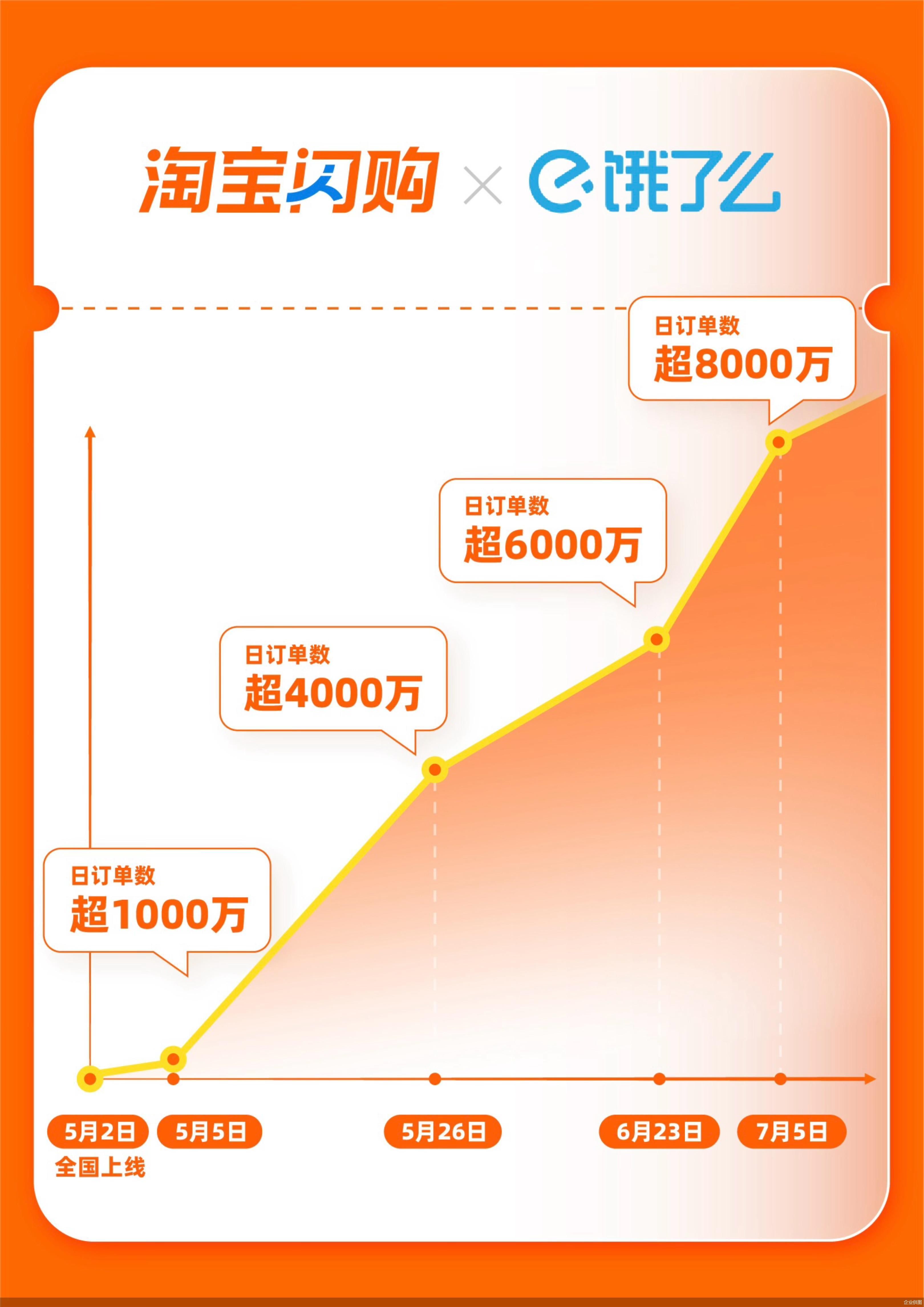
外卖大战日单量冲击2亿单 美团淘天京东谁胜出
Bei Jing Shang Bao· 2025-07-07 14:09
Core Insights - The article highlights a significant surge in daily orders for food delivery services, with Taobao Flash Purchase and Ele.me reporting over 80 million daily orders and more than 200 million active users, while Meituan's daily orders exceeded 100 million [1][7][10] - The competition among e-commerce giants has intensified, particularly in the food delivery sector, driven by substantial subsidies aimed at attracting younger consumers and boosting order volumes [1][6][10] E-commerce Competition - Taobao Flash Purchase and Ele.me launched a massive subsidy campaign, with Taobao offering a total of 50 billion yuan in subsidies, leading to a spike in orders and user engagement [7][10] - Meituan reported that its instant retail orders surpassed 120 million, with food delivery orders exceeding 100 million, indicating a strong consumer response to the subsidy initiatives [6][10] Consumer Behavior - The article notes a trend of consumers sharing their experiences on social media, showcasing the benefits of the subsidies, such as receiving multiple drinks for little to no cost [8][9] - The demand for milk tea has been particularly effective in driving sales, as it appeals to younger demographics and has a high frequency of purchase [9][11] Impact on Merchants and Delivery Personnel - Merchants and delivery personnel are experiencing overwhelming order volumes, with reports of some stores receiving over 300 orders in an hour, leading to challenges in fulfilling orders promptly [8][9] - Delivery personnel have reported significant increases in earnings due to the subsidies, with some earning over 1,000 yuan in a single day [8][9] Strategic Implications - The ongoing subsidy wars are seen as a strategic battle for high-frequency traffic and market share in the trillion-yuan instant retail market, with companies aiming to create a closed-loop ecosystem that connects food delivery with other high-value services [10][11] - Experts suggest that while subsidies can drive short-term growth, they may not be sustainable in the long run, potentially leading to a "prisoner's dilemma" scenario within the industry [10][12]