AI技术迭代

Search documents
谷歌发布最新技术,专治AI“内存不够用”
是说芯语· 2026-03-27 01:39
Core Viewpoint - The release of TurboQuant AI memory compression technology by Google Research is set to reshape the AI industry landscape, significantly reducing the memory requirements for large models and enhancing inference speed by eight times, thus addressing the long-standing "memory wall" issue in AI development [1][5]. Group 1: TurboQuant Technology Breakthrough - TurboQuant achieves a breakthrough in traditional quantization technology by overcoming the dual bottlenecks of compression efficiency and precision loss through two innovative steps: PolarQuant for efficient data representation and QJL 1-bit error correction for maintaining accuracy [3][4]. - PolarQuant utilizes a vector random rotation algorithm to convert values from Cartesian to polar coordinates, eliminating extra storage costs associated with normalization parameters, thus enhancing data compression [3]. - QJL 1-bit error correction ensures zero precision loss, maintaining 100% model accuracy even in complex scenarios with 104K context length, challenging the industry norm that high compression ratios lead to accuracy decline [3]. Group 2: Impact on AI Hardware Industry - The introduction of TurboQuant is expected to significantly alter the demand dynamics for memory chips, particularly HBM and DRAM, reducing the storage requirement for KV caches from 512GB to 85GB in typical scenarios, a reduction of approximately six times [5][6]. - The performance of H100 GPUs will see an eightfold increase in attention computation speed, allowing a single GPU server to serve more users, thereby alleviating the previous high demand for large-capacity memory chips [6]. - The focus of competition in the memory chip market will shift towards bandwidth optimization, as the need for high-capacity chips diminishes, highlighting the importance of high-bandwidth features in future HBM technologies [6]. Group 3: Investment and Application Opportunities - TurboQuant presents a dual benefit for the capital market and AI application scenarios, leading to increased volatility in the stock prices of semiconductor companies while necessitating a reassessment of previous overly optimistic demand forecasts for memory chips [7]. - The drastic reduction in deployment costs for large models will free up significant funds for AI applications, driving explosive growth in sectors such as healthcare, finance, and industry [7]. - The technology lowers the barriers for AI deployment, allowing smaller firms to implement large models without the need for high-end hardware upgrades, transforming large models from exclusive tools for leading companies to accessible resources for various industries [7]. Group 4: Industry Transformation and Future Trends - The emergence of TurboQuant underscores the accelerating pace of AI technology iteration and its disruptive potential, prompting a reevaluation of development strategies within the tech industry [8]. - Future AI development will prioritize technological innovation over hardware upgrades, emphasizing cost-effective performance breakthroughs through software advancements [8]. - The shift towards bandwidth optimization will necessitate collaboration across the semiconductor supply chain, with upstream companies adjusting their product development focus and downstream firms rapidly adapting to low-cost, high-efficiency AI solutions [8].



林俊旸发文告别阿里
第一财经· 2026-03-07 08:24
Core Viewpoint - The article discusses the recent resignation of Lin Junyang, the former head of Alibaba's Qwen, highlighting the implications of his departure for the company and the AI industry as a whole [3][8]. Group 1: Resignation Details - Lin Junyang announced his resignation from Qwen on March 4, expressing gratitude for his time at the company and the support he received [8][9]. - His departure coincided with the resignations of other key figures in the Qwen team, raising concerns about a potential exodus of talent from Alibaba [9][10]. - Alibaba's CEO, Wu Yongming, acknowledged Lin's contributions in an internal email and stated that the company would continue to support the Qwen project under the leadership of CTO Zhou Jingren [9][10]. Group 2: Strategic Implications - Lin's resignation is linked to a strategic shift within Qwen, as the company aims to attract more technical talent, which led to adjustments in Lin's responsibilities [9][10]. - Despite concerns about a "mass resignation," Alibaba maintains that the Qwen team remains stable and committed to its open-source strategy [9][10]. - The departure of Lin has sparked a competitive talent acquisition environment in the AI sector, with other companies actively seeking to recruit former Qwen team members [10]. Group 3: Industry Reactions - The AI community has reacted strongly to Lin's departure, with some industry leaders describing it as the end of an era and a significant loss for Alibaba [10]. - Competitors like Google DeepMind have reached out to the Qwen team, indicating a strong interest in recruiting talent from Alibaba [10]. - The situation underscores the broader challenge of balancing strategic expansion with talent retention in the rapidly evolving AI landscape [10].


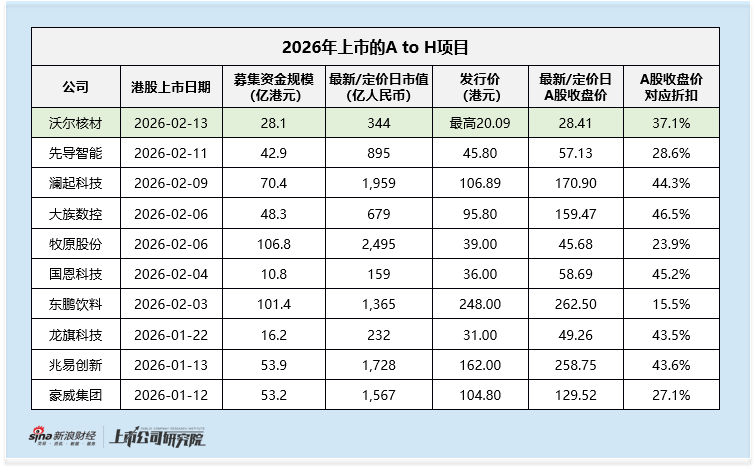
沃尔核材港股上市在即:最高发行价较A股折价超35% 英伟达铜缆核心供应商直面技术迭代与行业地位大考
Xin Lang Zheng Quan· 2026-02-11 07:16
Core Viewpoint - Wolong Materials is set to launch its global offering on February 5, with a maximum issue price of HKD 20.09 per share, raising approximately HKD 2.81 billion. The company is a leading AI high-speed copper cable supplier, leveraging its technological advantages to position itself within Nvidia's top supply chain. However, it faces challenges such as limited discount levels, lack of a greenshoe option, low cornerstone subscription ratios, and pressures from the AI industry's technological iterations and high raw material costs [1][2][10]. Group 1: IPO Details - The maximum issue price of HKD 20.09 per share represents a discount of approximately 37.1% compared to the A-share closing price of CNY 28.41 on February 10 [1]. - The offering includes 140 million shares, with a total issuance scale of about HKD 2.81 billion [1]. - The cornerstone investment attracted 16 investors, totaling USD 124 million, which is 34.5% of the issuance scale, indicating a relatively low cornerstone subscription ratio compared to other recent A to H projects [2][4]. Group 2: Market Position and Financial Performance - Wolong Materials ranks third among the top five manufacturers of high-speed copper cables, with a revenue of CNY 1.7 billion and a market share of 12.7% in 2024 [5][6]. - The company has shown steady revenue and profit growth, with projected net profit for 2025 expected to be between CNY 1.1 billion and CNY 1.18 billion, reflecting a year-on-year growth of 29.79% to 39.22% [4][10]. Group 3: Strategic Partnerships and Challenges - The collaboration with Amphenol has deepened, becoming a crucial link in entering Nvidia's AI supply chain, with revenue from Amphenol increasing significantly from CNY 1.38 million in 2022 to CNY 5.9 million in 2025 [7]. - The company faces raw material cost pressures, with copper prices rising significantly from CNY 59,200 per ton in 2022 to CNY 89,200 per ton in 2025, impacting profitability [9]. - The AI industry's technological iterations pose risks, as Nvidia's new server platform may reduce demand for traditional copper cables, leading to market concerns about Wolong's future demand [10].

金属行业2026年度策略系列报告之小金属&新材料篇:地锁金戈,云生万象
Guolian Minsheng Securities· 2026-01-23 00:50
Investment Rating - The report maintains a "Buy" rating for the metal industry, specifically recommending companies such as Huaxi Nonferrous, Xiyegongsi, Boqian New Materials, and others [2][3]. Core Insights - The report highlights the tightening supply of strategic metals due to export controls and geopolitical factors, which is expected to drive prices upward. The integration of AI technology is anticipated to create new opportunities in electronic materials [9][10]. - Tin supply is under pressure due to slow recovery in Myanmar and regulatory changes in Indonesia, leading to a persistent shortage [26][35]. - Tungsten is positioned as a critical material for high-end manufacturing, with supply constraints expected to support long-term price increases [9][10]. - Antimony supply remains rigid, with recent export control relaxations likely to narrow the price gap between domestic and international markets [9][10]. - The rare earth materials sector is expected to see price stabilization and growth due to increasing demand from electric vehicles and energy-efficient technologies [9][10]. Summary by Sections 1. Strategic Metals and Supply Dynamics - The report emphasizes the strategic importance of metals like tungsten, antimony, and rare earths, which are crucial for technology and military applications. China holds a dominant position in the supply of these metals, with import dependency for many industrial metals exceeding 50% [16][20]. - Export controls on strategic metals have led to significant price increases domestically, with prices expected to continue rising as global demand grows [21][22]. 2. AI Technology and Electronic Materials - The report discusses the impact of AI technology on the demand for electronic materials, predicting a dual increase in both volume and price as the technology evolves [9][10]. - The need for advanced electronic components that can handle higher power and efficiency is driving innovation in materials used in AI applications [9][10]. 3. Investment Recommendations - The report recommends focusing on domestic strategic resource sectors and companies benefiting from AI technology advancements. Key companies highlighted include Huaxi Nonferrous, Xiyegongsi, Boqian New Materials, and others [13][10].





金属行业2026年度策略系列报告之小金属:新材料篇:地锁金戈,云生万象
Guolian Minsheng Securities· 2026-01-22 11:13
Group 1 - The report emphasizes the strategic importance of key metals, highlighting that supply control and application demand in critical fields like technology and military are crucial for pricing [16][20][21] - The report identifies significant supply disruptions in tin due to slow recovery in Myanmar and regulatory changes in Indonesia, leading to a persistent tight supply situation [26][35][40] - The report notes that tungsten is a backbone of high-end manufacturing, with supply tightening driving significant price increases, supported by steady demand from sectors like photovoltaics and military applications [9][16][21] Group 2 - The report discusses the impact of AI technology on the development of electronic new materials, indicating that advancements in AI will drive demand for upgraded materials to meet higher performance requirements [9][10][12] - The report recommends investing in domestic strategic resource sectors and electronic new materials benefiting from AI technology, highlighting specific companies such as Huaxi Nonferrous, Xiyegongsi, and others [13][21] - The report outlines the tightening supply of antimony and the potential for price convergence due to the relaxation of export controls, which may benefit domestic demand [9][10][12]
四大热点齐发:茅台直销战略落地、巴菲特退休、GPU四小龙集结上市、DeepSeek再释信号
Jin Rong Jie· 2026-01-02 00:17
Group 1: Moutai's Direct Sales Strategy - Moutai officially launched its direct sales strategy by selling Feitian Moutai on the "i Moutai" platform at a price of 1499 yuan per bottle, with a purchase limit of 12 bottles per user per day [2] - The move aims to reduce intermediaries, potentially converting some dealer profits into direct company revenue, which is expected to positively support mid-to-long-term performance [2] - The market response was extremely enthusiastic, with all six rounds of product releases selling out quickly, indicating strong demand for reasonably priced Feitian Moutai [2] Group 2: Warren Buffett's Retirement - Warren Buffett, the legendary investor, announced his retirement at the age of 95, marking the end of a nearly century-long investment career [3] - His career exemplified that investing can be a lifelong endeavor and has prompted a renewed examination of long-term investment philosophies [3] - Buffett emphasized the importance of focusing on quality assets and long-term holding, a principle that remains relevant despite the rise of high-frequency trading and quantitative strategies [3] Group 3: Domestic GPU Companies Accelerating Capitalization - The four leading domestic GPU companies, including Suiruan Technology, have initiated their IPO processes, with Suiruan recently completing its IPO counseling [4] - This acceleration in the capitalization of the domestic GPU sector reflects an unprecedented speed in the industry, with multiple companies moving towards public offerings [4] - The upcoming wave of IPOs in the tech sector is expected to inject capital into the economy and support the goal of self-sufficiency in the industrial chain [4] Group 4: DeepSeek's Research Publication - DeepSeek recently published an important research paper on a preprint platform, with founder Liang Wenfeng listed as one of the authors, highlighting the company's strategic focus on technological advancement [5] - The release of the paper follows the market's high interest in their DeepSeek-R1 model, indicating the company's strong technical capabilities [5] - Despite mixed opinions on the pace of AI technology iteration, DeepSeek's continuous output of significant research results suggests a robust technical strength [5]


明年周期板块如何展望
2025-12-29 01:04
Summary of Key Points from Conference Call Records Industry Overview Real Estate Market - Relaxation of real estate policies in first-tier cities significantly supports demand for low-priced housing, with expectations for other core cities to follow suit, potentially leading to more measures to stabilize the real estate market, such as land acquisition and mortgage interest subsidies [1][2][4] - Recent policy changes in Beijing include allowing multi-child families to purchase additional properties and lowering social security requirements for non-residents, which are expected to stimulate demand for affordable housing [2][4] Coal Market - Domestic supply tightening and demand recovery have led to a narrowing decline in thermal coal prices, with expectations for price stabilization in the future [1][5] - The market for coking coal is under short-term pressure due to increased imports and expectations of lower downstream demand for coke, with a forecast of a weak and stable trend for coke prices [1][6] - By 2026, the thermal coal market supply-demand balance is expected to improve, benefiting companies like China Shenhua due to reduced imports from Indonesia [1][8][9] Cleanroom Engineering Industry - The cleanroom engineering market is projected to reach 350 billion yuan by 2026, driven by demand from the electronics industry, particularly in semiconductor and AI technology sectors [1][10][12] - Key players in the cleanroom engineering sector include Shenghui Integration and Yaxiang Integration, which have shown significant revenue growth and are expanding their market presence [12][13] Solar Thermal Power - The government aims to achieve a total installed capacity of 15 million kilowatts for solar thermal power by 2030, with policies in place to support this growth and improve revenue structures for solar thermal plants [1][14][15] - Companies to watch in this sector include Xizi Energy and Material Energy, which have experience in related projects and technologies [15] Key Market Trends and Projections PX and PTA Market - PX prices have risen due to limited new supply expected in the coming years, with a significant increase in demand from downstream products [1][18][19] - PTA is also experiencing a supply vacuum, with no new capacity added this year, leading to improved supply-demand dynamics by 2026 [1][19] Polyester Filament Yarn Industry - The polyester filament yarn industry is seeing price increases due to coordinated production cuts among major manufacturers, with a positive outlook for 2026 driven by both domestic and international demand [1][20] Organic Silicon Market - The organic silicon market is expected to improve in supply-demand balance, with a focus on new applications in renewable energy and electric vehicles driving demand growth [1][21][22] - Companies to monitor include Hesheng Silicon, Xin'an Chemical, and Dongyue Silicon [22][23] Investment Opportunities - Recommended companies for investment consideration include: - In the polyester chain: Tongkun Co., New Fengming, Hengyi Petrochemical, and others [23] - In the organic silicon sector: Hesheng Silicon, Xin'an Chemical, and others [23] This summary encapsulates the key insights and projections from the conference call records, highlighting significant trends and potential investment opportunities across various industries.
方正富邦基金汤戈:以产业趋势的视角探寻2026年投资机会
Zheng Quan Ri Bao Wang· 2025-12-26 13:13
Group 1 - The core viewpoint of the article emphasizes the importance of strategic investment planning for the upcoming year 2026, focusing on industry trends to identify investment opportunities [1] - The Chief Investment Officer of Fangzheng Fubon Fund, Tang Ge, predicts that the A-share market will continue to see recovery in profit growth and return on equity (ROE), which will help absorb some valuation pressures, making stock investment a preferred allocation choice [1] - There is an expectation for a more significant shift of household savings towards the stock market, indicating a potential increase in market participation [1] Group 2 - From an industry perspective, the company maintains a positive outlook on sectors such as lithium batteries, power equipment, PCB, and semiconductor storage, particularly highlighting the new production capacity represented by solid-state batteries [1] - These sectors are expected to benefit from advancements in AI technology, as well as changes in energy demand and policies, indicating clear driving forces within these large industries [1] - The investment opportunities in the market are anticipated to expand further in 2026, with a commitment to in-depth research and selective stock picking to actively seize structural opportunities [1]
帮主郑重早间观察:芯片股暴跌+AI掀狂潮,中长线该锚定哪些确定性?
Sou Hu Cai Jing· 2025-11-19 01:30
Market Overview - The US stock market experienced significant volatility, with major indices like the Dow Jones and S&P 500 declining for four consecutive trading days, and a notable drop of over 10% in the chip stock SanDisk [3] - Concerns regarding the Federal Reserve's interest rate policy and the upcoming earnings report from Nvidia contributed to market anxiety [3] - A temporary network issue at Cloudflare affected major platforms like X, ChatGPT, and Amazon, further dampening investor sentiment in tech stocks [3] AI Developments - Google launched its advanced AI model, Gemini 3, which has shown significant improvements in reasoning capabilities and was integrated into Google Search on the same day [3] - Baidu reported over 50% growth in its AI cloud business, indicating strong performance in the AI sector [3] Domestic Economic Signals - A new financial support plan from 12 departments in Beijing aims to bolster consumption in sectors like hospitality, tourism, and elderly care, with a goal to establish a diversified consumer finance service system by 2030 [4] - Xiaomi's automotive division achieved profitability for the first time, earning 700 million, with electric vehicle revenue surging over 199% year-on-year [4] Foreign Investment Trends - Recent filings indicate that major US financial institutions, including Bank of America and UBS, have significantly increased their investments in Chinese assets, particularly in the tech sector [5] - This trend suggests a recognition of the valuation advantages and growth potential of Chinese assets amidst global market fluctuations [5] Investment Strategy Insights - The current market volatility presents opportunities for long-term investors to identify undervalued companies, particularly in sectors like AI, consumption, and new energy [6] - Recommendations include diversifying investments across quality sectors, buying on dips for undervalued companies, and continuously monitoring fundamental changes in companies [6] Conclusion - The market is characterized by short-term fluctuations, but long-term investors should focus on identifying trends and opportunities in sectors with strong growth potential, such as AI and consumer upgrades [7]
【广发宏观贺骁束】高频数据下的10月经济:价格篇
郭磊宏观茶座· 2025-11-01 00:25
Core Viewpoint - The article discusses the mixed performance of various commodity prices in October, highlighting the resilience of the non-ferrous metals sector amid macroeconomic factors such as the Federal Reserve's interest rate cuts and supply disruptions from Indonesia [1][4]. Group 1: Commodity Price Trends - The BPI index recorded 870 points as of October 30, reflecting a 0.6% increase from the end of September, with energy prices down 0.6% and non-ferrous metal prices up 2.2% month-on-month [1][4]. - In the domestic market, prices of thermal coal and coking coal futures saw significant increases of 9.2% and 19.1% respectively, while chemical products, cement, and glass prices showed notable declines of -1.9%, -3.1%, and -10.6% respectively [8][10]. - The South China comprehensive index remained flat month-on-month, with a year-on-year average decrease of 0.3% compared to a previous increase of 6.0% [8]. Group 2: Real Estate Market - The second-hand housing price index in major cities continued to adjust, with declines of -1.2%, -0.7%, -1.7%, and -0.9% in Beijing, Shanghai, Guangzhou, and Shenzhen respectively as of October 20 [10]. Group 3: Emerging Industries - Prices in emerging sectors such as storage chips and lithium carbonate remained strong, while the photovoltaic industry saw a price decline, with the photovoltaic industry composite index (SPI) down 0.5% month-on-month [2][11]. - The DXI index, representing the semiconductor (DRAM) industry, surged by 93.5% month-on-month, indicating a robust outlook for the memory sector [2][11]. Group 4: Shipping and Logistics - In the export shipping sector, the China Container Freight Index (CCFI) fell by 6.1% month-on-month, while the WCID container freight indices for routes to Los Angeles and New York increased by 5.5% and 8.9% respectively [13]. - The average value of the road logistics price index showed a year-on-year decrease of 0.1%, indicating a gradual decline from the peak observed in June [15]. Group 5: Food Prices - Food prices exhibited mixed trends, with the average wholesale price of pork declining by 7.8% and key vegetable prices rising by 13.6% month-on-month [3][15].