AI 泡沫

Search documents
AI泡沫后只剩这两类公司杀出重围!昆仑万维CEO方汉:明年唯一技术赛点在Agent
Xin Lang Cai Jing· 2025-12-30 11:04
Group 1 - The core keywords for the technology sector in 2025 are AI bubble, verifiable product value, and process-oriented ecology, indicating a shift from mere technological advancement to practical application and monetization [2][10] - The AI bubble is seen as a necessary phase that concentrates capital, computing power, and engineering talent to filter out viable products, with a focus on real-world high-frequency scenarios that can generate sustainable revenue [2][10] - Companies that have emerged successfully this year are those that address high-frequency demand scenarios, such as AI social media and music, which are conducive to scalable model applications and user retention [3][11] Group 2 - AI has significantly restructured content production and research analysis, reducing the marginal cost of content or services by 1-2 orders of magnitude, thus altering industry pricing logic [3][11] - Companies lagging behind include general-purpose AI assistants lacking vertical data and result closure, and those that focus solely on models without product development, leading to long-term commercialization stagnation [4][13] - The industry is transitioning from an "algorithm-driven" approach to a balanced focus on both algorithms and products, with product leaders gaining influence comparable to algorithm leaders [12][14] Group 3 - The unique technological battleground for 2026 is whether Agents can automate verifiable processes on a large scale, emphasizing the industrialization of structured decision-making [6][15] - The Chinese AI sector has made significant strides in application layers, particularly in AIGC and AI social media, leveraging data density and scene complexity for rapid iteration, although gaps remain in top-tier closed model capabilities compared to Silicon Valley [6][15] - Future innovations are expected to emerge as AI mobile devices and edge computing become prevalent, with a focus on transforming processes into assets rather than merely enhancing model intelligence [6][15][16]

关注美国私募信贷市场暴雷的尾部风险:环球市场动态2025年12月24日
citic securities· 2025-12-24 03:19
Market Overview - U.S. private credit market risks are emerging, with significant exposure concentrated in large banks and insurance funds rather than smaller banks[6] - The U.S. economy grew at its fastest pace in two years in Q3 2025, with GDP growth reaching 4.3%, exceeding expectations of 3.3%[31] Stock Market Performance - A-shares experienced a slight increase, with the Shanghai Composite Index closing at 3,919 points, up 0.07%[15] - U.S. stock indices reached new highs, with the S&P 500 up 0.5% to 6,909.8 points and the Nasdaq up 0.6% to 23,561.8 points[9] Commodity and Currency Trends - Gold and silver prices reached record highs due to U.S. interest rate cut expectations and geopolitical risks[28] - The U.S. dollar index fell to its lowest level since early October, while the Chinese yuan approached the 7 yuan mark against the dollar[28] Fixed Income Market - U.S. Treasury yields rose sharply in the short term following strong GDP data, with the 2-year yield at 3.53%[31] - A $44 billion auction of 7-year Treasury bonds is scheduled, reflecting ongoing market adjustments[31] Sector Insights - The healthcare sector in Latin America showed strong performance, with the medical care sector rising by 2.48%[9] - The real estate sector in China is under focus, with government efforts to stabilize the market and support reasonable financing needs for real estate companies[31]

金融产品周报:权益ETF系列:继续保持耐心,等待海外市场的企稳-20251213
Soochow Securities· 2025-12-13 13:09
Report Summary 1. Report Industry Investment Rating There is no information provided regarding the industry investment rating in the given report. 2. Core Viewpoint of the Report The report suggests continuing to be patient and waiting for the stabilization of overseas markets. Although the macro - timing model's monthly score for December 2025 indicates a certain probability of adjustment in the Wind All - A Index, the adjustment space may be limited. In the whole month, the cost - effectiveness of the dividend sector may gradually weaken, while the technology growth sector may regain some attractiveness after the adjustment in November. More incremental funds still need time. The report is cautious about the micro - and small - cap direction in December. In the short - term, the equity market is expected to continue to fluctuate within a range due to overseas market disturbances [23][24]. 3. Summary by Directory 3.1 A - share Market行情 Overview (2025.12.08 - 2025.12.12) - **Equity ETF Net Inflow Statistics**: The top three types of equity ETFs in terms of net inflow in the past five trading days are scale index ETFs (2.843 billion yuan), style index ETFs (86 million yuan), and cross - border industry index ETFs (32 million yuan). The top three products are A500ETF Huatai - Peregrine (1.319 billion yuan), Science and Technology Innovation Board 50ETF (1.155 billion yuan), and A500ETF Southern (1.123 billion yuan) [8][9]. - **Main Broad - based Indexes**: The top three broad - based indexes in terms of increase and decrease are the Beijing Stock Exchange 50 (1.50%), the Science and Technology Innovation Composite Index (0.26%), and the Science and Technology Innovation 100 (0.19%); the bottom three are the Wind Micro - cap Stock Daily Equal - weighted Index (- 5.75%), the Dividend Index (- 2.10%), and the CSI Dividend Index (- 1.82%) [13]. - **Style Indexes**: The top three style indexes in terms of increase and decrease are mid - cap growth (0.30%), China Securities Mid - cap (0.09%), and small - cap growth (0.02%); the bottom three are mid - cap value (- 1.61%), finance (style. CITIC) (- 1.47%), and small - cap value (- 1.46%) [15]. - **Shenwan Primary Industry Indexes**: The top three Shenwan primary industry indexes in terms of increase and decrease are national defense and military industry (1.73%), communication (1.41%), and public utilities (0.33%); the bottom three are real estate (- 3.10%), textile and clothing (- 2.91%), and petroleum and petrochemicals (- 2.70%) [19]. 3.2 A - share Market行情 Outlook (2025.12.15 - 2025.12.19) - **Macro Model Results of the Broad - based Index**: The low - frequency monthly macro - model score for the Wind All - A Index as of December 1, 2025, is - 2 points, indicating possible shock adjustment but with limited adjustment space. The high - frequency daily macro - model score turned negative this week, suggesting that the broad - based index may show a shock trend [30][31]. - **Technical Analysis Model Results of Major Indexes** - **Main Broad - based Indexes**: As of December 12, 2025, the top three in the risk - trend model's comprehensive score are the Beijing Stock Exchange 50 (90.69 points), the Science and Technology Innovation 100 (62.89 points), and the Science and Technology Innovation Composite Index (62.71 points); the bottom three are the Wind Micro - cap Stock Daily Equal - weighted Index (26.88 points), the Dividend Index (40.28 points), and the ChiNext Index (40.82 points). Historically, in December, the top three in average returns are the Shenzhen Dividend (4.71%), the SSE 50 (4.43%), and the CSI 300 (3.88%); the bottom three are the Science and Technology Innovation 100 (- 4.99%), the Beijing Stock Exchange 50 (- 4.65%), and the Science and Technology Innovation 50 (- 2.43%) [34][39]. - **Style Indexes**: As of December 12, 2025, the top three in the risk - trend model's comprehensive score are consumption (style. CITIC) (64.24 points), China Securities Small - cap (56.76 points), and China Securities Mid - cap (56.24 points); the bottom three are large - cap value (34.67 points), China Securities Large - cap (41.48 points), and small - cap value (41.69 points). Historically, in December, the top three in average returns are finance (style. CITIC) (4.16%), large - cap value (3.98%), and China Securities Large - cap (3.75%); the bottom three are small - cap growth (- 0.53%), small - cap value (0.07%), and mid - cap growth (0.36%) [43][49]. - **Shenwan Primary Industry Indexes**: As of December 12, 2025, the top three in the risk - trend model's comprehensive score are non - bank finance (77.49 points), medicine and biology (71.35 points), and automobile (71.08 points); the bottom three are comprehensive (27.56 points), banks (28.07 points), and household appliances (29.3 points). Historically, in December, the top three in average returns are food materials (3.44%), non - bank finance (3.37%), and banks (3.16%); the bottom three are environmental protection (- 0.22%), comprehensive (- 0.14%), and electronics (0.09%) [51][59]. 3.3 Fund Allocation Suggestion The report recommends an evenly - weighted and relatively aggressive ETF allocation strategy, considering that the subsequent market may be in a range - bound situation. It also lists recommended ETFs, including Chemical ETF, Hong Kong Stock Innovative Drug ETF, Satellite ETF, etc. [62][64][65]
甲骨文业绩受挫冲击AI概念股,但多数投资者仍持乐观态度
Xin Lang Cai Jing· 2025-12-12 12:17
Core Viewpoint - Oracle's disappointing earnings report has negatively impacted the trading of AI-related stocks, raising concerns about overvaluation and the risk of an AI bubble [1][9][10] Group 1: Market Reactions - Investors remain optimistic about AI, with many cautious about declaring the AI sector has peaked [10] - Oracle's stock fell by 16.5% after it warned that capital expenditures for fiscal year 2026 would exceed September's expectations by $15 billion [1][11] - Broadcom also warned that increased revenue from AI could pressure profit margins, further dampening market sentiment [1][11] Group 2: Broader Market Impact - Despite Oracle's stock drop affecting other tech stocks, the overall market remained stable, with the S&P 500 index slightly rising to a historical high [12] - Some analysts believe Oracle's issues are specific and do not indicate systemic risks for the entire AI sector [12] Group 3: Investment Sentiment - Investors are becoming more selective in AI stock picking, moving away from blindly rewarding AI investments with stock price premiums [14] - The correlation between aggressive capital expenditures and stock prices has significantly changed in recent months [14] Group 4: Short Selling Trends - Even skeptical investors are hesitant to short-sell AI stocks, with some believing the market is in a phase of extreme growth [15] - Concerns about an AI bubble are perceived as exaggerated, with major cloud service providers still struggling to meet strong demand for data centers [16] - Data shows that while short-selling interest in small-cap AI stocks has increased, the short ratio for major AI beneficiaries remains low [16] Group 5: Sector Performance - The technology sector is currently the largest component of the S&P 500 index, accounting for 35% as of the latest close [17] - The S&P 500 index has risen 17% this year, largely driven by strong AI stocks, leading to concerns about the market's reaction if enthusiasm for these stocks wanes [17] - Despite the sell-off in the AI sector, the S&P 500 index showed resilience, alleviating some market concerns [18]

英伟达财报解读:完美定价背后的隐忧
美股研究社· 2025-12-11 12:03
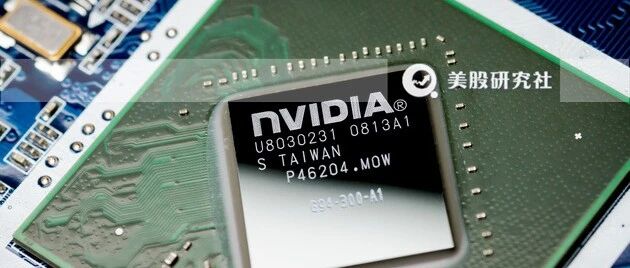
Core Viewpoint - Nvidia's Q3 FY2026 performance is exceptional, with revenue reaching $57 billion, a 62% year-over-year increase, driven primarily by data center revenue of $51.2 billion, which grew 66% year-over-year and 25% quarter-over-quarter [1][2]. Financial Performance - Operating profit surged 65% to $36 billion, with an impressive operating margin of 63.1% [2]. - Despite strong earnings, the stock initially rose 5% post-announcement but later fell approximately 3% [3]. Market Sentiment and Concerns - CEO Jensen Huang highlighted a "bubble perception" issue, where any earnings miss is viewed as evidence of an AI bubble, even if results exceed expectations [5]. - The gross margin declined to 73.4% from 74.6% year-over-year, indicating a downward trend, although management expects it to stabilize around 70% [5]. - The projected earnings per share growth rate for FY2027 is about 59%, significantly lower than the triple-digit growth rates of the past two years [5]. Policy Changes and Market Opportunities - A new policy allows Nvidia to export advanced H200 AI chips to China, contingent on a 25% additional fee to the U.S. government, potentially unlocking a $50 billion market [5][6]. - This market entry could lead to revenue growth that exceeds current expectations, helping to alleviate concerns about slowing growth in the coming years [6]. Industry Dynamics and Risks - AI applications are still in their early stages, with significant technological transformations underway, including the shift from CPU to GPU computing and the rise of large language models [6]. - However, the commercialization of AI services has not kept pace with infrastructure investments, reminiscent of the 1999 internet bubble [7]. - Major AI service providers have yet to achieve profitability, with OpenAI and Anthropic projecting significant losses for years to come [7]. Customer Concentration and Competitive Landscape - Nvidia's revenue is highly concentrated, with four major customers accounting for 61% of revenue, raising significant risks if any major client reduces spending [7][8]. - Competition is intensifying, with AMD and Intel developing chips that could erode Nvidia's pricing power [8]. Growth Projections and Market Sentiment - Nvidia's revenue growth is projected to slow from 114% in FY2025 to 60% in FY2026, with further declines expected in FY2027 and FY2028 [9]. - Current market sentiment is overly optimistic, with 37 firms rating Nvidia as a "buy" and only one as "hold," indicating potential bubble conditions [9]. Conclusion on Valuation and Future Outlook - While Nvidia maintains a leading position and strong demand, its stock price reflects high expectations for flawless management execution [10]. - Analysts suggest a "hold" rating, as the risk-reward ratio is unfavorable at current valuations, despite potential for further price increases [11].


格林大华期货早盘提示:全球经济-20251204
Ge Lin Qi Huo· 2025-12-04 01:41
Report Industry Investment Rating - The global economic investment rating is (turning weaker) [1] Core Viewpoints - The global economy is at the top and starting to weaken due to consecutive wrong policies in the US [2] - The probability of the Fed cutting interest rates in December has risen significantly to 80% as employment data weakens [2] - The demand for the short - end interest rate curve structure linked to the "Secured Overnight Financing Rate" (SOFR) is increasing, and the market bets that the pace of monetary policy easing will accelerate in 2026 [1][2] - The AI technology bubble may end at some point next year if the US economy remains strong and inflation rebounds, forcing the Fed to raise interest rates [1] - There may be no so - called AI bubble in the next three years as current and previous generations of GPUs are fully utilized [2] Summaries by Related Content Global Economic News - From Thanksgiving to "Cyber Monday", about 202.9 million US consumers shopped, exceeding the NRF's prediction and breaking records since 2017 [1] - The US 9 - month retail sales increased only 0.2%, far lower than expected, indicating Americans are cutting spending [2] - ADP data shows private enterprises are reducing an average of 13,500 jobs per week, and well - known companies like Amazon are laying off employees, which may be an economic warning [2] - The 10 - year Japanese government bond yield is expected to rise to 2% by the end of 2026 due to wage growth, fiscal expansion, and the Bank of Japan's interest - rate hike, and shorting the spread is recommended [1] - The Bank of Japan governor will "consider raising interest rates" in the December meeting, which may impact global arbitrage funds [2] Technology - related News - The computing load in data centers is shifting from CPU to GPU, and about $3 - 4 trillion will be invested in data center infrastructure by the end of this decade, with about half related to the transformation to accelerated computing [1] - OpenAI has launched an internal "red alert" due to the threat from Google Gemini, and will postpone new projects to optimize ChatGPT [1] - Amazon Web Services (AWS) launched the third - generation custom AI chip Trainium3, with performance four times higher than the previous generation and can reduce AI model training and operation costs by up to 50% [1] - Amazon Web Services released multiple "cutting - edge AI agents", among which Kiro can learn from humans and program autonomously for days [1] - Google's AI infrastructure leader said the company must double AI computing power every 6 months and achieve a 1000 - fold increase in the next 4 - 5 years [2] - NVIDIA CEO Huang Renxun believes China will win the AI competition due to a more favorable regulatory environment and lower energy costs [2] - Morgan Stanley strategists think at least $5 trillion is needed for the construction boom of AI data centers in the next five years, and the planned capacity of US data centers has increased to 245 gigawatts [2]
AMD正在人工智能基础设施领域挑战英伟达
美股研究社· 2025-12-03 11:42
Core Viewpoint - Nvidia has experienced a significant surge in its stock performance following the release of its Q1 2024 earnings, marking a pivotal moment akin to an "iPhone moment" for the company. Meanwhile, AMD, traditionally seen as a secondary player, is now poised to compete directly with Nvidia under CEO Lisa Su's leadership [2]. Market Size and AI Bubble - The global AI chip market is currently valued at $94.5 billion, with a compound annual growth rate (CAGR) of 29%, up from approximately 20% over the past three years. Analysts suggest that while discussions about an "AI bubble" are prevalent, such phenomena are typical during transformative technological advancements [4][3]. Competitive Landscape - The AI semiconductor industry exhibits high entry barriers, weak supplier bargaining power, and moderate buyer bargaining power due to strong demand. Nvidia's proprietary software products, such as CUDA and its data center software stack, create significant competitive advantages [5][6]. AMD's Strategy and Market Share - AMD has launched the ROCm platform to compete with Nvidia's CUDA, offering cost savings of 10%-40% despite being less feature-rich. Analysts believe AMD's market share could increase to around 10% as buyers leverage AMD in negotiations with Nvidia, although achieving a 30% share remains a significant challenge [9][14]. Recent Performance Metrics - Both Nvidia and AMD reported strong quarterly earnings, with Nvidia achieving a gross margin of 73.6% and a year-over-year revenue growth of 62.5%. AMD's data center revenue grew by 22%, but its gross margin of 54% remains lower than Nvidia's [12][13]. Future Growth Projections - AMD anticipates a compound annual growth rate of 26% in revenue from 2016 to 2025, potentially accelerating to 35% or higher post-2026 due to significant AI collaborations with companies like OpenAI and Oracle [14]. Valuation Analysis - Nvidia's price-to-earnings (P/E) ratio of approximately 39 is considered low given its industry leadership and growth potential, while AMD's P/E ratio of about 52 reflects its transition to profitability and potential for significant earnings growth [17][18]. Conclusion - Both Nvidia and AMD are recognized as strong companies, but AMD is favored for its limited downside risk and substantial upside potential. Nvidia's dominant market position may limit its growth opportunities, while evolving market dynamics introduce volatility and risk for the company [20][21].

中国企业出海遇坎?再全球化抱团,反成贸易战,特朗普关税卡脖子
Sou Hu Cai Jing· 2025-12-02 11:20
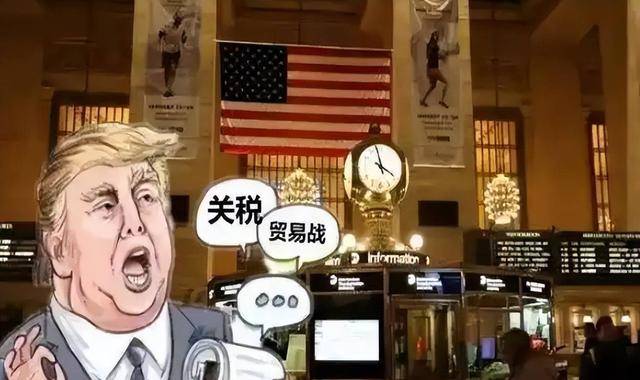
Economic Growth and Consumer Spending - The IMF predicts a global economic growth rate of 3.2% for 2025, which is similar to last year's performance, supported by strong consumer spending in the U.S. [1] - In Q2 2025, U.S. personal consumption expenditures (PCE) increased by 2.5%, indicating that consumers are still willing to spend [1]. Impact of Tariffs and Corporate Performance - PCE is expected to decline to 2% in Q3 and further to 1.5% in Q4, with the negative effects of tariffs starting to manifest, particularly impacting high-end manufacturing in Europe [3]. - Companies like LVMH reported an 8% revenue drop, and Porsche's operating profit plummeted by 99%, attributed to the adverse effects of U.S. tariffs [3]. Technology Sector and AI Investment - The five major U.S. tech companies (Meta, Google, Oracle, Microsoft, Amazon) are projected to increase their capital expenditures by 30% annually by 2027, highlighting the significant role of AI in driving economic growth [3]. - Alibaba's AI-related revenue has seen triple-digit growth for seven consecutive quarters, with Alibaba Cloud's growth reaching 18% [5]. Global Debt and Economic Risks - Global debt is expected to exceed $337.7 trillion by 2025, with an increase of $21 trillion in the first half of the year, raising concerns about the sustainability of this debt burden [8]. - Many European countries are facing bankruptcy risks, indicating a precarious economic situation [8]. Structural Changes in Global Trade - The world is experiencing a "re-globalization" trend, moving away from "de-globalization," with countries seeking diversified trade partners and reshaping global supply chains [9]. - Tariff policies under the Trump administration have created a more complex global trade environment, with varying rates for allies and other nations [12]. Monetary Policy and Market Sentiment - The Federal Reserve's independence is crucial for maintaining stability in U.S. debt rates and the dollar, with potential fluctuations expected in the market [14]. - Investors are currently wary of the dollar, but a rebound is anticipated, contingent on the Fed's ability to maintain its policy independence [14]. Economic Challenges Ahead - The global economy is facing a slowdown, with high debt levels and reliance on stimulus measures creating a vicious cycle [16]. - Structural inflation persists, making it difficult for governments, businesses, and consumers to navigate a high-interest, high-debt environment [18].
AI 狂热下的美股暗礁:泡沫的边界在哪?
Sou Hu Cai Jing· 2025-11-24 14:33
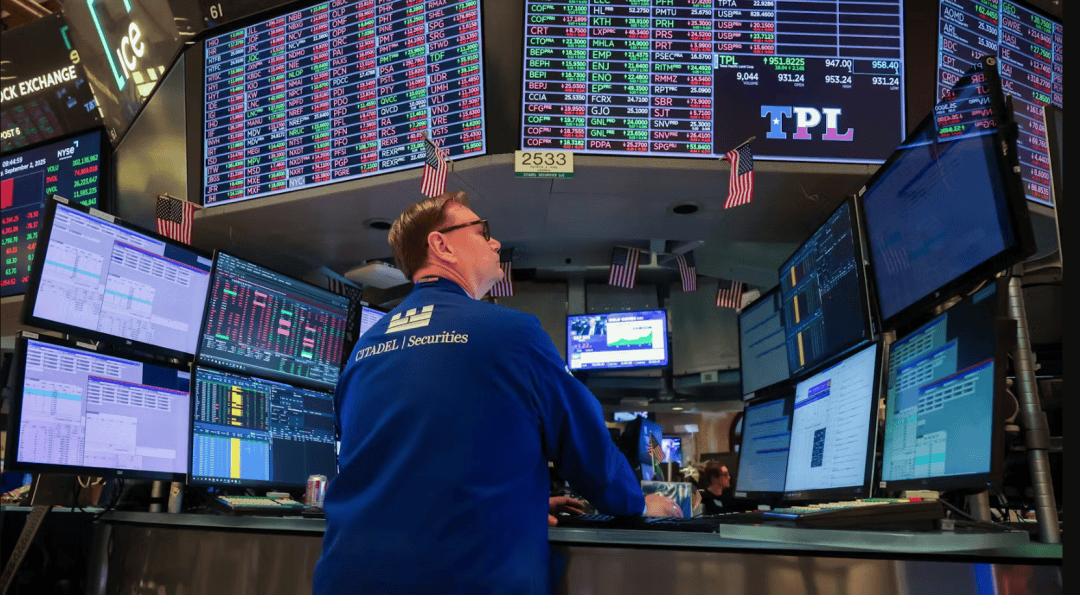
Group 1 - The recent pullback in tech stocks has cooled the AI frenzy in the U.S. stock market, raising concerns about an "AI bubble" as Nvidia's market cap surpasses the combined total of the top 20 European companies and the Shiller P/E ratio approaches levels seen during the 2000 internet bubble [1][3] - The current market structure shows extreme concentration, with eight out of the top ten U.S. companies being AI tech stocks, compared to only four during the peak of the 1999 internet bubble, leading to significant index weight contributions from these companies [3] - Historical data indicates that when the Shiller P/E ratio exceeds 35, the S&P 500 has negative returns over the next 1 to 10 years, prompting notable investors like Michael Burry to short Nvidia and SoftBank to cash out $5.83 billion in Nvidia stock [3] Group 2 - Tech giants are engaged in a capital expenditure race to dominate the AI sector, with Microsoft increasing its Q3 capital spending to $34.9 billion (up 74% year-over-year) and Meta raising its annual spending forecast to $70-72 billion [4] - There is a growing imbalance between investment and returns, as evidenced by Meta's 26% revenue growth alongside an 83% drop in net profit, while only a few companies like Nvidia and Microsoft maintain high growth [4] - The re-emergence of leveraged strategies, such as the securitization of long-term data center leases, poses risks reminiscent of the 2008 subprime mortgage crisis, especially given the high capital density required for GPU deployment [4] Group 3 - Concerns about the long-term growth potential of AI are highlighted by a June paper from the Santa Fe Institute, which points to performance bottlenecks in large language models, leading to a divergence in performance among tech stocks [6] - While companies like Alphabet and Nvidia report strong earnings, others like Meta and Tesla show signs of growth fatigue, indicating that AI benefits are concentrated among a few firms with core technologies [6] - Despite the challenges, the overall profitability of tech stocks remains stronger than during the internet bubble, with companies like Microsoft and Google having sufficient cash flow to support R&D investments, and SoftBank's reinvestment in OpenAI signaling confidence in AI's long-term value [6]
英伟达:Q3 股价回调后,丝毫不慌
Xin Lang Cai Jing· 2025-11-24 13:31
Core Viewpoint - Nvidia's Q3 FY2026 earnings report showcased strong AI demand, with a record revenue increase of $10 billion quarter-over-quarter, indicating that the AI competition is intensifying despite market concerns about an AI bubble [1][2]. Group 1: Financial Performance - Nvidia reported total revenue of $57 billion for Q3, representing a year-over-year growth of 62%, significantly exceeding Wall Street expectations and the company's prior guidance [2]. - The quarter's revenue increase of approximately $10 billion is more than double the total revenue of AMD's data center segment for Q3, which was $4.3 billion [2]. - The GAAP gross margin reached 73.4%, while the non-GAAP gross margin was 73.6%, both surpassing previous guidance, attributed to the increased share of data center business [4]. Group 2: Market Dynamics and Growth Prospects - Nvidia's forward P/E ratio is approximately 38 times, which analysts consider attractive, especially with Q4 revenue guidance of $65 billion, indicating an $8 billion quarter-over-quarter increase [1][7]. - The company has locked in $500 billion in revenue from its Blackwell and Rubin series from early 2025 to the end of 2026, indicating strong future growth potential [5]. - Concerns about an AI bubble were addressed by CEO Jensen Huang, who emphasized the ongoing growth cycle and the significant revenue increases driven by AI applications, such as Meta's GEM model [3]. Group 3: Inventory and Supply Chain - Q3 inventory increased by 32% quarter-over-quarter, and supply commitments rose by 63%, reflecting the company's preparation for future growth, particularly with the upcoming launch of the Rubin GPU [4][5]. - The increase in inventory is seen as a strategic move to mitigate risks associated with the Rubin GPU launch, ensuring adequate supply to meet anticipated demand [5]. Group 4: Competitive Positioning - Nvidia's valuation remains attractive compared to competitors, with its forward P/E ratio being half that of AMD's [7]. - The stock price is currently supported at the $180 level, with a potential drop to $150 representing a forward P/E of 32 times, which analysts view as a compelling buying opportunity [7]. Group 5: Market Concerns - Nvidia's GPU revenue from the Chinese data center market was only $50 million in Q3, aligning with expectations that significant orders would not materialize in this quarter [6]. - The company's stock performance is influenced by broader market trends, with analysts noting that macroeconomic pressures could lead to a decline below current support levels [7][8].