IP变现

Search documents
阅文集团(00772.HK):新丽传媒拖累25年利润 版权运营延续向上趋势
Ge Long Hui· 2026-02-14 14:45
机构:申万宏源研究 研究员:林起贤/夏嘉励 事件: 公司发布盈利预警:1)预计25 年调整后归母净利润为8-9 亿元,低于预期,较24 年调整后归母净利润 11.4 亿元(新丽传媒3.4 亿元,在线业务+阅文自有版权运营业务8 亿元)对应同比下滑21-30%。2)预 计25 年调整前归母净亏损为7.5-8.5 亿元,同比24 年亏损扩大;主要由于新丽传媒计提商誉减值约18 亿 元。 投资要点: 新丽传媒项目波动导致公司25 年利润下滑。一方面,部分剧集延期,25 年全年仅上线2部剧(《扫毒风 暴》《哑舍》);另一方面,电影《情圣3》亏损,根据猫眼专业版,总票房仅4262 万。新丽传媒仍然 为国内头部剧集制作公司,26 年已上线剧集《年少有为》,关注后续项目排播。新丽传媒25 年已计提 剩余全部商誉减值,减值支出不影响调整后利润口径,不影响现金流。 在线业务及阅文自有版权运营业务25 年基本符合预期。阅文作为付费网文领军,在线业务预计平稳。 公司当前核心看点版权运营业务25 年增速较好,经营向上。衍生品、短剧、漫剧等更"短平快"的IP 变 现方式,可平滑长剧电影产品周期波动。 漫剧等有助于阅文从"爆款驱动"转向 ...
未知机构:2月金股泡泡玛特坚定看好年会信息小结王宁讲话简评1月底部深度报告回顾-20260210
未知机构· 2026-02-10 01:55
2月金股【泡泡玛特】坚定看好:年会信息小结&王宁讲话简评&1月底部深度报告回顾: 1、全年全品类销售量4亿+,Labubu单品销售量1亿+,i.e.Labubu销售量占比25% 2、全球门店数量700家+,海外200家+ 3、全球注册会员1亿+,1H25中国内地会员数量近6000万,海外会员数量占比低于中国内地;49%新会员仅认识 Labubu 3.0 4、乐园客流量同比+77%,其中非亲子家庭游客占比59%,非本 3、全球注册会员1亿+,1H25中国内地会员数量近6000万,海外会员数量占比低于中国内地;49%新会员仅认识 Labubu 3.0 4、乐园客流量同比+77%,其中非亲子家庭游客占比59%,非本地游客占比58%,潜在客群超预期;城市乐园二期 规划中,或包含游乐项目。 5、毛绒成为第一大品类,占比40%左右,预计全年占比相比25H1保持稳定。 6、建成6大供应链基地,赋能20万个就业岗位。 相比2024年7月全品类产能+2.5倍,毛绒产能+7倍。 目前国际估值比较赔率可观,成长阶段强化安全边际,国力势能强化胜率: (1)pe角度: 迪士尼与三丽鸥的历史估值体系pe在10-30或10-40倍,10倍 ...

想当迪士尼,蜜雪冰城够格吗?
3 6 Ke· 2026-02-04 02:23
最近,我在刷招聘平台时,注意到一个不太寻常的细节。 蜜雪冰城,在BOSS直聘上,悄悄上线了一批与乐园项目相关的岗位。 起初我以为又是哪种品牌活动,点进去才发现,是清一色的乐园建制岗位:乐园内容编剧、乐园演艺统筹、乐园工程管理、乐园周边产品统筹。 招聘描述里反复出现的关键词是世界观、核心叙事线、沉浸式体验、演艺体系、工程全流程管理。 月薪区间则在11K到24K,部分岗位明确写着20K以上,要求5到10年相关经验,工作地点标注在郑州。 更耐人寻味的是,任职要求中多次提及熟悉迪士尼、环球影城等成熟主题乐园的内容与演艺逻辑,有完整乐园项目经验者优先。 与此同时,关于蜜雪冰城选址的讨论也在悄然发酵,有网友提到,蜜雪冰城的地勘工作已经完成,位置就在郑州中牟。 这个名字对于主题乐园爱好者并不陌生,只有河南、电影小镇、方特、海昌、绿博园,一大批河南主题文旅项目已经在那里完成集结。 对此,蜜雪冰城官方客服对媒体的回应很谨慎,表示暂不清楚具体规划,但种种迹象来看,这个曾经站在街头唱着甜蜜蜜的雪王,正在尝试搭建一个更大 的舞台。 更重要的是,蜜雪冰城并不孤单。 就在不久前,扬州爱奇艺乐园定在今年2月8日正式启幕,从前期宣推来看,相 ...

这家上海游戏公司,悄悄投出3个IPO
AI研究所· 2026-01-16 11:03
Core Viewpoint - MiHoYo has established itself as a unique player in the domestic gaming industry, successfully competing with industry giants without relying on mergers and acquisitions, instead focusing on core products like "Genshin Impact" and "Honkai" series, while building a vast investment network across various sectors including AI, aerospace, and energy [1][6]. Investment Landscape - In early 2026, MiHoYo's investment strategy became more visible with the IPO applications of three companies: Suplay, MiniMax, and Soulgate, showcasing its diverse investment portfolio [2][3]. - MiHoYo holds significant stakes in these companies, being the largest external shareholder in Suplay (11.86%), an angel investor in MiniMax (approximately 6.4%), and a key institutional shareholder in Soulgate (5.47%) [3]. Strategic Focus - The investments in AI, trendy toys, and social platforms align with MiHoYo's vision of constructing a "virtual world," addressing three core aspects: technological foundation, IP monetization, and user entry points [8][9]. - MiniMax's technology is integrated into MiHoYo's games, enhancing content production efficiency and user interaction, with MiniMax's revenue reaching 380 million RMB in the first three quarters of 2025, a 174.7% year-on-year increase [13][14]. Monetization and User Engagement - Suplay has transformed its business model through MiHoYo's investment, significantly increasing its revenue from MiHoYo's IPs, which contributed over 60% of its earnings as of September 2025 [15][17]. - Soul, targeting Gen Z users, has become a crucial platform for virtual social interaction, with 390 million registered users and a daily active user rate of 1.1 million, 78.7% of whom are Gen Z [18][19]. Investment Strategy Evolution - MiHoYo's investment strategy shifted significantly in 2021, expanding beyond gaming content to include hard tech sectors like brain-computer interfaces and nuclear fusion, driven by strong cash flow from "Genshin Impact" [24][25]. - The company’s decision to avoid external investments allows it to focus on long-term strategic goals without pressure for short-term returns, with founders holding over 85% of the shares [26]. Long-term Vision - MiHoYo aims to create a virtual world that integrates social, consumer, work, and entertainment aspects, necessitating investments in diverse technologies like AI and energy [28][29]. - The company's investments are strategically aligned to build a technological foundation for this virtual world, indicating a comprehensive approach to future growth [30]. Conclusion - MiHoYo's investment strategy reflects a broader trend in the cultural technology industry, emphasizing the importance of integrating content, technology, and consumer engagement to maintain competitive advantage [32][33].
虚拟IP变纸上黄金,Suplay逆袭全球前五,IPO能否解死循环?
Sou Hu Cai Jing· 2026-01-14 15:20
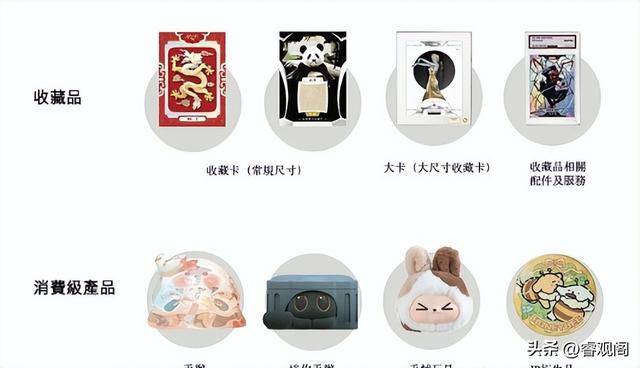
Core Viewpoint - Suplay is attempting to go public in Hong Kong, aiming to become the first publicly listed company in the collectible card industry, leveraging its partnership with miHoYo for significant profits, but faces challenges as its core IP license is set to expire soon [1] Group 1: Company Overview - Suplay has submitted its IPO application to the Hong Kong Stock Exchange, with CICC and JPMorgan as joint sponsors [1] - The company has achieved a gross margin exceeding 60%, comparable to luxury goods, but its reliance on IP has surged to 77.7% [1][11] - Suplay's flagship brand, Kaka Wo, utilizes premium materials and traditional craftsmanship, with individual card prices reaching up to 69,900 yuan [4] Group 2: Market Position and Performance - Suplay has positioned itself as a leader in the collectible non-battle card market in China and is among the top five brands globally [11] - The company has registered over 1.3 million users, with 99.5% being adults, creating a complete ecosystem around scarcity and value verification [6] - In 2024, Suplay's revenue is projected to be 280 million yuan, achieving a 30.5% adjusted net profit margin, significantly outperforming industry leader KaYou, which reported a loss of 1.242 billion yuan despite higher revenue [8][9] Group 3: Challenges and Risks - Suplay's dependency on licensed IP has increased dramatically, with its own IP revenue dropping from 40.6% to 4.1% [11] - The core IP that contributed 32.3% of revenue in the first three quarters of 2025 is set to expire, with negotiations for renewal ongoing, raising concerns about future revenue stability [13] - Out of 22 signed IPs, only three are exclusive, indicating a potential competitive disadvantage as other companies, like Pop Mart, pursue partnerships with major players [13]
漫剧产业发展对IP变现方式的影响
2025-12-25 02:43
Summary of the Animation Industry Conference Call Industry Overview - The animation industry is experiencing significant changes due to the integration of AI technology, which has improved production efficiency dramatically. The production cycle for a 50-80 episode series has been reduced to three months, lowering both time and labor costs significantly [1][4]. Key Insights - **Production Costs**: The cost of producing a typical non-sand sculpture animation is between 80 to 300 RMB per minute, while high-quality productions range from 1,000 to 2,000 RMB per minute. In contrast, traditional animation costs around 15,000 to 20,000 RMB per minute, with total investments reaching 20 to 30 million RMB for a full series [5]. - **Copyright Fees**: The fees for high-value copyrights have decreased from 5 to 10 million RMB to 800,000 to 5 million RMB, while ordinary copyright fees have dropped from 500,000 RMB to 200,000 RMB. This reduction lowers the barriers to entry for the industry [6]. - **Market Potential**: The current user base for long video platforms is estimated at 20 to 30 million, but the potential male user base could reach 170 million, and including female users, it could expand to 300 million, indicating substantial growth opportunities [7][2]. AI Impact - **Efficiency Gains**: AI is utilized extensively in the production of animation, particularly in script generation and image creation, achieving a usage rate of 70-80% in certain genres. This has led to a return on investment (ROI) of approximately 1.1 for animation projects [3][17]. - **Production Process**: The production of an AI animation involves selecting marketable books, scriptwriting (often with AI assistance), generating key frames, and final editing, typically completed by a team of 20-30 people within a month [11]. Revenue and Performance - **Revenue Generation**: Top-performing works on platforms like Douyin have generated over 3 million RMB each, with the platform's average daily revenue from animations expected to exceed 20 million RMB by October 2025 [12][14]. - **Monthly Income**: A typical animation can earn around 60,000 RMB per month, with a lifecycle of one to two months, allowing for ROI calculations within one to two quarters [26]. User Demographics and Trends - **Core User Base**: The primary audience for animations is predominantly male (approximately 60%), who have high content demands but lower expectations for visual quality. Their willingness to pay is currently unclear but may increase with improved content quality [24]. - **Future Trends**: The industry is moving towards a model that emphasizes high-quality long-form animations, with a focus on creating flagship brands. As user engagement increases, particularly among male users, there is potential for expanding into female demographics [25]. Competitive Landscape - **Market Dynamics**: The animation market has not yet established a clear competitive structure, with platforms currently focused on rapid user growth. The competition is expected to intensify as AI technology evolves and consumer expectations for quality increase [23]. Conclusion - The animation industry is poised for significant growth driven by AI advancements, reduced production costs, and an expanding user base. The shift towards high-quality content and effective monetization strategies will be crucial for future success.
国泰海通 · 晨报1219|宏观、传媒
国泰海通证券研究· 2025-12-18 14:09
Macroeconomic Analysis - The narrow revenue growth has slowed down, with national public budget revenue increasing by only 0.8% year-on-year from January to November 2025, and the growth rate in November being flat compared to the same period in 2024 [1] - Narrow budget expenditure grew by 1.4% year-on-year from January to November 2025, with a decline of 3.7% in November, indicating a marginal narrowing of the decline compared to October [1] - The overall fiscal expenditure growth remains low, influenced by prior fiscal efforts and year-end budget adjustments, with key areas like health, technology, and environmental protection seeing leading expenditure growth [1] Government Fund Analysis - Government fund budget revenue decreased by 4.9% year-on-year from January to November 2025, with a significant decline of 15.8% in November [2] - Government fund budget expenditure increased by 13.7% year-on-year from January to November 2025, with a notable recovery in November, growing by 2.8% compared to a decline of 38.2% in October [2] - The increase in expenditure is attributed to the allocation of 500 billion yuan from the central government to support local investment projects [2] Fiscal Policy Outlook - The fiscal balance remains tight, with moderate revenue growth constraining expenditure amid economic growth and real estate market transitions [3] - Expenditure is becoming more targeted and effective, with a clear focus on key areas such as social welfare and technological innovation [3] - The decision-makers plan to implement a more proactive fiscal policy in 2026, with an expected narrow fiscal deficit rate of around 4%, emphasizing structural optimization and enhancing local fiscal sustainability [3] IP Fun Food Industry Analysis - The IP fun food sector, which combines IP with food and collectible gifts, is rapidly growing, driven by consumer demand for emotional consumption [6][7] - The market size of China's IP food industry is projected to grow from 18.1 billion yuan in 2020 to 35.4 billion yuan by 2024, with a CAGR of 18.2%, while the IP fun food segment is expected to grow from 5.6 billion yuan to 11.5 billion yuan, with a CAGR of 19.6% [7] - The growth is fueled by the younger generation's increasing emotional consumption needs and the mature supply chain of the snack industry in China [7] Competitive Landscape - The core competitiveness in the IP fun food market lies in supply chain management and IP operation, with low differentiation in snack products making cost control crucial [8] - The market remains fragmented, with leading companies holding only 7.6% market share, indicating a competitive environment with many small players [9] - The differentiation provided by IP toys as gifts is key to achieving premium pricing in a market where snack products lack inherent differentiation [8][9]

IP 系列报告一:情绪消费风起,IP趣玩行业快速增长
GUOTAI HAITONG SECURITIES· 2025-12-18 02:28
Investment Rating - The report rates the industry as "Buy" [3] Core Insights - The IP food and play industry is rapidly growing under the trend of emotional consumption, with supply chain management and IP operation being the core [2][3] - The market for IP food products is expected to grow from 18.2% CAGR from 2020 to 2024, reaching a scale of 354 billion yuan, while the IP play food segment is projected to grow at a CAGR of 19.6%, reaching 115 billion yuan by 2024 [10][12] - The emotional consumption trend is driven by younger generations who prioritize identity recognition and emotional connection, leading to increased demand for IP products [15][12] Summary by Sections 1. IP Play as a Combination of IP, Food, and IP Gifts - IP play food products include collectible cards, stickers, badges, figurines, and edible toys, providing a unique experience that combines eating and playing [6][7] - Compared to regular IP food, IP play food can effectively enhance premium pricing through limited edition gifts that stimulate consumer collection desires [7][6] 2. Rapid Industry Growth and Fragmented Landscape - The Chinese IP food industry is expected to reach 431 billion yuan by 2025, with a projected CAGR of 18.5% from 2025 to 2029 [10][11] - The market is characterized by a fragmented competitive landscape, with the leading company, Jintian Animation, holding a market share of 7.6% in 2024 [3][60] 3. Supply Chain Management and IP Operation as Core Competencies - The core competitive advantage lies in supply chain control and effective IP operation, as the differentiation of snack products is low [33][34] - The cost of IP gifts is low, allowing for higher pricing of IP food products compared to non-IP snacks, with the impact of gift items potentially increasing prices by 2-3 times [52][33] 4. Domestic Brand Rise in a Fragmented Competitive Landscape - The IP food industry is experiencing a structural transformation, with domestic brands gaining prominence due to product innovation and cultural integration [60] - The top five revenue-generating companies in 2024 include Pepsi, Mars, Mondelez, Jintian Animation, and Nestle, with market shares of 5.6%, 2.9%, 2.7%, 2.5%, and 1.3% respectively [60]
业务承压 阅文押注漫剧与潮玩 IP变现能否续写新故事?
Xi Niu Cai Jing· 2025-12-05 09:57
Core Insights - Recently, the company announced the opening of 100,000 premium IPs and the establishment of a special fund of 100 million yuan to develop the comic-drama sector, despite facing revenue decline and challenges in its core online business [2] - The company's revenue for the first half of 2025 decreased by 23.9% year-on-year to 3.191 billion yuan, with net profit down 27.7% to 508 million yuan [2] - The core IP operation business suffered a 48.4% revenue drop to 1.138 billion yuan due to the lack of new film and television releases [2] - The online reading business has stagnated, with revenues of 4.364 billion yuan in 2022, 3.948 billion yuan in 2023, and 4.031 billion yuan in 2024, indicating a growth bottleneck [2] - The average monthly active users on the company's platform fell from 244 million in 2022 to 167 million in 2024, a loss of 77 million users [2] Industry Challenges - The long video platform industry is experiencing systemic crises, with Tencent Video's paid membership dropping by 3 million to 114 million [3] - The film market is also struggling, with a 13% year-on-year decline in box office revenue during the 2025 National Day holiday period [3] - The dual pressure on online and film businesses has hindered the company's path to film adaptation [3] Strategic Initiatives - The company is focusing on comic-dramas and trendy toys as key strategies for breakthrough, leveraging AI technology to create new content forms [3] - The company has achieved over 30 comic-dramas with viewership exceeding 10 million, but faces increasing competition from major players like ByteDance and Bilibili [3] - The trendy toy business is seen as a second growth curve, with a GMV of 480 million yuan in the first half of 2025, nearing last year's total [4] - The company is working on a "Global Trendy Toy Co-Creation Plan" to differentiate itself in the blue ocean market [4] Competitive Landscape - The company is in a catch-up phase in the trendy toy sector compared to established brands like Pop Mart, needing to accelerate resource integration and market promotion [4] - The company aims to leverage its vast IP through AI-enabled lightweight adaptations to activate content value and expand monetization boundaries [4] - Challenges include homogenized competition in the comic-drama sector, brand-building cycles in trendy toys, and the need to address user attrition in the core online business [5]

《疯狂动物城2》,救了电影市场丨消费参考
2 1 Shi Ji Jing Ji Bao Dao· 2025-11-28 02:09
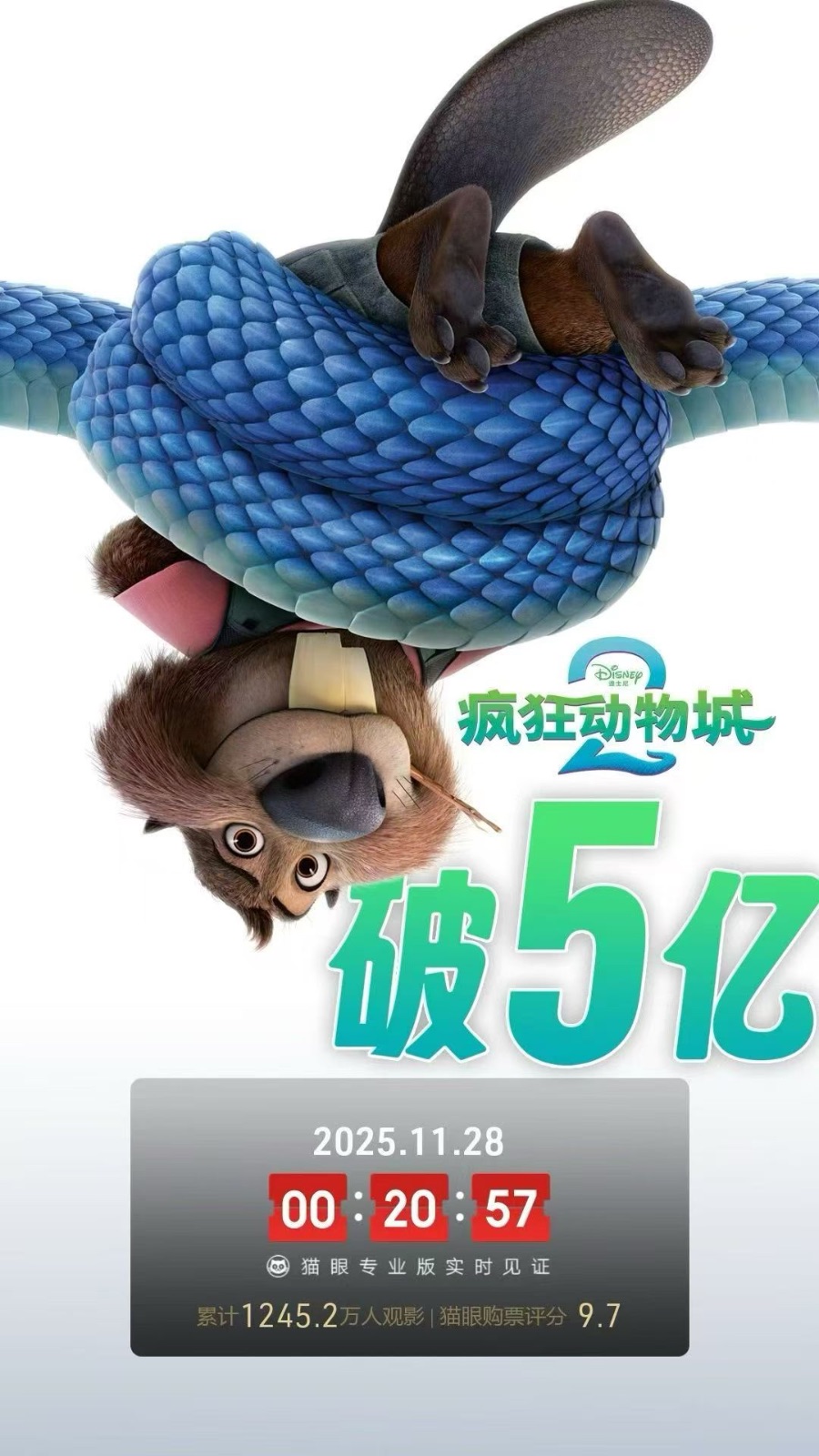
Group 1 - The release of "Zootopia 2" has revitalized the film market, with a cumulative box office exceeding 503 million yuan and over 12.53 million viewers as of November 28 [2] - The success of blockbuster films is crucial for the current film market, which has been struggling, as evidenced by a 13% to 18% year-on-year decline in box office during the 2025 National Day period [3] - The film's popularity indicates that there is still demand for movies, primarily hindered by a lack of quality commercial films [6] Group 2 - "Zootopia 2" has demonstrated significant commercial potential, with various brand collaborations and the establishment of a themed park in Shanghai, attracting millions of visitors [7] - The success of animated films like "Zootopia" has boosted confidence among domestic animation professionals, highlighting the high IP monetization value and the potential for international expansion [8] Group 3 - The film market faced a 34.73% year-on-year decline in box office during the second quarter, with notable drops during the Qingming and May Day holidays [4] - The National Film Administration reported a 2.7 billion yuan decrease in box office revenue during this year's National Day period compared to the previous year [3]