
关税威胁

Search documents
隔夜美股 | 标普再创新高,英伟达财报后跳水
Sou Hu Cai Jing· 2025-08-28 02:47
Group 1 - The three major U.S. stock indices closed higher, with the Dow Jones up 0.32%, Nasdaq up 0.21%, and S&P 500 up 0.24%, reaching both intraday and closing historical highs [1] - Technology stocks showed mixed performance, with Intel rising over 2%, while Nvidia fell 0.09% and dropped over 5% in after-hours trading due to disappointing data center revenue [1] - The probability of a Federal Reserve rate cut in September increased to 88.7%, as the New York Fed President stated the need to observe data before making decisions [1] Group 2 - The Nasdaq China Golden Dragon Index fell sharply by 2.58%, with Meituan experiencing a significant drop of 9.7% post-earnings [1] - The electric vehicle sector saw declines across the board, with Li Auto down over 8%, Xpeng down nearly 7%, and NIO down over 5% [1] - Major e-commerce players also faced losses, with JD.com down over 3% and Alibaba down 1.58% [1] Group 3 - Nvidia's weak data center revenue may dampen sentiment in the tech sector, although its Q3 revenue guidance of $54 billion exceeded expectations [1] - Despite high expectations for a Federal Reserve rate cut, tariff threats and geopolitical risks continue to disrupt the market [1]

張晶霖:伦敦金多头畏畏缩缩能否追?8.27现货黄金走势分析操作建议!
Sou Hu Cai Jing· 2025-08-27 13:05
Group 1 - The international gold price experienced a decline due to a stronger dollar, but concerns over the independence of the Federal Reserve, triggered by President Trump's threats, provided some support for gold [3] - Trump's new round of tariffs against China and a 50% tariff on India are raising economic growth concerns, which may weaken the attractiveness of the dollar and other U.S. assets, benefiting gold [3] - Technical analysis indicates that gold still has bullish potential as long as the 14-day Relative Strength Index (RSI) remains above 50, with a "golden cross" formation observed between the 21-day and 50-day moving averages [5] Group 2 - The suggested trading strategy for gold includes buying near 3376 with a stop loss at 3365 and targets at 3393 and 3400, while selling near 3401 with a stop loss at 3410 and a target at 3380 [6] - Despite a late surge in gold prices, the market remains cautious due to the potential for a bearish daily close, indicating a need for flexible trading positions [6]


50%关税!美国明天将对印度加税,印股相对表现20年最差
Hua Er Jie Jian Wen· 2025-08-26 00:28
Core Viewpoint - The Indian stock market is experiencing significant pressure due to escalating tariff threats from the U.S., leading to a pessimistic sentiment among investors [1][3]. Group 1: Tariff Impact - The U.S. Department of Homeland Security announced a 50% tariff on all Indian goods starting August 27, which is a response to India's purchase of Russian oil [1]. - This tariff increase is part of a broader strategy by the Trump administration to compel Russia to engage in peace talks regarding Ukraine [2]. - The new tariffs are expected to directly impact India's already slowing economic growth, potentially reducing the annual growth rate by 0.6 to 0.8 percentage points according to Citigroup [5]. Group 2: Market Reaction - The MSCI India Index has underperformed the MSCI Emerging Markets Index for four consecutive months, lagging by over 15 percentage points this year, heading towards its worst annual performance in over two decades [1]. - Foreign investors are accelerating their exit from the Indian market, with net selling of Indian stocks for the second consecutive month in August [3]. - Concerns over fiscal deficit expansion are also pressuring the Indian bond market, with the yield on the benchmark 10-year government bond rising by 22 basis points this month [4]. Group 3: Economic Outlook - Analysts warn that if the 50% tariff persists, the impact on India's GDP could be as high as 1%, affecting monetary policy and bond yields [5]. - Despite recent tax cuts introduced by Prime Minister Modi aimed at boosting the economy, sectors like banking and IT are expected to face continued pressure on profitability [5]. - The Reserve Bank of India has indicated that the impact of tariffs may be minimal, and the ongoing monetary easing could support economic growth [6].
出行火热,地产降温
Haitong Securities International· 2025-08-18 09:22
Consumption - Travel and tourism activity remains high, with significant recovery in urban and intercity population movement, reflected in increased subway ridership and flight operations[7] - Retail and wholesale volumes for automobiles have slightly declined, indicating a weakening effect of promotional activities and subsidies[7] - Movie attendance and box office revenues have significantly decreased post-summer, indicating a drop in consumer interest[7] Investment - New special bonds issued reached CNY 3.08 trillion as of August 16, with a recent acceleration in issuance[20] - Real estate transaction volumes remain subdued, with new home sales in 30 cities showing a slight recovery but still down year-on-year[20] - Construction activity is marginally improving, with asphalt operating rates increasing and cement shipment rates recovering seasonally[20] Trade and Prices - Import and export volumes are showing divergence, with a 11.1% decline in imports from China to South Korea and a 4.3% drop in global exports[26] - Domestic export freight rates have decreased for seven consecutive weeks, reflecting a retreat from previous shipping surges due to tariff concerns[26] - The Producer Price Index (PPI) remains flat overall, with industrial prices showing little change except for a notable 15% increase in lithium carbonate prices[44] Liquidity - The 10-year government bond yield rose by 5.7 basis points to 1.75%, indicating a tightening liquidity environment[47] - The US dollar index fell by 42 basis points, influenced by moderate inflation data from July, which strengthened expectations for a potential interest rate cut in September[47]
特朗普掀桌失败,莫迪通告全球,印度不跪,11国已加入反美战斗
Sou Hu Cai Jing· 2025-08-18 05:33
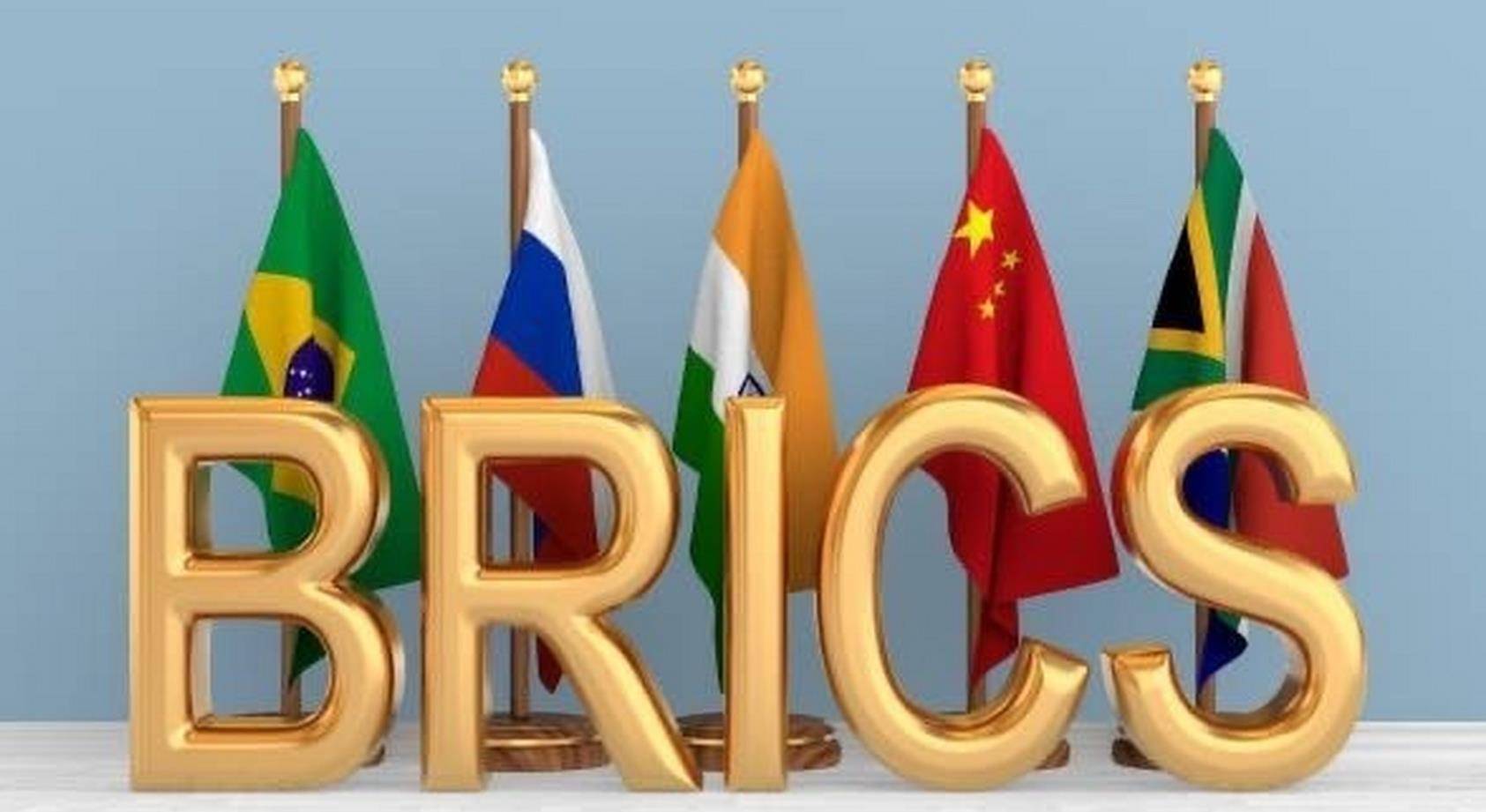
Group 1 - Modi's speech during India's Independence Day emphasized a strong stance against US-India trade tensions, particularly in response to Trump's tariff threats, asserting that India will not compromise its national interests [1] - The core reason for Modi's firm attitude is Trump's aggressive tariff demands and unacceptable requests, particularly regarding agricultural market access, which threatens the livelihoods of approximately 42% of India's population [2][3] - Modi's government is politically constrained from yielding to Trump's demands due to the potential backlash from domestic farmers, a crucial voter base [3] Group 2 - India has taken countermeasures, such as canceling the defense minister's visit to the US and pausing planned military purchases, which could impact US economic interests [3] - Modi is actively seeking international support through multilateral cooperation, focusing on organizations like BRICS and the Shanghai Cooperation Organization to mitigate the negative effects of US tariffs [5] - The strategy of strengthening ties with other nations is aimed at enhancing India's negotiating position with the US, indicating a potential temporary shift in foreign policy [7] Group 3 - Modi's actions not only seek to gain international support but also aim to showcase his leadership domestically, thereby maintaining political stability amid external pressures [9]
法国经济竞争力遭受关税重创
Jing Ji Ri Bao· 2025-08-13 22:05
Core Viewpoint - The recent trade agreements between Europe and the U.S. have not mitigated the damaging impacts of U.S. tariffs, leading to a significant increase in France's trade deficit and raising concerns about the competitiveness of French exports [1][2]. Trade Deficit and Economic Impact - In June, France's trade deficit expanded to approximately 7.7 billion euros, with imports rising by 400 million euros to 57.6 billion euros and exports increasing by 300 million euros to 49.9 billion euros [1]. - For the first half of 2025, France's cumulative trade deficit reached 43 billion euros, an increase of about 4.4 billion euros compared to the second half of 2024 [1]. - The trade deficit for the second quarter of 2025 was 22.9 billion euros, widening by approximately 2.8 billion euros from the first quarter [1]. Structural Issues in Trade Agreements - The framework agreement between the U.S. and Europe reveals significant structural differences, particularly regarding tariff exemptions, with the U.S. interpreting a 15% tariff as broadly applicable to European goods, while Europe seeks exemptions for key industries [2]. - French officials emphasize the need to advocate for exemptions beyond the aviation sector, including pharmaceuticals and food processing [2]. Agriculture and Food Sector Concerns - French agricultural products, including wine and cheese, are excluded from tariff exemptions, with potential additional tariffs of 800 million euros if wine and spirits do not receive exemptions [3]. - The U.S. demands simplification of health certifications for meat and dairy, which could impact food safety standards in France and Europe [3]. Digital Services and Technology - The U.S. claims that Europe has committed to exempting American companies from certain taxes, while Europe has only stated it will coordinate further [3]. - France views the digital services sector as a critical area for exerting pressure on the U.S. and aims to implement a digital tax on American tech giants [3]. Military and Energy Procurement - The U.S. has indicated that Europe will significantly purchase American military equipment by 2026, but European officials argue that military procurement was never formally on the agenda [4]. - France is pushing for exemptions in energy and pharmaceuticals to protect domestic jobs and industries, criticizing the reliance on U.S. fossil fuels [4]. France's Position and Strategy - France expresses dissatisfaction with compromises made in negotiations with the U.S. and vows to maintain its competitiveness through "strategic autonomy" [5]. - French officials argue that the U.S. tariffs will lead to a "lose-lose" situation, affecting both American consumers and exports [5]. - The French government aims to strengthen its position in trade negotiations by focusing on collective unity within the EU and addressing structural imbalances in service trade [6]. Future Coordination and Policy Recommendations - Experts suggest that France should enhance coordination in trade strategy, avoid unilateral actions, and utilize "anti-coercion tools" against U.S. threats [6]. - Policy recommendations include targeted subsidies, diversifying export markets, and increasing investments in innovation and green development to counteract U.S. tariff impacts [6].
道明证券:市场对美国关税威胁心存疑虑,关注经济数据
Sou Hu Cai Jing· 2025-08-07 09:58
Group 1 - The core viewpoint of the article highlights market skepticism regarding U.S. tariff threats, leading to reduced focus on tariff announcements [1] - The U.S. has imposed tariffs of 50% on imports from India, 39% on imports from Switzerland, and 35% on certain products from Canada, along with tariffs on other trade partners [1] - Market attention is shifting towards the impact of tariffs on economic data and expectations of interest rate cuts by the Federal Reserve [1] Group 2 - The overall market remains orderly, partly due to skepticism about some of President Trump's more extreme threats [1]
特朗普再发威胁:将大幅提高对印度关税
Zhong Guo Xin Wen Wang· 2025-08-04 22:36
Core Viewpoint - The article discusses President Trump's threats to increase tariffs on Indian goods due to India's purchase of Russian oil and subsequent resale on the open market, which he claims is for profit [1]. Group 1: Tariff Increase - President Trump announced a 25% tariff on Indian goods starting August 1, as part of broader punitive measures [1]. - Trump expressed his intention to significantly raise tariffs on India in response to their oil trade practices [1]. Group 2: India's Response - The Indian Ministry of Commerce stated that it is assessing the impact of Trump's statements and will take necessary measures to protect national interests [1]. - Indian officials indicated that despite the threats, India will continue to purchase Russian oil due to long-term contracts that cannot be abruptly terminated [1].
特朗普威胁100%关税后,莫迪迅速行动,下令停止购买俄罗斯石油?
Sou Hu Cai Jing· 2025-08-01 13:28
Group 1 - The four major state-owned oil companies in India have halted new oil procurement requests from Russia, marking a temporary suspension of oil trade with Russia [1][3] - State-owned oil companies control over 60% of India's refining capacity, processing approximately 5.2 million barrels per day, making them a key player in the industry [3] - Indian Oil Corporation, the largest oil company in India, has explicitly rejected oil supplies from Russia, significantly impacting Russian oil exports [3] Group 2 - The primary reason for this halt is the threat from former President Trump, who warned that countries purchasing oil from Russia could face a 100% tariff, causing confusion in the Indian refining sector [6] - Economic factors also play a role; since the onset of the Russia-Ukraine conflict, Russian oil supply to India has increased over 30 times, initially attracting Indian companies with discounts of $14 to $16 per barrel compared to market prices [9] - Recently, the discount offered by Russia has decreased to only $2.5 to $4 per barrel, reducing the attractiveness of Russian oil and prompting Indian companies to seek alternatives from other regions [9]
分析师:美国非农就业数据或破坏美国经济的“韧性”
news flash· 2025-08-01 12:22
Core Viewpoint - Analysts express concern that significantly weaker-than-expected U.S. non-farm payroll data could challenge the current strength of the U.S. dollar, potentially undermining the narrative of economic resilience in the face of tariff threats [1] Summary by Relevant Categories Economic Outlook - Analysts are pessimistic about the upcoming non-farm payroll report, suggesting it may disrupt the perception of U.S. economic resilience [1]