
国补政策

Search documents
汽车补贴按价浮动 明年“两新”政策继续
Bei Jing Shang Bao· 2025-12-30 16:04
Group 1 - The core policy for 2026 includes large-scale equipment updates and a trade-in program for consumer goods, with support for home appliances and digital products [1][3] - Consumers purchasing energy-efficient home appliances will receive a subsidy of 15% of the product price, capped at 1500 yuan per item, with a limit of one item per category per consumer [1] - New digital products eligible for subsidies include smartphones, tablets, smartwatches, and smart glasses, with a similar subsidy structure as home appliances [3] Group 2 - The automotive subsidy policy for 2026 will adjust from fixed amounts to a percentage of the vehicle price, linking subsidies directly to the purchase price [3][4] - For vehicle trade-ins, consumers can receive an 8% subsidy on the price of new energy vehicles, capped at 15,000 yuan, and a 6% subsidy for fuel vehicles with an engine size of 2.0 liters or less, capped at 13,000 yuan [3][4] - The scrapping and replacement subsidy offers higher rates, with 12% for new energy vehicles (up to 20,000 yuan) and 10% for smaller fuel vehicles (up to 15,000 yuan) [4] Group 3 - Funding for the "national subsidy" program will primarily come from the issuance of long-term special bonds, with the issuance amount increasing from 150 billion yuan last year to 300 billion yuan this year [4][5] - The central government will support local governments with a 9:1 funding ratio for the consumer goods trade-in program, with varying central government contributions based on regional classifications [4][5] - Unused subsidy funds by the end of 2026 will be reclaimed by the central government, and regions with significant unfulfilled subsidy claims will face increased oversight [5]

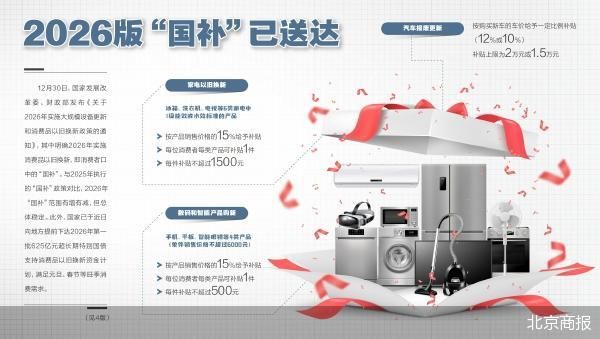
官宣!明年,“国补”继续!
Jin Rong Shi Bao· 2025-12-30 12:24
Core Viewpoint - The National Development and Reform Commission and the Ministry of Finance have issued a notice regarding the continuation of large-scale equipment updates and consumer goods replacement policies in 2026, optimizing support scope, subsidy standards, and implementation mechanisms [1] Group 1: Optimization of Support Scope - The support scope for equipment updates will generally continue from 2025, with additions in the livelihood sector for old residential elevators and equipment updates in elderly care institutions, as well as in safety for firefighting and inspection equipment [2] - The policy will continue to implement subsidies for scrapping and replacing automobiles, and for replacing old household appliances, focusing on six categories: refrigerators, washing machines, televisions, air conditioners, computers, and water heaters [2] - The subsidy for digital products will be expanded to include smart products such as smartphones, tablets, smartwatches, smart glasses, and smart home products, including those designed for the elderly [2] Group 2: Optimization of Subsidy Standards - For equipment updates, the subsidy for updating old residential elevators will be adjusted from a fixed amount to a tiered subsidy based on the number of elevator floors [3] - In the scrapping and replacing of old operational trucks, priority will be given to supporting the replacement with electric trucks [3] - The subsidy for household appliances will be adjusted to support products with a 1st-level energy efficiency or water efficiency rating, providing 15% of the product price as a subsidy, with a maximum of 1,500 yuan per item [3] Group 3: Optimization of Implementation Mechanisms - The project application mechanism and review process for equipment updates will be optimized to lower the investment threshold for applications and increase support for small and medium-sized enterprises [4] - The funding allocation method for consumer goods replacement will be optimized, with strict measures against fraudulent claims and illegal practices [4] - The notice emphasizes the need for coordinated efforts among various departments to implement the policies effectively, with local governments required to organize and enhance the effectiveness of the policies [4]
2026年国补:智能眼镜首次入选,家电只补一级能效
Di Yi Cai Jing· 2025-12-30 12:07
严厉打击骗补套补和"先涨后补"等违法违规行为。 洛图科技(RUNTO)资深研究员刘闯向第一财经记者表示,国家首次把智能眼镜纳入国补范围是出于三点考虑:一是推动产品创新;二是培育高增长市 场;三是丰富以旧换新内涵,因智能眼镜兼具时尚、科技、生产力工具等多标签属性。相关影响将有三方面,一是降低消费门槛,加快市场教育;二是优化 产品价格,加速产业链成熟;三是刺激短期销量,拉动内需。预计通过政府引导与市场的共振,将加速智能眼镜消费从尝鲜走向普及。 据洛图科技数据,2025年中国含AR眼镜在内的AR设备(带显示)销量预计达45.2万台,同比增长近70%。而在AI大模型的驱动下,AI眼镜(不带显示)迎 来爆发式增长,2025年中国AI眼镜销量预计达137万副,同比增长215.7%。 在政策实施方面,严厉打击骗补套补和"先涨后补"等违法违规行为。同时,落实全国统一大市场建设要求,对汽车报废更新、汽车置换更新、6类家电以旧 换新、4类数码和智能产品购新,明确在全国范围内执行统一的补贴标准。 中国家用电器商业协会常务副秘书长吴咸建向第一财经记者分析说,2026年国补有三个方面的优化,补贴范围更能满足居民换新消费需求,补贴方向是 ...
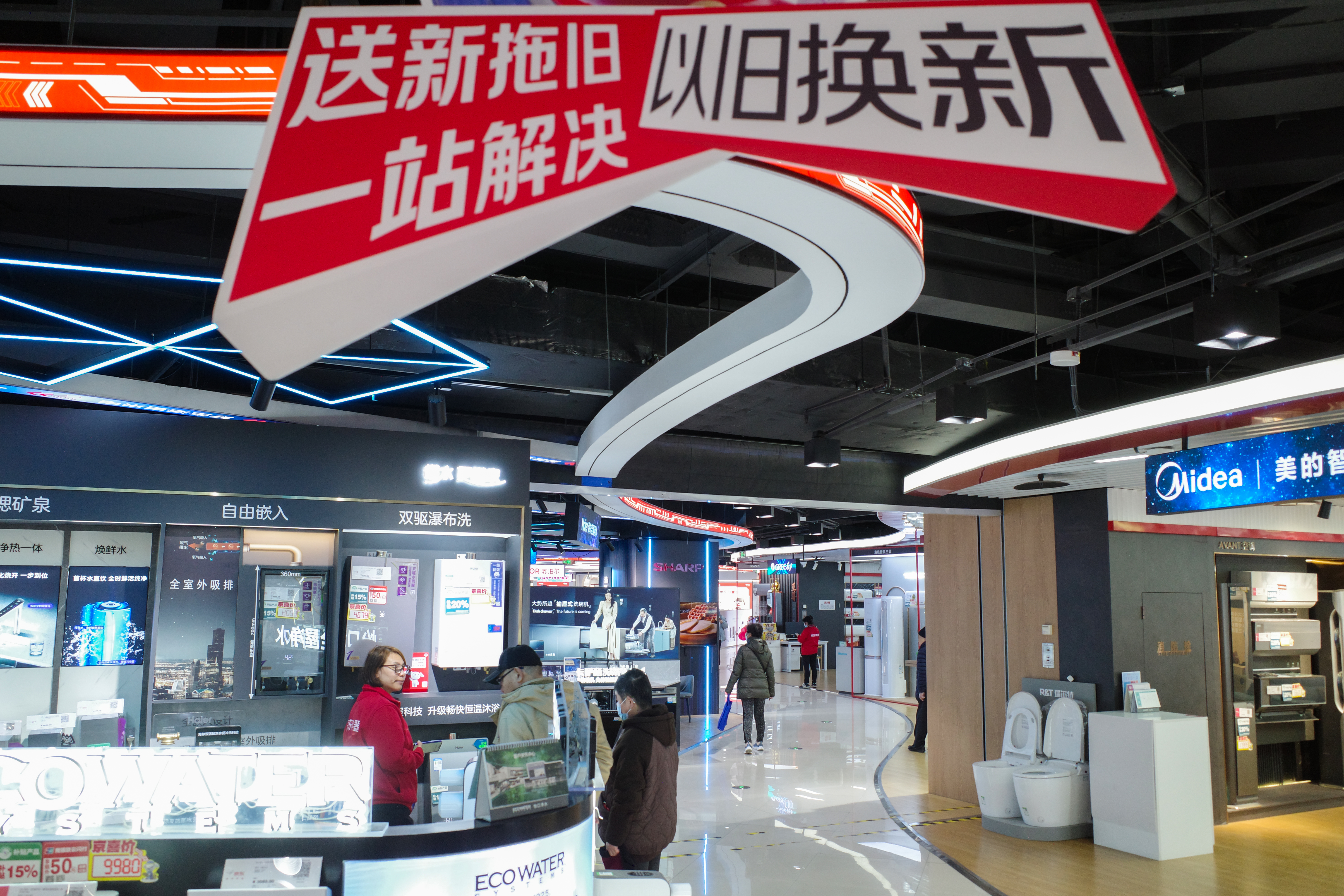
2026年“国补”继续!范围和标准将持续优化
Sou Hu Cai Jing· 2025-12-30 09:52
Group 1 - The National Financial Work Conference was held in Beijing on December 27-28, where the Minister of Finance, Lan Fo'an, emphasized the importance of boosting consumption in the upcoming year [1] - The government plans to continue the "National Subsidy" policy into 2026, with adjustments to the scope and standards of subsidies [1] - The fiscal policy will focus on expanding fiscal spending, optimizing government bond tools, enhancing transfer payment efficiency, and improving expenditure structure [1] Group 2 - The subsidy standards for certain consumer goods have been raised, with the scrap and replacement subsidy for qualifying vehicles increasing from 10,000 yuan to 20,000 yuan for new energy vehicles, and from 7,000 yuan to 15,000 yuan for fuel vehicles [2] - The funding for the "National Subsidy" comes from the issuance of ultra-long special bonds, with an issuance amount of 150 billion yuan in 2024 and increasing to 300 billion yuan in 2025 [2] - Experts suggest that the "National Subsidy" policy should shift focus from goods consumption to service consumption, exploring cash subsidies and digital currency as new forms of consumption incentives [2]
2026财政花钱,怎样更好“投资于人”?
Yang Shi Wang· 2025-12-30 01:50
Group 1 - The core viewpoint of the article emphasizes the need for increased fiscal spending in 2026, focusing on consumer promotion and social welfare [1] - The national fiscal work conference has outlined plans to expand the fiscal expenditure framework and optimize the scope and standards of national subsidies [1] - The professor from Central University of Finance and Economics predicts that national subsidy funds will double in 2025 compared to 2024, indicating a positive outlook for 2026 [3] Group 2 - Employment is highlighted as the most significant aspect of people's livelihoods, with a focus on stabilizing existing jobs and enhancing skills to increase income [6] - Tax reforms, including seven special additional deductions for personal income tax, are expected to increase disposable income for citizens [7] - The government plans to increase subsidies for urban and rural residents' pension insurance and social security, thereby reducing financial concerns for citizens [7] Group 3 - A new mechanism for educational funding distribution is necessary due to the declining school-age population, particularly in preschool, which will impact middle school enrollment [10] - Fiscal spending must adjust to demographic changes, directing more funds to urban areas and regions experiencing population inflow [10] - The government aims to enhance higher education capacity to meet the demand for quality university education [10] Group 4 - There is a push for fiscal resources to be directed more towards grassroots levels, particularly in areas with population inflow [13] - The government intends to reduce specific transfer payments while increasing general transfer payments to local governments, allowing for greater financial autonomy [13] - This approach aims to ensure that fiscal resources effectively support the livelihoods of populations in areas experiencing growth [13]
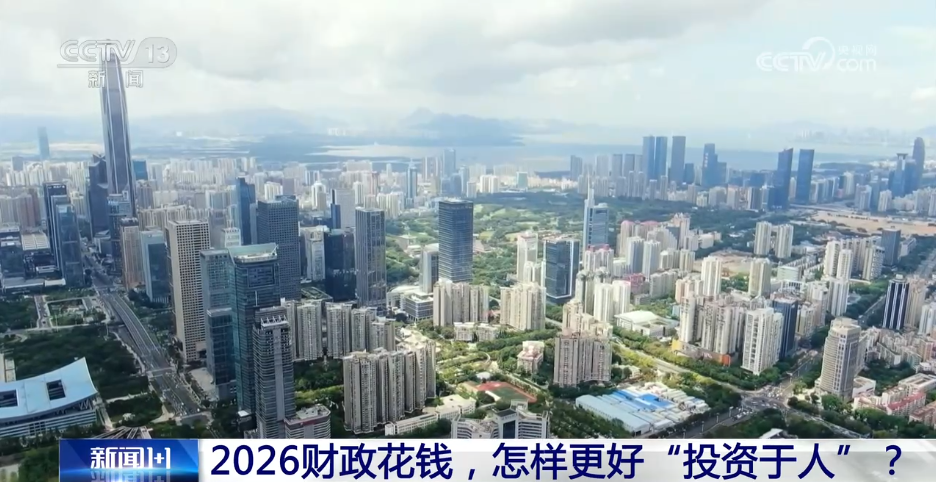
明年财政的钱该怎么花、如何更好“投资于人” 详解来了
Yang Shi Xin Wen Ke Hu Duan· 2025-12-29 22:26
Core Viewpoint - The national fiscal work conference has outlined plans for increased fiscal spending in 2026, focusing on enhancing social welfare, promoting consumption, and supporting employment [1] Fiscal Spending Plans - The fiscal spending will be expanded, with adjustments to the scope and standards of national subsidies to promote employment and improve the social security system [1] - National subsidy funds are expected to double in 2025 compared to 2024, indicating a promising funding scale for 2026 [2] - The subsidy range will expand from home appliances to include digital products like computers and smartphones, with local governments adapting subsidies to consumer needs [2] Employment and Social Security - Employment is highlighted as the most significant aspect of people's livelihoods, with a focus on stabilizing existing jobs and enhancing skill development to increase income [3] - Tax deductions have been introduced, increasing disposable income for citizens, while social security benefits, including pensions, will also see annual increases [3] Education Funding Mechanism - A new mechanism for education funding distribution is necessary due to a significant decline in the school-age population, particularly in preschool, which will affect middle school enrollment trends [4] - There is a demographic shift of school-age children from rural to urban areas, necessitating adjustments in fiscal spending towards urban regions [5] - Higher education will also see an expansion to meet the demand for university access, particularly for quality institutions [6] Fiscal Responsibility Distribution - The government is pushing for fiscal resources to be directed more towards grassroots levels, particularly in areas with population inflows [7] - There will be a shift from specific transfer payments to more general transfer payments, allowing local governments greater financial autonomy to address the needs of incoming populations [7]
新闻1+1丨2026财政花钱,怎样更好“投资于人”?
Yang Shi Wang· 2025-12-29 22:12
Group 1: Fiscal Policy and Spending - The national fiscal work conference has decided to expand the fiscal spending scope for the upcoming year, focusing on promoting consumption and ensuring social welfare [1] - In 2025, the national subsidy funds are expected to double compared to 2024, indicating a significant increase in funding scale for 2026 [3] - The subsidy range will expand from home appliances to include digital products like computers and mobile phones, with local governments encouraged to tailor subsidies to their specific consumption needs [3] Group 2: Employment and Social Security - Employment is highlighted as the most critical aspect of people's livelihoods, with a focus on stabilizing existing jobs and enhancing skill development to increase income [5] - Tax deductions, particularly for individual income tax, have been increased, leading to a rise in disposable income for citizens [6] - The government plans to raise the subsidy standards for urban and rural residents' pension and social security, thereby reducing financial concerns for citizens and strengthening the social safety net [6] Group 3: Education Funding Mechanism - Changes in school-age population demographics necessitate adjustments in fiscal spending, with a focus on directing funds towards urban areas and regions experiencing population inflow [8] - There is a need to expand higher education capacity to meet the demand for quality university education among the populace [8] Group 4: Central and Local Government Spending Responsibilities - The government is pushing for fiscal funds to be directed more towards grassroots levels, particularly in areas with population inflow, while also increasing local spending responsibilities [10] - The approach includes reducing specific transfer payments and increasing general transfer payments to enhance local financial autonomy for better allocation towards public welfare [10]
调整优化补贴范围和标准 2026年“国补”继续
Sou Hu Cai Jing· 2025-12-29 10:34
Group 1 - The Ministry of Finance plans to significantly boost consumption in 2024 through special actions and financial support for consumer goods replacement programs [1][2] - The central economic work conference highlighted the expansion of the "two new" policies, with a doubling of support funds to 300 billion yuan for consumer goods replacement, including an increase in supported categories from 8 to 12 [1][2] - From January to November this year, the consumer goods replacement program generated over 2.5 trillion yuan in sales, benefiting more than 360 million people, with significant contributions from the automotive and home appliance sectors [1] Group 2 - The central economic work conference emphasized optimizing the implementation of the "two new" policies and utilizing various government bond funds to support consumption [2] - Analysts predict that by 2026, the support funds for the replacement program could increase from 300 billion yuan to 500 billion yuan, expanding the scope of consumption support to include general consumer goods and services [2] - There is a strong demand for service consumption in areas like tourism, education, and healthcare, but supply constraints exist; thus, the central bank's 500 billion yuan loan for service consumption and elderly care will be crucial for enhancing supply capabilities [2] Group 3 - Investment in human capital is expected to enhance residents' consumption capacity, with increased fiscal spending on education, healthcare, and technology [3] - The growth rate of retail sales of consumer goods is anticipated to accelerate, with service retail sales expected to grow by approximately 6.5% year-on-year by 2026 [3] - The current low government debt ratio provides ample policy space for promoting consumption, which is expected to further drive economic growth and stabilize domestic demand [3]
家电行业专题研究:拥抱龙头,重视出海
Xin Lang Cai Jing· 2025-12-26 12:24
Group 1: Domestic Demand and Market Outlook - The home appliance sector is expected to show a "high first half and stable second half" trend in 2025, driven by policy continuation and consumption peaks [1] - In the first three quarters of 2025, air conditioner shipments increased by 8.4%, refrigerators by 2.4%, and washing machines by 4.1% year-on-year [1][13] - For 2026, the continuation of subsidies is anticipated to mitigate the impact of high base effects and demand pull-forward, with projected declines in overall appliance sales of -4% to -7.3% under various subsidy scenarios [1][16][19] Group 2: Export Performance and Global Market Trends - Home appliance exports have slowed down due to tariff policies and global supply chain adjustments, but still show resilience and structural highlights [2] - In 2025, the export growth rate for air conditioners is expected to be weaker than that of washing machines and refrigerators, primarily due to adverse weather conditions affecting overseas demand [2][39] - The U.S. market is projected to benefit from a rate cut, which may enhance demand for home appliances, while the European market is expected to maintain a slow recovery [42][44][50] Group 3: Investment Themes - The narrative in the black appliance sector is shifting from "market share chasing" to "profit and pricing power," with Chinese brands like Hisense and TCL expected to convert market share into higher profits [3][55] - White appliances are seen as having strong growth potential due to their historical resilience through cycles, with leading brands like Midea and Haier expected to maintain stable growth and generous dividends [3][83] - The global competition in new consumer products, particularly in smart imaging and robotic vacuum cleaners, is expected to favor Chinese brands, highlighting their competitive advantages [3] Group 4: Financial Metrics and Valuation - As of December 22, 2025, the home appliance sector's PE TTM is 16.27 times, remaining below the 10-year average of 32.8% [7] - The white appliance segment's current PE is 11.22, while black appliances stand at 25.94, indicating varying levels of market valuation [9] - The home appliance sector has seen a decline in public fund holdings, with a heavy allocation of only 2.46% in Q3 2025, reflecting concerns over demand in 2026 [9]



首席联合电话会-消费专场
2025-12-26 02:12
Summary of Conference Call Records Industry and Company Focus Home Appliances Industry - The tightening of national subsidy policies is focusing on core categories such as black and white appliances, which supports companies like Midea, Haier, TCL Electronics, and Hisense Visual. However, competition remains fierce for brands like Hisense Home Appliances and Gree Electric, with better investment opportunities expected after Q1 [1][4] Pet Industry - The pet industry continues to experience high single-digit growth, with pet food growth around 10%. Online channels, particularly Douyin and Pinduoduo, are seeing significant growth, while offline channels face pressure. The industry is expected to add approximately 4 million new pet owners in 2025, driving demand [5][6] - Head brands are growing significantly faster than the industry average, while smaller brands are struggling, often focusing on offline channels to maintain profitability. The trend is increasingly favoring market concentration towards head brands [6] Education Industry - China Oriental Education is benefiting from post-pandemic expansion and a national focus on employment, with double-digit growth in enrollment numbers. The company specializes in vocational education with a high employment rate, which provides a competitive advantage. New training programs are rapidly growing, and the company is expanding into emerging fields [8][10] Pharmaceutical Industry - The pharmaceutical industry is focusing on the small nucleic acid supply chain, with Novartis's Inqisiran entering medical insurance but facing capacity shortages. Companies that meet FDA audit standards and enter multinational supply chains, such as Lianhua Technology and Chen Da Pharmaceutical, are recommended for attention [11] Food and Beverage Industry - The food and beverage industry is seeing trends towards spring excitement, health directions, new products, and cyclical growth. Health products and oatmeal sectors are performing well, with companies like Dongpeng Beverage expected to grow over 20% next year [12][13] Light Industry - The light industry is adopting a dual strategy focusing on both domestic and international sales. The two-wheeler market is performing well, and solid-state batteries may drive growth in the electric vehicle sector. The industry is expected to have a positive outlook in the near future [14] Key Points and Arguments Home Appliances - The 2026 home appliance replacement policy will focus more on traditional large appliances, reducing the variety of small appliances eligible for subsidies. The overall subsidy amount may decrease, but support for core categories is expected to remain stable or even increase [2] Pet Industry - The pet industry is facing a bottleneck in product innovation, with most developments being minor improvements. There is a consensus on the need for functional and specialized products, requiring more investment in consumer education and brand building [5][6][7] Education Industry - The company expects to achieve a revenue of 1 billion yuan in 2026, with a projected compound profit growth rate of 15%-20% over the next three years. The current valuation is low, with a high dividend rate, making it a recommended investment target [9][10] Pharmaceutical Industry - The small nucleic acid supply chain is critical, with China being the largest production market. The industry faces challenges in meeting quality standards for FDA compliance, making it essential to focus on companies that can meet these standards [11] Food and Beverage Industry - Companies with strong operational momentum are expected to perform well, and the white liquor sector is seen as having good investment value [12][13] Light Industry - The light industry is expected to see sales growth due to inventory levels being low and potential technological effects in the upcoming quarters [14][15] Globalization and Export Markets - The export market is influenced by the appreciation of the RMB and pessimistic expectations regarding the US real estate market. However, long-term focus should be on new product development and self-owned brands [17][18] Pulp Industry - The pulp sector is expected to have significant elasticity in the first half of next year due to external factors affecting wood chip supply and no new capacity expansion, leading to potential price increases [19][20]