第一性原理

Search documents
PayPal黑帮,从支付颠覆者到资本与政治的合流
3 6 Ke· 2025-11-21 02:59
Core Insights - The "PayPal Mafia" represents a group of former PayPal employees who have significantly influenced various industries in Silicon Valley, creating companies with a combined valuation exceeding one trillion dollars and impacting billions of lives globally [2][11]. Group 1: PayPal's Founding and Culture - PayPal was founded in 1998 during the internet boom, initially as a secure software company before pivoting to online payments due to the inefficiencies of traditional payment methods [3][4]. - The company was characterized by a non-traditional culture, favoring unconventional thinkers over typical MBA graduates, and promoting transparency and efficiency within its operations [7][9]. - PayPal's rapid adaptability allowed it to transition from a handheld device platform to a leading online payment service within months, showcasing its agility in a competitive market [9][10]. Group 2: The Evolution of the "PayPal Mafia" - After PayPal's acquisition by eBay for $1.5 billion in 2002, its core members maintained close ties and ventured into various sectors, forming a network that would drive innovation across multiple industries [10][11]. - Notable figures like Peter Thiel and Elon Musk emerged as key players, with Thiel making a landmark investment in Facebook that yielded over a thousandfold returns, while Musk founded SpaceX and Tesla, reshaping their respective industries [12][13]. Group 3: The Impact of the "PayPal Mafia" - The "PayPal Mafia" has been instrumental in the creation of several unicorn companies, including SpaceX, LinkedIn, and YouTube, which have collectively transformed sectors such as aerospace, social networking, and media [12][17]. - Their success can be attributed to a shared culture of challenging traditional norms and a robust mutual support network that facilitates collaboration and resource sharing among members [18][20]. Group 4: Political Engagement and Influence - Since 2010, the "PayPal Mafia" has increasingly intertwined with political power, exemplified by Peter Thiel's Palantir, which provides data analysis services to government agencies, and Musk's SpaceX, which collaborates with NASA [22][26]. - The group's political involvement has grown, with significant financial contributions to candidates aligned with their interests, particularly during the Trump administration, which has resulted in favorable policies for their businesses [27][30]. Group 5: Ethical Concerns and Future Challenges - The "PayPal Mafia" faces scrutiny over the implications of their technological advancements and political influence, raising questions about privacy, governance, and the potential for capital to overshadow public interest [32][33]. - As they continue to shape both the tech landscape and political discourse, the balance between innovation and social responsibility remains a critical challenge for the future [33][34].



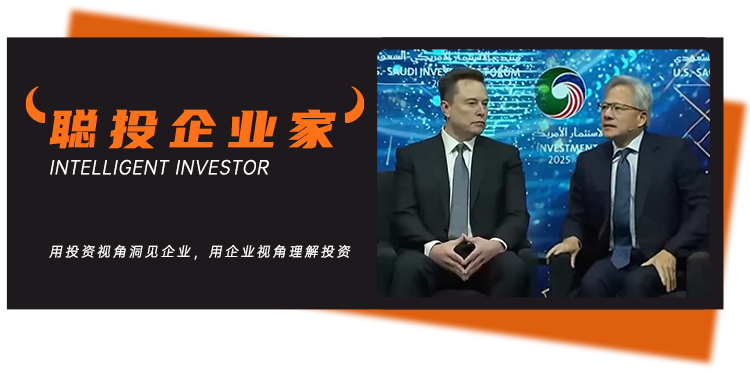
最新!黄仁勋马斯克罕见同台,畅谈人形机器人、太空AI,并回应AI是否有泡沫
Xin Lang Cai Jing· 2025-11-20 06:17
Core Insights - The underlying computing power required for the Agentic AI revolution is much less than anticipated, indicating a structural transformation rather than a bubble [2][44] - NVIDIA's CEO Jensen Huang emphasized that the current AI enthusiasm is supported by a significant shift in computing architecture, moving from general-purpose to accelerated computing [45][46] Group 1: AI and Robotics - Elon Musk predicts that humanoid robots will become the largest industry ever, surpassing smartphones and other products, as they will be desired by both individuals and businesses [4][7] - Musk believes that Tesla will be the first company to produce truly useful humanoid robots, which will revolutionize the market [4][6] - The discussion highlighted the potential of AI and humanoid robots to address significant societal issues, including poverty [5][7] Group 2: AI Factories - Saudi Arabia is investing in AI infrastructure, aiming to become one of the most AI-empowered nations through the establishment of AI factories [8][9] - Huang likened AI to a new form of infrastructure, essential for transforming various industries and sectors [9][10] Group 3: Future of Work - Musk envisions a future where work becomes optional, similar to leisure activities, allowing individuals to choose whether to engage in work [13][15] - Huang noted that AI will enhance productivity, leading to more efficient work processes and potentially increasing the demand for certain professions, such as radiologists [21][22] Group 4: AI Applications and Collaborations - NVIDIA is collaborating with Humane to develop a significant data center project, showcasing the rapid growth of AI applications beyond traditional uses [23][24] - The partnership aims to leverage AI in various fields, including robotics and quantum computing [24] Group 5: AI in Space - Musk stated that deploying AI in space is inevitable for the advancement of civilization, particularly for harnessing solar energy [25][36] - The discussion emphasized that space offers a more efficient environment for AI operations compared to Earth, due to continuous solar energy availability [41][42] Group 6: AI Bubble Discussion - Huang argued that the current AI excitement is not a bubble but a result of three major trends: the end of Moore's Law, the rise of generative AI, and the emergence of Agentic AI [44][45][46] - The transition from CPU to GPU-driven systems marks a significant shift in computing paradigms, supporting the growth of AI technologies [45][46]


最新!黄仁勋马斯克罕见同台,畅谈人形机器人、太空AI,并回应AI是否有泡沫
聪明投资者· 2025-11-20 03:37
Core Viewpoint - The underlying computing power required for the Agentic AI revolution is much less than commonly perceived, indicating a structural transformation rather than a bubble [2][70]. Group 1: AI and Market Sentiment - NVIDIA's CEO Jensen Huang emphasized that there is no AI bubble during the earnings call and at the investment forum, reigniting market enthusiasm for AI [2]. - Elon Musk predicted that humanoid robots will become the largest industry ever, surpassing smartphones and other products, and suggested that the cheapest source of AI computing power will soon be solar-powered AI satellites [3][57]. Group 2: Humanoid Robots - The discussion highlighted the transition to an "intelligent era," focusing on building AI factories, robots, and electric autonomous vehicles [4]. - Musk expressed confidence that Tesla will be the first company to produce truly useful humanoid robots, which he believes will lead to a significant revolution [7][12]. Group 3: AI Factories - The conversation included the signing of a strategic cooperation agreement between Saudi Arabia and the U.S. to support the AI ecosystem, with Saudi Arabia investing in AI infrastructure [13]. - Huang likened AI to a new form of infrastructure, emphasizing its transformative potential across all industries and sectors [14][15]. Group 4: Future of Work - Musk predicted that future work will become optional, akin to a leisure activity, where individuals can choose to work or not [20][22]. - Huang noted that AI will enhance productivity, allowing people to focus on more complex tasks rather than being replaced [31][34]. Group 5: Collaboration with Humane - Musk announced a collaboration with Humane to develop a 500 MW project, with NVIDIA also involved in building a significant data center [38][39]. - Huang highlighted the rapid progress of their partnership, which aims to leverage AI in various fields, including robotics and quantum computing [41][42]. Group 6: AI in Space - Musk asserted that deploying AI in space is inevitable for the advancement of civilization, particularly for harnessing solar energy [45][49]. - He emphasized that the only feasible way to achieve significant AI computing power is through space-based solar energy, as terrestrial resources will be insufficient [60][61]. Group 7: AI Bubble Discussion - Huang discussed three major trends driving structural changes in computing: the end of Moore's Law, the rise of generative AI, and the emergence of Agentic AI [64][70]. - He concluded that the foundational computing power needed for the Agentic AI revolution is significantly less than anticipated, reinforcing the idea that it is a result of structural change rather than a bubble [70].
关于Spark培养营你可能会问的15个问题
混沌学园· 2025-11-16 02:06
这篇内容,提取自我们 Spark 培养营的优秀毕业展演 。 来自第七期营员 曹雷 的最终展示。 他用「一思维×探索流」的方法, 从一个模糊的想法,拆解到本质,再落地成实际能演示的 AI 助理产品 。 为了让第一次接触 Spark 的朋友更清楚 Spark 到底在做什么,我们把他展演中最亮眼的部分整理为: "第一次了解 Spark,你一定会问的 15 个问题" 每一个答案都来自真实的落地过程。 Spark培养营不是学习更多工具, 而是找到 你不可替代的那一部分 。 什么是 Spark 培养营? 它到底解决什么问题? Spark 不教更多方法,而是帮助你 找回"不可替代的人类优势" 。 当 AI 提升效率,我们常常变成"工具的使用者",但 Spark 的目标是: 让你成为创造者,而不是使用者。 因为时代的误区是: "更像机器,效率更高。" Spark 的观点是: "更像人,才不可替代。" Spark 的核心是 三真能力 : 真理念(我为何做) 什么是一思维(核心方法论)? 连续追问"为什么" → 找到问题最核心的那个"一"。 和第一性原理类似,但更强调: 不是推理论证,而是 洞察本质 。 为什么不是学工具, 而是 ...
股市震荡!比尔·盖茨、李彦宏发声!
Sou Hu Cai Jing· 2025-11-15 01:18
Group 1 - The article discusses the resurgence of concerns regarding the "AI bubble," drawing parallels to the internet bubble of 2000, as stated by Bill Gates, who emphasizes that while AI technology breakthroughs are real, many companies may be overspending without sustainable business models [2] - Major tech stocks in the U.S. experienced declines, with Tesla down 6.64%, Nvidia down 3.58%, and Microsoft down 1.54%, indicating market apprehension towards the AI sector [2] - Baidu's founder, Robin Li, mentioned at the Baidu World Conference that the AI industry is transitioning from an unhealthy "pyramid" structure to a healthier "inverted pyramid," where the value generated by applications must significantly exceed the costs of underlying technologies [2] Group 2 - The digital transformation is reshaping work patterns, social interactions, and wealth structures, with technologies like AI, blockchain, and the metaverse becoming increasingly relevant [3] - The digital ecosystem is complex, comprising not only familiar applications like social media and e-commerce but also advanced technologies such as AI and blockchain, which have their own operational rules and development logic [9] - The book "Digital World Survival Guide" aims to provide insights into navigating opportunities and pitfalls in the digital landscape, offering a framework for innovation and survival in the digital age [11]

他用一纸包装,重新定义饮用水行业的环保标准
财富FORTUNE· 2025-11-14 13:11
Core Insights - Hansen Bi, founder and CEO of Elix Water, was recognized in the 2025 "Fortune China 40 Under 40" list for his innovative practices in sustainable packaging and leadership in the drinking water industry [1] - The company aims to redefine the environmental standards of the drinking water sector by addressing carbon emissions and plastic pollution through sustainable solutions [1][4] Group 1: Background and Vision - Hansen Bi's international upbringing allows him to navigate different cultural perspectives, focusing on global issues like climate change and waste management [4] - After studying finance in Boston, Hansen shifted his focus from abstract numbers to the physical realities of resource consumption and environmental costs [4] Group 2: Innovative Approach - In late 2019, Hansen began rethinking the drinking water industry using first principles, aiming to define what "better" drinking water should be [6] - The solution proposed is to package high-quality natural spring water in paper cartons, which is both simple and disruptive [8] Group 3: Environmental Impact - The design aims to create a product that is healthier for consumers and has a lower environmental impact, addressing global challenges of carbon emissions and plastic waste [9] - Elix Water's mission extends beyond changing packaging materials; it seeks to rewrite the rules of the entire category by promoting sustainable consumption [11] Group 4: Structural Change - Hansen integrates first principles thinking into business management, questioning traditional assumptions about water sources, packaging, and distribution [14] - The focus is on minimizing the environmental footprint throughout the product's lifecycle while maintaining cost-effectiveness [14] Group 5: Broader Implications - Hansen represents a new generation of entrepreneurs who seek structural change rather than marginal improvements, demonstrating that sustainable development can coexist with business success [16] - The story of Elix Water illustrates that even the most ordinary products can be redesigned for sustainability, starting with something as simple as a carton of water [18]

小鹏刘先明:VLA 2.0的「涌现」过程极其突然......
自动驾驶之心· 2025-11-14 00:04
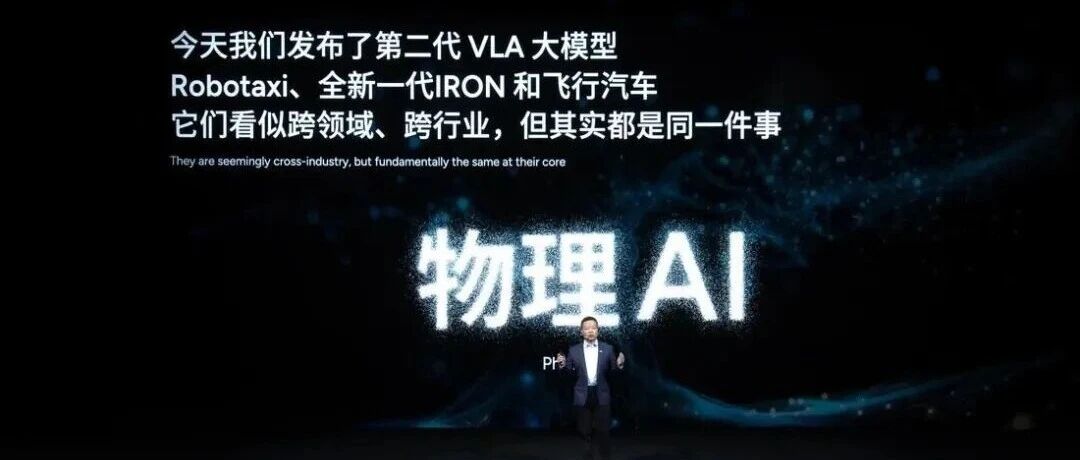
Core Insights - The article discusses the emergence of advanced technologies in autonomous driving and robotics, particularly focusing on Xiaopeng Motors' developments in VLA (Vision-Language Architecture) and humanoid robots [5][10][28]. Group 1: Technological Advancements - Xiaopeng Motors has invested significantly in computational power, utilizing 30,000 cards and spending over 2 billion in training costs, leading to a breakthrough in their technology [7]. - The emergence of capabilities in their second-generation VLA and humanoid robot IRON was unexpected, with previous months of failures suddenly giving way to significant progress [5][8]. - The core logic of the second-generation VLA is to eliminate the translation from vision to language, enhancing efficiency and enabling self-supervised learning [10][19]. Group 2: Challenges and Solutions - The transition from structured text data to continuous video signals presents challenges, including information loss and the need for real-time feedback from the physical world [14][15][17]. - Xiaopeng's approach simplifies the training process by removing complex steps, allowing for direct input from multimodal data and output as physical actions [20][22]. - The company is focused on optimizing local deployment solutions to achieve low latency and high frame rates, ensuring real-time performance on their hardware [24]. Group 3: Robotics Development - Xiaopeng's robotics team is closely collaborating with the automotive division, emphasizing in-house development to reduce costs and accelerate iteration [28][29]. - The humanoid robot IRON has shown significant improvements in movement, achieving a human-like gait through innovative design and control systems [36][39]. - The development of a universal generative controller allows the robot to perform complex movements, such as Tai Chi, by directly inputting recorded trajectories [46]. Group 4: Future Prospects - The company envisions a future where robots can establish deeper emotional connections with humans, potentially personalizing their designs to meet individual preferences [48]. - The advancements in robotics and autonomous driving are expected to lead to sudden breakthroughs, similar to those seen in the automotive sector [32].

批准了,给马斯克1万亿美元,特斯拉股东:不能眼睁睁看他离开
Sou Hu Cai Jing· 2025-11-08 11:05
Core Viewpoint - Tesla's shareholders have approved a historic $1 trillion compensation plan for Elon Musk, reflecting a gamble to retain his leadership despite concerns about the company's dependency on him [1][20]. Group 1: Shareholder Decision - The high approval rate for Musk's compensation plan indicates shareholders are willing to pay a steep price to keep him, viewing it as more beneficial than the risk of losing him [1][3]. - The board has acknowledged Musk's critical role, suggesting that while the company could survive without him, his absence would create uncertainty about its future direction [3][10]. Group 2: Compensation Structure - The compensation plan is not immediate cash but future stock rewards tied to specific performance metrics, requiring significant company growth to fully realize [5][7]. - This creates a strong interdependence where Tesla relies on Musk, and he must deliver on company performance to benefit personally [7][10]. Group 3: Governance Concerns - Some institutional investors express dissatisfaction with the scale of the compensation, raising concerns about the underlying governance issues within Tesla [8][10]. - The board's structure, with members closely tied to Musk, raises questions about their ability to provide independent oversight [10][12]. Group 4: Market Reactions and Future Implications - The market's reaction to the compensation plan reflects a defensive mindset, with shareholders preferring to "buy insurance" against Musk's potential departure [12][16]. - The reliance on Musk's personal interests and emotions for the company's future stability is seen as a significant risk, highlighting the need for a more robust governance structure [16][18]. - The approval of the compensation plan may temporarily alleviate concerns about Musk leaving, but it underscores the necessity for Tesla to develop an independent management system [18][20].
马斯克万亿美元薪酬,极大拉高企业家价值天花板
Xin Jing Bao· 2025-11-07 06:13
Core Points - Tesla's shareholders approved CEO Elon Musk's 10-year compensation plan, potentially worth nearly $1 trillion in stock, with 75% voting in favor during the annual meeting [1][3] - This compensation plan represents the highest reward for a corporate leader in history and positions Musk to become the first trillionaire, contingent on significant increases in Tesla's market value and successful launches of new projects [3][4] Group 1: Compensation Plan Details - The plan is essentially a bet: Musk will receive nothing if he fails to lead Tesla to exponential growth [4][7] - The approval of this plan highlights the extreme risk-reward relationship in corporate leadership compensation [4][8] Group 2: Entrepreneurial Value in the AI Era - The ongoing legal discussions surrounding Musk's compensation have raised questions about the value of top entrepreneurs in an AI-driven economy, where many jobs face replacement [4][5] - Entrepreneurs are seen as irreplaceable in defining and achieving "non-consensus" futures, which AI cannot envision or believe in [5][6] - The disparity between "mediocre" and "excellent" will widen, with true entrepreneurs becoming the most valuable resources in the economy [8] Group 3: Risk and Innovation - Entrepreneurs bear the ultimate risk in innovation, navigating uncertainties that cannot be quantified [7][8] - Musk's compensation structure reflects the monetization of risk-taking, crucial in an era of rapid technological change and market competition [7][8] - The trend indicates that the value of entrepreneurs will not diminish in the AI age but will instead increase significantly [8]
马斯克万亿美元薪酬,极大拉高企业家价值天花板| 新京报快评
Sou Hu Cai Jing· 2025-11-07 04:15
Group 1 - Tesla's CEO Elon Musk's 10-year compensation plan was approved by 75% of shareholders, potentially allowing him to earn nearly $1 trillion in stock if certain performance targets are met [1] - This compensation plan represents the highest reward for a corporate leader in history and positions Musk to become the world's first trillionaire [1] - To fully realize this compensation, Musk must significantly increase Tesla's market value and successfully launch new projects in autonomous taxis and robotics [1] Group 2 - The legal battles surrounding Musk's compensation have transcended corporate governance, raising questions about the value of top entrepreneurs in the age of AI [2] - Concerns about AI replacing jobs have led to a paradox where the value of top entrepreneurs is not diluted but rather elevated [2] - Entrepreneurs are seen as irreplaceable in defining problems and setting goals, which AI cannot achieve [3] Group 3 - Musk's compensation plan is characterized as a high-risk, high-reward agreement, emphasizing the need for non-linear growth [3] - The plan highlights the importance of entrepreneurs in envisioning and realizing futures that are not yet consensus [3] - The integration of various technological advancements requires entrepreneurs to possess unique insights and organizational capabilities [4] Group 4 - Entrepreneurs bear the ultimate risk in innovation, which is often accompanied by significant uncertainty [4] - Musk's compensation structure reflects the monetization of risk-taking in an era where technological and market competition risks are heightened [6] - The disparity between "mediocre" and "excellent" will widen, with true entrepreneurs becoming the most valuable resources in the economy [6][7] Group 5 - Musk's compensation plan serves as a stress test for the value of entrepreneurs in the AI era, emphasizing their role in wealth and job creation [7] - The ongoing discourse around Musk's compensation underscores the need to recognize and understand the true value of entrepreneurs in a rapidly evolving technological landscape [7]