经济结构转型

Search documents
专家:进一步释放消费潜力 国有资本可发挥更多作用
Zhong Guo Xin Wen Wang· 2025-08-25 02:56
Group 1 - The core viewpoint of the articles emphasizes the need to enhance consumption demand by improving the income levels of low-income groups and increasing their pension benefits, with state-owned capital playing a crucial role in this process [1][2] - The chief economist of Zhongyin International Securities suggests that transferring state-owned capital to social security funds can have an immediate positive impact on consumption and aligns with the long-term direction of economic structural transformation [1] - As of the end of 2024, the value of transferred state-owned equity is projected to be 2.1 trillion yuan, with dividends from transferred enterprises expected to reach 26.422 billion yuan in 2024, accumulating to 111.6 billion yuan [1] Group 2 - Liu Shijin, a vice chairman of the Economic Committee of the National Committee of the Chinese People's Political Consultative Conference, argues for a shift in the use of state-owned capital earnings towards supporting consumption, especially through enhancing pension levels for low-income groups [2] - The large-scale transfer of state-owned capital to pension funds is seen as a necessary strategy for stimulating consumption and reflects the mission of state-owned capital to serve the high-quality development of the country [2] - The transfer of state-owned capital to pension funds is expected to positively impact the stock market by providing long-term capital, thereby creating a linkage effect that promotes consumption, strengthens social security, and stabilizes the stock market [2]
中美差距又扩大!上半年中国GDP跌至美国60%左右,究竟是什么原因
Sou Hu Cai Jing· 2025-08-23 12:16
Group 1 - The GDP gap between China and the US has widened, with China's GDP at approximately $9.19 trillion and the US at $14.93 trillion, reducing China's economic scale to about 60% of the US, down from a peak of 77% a few years ago [2][13][33] - In the first quarter of 2025, the US GDP experienced a quarter-on-quarter annualized decline of 0.5%, marking the first quarterly negative growth in three years [3][9] - The US economy showed a rebound in the second quarter with an annualized GDP growth rate of 3%, largely driven by a significant drop in imports exceeding 30% [3][5] Group 2 - The decline in imports, which negatively impacts GDP calculations, has artificially inflated the GDP figures, suggesting a superficial economic prosperity rather than genuine growth [5][25] - The US has been experiencing high inflation since the post-pandemic period, leading to a high-interest rate environment maintained by the Federal Reserve, which can suppress economic activity [9][10] - In contrast, China's economy maintained a stable growth rate of 5.4% in the first half of 2025, significantly higher than the US's 1.9%, despite the widening GDP gap [13][33] Group 3 - The depreciation of the Chinese yuan against the US dollar, from an average exchange rate of 7.11 to 7.18, has contributed to the apparent shrinkage of China's GDP when converted to dollars [15][21] - China's economic transition from high-speed growth to high-quality development involves controlling leverage and financial risks, which may slow total expansion in the short term but is essential for sustainable growth [17][33] - The differences in GDP calculation methods between China and the US, along with the structural economic differences, highlight that GDP figures alone do not fully represent economic strength [27][29]


如果寒武纪股价超越茅台,会给市场传递什么样的信息?
Sou Hu Cai Jing· 2025-08-22 09:07
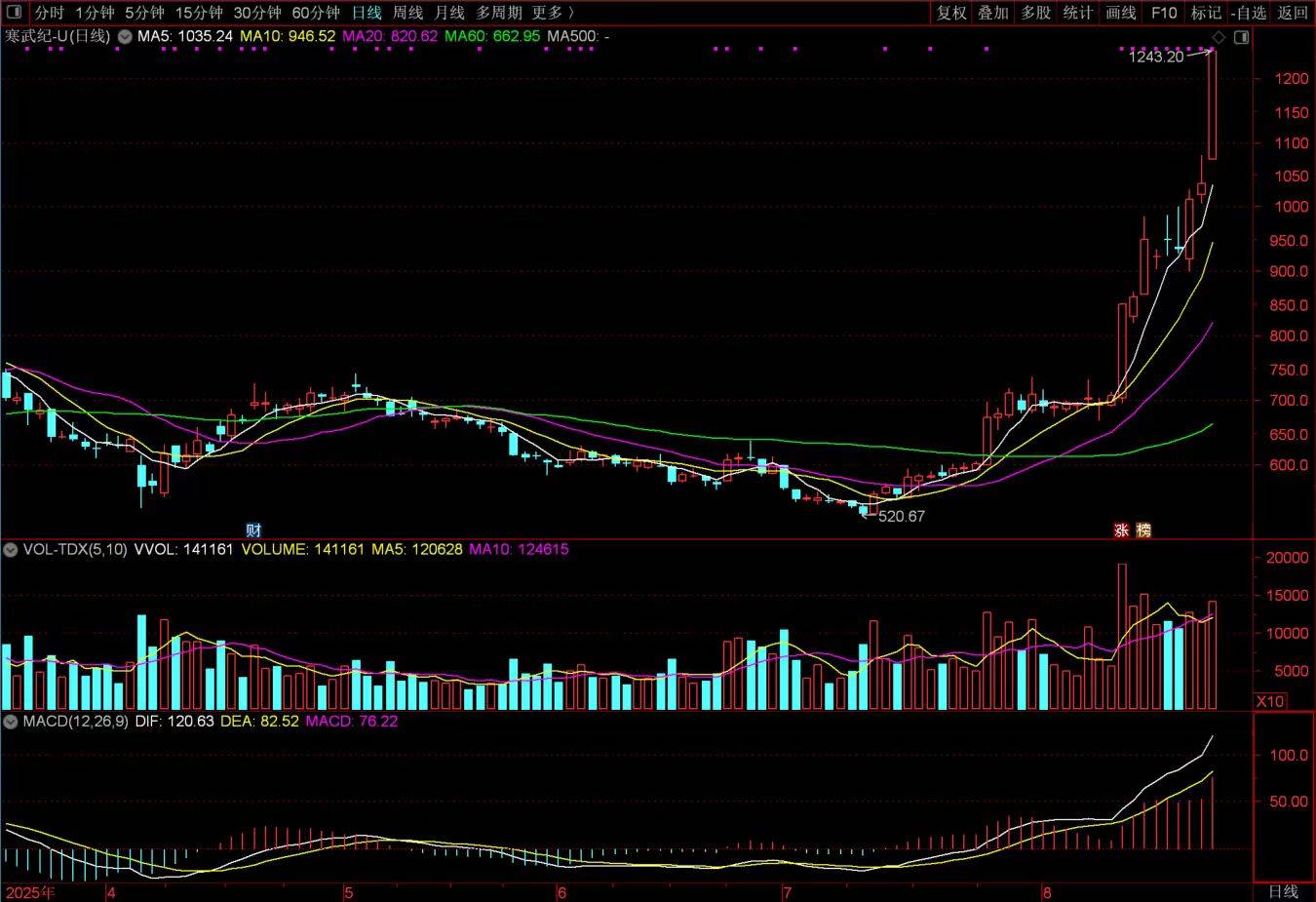
Group 1 - The core point of the article is the significant rise in the stock price of chip leader Cambricon, which surged to 1242 yuan, an increase of 20%, driving the STAR 50 Index up by 8.4% and boosting various semiconductor ETFs and the AI sector [1] - The phenomenon is attributed to the acceleration of domestic chip replacement, creating high market expectations, and the influx of latecomer funds into the STAR market, which has led to a dual profit effect through major stocks like Cambricon [1] - The current market dynamics suggest that both retail and institutional investors who previously missed out are now driving the STAR board's performance, indicating a shift in investment focus towards technology [1] Group 2 - Cambricon's stock price is currently at 1242 yuan, and if it rises by 200 yuan, it will surpass Kweichow Moutai's price of 1462 yuan, raising questions about the implications of such a shift in market leadership [2] - The potential surpassing of Moutai by Cambricon signals a transformation in market sentiment, reflecting a preference for technology-driven growth over traditional consumer brands, indicating a structural economic transition [4] - The rise of Cambricon as a leading stock in this bull market suggests that technology is the primary driver, with all tech-related stocks likely to benefit from this trend, opening up new opportunities in various tech sectors [5]

首席点评:政策红利与市场信心共振,A股迈入百万亿新时代
Shen Yin Wan Guo Qi Huo· 2025-08-19 02:02
Report Summary 1. Report Industry Investment Rating No relevant content provided. 2. Core Views of the Report - On August 18, 2025, the total market capitalization of A-shares exceeded 100 trillion yuan for the first time, driven by top - level policies and financial policies, with significant inflow of incremental funds and strong economic resilience [1]. - In 2025, domestic liquidity remains loose, in a policy window period. There may be more incremental policies in the second half of the year, and external risks are gradually easing. The stock market is in a resonance period of "policy bottom + capital bottom + valuation bottom", but sector rotation is accelerating and structural differentiation exists [2][11]. - Precious metals may show an oscillating trend under the warming of interest - rate cut expectations, with long - term drivers still providing support for gold [3][19]. - The trend of crude oil needs to pay attention to the OPEC production increase situation, and the unemployment rate in the US may rise in August [4][13]. 3. Summary by Related Catalogs a. Key Varieties - **Stock Index**: The US three major indexes fluctuated slightly. The previous trading day saw an increase in the stock index, with the communication sector leading the rise and the real - estate sector leading the fall. The market turnover was 2.81 trillion yuan. The margin trading balance increased by 7.542 billion yuan on August 15. The CSI 500 and CSI 1000 are more offensive, while the SSE 50 and CSI 300 are more defensive [2][11]. - **Precious Metals**: Last week, unexpected US inflation data pressured gold and silver. Although there are factors supporting the price, the current high price makes gold hesitant to rise, and gold and silver may oscillate [3][19]. - **Crude Oil**: SC night trading rose 0.7%. The US - Russia talks over the weekend had no clear conclusion. The unemployment rate in the US may rise to 4.3% in August, and attention should be paid to OPEC production increase [4][13]. b. Main News of the Day - **International News**: US President Trump met with Ukrainian President Zelensky at the White House, and a trilateral meeting among the US, Russia, and Ukraine may be held. Trump also said he would not rule out sending US troops to participate in peace - keeping missions in Ukraine [5]. - **Domestic News**: Premier Li Qiang emphasized enhancing the effectiveness of macro - policies, stabilizing market expectations, stimulating consumption potential, expanding effective investment, and consolidating the real - estate market [6]. - **Industry News**: The National Medical Insurance Work Symposium announced nine key tasks, including starting to formulate the DRG 3.0 grouping plan, improving the maternity insurance system, and exploring national unified follow - up procurement after the expiration of the centralized procurement agreement [7]. c. Morning Comments on Major Varieties - **Financial**: - **Stock Index**: Similar to the key varieties part, the market is in a favorable period, but sector rotation and differentiation need attention [2][11]. - **Treasury Bonds**: Treasury bonds continued to fall. The yield of the 10 - year active treasury bond rose to 1.778%. The bond market may continue to be under pressure, and the price difference between new and old bonds and long - and short - term bonds may widen [12]. - **Energy and Chemicals**: - **Crude Oil**: As mentioned before, pay attention to OPEC production increase and the US unemployment rate [4][13]. - **Methanol**: Methanol night trading fell 1.04%. The overall domestic methanol plant operating rate decreased slightly, and the coastal inventory continued to accumulate. It is short - term bullish [14][15]. - **Rubber**: The price support mainly comes from the supply side. The demand side is weak, and the price may oscillate and fall [16]. - **Polyolefins**: The polyolefin futures were weak. The market is still mainly driven by supply and demand, and the inventory digestion is slow. Pay attention to the autumn restocking market and cost changes [17]. - **Glass and Soda Ash**: Both glass and soda ash futures are in the process of inventory digestion. The prices have stopped falling, and attention should be paid to the inventory digestion speed [18]. - **Metals**: - **Precious Metals**: As described above, affected by inflation data and other factors, it shows an oscillating trend [3][19]. - **Copper**: The copper price may fluctuate within a range due to the balance of multiple factors, and attention should be paid to US tariffs and other factors [20][21]. - **Zinc**: The zinc price may fluctuate widely in the short term, affected by factors such as US tariffs and supply - demand [22]. - **Lithium Carbonate**: Supply is expected to increase slightly in August, demand is also growing, and inventory is in a complex state. There is a risk of correction after the previous rise, and short - selling should be cautious [23]. - **Black Metals**: - **Iron Ore**: The demand for iron ore is supported. The global iron ore shipment has decreased recently, and the inventory is being depleted. It is expected to rise in the second half of the year, and the market is expected to be oscillating and bullish [24]. - **Steel**: The supply - side pressure of steel is gradually emerging, but the supply - demand contradiction is not significant. The market is expected to be oscillating and bullish [25]. - **Coking Coal and Coke**: The main contracts of coking coal and coke oscillated narrowly. The market is under pressure, and the multi - empty game is intensifying [26][27]. - **Agricultural Products**: - **Protein Meal**: The US Department of Agriculture adjusted the soybean production forecast, and the soybean futures inventory is tightening. The price of the domestic protein meal has strong support [28]. - **Oils and Fats**: The MPOB report has a neutral - to - bullish impact on the market. Affected by news from Indonesia, the short - term trend of oils and fats is expected to be bullish and oscillating [29]. - **Sugar**: The international sugar market is expected to be oscillating and bearish, while the domestic sugar market is supported by high sales - to - production ratio and low inventory, and is expected to be oscillating [30]. - **Cotton**: The ICE US cotton price rose. The domestic cotton market supply is tight, and the demand is in the off - season. The short - term trend may be oscillating and bullish, but the upside space is limited [31]. - **Shipping Index**: - **Container Shipping to Europe**: The EC oscillated slightly. The SCFIS European line price decreased. The market is concerned about the off - season freight rate decline rate and the support of deep discounts [32][33].
“股牛”已至,未来如何演绎?
2025-08-18 01:00
Summary of Conference Call Records Industry or Company Involved - The discussion primarily revolves around the Chinese stock market, macroeconomic policies, and the impact of U.S.-China relations on investment strategies. Core Points and Arguments 1. **Market Confidence and Economic Transition** - China adopts a non-concessional strategy while the U.S. gradually concedes, leading to a gradual establishment of market confidence. The economy is transitioning away from real estate dependency towards manufacturing and high-tech industries, fostering optimism about future economic growth models [1][2] 2. **Stock Market Outlook** - The current stock market is characterized as a structural slow bull market, driven by two macro factors: U.S.-China relations and economic restructuring. The focus should be on dividend assets in the context of U.S.-China confrontation and technology assets in the context of cooperation [2][10] 3. **Bond Market Characteristics** - The bond market does not exhibit bear market characteristics despite stock market gains. A phase adjustment is normal due to prior accumulated gains, with interest rates at low levels and a long-term downward trend expected [3] 4. **Monetary Policy Direction** - The central bank's second-quarter monetary policy report emphasizes stabilizing employment, maintaining economic growth, and promoting reasonable price recovery, indicating a loosening monetary policy direction [4] 5. **Macro-Prudential Management** - Focus on financial stability and prevention of systemic financial risks is crucial. Non-bank institutions are now included in the assessment of systemically important financial institutions, enhancing oversight [5] 6. **Central Bank Re-lending Support** - The central bank's re-lending support focuses on inclusive finance, green projects, and technology, with a balance of 3.8 trillion yuan. The loan growth rate for the elderly care industry is the highest, reflecting changes in credit allocation due to economic restructuring [6] 7. **Financial Support for Technological Innovation** - Financial support for technology innovation is vital, involving various stakeholders such as financial institutions and private equity firms, which help leverage more equity capital for future fundraising [7][8] 8. **Financial Stability Risk Prevention Tools** - Various tools for assessing financial stability risks include equity pledge financing and liquidity management for public funds, which help mitigate systemic risks [9] 9. **U.S.-China Trade Relations** - Recent developments in U.S.-China trade relations include a 90-day extension of a 24% reciprocal tariff suspension, with expectations for a meeting between leaders at the APEC conference. This has improved market risk appetite [11][12] 10. **Potential Risks in U.S.-China Negotiations** - China faces risks from U.S. negotiation tactics, particularly regarding secondary tariffs on energy, which could extend to other countries, including China [14] 11. **U.S. Tariff Policy Changes** - The U.S. has announced significant tariffs on copper and semiconductors, with potential expansions to other industries, which could impact market dynamics [15][16] 12. **Potential Sanction Risks in Financial Sector** - Risks of sanctions primarily affect Chinese concept stocks, although the actual impact is expected to be limited due to preparations for domestic companies to return [17] 13. **Federal Reserve Decision-Making Adjustments** - The Federal Reserve is expected to announce the cancellation of the average inflation target at the 2025 Jackson Hole meeting, although the marginal impact is considered minimal [18] 14. **U.S. Treasury Financing Report Highlights** - The U.S. Treasury plans to replenish the TGA account to $850 billion, which may lead to a liquidity siphoning effect and increased volatility in overseas markets, affecting A-share risk appetite [19] 15. **Importance of Bank Reserves** - The U.S. banking system's reserve ratio must maintain at least 9% of GDP. A potential drop in reserves due to TGA withdrawals could impact market stability, necessitating close monitoring of liquidity conditions [20] Other Important but Possibly Overlooked Content - The emphasis on macro-prudential management and the inclusion of non-bank institutions in systemic risk assessments highlight a shift towards a more comprehensive approach to financial stability [5] - The ongoing transition in credit allocation towards sectors like elderly care and green finance reflects broader economic restructuring trends [6]
消费贷国补9月1日启动,单家最高贴息3000元,23机构利息直降13%
Sou Hu Cai Jing· 2025-08-17 23:18
Core Viewpoint - The newly introduced consumer loan interest subsidy policy aims to stimulate consumer spending and boost the economy amid ongoing economic downturn and weak consumer market [1][4]. Policy Details - The subsidy is limited to loans of 50,000 yuan or less, with a cap on the subsidized amount, and covers large purchases such as automobiles, home renovations, appliances, medical expenses, and education [3][4]. - The subsidy will be directly applied to loan interest, allowing users to automatically deduct it from their monthly repayments, enhancing user experience through a "no-sense subsidy" model [3][4]. Implementation and Support - Major banks, including Agricultural Bank of China, Bank of China, China Construction Bank, and others, have expressed support and are preparing to implement the policy [6]. - The central government will cover 90% of the subsidy, while local governments will bear 10%, reflecting confidence in local execution capabilities [8]. Regulatory Oversight - Regulatory bodies emphasize the importance of banks maintaining strict credit assessments and post-loan management to prevent misuse of funds [10]. - The policy aims to reduce burdens on residents and encourage spending, particularly targeting young consumers and small-scale buyers [10]. Market Competition - The introduction of the subsidy is expected to intensify competition among banks and financial institutions as they vie for customer resources [10]. - The effectiveness of the policy in stimulating consumption and economic growth will depend on the overall improvement in residents' income and consumer confidence [10][11]. Future Outlook - The true test of the policy's success will occur after its conclusion in 2026, as it represents only one step in addressing the challenges of economic recovery and consumption structure adjustment [11].

“财政贴息”惠企利民(财经热评)
Sou Hu Cai Jing· 2025-08-13 23:14
Group 1 - The core viewpoint of the news is the introduction of a fiscal subsidy policy for personal consumption loans, aimed at stimulating consumer spending in key sectors such as automotive, education, and healthcare from September 2025 to August 2026 [1][2] - The policy provides a subsidy of 1 percentage point per year on eligible consumption loans, with a maximum subsidy not exceeding half of the loan contract interest rate, targeting both large and small consumer loans [1][2] - This initiative is designed to directly reduce loan interest rates, thereby encouraging consumer demand and potentially boosting large-scale consumption in the context of weak consumer sentiment and economic recovery challenges [1][2] Group 2 - The implementation of the consumption loan subsidy requires coordination among various departments, including finance, banking, and commerce, to establish detailed policy guidelines and execution routes [2] - The policy stipulates that loans must be genuinely used for consumption, with measures in place to prevent misuse, such as a cap on total subsidies per borrower and limits on small loans [2] - The shift in policy focus from production to consumption reflects a broader economic structural transformation, indicating a commitment to supporting consumer spending alongside business investment [2]
2025万亿城市大洗牌!福州泉州双星闪耀 烟台增速领跑 谁将成下一个“黑马”?
Sou Hu Cai Jing· 2025-08-13 03:14
Group 1 - The competition among China's "trillion-yuan cities" is intensifying, with 27 cities now classified as such, and the top ten cities maintaining a stronghold in the rankings [1][2] - Shanghai and Beijing lead the first tier with GDPs exceeding 2 trillion yuan, while cities like Shenzhen, Guangzhou, and Chengdu form the second tier with GDPs between 800 billion and 2 trillion yuan [2] - The stability of the top ten cities is attributed to their industrial depth and policy advantages, with significant contributions from sectors like finance, technology, and manufacturing [2] Group 2 - The competition among mid-tier cities (ranked 11-20) is fierce, with cities like Jinan, Nantong, and Fuzhou having GDP differences of less than 500 billion yuan, indicating a volatile ranking landscape [3] - The economic performance of these mid-tier cities reveals a trend towards regional economic balance but also highlights the risks of homogenization, as many still rely heavily on traditional manufacturing and real estate [3] - Fuzhou's GDP growth rate of 5.8% outpaces the national average, driven by emerging industries, while Quanzhou faces challenges due to its reliance on traditional sectors [3] Group 3 - Economic growth rates among the trillion-yuan cities show significant divergence, with Yantai leading at 6.4% and Foshan lagging at 2.3%, reflecting the challenges faced by traditional manufacturing hubs [4] - Yantai's growth is fueled by strategic investments in emerging industries, while Foshan struggles with the pressures of rising labor costs and declining export demand [4] - The need for structural adjustments in traditional manufacturing cities is emphasized, as they face the dual challenge of transformation and maintaining competitiveness [4] Group 4 - Potential growth cities such as Hefei, Xi'an, and Fuzhou are highlighted for their strong industrial foundations and innovative capabilities [5] - Hefei's venture capital model has led to significant growth in sectors like new energy vehicles and integrated circuits, positioning it for future advancement [5] - Xi'an's focus on "hard technology" and its strong educational resources contribute to its economic resilience, while Fuzhou's digital economy is rapidly expanding [5] Group 5 - The fluctuations in the rankings of the trillion-yuan cities reflect broader trends in China's economic structural transformation, showcasing various paths to high-quality development [6] - The competition among these cities will increasingly focus on innovation and industrial strength, with the ability to overcome key technological challenges being crucial for future success [6] - The diverse growth strategies of these cities illustrate the dynamic nature of China's economic landscape, with potential for more cities to emerge as leaders in the future [6]

2025年下半年中国投资展望:乘胜追难,续写新章
Bank of China Securities· 2025-08-09 12:15
Economic Growth Outlook - China's GDP growth is projected to be 4.9% for the year 2025, with Q3 and Q4 expected to grow at 4.7% and 4.3% respectively[24] - The GDP growth rate for the first half of 2025 is estimated at 5.3%, marking a significant recovery compared to the previous three quarters[26] Inflation and Price Trends - CPI is expected to show a slight recovery, with average growth of 0.1% and 0.6% in Q3 and Q4 respectively, leading to an annual increase of 0.1%[30] - PPI is projected to decline by 2.4% for the year, with a narrowing drop in the fourth quarter to -0.2%[30] Investment and Consumption - Manufacturing investment is expected to slow from 7.5% in the first half to 3.6% in the second half of 2025, while infrastructure investment is projected to decrease from 8.9% to 6.8%[24] - Social retail sales are anticipated to grow by 4.3% in the second half of 2025, with an annual growth of 4.6%[24] External Trade and Tariffs - Export growth is expected to turn negative in the second half of 2025, impacted by a high average tariff rate of 44.5% imposed by the U.S.[24] - The anticipated decline in exports could reduce growth by approximately 7-8 percentage points in the latter part of the year[24] Fiscal and Monetary Policy - Fiscal policy is expected to focus on optimizing existing policies and increasing the use of special bonds, with a projected growth in broad fiscal expenditure slowing to 3.5%[31] - There is potential for a 50 basis point reduction in reserve requirements, with a limited interest rate cut of 10-15 basis points anticipated[31]
农业银行首次问鼎A股市值冠军 牛!
Zheng Quan Shi Bao· 2025-08-06 18:35
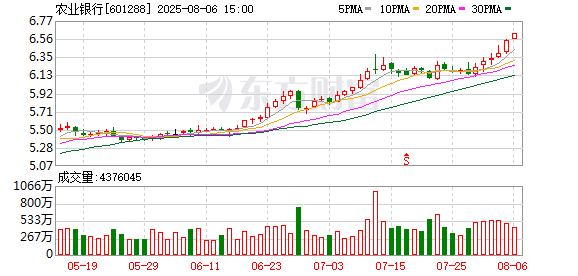
Core Viewpoint - Agricultural Bank of China has surpassed Industrial and Commercial Bank of China to become the market capitalization champion in A-shares, reflecting a phase of valuation recovery and capital allocation logic in the banking sector [2][3]. Group 1: Company Performance - As of August 6, Agricultural Bank's stock closed at 6.62 CNY per share, up 1.22%, reaching a historical high with a market capitalization of 2.11 trillion CNY [2]. - In Q1 2025, Agricultural Bank reported a net profit growth of 2.2% year-on-year and 6.23% quarter-on-quarter, while Industrial and Commercial Bank experienced a net profit decline of 3.99% year-on-year and 13.1% quarter-on-quarter [2]. Group 2: Market Dynamics - The rise of Agricultural Bank's market value is attributed to its stable earnings, high dividend yield, and deep engagement in county-level economies, making it a "ballast" for stable funds like insurance and pension funds [3]. - Nearly 50% of bank stocks have reached historical highs this year, indicating a broader trend in the banking sector [4]. Group 3: Historical Context - Historically, A-share market capitalization champions have shifted from local companies in the 1990s to major state-owned banks and consumer brands in the 21st century, with Agricultural Bank's recent rise marking a significant shift [4][5]. - The transition of market leaders reflects changes in economic structure and capital preferences, with a current focus on certainty in returns amid declining interest rates [5]. Group 4: Future Outlook - Short-term trends suggest that the valuation recovery of bank stocks may continue, especially with supportive fiscal and monetary policies benefiting major banks like Agricultural Bank [5]. - Long-term prospects indicate that if economic recovery exceeds expectations or interest rates rise, technology or consumer sectors may reclaim the top position, but the "certainty of returns" from bank stocks will remain attractive in volatile markets [5].