
美国劳动力市场

Search documents
布米普特拉北京投资基金管理有限公司:行业分化下的美国劳动力市场现状
Sou Hu Cai Jing· 2025-09-06 11:47
Group 1 - The latest ADP employment report indicates that private sector employment in the U.S. increased by 54,000 in August, falling short of the market expectation of 65,000 and showing a significant slowdown from the revised 106,000 in the previous month, suggesting challenges in the labor market [1] - ADP's Chief Economist Nela Richardson noted that the strong employment growth seen earlier this year has been impacted by uncertainties, with declining consumer confidence, labor shortages, and disruptions related to artificial intelligence being key factors for the slowdown [3] - The employment market shows a clear divergence across industries, with trade, transportation, and utilities sectors experiencing a net loss of 17,000 jobs, while the leisure and hospitality sector added 50,000 jobs, partially offsetting losses in other areas [3] Group 2 - Wage growth remains stable, with salaries for retained employees increasing by 4.4% year-over-year, while job switchers saw a 7.1% increase, consistent with the previous month [6] - Initial jobless claims rose to 237,000, the highest since June 21, indicating signs of fatigue in the labor market, although the overall employment market remains healthy with a low unemployment rate of 4.2% [6] - The JOLTS job openings data for July showed the worst performance since 2020, reflecting a cautious hiring stance among U.S. businesses due to trade policy uncertainties, with the annualized economic growth rate for the first half of the year at just 1.3%, significantly lower than last year's 2.5% [8]


今夜非农:数据要多“难看”,才能换来50个基点降息?-美股-金融界
Jin Rong Jie· 2025-09-05 07:38
Group 1 - The market widely expects a slight increase in non-farm payrolls to 75,000 in August, with the unemployment rate anticipated to rise to 4.3%, reinforcing expectations for a 25 basis point rate cut in September [1][3] - Standard Chartered Bank indicates that for a 50 basis point rate cut to be considered, the data must be "bad enough," specifically non-farm payrolls below 40,000 and an unemployment rate of 4.4% or higher [1][9] - A weak report is seen as most beneficial for the market, as it would likely support the case for a rate cut [1][10] Group 2 - Investors will closely monitor revisions to previous months' data, as July's report saw significant downward adjustments to May and June's employment figures, which shocked the market [2][3] - The upcoming annual benchmark revision from the Bureau of Labor Statistics could also trigger market volatility, with expectations of a downward adjustment of 500,000 to 1 million jobs [8][9] - The options market reflects an unusually calm expectation, with traders anticipating only a 0.70% volatility in the S&P 500 on the report release day, marking one of the lowest levels historically [2][11] Group 3 - Economic forecasts suggest a slowdown, with the unemployment rate expected to rise from 4.2% in July to 4.3% in August, still below the Federal Reserve's year-end median forecast of 4.5% [3][4] - Average hourly earnings are projected to increase by 0.3% month-over-month, with the year-over-year growth rate slowing from 3.9% to 3.8% [3][4] - The labor market is showing signs of cooling, with initial jobless claims and ADP private sector employment figures indicating a decline in hiring [6][7] Group 4 - The Challenger report indicates a drop in corporate hiring intentions to the lowest level since 2009, alongside a surge in layoffs [7] - The JOLTS report shows that for the first time since April 2021, the number of unemployed exceeded job vacancies, signaling a demand-constrained labor market [7] - Consumer confidence reports reveal a decrease in the proportion of consumers believing job availability is sufficient, while those finding it hard to secure work has increased [7] Group 5 - The market's baseline expectations for the report are notably pessimistic, following July's weak non-farm payrolls and significant downward revisions to prior months [4][6] - Analysts suggest that a "just right" report, slightly below expectations, would be the most favorable outcome for risk assets, maintaining the current growth pricing while solidifying rate cut expectations [12][13] - The upcoming CPI data is considered more critical than the non-farm report, as a strong inflation reading combined with robust employment figures could lead the Fed to pause rate cuts [9][10]
伦敦银走势震荡上涨 最新数据释放复杂信号
Jin Tou Wang· 2025-09-05 05:10
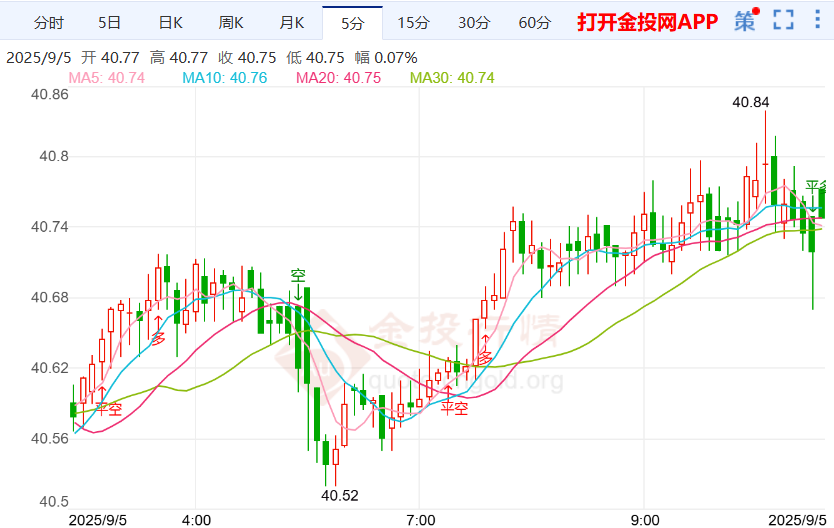
Core Viewpoint - The recent fluctuations in silver prices are influenced by U.S. economic data, particularly jobless claims and employment reports, which are shaping market expectations for potential interest rate cuts by the Federal Reserve [3][4]. Group 1: Silver Market Analysis - As of September 5, London silver is trading below $40.78, with a current price of $40.72, reflecting a 0.25% increase [1]. - The highest price reached today was $40.84, while the lowest was $40.52, indicating a short-term bullish trend in the silver market [1]. - The market is awaiting the monthly employment report, which is expected to significantly impact silver prices depending on the employment growth figures [3]. Group 2: U.S. Economic Indicators - Recent jobless claims data showed an increase to 237,000, exceeding the expected 230,000, indicating a cooling labor market [3]. - The ADP national employment report revealed that private sector jobs increased by only 54,000 in August, well below the anticipated 65,000, with July's figures revised upward to 106,000 [3]. - These indicators suggest a gradual slowdown in the U.S. labor market, which may enhance the safe-haven appeal of silver while raising concerns about a potential economic recession [3]. Group 3: Trading Strategies - The trading strategy for silver includes holding positions with stop-loss orders set at $39.95 and targeting price levels of $40.5, $40.7, and $41-$41.2 [4]. - The market sentiment is cautious ahead of the non-farm payroll report, with traders adjusting their positions based on the anticipated data [4].
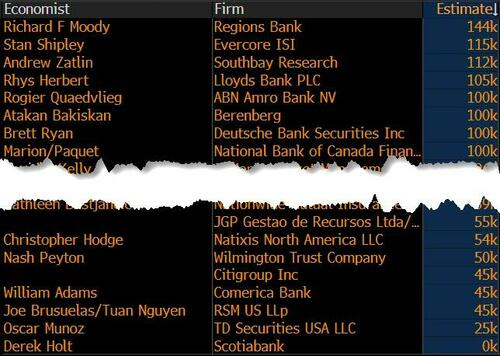
高盛的非农前瞻:60K!低于市场预期,但高于近期平均水平
Hua Er Jie Jian Wen· 2025-09-05 02:20
Core Viewpoint - The upcoming U.S. non-farm payroll report for August is expected to show an increase of 60,000 jobs, slightly below market expectations of 75,000, but above the three-month average of 35,000, reflecting a mixed impact of private sector job growth and government job cuts [1][2]. Group 1: Employment Data and Predictions - Goldman Sachs predicts a modest improvement in private sector employment, estimating an increase of 80,000 jobs, supported by alternative data sources indicating an average growth of 81,000 jobs in August [2]. - The report highlights a historical tendency for August non-farm payroll data to show initial weakness, with a median decline of 39,000 jobs compared to the previous three-month average since 2010 [3]. - The anticipated unemployment rate is expected to rise slightly from 4.248% in July to 4.3% in August, influenced by various labor market indicators [5]. Group 2: Government Employment and Policy Impact - Government employment is projected to decline by 20,000 jobs, primarily due to a hiring freeze that has been extended, impacting federal job numbers [3]. - The report suggests that recent government policies, including tariffs and immigration restrictions, may continue to exert pressure on job growth in certain sectors, particularly manufacturing [4][3]. Group 3: Labor Market Indicators - The Conference Board's labor differential indicator has decreased by 1.3 percentage points to 9.7, indicating a cooling labor market, which is the lowest level since February 2021 [5]. - The two-week moving average of continuing unemployment claims shows an upward trend, suggesting increasing job market pressures [5].


事关降息!美联储,大消息!
天天基金网· 2025-09-04 05:09
Core Viewpoint - The Federal Reserve is highly likely to cut interest rates by 25 basis points in September, with a probability of 89.6% according to market data [2][10]. Group 1: Labor Market and Economic Risks - Alberto G. Musalem, a voting member of the Federal Open Market Committee, indicated that the U.S. labor market faces increasing downside risks, particularly due to a weak real estate market [4]. - Musalem expects the labor market to gradually cool while remaining close to full employment, with recent data reinforcing his concerns about labor market risks [5]. - He anticipates that tariffs will impact the economy over the next two to three quarters, after which their effect on inflation will diminish, projecting inflation to converge towards 2% by the second half of 2026 [6]. Group 2: Interest Rate Outlook - Christopher J. Waller, a Federal Reserve governor, expressed support for a rate cut at the next meeting, suggesting multiple cuts may follow depending on economic data [8]. - Waller noted that the yield on the 10-year U.S. Treasury has stabilized and emphasized that the Fed can adjust the pace of rate cuts based on incoming data [8]. - Market expectations indicate a 10.4% chance of maintaining rates in September, while cumulative cuts of 25 and 50 basis points have probabilities of 47.3% and 47.9%, respectively, for October [10]. Group 3: Diverging Opinions on Future Rate Cuts - There is a consensus that the Fed will likely cut rates this year, but opinions vary on the number of cuts. Some analysts predict 5 to 6 cuts, while others, like HSBC's chief economist, suggest a maximum of 3 cuts post-September [11]. - Ellen Zentner from Morgan Stanley Wealth Management stated that the Fed has opened the door for rate cuts, but the extent will depend on whether labor market weakness poses a greater risk than rising inflation [11].

机构:职位空缺数据对美元走势的潜在提振作用将十分有限
Sou Hu Cai Jing· 2025-09-03 14:21
Core Viewpoint - The labor market is facing increasing downside risks, influenced by tightening immigration policies that have led to a sudden slowdown in labor growth [1] Group 1: Federal Reserve Insights - Federal Reserve Chairman Jerome Powell highlighted the rising risks in the labor market during the Jackson Hole Global Central Bank Conference [1] - San Francisco Federal Reserve Bank President Mary Daly emphasized the uncertainty regarding whether price increases related to tariffs are temporary, warning that waiting for definitive evidence could harm the labor market [1] Group 2: Market Reactions - Current market positioning suggests limited downside potential for the US dollar, but a significant drop in job openings reported in the JOLTS could further confirm the deterioration of the labor market, potentially putting pressure on the dollar [1] - Conversely, if the JOLTS data exceeds expectations, it is unlikely to alter the market's existing outlook on Federal Reserve policy, thus having a limited potential uplifting effect on the dollar [1]
海外宏观周报:美联储重启降息,美元或延续走弱-20250902
China Post Securities· 2025-09-02 05:59
Macroeconomic Insights - The Federal Reserve is expected to restart interest rate cuts, with inflation trends not hindering this decision[2] - Recent data shows declines in the FHFA and S&P/Case-Shiller home price indices, along with a decrease in rental prices[2] - The Manheim used car wholesale price index has also shown a month-on-month decline, indicating slower inflationary pressures on core goods[2] Labor Market Analysis - Employment data has shown a significant slowdown, with average hourly wages in sectors heavily reliant on immigrant labor, such as leisure and healthcare, declining since April[2] - The tightening of immigration policies has had a limited impact on the supply side of the U.S. labor market[2] Asset Price Trends - Anticipation of early interest rate cuts may lead to a steeper U.S. Treasury yield curve[3] - The U.S. dollar experienced a slight strengthening in mid-August, primarily due to reduced uncertainty around tariff policies rather than interest rate differentials[3] - The narrowing interest rate spread between the U.S. dollar and the euro suggests medium-term downward pressure on the dollar index[3] Risk Factors - A stronger-than-expected recovery in the labor market, coupled with persistent inflation above expectations, could delay the Fed's rate-cutting schedule[4]
美联储动向如何影响黄金价格?
2 1 Shi Ji Jing Ji Bao Dao· 2025-09-01 23:41
Group 1: Gold Price Trends - International gold prices have reached a new historical high, with COMEX gold futures settling at $3546 per ounce as of September 1, marking a 31.74% increase since the beginning of the year [1] - London spot gold and Shanghai Gold Exchange prices are at $3478 per ounce and 794.66 yuan per gram respectively, with year-to-date increases of 29.58% and 25.68% [1] - The average daily increase in London spot gold prices for Q1, Q2, and Q3 (up to September 1) were 0.295%, 0.080%, and 0.09% respectively, indicating a higher average increase in Q3 compared to Q2 [2] Group 2: Federal Reserve's Monetary Policy - The expectation of interest rate cuts by the Federal Reserve has increased, with a 87.4% probability of a 25 basis point cut in September [1] - Fed Chair Powell signaled a potential rate cut based on the current labor market conditions and rising stagflation risks [3] - The unemployment rate in the U.S. has remained stable around 4% to 4.2%, reflecting a softening labor supply and demand [4] Group 3: Inflation and Tariff Impact - U.S. inflation rates have shown an upward trend, with CPI and core CPI year-on-year growth rates at 2.7% and 3% respectively as of July 2025, higher than the levels in April [5] - The imposition of tariffs has been identified as a factor hindering the downward trend of inflation in the U.S. [5] - Concerns regarding the independence of the Federal Reserve have been raised following political pressures, which may affect market confidence [6]
本周外盘看点丨美国8月非农如何表现,库克去留悬念待解
Di Yi Cai Jing· 2025-08-31 05:10
Economic Overview - The U.S. stock market experienced slight declines, with the Dow Jones down 0.19%, Nasdaq down 0.32%, and S&P 500 down 0.10% for the week [1] - European markets also fell, with the FTSE 100 down 1.44%, DAX 30 down 1.89%, and CAC 40 down 3.33% [1] - Upcoming economic indicators include the U.S. non-farm payroll data for August, which is expected to show a slight increase in unemployment from 4.2% to 4.3% and non-farm employment growth of 78,000 [3][4] Federal Reserve Insights - The Federal Reserve is anticipated to release its Beige Book, which will provide insights into the economic conditions across the U.S. [3] - Market expectations for a 25 basis point rate cut at the next Federal Reserve meeting on September 17 are at 84% [3] Corporate Earnings - Notable corporate earnings reports expected this week include those from companies like Salesforce, Broadcom, HP Enterprise, and Lululemon, as well as Chinese company NIO [4][8] Commodity Market - WTI crude oil prices rose by 0.55% to $64.01 per barrel, while Brent crude increased by 0.58% to $68.12 per barrel, despite both experiencing declines in August [5] - Gold prices saw a significant increase, with COMEX gold futures rising by 2.84% to $3,473.70 per ounce, marking a 5.48% increase for August [5][6] European Economic Indicators - The Eurozone's consumer price index (CPI) is expected to show a stable growth of 2.0% for August, consistent with July [6] - Upcoming data releases include manufacturing and services PMI for several European countries, as well as the Eurozone's unemployment rate and retail trade data [7][8]

JacksonHole年会点评:鲍威尔重磅讲话之后:相信你所相信的
Huafu Securities· 2025-08-24 08:25
Group 1: Federal Reserve Policy Insights - Powell's speech at Jackson Hole provided a clear hint of potential interest rate cuts, causing significant market reactions, with the dollar index dropping as much as 0.94% on August 22[3] - The Fed is facing challenges with inflation risks skewed upwards and employment risks skewed downwards, indicating a need to adjust policy stance[3] - The abandonment of the flexible average inflation targeting framework opens the door for quicker rate cuts if inflation shows signs of rapid decline[4] Group 2: Labor Market Dynamics - The U.S. labor market is exhibiting a "curious kind of balance," with both labor supply and demand significantly slowing, which could lead to a rise in unemployment if participation rates do not improve[4] - The upcoming August non-farm payroll data will be crucial for assessing labor market conditions ahead of the September FOMC meeting[4] - Initial jobless claims rose in the third week of August, indicating potential weakness in the labor market, but previous strong data complicates the assessment[4] Group 3: Global Economic Context - Japan's core CPI remained flat at 3.4% in July, suggesting that input inflation may be ending, with future inflation risks leaning towards a decline[26] - The U.S. imposition of "reciprocal tariffs" on Japan is expected to further impact Japan's manufacturing PMI, indicating a deteriorating external demand environment[26] - If U.S. economic data points to effective fiscal expansion and improved employment, a rebound in the already weakened dollar index may be more likely[5]