消费升级

Search documents
亚玛芬增长引擎换挡:萨洛蒙收入超过始祖鸟
Nan Fang Du Shi Bao· 2025-11-20 23:08
Core Insights - Amer Sports reported a significant increase in Q3 2025 revenue, up 30% year-over-year to $1.756 billion, with adjusted net profit soaring 161% to $185 million, exceeding market expectations [2] - The strong performance led to an 8.45% surge in stock price, bringing the total market capitalization back to $18.5 billion [2] Group 1: Business Performance - The growth was driven by three core business segments: Salomon's footwear, Arc'teryx's omnichannel sales, and Wilson's tennis and winter sports equipment, all showing robust performance [3] - Technical Apparel segment revenue increased by 31% to $683 million, Outdoor Performance segment revenue rose by 36% to $724 million, and Ball & Racquet Sports segment revenue grew by 16% to $350 million [3] - Salomon's footwear business contributed significantly to the financial health and long-term value creation potential of Amer Sports [4] Group 2: Market Dynamics - The gross margin improved by 240 basis points year-over-year to 57.9%, positioning Amer Sports ahead of competitors like Nike and Adidas in the outdoor sports goods industry [4] - The Greater China region showed remarkable growth, with a revenue increase of 47%, significantly surpassing the global average growth rate of 30% [5] - The acquisition by Anta Group has transformed the Greater China market into a key growth driver, with a projected revenue increase of 53.7% in 2024 [5] Group 3: Future Outlook - Amer Sports raised its full-year revenue growth guidance to 23%-24%, up from the initial estimate of 20%-21%, projecting total revenue between $6.37 billion and $6.42 billion [5] - The outdoor sports market is experiencing steady growth, particularly in high-end functional sports equipment, driven by consumer upgrades and the promotion of healthy lifestyles [6] - Despite the competitive landscape, Amer Sports aims to maintain its brand strategy and continue the high growth trajectory in the Greater China region [6]


奢侈品门店密集调整 北京高端商业新比拼
Bei Jing Shang Bao· 2025-11-20 16:30
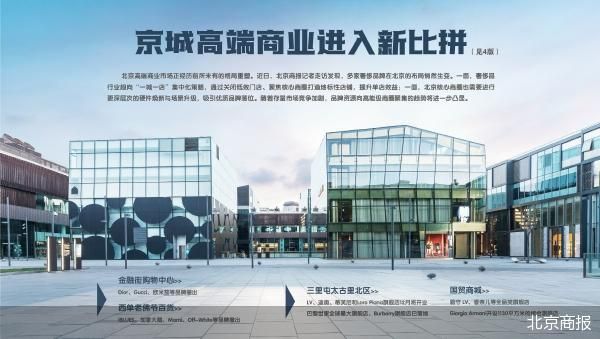
Core Insights - The luxury goods market in Beijing is undergoing significant changes, with brands like Gucci and Dior closing stores in traditional high-end shopping areas, while new flagship stores are emerging in more vibrant districts like Sanlitun [1][3] - The trend indicates a shift towards a "one store per city" strategy among luxury brands, focusing on flagship locations in prime commercial areas to enhance single-store efficiency [1][6] - The competition among shopping districts is intensifying, with a clear divide between the declining western commercial areas and the thriving eastern districts, particularly in Chaoyang [3][8] Group 1: Market Dynamics - Financial Street Shopping Center has seen the closure of major luxury brands due to expired leases, while other brands like Burberry and LV continue to operate [3] - Westside shopping areas, such as the West Wangfujing area, are experiencing a significant reduction in luxury brand presence, contrasting sharply with the "luxury frenzy" in the Chaoyang district [3][8] - The luxury brand selection criteria have evolved, with a focus on the alignment of brand positioning with shopping district characteristics and the necessity for high-quality infrastructure [6][7] Group 2: Strategic Adjustments - High-end shopping centers are actively upgrading their offerings to attract luxury brands, introducing trendy brands and unique experiences to enhance their appeal [4][6] - The introduction of flagship stores and unique retail experiences, such as themed pop-ups and interactive spaces, is becoming a strategy to maintain competitiveness in the luxury market [4][6] - The luxury market's focus on experiential retail is growing, with brands increasingly valuing the ability of shopping centers to create engaging content and experiences for consumers [7][10] Group 3: Future Opportunities - Despite the current challenges, there are still opportunities for luxury brands in the western regions of Beijing, particularly in areas like Haidian, which have affluent consumer bases [8][9] - The potential for luxury brands to establish a presence in western districts hinges on improving the quality of commercial spaces and enhancing transportation connectivity [8][9] - Strategies such as introducing high-end watch brands and leveraging local technological advancements could help attract luxury brands to underperforming areas [9][10]
2025年全球耳机市场洞察研究报告
Tou Bao Yan Jiu Yuan· 2025-11-20 12:33
Investment Rating - The report does not explicitly state an investment rating for the headphone industry Core Insights - The global headphone market is projected to grow significantly, reaching 800 million units by 2030, with a compound annual growth rate (CAGR) of 8.3% from 2020 to 2030 [7][11] - The market is shifting from developed regions to emerging economies, particularly India, which is expected to become a key growth market by 2030 [6][12] Market Distribution - The global headphone market is experiencing a transition from developed markets to emerging economies, with China reaching a mature stage and the US and Western Europe showing slow growth [12][16] - The market share of China is expected to decline from 17.5% in 2024 to 15.1% by 2030, while India's market share is projected to rise from 11.1% in 2024 to 13.9% by 2030 [6][16] Competitive Landscape - Apple continues to lead the market, increasing its share from 12.2% in 2018 to 17.7% in 2024, driven by the success of the AirPods series [5][19] - In the mid-to-high-end market, brands like Sony, Bose, and JBL maintain stable market shares due to their superior sound quality and noise-cancellation technology [19] - Emerging brands such as boAt are gaining traction in the Indian market, with their share rising from virtually zero in 2018 to nearly 4% in 2024 [19] Growth Drivers - The rise of open-ear headphones is expected to expand their market share, projected to reach 65.7 million units by 2030, with a CAGR of 11.3% [32][34] - The AI headphone market is anticipated to grow rapidly, reaching a market size of 18.48 billion yuan by 2030, with a CAGR of 32.9% from 2025 to 2030 [36][37]



无糖茶的苦,年轻人不想咽了
3 6 Ke· 2025-11-20 09:57
Core Insights - The trend of young consumers moving away from "sugar-free" products is evident, with a noticeable slowdown in the growth of sugar-free tea sales and a decline in the popularity of sugar substitutes [5][12][14] Industry Overview - Sugar-free tea sales growth has significantly decreased, with sales growth rates from April to September 2023 being 3.9%, 7%, 19.9%, 19.5%, 8.5%, and 6.3%, all lower than the same periods in the previous year [2] - The average price of sugar-free tea has been on the rise, increasing from 5.1 yuan per piece in 2023 to 5.6 yuan per piece by 2025, indicating that despite higher prices, total sales growth is slowing [2] - The market is dominated by established brands like Nongfu Spring and Suntory, which together hold 87.3% market share as of September 2023, up 6.4% from the previous year [7] - The second-tier brands' market share has decreased from 11.3% to 7.4%, while the third-tier brands' share has shrunk from 5.1% to 3.4%, highlighting the intensifying head effect in the industry [7][9] Consumer Behavior - The shift in consumer preferences indicates that the younger generation is moving away from extreme health consciousness towards a more indulgent lifestyle, seeking comfort in sugary beverages [5][12] - The demand for sugar substitutes, particularly erythritol, has also faced challenges, with a reported oversupply in the market as of May 2023, where domestic production capacity reached 380,000 tons per year against a global demand of only 173,000 tons [2][14] Product Innovation - There has been a lack of new hit products in the sugar-free tea market, with established products like unsweetened oolong and jasmine tea dominating nearly 70% of the market share [9] - The innovation in the sugar-free tea sector has stagnated, with brands focusing on minor innovations around existing products rather than developing new ones, leading to potential homogenization and price competition [9][11] - In contrast, the sugary tea segment has seen a surge in new product launches, with sugary tea products outnumbering sugar-free tea products significantly in recent months [10] Supplier Challenges - Suppliers of sugar substitutes are experiencing significant operational pressures, with major companies like San Yuan Bio reporting a 7.54% decline in total revenue and a 16.8% drop in net profit for the first three quarters of the year [14][19] - The industry is facing a broader trend of declining demand, leading to increased competition and financial strain on suppliers, many of whom are exploring alternative products and markets to mitigate losses [17][19]




建筑材料行业周报:前十月基建投资同比-0.1%,稳增长背景下看好战略重点工程推进-20251120
East Money Securities· 2025-11-20 08:57
Investment Rating - The report maintains an "Outperform" rating for the construction materials industry, indicating a positive outlook compared to the broader market [3][51]. Core Insights - The construction materials sector has shown resilience with a 1.50% increase last week, outperforming the CSI 300 index by 2.6 percentage points. Year-to-date, the sector has risen 17.3%, slightly underperforming the CSI 300 index by approximately 0.4 percentage points [6][14]. - Infrastructure investment in the first ten months of 2025 has decreased by 0.1% year-on-year, but there is optimism regarding the acceleration of strategic key projects, particularly in cement, explosives, pipes, and waterproof materials [6][26]. - The report highlights a shift towards consumption upgrades, which is expected to enhance the competitive landscape in the consumer building materials segment, leading to increased market share for leading companies [6][26]. Summary by Sections Market Overview - The construction materials sector has experienced a 1.50% increase last week, with cement, glass, and renovation materials showing varied performance [6][14]. - Cement prices have seen a slight increase, with the national average price at 358 RMB/ton, reflecting a week-on-week increase of 1.1 RMB/ton [20][30]. Infrastructure Investment - National fixed asset investment reached 408914 billion RMB in the first ten months of 2025, down 1.7% year-on-year, with infrastructure investment showing a minor decline of 0.1% [6][24]. - Key sectors such as pipeline transportation, water transportation, and railway transportation have shown growth rates of 13.8%, 9.4%, and 3.0% respectively, indicating relative strength in these areas [6][24]. Cement Market Dynamics - The national cement shipment rate was approximately 46% as of November 14, 2025, with a week-on-week increase of 0.3 percentage points [20][30]. - The report notes that the overall demand for cement is expected to stabilize, with prices likely to experience fluctuations as companies aim to enhance profitability [31][30]. Glass and Fiberglass Market - The average price of float glass has decreased to 1195 RMB/ton, with a week-on-week decline of 2 RMB/ton, while inventory levels have also decreased [39][40]. - Fiberglass prices remained stable, with the average price of non-alkali fiberglass yarn in East China at 3475 RMB/ton [43][44]. Cost Trends - The report indicates that most raw material prices have decreased year-on-year, which is expected to positively impact corporate profitability in the second half of 2025 [45][47].
通胀拐点已至?10月CPI超预期下,消费板块的投资机会应该这样看
Xin Lang Cai Jing· 2025-11-20 08:33
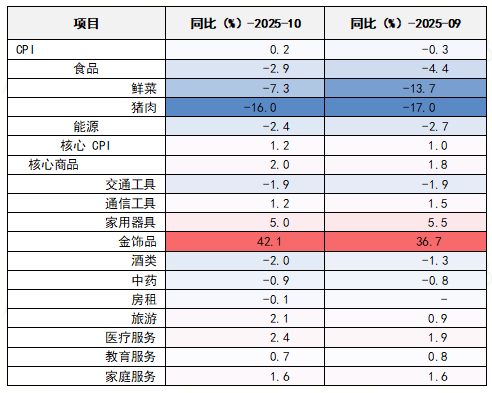
Core Insights - The October CPI data shows a year-on-year increase of 0.2%, indicating a potential turning point in consumer inflation, with core CPI rising for six consecutive months to 1.2% [1][2] Group 1: October CPI Analysis - The increase in October CPI is primarily driven by holiday consumption and rising gold prices, rather than a comprehensive recovery in the economy [1] - The year-on-year change in CPI reflects a reduction in downward pressure, with food price declines narrowing to -2.9% and energy price declines to -2.4% [1] - Retail sales in October grew by 2.9% year-on-year, but there are signs of weakening demand as new social financing growth slows and both short and long-term loans show negative growth [2] Group 2: Long-term Trends - A significant milestone is noted as the total retail sales of consumer goods from January to October (41.22 trillion yuan) surpass fixed asset investment (40.89 trillion yuan), indicating a shift from investment-driven to consumption-driven economic growth [2][4] - Conditions for consumption to become a core driver of economic growth are maturing, supported by rising per capita GDP, increased policy focus on consumption, and structural changes in consumer behavior [4] Group 3: Investment Opportunities in the Consumer Sector - High-end consumer demand is showing signs of recovery, with notable growth in high-end service consumption, such as entertainment and duty-free shopping [6] - The consumer sector is currently at historical low valuation levels, with the CSI Consumer 50 Index PE ratio at 17.5, indicating a favorable risk-reward ratio for investors [7][10] - The dividend yield for the CSI Consumer 50 Index is currently at 3.79%, higher than that of banks, suggesting limited downside potential [10] Group 4: Strategic Recommendations - Investors are encouraged to consider the consumption sector as a strategic opportunity, particularly in light of the structural improvements indicated by the October CPI data [11] - Suggested investment products include the E Fund Consumption ETF, which tracks the CSI Consumer 50 Index, and the Hong Kong Stock Consumption ETF, providing exposure to high-quality consumer companies in the Hong Kong market [11]
英中贸易协会:粤港大湾区已成为“全球湾区”
2 1 Shi Ji Jing Ji Bao Dao· 2025-11-20 04:13
Group 1 - The UK-China trade relationship is strengthening, with significant increases in high-level exchanges and economic cooperation in 2025, including the resumption of economic dialogues and participation in major trade events [2] - The UK has over 100 companies participating in the 25th China International Investment and Trade Fair, highlighting its commitment to enhancing trade ties with China [2] - The UK has a strong presence in sectors such as financial services, life sciences, and clean energy, with 168 unicorn companies in artificial intelligence, contributing significantly to the economy [2] Group 2 - The Guangdong-Hong Kong-Macao Greater Bay Area is recognized as a vital hub for international cooperation, being the most open and dynamic region in China, attracting numerous UK businesses [3] - The Greater Bay Area aligns with China's five-year development strategy, facilitating cross-border trade, technological innovation, and investment [3] - Future openness in the Greater Bay Area will focus on aligning institutional frameworks with international standards, including the Comprehensive and Progressive Agreement for Trans-Pacific Partnership (CPTPP) [3]
10月以旧换新相关商品销售保持较快增长
Qi Huo Ri Bao· 2025-11-19 16:07
Core Viewpoint - The domestic consumption market in China has shown steady growth in October, driven by the National Day and Mid-Autumn Festival holidays, with continuous release of consumption potential [1] Summary by Categories Overall Consumption Performance - In October, the total retail sales of consumer goods reached 4.63 trillion yuan, representing a year-on-year growth of 2.9% [1] - From January to October, the total retail sales of consumer goods amounted to 41.2 trillion yuan, with a growth rate of 4.3%, which is 0.8 percentage points higher than the same period last year [1] Retail Sales Breakdown - In October, the retail sales of goods increased by 2.8%, with significant growth in sales of products related to trade-in programs [1] - Retail sales for communication equipment, cultural and office supplies, and furniture increased by 23.2%, 13.5%, and 9.6% respectively [1] Basic and Upgraded Goods Consumption - Basic living goods saw rapid growth, with retail sales of grain and oil foods increasing by 9.1% and clothing and footwear by 6.3% [1] - Demand for upgraded goods remained strong, with retail sales of gold and silver jewelry, sports and entertainment products, and cosmetics increasing by 37.6%, 10.1%, and 9.6% respectively [1]
湾里项目冲刺开业 为通州经济注入新动能
Bei Jing Shang Bao· 2025-11-19 13:23
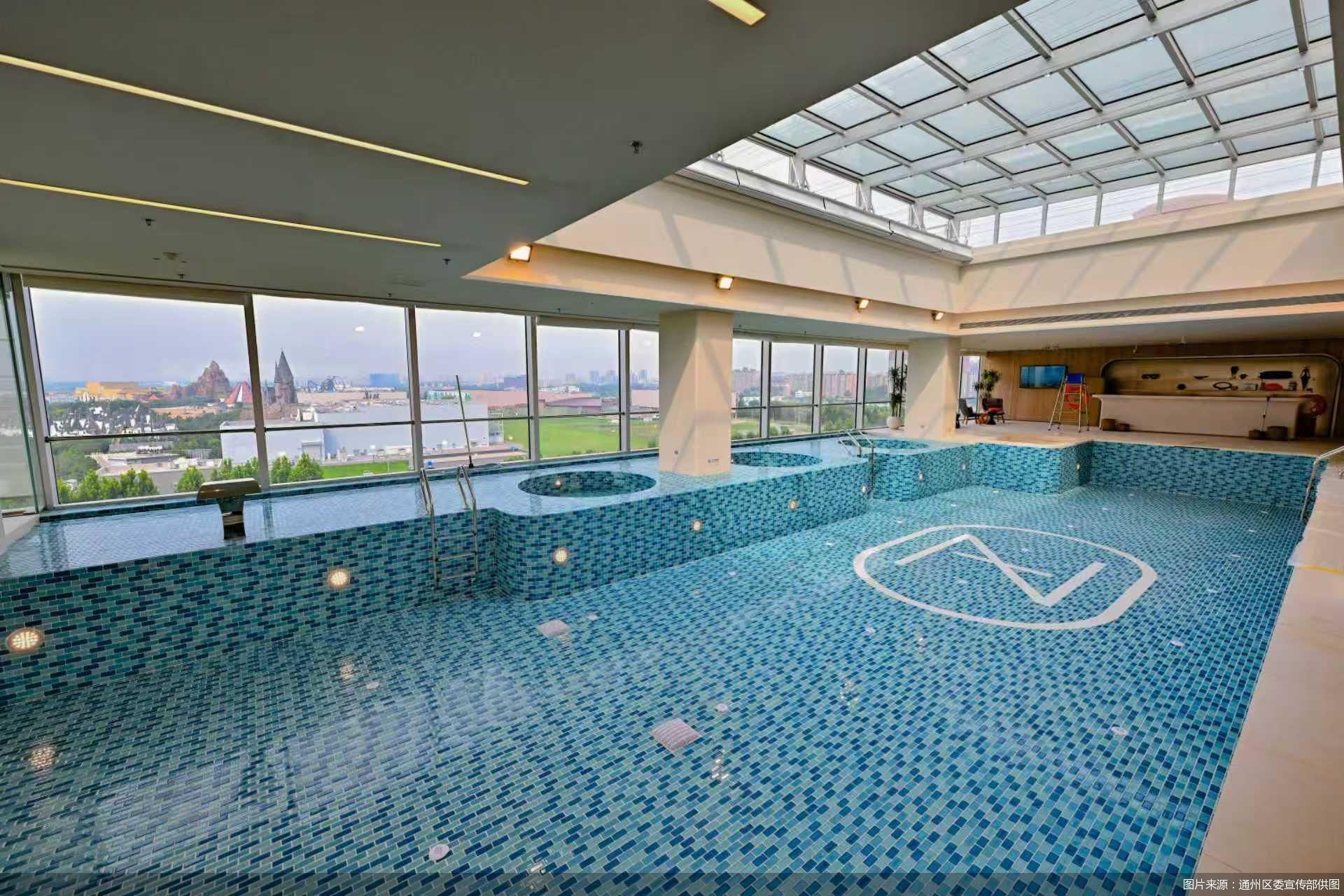
Core Insights - The "Wanli" project, a major international commercial and entertainment complex, is set to officially open by the end of this year, having completed construction and entered trial operations [1][4]. Economic Development - The cultural tourism sector is a key driver for enhancing urban quality and improving residents' well-being, forming a core support for the Beijing urban sub-center's "3+1" main functions [3]. - During the 14th Five-Year Plan period, the region's GDP is expected to grow at an average annual rate exceeding 6%, with a notable 10.9% growth in the first three quarters of this year, ranking second in the city [3]. - Since the construction of the urban sub-center began in 2016, fixed asset investment has exceeded 960 billion yuan, maintaining over 100 billion yuan annually for five consecutive years [3]. Project Details - The "Wanli" project encompasses a total development area of approximately 500,000 square meters, featuring components such as Wangfujing WellTown, NuoLan Hotel, and TingYun Town, all interconnected by a corridor [4][5]. - The project aims to attract over 500 well-known domestic and international brands, with more than 60% being brands entering Tongzhou for the first time, positioning it as the largest outlet complex in North China [4]. Market Potential - The project is expected to attract over 8 million visitors annually, generating more than 5,000 direct jobs and increasing regional tourism revenue by over 15% [5]. - The integration of the "Universal Studios + Grand Canal + Urban Green Heart" tourism matrix is anticipated to enhance the full-chain service of daytime entertainment and nighttime consumption [5].
过去两年,山东日企减少229家
Sou Hu Cai Jing· 2025-11-19 12:51
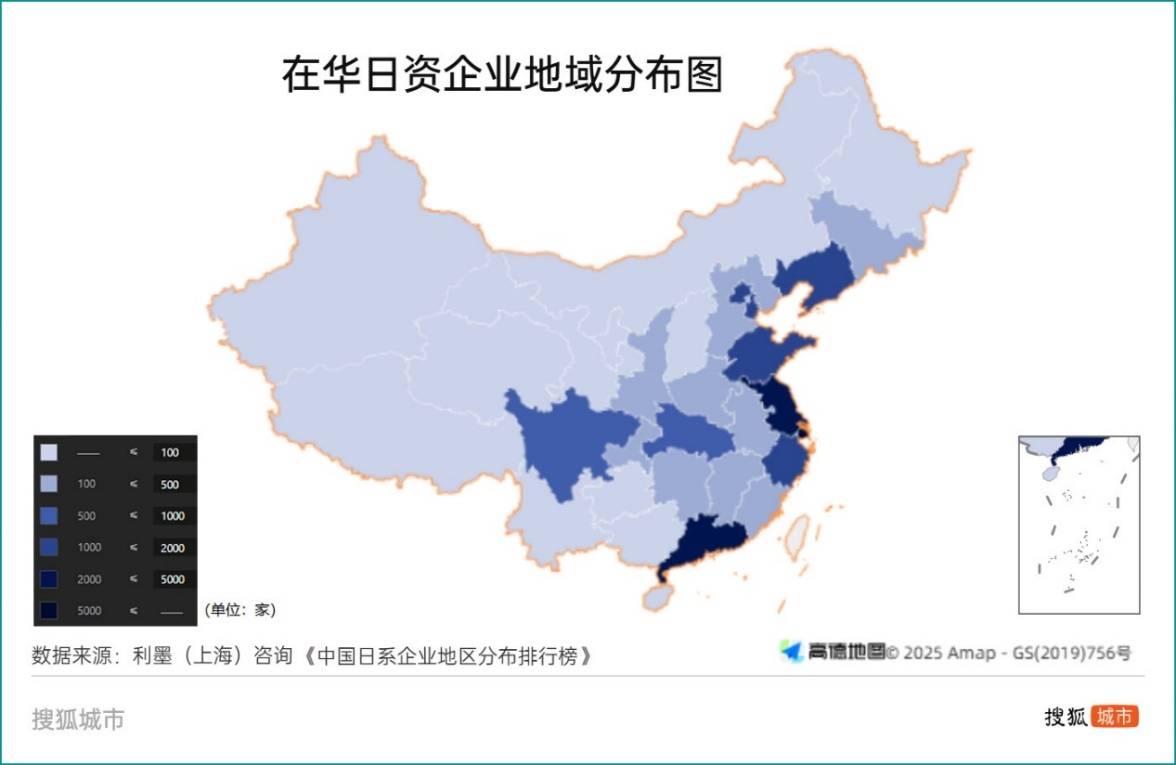
Core Insights - The restructuring of global supply chains has led to a significant adjustment in Japanese companies' investment strategies in China, with a notable decline in both the number of Japanese firms and their investment scale [1][10]. Group 1: Decline in Japanese Companies in China - The number of Japanese companies in China decreased from 33,341 in 2019 to 31,060 in 2022, with further declines expected, dropping to 27,148 by April 2025 [3][7]. - Shandong province experienced the largest drop, losing 229 companies, while Shanghai saw a reduction of 164 companies [3][7]. - The overall trend indicates that, apart from Tianjin and Hubei, all other top provinces for Japanese companies are witnessing a decline [1][7]. Group 2: Investment Scale Reduction - Japanese investment in China fell from approximately 1.9 trillion yen in 2018 to 1.6 trillion yen in 2019, and further down to about 600 billion yen by 2023 [1][10]. - The actual investment from Japanese companies in China for 2023 was reported at 38.9 million USD (approximately 600 billion yen), marking a 15.5% year-on-year decrease [10]. - The withdrawal of Japanese investments has also increased, rising from 332.6 billion yen in 2019 to 772.5 billion yen in 2023 [10]. Group 3: Strategic Shift in Investment Focus - Japanese companies are shifting their focus from production and export centers to consumer-oriented strategies, emphasizing local market demands [11][14]. - New investments are primarily concentrated in the retail, dining, and wholesale sectors, with manufacturing investments shrinking significantly from 790.5 billion yen in 2020 to 200.5 billion yen in 2023 [13]. - The trend shows a concentration of new Japanese enterprises in regions like Guangdong, Shanghai, and Jiangsu, which together account for nearly half of the new establishments [13]. Group 4: Factors Influencing Investment Decisions - Rising labor and land costs, along with increased competition, are driving Japanese companies to reconsider their operational strategies in China [18][20]. - Geopolitical tensions and social security risks, highlighted by incidents in Suzhou and Shenzhen, have made Japanese firms more cautious in their investment decisions [20]. - Despite these challenges, Japanese investment in China saw a 59% increase in the first half of the year, attributed to a temporary thaw in Sino-Japanese relations [20].