对等关税

Search documents
欧美关税谈判开谈,欧盟高官对美国“速战速决”的愿望说不
第一财经· 2025-05-18 12:56
Core Viewpoint - The article discusses the ongoing trade negotiations between the US and EU, focusing on tariffs, digital trade, and investment opportunities, highlighting the complexities and challenges in reaching an agreement [1][2][4]. Summary by Sections Trade Negotiations - The US and EU have exchanged negotiation documents covering tariffs, digital trade, and investment opportunities, with EU officials urging caution against US pressure for quick resolutions [1]. - The EU is wary of US attempts to use tariffs to force changes in its digital tax and non-tariff trade barriers, indicating that such pressure may be ineffective [2]. US-UK Trade Agreement - The recent US-UK trade agreement is not seen as a template for EU negotiations, as EU officials reject the retention of a 10% tariff that was part of the US-UK deal [4][5]. - EU trade officials express dissatisfaction with the US-UK agreement and indicate potential retaliatory measures if the US maintains its tariff stance [4]. EU's Position and Strategy - EU officials are considering their options regarding US tariffs, weighing the possibility of retaliatory tariffs against the need to minimize economic losses [6][8]. - The EU has not yet implemented significant retaliatory measures but continues to threaten increased tariffs as a means of negotiation [8]. Technical Standards and Regulatory Issues - The article highlights the longstanding difficulties in reconciling US and EU technical standards, which complicate trade negotiations beyond tariff discussions [8][9]. - EU officials assert that they will not compromise on their regulatory autonomy, particularly regarding digital services and value-added tax [10]. Potential Retaliation Measures - The EU is preparing a package of retaliatory measures worth €95 billion, targeting US exports such as aircraft, automobiles, and bourbon whiskey, should negotiations fail [10][11]. - Ongoing discussions among EU member states regarding which US products to include in the retaliation list indicate a lack of consensus, with some countries seeking exemptions for specific products [12]. Member States' Unity and Challenges - While EU member states currently support the EU Commission's trade negotiation strategy, this unity may be tested as the details of the agreement emerge [12]. - The final stance of the EU will depend on whether the negotiations yield substantial tariff reductions, with some member states potentially favoring a more conciliatory approach to avoid further losses [12].

面临高关税压力,越美完成首次线下部长级磋商
Guan Cha Zhe Wang· 2025-05-18 11:42
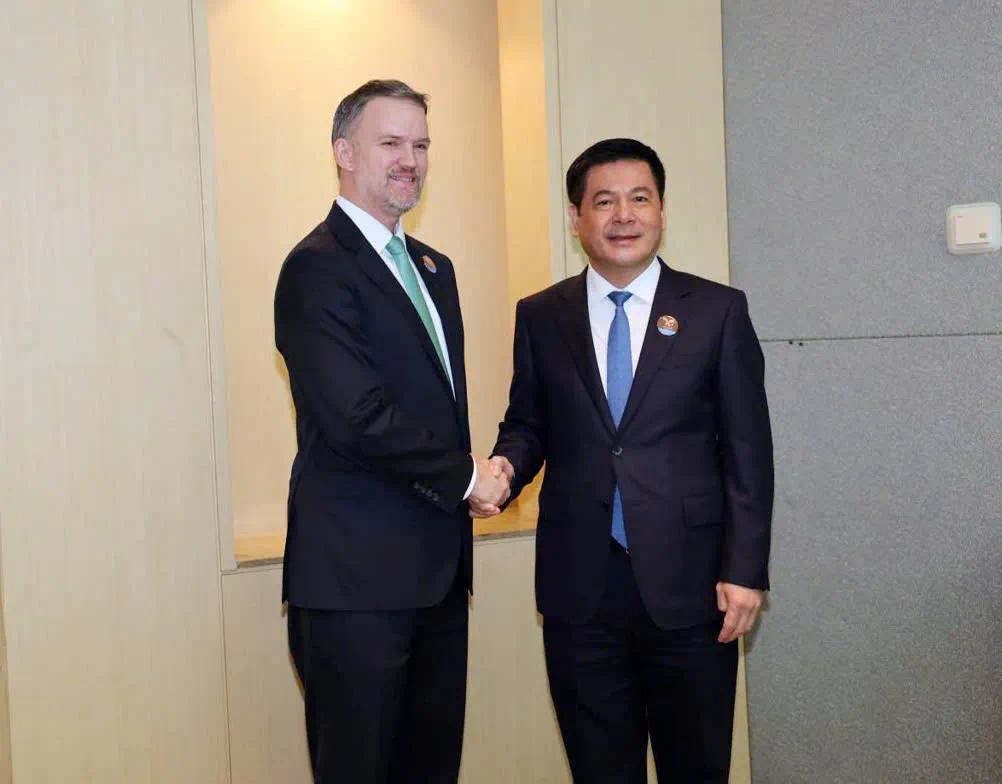
据越南工贸部17日消息,在16日亚太经合组织(APEC)第三十一届贸易部长会议闭幕后,越南工贸部部长阮鸿延与美国贸易代表格里尔在韩国济州就"对 等贸易协定"进行了首次线下部长级磋商。 这是自越美4月23日启动贸易谈判后,两国谈判代表首次线下会面。按照越方发布的声明,此次谈判"本着坦诚、建设性、开放、灵活的精神进行",体现 出越美两国致力于发展"稳定互利的经贸投资关系"。 5月7日,越南工贸部召开了与越南各大集团、总公司和重点企业的工作会议,评估这些企业未来对美国高技术、高附加值商品的进口需求,敦促其在6月 前推动签署更多采买合同,实现两国"贸易平衡"。8日,该部又召集了对美出口额较大的企业等,指示其致函美官员投诉"不合理"关税,并动员美国民众 和政界人士支持维持越南商品对美"正常"流通。 美国《纽约时报》5月4日刊文称,即便有90天的"对等关税"暂缓期,但越南工人仍生活在迷茫与恐惧之中。多名越南工厂的高管表示,工厂利润率微薄, 平均只有5%。目前一些工厂正加大产量,以便在暂缓期结束前完成发货。但一些美国客户已经开始取消订单或推迟新订单,有工厂已经开始裁员或冻结 招聘。 出于对本国经济的担忧,越南在应对本轮美国 ...
近日首次交换谈判文件 美欧关税谈判正式开启
Hua Er Jie Jian Wen· 2025-05-17 07:54
Core Points - The EU and the US have officially begun tariff negotiations after a period of stalemate, with discussions covering tariffs, digital trade, and investment opportunities [1] - The EU has rejected the 10% tariff agreement reached between the US and the UK, indicating it will not serve as a template for their negotiations [2][5] - The EU has proposed a retaliatory tariff plan amounting to €95 billion, targeting US products such as Boeing aircraft, automobiles, and bourbon whiskey [2] Tariff Negotiation Focus and Stance - The US currently maintains a 25% additional tariff on EU steel, aluminum, and automobiles, with a recent announcement of a "reciprocal tariff" measure that raised tariffs on all European imports [3] - The EU has suspended €21 billion in retaliatory tariffs and reduced the "reciprocal tariff" from 20% to 10% until July 8 to facilitate negotiations [3] - EU officials emphasize the need for a calm approach and caution against yielding to US pressure for quick resolutions, with some US tariffs likely to remain, particularly in steel and automotive sectors [3] US Concerns and EU Response - The US has raised concerns regarding the EU's value-added tax, digital services regulations, food standards, and tariffs on certain US goods [4] - The EU has firmly stated it will not accept US demands to eliminate value-added tax or weaken digital regulations and taxation [5]
中金研究 | 本周精选:宏观、策略、大类资产、房地产
中金点睛· 2025-05-17 01:04
Strategy - The article discusses the recent "triple kill" in the U.S. stock, bond, and currency markets following Trump's announcement of "reciprocal tariffs," which led to a significant market downturn, with the S&P 500 experiencing a maximum drawdown of 10% and the 10-year U.S. Treasury yield rising by 50 basis points to nearly 4.5% [3] - The concerns stem from the potential erosion of global investors' confidence in U.S. dollar assets as a long-term safe haven, alongside the immediate market volatility caused by policy uncertainty [3] - Historical instances of similar "triple kill" scenarios since 1970 are analyzed, identifying common triggers such as stagflation fears, monetary tightening, and reduced relative attractiveness of the dollar [3] Real Estate - The article highlights the evolving framework of China's real estate policies since 2022, emphasizing the need for dynamic responses to market challenges [9] - It suggests that enhancing asset circulation at both macro and micro levels could lead to a more balanced real estate market and effective risk mitigation [9] - The article advocates for synchronized policy deepening on both supply and demand sides, particularly enriching supply-side policy tools to improve industry supply-demand dynamics and asset price expectations [9] Macroeconomy - A joint statement from the U.S. and China indicates a significant reduction in tariffs, with the effective U.S. tariff rate dropping from 28.4% to 15.5%, which is expected to alleviate inflationary pressures in the U.S. and reduce export risks for China [11] - The outcome of the trade talks is seen as a positive development for market sentiment, with implications for both U.S. supply shocks and Chinese demand shocks [11] - The article notes that the future trajectory of China's economy will largely depend on the strength of macroeconomic policies, especially fiscal measures [11] Major Assets - The "triple kill" scenario in April is linked to significant changes in the inflation environment and the dollar cycle, indicating a decline in the safe-haven capacity of U.S. dollar assets [16] - The article warns of the potential for repeated and prolonged "triple kill" events, suggesting that the scarcity of safe assets like U.S. Treasuries may enhance the appeal of gold and other non-dollar assets [16] - It also points out that the uncertainty surrounding U.S. equities may increase the attractiveness of non-U.S. risk assets, particularly in Europe and China [16]
日美关税谈判陷入尴尬局面
Jing Ji Ri Bao· 2025-05-16 21:52
对于石破茂政权而言,如何在守住国内政治底线的同时,打破议程错位、重建对美谈判节奏,不仅是贸 易政策的技术性课题,更成为其执政稳定与战略自主的关键考验。 (文章来源:经济日报) 谈判僵持不下的一大原因在于日本政府出乎意料的强硬表态。日本政府此前希望继续保留将汽车、钢 铁、铝等"零关税"纳入全面谈判之中的政策基调。针对英美两国就汽车关税达成协定,日本首相石破茂 在5月11日接受采访时表示:"这只是一种模式,然而我们呼吁取消关税,并不是10%就可以满足。"石 破茂还在国会上表示,日本不会接受只处理外围议题的"片段式"安排,也无意提前就汽车以外领域达成 单项协议。他强调,"包括汽车在内的结构性关税问题必须作为整体处理,日本的谈判立场很明确"。 日本政府正在紧密评估下一阶段即将到来的事务层级谈判的具体路径,试图用更符合美国需要的筹码换 取谈判前提的改变。在5月12日的日本国会众议院预算委员会会议上,石破茂表示将加快日美关税谈判 准备工作,重点推进扩大贸易、非关税措施、经济安全合作3个领域的合作,争取在本月中旬举行的部 长级会议上取得具体进展。农业方面,此前一度遭致党内国内大肆批判而沉寂的"大米免税配额"方案有 重新浮出 ...
日本对美将更强硬? “若达成不利协议,等于把自己往刀片送”
Guan Cha Zhe Wang· 2025-05-16 16:02
Group 1 - Japan is shifting to a tougher stance in trade negotiations with the U.S., focusing on securing favorable terms rather than rushing to finalize an agreement [1][3] - The Japanese government aims to eliminate all new tariffs, including a 25% tariff on imported cars and steel, and a 24% "reciprocal tariff" on other Japanese goods [3][4] - Japanese officials emphasize that the automotive sector is crucial, accounting for 81% of Japan's trade surplus with the U.S., making it essential to address auto tariffs in negotiations [4][5] Group 2 - Major Japanese automakers are projected to lose over $19 billion due to U.S. tariff policies, with Toyota expected to face significant revenue reductions [4][5] - The Japanese economy has shown signs of weakness, with the first quarter of this year experiencing negative GDP growth, highlighting the urgency of the trade negotiations [5] - Japan's reliance on the U.S. for security while maintaining a trade surplus complicates the negotiations, as U.S. President Trump has expressed dissatisfaction with Japan's trade practices [5][7] Group 3 - Japan is considering strategies such as importing cars produced by Japanese companies in the U.S. back to Japan to negotiate tariff reductions [7] - There is speculation that Japan may leverage its holdings of $1.126 trillion in U.S. Treasury bonds as a negotiation tactic, although officials have downplayed this approach [8]
关税,突变!欧盟,发出警告!
券商中国· 2025-05-16 10:45
针对关税问题,欧盟突然强硬起来! 来看详细报道! 欧盟对美强硬表态 据参考消息援引西班牙《阿贝赛报》网站15日报道,欧盟成员国贸易部长已经排除接受与美国达成类似英国所 签署协议的可能性,英国已经承担了10%的基础关税,以避免对汽车和金属征收其他税费。 报道称,15日的欧盟贸易部长会议是在华盛顿决定"暂停"所谓"对等关税"90天之后的第37天召开的。根据"对 等关税",美国将对欧盟产品征收20%的关税。布鲁塞尔已经威胁说,如果达不成协议,将以两个独立的一揽 子方案进行反击,而这两个方案可能会影响到总价值达1160亿欧元的美国商品。 欧盟理事会轮值主席国波兰的经济部长米哈乌·巴拉诺夫斯基表示,欧洲不会"满足于"与英国类似的协议。他 说:"我认为我们可以取得比保持很高关税更好的结果。" 报道称,此前欧盟向美国提出相互取消任何工业产品的所有关税,但特朗普政府仍执迷不悟地要求欧盟对其在 欧洲销售的产品免征增值税。 另据观察者网援引《华尔街日报》15日报道,数名欧盟国家官员当天放风称,欧盟与美国的关税谈判正在取得 进展,欧盟寻求达成一项关税降幅大于美英、中美协议的贸易协定。有欧盟官员指出,美国给英国和中国开出 的条件不足 ...

Bill Ackman一季度:增持Uber,赶在关税前清仓了耐克
Hua Er Jie Jian Wen· 2025-05-16 05:32
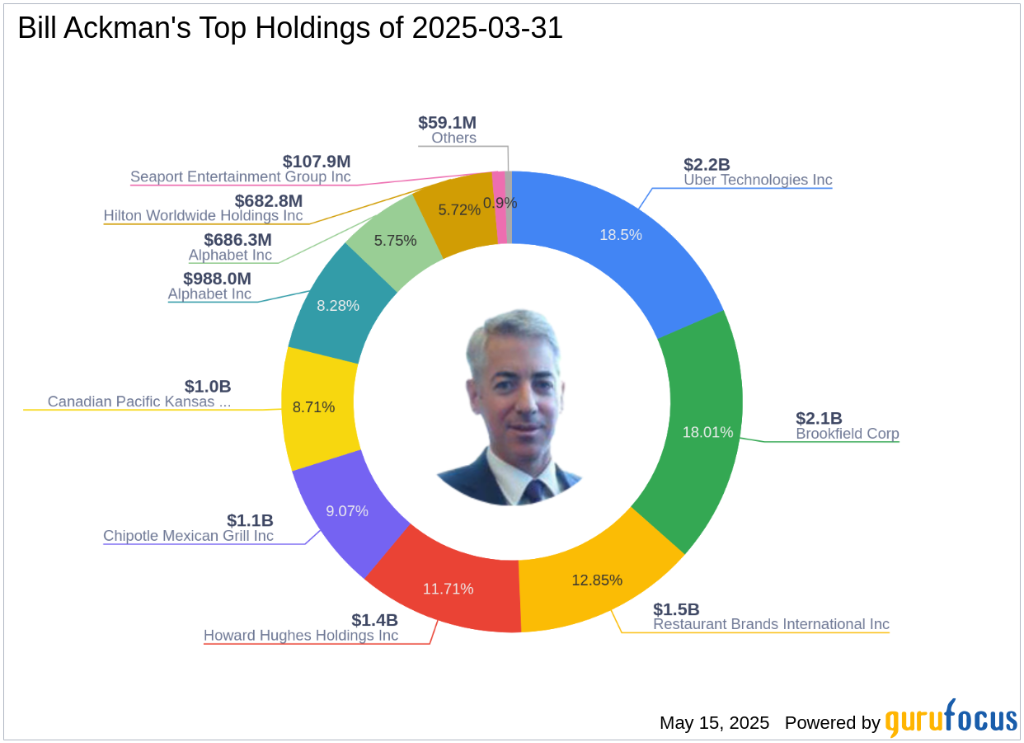
Core Insights - Bill Ackman's Pershing Square Capital Management significantly increased its stake in Uber, making it the largest holding in the portfolio, while also adding to positions in Brookfield and Google Class A shares, and completely exiting Nike [1][3][5]. Group 1: Major Portfolio Adjustments - Ackman increased his holdings in Uber Technologies by over 30.3 million shares, valued at $2.21 billion, which now constitutes 18.5% of the portfolio [3]. - The stake in Brookfield was raised by 17.52%, adding 6.11 million shares for a total of 41.05 million shares, valued at approximately $2.15 billion, making it the second-largest holding at 18.01% [6]. - Google Class A shares saw an increase of 451,000 shares, a rise of 11.33%, bringing the total to 4.438 million shares valued at around $686 million [6]. Group 2: Significant Exits and Reductions - Ackman completely exited his position in Nike, selling 18.769 million shares [5]. - The stake in Hilton Worldwide Holdings was reduced by 2.4398 million shares, a decrease of 44.84% [7]. - Ackman also reduced his holdings in Google Class C shares by 1.2236 million shares, a reduction of 16.21% [7].




说好的硬气呢?特朗普:印度同意不向美国收取任何关税
Sou Hu Cai Jing· 2025-05-15 16:01
Group 1 - The core point of the article is the evolving trade relationship between the US and India, with India initially agreeing to eliminate tariffs on US goods but later showing a tougher stance by proposing to increase tariffs on certain US products [1][7]. - President Trump mentioned that selling products in India is challenging, but India has proposed an agreement to not impose tariffs on US goods, although details remain undisclosed [1][2]. - India is negotiating a trade agreement with the US, with proposals to reduce tariffs on 60% of goods to zero and provide preferential access for nearly 90% of US imports [2][7]. Group 2 - Trump expressed concerns about high tariffs in India, stating he prefers Apple to manufacture in the US rather than India, which he described as having some of the highest tariffs globally [3][5]. - India aims to become a smartphone manufacturing hub, with significant exports of iPhones to the US, reaching nearly $2 billion in March [5]. - The US is India's largest trading partner, with a projected bilateral trade volume of approximately $129 billion in 2024, and India has a trade surplus of $45.7 billion with the US [5][7]. Group 3 - Recent reports indicate a shift in India's approach to trade negotiations, moving from a cooperative stance to proposing retaliatory tariffs against the US, which may be a strategic negotiation tactic [7][8]. - The proposed retaliatory tariffs are seen as a sign of India's willingness to assert itself as an equal trade partner, especially after the US recently reduced tariffs on Chinese products [8]. - Indian officials have indicated that the planned retaliatory tariffs will be part of the ongoing trade negotiations with the US [7][8].
WTO成员对美国关税措施再提关切,中方:所谓“对等关税”严重破坏了多边贸易体制|独家
Di Yi Cai Jing· 2025-05-15 11:49
Core Points - The WTO meeting highlighted concerns over the impact of U.S. tariffs on global trade and the importance of a rules-based multilateral trading system [1][3] - The EU warned that global trade is expected to decline due to increased trade policy uncertainty, with a projected 0.2% shrinkage in goods trade volume by 2025 [3] - Canada emphasized that U.S. tariffs disrupt global trade and undermine the predictability of the international trading system [3][5] - Norway called for WTO reform to address the challenges posed by current trade policies and their impact on global economic stability [4][5] - Australia expressed concerns over unilateral trade measures and their potential to undermine a system that has benefited all members for decades [5] - China criticized the U.S. "reciprocal tariffs" as a violation of WTO rules, asserting that it disrupts global supply chains and the international trading system [6] Summary by Category Trade Policy Concerns - Canada, the EU, and Norway raised alarms about the negative effects of U.S. tariffs on global trade and the need for a stable trading environment [3][4][5] - The EU highlighted the importance of transparency and dialogue in building trust and predictability in international markets [3] WTO Reform - Norway and Switzerland stressed the necessity for reforming the WTO to adapt to changing economic realities and improve its functions [4] - Australia and Japan underscored the critical role of a free, fair, and open economic system for global economic health [5] U.S. Tariff Impact - The U.S. tariffs have been described as severely disrupting global trade and creating an unstable environment for consumers and businesses [3][5] - China firmly opposed the U.S. "reciprocal tariffs," labeling them as a direct violation of WTO principles [6]