
资产配置

Search documents
储蓄国债(电子式)将纳入个人养老金产品范围
Zheng Quan Shi Bao· 2025-11-21 16:25
Core Insights - The Ministry of Finance and the People's Bank of China announced that starting from June next year, personal pension savings bonds (electronic) will be included in the range of personal pension products, allowing pension investors to purchase these bonds through designated institutions [1][2] - Personal pensions are a government-supported, voluntary supplementary pension system that allows individuals to choose from various compliant financial products, including savings deposits, wealth management products, commercial pension insurance, public funds, and government bonds [1] - As of the end of June, over 1.439 million investors had opened personal pension wealth management product accounts, representing a 46.2% increase since the beginning of the year, with these products generating over 390 million yuan in returns for investors [1] Industry Implications - The inclusion of savings bonds is expected to address the current "mismatch of terms" issue, aligning with the long-term investment characteristics of pension funds and optimizing asset allocation structures [1] - The notification mandates that institutions must establish dedicated accounts for pension investors to record their purchases and holdings of savings bonds, ensuring proper tracking and management [2] - Institutions are required to expedite the development of business plans and system integration to ensure a smooth launch of the personal pension savings bond business [2]
603亿美元美债大挪移:中日英上演三国杀,黄金12连增藏玄机
Sou Hu Cai Jing· 2025-11-21 16:02
翻开美国财政部最新TIC报告,剧情比《纸牌屋》还要精彩。曾经在2011年手握1.3万亿美元美债、稳坐美国"头号债主"交椅的中国,如今持仓已骤降至7005 亿美元,较巅峰时期砍掉近半。 美国政府的"停摆闹剧"刚刚落幕,一份迟到的美债报告就爆出猛料——中国在9月份再度减持美债,使得今年前三季度抛售总额飙升至603亿美元! 这个数字相当于冰岛全年GDP的1.5倍。就在美债总额突破38万亿美元天际线的当下,各国央行正在用脚投票,上演一场惊心动魄的资产大迁徙。 随着美联储年内两次降息,市场正在密切关注12月会否第三次降息。更关键的是,何时停止缩表并重启"扩表"——那将意味着美联储再度开闸放水,亲自下 场买入美债。到那时,这场围绕美债的资产大戏,必将迎来更精彩的下一幕。 这场持续十余年的减持长跑中,最剧烈的转折发生在2018年贸易战之后,就像打开了泄洪闸门,到2022年终于跌破万亿大关。 这场美债三国杀背后,是各国对美国经济预期的真实写照。日本一边增持美债一边忍受日元贬值,被市场戏称为美国的"移动血包";英国则在11月初宣布伦 敦交易所暂停所有非美元计价金属期权交易,进一步巩固美元霸权。 而中国连续12个月增持黄金的举动 ...


当前股票、黄金和另类资产如何配置?专访瑞银财富管理吕子杰:财富管理从不是单一维度的金融投资
Mei Ri Jing Ji Xin Wen· 2025-11-21 11:44
Core Insights - The Chinese wealth management market is experiencing significant growth, with increasing importance in the global landscape, necessitating a reevaluation of asset allocation strategies in light of geopolitical and economic changes [1] - UBS Wealth Management's China head, Lu Zijie, emphasizes the need for a diversified asset portfolio that balances returns and liquidity, particularly in the context of rising gold prices and alternative investment opportunities [1] Investment Strategy - High-net-worth clients in China prioritize asset stability, often preferring cash holdings due to market risk aversion; however, low interest rates make cash savings insufficient against inflation [2] - Asset allocation should focus on risk control while enhancing overall return potential; for conservative clients, medium to long-term bonds are recommended as they typically yield higher returns than cash deposits [2] - UBS remains optimistic about stock investments but advises careful timing and sector selection due to significant market gains in the US, Hong Kong, and A-shares [2][3] Sector Preferences - In the US, UBS favors sectors with strong fundamentals such as healthcare and banking, while in Europe, high-dividend assets like REITs are preferred; in Asia, technology and AI sectors in Hong Kong and high-performing companies in mainland China are highlighted [3] - The recommended stock allocation for Chinese clients is around 25% to maintain stable growth without excessive market volatility [3] Alternative Investments - Family offices are increasing their allocation to alternative investments, rising from single-digit percentages to 14%-15%, which enhances portfolio stability despite lower liquidity [4] - Gold is viewed as a long-term investment rather than a short-term speculation, with central banks expected to maintain significant gold purchases, projected at 900-950 tons in 2025 [5] Art Investment - Art collection is evolving from a passion to a significant aspect of family legacy and value expression, with high-net-worth individuals expected to allocate 20% of their wealth to art by 2025, up from 15% in 2024 [6] - The Chinese ultra-high-net-worth demographic leads in art investment, with an average allocation of 44% of their wealth to art, reflecting a strong cultural and emotional connection to their collections [6] UBS's Wealth Management Position - UBS has a long-standing history in wealth management, with global investment assets totaling $6.9 trillion and $4.7 trillion specifically in wealth management, making it the largest in Asia [7] - The firm aims to assist clients in achieving liquidity, longevity, and legacy through differentiated services tailored to high-net-worth individuals in China [7][8] - UBS's integrated banking model enhances its ability to serve the Greater Bay Area, leveraging its extensive experience in Hong Kong and connections with Shenzhen and Guangzhou [8][9]

ETF日报 | 权益资产全面回调!如何做好资产配置?
Sou Hu Cai Jing· 2025-11-21 07:58
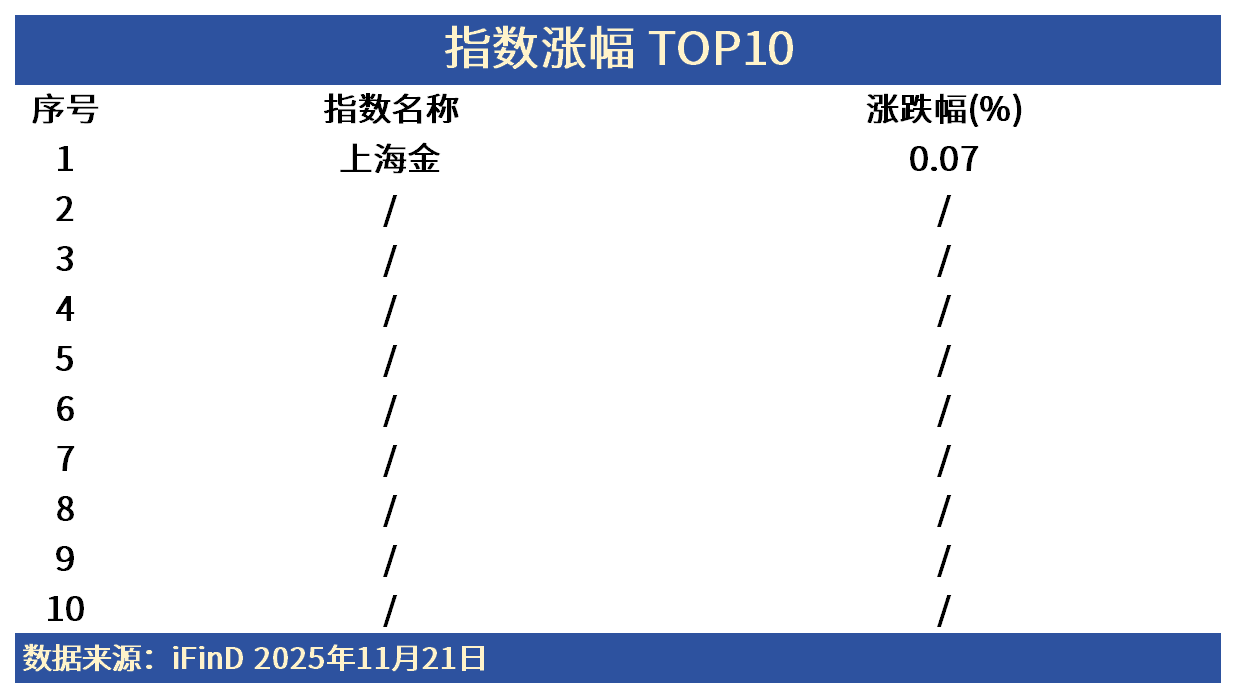
Group 1: Market Overview - The U.S. government is engaging in productive dialogue with both Ukraine and Russia regarding a potential peace plan, which may influence market sentiment and economic data releases in December [1] - The Shanghai Gold ETF (518600) has seen a net inflow of 326 million yuan over the past 10 trading days, with 8 days of inflows, indicating strong investor interest in gold [1] Group 2: Sector Performance - The non-ferrous metals sector has experienced a decline of 5.26%, with companies like Hanrui Cobalt and Tibet Summit leading the losses [3][7] - The power equipment sector has also seen a drop of 5.17%, with Tianhua New Energy and Haike New Source among the biggest decliners [3][7] Group 3: Investment Insights - Zhongtai Securities is optimistic about a bull market in the non-ferrous metals sector, driven by increasing demand from new energy and AI, predicting continued price increases for copper and aluminum [4] - Guosen Securities highlights investment opportunities in new technologies such as solid-state batteries and virtual power plants, as well as the potential for performance improvement in leading companies through overseas expansion [5] Group 4: Industry Trends - The chemical industry is undergoing a supply-side reform, with leading companies expected to gain market share due to better management and energy control [8] - The China Chemical and Physical Power Industry Association is set to release average cost ranges for the lithium iron phosphate industry to prevent price dumping, indicating a move towards more regulated pricing [7][8]
谈谈对“合理利率比价关系”的理解
Tebon Securities· 2025-11-21 07:20
Group 1: Interest Rate Nature and Importance - The essence of interest rates is the return on capital, influenced by time value and risk compensation[9] - A reasonable interest rate comparison is essential for effective resource allocation and monetary policy transmission[12] - Historical examples of unreasonable interest rate comparisons include deposit rates exceeding loan rates and abnormal yield curves in bond markets[13] Group 2: Central Bank's Focus on Interest Rate Relationships - The central bank emphasizes five key relationships to enhance monetary policy transmission: policy rates vs market rates, asset vs liability rates, different asset yields, term structure of rates, and risk-adjusted rates[36] - The central bank aims to transition from quantity-based to price-based monetary policy, improving transmission efficiency and directing resources to the real economy[39] Group 3: Asset Allocation and Rate Comparisons - Investors should consider interest rate comparisons to assess asset allocation value and attractiveness[40] - Significant differences between stock dividend yields and government bond yields can indicate undervaluation of equities[43] - Low rental yields in real estate compared to risk-free rates suggest a lack of attractiveness for property investments[26] Group 4: Risk Factors - Risks include domestic economic recovery falling short of expectations, global interest rate trends deviating from forecasts, and unexpected geopolitical risks[46]
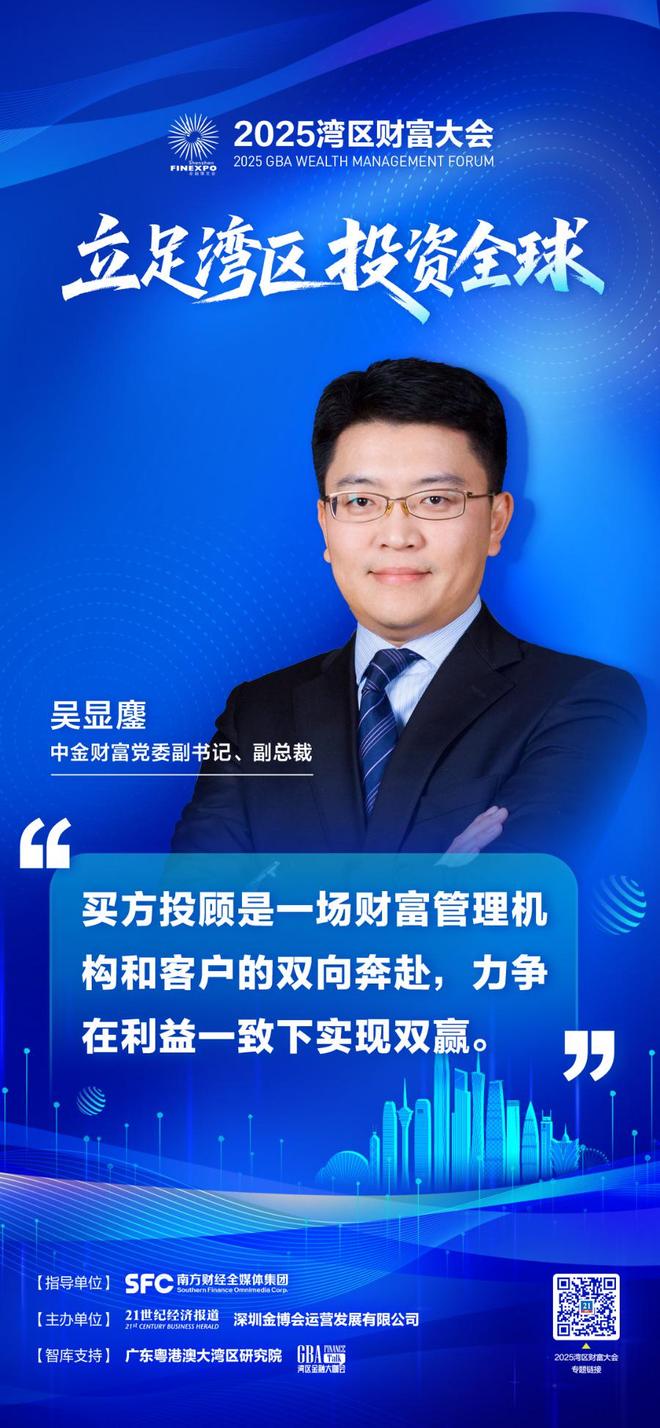
中金财富吴显鏖:财富管理行业有三大挑战,探索破局路径
2 1 Shi Ji Jing Ji Bao Dao· 2025-11-21 03:48
Core Insights - The wealth management industry is transitioning from a traditional sales model to a more client-centric advisory model, termed Wealth Management 3.0, which emphasizes long-term relationships and stable income sources [1][3][5] Industry Challenges - The traditional brokerage business is facing significant challenges, with brokerage revenue share dropping from over 40% in 2014 to below 30% currently, while the concentration of profits among the top firms has increased, with CR10 rising from 52% to over 60% [2] - The stock trading commission rates are declining, putting pressure on brokerage income, and competition for institutional services is intensifying as institutional investors now hold over 70% of A-share market shares [2] Wealth Management Transformation - Wealth management has evolved through three stages: 1. Stage 1.0 focused on brokerage services and transaction volume 2. Stage 2.0 shifted to a sales model through product distribution 3. Stage 3.0 emphasizes advisory services and asset management, creating a deeper bond between advisors and clients [3][4] - The essence of asset allocation differs between asset management and wealth management, with the latter focusing on enhancing client experience and building trust [4] Key Challenges in Wealth Management 3.0 - Three main challenges identified in the transition to Wealth Management 3.0: 1. Client understanding of net worth transformation needs time to adjust 2. Insufficient effective supply of financial products 3. The advisory side faces challenges in enhancing diverse capabilities [5][6][7] Client Understanding and Product Supply - Clients are still focused on chasing high returns, necessitating a shift in mindset towards long-term holding and realistic expectations regarding product performance [6] - The domestic financial product supply is lacking, with a heavy reliance on real estate and stocks, leaving a gap in the middle ground for investment options [7] Advisory Capability Enhancement - The transition requires advisors to evolve from sales-oriented roles to consultative roles, necessitating skills in market analysis, wealth planning, and asset allocation [8] - The company is exploring AI-driven solutions to enhance advisory services, such as providing AI wealth advisors and digital assistants to improve service efficiency [8]
关注债市压舱石,十年国债ETF(511260)盘中飘红,近20日净流入超7.1亿元
Sou Hu Cai Jing· 2025-11-21 01:59
Core Viewpoint - The ten-year government bond ETF (511260) has seen a net inflow of over 710 million yuan in the past 20 days, indicating strong interest in the bond market despite a generally volatile outlook [1]. Group 1: Market Analysis - The central bank's resumption of government bond trading has set a yield ceiling for the bond market, while external risks have eased, limiting the ten-year bond yield's potential drop to 1.6% [1]. - The overall volatility in the bond market is expected to be low, and investors are advised to adopt a trend-following approach with modest expectations for yield [1]. Group 2: Investment Strategy - From an asset allocation perspective, bonds are viewed as a hedge against stock market risks, with the ten-year government bond ETF (511260) recommended for balanced stock-bond allocation [1]. - The ten-year government bond ETF tracks the Shanghai Stock Exchange 10-year government bond index, selecting bonds with a remaining maturity of 7 to 10 years listed on the exchange [1]. Group 3: Performance Metrics - Since its inception, the ten-year government bond ETF has consistently achieved positive annual returns, making it a potential asset allocation tool across market cycles [1]. - As of the end of Q2, the one-year return rate for the ETF is 5.88%, the three-year return rate is 16.13%, the five-year return rate is 22.41%, and the cumulative return since inception is 36.68% [1].
11.21犀牛财经早报:15只新发科创债ETF规模均超百亿元 投顾业28年老牌机构遭摘牌
Xi Niu Cai Jing· 2025-11-21 01:52
Group 1: Bond ETF Market - The total scale of bond ETFs has reached a historical high of 714.8 billion yuan as of November 19, 2023, indicating significant growth in this investment vehicle [1][2] - The short-term bond ETF has surpassed 70 billion yuan, reaching 70.01 billion yuan, highlighting its popularity among investors [2] - The expansion of bond ETFs is expected to enhance market liquidity and diversify asset allocation options for investors [1] Group 2: Insurance Sector - Insurance companies have issued over 70 billion yuan in bonds this year, with perpetual bonds accounting for nearly 70% of this total, becoming a key tool for capital supplementation [2] - The issuance of bonds is seen as a way to alleviate capital pressure for insurance firms, although long-term capital strength enhancement is still necessary [2] Group 3: Non-Performing Loans - The balance and rate of non-performing loans in commercial banks have slightly increased, with over 26 billion yuan in personal non-performing loans listed for transfer since November [1] - The issuance of asset-backed securities (ABS) for non-performing loans has exceeded 67 billion yuan this year, reflecting a significant year-on-year growth of approximately 80% [1] Group 4: Lithium Carbonate Market - Lithium carbonate futures prices are fluctuating around 100,000 yuan per ton, with strong market expectations for future demand [3] - The recent price surge is attributed to adjustments in supply and demand fundamentals, with significant trading volumes reported [3] Group 5: Energy Storage Projects - New energy storage projects are expected to see increased profitability as demand for energy supply rises during the winter heating season [4] - The role of large-scale energy storage in the power system is anticipated to become increasingly important, potentially becoming a core asset in the new energy landscape [4] Group 6: Regulatory Environment for Investment Advisory - A prominent investment advisory firm has faced severe penalties, including a 3 million yuan fine and the revocation of its business license, reflecting stricter regulatory oversight in the industry [5] - The regulatory actions are part of a broader trend of tightening compliance standards within the investment advisory sector [5] Group 7: Company Financial Performance - Net revenue for NetEase in Q3 reached 28.4 billion yuan, marking an 8.2% year-on-year increase, with net profit attributable to shareholders rising by 32% [6] - Management has addressed concerns regarding executive turnover, emphasizing that it does not impact daily operations [6] Group 8: Real Estate Market Initiatives - A new housing subsidy policy in Hangzhou's Yuhang District offers a 30,000 yuan subsidy for new home purchases, aimed at stimulating the real estate market [7] - The policy is part of broader efforts to support residential consumption and meet housing demand [7] Group 9: Legal Issues in Photography - A court ruling found Visual China liable for copyright infringement, ordering compensation of 15,000 yuan to a photographer for unauthorized use of an image [8] - Visual China has taken steps to address the infringement and is pursuing legal action against the responsible party [8] Group 10: IPO and Market Reactions - A fire incident at XinYuan Technology's facility has raised concerns, leading to fluctuations in stock prices of related companies [9] - The company is in the process of restarting its IPO, indicating ongoing interest in its market potential despite recent challenges [9]

短融ETF规模突破700亿元
Zheng Quan Shi Bao Wang· 2025-11-21 00:50
人民财讯11月21日电,今年以来债券ETF凭借流动性强、费率低、交易高效、结构透明等优势,规模不 断创新高,成为资产配置中的重要工具。数据显示,截至2025年11月20日,债券ETF中规模最大的一只 ——短融ETF规模已突破700亿大关,达700.01亿元,该产品基金管理人为海富通基金。截至最新,全 部债券ETF规模达7150.6亿元。 ...
15只今年新发科创债ETF规模均超百亿元
Zheng Quan Ri Bao· 2025-11-20 23:25
Core Insights - The scale of bond ETFs has reached a historical high of 714.82 billion yuan as of November 19, 2023, reflecting significant growth throughout the year [1][2] - The expansion of bond ETFs is attributed to multiple factors, including policy support, product innovation, and increasing market demand [3][4] Growth Factors - The bond ETF scale first surpassed 100 billion yuan in May 2024, ending that year at 173.97 billion yuan, with a notable increase of 540.84 billion yuan in 2023, accounting for 75.66% of the current total [2] - The number of bond ETF products has also increased, with 53 products available as of November 19, 2023, of which 33 were newly established this year, representing over 62% of the total [2] Market Dynamics - The rise of bond ETFs is supported by favorable policies, such as the inclusion of credit bond ETFs in the general repurchase pledge library, enhancing their liquidity and attractiveness [3] - The limited number of bond ETF products creates a sense of scarcity, making them appealing for asset allocation, especially in a low-interest-rate environment [4] Investor Appeal - Bond ETFs offer advantages such as low volatility, low fees, high transparency, and flexible trading, attracting a wide range of investors [4] - For individual investors, bond ETFs lower investment thresholds and efficiently activate idle funds in securities accounts, while for institutional investors, they provide diverse strategy support and effective tools for risk management [5] Future Outlook - The bond ETF market is expected to continue its rapid development, with the China Securities Regulatory Commission promoting the expansion of bond ETFs to meet low-risk investment demands [6][7] - The market penetration of bond ETFs remains low, indicating significant growth potential as awareness and participation from individual investors and other entities increase [7]