AI泡沫

Search documents
美国政府停摆有望落幕 风险偏好回暖 新兴市场股汇两市反弹
Zhi Tong Cai Jing· 2025-11-10 08:25
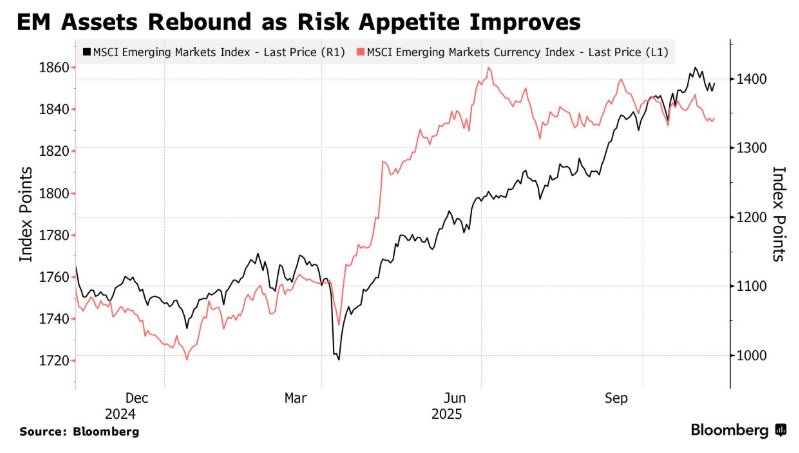
Group 1 - Emerging markets, particularly technology stocks related to AI, experienced a significant rebound following optimism about the end of the longest government shutdown in U.S. history, with the MSCI Emerging Markets Index rising nearly 2% [1][4] - The Korean Composite Stock Price Index (Kospi) led the Asian markets, driven by strong performance from major tech firms like SK Hynix and Samsung Electronics, supported by reports of potential tax cuts and increased pension stock allocations [4][5] - Japanese stocks, particularly those linked to AI, surged as AMD and SanDisk reported strong earnings driven by the AI boom, alleviating concerns about an "AI bubble" [5] Group 2 - The MSCI Asia-Pacific Index has seen a significant rebound, up approximately 25% year-to-date, despite a previous downturn attributed to fears of overvaluation in the tech sector [5] - A potential "short squeeze" in the U.S. stock market could boost bullish sentiment globally, with an estimated $1 trillion expected to flow back into the U.S. economy if the government shutdown is resolved [6] - Goldman Sachs noted an increase in long positions in the S&P 500 futures, indicating a shift in market sentiment towards bullishness despite recent weak index performance [6]

策略观点: AI 浪潮:泡沫重演还是新周期基石?-20251110
Guoxin Securities· 2025-11-10 08:17
Core Insights - The current AI wave is not a repetition of the 2000 internet bubble, as it is driven by profitable "cash cow" companies rather than speculative "concept stocks" [3][5][6] - Investment strategies should shift from focusing on a few semiconductor leaders to a diversified approach across the entire value chain, including upstream (data centers, power facilities) and downstream (enterprise SaaS applications, AI security and governance) [3][23] Historical Review - The valuation levels of the current AI market are high but not irrational, with the Nasdaq 100's forward P/E ratio at approximately 26.7 times compared to 60 times during the 2000 bubble [5][6] - The current AI market is led by strong "cash cow" companies, with the S&P 500 Information Technology sector's net profit margin at 27.7% in Q3 2025, significantly higher than the five-year average of 24.7% [6][7] Investment Landscape - The AI infrastructure is experiencing a real "arms race," with major companies like Amazon, Alphabet, Microsoft, and Meta projected to spend a total of $364 billion on capital expenditures in FY2025, primarily for AI core equipment [7][8] - The demand for AI computing power is expected to grow exponentially, with projections indicating a 3.5 times increase in AI computing demand by 2030, corresponding to $6.7 trillion in spending [13][14] Domestic and International Tech Giants - North American cloud providers are focusing on three main lines: upgrading product matrix architecture, launching independent applications, and enhancing existing product capabilities with AI [8][9] - Domestic internet giants like Tencent, Alibaba, and Baidu are leveraging AI to drive growth in cloud services, advertising systems, and AI applications, with varying degrees of success [10][11] AI Hardware Landscape - Major AI hardware players like NVIDIA, Intel, and AMD are adopting different strategies, with NVIDIA focusing on a closed ecosystem, AMD on high-performance open hardware, and Intel on cost-effective solutions [11][12] Future Outlook - The AI industry's transition from speculation to practical application is underway, with predictions that by 2026, 40% of enterprise applications will embed AI agents, up from less than 5% in 2025 [23]
AI泡沫论调下CoreWeave(CRWV.US)业绩万众瞩目 市场期待AI算力租赁爆棚
Zhi Tong Cai Jing· 2025-11-10 07:41
Core Viewpoint - CoreWeave is expected to report strong revenue growth driven by the surging demand for AI computing power, particularly from its NVIDIA GPU-based cloud AI computing rental services [1][2] Financial Performance Expectations - Analysts predict an adjusted loss per share of approximately $0.36 and total revenue of about $1.28 billion for CoreWeave, indicating rapid revenue growth but still not achieving profitability [2] - Revenue is expected to increase significantly from approximately $395 million in Q2 2024 to around $1.2 billion in Q2 2025, reflecting a strong year-over-year growth trend [2] - CoreWeave's backlog of AI computing capacity orders is nearly $30 billion, showcasing robust demand for AI GPU-intensive cloud computing rental services [2] Company Background - CoreWeave is recognized as an early adopter of NVIDIA GPU cloud rental services, gaining favor from NVIDIA's venture capital arm and securing priority access to high-demand GPUs [3] - The company became the first to deploy NVIDIA H200 Tensor Core GPUs, enhancing its ability to provide powerful computing capabilities [3] Service Characteristics - CoreWeave specializes in providing high-end AI GPU clusters for on-demand access, suitable for machine learning, deep learning, and inference workloads [4] - The service allows for elastic deployment, enabling users to quickly scale AI GPU resources based on project needs [4] Market Sentiment and Trends - CoreWeave's upcoming financial report is seen as a potential indicator of investment sentiment in the AI computing power supply chain [5] - Analysts believe that a strong performance from CoreWeave could revive market confidence in AI-related stocks, including NVIDIA and other key players in the AI computing supply chain [5] Industry Perspective - Analysts argue that even if an "AI bubble" exists, it is in its early stages, with significant room for growth in AI infrastructure investments [6] - Goldman Sachs compares the current AI investment surge to the early stages of the tech boom in the late 1990s, suggesting that the market is not yet at a speculative peak [6] Core Industry Role - CoreWeave is positioned as a central player in the AI computing supply chain, directly reflecting the demand for AI GPUs and the actual usage of AI computing power by downstream application software clients [7] - The company's financial data and backlog orders are critical indicators of sustained growth in AI computing demand, which could trigger a significant rebound in trading for AI supply chain participants [7]

大消费集体爆发,港股沪上阿姨涨近16%,蜜雪集团涨超9%
2 1 Shi Ji Jing Ji Bao Dao· 2025-11-10 07:40
Market Overview - Major stock indices in the Asia-Pacific region rose as investor concerns over the "AI bubble" eased, with the Nikkei 225 index up 1.26% and the KOSPI index up 3.02% [1] - In the A-share market, the Shanghai Composite Index rose by 0.53%, the Shenzhen Component Index increased by 0.18%, while the ChiNext Index fell by 0.92% [1] - The total market turnover reached 2.19 trillion, with over 3,300 stocks rising [1] Consumer Sector Performance - The consumer sector showed strong performance in both A-shares and Hong Kong stocks, driven by multiple favorable policies [3] - Notable A-share stocks included Huifa Food and Kuaijishan, while in Hong Kong, stocks like Shàngshàng Āyí and Mìxuè Group saw significant gains [3] - The National Bureau of Statistics reported a 0.2% year-on-year increase in the Consumer Price Index (CPI), indicating a positive trend in consumer spending [3] New Consumption Trends - Four main consumption themes are emerging: 1. Brand globalization focusing on pricing power and emerging market opportunities [4] 2. Emotional value sectors such as trendy toys and pet products benefiting from rising GDP [4] 3. Functional value with profitable business models in AI-driven sectors like e-commerce and education [4] 4. Channel transformation emphasizing instant retail and cost-effective dining options [4] Market Outlook - The market is perceived to be in a bull phase, although it may enter a period of wide fluctuations [4] - Short-term focus is on defensive and consumer sectors, while mid-term attention remains on TMT and advanced manufacturing [4] - In the food and beverage sector, there is a recommendation to capitalize on low valuations in the liquor market, particularly for white liquor [5]
策略观点:AI 浪潮:泡沫重演还是新周期基石?-20251110
Guoxin Securities· 2025-11-10 07:23
Core Insights - The current AI wave is not a repeat of the 2000 internet bubble, as it is driven by profitable "cash cow" companies rather than speculative "concept stocks" [3][5][6] - Investment strategies should shift from focusing on a few semiconductor leaders to a diversified approach across the entire value chain, including upstream (data centers, power facilities) and downstream (enterprise SaaS applications, AI security and governance) [3][23] Historical Review - The valuation levels in 2025 are significantly lower than the peak of the 2000 bubble, with the Nasdaq 100's forward P/E at approximately 26.7 times compared to 60 times in 2000 [5][6] - The quality of earnings is crucial, with only about 14% of ".com" companies profitable in 2000, while the S&P 500 IT sector's net profit margin is projected to be 27.7% in Q3 2025 [6][7] - The current investment landscape is characterized by substantial capital expenditures on real AI infrastructure, contrasting with the speculative marketing of the past [7] Industry Landscape - North American cloud providers are focusing on three main AI lines: upgrading product architectures, launching independent applications, and enhancing existing product capabilities with AI [8] - Capital expenditures among major cloud service providers are expected to grow significantly, with a projected year-on-year increase of 55% in FY2024 and over 40% in FY2025 [8][9] AI Market Dynamics - The AI industry is experiencing exponential growth in computing demand, with projections indicating a 3.5 times increase in AI computing needs by 2030, translating to $6.7 trillion in spending [13][14] - Supply constraints in AI infrastructure are expected to persist, with significant challenges in power supply and semiconductor production capacity [14] Investment Recommendations - The shift from speculation to practical applications in AI is evident, with predictions that by 2026, 40% of enterprise applications will incorporate AI agents [23] - A diversified investment strategy across the entire AI value chain is recommended, moving beyond a narrow focus on leading companies to include emerging applications and infrastructure [23]
?利空突袭,全线大跌!5.7万亿,发生了什么?
Zheng Quan Shi Bao Wang· 2025-11-10 03:46
Core Points - The technology sector in the U.S. experienced significant volatility, with the Nasdaq index dropping over 3% in a week, marking its worst performance since April [1][2] - Eight major AI-related companies saw a combined market value loss of over $800 billion in a week, contributing to a total market loss of nearly $1 trillion for AI-related U.S. companies [1][2] - Concerns over high valuations in the AI sector were triggered by Palantir's recent earnings report, leading to a sell-off that affected other companies in the industry [1][3] Group 1: Market Performance - The Nasdaq index fell by over 3% this week, while the S&P 500 index decreased by 1.6%, ending a three-week streak of gains [2] - Nvidia's stock dropped more than 7%, resulting in a market value loss of approximately $348.5 billion, while Microsoft and Oracle also experienced significant declines [2][3] Group 2: AI Sector Concerns - Analysts are increasingly questioning the sustainability of high valuations in the AI sector, with significant capital expenditures and reliance on debt financing raising red flags [3][4] - The total capital expenditure of major tech companies like Alphabet, Amazon, Meta, and Microsoft reached $112 billion in Q3, indicating substantial investment in AI expansion [3] Group 3: Meta's Advertising Issues - Internal documents revealed that Meta is projected to earn about $16 billion in 2024 from fraudulent and prohibited advertisements, highlighting regulatory gaps in its advertising business [5][6] - Meta's platforms have been linked to a significant portion of successful scams in the U.S., with estimates suggesting that one-third of such cases are associated with the company [6]




突然出手,华尔街“大空头”押上八成资产做空AI,再次“狙击”英伟达,他曾精准预测2008年次贷危机,但做空特斯拉失败
3 6 Ke· 2025-11-10 03:37
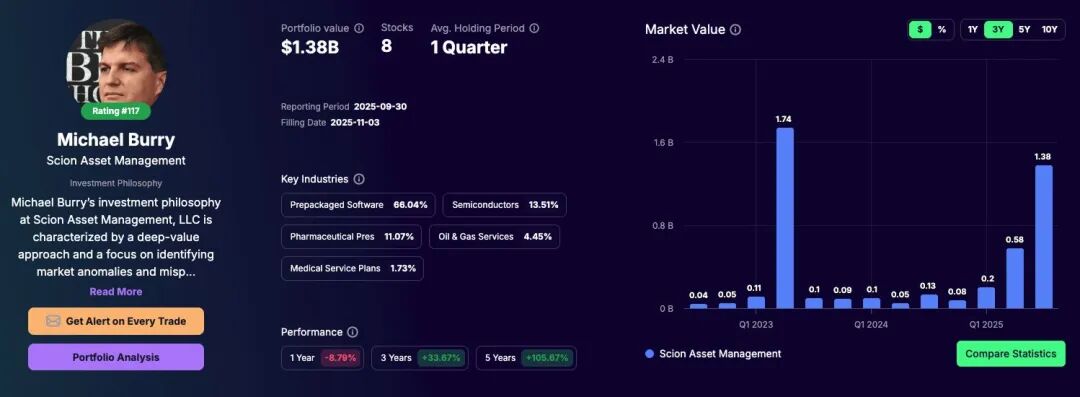
Group 1 - Michael Burry's hedge fund, Scion Asset Management, disclosed a third-quarter position holding over $1 billion in put options, primarily betting against Nvidia and Palantir, which constitutes 80% of its total assets [1][3] - Following the disclosure, Nvidia's stock fell by 3.96%, while Palantir experienced a more significant drop of 7.95%, with Nvidia's market value decreasing by approximately $455.1 billion over four trading days [1][3] - The fund's total holdings amount to approximately $1.38 billion, with a significant portion concentrated in put options for Nvidia and Palantir, valued at about $187 million and $912 million respectively [3][4] Group 2 - Burry's actions represent the second time this year he has targeted Nvidia, having previously established a short position worth over $97 million in the first quarter, which was later liquidated [4][5] - The market's interest in shorting Nvidia is reportedly declining, with short positions decreasing from approximately 315 million shares to about 211 million shares between June 2024 and October 2025 [18][20] - Analysts express skepticism regarding Burry's timing, suggesting that his put options may already be at a loss unless Nvidia and Palantir experience further significant declines [20][21] Group 3 - Palantir's CEO criticized Burry's shorting strategy, asserting that the company is genuinely profitable in the AI sector, and emphasized their commitment to delivering strong performance despite external pressures [15] - Palantir reported a 63% year-over-year revenue increase in its latest quarterly earnings, with revenues surpassing analyst expectations for 21 consecutive quarters [15] - Despite strong performance, Palantir's stock has seen an 11.24% decline recently, raising concerns about its high valuation relative to its earnings guidance [15][21] Group 4 - Major investment banks are adopting a dual strategy of lending while simultaneously shorting stocks in the tech and AI sectors, reflecting a cautious approach to the perceived overvaluation in these markets [21][23] - Deutsche Bank has provided significant loans to data center operators, while also exploring hedging strategies to mitigate risks associated with their AI investments [23][25] - The financial sector is increasingly aware of the potential for a market correction in the tech space, with analysts noting that the risks currently outweigh potential rewards [22][25]
股票 - 上行尾部 --- Equities - Upside Tails
2025-11-10 03:34
Summary of Key Points from Conference Call Industry Overview - The focus of the conference call is primarily on the **AI industry** and its implications for the broader **equity market**. Core Insights and Arguments 1. **AI Cycle and Market Positioning** - The AI cycle is still in its early stages, with institutional positioning not fully saturated. Fund flows are expected to favor the market towards the end of the year, with a more dovish Federal Reserve anticipated compared to a hawkish stance next year. Mega-cap tech companies are increasing spending, supported by strong balance sheets and reasonable trading multiples, compounding EPS growth at over 20% [2][3][9] 2. **Market Upside Potential** - There is a good probability of an additional 5-10% upside at the index level with broad participation by year-end. Despite skepticism among colleagues, the conviction remains that a sharp market move is likely in the remaining trading days of the year [3][5] 3. **AI Bubble Concerns** - Discussions around an AI bubble have intensified, with private market valuations significantly exceeding public market valuations. Private companies are primarily valued on revenue growth, while public companies are evaluated based on free cash flow and return on capital. This divergence in valuation frameworks indicates potential systemic risk [9][13] 4. **Economic Value from AI** - Generative AI is projected to create $20 trillion in present discounted value (PDV) of economic value in the U.S., with $8 trillion flowing to U.S. companies as capital revenues. Current AI investment remains below 1% of GDP, suggesting it is not excessively large by historical standards [13][19] 5. **Valuation Comparisons** - Current valuations are materially lower than those during the late 1990s, with the NASDAQ 100 trading at approximately a 46% discount compared to the dot-com bubble. The capital markets are active, but the composition has changed significantly since that period [17][19] 6. **Consumer Market Dynamics** - The U.S. consumer market is showing signs of strain, particularly in consumer services sectors. However, many issues affecting consumers are expected to be temporary, with potential improvements as government operations resume [41][44] 7. **Emerging Market Insights** - Indian equities have underperformed in a record emerging market year due to limited exposure to AI themes. However, there is a case for better performance in the coming year driven by supportive policies and earnings revival [38][40] 8. **Alternative Asset Managers** - Concerns over credit are impacting alternative asset managers, particularly those with significant private credit exposure. Despite this, there are compelling risk/reward opportunities in private credit-focused managers [34][35] Other Important Insights - **Seasonal Trends** - Favorable seasonal trends are noted as a significant factor for market performance towards year-end [5] - **Labor Market Trends** - The labor market is experiencing tightness, with expectations of continued weakness. The potential for a December interest rate cut is high due to temporary inflation issues and labor market conditions [22][23] - **Investment Themes** - The theme of reliability in power and water is highlighted as a multi-year investment opportunity amid rising demand and aging infrastructure [27][28] This summary encapsulates the key points discussed in the conference call, focusing on the AI industry's current state, market dynamics, and investment opportunities.
宏观周谈:全球市场在交易什么?
2025-11-10 03:34
Summary of Key Points from Conference Call Records Industry Overview - The macroeconomic environment is heavily influenced by the Federal Reserve's monetary policy, which has a direct correlation with global capital market performance. The current market dynamics are characterized by a unified beta phenomenon across global markets, closely tied to the Fed's policy stance [1][3][4]. Core Insights and Arguments - **Market Performance**: The global capital markets have shown strong performance in 2025, particularly in South Korea, where the index rose by 71.18% until October. This surge is attributed to the Fed's loose monetary policy and the AI industry's growth. However, a cooling trend has been observed since October, indicating potential risks [2][4]. - **AI Industry Impact**: AI is recognized as a key driver of the fourth industrial revolution, significantly affecting traditional industries. The demand for AI chips has led to increased prices for consumer electronics chips, and rising electricity demand in the U.S. has escalated manufacturing costs, potentially leading to stagflation [1][8]. - **Liquidity and Asset Prices**: Recent fluctuations in asset prices, including cryptocurrencies and precious metals, are driven by changes in liquidity. Prior to October 2025, liquidity expansion supported asset price increases, but a shift to a stock game has resulted in volatility [6][7]. - **U.S. Stock Market Risks**: The U.S. stock market, particularly in relation to AI, is facing significant risks. The rapid expansion of AI has led to concerns about a potential bubble, especially if liquidity fails to support both emerging and traditional industries [8][11]. - **Federal Reserve's Role**: The Fed's monetary policy is crucial in determining market stability. If inflation remains high and employment data does not deteriorate significantly, the Fed may tighten policies, which could burst the stock market bubble [11][12]. Additional Important Insights - **Cross-Border Capital Flows**: The relationship between U.S. equities and non-U.S. equity assets is influenced by the dollar's depreciation. Even without significant dollar depreciation in 2025, non-U.S. equity assets have performed well, indicating a potential shift in capital flows [5]. - **Historical Context**: The historical context of market performance post-QE3 and the subsequent tightening of monetary policy illustrates the cyclical nature of market reactions to Fed policies [4][10]. - **Political Factors**: The upcoming U.S. midterm elections may influence economic policies and market performance, with potential implications for the Fed's approach to monetary policy [16][17]. - **China's Economic Outlook**: Factors affecting China's effective exchange rate include total factor productivity, private sector leverage, and PPI fluctuations. A potential recovery in productivity could lead to an appreciation of the yuan and a rise in the CSI 300 index [14][15]. This summary encapsulates the critical insights and arguments presented in the conference call records, highlighting the interconnectedness of monetary policy, market dynamics, and geopolitical factors.
芦哲:美国联邦政府停摆时长创历史新高
Sou Hu Cai Jing· 2025-11-10 03:18
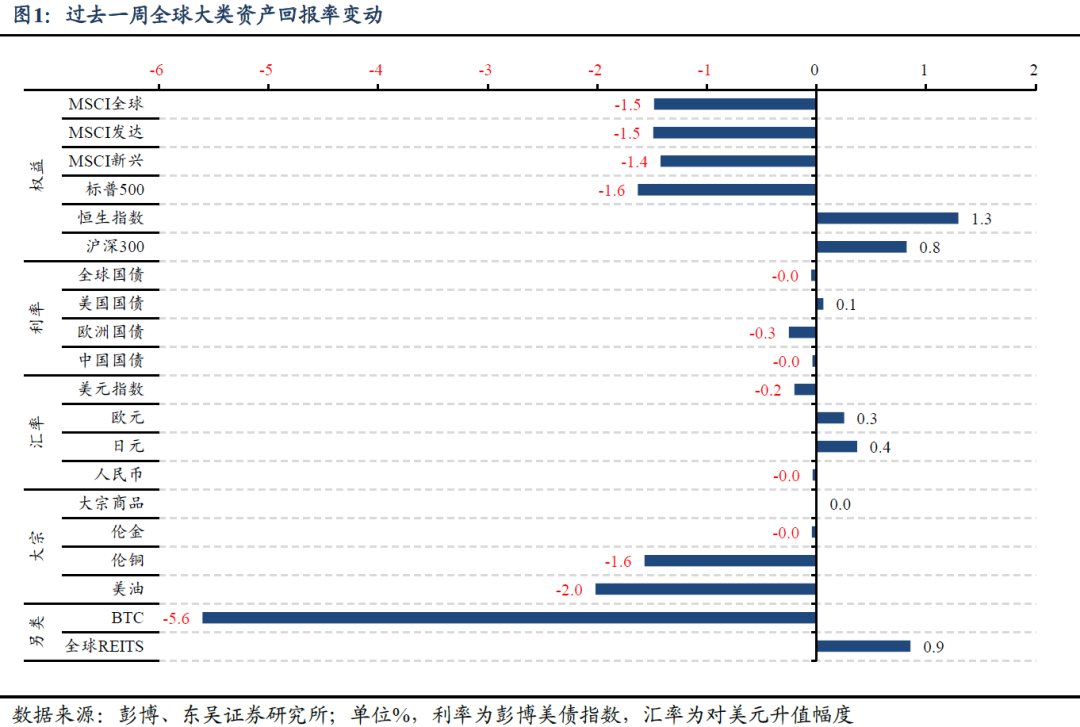
芦哲、张佳炜(芦哲系东吴证券首席经济学家、中国首席经济学家论坛成员) 核心观点 核心观点:本周市场对AI泡沫化的担忧,叠加联邦政府关门时间破历史纪录、最高法院对IEEPA关税判决带来的不确定性,市场避险情绪大幅走高,美股 大跌,美债利率走势震荡。截至最新美国联邦政府停摆时间已达40天,超越2018年底至2019年初停摆35天的历史纪录。持续的政府停摆除了导致非农、 GDP等关键数据缺失外,也开始对经济产生更大负面影响。一方面,由于公务员薪资等政府发放收入无法按期支付,居民消费面临一定的下行压力;另 一方面,政府停摆导致财政持续融资但无法支出,TGA余额持续增加,叠加缩表持续、RRP接近耗尽,货币市场流动性有所收紧,但其与近期风险资产大 幅回调更多为平行而非交叉的事件。向前看,随着预期的11月政府结束停摆,TGA泄洪,12月开始的经济数据与美元流动性料所改善。同时,由于12月 FOMC参考的11月经济数据(如能够发布)仍处于恶化阶段,叠加近期的美元流动性问题,美联储12月再度降息仍是大概率事件。 大类资产:AI泡沫、政府关门与关税裁决担忧推动市场避险情绪,带动美股大跌。本周市场对AI泡沫化的担忧,叠加联邦政府关 ...