
生成式AI

Search documents
90后华人副教授突破30年数学猜想!结论与生成式AI直接相关
量子位· 2025-11-26 04:21
鱼羊 发自 凹非寺 量子位 | 公众号 QbitAI 困扰数学界30多年的 塔拉格兰卷积猜想 ,被90后华人数学家攻破了! 苏黎世联邦理工学院Yuansi Chen,刚刚在arXiv上发布了自己的最新研究成果: $$\mathbb{P}_{X\sim\mu}\left(P_{\tau}f(X)>\eta\int f d\mu\right)\leq c_{\tau}{\frac{\log\log\eta}{\eta\sqrt{\log\eta}}},$$ 论文证明了布尔超立方体上的塔拉格兰卷积猜想(Talagrand's convolution conjecture),结果精确到一个log log η因子。 这个结果引发了大量关注,简单来说,是因为这为 理解高维离散空间中的平滑化提供了数学论证 。 另外,这项研究也与机器学习息息相关: 从理论上支撑了机器学习中的正则化概念; 为开发处理离散数据的生成式AI模型提供了直接的数学工具和物理直觉。 破解30年数学难题 塔拉格兰卷积猜想由"数学界诺奖"——阿贝尔奖得主Michel Talagrand在1989年提出。 我们先来了解两个概念,其一,是"加热平滑": 想象一 ...


快手-W(01024.HK)2025Q3业绩点评:盈利能力稳步提升 AI业务商业化提供增量空间
Ge Long Hui· 2025-11-26 04:06
Core Insights - The company reported a strong performance in Q3 2025, with a revenue of 35.554 billion yuan, a year-on-year increase of 14%, and a net profit of 4.488 billion yuan, up 37% year-on-year [1] - The average daily active users (DAU) for the Kuaishou app reached 416 million, reflecting a 2.1% year-on-year growth, while the average monthly active users (MAU) were 731 million, up 2.4% year-on-year [1] - The company is actively commercializing its AI business, launching the Keling 2.5 Turbo model, which topped global rankings in generative video models [1] Financial Performance - In Q3 2025, the company achieved an operating profit of 4.676 billion yuan, a significant increase of 76% year-on-year [1] - Adjusted net profit for the quarter was 4.986 billion yuan, representing a 26% year-on-year growth, with an adjusted net profit margin of 14% [1] - The core commercial revenue, which includes online marketing services and other services primarily focused on e-commerce, grew by 19.2% year-on-year [2] User Engagement and E-commerce - The average revenue per daily active user (ARPDAU) was 48.3 yuan, marking a 12% increase year-on-year [1] - Total e-commerce gross merchandise volume (GMV) reached 385.044 billion yuan, reflecting a 15% year-on-year growth [1] - Online marketing service revenue for Q3 2025 was 20.1 billion yuan, up 14% year-on-year, while live streaming service revenue was 9.6 billion yuan, a 2.5% increase year-on-year [2] AI Business Development - Keling AI generated over 300 million yuan in revenue during Q3 2025, with ongoing optimization of the OneRec end-to-end generative recommendation model [2] - The company introduced the G4RL model for generative reinforcement learning, enhancing advertising budget and ROI optimization throughout the campaign [2] - The implementation of large model technologies like OneRec contributed to a 4%-5% increase in domestic online marketing revenue in Q3 2025 [2] Future Outlook - The company anticipates revenue growth from 143.103 billion yuan in 2025 to 171.33 billion yuan in 2027, with year-on-year growth rates of 12.8%, 10.0%, and 8.8% respectively [2] - The ongoing development and commercialization of generative AI applications are expected to create new growth opportunities for the company [2]

腾讯投资拓竹,3D打印市场卷疯了:大疆才是幕后超级赢家?
3 6 Ke· 2025-11-26 03:45
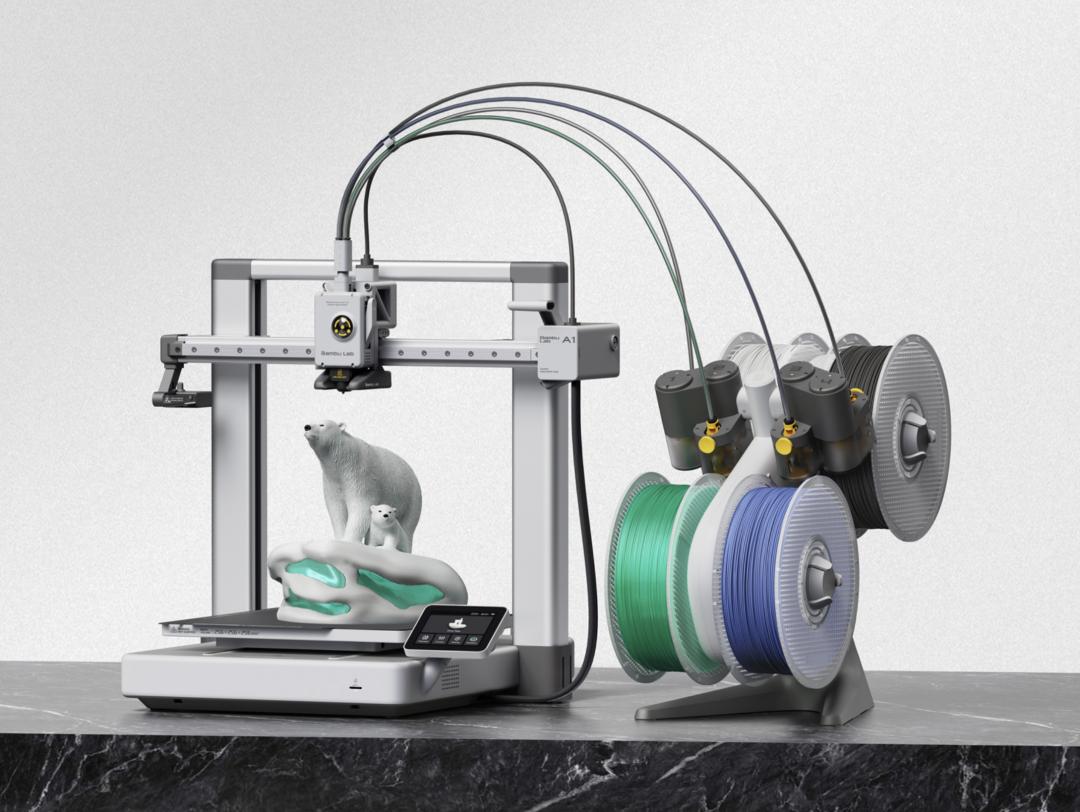
Core Insights - Bambu Lab, a rapidly growing company in the 3D printing sector, has achieved the highest sales in desktop 3D printers globally for three consecutive years and is valued at approximately $10 billion [1] - The global 3D printer market is projected to reach $24.61 billion in 2024, with a compound annual growth rate (CAGR) of 18.5% from 2024 to 2034 [3] - The consumer-grade 3D printer market is expected to see annual shipments grow from over 4 million units to 20 million units in the next five years, and then to 50 million units in the following five years [3] Company Overview - Bambu Lab's revenue is estimated to be around 6 billion RMB in 2024, with a shipment volume of approximately 1.2 million units, capturing about 29% of the global consumer-grade 3D printer market [1] - The company was founded by a team from DJI, which has contributed to its rapid growth and technological advancements in the 3D printing space [1][7] Market Dynamics - The competition in the consumer-grade 3D printer market is intensifying, with major players like Tencent and DJI investing in various companies, including Bambu Lab and Creality [5][12] - Bambu Lab has partnered with Tencent Cloud to integrate its 3D model platform MakerWorld with Tencent's 3D generation technology, which is seen as a key driver for market growth [3] Competitive Landscape - The "Shenzhen Four Kings" of consumer-grade 3D printers, which includes Bambu Lab, Creality, Zongwei Lifan, and Smart 3D, dominate approximately 95% of the entry-level 3D printer market [16][17] - Bambu Lab's current revenue significantly exceeds that of its competitors, with Smart 3D projected to reach 1.6 billion RMB in 2024 and 2.5 billion RMB in 2025 [13] Technological Advancements - Bambu Lab has leveraged technologies from its founders' experience at DJI, such as brushless motors and laser radar, to enhance the performance and capabilities of its 3D printers [7][9] - The integration of generative AI is lowering the barriers for users in 3D modeling, which is expected to further stimulate the growth of the 3D printing market [3] Future Outlook - The consumer-grade 3D printer market is still in its early development stages, with significant growth potential as major tech companies like Tencent and DJI continue to invest and innovate [22] - The market is being compared to the early days of the robotic vacuum cleaner industry, suggesting a potential for explosive growth in the coming years [22]

快手-W(01024):盈利能力稳步提升,AI业务商业化提供增量空间
Western Securities· 2025-11-25 05:05
Investment Rating - The report maintains a "Buy" rating for Kuaishou-W (01024.HK) [5][3][10] Core Insights - Kuaishou-W's Q3 2025 performance shows steady improvement in profitability, with revenue reaching 35.554 billion yuan (YoY +14%), operating profit at 4.676 billion yuan (YoY +76%), and net profit at 4.488 billion yuan (YoY +37%) [1][5] - The average daily active users (DAU) for Kuaishou in Q3 2025 was 416 million (YoY +2.1%), and the average monthly active users (MAU) reached 731 million (YoY +2.4%) [1] - The company has launched the Keling 2.5 Turbo model, which ranked first in global generative video models, contributing over 300 million yuan in revenue in Q3 2025 [2] - Kuaishou's core business revenue, primarily from online marketing services and e-commerce, grew by 19.2% YoY, with online marketing service revenue at 20.1 billion yuan (YoY +14%) [2] Financial Projections - Revenue projections for Kuaishou from 2025 to 2027 are 143.103 billion yuan, 157.436 billion yuan, and 171.330 billion yuan, reflecting growth rates of 12.8%, 10.0%, and 8.8% respectively [3][4] - Adjusted net profit estimates for the same period are 17.720 billion yuan, 20.869 billion yuan, and 23.616 billion yuan, with growth rates of 15.6%, 17.8%, and 13.2% respectively [4][3] - The report indicates an expected EPS of 4.10 yuan in 2025, with a P/E ratio of 15.2 [4][3]
金融壹账通联合亚马逊云科技、聚云科技 以生成式AI驱动金融数字化转型
Zhong Guo Zhi Liang Xin Wen Wang· 2025-11-25 03:55
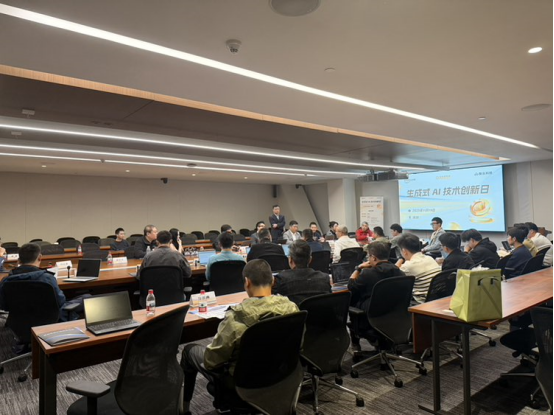
Core Insights - The event "Generative AI Technology Innovation Day" was successfully held by Financial One Account, in collaboration with Amazon Web Services and technology partner JuCloud, gathering over 40 guests to discuss the innovation blueprint and application prospects of generative AI in the fintech sector [1][3]. Group 1: Strategic Importance - Generative AI technology is rapidly reshaping the global industrial landscape and is becoming a core engine for digital transformation and business innovation [3]. - Financial institutions and technology companies view embracing generative AI as a crucial strategic choice during the key phase of intelligent, scenario-based, and open financial services [3]. Group 2: Expert Contributions - Financial One Account's CEO in Hong Kong, Jin Xinming, emphasized the strategic significance of generative AI for digital transformation in the financial industry, predicting more innovative applications and industry integration in the future [3]. - Amazon Web Services' financial industry sales leader Chen Ming and JuCloud founder Zhu Jun also contributed insights, agreeing on the importance of deep communication to explore new boundaries for generative AI applications in fintech [3]. Group 3: Technical Insights - Amazon Web Services expert Deng Qibiao provided a specialized training session on generative AI technology, covering its evolution, core principles, and mainstream models, thereby constructing a systematic knowledge framework for attendees [4]. - AWS's generative AI product solutions architect Gao Yunyi shared breakthroughs in multi-modal embedding models, illustrating the unique value of this technology in handling complex financial data through detailed case studies [4]. - JuCloud's generative AI architect Fu Yunbo shared practical experiences on efficiency improvement and cost reduction in enterprise-level applications, offering valuable references for future project implementations [4]. Group 4: Future Collaboration - The event facilitated a platform for deep dialogue between technology suppliers and industry users, highlighting the exploration of generative AI in enterprise intelligent transformation [4]. - Financial One Account aims to continue focusing on technological frontiers and deepen collaboration with partners to promote the in-depth application of AI technology in financial scenarios, enhancing its core competitiveness in the fintech sector [5].

对AI答案中的隐形广告该有明确治理答案
Bei Jing Qing Nian Bao· 2025-11-25 02:29
Core Insights - The rise of a new content marketing service called "GEO Promotion" is leveraging generative AI platforms to subtly integrate commercial information into AI-generated responses, transforming neutral AI answers into hidden advertisements [1][2]. Group 1: GEO Promotion Overview - GEO Promotion, or Generative Engine Optimization, aims to optimize content strategies so that AI "recognizes" and recommends specific brands, effectively embedding commercial messages within AI-generated content [1]. - This marketing approach involves creating a large volume of Q&A, guides, and lists that are tailored to specific keywords and brand information, which are then published on high-traffic platforms [1]. Group 2: Industry Implications - The GEO Promotion model has developed into a complete industry chain, offering systematic promotional solutions from content creation to execution and performance monitoring, with some services claiming low-cost, high-exposure marketing results [2]. - There are significant legal risks associated with GEO Promotion, as it often fails to clearly label advertising content, potentially infringing on consumer rights and misleading users [2]. Group 3: Regulatory Recommendations - It is necessary to incorporate GEO Promotion into governance frameworks, with market regulators taking the lead to establish clear advertising identification standards for AI-generated content [3]. - AI platforms should take responsibility for information verification, enhance their ability to identify advertising content, and provide users with options to disable personalized recommendations [3].
Meta再推WorldGen,一句话「盖」出50×50米一座城
具身智能之心· 2025-11-25 00:03
Core Insights - Meta has introduced a groundbreaking research project called WorldGen, which allows users to generate fully navigable and interactive 3D worlds from simple text prompts [12][22][30] - The technology leverages advanced procedural reasoning, diffusion models, and object-oriented scene decomposition to create coherent and visually rich 3D environments [13][19][29] Group 1: Technology Overview - WorldGen enables the creation of 3D worlds by inputting a simple prompt, such as "a medieval village in cartoon style," resulting in a consistent and themed environment [5][12] - The generated 3D worlds are not just static images but are interactive and allow for free movement within the space, maintaining structural integrity and connectivity between different areas [9][12] - Unlike existing methods that often degrade in quality when viewed from different angles, WorldGen maintains high-quality textures and geometry across a 50 x 50 meter area [19][29] Group 2: Development and Future Plans - Currently, WorldGen is in the research phase and is not yet available to developers, but it is compatible with major game engines like Unity and Unreal without additional conversion processes [22][31] - Future iterations of WorldGen are expected to support larger-scale world generation and reduce latency in the generation process [20][22] - The introduction of WorldGen signifies a shift in 3D content creation, making it more accessible to non-experts and potentially revolutionizing workflows in various industries [22][30]


腾讯研究院AI速递 20251125
腾讯研究院· 2025-11-24 16:14
Group 1: Google and AI Developments - Google has released a new machine learning paradigm called Nested Learning, which views models as a set of nested optimization problems to mitigate "catastrophic forgetting" [1] - The HOPE model, based on Nested Learning, shows optimal performance in language modeling perplexity and common sense reasoning accuracy, demonstrating excellent memory management capabilities [1] - DeepMind CEO Demis Hassabis stated that Google's AI narrative is shifting from "struggling to catch up" to "being in a leading position," with Gemini 3's score on the "ultimate human exam" rising from 21.6% to 37.5% [10] Group 2: OpenAI's Response to Competition - OpenAI's CEO, Altman, acknowledged that Google's recent advancements in AI may pose temporary economic challenges for the company [2] - OpenAI is expected to launch a new model named "Shallotpeat" in the coming months to address issues encountered during pre-training and to catch up with Google's breakthroughs [2] Group 3: Innovations in Design and AI Tools - The design agent Lovart has officially integrated with Nano Banana Pro, allowing for the processing of 14 image elements simultaneously and generating professional-grade designs and videos [3] - Elser.AI, created by a Peking University philosophy PhD, has gained 200,000 active users globally without any promotion, supporting the entire creative process from script to final production [5][6] Group 4: Advances in Robotics and AI Collaboration - A team from Hong Kong University of Science and Technology has developed the world's first basketball robot demo capable of performing real-world basketball actions, utilizing SkillMimic-V2 technology [9] - The Erdős 367 problem was solved in ten minutes using Gemini Deep Think, showcasing the potential of AI in assisting with complex mathematical proofs [7] Group 5: Market and Technology Trends - Google's Pixel 10 series now supports native AirDrop capabilities, allowing seamless file sharing between Android and iOS devices, a move influenced by the EU's Digital Markets Act [8] - The MCP community has proposed the MCP Apps initiative to enhance interactive user interfaces, which has already been adopted by companies like Postman and Shopify [4]


蚂蚁灵光6天下载量突破200万;智元机器人推出灵心平台| 蓝媒GPT
Sou Hu Cai Jing· 2025-11-24 13:08
Group 1: Ant Group and AI Assistant - Ant Group's AI assistant Lingguang achieved over 2 million downloads within 6 days of its launch, significantly surpassing the first-week performance of ChatGPT and Claude [1] - The app reached 1 million downloads in just 4 days, setting a new record compared to Sora's 5 days [1] Group 2: Alibaba Cloud and Generative AI - Gartner's latest report positions Alibaba Cloud as a leader in all four dimensions of Generative AI, making it the only Asia-Pacific company to achieve this alongside Google and OpenAI [2] Group 3: Moole Thread and Market Interest - Moole Thread, referred to as the "first domestic GPU stock," began its subscription process with a high issuance price of 114.28 yuan per share, marking a new high for new stock issuance this year [4] - The initial inquiry phase saw 267 institutional investors submit valid bids, with a total effective subscription amount reaching 704.06 billion shares, indicating strong interest from institutional investors [4] Group 4: Meta and Power Trading - Meta is seeking permission from the U.S. government to enter the power trading market, aiming to reduce risks by committing to purchase electricity from new power plants and reselling part of it in the wholesale market [5] Group 5: AI Regulation in Shanghai - The Shanghai Cyberspace Administration has initiated a special enforcement action to address the misuse of AI, focusing on companies that fail to conduct safety assessments and implement necessary protective measures [6]


东兴证券晨报-20251124
Dongxing Securities· 2025-11-24 10:14
Economic News - The U.S. is preparing for a new round of actions regarding Venezuela, with options including attempts to overthrow the Maduro regime [2] - The Ministry of Industry and Information Technology in China has announced the establishment of a standardization technical committee for humanoid robots, with a member from Yushu Technology serving as deputy director [2] - The Inner Mongolia Autonomous Region has released suggestions for its 14th Five-Year Plan, emphasizing the development and utilization of strategic mineral resources, particularly rare earths [2] - The U.S. has quietly dissolved the "Department of Government Efficiency," which was established by President Trump, with its functions now taken over by the Office of Personnel Management [2] - The National Bureau of Statistics in China reported that in mid-November 2025, 30 out of 50 monitored important production materials saw price increases, while 17 experienced declines [2] - The Supreme People's Court in China has announced a crackdown on tax-related crimes, emphasizing the importance of maintaining fiscal stability and social justice [2] - The Ministry of Finance and the China Securities Regulatory Commission have issued a notice to promote the healthy development of accounting firms in auditing H-share companies, enhancing cooperation between mainland and Hong Kong accounting sectors [2] Company News - Alibaba announced that its Qianwen APP surpassed 10 million downloads in its first week of public testing [5] - Jiahua Technology is planning to acquire a controlling stake in Shudun Information Technology through a share issuance and cash payment, which may constitute a major asset restructuring [5] - Mixue Group's budget coffee brand, Lucky Coffee, has surpassed 10,000 global stores, rapidly rising in the domestic coffee chain market [5] - Yizhiming stated that its large die-casting machines have been successfully applied in mass production projects for new energy vehicle integrated rear floorboards [5] - Midea Group and BYD signed a strategic cooperation agreement to enhance collaboration in technology, standards, and marketing, aiming to create a seamless "human-vehicle-home" ecosystem [5] Industry Analysis Aviation Industry - In October, domestic airlines increased capacity by approximately 3.6% year-on-year and 5.6% month-on-month, with passenger load factors improving due to the extended National Day holiday [6][7] - The overall passenger load factor for listed airlines in October increased by about 1.8 percentage points year-on-year and month-on-month, with major airlines achieving load factors above 89% [7] - Internationally, airlines increased capacity by about 14.3% year-on-year and 6.7% month-on-month, with load factors improving by 4.0 percentage points year-on-year [8] - The recent travel advisory for Japan may impact demand for related routes, as airlines have announced special handling for tickets [9][10] - The report suggests that the ongoing "anti-involution" trend in the industry is beginning to show results, with a focus on maintaining capacity and improving profitability [11] Banking Industry - The social financing growth rate continued to decline, with a year-on-year increase of 8.5% reported for October, reflecting a decrease in government bond financing [13][14] - The total amount of new loans in October was 220 billion yuan, with a year-on-year decrease of 280 billion yuan, indicating weak credit demand [15] - The M1 growth rate fell to 6.2%, while M2 increased by 8.2%, suggesting a trend of "de-banking" in deposits [17] - The report anticipates that credit demand will remain weak towards the end of the year, with social financing growth expected to decline further [18] Express Delivery Industry - In October, the total volume of express delivery services reached 17.6 billion pieces, with a year-on-year growth of 7.9%, marking the lowest growth rate of the year [19] - The report indicates that the decline in growth rate is linked to a decrease in enthusiasm for the Double Eleven shopping festival, as consumers become more rational in their spending [19][20] - The report highlights a divergence in strategies among major express companies, with some focusing on market share while others prioritize price increases [20][21] - The ongoing "anti-involution" trend is expected to continue, leading to improved service quality and profitability in the industry [21]