套利交易

Search documents
美债信用基础呈系统性动摇态势
Di Yi Cai Jing· 2025-06-23 13:22
美元信用遭遇多重撕裂,美国政府信用呈边际递减。 尽管市场对美国政府的偿债能力不断提出质疑,但似乎很难羁绊住美国国债进一步肿大的趋势,且在日 前完成了一笔220亿美元30年期国债发行后,美国联邦政府债务总额至今年6月底也升至36.22万亿美元 的历史最高纪录。 不仅如此,特朗普直接操盘的"大而美"法案推出了提高债务发行上限的顶层设计,甚至参议院正在酝酿 取消债务上限的法案,果如是,美国政府的借债融资将打破原有的边际约束而滑向肆意妄为的自由化状 态,而与此相伴随,已现恶化生态的美债信用风险也会被推到更加敏感的位置。 美元信用遭遇多重撕裂 "金本位"制度下,美元与黄金挂钩,获得了任何非美货币不可能具有的稳固信用基础;布雷顿森林体系 解散后,美元虽与黄金脱钩,但转身拥抱了石油,且这种绑定关系延续至今,美元的霸权地位由此确 立,其显赫价值也得到充分外溢,无论是在国际货币基金组织(IMF)特别提款权篮子中,还是在世界 所有国家外汇储备仓库中,抑或是国际贸易结算和全球外汇交易市场上,美元都占有绝对多的权重。 基于以上特殊的地位,美元已经超出了单一主权货币的性质范畴,被赋予了全球"信用本位"的职责。对 于各国央行而言,购买的 ...
香港经济受联系汇率制影响,美元信用下降超预期
3 6 Ke· 2025-06-23 03:47
Core Viewpoint - Hong Kong's interest rates are declining despite the currency peg to the US dollar, leading to a widening gap between Hong Kong's rates and US rates, which raises uncertainties for the local economy [2][6]. Group 1: Interest Rate Dynamics - The Hong Kong Interbank Offered Rate (HIBOR) for one month is currently around 0.5%, the lowest level in approximately three years, while the US Secured Overnight Financing Rate (SOFR) is about 4.3% [2]. - The interest rate gap has expanded to its largest scale since SOFR became public in 2018, with a drop of about 3% in HIBOR over the past month [2][5]. Group 2: Market Reactions and Implications - Major real estate companies in Hong Kong, such as Henderson Land Development and Sun Hung Kai Properties, have seen their stock prices rise by approximately 20% compared to late April, prior to the HKMA's intervention [6]. - The HKMA's intervention in May, which involved selling and buying US dollars totaling HKD 129.4 billion, has increased market liquidity and contributed to the decline in interest rates [3]. Group 3: Economic Context and Future Outlook - The current low interest rates are expected to stimulate real estate transactions, but there are concerns that these low rates may not last long due to potential interventions by the HKMA if the HKD approaches its lower limit of 7.85 against the USD [6]. - The ongoing trend of de-dollarization and reduced activity in arbitrage trading has contributed to the sustained low interest rates, despite the typical market behavior of borrowing in low-rate HKD to invest in higher-rate USD [5].


香港经济受联系汇率制影响,美元信用下降超预期
日经中文网· 2025-06-20 07:30
Core Viewpoint - The article discusses the divergence of Hong Kong's interest rates from those of the United States, highlighting the implications of this discrepancy on the local economy and financial markets [1][4]. Group 1: Interest Rate Dynamics - Despite the peg to the US dollar, Hong Kong's interest rates are declining, with the gap between Hong Kong Interbank Offered Rate (HIBOR) and the Secured Overnight Financing Rate (SOFR) reaching a record high [1]. - The 1-month HIBOR is currently around 0.5%, the lowest level in approximately three years, while the SOFR is about 4.3% [1]. - The divergence in interest rates has persisted for over a month, attributed to a lack of active arbitrage trading due to trends of de-dollarization [3]. Group 2: Market Reactions and Implications - The Hong Kong Monetary Authority (HKMA) intervened in the currency market by selling and buying US dollars, which increased market liquidity and led to a sharp decline in interest rates [2]. - Major real estate companies in Hong Kong, such as Henderson Land and Sun Hung Kai Properties, have seen their stock prices rise by approximately 20% since the HKMA's intervention [4]. - There are concerns that low interest rates may not last long, as the HKMA may need to buy Hong Kong dollars to stabilize the currency, potentially leading to a rise in HIBOR [4]. Group 3: Broader Economic Context - The article highlights the contradiction of Hong Kong's monetary policy being tied to the US economy while facing local economic challenges, such as a downturn [1][4]. - The significance of the linked exchange rate system is diminishing amid a declining trust in the US dollar, which may lead to adjustments in Hong Kong's monetary policy [4].

银河期货每日早盘观察-20250618
Yin He Qi Huo· 2025-06-18 14:12
Report Industry Investment Rating No relevant content provided. Core Viewpoints - The soybean and meal market is influenced by the US soybean oil, showing a strong trend, but pressure from South America remains. The domestic soybean meal demand is good, and inventory accumulation is expected. For sugar, the global supply increase expectation drags down the raw sugar price, and the domestic sugar price is expected to follow the raw sugar price passively. The short - term trend of oils and fats is affected by geopolitical conflicts and may run strong, but there is a risk of high - level correction. The corn market has a tight domestic supply, and the futures are expected to fluctuate at a high level. The pig market still faces pressure due to relatively high inventory. The peanut market may decline due to the expected increase in planting area. The egg market may have a weak spot price in the short - term, and the far - month contracts may rise under certain conditions. The apple market is expected to have a slightly stronger and stable futures price in June. The cotton market is expected to fluctuate in the short - term and decline in the medium - to - long - term [3][11][19][27][31][35][44][48][56] Summary by Related Catalogs Soybean/Meal - **External Market**: CBOT soybean index rose 0.26% to 1074 cents/bu, and CBOT soybean meal index rose 0.44% to 294.3 US dollars/short ton [2] - **Related Information**: As of June 15, EU 2024/25 soybean imports reached 13.58 million tons, up from 12.65 million tons last year; rapeseed imports were 6.91 million tons, up from 5.45 million tons last year. As of June 12, US soybean export inspections were only 216,000 tons. From June 9 - 13, the soybean crushing profit in Mato Grosso was 515.08 reais/ton. As of June 13, the actual soybean crushing volume of oil mills was 2.2587 million tons, with an operating rate of 63.49%. Soybean inventory was 5.996 million tons, down 1.75% from last week and up 8.59% year - on - year; soybean meal inventory was 410,000 tons, up 7.19% from last week and down 58.79% year - on - year [2] - **Logic Analysis**: The US soybean market is strong, but South American pressure remains. Domestic demand for soybean meal is good, and inventory accumulation is expected [3] - **Trading Strategy**: Short - term, wait and buy at low points; for arbitrage and options, wait and see [6] Sugar - **External Market**: ICE US sugar fell, with the main contract down 0.49 (2.89%) to 16.45 cents/lb [7] - **Important Information**: In the next 30 days, most sugarcane areas in Guangxi will have more precipitation, which is beneficial to sugarcane growth. Brazilian hydrous ethanol prices are at an 8 - month low, and the average national alcohol - to - gasoline ratio is 67.7%. In May, Brazilian ethanol sales reached 2.99 billion liters. In the second half of May, Brazil's central - southern region crushed 47.843 million tons of sugarcane, up 5.47% year - on - year; sugar production was 2.951 million tons, up 8.86% year - on - year; ethanol production was down 3.12%. From April 2025 to June 1, the central - southern region cumulatively crushed 124.768 million tons of sugarcane, down 11.85% year - on - year; sugar production was 6.954 million tons, down 11.64% year - on - year; ethanol production was 5.74 billion liters, down 11.36% year - on - year. In the first two weeks of June, Brazil exported 1.53 million tons of sugar and molasses, down 12.8% year - on - year [8][9][10] - **Logic Analysis**: The raw sugar price is dragged down by the expected increase in global supply, and the domestic sugar price is expected to follow the raw sugar price passively [11] - **Trading Strategy**: Passively follow the raw sugar price, expect short - term weakness, and sell high. For arbitrage, wait and see; for options, use out - of - the - money ratio spread options [12][13][14] Oils and Fats - **External Market**: The overnight CBOT US soybean oil main price fell 0.89% to 54.69 cents/lb; the BMD palm oil main price rose 0.74% to 4096 ringgit/ton [16] - **Related Information**: Anec expects Brazilian soybean exports in June to reach 14.37 million tons. French 2025 winter rapeseed production is expected to reach 4.2 million tons, up 9.4% year - on - year. As of June 15, EU 2024/25 palm oil imports were 2.74 million tons, down from 3.36 million tons last year; soybean imports were 13.58 million tons, up from 12.65 million tons last year; rapeseed imports were 6.91 million tons, up from 5.45 million tons last year. On June 17, the total trading volume of soybean oil and palm oil was 17,560 tons, down 55% from the previous trading day [17][18] - **Logic Analysis**: Geopolitical conflicts in the Middle East affect the market. India's reduction of the crude palm oil tax may increase purchases. Domestic soybean oil is in a stage of inventory accumulation, and the supply of rapeseed oil is in excess, but the bottom support is strong [19] - **Trading Strategy**: In the short - term, oils and fats are expected to fluctuate strongly, but beware of high - level corrections. For arbitrage and options, wait and see [20][21][22] Corn/Corn Starch - **External Market Change**: The CBOT corn futures main contract rose 0.5% to 438.5 cents/bu [24] - **Important Information**: On the 17th, DDGS prices rose slightly. The wheat market price is rising, and the corn price is also rising, increasing the wheat's feed substitution advantage. As of June 12, the domestic trade corn inventory in Guangdong Port was 1.135 million tons, up 119,000 tons from last week; the foreign trade inventory was 300 tons, unchanged from last week; the imported sorghum was 433,000 tons, down 7,000 tons from last week; the imported barley was 333,000 tons, down 25,000 tons from last week. On June 16, the purchase price in the northern port was stable, and the corn price in the North China production area continued to rise [26] - **Logic Analysis**: The US corn sowing is accelerating, and the domestic supply is tight. The 07 corn futures fluctuate at a high level, and the basis narrows. The spot price is expected to be strong in the short - term, and the futures will fluctuate at a high level [27] - **Trading Strategy**: For the external market, the 07 corn fluctuates at the bottom. Wait and see for the 07 corn. For arbitrage, operate the corn - starch spread, buy 09 starch and short 09 corn when the spread is low. Hold long corn and short 07 or 09 corn. For options, those with spot can consider selling high carefully [28][29] Pig - **Related Information**: The pig price is oscillating downward. As of June 17, the national 7 - kg piglet price was 443 yuan/head, down 12 yuan/head from June 13; the 15 - kg piglet price was 542 yuan/head, down 12 yuan/head from June 13; the 50 - kg sow price was 1619 yuan/head, unchanged from June 13. On June 17, the national average wholesale price of pork was 20.23 yuan/kg, down 0.7% [31] - **Logic Analysis**: The market supply pressure is alleviated, but the inventory is still high, and the upward space of futures is limited [31] - **Trading Strategy**: Short - term short operation. For arbitrage and options, wait and see [32] Peanut - **Important Information**: Peanut prices in different regions are stable. The arrival volume of peanut oil mills is different, and the peanut oil price is strong, but there is room for negotiation. Peanut meal sales are weak. As of June 12, the peanut inventory of domestic peanut oil sample enterprises was 139,340 tons, down 5280 tons from last week; as of June 13, the peanut oil inventory was 39,930 tons, down 170 tons from last week [33][34] - **Logic Analysis**: Peanut spot trading is light. The expected increase in new - season planting area may lead to a price decline [35] - **Trading Strategy**: Short 10 - month peanuts at high prices. For arbitrage, wait and see; for options, sell pk510 - C - 8800 options [36][37][38] Egg - **Important Information**: The main egg - producing area price rose 0.04 yuan/jin, and the main sales area price fell 0.1 yuan/jin. In May, the national laying hen inventory was 1.334 billion, up 0.11 billion from last month and 7.2% year - on - year. In May, the egg chick hatching volume of sample enterprises was 46.985 million, down 4% month - on - month and up 1% year - on - year. In the week of June 13, the national main - producing area laying hen culling volume was 20.52 million, up 2.8% from the previous week. As of June 12, the average culling age was 512 days, down 3 days from the previous week. As of June 12, the egg sales volume in representative sales areas was 8194 tons, down 7.4% from last week. As of June 13, the average inventory in the production link was 1.03 days, up 0.09 days from last week; the average inventory in the circulation link was 1.05 days, up 0.02 days from the previous week. As of June 12, the average weekly egg profit was - 0.47 yuan/jin, down 0.07 yuan/jin from the previous week; on June 13, the expected laying hen breeding profit was 15.5 yuan/feather, down 1.09 yuan/jin from the previous week [41][42][43] - **Trading Logic**: The egg consumption is in the off - season, and the spot price may be weak. The far - month contracts may rise if the culling volume increases [44] - **Trading Strategy**: Build long positions in the 8 - and 9 - month far - month contracts in mid - to - late June. Short near - month contracts and long far - month contracts. For options, wait and see [44] Apple - **Important Information**: As of June 11, the national main - producing area apple cold - storage inventory was 1.2746 million tons, down 107,400 tons from last week. In 2025, the cumulative apple export volume from January to March was 255,600 tons, up 9.5% year - on - year; the import volume was 13,300 tons, up 123.9% year - on - year. The apple price is stable, and the demand is in the off - season [46] - **Trading Logic**: The low inventory may support the price of early - maturing apples. The 10 - month futures price is expected to fluctuate slightly stronger in June [48] - **Trading Strategy**: Build long positions in the AP10 contract at low prices. For arbitrage and options, wait and see [49][50][51] Cotton - Cotton Yarn - **External Market Influence**: ICE US cotton rose, with the main contract rising 0.15 (0.22%) to 68.05 cents/lb [52] - **Important Information**: As of June 14, the Brazilian cotton harvesting progress was 2.8%, up 1.4 percentage points from last week. As of June 15, the US cotton planting rate was 85%, 4 percentage points slower than last year; the budding rate was 19%, 2 percentage points slower than last year; the boll - setting rate was 3%, the same as last year; the good - quality rate was 48%, 6 percentage points lower than last year. The cotton spot trading is generally cold, and the sales basis is firm [53][54][55] - **Trading Logic**: The current trading logic is mainly macro - oriented. In the short - term, it is expected to fluctuate in a range, and in the medium - to - long - term, it is expected to decline [56] - **Trading Strategy**: The US cotton is expected to fluctuate slightly stronger, and the Zhengzhou cotton is expected to fluctuate strongly in the short - term. For arbitrage and options, wait and see [57][58]
贵金属有色金属产业日报-20250618
Dong Ya Qi Huo· 2025-06-18 12:43
1. Report Industry Investment Rating No relevant content provided. 2. Core Viewpoints of the Report - **Precious Metals**: The continuous escalation of the Middle - East geopolitical conflict increases market risk - aversion demand, but the sharp strengthening of the US dollar index exerts pressure. Weak US retail sales and industrial output data in May strengthen the Fed's interest - rate cut expectation. The global central banks' gold - buying trend remains unchanged, supporting the gold price center in the long - term. With a mix of bullish and bearish fundamentals, short - term focus is on the evolution of the geopolitical situation and signals of monetary policy shift [3]. - **Copper**: The most important macro event in the short - term is the Fed's interest - rate decision. Although the interest rate is mostly priced in, the statement after the decision may affect copper prices. High prices above 78,000 yuan per ton may lead to a negative feedback and a situation of high prices but low trading volume. The position of Shanghai copper has declined from a high of 580,000 lots to below 550,000 lots. Copper prices are expected to fluctuate around 78,000 yuan per ton [15]. - **Zinc**: The supply side shows a slow - paced relaxation, as indicated by the rising TC and the month - on - month increase in zinc ingot production. However, the transfer from ore to ingot takes time, and the relaxation at the ore end has not fully translated to the ingot end. The demand side remains stable but weak in the traditional off - season. Short - term focus is on macro data and market sentiment, as well as inventory data [32]. - **Aluminum**: The supply of electrolytic aluminum is approaching the industry's upper limit with little change. The demand from end - user factories is significantly declining in the off - season, but the processing sector's start - up rate has only slightly decreased, with some inventory accumulation. The low inventory and continuous de - stocking are the core factors supporting aluminum prices in the short - term, with prices likely to be volatile and bullish in the short - term and bearish in the long - term [46]. - **Alumina**: The Axis mine in Guinea has not resumed production, and there is a possibility of short - term (1 - 3 months) production suspension. Although the overall impact on annual alumina supply is limited, there may be monthly shortages, pushing up ore prices. Alumina has shifted to inventory accumulation, and prices are under pressure [47]. - **Cast Aluminum Alloy**: The raw material market for scrap aluminum is tight, leading to high costs. The supply capacity is relatively excessive, and the demand growth may slow down in the second half of the year. The futures contract shows a BACK structure [48]. - **Nickel**: The price of Philippine laterite nickel ore remains firm, squeezing the profits of downstream products. The price of nickel iron has been further reduced, and the demand from some steel mills has weakened, leading to inventory accumulation. The stainless - steel market is sluggish, and the price of nickel sulfate has also decreased. The spread between nickel sulfate and pure nickel is widening [74]. - **Tin**: Tin prices have remained stable recently and are expected to continue so in the next week under the assumption of no major changes in the macro and fundamental aspects. Due to falling inventory, slower - than - expected recovery of Burmese tin mines, and decent short - term demand, tin prices may be slightly bullish with limited upside space [90]. - **Lithium Carbonate**: The spot market for the lithium - battery industry is weak. The supply side sees stable lithium ore prices but a downward shift in the lithium carbonate market price. The demand side shows no significant improvement, and the terminal market has mixed performance [104]. - **Silicon Industry Chain**: The market supply of the silicon industry chain is generally loose, and the furnace - opening expectations are gradually being realized. The supply side is slightly relaxed, and the demand side is stable. The polysilicon market has an increased production plan in July, while the downstream silicon wafer and battery - cell markets have reduced production and mainly make rigid purchases [118]. 3. Summary by Related Catalogs Precious Metals - **Price Data**: SHFE gold and silver futures prices, COMEX gold price and gold - silver ratio are presented [4]. - **Correlation Analysis**: Relationships between gold and the US dollar index, gold and US Treasury real interest rates are shown [9][10]. - **Inventory and Fund Position**: SHFE and COMEX gold and silver inventories, as well as long - term gold and silver fund positions are provided [13][14]. Copper - **Futures Data**: The latest prices, daily changes, and daily change rates of Shanghai copper futures (main contract, continuous, etc.) and LME copper 3M are given [16]. - **Spot Data**: Spot prices, price changes, and spreads of different copper brands in various regions are presented [21]. - **Import and Processing Data**: Copper import profit and loss, copper concentrate TC, and copper scrap - refined copper price difference are provided [25][28]. - **Warehouse Receipt and Inventory Data**: Shanghai copper and international copper warehouse receipts, and LME copper inventory data are shown [29][30]. Zinc - **Futures Data**: The latest prices, daily changes, and daily change rates of Shanghai zinc futures and LME zinc are provided [33]. - **Spot Data**: Spot prices, price changes, and spreads of different zinc products in various regions are presented [38]. - **Inventory Data**: Shanghai zinc and LME zinc warehouse receipts and inventory data are shown [42]. Aluminum - **Futures Data**: The latest prices, daily changes, and daily change rates of Shanghai aluminum, LME aluminum, and aluminum - related futures contracts are provided [50]. - **Spot Data**: Spot prices, price changes, and spreads of aluminum in different regions, as well as LME aluminum spot and spreads are presented [57][62]. - **Inventory Data**: Shanghai aluminum and LME aluminum warehouse receipts and inventory data, as well as alumina warehouse receipt data are shown [68]. Nickel - **Futures Data**: The latest prices, changes, and trading volume of Shanghai nickel and LME nickel futures, as well as stainless - steel futures, are provided [75]. - **Spot and Inventory Data**: Nickel spot prices, warehouse receipt inventories, and nickel ore prices and inventories are presented [80][82]. - **Profit Data**: Profit margins of nickel - related products such as MHP - produced electrolytic nickel, sulfuric - nickel production, and stainless - steel production are shown [84][87]. Tin - **Futures Data**: The latest prices, daily changes, and daily change rates of Shanghai tin futures and LME tin are provided [91]. - **Spot Data**: Spot prices, price changes, and spreads of tin products are presented [97]. - **Inventory Data**: Warehouse receipt inventories of tin and LME tin inventory are shown [99]. Lithium Carbonate - **Futures Data**: The closing prices, daily and weekly changes of lithium carbonate futures contracts are provided [105]. - **Spot Data**: Spot prices of lithium - related products such as lithium ore, lithium carbonate, and lithium hydroxide are presented [108]. - **Inventory Data**: Exchange inventories, including Guangzhou Futures Exchange warehouse receipts and different types of lithium carbonate inventories, are shown [114]. Silicon Industry Chain - **Spot Data**: Spot prices of industrial silicon in different regions and grades are provided [119]. - **Futures Data**: The latest prices, daily changes, and daily change rates of industrial silicon futures contracts are provided [123]. - **Product Price Data**: Prices of polysilicon, silicon wafers, battery cells, and silicone products are presented [131][134]. - **Output and Inventory Data**: Industrial silicon production in Xinjiang and Yunnan, as well as inventories of polysilicon and industrial silicon are shown [137][145][149].
土耳其央行出手反击短期套利交易 遏制“热钱”流入里拉市场
智通财经网· 2025-06-11 12:39
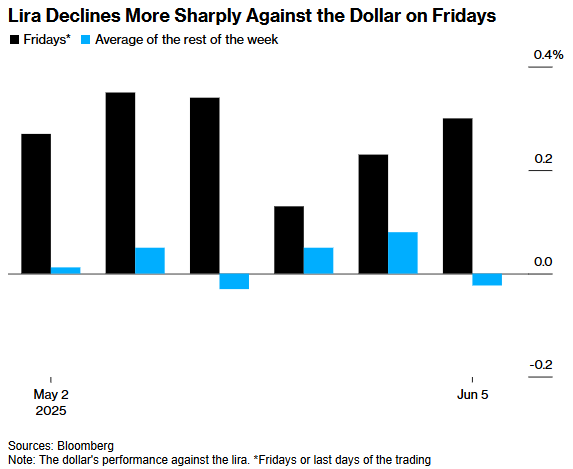
Group 1 - Turkish policymakers are taking action to curb the inflow of "hot money" into the lira market, responding to one of the most profitable currency arbitrage trades globally [1] - The Central Bank of Turkey has been strictly controlling the lira market while allowing gradual depreciation of the currency, leading to increased unpredictability in market fluctuations [1][2] - The recent acceleration of lira depreciation on Fridays has negatively impacted a popular short-term trading strategy, where investors buy lira overnight on Thursdays to earn weekend interest [1] Group 2 - With the Central Bank's interest rates near 50%, Turkey has become a hotspot for arbitrage traders who borrow from low-interest countries to invest in high-interest assets [2] - Turkish officials are attempting to prevent short-term arbitrage trades due to concerns that rapid capital withdrawal could lead to significant market volatility [2] - The lira's depreciation against the dollar continues, but the Turkish government is implementing a "real appreciation" policy, aiming to keep currency depreciation below consumer inflation rates [2] Group 3 - Bloomberg reports that the return on lira arbitrage trading reached its highest level since 2021 in May, compensating for losses incurred in March [6] - Approximately $3.4 billion has flowed into arbitrage trades from April 18 to the previous week, with traders experiencing five consecutive quarters of profitability [6] - Major financial institutions like Morgan Stanley, Deutsche Bank, and ING have reiterated their bullish stance on lira arbitrage trading, while HSBC advocates for buying long-term local currency bonds [6]
日元或重启跌势 仍是套利交易首选融资货币
Xin Hua Cai Jing· 2025-06-09 13:51
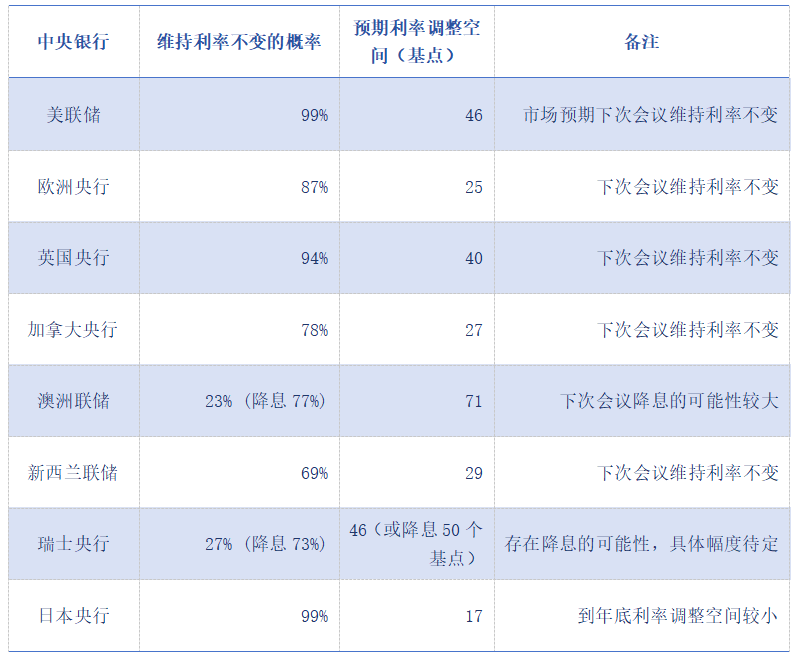
新华财经北京6月9日电欧洲交易时段,风险偏好上升推动澳元和新西兰元等货币上涨,日元表现分化。自年初以 来,美元已下跌约10%,但近期显示出一定的企稳迹象。美国非农就业数据高于预期,以及央行决策不如预期鸽 派,导致市场对利率预期重新定价。整体偏向鹰派。外汇市场整体较为平静,利率因素的重要性进一步凸显。尽 管日本央行通过购买债券来维持市场稳定,但日元仍是进行套利交易的首选融资货币。 美元 | 中央银行 | 维持利率不变的概率 | 预期利率调整空 间(基点) | 备注 | | --- | --- | --- | --- | | 美联储 | 99% | 46 | 市场预期下次会议维持利率不变 | | 欧洲央行 | 87% | 25 | 下次会议维持利率不变 | | 英国央行 | 94% | 40 | 下次会议维持利率不变 | | 加拿大央行 | 78% | 27 | 下次会议维持利率不变 | | 澳洲联储 | 23% (降息 77%) | 71 | 下次会议降息的可能性较大 | | 新西兰联储 | 69% | 29 | 下次会议维持利率不变 | | 瑞士央行 | 27% (降息 73%) | 46(或降息 50个 基 ...
关税博弈再掀伦铜“西迁潮”,LME铜库存半年内腰斩至13万吨
Di Yi Cai Jing· 2025-06-06 11:23
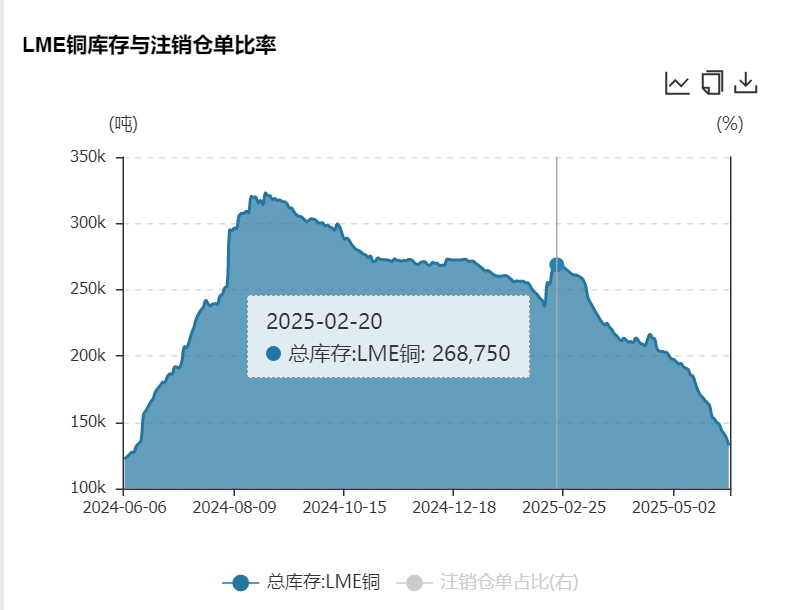
但美国经济数据疲软和供需面走弱可能限制铜价上涨空间 关税预期摇摆,铜价重拾涨势。 本周铜价持续冲高,截至6月6日收盘,沪铜期货收于78930元/吨,日内涨810元。 伦敦金属交易所(LME)铜期货本周录得四连涨,并触及9809美元/吨,创近两个月新高,纽约商品交易所 (COMEX)铜期货五连涨,价格更是一度飙升至5.06美元/磅,距离今年3月创下的5.37美元/磅历史高位仅一步 之遥。 交易人士分析称,这轮涨势和3月份铜价狂飙的行情有相似之处,是美国关税预期引发的全球库存"大转移"、矿 端供应紧张与需求复苏的复杂博弈。但在经历过3月行情后,市场可能对此敏感性会有所下降。 今年3月份,LME铜价突破1万美元/吨,五矿期货有色研究员吴坤金分析称,海外贸易局势相对反复,尽管美国 提高钢铁关税对美铜形成向上的脉冲刺激,但总体情绪面持续性待观察。产业上看铜原料供应较为紧张,但加 工费边际企稳和精废价差扩大使得供应紧张情绪边际缓和,叠加消费端韧性有所减弱,预计铜价上涨仍面临阻 力。 价差走阔,铜市套利交易再起 尽管关税政策尚未正式落地,但市场已提前反应。 "交易商预期美国将对铜征收关税,希望从美国铜价上涨中获利,大量铜库 ...
摩根大通戴蒙警告监管方:美国过度财政支出和QE会让债市崩溃,“你们会恐慌”
华尔街见闻· 2025-05-31 08:45
Core Viewpoint - Jamie Dimon, CEO of JPMorgan Chase, warns that excessive government spending and aggressive quantitative easing (QE) by the Federal Reserve have set the stage for a potential collapse of the bond market, indicating that the timing of this crisis is uncertain [1][2]. Group 1: Bond Market Concerns - Dimon believes that the U.S. government's previous large-scale spending and the Federal Reserve's extensive QE policies have created a "ticking time bomb" for the bond market, leading to an inevitable collapse [2]. - He expresses uncertainty about when this crisis will occur, suggesting it could be in six months or six years, and emphasizes the need for a change in the debt trajectory and market-making capabilities [2]. - Dimon acknowledges the return of "bond vigilantes," indicating a growing concern among investors regarding government debt levels [2]. Group 2: Internal Threats to the U.S. - Dimon identifies "internal enemies" as the greatest threat to the U.S., rather than foreign adversaries, highlighting issues such as mismanagement and the need for reform in various sectors including government regulation, immigration, and healthcare [3]. - He calls for improvements in governance and management to enhance the U.S. economy's growth potential, suggesting that addressing these issues could lead to an annual growth rate of 3% [3][4]. Group 3: Tax Policy Recommendations - Dimon supports taxing profits from arbitrage trading, aligning with recent efforts by the Trump administration to close tax loopholes in this area [6][7]. - He proposes using the revenue from this tax to increase income tax credits, potentially benefiting individuals without children, estimating an additional cost of $60 billion for this initiative [7]. - Dimon argues against allowing significant state and local tax (SALT) deductions and urges Congress to pass tax legislation before focusing on other growth issues [8].