
经济高质量发展

Search documents
赵伟:综合整治“内卷式”竞争:背景、成因、影响及应对
申万宏源宏观· 2025-12-23 16:05
Core Viewpoint - The article discusses the phenomenon of "involution" in the Chinese economy, highlighting its causes, impacts, and policy responses, emphasizing the need for structural reforms to enhance economic quality and stability [3][5][6]. Group 1: Causes and Impacts of Involution - The current "involution" is characterized by long-term negative growth in the Producer Price Index (PPI) and low capacity utilization rates in mid- and downstream industries, which squeeze corporate profits and hinder industrial upgrades [3][5]. - The deep-rooted causes of this "involution" include the differentiation of old and new economic drivers during the economic transition period and the chaotic competition among local governments pursuing GDP and fiscal revenue [5][6]. - The "involution" phenomenon has created a spiral contraction cycle of "price-income-consumption," severely restricting healthy economic development and transformation [5][6]. Group 2: Policy Responses and Recommendations - To address the "involution," policies should focus on both supply and demand sides, combining growth stabilization with reform promotion, which benefits both the present and the long term [6][11]. - Supply-side measures include production adjustment, elimination of backward production capacity, and improving product quality to restore prices and enhance competitiveness [6][11]. - Demand-side strategies should promote resident service consumption through fiscal subsidies and social security improvements to unleash consumption potential, while guiding employment from manufacturing to services [6][11]. Group 3: Evolution of Anti-Involution Policies - Since mid-2024, high-level meetings have consistently addressed the need to combat "involutionary" competition, with significant policy decisions made to regulate local government and corporate behaviors [7][8]. - The 2025 government work report outlined specific actions to establish a unified national market and comprehensively address "involutionary" competition [8][11]. - The current anti-involution policies are characterized by a higher stance, broader coverage, and stronger synergy compared to previous supply-side reforms, with a focus on both local governments and enterprises [11][12]. Group 4: Macroeconomic Context and Industry Characteristics - The macroeconomic environment is under pressure from continuously declining prices, with the PPI experiencing negative growth for 33 consecutive months, and industrial capacity utilization rates at historical lows [14][16]. - The profitability of industrial enterprises is under significant pressure, with many industries, particularly in the mid- and downstream sectors, experiencing negative profit growth [16][19]. - The "involution" is more pronounced in mid- and downstream industries, where the competition has intensified, leading to a decline in profitability and increased cost pressures [19][21]. Group 5: Structural Issues and Future Directions - The article emphasizes the need for structural reforms to break the cycle of "price-income-consumption" contraction, advocating for a shift from an investment-driven to an innovation-driven economy [20][42]. - The service sector is identified as a key area for absorbing employment and addressing structural unemployment, with significant potential for growth in service consumption [42][43]. - Policies should focus on enhancing service sector development, improving social security systems, and optimizing service industry regulations to stimulate demand and support economic transformation [37][42].

跨国公司在广东:一流营商环境“不见外”
2 1 Shi Ji Jing Ji Bao Dao· 2025-12-23 04:29
Group 1 - The core viewpoint of the articles highlights that multinational companies are increasingly investing in Guangdong, indicating that the region remains a trusted "safe haven" for foreign capital and a preferred destination for investment [2][4][6] - Guangdong has attracted over $600 billion in foreign investment since the reform and opening up, with more than 370,000 foreign enterprises established, including over 350 Fortune Global 500 companies [2][3] - In the first ten months of 2025, Guangdong established 27,000 new foreign enterprises, a year-on-year increase of 32.2%, with actual foreign investment amounting to 84.62 billion yuan, up 7.5% year-on-year [2] Group 2 - Key investment areas for foreign capital in Guangdong include electronic information, green petrochemicals, and specialized equipment, with a focus on "new," "intelligent," and "high" sectors [2][9] - The ExxonMobil Huizhou ethylene project, with a total investment exceeding $10 billion, is a significant example of foreign investment in Guangdong, marking it as the first major petrochemical project wholly owned by a U.S. company in China [3][5] - The Guangdong government has implemented a series of policies to support foreign investment, enhancing the stability and confidence of foreign enterprises in the region [6][9] Group 3 - The rapid establishment of the ExxonMobil project, completed in just 18 months, showcases the efficiency of Guangdong's investment environment, which is characterized by a strong industrial foundation and quick response capabilities [5][6] - Multinational companies are transitioning from merely expanding their market presence to deeply embedding themselves in Guangdong's industrial ecosystem, utilizing local resources for global distribution [6][11] - The region is increasingly viewed as an "innovation amplifier," with foreign companies focusing more on research and development, high-end manufacturing, and innovative industries [11]

俄罗斯增长放缓但可控
Jing Ji Ri Bao· 2025-12-23 00:03
Economic Overview - In 2025, the Russian economy is expected to experience a controlled cooling period, with GDP growth projected to decline to around 1% after reaching a 12-year high of 4.3% in 2024 [1] - The economic slowdown is attributed to weak production growth, reduced consumer spending, and declining contributions from key sectors [1][2] GDP and Growth Projections - The Russian Academy of Sciences predicts a GDP growth of 0.7% for 2025, while some commercial banks estimate it at 0.9% [2] - Industrial production remains a significant driver of economic growth, with manufacturing, particularly machinery and chemical production, showing stable contributions [2] Inflation and Monetary Policy - Inflation pressure is easing, with the inflation rate dropping to 6.6% in November from a high of 10.34% in March, although it remains above the central bank's target of 4% [3] - The central bank has more room to ease monetary policy due to the declining inflation and cooling domestic demand [3] Currency and Debt Dynamics - The real effective exchange rate of the ruble has appreciated significantly, increasing by 25.2% from January to November [3][4] - Public debt has risen by 10.1% to 32.98 trillion rubles, with domestic debt increasing while external debt has decreased [4] Future Economic Strategy - The Russian government is focusing on structural economic reforms aimed at creating high-tech industries and high-value production jobs, with a plan extending to 2030 [7] - Balancing inflation control, exchange rate stability, and growth is emphasized as crucial for achieving national development goals [7]
省委经济工作会议精神在全省引发热烈反响 坚定信心锐意进取 奋力实现“十五五”良好开局
He Nan Ri Bao· 2025-12-22 23:48
Core Viewpoint - The Provincial Economic Work Conference has outlined the economic work for 2026, emphasizing the need for confidence and proactive measures to achieve a strong start for the "14th Five-Year Plan" and to advance modernization in the region [1]. Group 1: Economic Development Strategy - The conference summarized the achievements of the current year and set the overall requirements and main expected goals for next year's economic development, focusing on high-quality economic growth [2]. - The provincial development and reform commission will implement the conference's spirit by concentrating on the "1+2+4+N" target task system, aiming to stabilize employment, enterprises, and market expectations while enhancing advantages and vitality [2]. - A high-standard plan for the "14th Five-Year Plan" will be developed, ensuring a strong start for the first quarter of the next year [2]. Group 2: Technological Innovation - The provincial science and technology department will focus on integrating education, technology, and talent development, planning major strategic technology projects to enhance innovation capabilities [3]. - There will be an emphasis on collaborative innovation between industry and academia, with support for enterprises to tackle key technological challenges [3]. - Policies will be improved to facilitate the conversion of scientific achievements into productive forces [3]. Group 3: Water Resource Management - The water resources department will implement the "1+2+4+N" target task system, focusing on ecological protection and high-quality development of water resources [4]. - Major water conservancy projects will be planned to enhance disaster prevention and agricultural irrigation capabilities [4]. Group 4: Financial Support - The provincial branch of the People's Bank of China will implement a moderately loose monetary policy, focusing on supporting key areas such as domestic demand and technological innovation [5]. - Financial measures will be taken to ensure the stability of the economy and support the goals set by the conference [5]. Group 5: Agricultural Development - The agricultural research institute will focus on food security and rural revitalization, enhancing agricultural productivity through technological advancements [6]. - Efforts will be made to accelerate the transformation of research achievements into practical applications to support the agricultural sector [6][7].
投资于人如何深入实施?
Zheng Quan Shi Bao· 2025-12-21 18:09
Core Viewpoint - The recent Central Economic Work Conference emphasizes the integration of "investment in material" and "investment in people" as a new development strategy to enhance economic growth and improve people's livelihoods [1][2]. Group 1: Investment Strategy - The shift from a focus on "investment in material" to a combination of "investment in material" and "investment in people" is necessary due to diminishing returns on traditional investments [2]. - Fixed asset investment in the first 11 months of the year decreased by 2.6%, highlighting the urgency to stabilize investment and combine both types of investment [1]. Group 2: Employment and Social Support - Employment stability is prioritized, with actions to support key groups such as college graduates and migrant workers, and to encourage flexible employment [3]. - Policies are expected to include expanding special loans for job stability and providing subsidies to companies that hire unemployed youth [3]. Group 3: Healthcare and Elderly Care - The government plans to enhance long-term care insurance and increase basic pension levels for urban and rural residents, with a potential increase of 50 yuan or more by 2026 [4]. - Reforms in healthcare, including optimizing drug procurement and improving reimbursement methods, are set to be implemented [4]. Group 4: Financial Support and Collaboration - Fiscal policies will focus on supporting both "material" and "people" investments through special bonds and public-private partnerships (PPP) in sectors like elderly care and childcare [4]. - The collaboration between government and social capital is crucial to lower barriers for private sector participation in social projects [4]. Group 5: Systemic Coordination - A systemic approach is necessary to connect "improvement of livelihoods," "release of domestic demand," and "economic growth," ensuring resources effectively benefit the population [5]. - The focus on enhancing human welfare and capabilities is expected to lay a solid foundation for China's modernization by 2026 [5].
多件法律案将提请全国人大常委会第十九次会议审议 强化制度规范护航经济高质量发展
Jing Ji Ri Bao· 2025-12-20 06:33
Group 1: Legislative Developments - The 19th session of the 14th National People's Congress Standing Committee will be held from December 22 to 27, focusing on the review of several important legislative drafts, including the Ecological Environment Code, National Development Planning Law, Civil Aviation Law revision, and Foreign Trade Law revision, aimed at strengthening institutional norms to support high-quality economic development [1] - The Ecological Environment Code will undergo its third review, with enhancements in areas such as the roles of courts and procuratorates in environmental protection, credit supervision systems, and legal responsibilities for environmental damage compensation, emphasizing the principle of proportionality in penalties [2] - The National Development Planning Law aims to improve the macroeconomic governance system, emphasizing the strategic role of national development planning and modernizing governance capabilities, with provisions for long-term goals and a clear national planning system [3] Group 2: Industry-Specific Regulations - The revision of the Civil Aviation Law is a significant measure to adapt to new developments in the aviation sector, focusing on enhancing airworthiness certification management, promoting development, and ensuring passenger rights protection, thereby providing a robust legal framework for the high-quality development of the civil aviation industry [4] - The Foreign Trade Law revision aims to enhance cross-border financial services, promote international recognition of digital certificates and electronic signatures, and improve the facilitation of foreign trade [5] - The State-Owned Assets Law and Trademark Law revisions will focus on strengthening the management and supervision of state-owned assets and optimizing trademark registration processes, respectively, to protect the legitimate interests of all parties involved [5]
中共河南省委召开党外人士座谈会暨经济工作专题协商会 刘宁主持并讲话 王凯通报有关情况
He Nan Ri Bao· 2025-12-19 11:59
会上,王凯通报今年全省经济运行情况和明年经济工作有关考虑。民革省委会主委张弓、民盟省委会主 委霍金花、民建省委会专职副主委杨士海、九三学社省委会主委孙运锋、农工党省委会主委黄红霞、民 进省委会主委张震宇、致公党省委会主委司富春、省工商联主席胡汉阳、无党派人士代表郑云先后发 言。大家一致赞同中共河南省委对全省经济形势的分析判断和明年经济工作的安排部署,并就完善自贸 区涉外法律服务体系、推动生物制造与人工智能融合发展、提升开放型经济发展质量和国际竞争力、多 渠道发展新型储能、推动现代船舶制造业提质升级、提升全要素生产率深挖经济潜能、科技创新与产业 创新深度融合、将人口规模优势转化为内需增长动能、文旅强省建设等提出意见建议。刘宁认真听取发 言并与大家深入交流,要求有关部门做好研究吸纳。 12月19日,中共河南省委召开党外人士座谈会暨经济工作专题协商会,深入学习贯彻中共二十大和二十 届历次全会及中央经济工作会议精神,贯彻落实习近平总书记在河南考察时重要讲话精神和关于河南工 作的重要论述,听取各民主党派、省工商联负责人和无党派人士代表对明年经济工作的意见建议,更好 凝聚各方智慧力量,推动经济高质量发展,确保"十五五"开 ...
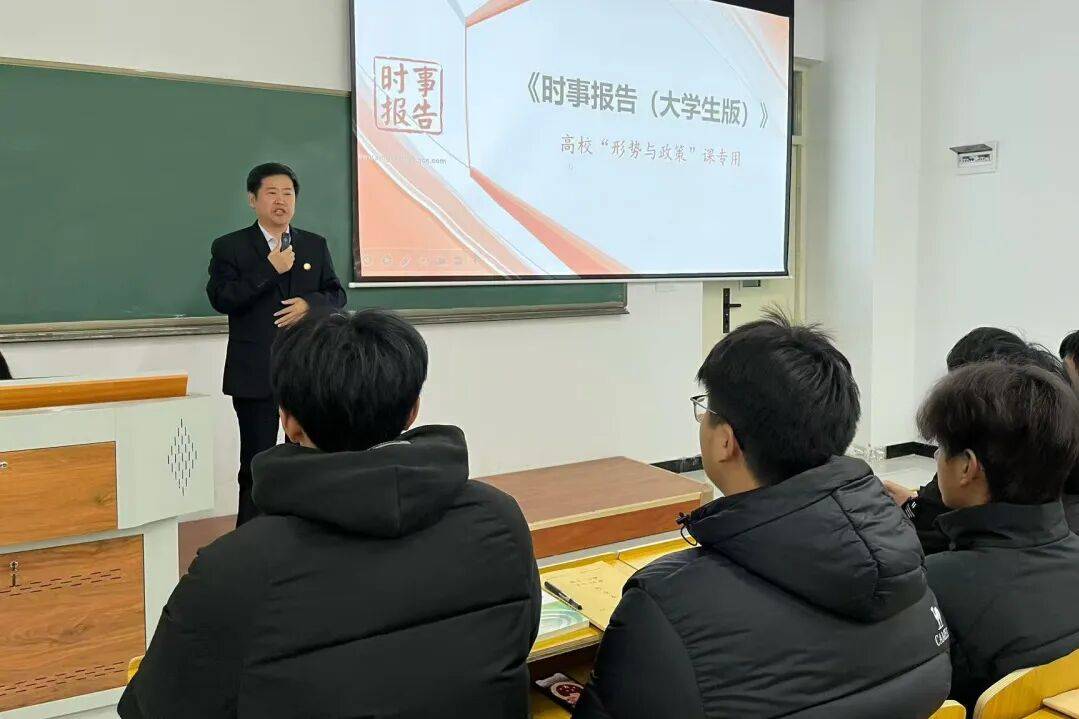
校党委书记王永全主讲专题思政课 引导学子正确认识中国经济形势
Sou Hu Cai Jing· 2025-12-18 04:42
Group 1 - The core theme of the lecture is the importance of correctly understanding China's economic hot issues, emphasizing the strategic deployment of promoting high-quality economic development and constructing a new development pattern as outlined in the 20th National Congress of the Communist Party of China [3] - The current period is critical for optimizing economic structure and transforming development momentum, with a focus on new productive forces, integration of the big health industry, and upgrading consumption quality, which are key areas for national development and personal value realization for youth [3] Group 2 - The integration of industry and education is highlighted as a crucial link to address economic hot issues and cultivate professional talent, particularly in the context of the food-related specialties [5] - Trends in the big health sector, such as smart health services, elderly health care, and community health management, require collaboration among schools, enterprises, and job positions to overcome talent bottlenecks [5] - The school's ongoing deepening of the industry-education integration model serves as an important bridge to meet economic demands and deliver high-quality talent [5]
牢牢把握“五个必须”的规律性认识
Xin Hua She· 2025-12-16 00:54
实践发展每前进一步,理论创新就前进一步。党的十八大以来,面对严峻复杂的国际环境和艰巨繁重的 国内改革发展稳定任务,以习近平同志为核心的党中央坚持和加强党对经济工作的全面领导,不断深化 对经济工作的规律性认识,提出一系列新理念新思想新战略,引领我国经济发展取得历史性成就、发生 历史性变革。实践充分证明,以习近平经济思想为科学指引,持续深化对经济发展规律的认识和把握, 是做好经济工作、推动中国经济航船行稳致远的制胜关键。中央经济工作会议提出的"五个必须"紧密联 系、相互贯通,是认识与实践的有机统一,既与此前关于经济工作的经验总结一脉相承,又与时俱进、 创新发展,是习近平经济思想的进一步丰富和发展,为做好当前和今后一个时期的经济工作提供了思想 指引和行动指南。 做好新形势下经济工作,必须充分挖掘经济潜能。我国是一个超大规模经济体,拥有14亿多人口,稳居 全球制造业第一大国、全球第二大消费市场。中国特色社会主义制度优势、超大规模市场优势、完整产 业体系优势、丰富人才资源优势等多重优势长期积累、持续叠加,构筑起进一步推动经济高质量发展的 坚实底盘。要坚持扩大内需这个战略基点,大力提振消费,扩大有效投资,坚决破除阻碍全国 ...
人民日报评论员:着眼全局把握明年经济工作的总体要求和政策取向
Xin Hua She· 2025-12-14 11:20
人民日报12月15日刊发评论员文章,题目为《着眼全局,把握明年经济工作的总体要求和政策取向—— 论学习贯彻中央经济工作会议精神》。全文如下: 会议明确明年经济工作的政策取向,指出"坚持稳中求进、提质增效,发挥存量政策和增量政策集成效 应,加大逆周期和跨周期调节力度",这将有力引导经济社会发展预期,有助于充分释放和提升宏观政 策效能。对明年财政政策和货币政策定调,要求继续实施更加积极的财政政策,继续实施适度宽松的货 币政策,这与今年的政策取向一以贯之,体现了宏观政策的连续性、稳定性,是不断巩固拓展经济稳中 向好势头的重大决策部署。 今年以来,从安排1.3万亿元超长期特别国债加力支持"两重""两新",到创设和实施多项结构性货币政 策工具为科技创新、提振消费等提供助力,再到强化宏观政策民生导向、使更多资金资源"投资于 人"……一项项政策因时酝酿、因势推出、协同发力,激发出经济高质量发展的强劲动能。实践充分证 明,有效的宏观政策、精准的宏观调控,对于促进我国经济平稳健康发展至关重要。 把握明年经济工作的政策取向,一个重要方面就是"提质增效"。既坚持积极务实的目标导向,把握好政 策实施的力度、节奏和时机,发挥"集成效应 ...