绿色经济

Search documents
10万亿消费潜力激活!涨工资不是口号,2026经济转轨改写收入格局
Sou Hu Cai Jing· 2026-01-06 05:43
Economic Policy Shift - The central economic work conference in December 2025 announced a shift from encouraging income growth to implementing a specific plan for increasing urban and rural residents' income, marking a significant policy change [1] - The new policy aims to address the long-standing issue of low resident income as a percentage of GDP, which has hindered economic growth [3] Investment and Consumption Trends - Fixed asset investment in China decreased by 2.6% in the first 11 months of 2025, with real estate development investment plummeting by 15.9%, indicating a shift in economic drivers from investment and exports to consumption [3] - The consumer spending rate in China stands at 39.9%, significantly lower than the average of 54% in developed countries, suggesting a substantial potential for consumption growth [5] Wage Increases and Employment Dynamics - Minimum wage standards in provinces like Shanxi and Sichuan were raised by 8% to 12%, while major companies like ByteDance and JD Technology implemented aggressive salary increases, with JD reporting an average salary hike of 20% [6] - The wage increase trend is skewed towards low-income workers and those with critical skills, while high-paying sectors like finance and real estate show little to no wage growth [8] Urban-Rural Income Disparity - The income disparity between urban and rural residents remains significant, with urban disposable income at 42,991 yuan compared to 17,686 yuan for rural residents, leading to a ratio of 2.43:1 [10] - Efforts to increase rural income through land reform and market access face challenges due to existing structural barriers [10] Consumer Behavior and Economic Stimulus - A high savings rate persists among residents, with 65% of new disposable income allocated to savings or debt repayment, and only 12% directed towards consumption [12] - Policy measures include lowering LPR rates to ease mortgage burdens and providing consumption and childbirth subsidies to stimulate spending [12] Geographic and Sectoral Disparities - The distribution of income growth is uneven, with significant differences in housing market dynamics between tier-3 cities and major urban centers like Shenzhen [14] - The survival of small and medium enterprises is under pressure due to rising social security costs and reduced funding, leading to potential market consolidation [14]

亚太经济:在不确定性中巩固增长韧性
Xin Lang Cai Jing· 2026-01-05 20:49
Group 1 - The Asia-Pacific region is expected to show resilience in economic performance despite facing increased uncertainty from global monetary policy adjustments, geopolitical tensions, extreme weather, trade protectionism, and financial market volatility. The IMF forecasts a growth rate of 4.5% for 2025, slowing to 4.1% in 2026 [1][2] - The region's economic growth is supported by a well-established manufacturing system, a large consumer market, and strategic advantages in global shipping, which have been developed over the past 30 years [1] - The World Bank indicates that the economic growth rate in East Asia and the Pacific remains above the global average, highlighting the region's importance in global economic growth [1] Group 2 - Economic disparities within the Asia-Pacific region are becoming more pronounced, with different economies relying on varying degrees of policy adjustments and structural reforms, leading to differentiated benefits from the ongoing industrial chain restructuring [2] - China continues to lead as a major economy, maintaining stable growth and contributing positively to global economic growth, while Japan's recovery is supported by mild inflation and improved corporate profits, despite long-term challenges from an aging population [2] - Southeast Asian economies are projected to grow at 4.5% in 2025, driven by resilient domestic demand, tourism recovery, and investment, although external trade tensions remain a significant concern [3] Group 3 - The Asia-Pacific economy is expected to maintain a relatively leading position in the global economy in 2026, with growth increasingly dependent on policy coordination and the effectiveness of structural reforms [3][4] - Digital transformation, green economy initiatives, and infrastructure development are identified as key drivers for sustained economic growth in the region, enhancing production efficiency and market scale [3] - Challenges such as potential low-speed global economic growth, rising debt levels, and climate risks are anticipated to test fiscal and social governance capabilities in the region [4][5]
河南省栾川县“两山”发展指数研究项目成果发布
Zhong Guo Huan Jing Bao· 2026-01-04 08:40
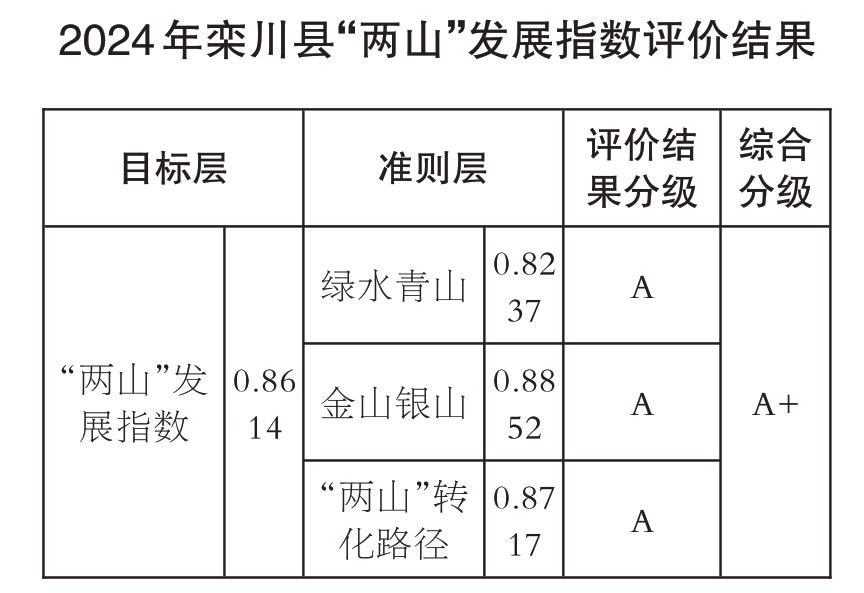
Core Insights - The "Two Mountains" development index project in Luanchuan County, Henan Province, successfully passed its final evaluation, achieving an A+ rating, which reflects the county's strong performance in environmental quality, ecological status, and innovation in governance [1][3]. Group 1: Evaluation and Results - The evaluation committee, consisting of seven experts including two academicians, unanimously agreed on the project's success and recognized the comprehensive evaluation level of A+ for Luanchuan County's "Two Mountains" development index [1]. - The index showed an improvement from 0.8014 in 2021 to 0.8614 in 2024, maintaining a rating in the "excellent" range of 0.8-1.0 for four consecutive years, indicating significant achievements in balancing ecological protection with socio-economic development [3]. Group 2: Evaluation Framework - A comprehensive evaluation system was developed, focusing on three core goals: "Green Water and Green Mountains," "Golden Mountains," and "Two Mountains Transformation Path," which includes 12 criteria and various indicators covering multiple dimensions such as environmental quality, resource conservation, and social benefits [2]. - Specific indicators tailored to Luanchuan's dual characteristics as an "ecological highland" and "mining heavy area" were introduced, allowing for a detailed assessment of the county's "Two Mountains" practices [2]. Group 3: Strategic Initiatives - Luanchuan County has implemented a series of initiatives since being designated as a national "Green Water and Green Mountains" practice innovation base in 2018, focusing on ecological industry, tourism, agriculture, and environmental construction [4]. - The county aims to enhance environmental quality, with air quality and surface water consistently meeting high standards, and has achieved 100% safety in drinking water sources [5]. Group 4: Economic and Industrial Development - The county is accelerating the construction of a green economy system, with a focus on transforming ecological value into economic and social value, exemplified by the development of a comprehensive tourism framework and the promotion of high-end homestay industries [6]. - Luanchuan is also optimizing its mining structure and promoting green transformation, achieving significant progress in ecological restoration and resource utilization [6]. Group 5: Institutional Framework and Future Plans - A robust institutional framework has been established to support ecological civilization, including leadership and coordination bodies, and mechanisms for ecological protection and responsibility assessment [6]. - The county plans to use the "Two Mountains" development index as a core tool for ongoing evaluation and policy calibration, aiming to continuously improve ecological quality and broaden the transformation pathways [7].
KBR授权绿色甲醇技术装备
Zhong Guo Hua Gong Bao· 2026-01-04 02:51
Core Viewpoint - KBR has authorized its green methanol technology and related equipment for a biochemicals project in Saudi Arabia, marking a significant step for green energy development in the Middle East [1] Group 1: Company Overview - KBR is a leading global player in the engineering, procurement, and construction (EPC) sector [1] - The company's green methanol technology has been validated through long-term practice, demonstrating strong competitiveness in both economic and environmental aspects [1] Group 2: Project Details - The biochemicals project will utilize biomass as raw material and employ KBR's advanced green methanol production technology to achieve low-carbon methanol production [1] - The technology authorized by KBR not only offers high conversion efficiency but also significantly reduces carbon emissions during the production process [1] Group 3: Industry Impact - This collaboration is expected to enhance Saudi Arabia's green methanol production capacity and contribute to the optimization of the regional energy structure [1] - The partnership aligns with global energy transition trends and Saudi Arabia's push for a green economy [1]
RCEP为全球多边合作提供示范样本
Sou Hu Cai Jing· 2026-01-01 23:00
Core Viewpoint - The Regional Comprehensive Economic Partnership (RCEP) has significantly contributed to regional integration, economic growth, and global economic confidence since its implementation on January 1, 2022, amidst rising unilateralism and geopolitical tensions [1] Trade and Investment - RCEP has enhanced trade resilience within the region, with the total goods trade volume expected to reach $5.83 trillion in 2024, marking an 18.7% increase from 2021, and accounting for 29.1% of global goods trade [2] - China's trade with RCEP member countries constitutes over 30% of its total imports and exports, with trade value reaching 12.54 trillion yuan in 2025, including 6.82 trillion yuan with ASEAN, reflecting an 8.5% year-on-year growth [2] Economic Cooperation and Supply Chain - RCEP has simplified customs procedures and enhanced trade facilitation, surpassing the WTO's Trade Facilitation Agreement, which has improved trade liberalization benefits [3] - The agreement has led to a significant increase in foreign direct investment (FDI) inflows, projected to reach $320 billion in 2024, with RCEP countries attracting over 30% of global FDI [4] - The implementation of RCEP has fostered deeper integration of supply chains, allowing for more efficient production networks and a new ecosystem of regional manufacturing and sales [4][5] Multilateral Cooperation - RCEP serves as a model for multilateral cooperation, balancing economic integration with political diversity, and providing a pragmatic framework for global economic collaboration [6] - The agreement's inclusivity has attracted interest from additional economies, with formal applications for membership from Hong Kong, Sri Lanka, and Chile [6] China's Role - As the largest economy in RCEP, China plays a crucial role in promoting high-level compliance, enhancing connectivity, and facilitating mechanism construction [7] - China aims to transition RCEP from a focus on "scale advantages" to "quality advantages," emphasizing internal deepening, new area expansion, and external enlargement [8]
打造国际绿色经济标杆城市 解读北京的“绿色新风口”
Xin Jing Bao· 2025-12-31 16:04
Group 1 - The core viewpoint of the article emphasizes Beijing's commitment to developing a green economy, aiming to become an "international benchmark city for green economy" through various initiatives [1] - The article outlines three main dimensions of Beijing's strategy: policy support, technological advancements, and market empowerment, which are essential for fostering the green economy [1] - The focus on cultivating new industry clusters and improving policy standards is highlighted as a key part of Beijing's approach to achieving its green economic goals [1] Group 2 - The article mentions the emergence of new growth points such as hydrogen energy and energy storage, which are expected to contribute significantly to the potential of Beijing's green economy in the coming years [1] - Continuous breakthroughs in green technologies are anticipated to further enhance the capabilities and opportunities within Beijing's green economic landscape [1]
世界经济论坛预测:2030年绿色经济效益将超7万亿美元
Zhong Guo Hua Gong Bao· 2025-12-31 03:47
Core Insights - The World Economic Forum (WEF) has released a report on the growth of green economic benefits, highlighting how leading companies convert green market participation into competitive advantages [1] - The growth of the green economy has generated over $5 trillion in annual benefits for businesses across various sectors, with expectations to exceed $7 trillion by 2030, presenting growth opportunities for global enterprises [1] - The growth rate of green revenues is twice that of traditional revenues, with companies generating green income performing better on multiple financial metrics, including lower capital costs and higher valuations [1] Technology Cost Trends - Since 2010, the technology costs for solar photovoltaics and lithium batteries have decreased by approximately 90%, while offshore wind technology costs have dropped by about 50%, enhancing global cost competitiveness [1] - However, technologies such as low-carbon hydrogen and carbon capture, utilization, and storage (CCUS) remain high-cost and require significant support for advancement [1]
准格尔旗煤炭“变形记”:矿山长出绿色经济,煤废实现价值裂变
Xin Lang Cai Jing· 2025-12-30 00:26
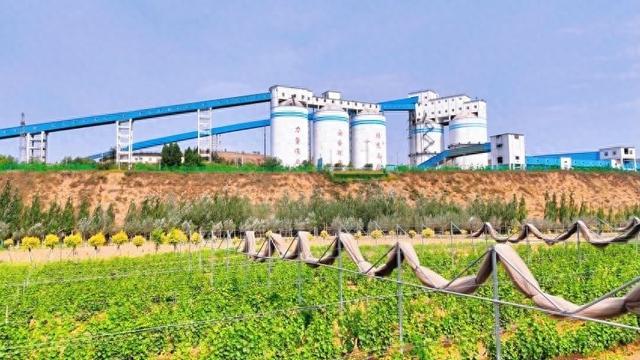
Core Viewpoint - The coal industry in the coal-producing county of Zhugeerqi is undergoing a comprehensive transformation, focusing on sustainable development and value creation through intelligent and green practices [1][3][15]. Group 1: Industry Transformation - Zhugeerqi, with a population of less than 400,000, plays a crucial role in supplying energy to 25 provinces and regions in China, with coal stability being a key pillar of its development [3]. - The region is implementing intelligent upgrades in coal mining, with robots monitoring underground conditions and enhancing safety and efficiency [4][6]. - The Inner Mongolia Energy Group's new power plant aims to achieve a breakthrough in energy efficiency, consuming only 274 grams of coal to generate one kilowatt-hour of electricity, which is about 10% less than the national average [17][18]. Group 2: Smart Mining Practices - The Dafenpu coal mine has undergone significant intelligent transformation since 2022, achieving an 80% level of overall intelligence in operations, which enhances both safety and production efficiency [8][9]. - The implementation of smart systems allows for remote monitoring and control of mining operations, reducing the need for on-site personnel and improving operational efficiency [6][8]. Group 3: Waste Utilization and Value Creation - Companies like Yuhua New Technology Materials are transforming industrial waste, such as fly ash, into high-value products like grinding balls, significantly increasing their market value from under 100 yuan per ton to between 6,500 and 8,500 yuan [11][13]. - The region is addressing the challenge of coal waste management by developing new materials and products from coal by-products, contributing to a circular economy [14][19]. Group 4: Green Mining Initiatives - The Dafenpu coal mine has been recognized as a national-level green mine, focusing on ecological restoration and sustainable agricultural practices alongside coal production [19][22]. - The establishment of the Inner Mongolia Liangyun Agricultural Development Company reflects the commitment to sustainable practices, with initiatives to plant economic trees and create a modern ecological agricultural landscape [19][23]. - Zhugeerqi is positioning itself as a model for resource-based cities to achieve green, efficient, and sustainable development, with multiple green mines contributing to the local ecosystem [22][23].
2025,我见证的“中国主场”(2025年终特别报道)
Ren Min Ri Bao Hai Wai Ban· 2025-12-29 22:47
Group 1 - In 2025, China showcased its openness and development through high-profile diplomatic activities and significant initiatives, engaging overseas Chinese in these moments [1] - The 9th Asian Winter Games in Harbin served as a platform for overseas Chinese to witness their hometown's development and express cultural identity [2][3] - The Shanghai Cooperation Organization summit in Tianjin established six practical cooperation platforms, enhancing opportunities for overseas Chinese in various sectors [4] Group 2 - The 80th anniversary of the victory in the Anti-Japanese War highlighted the historical sacrifices of overseas Chinese, fostering a sense of pride and security among them [6] - The China International Import Expo (CIIE) has evolved into a vital channel for Thai businesses to enter the Chinese market, emphasizing technology and future trends [8] - The 15th National Games showcased China's sports development and fostered a sense of national pride among overseas Chinese [11][12] Group 3 - The official launch of the Hainan Free Trade Port marks a significant opportunity for overseas Chinese businesses, promoting free trade and resource integration [15][16]
他们从“干点不一样的”那颗初心出发
Ren Min Wang· 2025-12-29 01:13
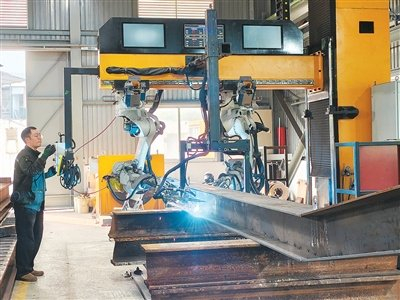
Group 1: Economic Transformation in Hong Kong - Hong Kong is experiencing an economic transformation with companies focusing on quality improvement and efficiency in sectors like cultural creativity, technology, and green economy [2] - The concept of "谷子经济" (Goods Economy) is emerging, emphasizing consumer emotional value and the willingness to pay for personalized experiences [3] Group 2: Innovative Business Models - A restaurant owner successfully increased revenue by collaborating with a game IP agent to create a themed dining experience, demonstrating the potential of emotional value in consumer spending [3] - The introduction of smart welding technology at a steel company has improved production efficiency and reduced the average age of skilled workers from 55 to the 30s, addressing the shortage of skilled labor [4] Group 3: Sustainable Agriculture Practices - A farm in Hong Kong utilizes a unique method of producing organic vegetables without pesticides or chemical fertilizers, converting food waste into nutrient-rich solutions for crops [5][6] - The partnership between the farm and a major food group has led to a reduction of approximately 24 tons of greenhouse gas emissions, showcasing the benefits of local production and sustainable practices [5][6] Group 4: Market Trends in Health-Conscious Consumption - There is a growing consumer demand for healthy food products, particularly those grown without pesticides or chemical fertilizers, indicating a trend towards sustainable agriculture in Hong Kong [7] - The local agricultural sector is well-positioned to innovate and promote green products due to a robust food waste recycling system and a focus on low-carbon practices by businesses [7]