美联储缩表

Search documents
10月美联储议息会议点评:降息如期落地,美联储“放鹰”后宽松路径存疑
Dongguan Securities· 2025-10-30 09:29
Monetary Policy Changes - The Federal Reserve lowered the federal funds rate target range by 25 basis points to 3.75% to 4.00%, marking the fifth rate cut since September 2024[3] - The decision to cut rates was influenced by moderate economic expansion, a slight increase in unemployment, and rising inflation rates[3] - The FOMC plans to end its balance sheet reduction on December 1, 2025[3] Internal Disagreements - There were dissenting votes from two committee members: Stephen Milan advocated for a 50 basis point cut, while Jeffrey Smith preferred to maintain the current rate[3] - Chairman Powell indicated significant internal disagreement regarding future rate cuts, stating that December's decision is not guaranteed[3] Economic Outlook - Recent CPI data showed lower-than-expected inflation, which may facilitate further rate cuts[3] - The focus remains on employment data, with expectations that the Fed may continue to cut rates if the job market continues to weaken[3] Market Reactions - Following Powell's comments, market expectations for a December rate cut dropped from 90% to around 60%[3] - Short-term impacts on asset performance are anticipated, with potential negative effects on gold and U.S. equities due to reduced rate cut expectations[3] Risks and Considerations - Risks include global economic uncertainties, trade tensions, and the potential for inflationary pressures to re-emerge in 2026[4] - The domestic market may face challenges from the Fed's hawkish stance, affecting equity market performance[4]
美联储那些事儿:美联储议息会议:预期分歧凸显
Ping An Securities· 2025-10-30 09:15
1. Report Industry Investment Rating - Not provided 2. Core Viewpoints - In the October 2025 meeting, the Fed cut interest rates by 25BP, lowering the policy rate to 3.75 - 4%, with two dissenting votes. The Fed also decided to end quantitative tightening (QT) in December [2]. - There are strong differences among Fed members regarding further rate cuts in December. The current rate is between 3 - 4%, close to most members' estimates of the neutral rate, leading to the divergence [2]. - The Fed's decision to end QT from December is due to factors such as the low ratio of reserve scale to GDP and signs of pressure on funding prices. Ending QT may bring downward pressure on interest rates and steepen the yield curve, but the impact may be limited [2][3]. - After the meeting, U.S. Treasury yields rose, the dollar index strengthened, and U.S. stocks were under pressure. Looking ahead, U.S. Treasury yields may face further upward pressure, and the possibility of a rate cut in December remains uncertain [3][4]. 3. Summary by Related Content Fed Meeting Decisions - In the October 2025 meeting, the Fed cut the policy rate by 25BP to 3.75 - 4%. Two members dissented: one advocated a 50BP cut, and the other opposed the cut. The Fed also decided to end QT on December 1 [2]. Reasons for Fed Divergence - Members have strongly differing views on further rate cuts in December. The current rate is in the 3 - 4% range, close to most members' estimates of the neutral rate. Some members think it's time to pause and observe the job market, while others advocate further rate cuts. This divergence was also shown in the September dot - plot [2]. Reasons for Ending QT - The ratio of reserve scale to GDP has dropped to 9.6%, a multi - year low. There are signs of pressure on funding prices, and the usage of the Fed's Standing Repo Facility (SRF) has increased significantly. The Fed's decision to end QT aims to make the weighted average duration of its investment portfolio closer to the market's [2]. Impact of Ending QT - Ending QT may lead to downward pressure on interest rates and a steeper yield curve, but the impact may be limited. Referring to previous events, the decline in 10Y U.S. Treasury yields was around 4BP and 7BP respectively, but the bond market may have been more influenced by other factors at that time [3]. Post - meeting Asset Price Movements - After the meeting, 2Y and 10Y U.S. Treasury yields rose by 9.4BP and 7.3BP respectively to 3.6% and 4.07%. The dollar index rose above 99 points, and U.S. stocks were under pressure [3]. Future Outlook - U.S. Treasury yields may face further upward pressure due to the improvement in recent employment data and the uncertainty of a rate cut in December. The market's pricing of a December rate cut may be relatively high [4].
美联储10月议息会议点评:鲍威尔一贯审慎,12月降息或不会改变
CAITONG SECURITIES· 2025-10-30 06:31
1. Report Industry Investment Rating - Not provided in the given content 2. Core Viewpoints of the Report - The Fed's interest rate cut of 25bp at the FOMC meeting and the announcement to stop balance - sheet reduction in December were in line with market expectations for the former and slightly exceeded expectations for the latter. However, there were still internal differences within the Fed, and Powell's speech was hawkish, leading to a bear - flattening of US Treasuries, a stronger US dollar, and a weaker US stock market. In the short term, the 10 - year US Treasury yield may fluctuate between 3.8% - 4.2%, and the US dollar index may fluctuate between 97 - 100. In the long run, as the US government shutdown prolongs and economic uncertainty rises, the probability of a December rate cut by the Fed remains high, with a bull - steepening of US Treasuries and a weakening US dollar as the general trend. The RMB exchange rate can be viewed optimistically, and the autonomy of domestic monetary policy and Chinese bonds has increased, keeping the domestic bond market in a favorable position [2]. - The tone of the FOMC resolution was mild, but internal differences intensified. The description of economic growth was adjusted, and two governors voted against the resolution, with different stances on rate cuts. The market reaction was mild within five minutes after the resolution was issued [2][5]. - Powell's speech at the press conference was hawkish, emphasizing the uncertainty of a December rate cut. The market began to trade based on this expectation, with stock prices falling, bond yields rising, and the US dollar strengthening [2][17]. - In the short term, US Treasuries may show a bear - flattening trend, and the US dollar will strengthen. For China, the possibility of a rate cut in the fourth quarter is low, and the domestic bond market is in a favorable position [2][20]. 3. Summary According to the Directory 3.1 What to Focus on in the Fed's Interest Rate Meeting 3.1.1 The FOMC Resolution's Tone was Mild, but Differences Increased - In October 2025, compared with September, the FOMC resolution had four key points: the description of economic growth was adjusted, more time limits were added, two governors voted against the 25bp rate cut, and the balance - sheet reduction would stop in December [5]. - The market had fully priced in the 25bp rate cut in October, but the more rigorous description of the fundamentals and the opposing votes indicated intensified internal differences within the FOMC [8]. - The suspension of balance - sheet reduction may be due to the increase in fiscal deposits and short - term debt issuance since July. It is estimated that this will lower the 10 - year Treasury rate by 1 - 2 basis points at the central level and 6 - 8 basis points at the peak [11]. - The market reaction was mild within five minutes after the resolution was issued, with the S&P 500 falling 0.11%, the 2 - year US Treasury yield down 0.61BP, the 10 - year US Treasury yield down 0.38BP, spot gold rising, and the US dollar index weakening slightly [11]. 3.1.2 The Press Conference Speech was Hawkish, Emphasizing the Divergence in the December Rate - Cut Path - Powell emphasized that there were strong differences within the committee regarding the December rate - cut decision. He also mentioned that a government shutdown leading to data delays would create high economic uncertainty, justifying a pause in rate cuts [17]. - The Fed has cut rates by 150 basis points so far in this cycle, and most voting members' estimates of the neutral rate are between 3% - 4%. In December, maturing securities will be rolled over in the form of short - term Treasuries to avoid exacerbating liquidity shortages [17]. - The market started to trade the expectation of no December rate cut after Powell's speech, with the S&P 500 falling 0.26%, the 2 - year US Treasury yield rising 5.11BP, the 10 - year US Treasury yield rising 3.08bp, spot gold prices falling, and the US dollar index rising 0.34% [19]. 3.2 How to View the Market - In the short term, the US Treasury yield curve may show a bear - flattening trend, with the 2 - year US Treasury rate expected to fluctuate between 3.44% - 3.84% and the 10 - year US Treasury rate between 3.81% - 4.21% [20]. - In the short term, the US dollar index may remain strong, fluctuating between 97 - 100, due to positive news on the Sino - US trade agreement and the unclear December rate - cut path of the Fed [20]. - In the medium term, Fed easing is still likely, with a bull - steepening of US Treasuries and a weakening US dollar as the general trend [20]. - For China, the possibility of a rate cut in the fourth quarter is low. The Chinese bond market is expected to perform well, and a long - position mindset is recommended [20].
美联储宣布10月降息和12月结束缩表,称12月降息并非板上钉钉
SPDB International· 2025-10-30 05:20
Monetary Policy Decisions - The Federal Reserve announced a 25 basis point rate cut in October and plans to end balance sheet reduction in December[1] - The December rate cut is not guaranteed, with the Fed emphasizing the need to monitor upcoming data post-government shutdown[2] Economic Indicators - Core inflation, excluding tariff impacts, is nearing the 2% target, with the core PCE expected to be in the range of 2.3%-2.4%[3] - Recent employment data indicates a cooling labor market, but the trend of weakness has not intensified[3] Internal Disagreements - There remains internal dissent within the Fed, with two members voting against the 25 basis point cut, advocating for a 50 basis point reduction instead[2] - The division among Fed members adds uncertainty to the December rate decision[2] Data Dependency - The upcoming release of economic data following the government shutdown will be crucial for the December monetary policy meeting[3] - The lack of government data during the shutdown has created a vacuum that private sector data cannot fill[3] Risks and Considerations - Risks include potential inflation from rapid rate cuts or renewed tariffs, and slower cuts could lead to economic recession[3]
【广发宏观陈嘉荔】美联储12月会继续降息吗?停止缩表的考量是什么?
郭磊宏观茶座· 2025-10-30 04:46
Core Viewpoint - The Federal Reserve's recent decision to lower the federal funds rate by 25 basis points to a range of 3.75%-4% is seen as a response to economic conditions, with market focus shifting towards guidance for December's rate decisions and the end of the balance sheet reduction plan [1][8]. Summary by Sections Federal Reserve Rate Decision - The Federal Open Market Committee (FOMC) voted to reduce the federal funds rate by 25 basis points, marking the second rate cut since the resumption of easing in September 2025 [1][8]. - Stephen Miran, a board member, voted against the decision, advocating for a 50 basis point cut, but this view did not gain widespread support [1][8]. FOMC Statement and Economic Indicators - The FOMC statement indicated that economic activity is expanding at a moderate pace, with a slight adjustment in language regarding employment risks, suggesting a softening labor market despite data gaps due to government shutdowns [2][10]. - The FOMC announced the end of the balance sheet reduction (QT) starting December 1 and will reinvest proceeds from mortgage-backed securities (MBS) into U.S. Treasury bills [2][10]. Powell's Press Conference Insights - Jerome Powell's comments reflected a hawkish stance regarding potential rate cuts in December, highlighting significant internal disagreements within the Fed about the direction of monetary policy [3][12]. - Powell acknowledged a slowdown in job growth, attributing part of this to a decline in labor force growth, while maintaining an optimistic view on inflation, estimating core inflation to be around 2.2%-2.3% when excluding tariff impacts [3][15]. Balance Sheet Reduction and Market Liquidity - Powell emphasized that the Fed would halt balance sheet reduction when bank reserves exceed the level deemed "ample," noting rising repo rates and increased use of the standing repo facility (SRF) as indicators of liquidity pressures [4][16]. - The Fed's experience from the September 2019 liquidity crisis informs its current approach, as it seeks to avoid a repeat of that situation by monitoring liquidity conditions closely [5][18]. Market Reactions and Economic Outlook - Following the FOMC meeting, market expectations for a December rate cut decreased, with a two-thirds probability now estimated based on futures markets [7][37]. - U.S. Treasury yields rose, with the 10-year yield increasing by 9 basis points to 4.07% and the 2-year yield rising by 12 basis points to 3.59%, reflecting a repricing of short-term policy expectations [7][37].


宽松还有空间——10月美联储议息会议解读
CAITONG SECURITIES· 2025-10-30 02:39
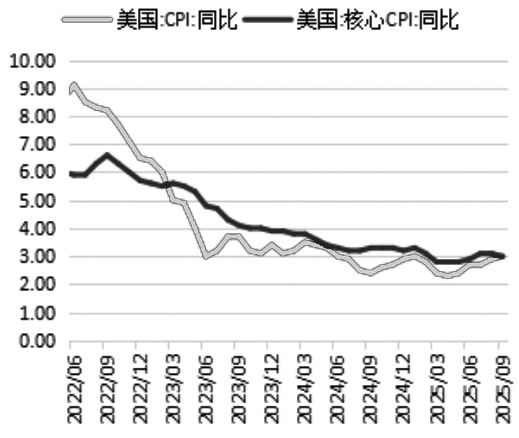
Group 1: Monetary Policy Decisions - The Federal Reserve lowered the interest rate by 25 basis points to a target range of 3.75%-4%[4] - The Fed will stop balance sheet reduction on December 1, gradually replacing MBS with short-term Treasury bonds[4] - There is internal disagreement within the Fed regarding rate cuts, with one member advocating for a 50 basis point cut[4] Group 2: Economic Indicators - Employment risks are rising, with the unemployment rate increasing to 4.3% in August, the highest since late 2021[8] - Inflation remains elevated, with the core CPI falling by 0.1 percentage points to 3% in September[8] - Economic growth is described as expanding at a moderate pace, a revision from previous assessments of slowing growth[13] Group 3: Market Reactions and Expectations - Market expectations for a December rate cut have dropped significantly from over 90% to below 60%[14] - The lack of recent economic data due to government shutdowns is causing uncertainty in Fed decision-making[14] - The stock market indices fell, while bond yields rose and the dollar index increased following the Fed's announcements[14] Group 4: Risks and Outlook - Risks include potential unexpected increases in inflation and tighter monetary policy from the Fed[14] - The overall economic outlook suggests a continued weakening in the labor market and consumer spending due to tariffs and economic uncertainty[13]
美联储如期降息25个基点并将结束缩表,内部分歧进一步加剧
Bei Ke Cai Jing· 2025-10-30 02:06
Core Points - The Federal Reserve announced a 25 basis point reduction in the federal funds rate target range to between 3.75% and 4%, marking the fifth rate cut since September 2024 [1] - There is significant internal disagreement within the Federal Reserve regarding monetary policy direction, with two committee members voting against the rate cut [1] - The Federal Reserve will end its balance sheet reduction (quantitative tightening) starting December 1, 2023, ceasing the monthly reinvestment of maturing U.S. Treasury securities [2] Group 1 - The Federal Reserve's decision to cut rates is a response to dual risks facing the U.S. economy, including rising inflation and slowing employment growth [3][4] - The language in the Federal Reserve's statement remained largely unchanged from September, indicating a cautious approach to economic conditions [3] - Market expectations for a rate cut in December have decreased significantly following the recent meeting, reflecting uncertainty about future economic data availability [6][7] Group 2 - The decision to halt balance sheet reduction is aimed at stabilizing money market rates amid signs of tightening liquidity and declining bank reserves [2][7] - The potential impact of the ongoing government shutdown on short-term economic growth is a concern, with implications for future monetary policy decisions [4][5] - Analysts suggest that the Federal Reserve's approach to rate cuts may evolve over the coming months, influenced by economic data and market conditions [6][7]
鲍威尔放鹰,12月降息“难说”
HUAXI Securities· 2025-10-30 01:32
Group 1: Federal Reserve Actions - The Federal Reserve lowered the interest rate by 25 basis points to a range of 3.75-4.0% on October 30, 2025[1] - Market expectations for a December rate cut dropped from approximately 90% to 63% following Powell's hawkish statements[2] - The Fed will cease its balance sheet reduction starting December 1, allowing $35 billion in MBS to mature and reinvesting the proceeds into Treasury bonds[2] Group 2: Economic Indicators and Risks - Employment growth has slowed, and the unemployment rate has slightly increased, indicating rising downside risks to employment[1] - Inflation has shown signs of rising, with recent indicators suggesting a potential upward trend in inflation risks[6] - The market anticipates a policy rate of about 3.08% by the end of 2026, compared to the Fed's September dot plot estimate of 3.4%[6] Group 3: Divergence in Fed Opinions - Two dissenting votes were recorded in the recent Fed meeting, with one member advocating for a 50 basis point cut and another supporting no change[3] - The divergence in opinions among Fed members reflects uncertainty regarding future rate cuts, with some members preferring to wait for more data[3] Group 4: Market Reactions - Following Powell's hawkish remarks, the 2-year Treasury yield rose by approximately 10 basis points to 3.6%, and the 10-year yield increased by about 9 basis points to around 4.07%[4] - The S&P 500 index initially fell by 0.77% but later recovered some losses, while the dollar index briefly rose by 0.4%[4]
美联储降息25个基点 宣布12月1日结束缩表
Zhong Jin Zai Xian· 2025-10-30 01:29
Core Points - The Federal Reserve announced a 25 basis point cut in the federal funds rate target range to 3.75% to 4.00%, marking the second rate cut in 2025 and the second consecutive cut since September this year [1][2] - The decision reflects a cautious approach after eight months of maintaining rates to assess the impact of tariffs and policy adjustments on the economy [1] - The Fed's statement highlighted that economic activity is expanding at a moderate pace, with employment growth slowing and a slight increase in the unemployment rate, although it remains low [1][2] Economic Outlook - The Federal Open Market Committee (FOMC) noted high uncertainty in the economic outlook and acknowledged rising downside risks to employment in recent months [2] - The FOMC reiterated its commitment to achieving maximum employment and returning inflation to the 2% target, leading to the decision to lower the federal funds rate [2] Future Policy Considerations - The FOMC will carefully evaluate the latest data, changes in economic outlook, and risk balance when considering further adjustments to the target range [3] - The committee plans to end the reduction of its overall securities holdings on December 1, with reinvestment of mortgage-backed securities' principal into short-term Treasury bonds [3] - The FOMC's assessments will consider a wide range of information, including labor market conditions, inflation pressures, and developments in financial and international situations [3]
美联储“盲飞”降息引发政策风险
Qi Huo Ri Bao Wang· 2025-10-30 01:09
Core Viewpoint - The Federal Reserve faces unprecedented challenges in formulating monetary policy due to a "data vacuum" caused by the U.S. government shutdown, which has halted the release of critical economic data [1][3][11]. Economic Data Impact - The government shutdown has led to a complete halt in data collection and publication by key departments, including the Labor Statistics Bureau and the Commerce Department, affecting important metrics like non-farm employment and retail sales [1][3]. - Goldman Sachs highlights that prolonged shutdowns can damage data quality, as seen in the 2013 shutdown when only 75% of regular price samples for CPI were collected [3]. Inflation and Employment Signals - Recent economic indicators show a consistent signal of policy direction, with the September Consumer Price Index (CPI) rising 3% year-on-year, below the expected 3.1%, and core CPI also underperforming expectations [4][5]. - The ADP employment report indicates a surprising decrease of 32,000 jobs in September, significantly below the expected increase of 51,000, marking the largest decline since March 2023 [5]. Federal Reserve's Policy Balancing - Fed Chair Powell emphasizes the difficulty of balancing the need to combat inflation while addressing employment market risks, especially in the context of missing key economic data [7][9]. - Powell signals a potential end to the balance sheet reduction policy, which has seen the Fed's assets decrease from approximately $9 trillion to $6.6 trillion since mid-2022 [7]. Divergence in Policy Perspectives - There is a growing divide within the Federal Reserve regarding the pace and extent of potential rate cuts, with some officials advocating for aggressive cuts due to employment market concerns, while others caution against inflation risks [9][10]. - The internal disagreement is exacerbated by the lack of recent official economic data, leading officials to rely on their interpretations of limited information [10]. Market Reactions and Future Outlook - The market has priced in strong expectations for rate cuts, with a 99.9% probability of a 25 basis point cut in October, reflecting concerns over economic growth and inflation dynamics [11][12]. - The 10-year U.S. Treasury yield has dropped below 4% for the first time since last September, indicating market apprehension about economic slowdown and the anticipated rate cuts [12][14]. - The dollar index remains under pressure due to rate cut expectations, while geopolitical risks and global economic uncertainties provide some support, leading to a mixed outlook for the dollar [16].