
行业自律

Search documents
广发证券:玻纤部分企业提价 电子纱价格或结构性提涨
智通财经网· 2025-09-10 08:30
Group 1 - The core viewpoint of the article highlights that several companies in the fiberglass industry have raised prices by 5%-10% due to ongoing losses and factors such as US-China tariffs, indicating initial success in industry self-discipline and a potential increase in profitability for the fiberglass sector [1][2] - The China Glass Fiber Industry Association approved the "Self-Discipline Convention for the Glass Fiber and Products Industry" on December 25, 2024, with nine major companies, including China Jushi and Taishan Fiberglass, committing to this self-regulation [1][2] Group 2 - In the construction materials sector, the demand for retail building materials is recovering, supported by high demand in the second-hand housing market and subsidy policies, with strong resilience observed in leading companies [3] - The national average price of cement has decreased by 0.5% week-on-week, with a current price of 343 RMB/ton, while the cement shipment rate stands at 45.73%, indicating a slight recovery in the market [4] - The average price of float glass has weakened slightly, with a current price of 1190 RMB/ton, while photovoltaic glass prices have increased, reflecting mixed market conditions [5] - The price of direct yarn in the fiberglass/carbon-based composite market remains stable, with electronic yarn prices holding steady, indicating a stable market environment for leading companies [6]

华创证券:反内卷推进下硅料价格报涨 储能板块有望估值修复
智通财经网· 2025-09-08 02:57
Core Viewpoint - The report from Huachuang Securities indicates that the price support from silicon materials is expected to gradually transmit through the industry chain, leading to a recovery in profitability. Additionally, the ongoing anti-involution efforts may result in supply-side policies that optimize the competitive landscape of the photovoltaic industry [1][2]. Silicon Material and Industry Chain - Silicon material prices have increased due to self-discipline within the polysilicon industry and market transactions, with mainstream prices for rod silicon rising to 55 RMB/kg and granular silicon to 49 RMB/kg. The ongoing production limits and sales restrictions are expected to support price transmission and profitability recovery in the industry chain [2]. - The recent bidding prices from China Resources and China Huadian have significantly increased, which may enhance industry confidence if domestic component price increases are realized [2]. Energy Storage Sector - The recent rise in energy storage cell prices indicates strong demand, with mainstream manufacturers seeing price increases of 0.003-0.01 RMB per watt-hour. The production of energy storage cells has reached historical highs since July, with leading manufacturers operating at full capacity [3]. - The global energy storage market is primarily driven by China, Europe, and the United States, with a shift from policy-driven to value-driven demand in the domestic market. The potential for future market growth is significant, especially in Europe and the U.S. [3]. Investment Recommendations - The report suggests focusing on leading companies benefiting from rising silicon material prices and tight supply, including Tongwei Co., Daqo New Energy, and Xiexin Technology [4]. - It also recommends attention to companies involved in N-type technology iterations, such as Longi Green Energy and JinkoSolar, as profitability recovery in the battery and component sectors is anticipated [4]. - For the inverter and energy storage sectors, companies like Sungrow Power Supply and Hiber Technologies are highlighted due to strong overseas demand [4].
两部门:依法治理光伏等产品低价竞争 引导地方有序布局光伏、锂电池产业
Zheng Quan Shi Bao Wang· 2025-09-04 06:31
Core Viewpoint - The Ministry of Industry and Information Technology and the State Administration for Market Regulation have issued an action plan for the electronic information manufacturing industry for 2025-2026, focusing on high-quality development in sectors like photovoltaics while addressing low-price competition [1] Group 1: Industry Development - The plan aims to eliminate "involution" competition and promote high-quality growth in the photovoltaic sector [1] - It emphasizes the need for legal governance of low-price competition in photovoltaic products [1] - Local governments are encouraged to orderly layout the photovoltaic and lithium battery industries and assess production capacity [1] Group 2: Quality Management and Standards - Implementation of quality management for photovoltaic modules and lithium battery products is a key focus [1] - The plan includes the development of a safety recommendation directory for energy storage battery products based on mandatory national standards [1] - Strengthening industry self-regulation through associations and chambers of commerce is supported [1] Group 3: Monitoring and Risk Management - The action plan calls for enhanced monitoring, early warning, and risk alert mechanisms in key industries [1] - There is an emphasis on orderly adjustment of industrial scale to mitigate risks [1]
新能源及有色金属日报:政策预期影响较大,多晶硅盘面偏强运行-20250904
Hua Tai Qi Huo· 2025-09-04 05:59
Group 1: Report Investment Ratings - Industrial silicon: Unilateral - Neutral, no specific ratings for other strategies [2] - Polysilicon: Unilateral - Short - term range operation, no specific ratings for other strategies [5] Group 2: Core Views - Industrial silicon: With stable spot prices, significant supply increase, polysilicon self - disciplined production cuts in September on the consumer side, inventory may start to increase, and the industrial silicon market may experience weak and volatile operations influenced by overall commodity sentiment [2] - Polysilicon: Spot quotes have been raised, downstream product prices have also increased. After self - disciplined production cuts in September, there is a certain reduction in supply, and the supply - demand fundamentals have improved to some extent. The market is greatly affected by anti - involution policies, with large price fluctuations. In the medium - to - long - term, it is suitable to buy on dips [5] Group 3: Market Analysis of Industrial Silicon - Futures: On September 3, 2025, the industrial silicon futures price fluctuated. The main contract 2511 opened at 8520 yuan/ton and closed at 8490 yuan/ton, a change of (-25) yuan/ton or (-0.29)% from the previous settlement. The position of the main contract 2511 was 279742 lots, and the number of warehouse receipts was 50348 lots, a change of 319 lots from the previous day [1] - Supply: Industrial silicon spot prices remained stable. In August 2025, industrial silicon production was 386,000 tons, a 14% month - on - month increase and a 19% year - on - year decrease. From January to August 2025, cumulative production decreased by 20% year - on - year [1] - Consumption: The quoted price of silicone DMC was 10500 - 10800 (-50) yuan/ton. Downstream procurement was cautious due to poor terminal demand, and monomer plants still adopted a strategy of offering discounts to secure orders [1] Group 4: Market Analysis of Polysilicon - Futures: On September 3, 2025, the main polysilicon futures contract 2511 showed a strong and volatile trend, opening at 52000 yuan/ton and closing at 52160 yuan/ton, a 0.34% change from the previous trading day. The position of the main contract was 149210 lots, and the trading volume was 362759 lots [3] - Spot: Polysilicon spot prices remained stable. N - type material was priced at 49.00 - 54.00 (0.00) yuan/kg, and n - type granular silicon was priced at 48.00 - 49.00 (0.00) yuan/kg [3] - Inventory and Production: Polysilicon factory inventory decreased, while silicon wafer inventory increased. The latest polysilicon inventory was 213,000 tons, a - 14.29% month - on - month change; silicon wafer inventory was 18.05GW, a 3.68% month - on - month change. Weekly polysilicon production was 31,000 tons, a 6.53% week - on - week change; silicon wafer production was 13.31GW, an 8.30% week - on - week change [3] - Industry Forecast: In September, the expected polysilicon production in China is less than 130,000 tons, mainly due to expected production cuts in Inner Mongolia and Qinghai. Some second - and third - tier production lines have resumed production, offsetting part of the reduction [4] - Downstream Products: Silicon wafers, battery cells, and component prices remained stable [4]
新能源及有色金属日报:多晶硅现货报价继续上调,关注价格向下游传导情况-20250903
Hua Tai Qi Huo· 2025-09-03 07:13
Industry Investment Rating - Unilateral: Neutral for polysilicon; short-term range operation for polysilicon in the strategy [5][7] - Inter-temporal: None [5][7][8] - Inter-commodity: None [5][7][8] - Spot-futures: None [5][7][8] - Options: None [5][7][8] Core Viewpoints - For industrial silicon, the short-term supply and demand have marginally improved, but there are issues of overcapacity and high inventory pressure, and the supply side is still expected to increase. The industrial silicon futures market fluctuates with the overall commodity sentiment [2] - For polysilicon, the downstream production scheduling of the photovoltaic industry increased slightly in September. Self-discipline production cuts by polysilicon producers led to a slight reduction in supply, and the oversupply situation improved. The market is greatly affected by anti-involution policies, and the policy is still being promoted, causing large market fluctuations. In the medium to long term, it is suitable to build long positions on dips [7] Market Analysis Industrial Silicon - On September 2, 2025, the industrial silicon futures price was strong. The main contract 2511 opened at 8,480 yuan/ton and closed at 8,470 yuan/ton, up 1.13% (95 yuan/ton) from the previous settlement. The position of the main contract 2511 was 281,480 lots, and the number of warehouse receipts was 50,029 lots, down 371 lots from the previous day [1] - The spot price of industrial silicon was stable. The price of East China oxygenated 553 silicon was 9,000 - 9,200 yuan/ton, 421 silicon was 9,300 - 9,500 yuan/ton, Xinjiang oxygenated 553 silicon was 8,400 - 8,600 yuan/ton, and 99 silicon was 8,400 - 8,600 yuan/ton. The silicon prices in Kunming, Huangpu Port, Northwest, Tianjin, Xinjiang, Sichuan, and Shanghai regions increased slightly, and the price of 97 silicon also rose slightly [1] - The consumption of industrial silicon is expected to remain stable. The price of silicone DMC was 10,500 - 10,900 yuan/ton. Silicone enterprises face increased cost pressure, and the peak-season restocking of end consumers is average [1] Polysilicon - On September 2, 2025, the main polysilicon futures contract 2511 oscillated strongly, opening at 52,360 yuan/ton and closing at 51,875 yuan/ton, up 3.97% from the previous trading day. The position of the main contract was 145,855 lots (150,409 lots the previous day), and the trading volume was 530,778 lots [4] - The spot price of polysilicon was stable. The price of N-type material was 49.00 - 54.00 yuan/kg, and N-type granular silicon was 48.00 - 49.00 yuan/kg. The inventory of polysilicon producers and silicon wafers decreased. The latest polysilicon inventory was 21.30 (a month-on-month decrease of 14.29%), and the silicon wafer inventory was 18.05GW (a month-on-month increase of 3.68%). The weekly polysilicon production was 31,000 tons (a month-on-month increase of 6.53%), and the silicon wafer production was 13.31GW (a month-on-month increase of 8.30%) [4] - In September, most domestic silicon wafer enterprises increased their production scheduling plans, and the overall output showed an upward trend compared to August [4] - In September, the global battery production scheduling was about 60GW (a month-on-month increase of 2.3% compared to 59GW in August), and the domestic production scheduling was about 59GW (a month-on-month increase of 2.3% compared to 58GW in August) [6] - The mainstream transaction prices of components remained stable. The mainstream transaction price of PERC182mm was 0.67 - 0.74 yuan/W, PERC210mm was 0.69 - 0.73 yuan/W, N-type 182mm was 0.67 - 0.69 yuan/W, and N-type 210mm was 0.67 - 0.69 yuan/W [6] Strategy Industrial Silicon - The spot price fluctuates slightly. The short-term supply and demand have marginally improved, but due to overcapacity and high inventory pressure, and the supply side is still expected to increase. The industrial silicon futures market fluctuates with the overall commodity sentiment [2] Polysilicon - In September, the downstream production scheduling of the photovoltaic industry increased slightly. Self-discipline production cuts by polysilicon producers led to a slight reduction in supply, and the oversupply situation improved. The market is greatly affected by anti-involution policies, and the policy is still being promoted, causing large market fluctuations. Participants need to pay attention to risk management, continuously follow up on policy implementation and the downward transmission of spot prices. In the medium to long term, it is suitable to build long positions on dips [7]
响应反内卷,磷酸铁锂行业发布自律倡议 | 投研报告
Zhong Guo Neng Yuan Wang· 2025-09-03 06:35
Core Viewpoint - The report highlights ongoing challenges in the lithium iron phosphate (LFP) industry, including persistent losses among companies, volatile lithium resource prices, low overall capacity utilization, and frequent low-level redundant construction, which threaten both the sustainability of the industry and its international competitiveness [1][2]. Group 1: Industry Challenges - Many companies in the LFP sector are experiencing continuous losses, exacerbated by significant fluctuations in lithium resource prices [2][3]. - The overall capacity utilization rate in the industry remains low, with a concerning trend of repeated low-level construction [1][2]. - These issues not only harm individual companies but also pose serious challenges to the sustainable development of the entire supply chain [1][2]. Group 2: Self-Regulation Initiative - The China Chemical and Physical Power Industry Association has released a draft proposal aimed at maintaining a healthy and orderly development of the LFP materials industry [2]. - The initiative calls for strict adherence to national laws and regulations to combat unfair competition, including the prohibition of selling below cost and the abuse of market dominance [2][3]. - A proposal to establish a "cost price index for LFP products" is included, which would be compiled by a qualified third-party organization to provide objective pricing references for companies [2][3]. Group 3: Supply Chain Collaboration - The initiative encourages upstream and downstream companies to strengthen strategic cooperation by signing long-term agreements and referencing futures market prices to build a resilient supply chain ecosystem [3]. Group 4: Capacity Management and Industry Standards - Companies are advised to implement dynamic management of capacity utilization, with a recommendation to pause new capacity plans if utilization falls below 70% [5]. - The industry is urged to collectively halt new expansions if overall capacity utilization drops below 60%, focusing instead on technological upgrades and management optimization [5]. - The establishment of high industry entry standards is proposed, based on existing regulations, to ensure that LFP material companies meet specific technical, energy consumption, and environmental protection criteria [5]. Group 5: Innovation and Quality Focus - The initiative signals a shift from extensive scale expansion to a focus on quality, efficiency, and innovation within the LFP industry [6]. - If effectively implemented, the initiative could stabilize market order and alleviate pressure on companies in the short term, while promoting industry consolidation and upgrading in the long term [6]. Group 6: Investment Strategy - The report suggests focusing on companies within the LFP supply chain that possess technological leadership and strong cost advantages, such as Hunan Youneng and Defang Nano [7].
冀东水泥(000401):2025年中报点评:上半年大幅减亏,核心市场战略布局进一步强化
Soochow Securities· 2025-09-03 03:07
Investment Rating - The investment rating for the company is "Accumulate" (maintained) [1] Core Views - The company significantly reduced its losses in the first half of 2025, with a core market strategy further strengthened [1] - The company achieved a total operating revenue of 11.761 billion yuan in the first half of 2025, a year-on-year increase of 4.8%, and a net profit attributable to shareholders of -154 million yuan, a year-on-year reduction in losses of 80.9% [1] - The company’s Q2 single-quarter revenue was 7.858 billion yuan, a year-on-year decrease of 0.3%, with a net profit of 719 million yuan, a year-on-year increase of 153.3% [1] Summary by Sections Financial Performance - The company’s cement and clinker sales volume in the first half was 37.38 million tons, a year-on-year decrease of 2%, with a significant narrowing of the decline compared to 2024 [1] - The average price per ton and gross profit per ton were 246 yuan and 51 yuan, respectively, with increases of 4 yuan and 26 yuan year-on-year, mainly due to strengthened industry supply discipline and optimized peak-shifting effects [1] - The gross profit margin for Q2 was 26.4%, an increase of 5.8 percentage points year-on-year, reflecting good price maintenance in core markets [1] Cost Control and Cash Flow - The company maintained good cost control, with a net cash flow from operating activities of 1.287 billion yuan, a year-on-year increase of 55% [1] - The company’s asset-liability ratio was 50.96% as of the end of Q2, with a slight increase of 0.70 percentage points year-on-year [1] Strategic Layout - The company has optimized its strategic layout, further consolidating its strength in the Northeast market through acquisitions [1] - The company completed the acquisition of Liaoning Hengwei Cement and its affiliates, enhancing its influence in the Northeast market [1] - The company’s long-term strategy includes cost reduction and efficiency enhancement, market integration, and overseas capacity layout [1] Earnings Forecast - The company’s net profit forecast for 2025-2026 has been adjusted to 270 million yuan and 590 million yuan, respectively, with a new forecast for 2027 set at 880 million yuan [1]

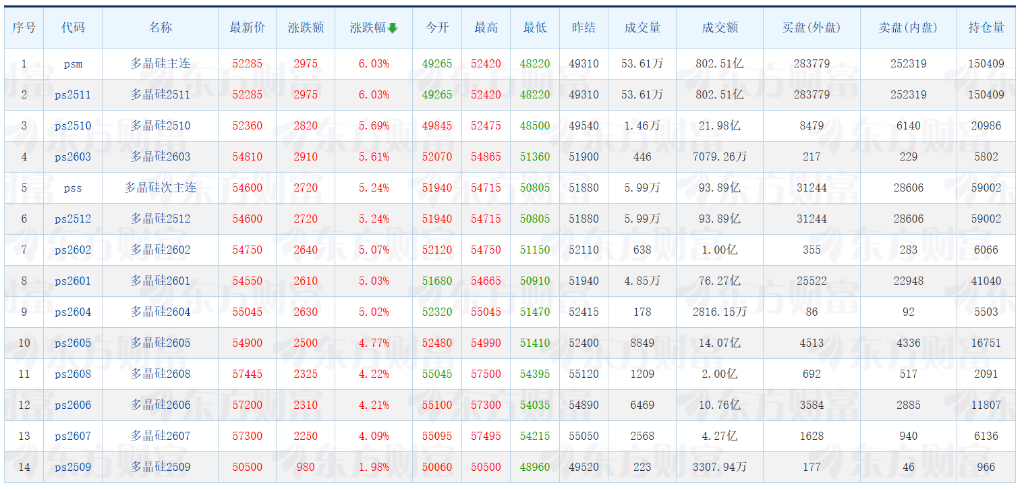
光伏产业链上游迎来反弹,硅料玻璃价格飙升,自律限产助力盈利修复
Sou Hu Cai Jing· 2025-09-02 07:56
Core Insights - The prices of key materials in the photovoltaic industry chain, namely polysilicon and photovoltaic glass, have seen significant increases, indicating a positive adjustment in supply and demand dynamics within the industry [1][4] - The recent price rebound is largely attributed to the positive effects of a self-discipline agreement signed by the China Photovoltaic Industry Association and leading companies, aimed at avoiding vicious price competition and controlling capacity release [2][4] Polysilicon Market - On September 1, the main contract price for polysilicon futures surged over 6%, with the leading domestic polysilicon companies raising their spot prices accordingly. The mainstream price for rod silicon has reached 55 yuan per kilogram, while granular silicon is priced at 49 yuan per kilogram [1][4] - The strong rebound in polysilicon prices is significantly driven by industry self-discipline efforts, with the main contract PS2511 closing with a 6.03% increase [1][3] Photovoltaic Glass Market - Photovoltaic glass prices have also seen notable increases, with new order prices for September rising significantly. The benchmark price for 2.0mm single-layer coated glass has reached 13 yuan per square meter, up by 2 yuan per square meter compared to July [1][4] - As of late August, the inventory of photovoltaic glass has decreased to 24.02 days, indicating a healthy level of stock [1][4] Industry Outlook - If current price levels are maintained, leading companies in the industry are expected to achieve profitability, while second and third-tier manufacturers may approach breakeven points, suggesting potential for further price increases in September [4] - The simultaneous rise in polysilicon and photovoltaic glass prices reflects a phase of improvement in the supply-demand relationship within the photovoltaic industry chain, with downstream silicon wafer companies increasing their operating rates [4]

新能源及有色金属日报:现货报价再次上调,多晶硅盘面大幅上涨-20250902
Hua Tai Qi Huo· 2025-09-02 06:56
新能源及有色金属日报 | 2025-09-02 现货报价再次上调,多晶硅盘面大幅上涨 工业硅: 市场分析 2025-09-01,工业硅期货价格维持震荡,主力合约2511开于8370元/吨,最后收于8495元/吨,较前一日结算变化(75) 元/吨,变化(0.89)%。截止收盘,2511主力合约持仓285449手,2025-09-01仓单总数为50400手,较前一日变化-53 手。 供应端:工业硅现货价格持稳。据SMM数据,昨日华东通氧553#硅在9000-9100(0)元/吨;421#硅在9300-9500 (0)元/吨,新疆通氧553价格8400-8500(0)元/吨,99硅价格在8400-8500(0)元/吨。昆明、黄埔港、西北、天 津、新疆、四川、上海地区硅价也暂稳。97硅价格同样持稳。。 SMM统计8月28日工业硅主要地区社会库存共计54.1万吨,较上周环比减少0.2万吨。其中社会普通仓库11.9万吨, 较上周增加0.2万吨,社会交割仓库42.2万吨(含未注册成仓单及现货部分),较上周环比减少0.4万吨。(不含内蒙、 甘肃等地)。 消费端:据SMM统计,有机硅DMC报价10500-11000(0)元/吨 ...
中国光伏行业协会:坚决抵制低于成本价格恶性竞争
Zhong Guo Hua Gong Bao· 2025-09-02 03:35
Core Viewpoint - The China Photovoltaic Industry Association has issued an initiative to strengthen industry self-discipline and maintain fair competition in the photovoltaic market, emphasizing the need to resist malicious competition below cost and shift from homogeneous low-efficiency competition to high-quality, high-level competition [1] Group 1: Industry Challenges - The photovoltaic industry is currently facing significant supply-demand contradictions and increasing disorderly competition, which severely hinders the high-quality development of the industry [1] - The initiative highlights the importance of addressing "involution" competition for the overall development of the nation and the industry [1] Group 2: Recommendations for Enterprises - Enterprises are urged to strictly comply with various laws and regulations, including the Price Law and Anti-Monopoly Law, and to resist engaging in malicious competition below cost [2] - Companies should optimize bidding rules by reducing price weight and increasing the weight of technical evaluations [2] - There is a call for enterprises to adhere to quality safety standards and avoid practices that compromise product performance, such as cutting corners or misrepresenting power [2] - Companies are encouraged to rationally schedule production based on market supply and demand, avoiding blind expansion that could worsen the market environment [2] - Strict adherence to intellectual property protection laws is emphasized to prevent infringement [2] - The initiative promotes innovation-driven strategies, shifting from low-efficiency competition to high-quality competition [2] Group 3: Role of Government and Other Entities - Local governments are called to enforce laws like the Anti-Monopoly Law and to regulate investment behaviors to prevent hindrances to capacity clearance [3] - Testing and certification institutions are encouraged to enhance their capabilities and build a trustworthy system to ensure quality monitoring [3] - Media organizations are urged to maintain a correct political direction and report objectively without distorting facts [3] - Financial institutions are encouraged to support the industry with differentiated financial policies, avoiding one-size-fits-all measures [3]