货币贬值交易

Search documents
黄金白银收官回落,仍录得20世纪70年代以来最佳年度表现
Sou Hu Cai Jing· 2025-12-31 21:02
Core Viewpoint - The precious metals market experienced a remarkable year, with gold and silver prices declining on the last trading day of 2025, yet maintaining the highest annual gains in over four decades [1] Price Performance - Spot gold prices hovered around $4,320 per ounce, while silver prices fell to $71 per ounce [1] - The year-end volatility saw significant price fluctuations, with a sharp decline on Monday followed by a rebound on Tuesday, and another drop on Wednesday [1] Market Dynamics - The Chicago Mercantile Exchange Group raised margin requirements twice due to the substantial price swings in the two precious metals [1] - Increased demand for safe-haven assets driven by escalating geopolitical risks and the Federal Reserve's interest rate cuts supported the strong performance of gold and silver [1] Economic Context - High inflation and rising debt burdens in developed economies have raised market concerns, leading to what is termed "currency devaluation trades," which further propelled precious metal prices [1]
黄金白银在创上世纪70年代以来最佳年度表现之际尾盘回落
Xin Lang Cai Jing· 2025-12-31 13:54
地缘政治风险持续升温推高避险资产需求、美联储接连降息,叠加发达经济体通胀担忧与债务负担高企 引发的货币贬值交易,共同助推贵金属本轮火爆涨势,黄金、白银双双迎来 1979 年以来表现最佳的一 年。 作为体量更大的贵金属品种,多重利好推动散户投资者与机构基金经理大举涌入黄金 ETF,各国央行 也延续了长达数年的黄金增持潮。 过去 12 个月,黄金涨幅约 64%。9 月,金价突破45 年来经通胀调整后的历史峰值—— 上一轮峰值出现 在美元承压、通胀飙升、经济衰退初现的时期,彼时金价触及 850 美元 / 盎司;而本轮牛市中,金价于 10 月初一举站上 4000 美元整数关口。 专题:2025年国际财经新闻大盘点 2025 年最后一个交易日,黄金、白银价格走低,但贵金属全年行情收官亮眼,二者均将创下四十年来 最大年度涨幅。 现货黄金小幅回落至每盎司 4320 美元下方,白银则跌至 70 美元关口附近。节后交投清淡的市场中,两 大贵金属价格波动剧烈:周一暴跌,周二反弹,周三再度走低。此番大幅震荡,促使交易所运营商芝商 所(CME Group)两度上调保证金要求。 世界黄金协会首席策略师、资深市场人士约翰・里德表示:'从 ...
金价,闪崩!银价,闪崩!
Xin Lang Cai Jing· 2025-12-30 03:38
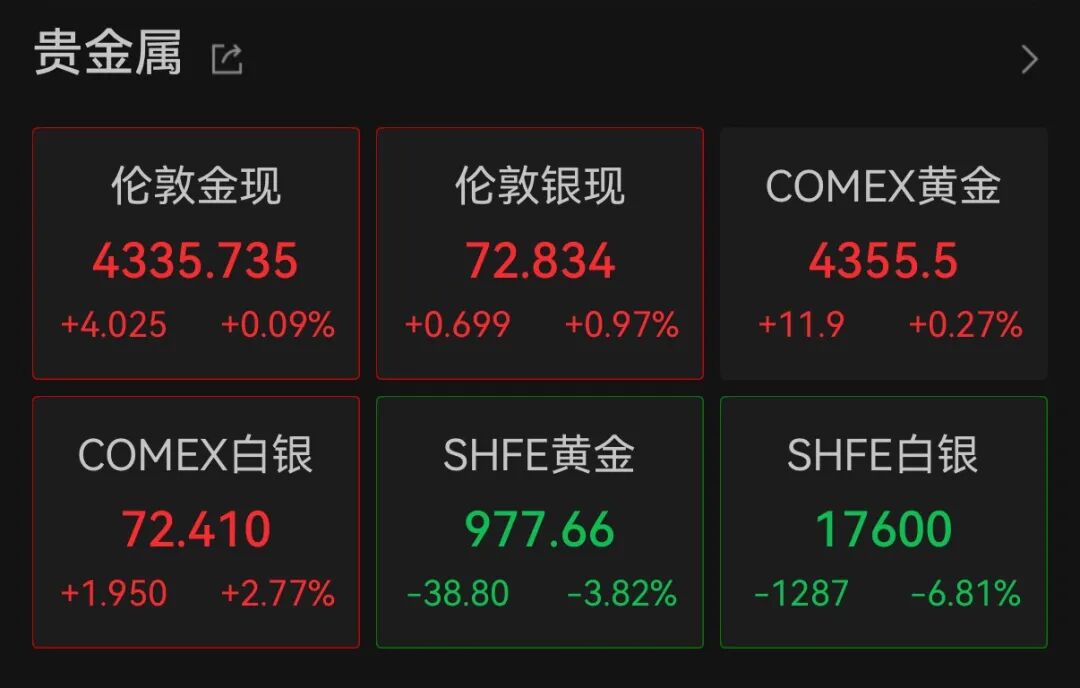
Core Viewpoint - The precious metals market experienced a significant downturn, with major declines in prices following a period of strong performance, raising concerns about future trends and market stability [1][3][19]. Price Movements - On December 30, domestic precious metal futures saw widespread declines, with silver down nearly 7% and gold down nearly 4% [1][16]. - The London gold price fell sharply by $205, a decrease of 4.52%, while silver experienced a drop exceeding 10% [5][19]. - Platinum and palladium saw even steeper declines, with prices plummeting around 15% [5][19]. Market Dynamics - The market reversal was attributed to several factors, including technical corrections, profit-taking by investors, and new policies from exchanges that increased margin requirements by over 10% for various metals [12][28]. - The recent surge in precious metal prices had led to a speculative bubble, which was punctured by the sudden sell-off [22][28]. Investor Sentiment - Analysts suggest that the recent downturn may be a temporary correction within a broader upward trend for precious metals, although there are concerns about potential further declines if selling pressure continues [29][30]. - UBS indicated that short-term risks in precious metal trading have increased, particularly as liquidity tends to be lower at year-end, complicating market interpretations [29][30]. Future Outlook - Some analysts believe that the macroeconomic environment remains favorable for precious metals, with expectations of continued upward pressure on prices due to a weakening dollar and ongoing inflation concerns [29][30]. - Citic Futures highlighted the need for caution regarding short-term risks, particularly in the silver market, which has shown increased volatility after significant price increases [30].

40%,特朗普惹大祸,资金撤离美国,美元崩盘,黄金白银还能暴涨?
Sou Hu Cai Jing· 2025-12-29 16:12
Core Viewpoint - The global capital markets are undergoing a historic transformation, marked by soaring precious metal prices and a significant decline in the allocation of assets to USD, driven by a crisis in the USD credit system and geopolitical factors [1][3][5]. Group 1: Precious Metal Prices - Gold prices surged past $4,500 per ounce, with an annual increase of over 70% [1] - Silver prices skyrocketed to $79 per ounce, marking a staggering annual rise of 174% [1] - Platinum saw a rise exceeding 150%, achieving the largest annual increase since records began in 1987 [1] Group 2: USD Asset Allocation - The allocation of USD assets has dropped to its lowest level in nearly 20 years, with institutions like the Quebec Savings and Investment Group reducing their US asset holdings by 40% [1][5] - A survey by Bank of America indicated a significant reassessment of USD assets among investors [5] Group 3: Economic Policies and Market Reactions - The introduction of "reciprocal tariffs" by the Trump administration triggered a notable market reaction, with the Dow Jones index falling by 3.2% on the announcement day [3] - The US federal debt surpassed $38.5 trillion in 2025, with an annual increase of $3 trillion, raising concerns about the sustainability of US fiscal policy [3][5] Group 4: Central Bank Actions - The Federal Reserve's dovish signals, including a 25 basis point rate cut and the resumption of quantitative easing, have fueled concerns about currency devaluation and prompted investors to acquire physical assets [5][7] - Central banks globally purchased a net total of 634 tons of gold in the first three quarters of 2025, with China increasing its gold reserves to 74.12 million ounces [7] Group 5: Market Dynamics and Supply Issues - The silver market has faced a continuous supply shortage since 2021, with global inventories reaching a ten-year low [7] - The demand for platinum and palladium is driven by the energy transition, with platinum prices rising due to increased hydrogen fuel cell demand [9] Group 6: Global Financial Trends - The trend of capital withdrawal from the US has accelerated, with significant reallocations to European markets [9][12] - Emerging markets have benefited from this capital shift, with inflows into emerging market equity funds increasing by 43% year-on-year [12] Group 7: Currency and Reserve Dynamics - The share of the USD in global foreign exchange reserves has declined from 71% at the beginning of the century to 59% in 2024, while the Chinese yuan has become the third-largest payment currency [14] - The International Monetary Fund predicts that 30% of central banks will increase their yuan holdings in the next decade [14] Group 8: Market Sentiment and Risks - The "silver-oil ratio" reached its highest level since 1990, indicating potential risks of disconnection between financial assets and real economic demand [16] - Market sentiment appears overheated, with analysts warning of potential corrections in precious metal prices [18][19]
2025年九大标志性交易:泡沫、蟑螂与367%的暴涨
Jin Rong Jie· 2025-12-29 06:26
Group 1: Market Trends and Dynamics - The year has been marked by high-stakes bets and rapid reversals, with significant volatility across various markets, including record highs in gold prices and fluctuations in mortgage giants [1] - Investors have heavily bet on changing political landscapes, inflated balance sheets, and fragile market narratives, leading to substantial stock market gains and crowded yield trades [1] - The geopolitical shift has significantly benefited European defense stocks, with companies like Rheinmetall AG and Leonardo SpA seeing stock price increases of approximately 150% and over 90% respectively [4][5] Group 2: AI and Technology Investments - Scion Asset Management disclosed protective put options on Nvidia and Palantir, raising concerns about the high valuations and spending plans of major AI players [2][3] - Nvidia's stock price fell significantly after the disclosure, reflecting the market's sensitivity to potential overvaluation in the AI sector [2] Group 3: Defense Sector Changes - The defense sector, previously avoided by asset managers due to ESG concerns, has seen a paradigm shift, with funds now focusing on defense-related investments [5] - A basket of European defense stocks has risen over 70% in 2025, indicating a strong market interest in this sector [5] Group 4: Currency and Alternative Assets - Concerns over heavy debt burdens in major economies have led investors to favor alternative assets like gold and cryptocurrencies, while showing reduced enthusiasm for government bonds and the dollar [6][7] - The narrative of "currency debasement" gained traction, particularly during periods of political instability, leading to record highs in both gold and Bitcoin [6][7] Group 5: South Korean Market Performance - The South Korean stock market has surged over 70% in 2025, driven by political efforts to boost the capital market and the global AI trend [8] - Despite the market's strong performance, local retail investors have been net sellers, indicating a lack of confidence in the domestic market [8] Group 6: Japanese Bond Market - The Japanese bond market has shifted from being a "widowmaker" trade to a favorable environment for short sellers, with benchmark yields rising significantly [10][11] - The 10-year Japanese government bond yield surpassed 2%, marking a significant change in the market dynamics [10] Group 7: Credit Market Developments - The credit market has seen substantial returns from strategic actions taken by funds like Pimco and King Street Capital Management, particularly in distressed situations [12] - A series of smaller but concerning events in the credit market have raised alarms about industry practices and borrower capabilities [17][18] Group 8: Fannie Mae and Freddie Mac - Fannie Mae and Freddie Mac have experienced a significant stock price increase of 367% from January to September 2025, driven by optimism regarding potential privatization [14][15] - The market remains speculative about the timing and feasibility of an IPO for these companies, despite the excitement surrounding their potential release from government control [14][15] Group 9: Turkish Lira and Emerging Markets - The Turkish lira has depreciated approximately 17% in 2025, highlighting the risks associated with high-yield investments in emerging markets amid political turmoil [16]


凌晨贵金属全线大涨,黄金、白银、铂金创历史记录
Sou Hu Cai Jing· 2025-12-27 03:06
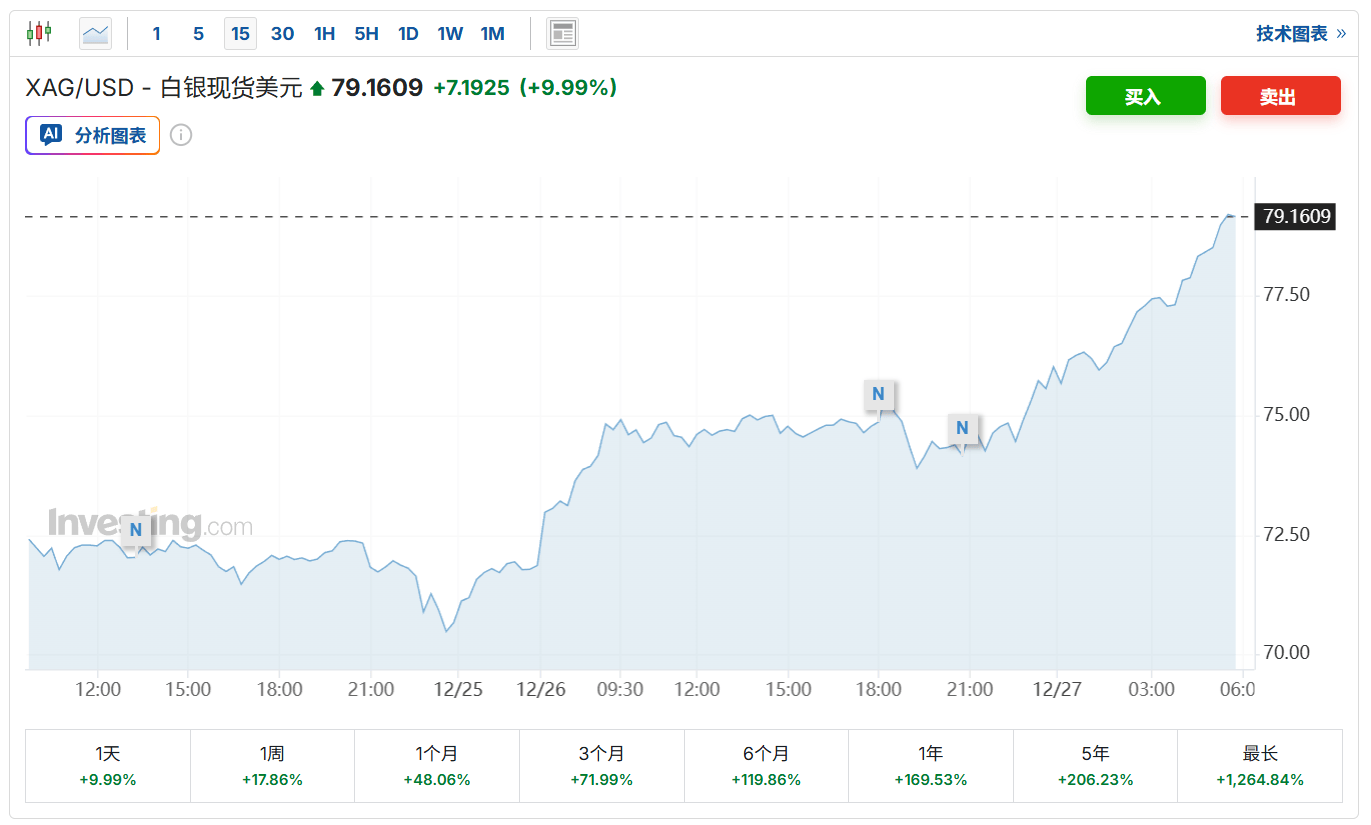
Core Viewpoint - Precious metals experienced a historic surge on December 26, with silver, gold, platinum, and palladium all rising significantly, marking new record highs for silver, gold, and platinum [1]. Group 1: Price Movements - Spot silver rose over 10% to $79.16 per ounce, reaching a peak of $79.33 per ounce, with a weekly increase of 17.86% and an annual increase of 169.5% [1]. - Spot gold increased by 1.18% to $4,532.63 per ounce, hitting a high of $4,550.11 per ounce, with a weekly rise of 4.47% and a yearly gain of 73% [1]. - Spot platinum surged by 8.7% to $2,411.46 per ounce, reaching a record high of $2,470.19 per ounce, with a weekly increase of 24.31%, the largest single-week gain ever [1]. - Palladium rose nearly 10% to $1,930.81 per ounce, achieving its highest level in over three years [1]. Group 2: Market Drivers - Expectations of further easing policies from the Federal Reserve in 2026, a weakening dollar, and escalating geopolitical tensions are driving greater volatility in precious metals [5]. - The ongoing geopolitical tensions, particularly regarding Venezuela and U.S. military actions in Nigeria, are increasing the appeal of precious metals as safe-haven assets [5]. - The combination of the Federal Reserve's easing policies, continued central bank purchases, ETF inflows, and a trend towards de-dollarization is expected to support gold's strongest annual gain since 1979 [5][6]. Group 3: Expert Insights - Peter Grant, a senior metal strategist, predicts silver could reach $80 per ounce by year-end, while gold's next target is $4,686.61 per ounce, potentially reaching $5,000 in the first half of next year [5]. - Daniel Takieddine, CEO of Sky Links Capital Group, emphasizes that the increasing geopolitical tensions are sustaining demand for safe-haven assets like gold and silver [5].
财联社2025年十大海外新闻
财联社· 2025-12-25 06:47
Group 1: Political and Economic Developments - Trump's return to the presidency has led to increased global uncertainty due to aggressive tariff policies aimed at reshaping the manufacturing landscape in the U.S. [2][3] - The U.S. stock and bond markets experienced significant volatility as a result of these tariff policies, prompting a shift in global capital strategies towards high-friction and high-inflation environments [3] - The U.S. Federal Reserve's three interest rate cuts in 2025 did not lead to a decrease in long-term interest rates, which remained high due to expansive fiscal policies and rising national debt [10][11] Group 2: Commodity and Asset Market Trends - Gold prices surged to over $4500 per ounce, surpassing the euro to become the second-largest reserve asset globally, indicating a shift in the traditional currency reserve system [4][5] - The MSCI global index reached historical highs, reflecting strong performance across various markets, particularly in technology and emerging markets [6][7] - Industrial metals like copper and aluminum saw significant demand due to global energy transitions and infrastructure developments, highlighting a robust physical economy [6][7] Group 3: Technology Sector Dynamics - Nvidia's market capitalization exceeded $5 trillion, marking a pivotal moment in the AI infrastructure race, although concerns about the sustainability of its growth model emerged [8][9] - The tech sector faced volatility as investors shifted focus from speculative investments to evaluating actual profit growth, raising concerns about potential bubbles in AI investments [9] Group 4: Geopolitical Tensions - The ongoing conflict in the Middle East saw a temporary ceasefire in Gaza, but underlying tensions remained, affecting global investment confidence in the region [14][15] - Military confrontations between India and Pakistan escalated, leading to significant disruptions in regional markets and highlighting the risks associated with geopolitical instability [16] Group 5: Market Sentiment and Investment Strategies - The retirement of Warren Buffett from Berkshire Hathaway prompted a reevaluation of value investing principles in a rapidly changing market landscape dominated by technology [17][18] - The cryptocurrency market experienced a dramatic downturn after a period of growth, emphasizing the volatility and risks associated with emerging digital assets [19]

圣诞休市贵金属热涨 瑞银预警获利了结
Jin Tou Wang· 2025-12-25 06:07
今日周四(12月25日)因美国圣诞节休市,今年以来贵金属普涨,白银劲升149%,黄金涨逾70%,铂 金、钯金分别涨约145%和超85%,主因矿场供应紧张、关税不确定性及投资资金从黄金轮动。创纪录 新高后获利了结引发回调。特朗普称望新任美联储主席降息,市场预期明年或降息两次,叠加地缘因 素,令市场不确定性升温。 【要闻速递】 贵金属今年迎来标志性大涨,12月购买热潮达顶峰,但瑞银策略师乔尼·特维斯周三在客户报告中警示 风险上升。她表示,这轮涨势速度与幅度令最乐观者也意外,虽美元走弱有助,却难觅单一强触发点解 释整体上涨。 摘要今日周四(12月25日)因美国圣诞节休市,今年以来贵金属普涨,白银劲升149%,黄金涨逾 70%,铂金、钯金分别涨约145%和超85%,主因矿场供应紧张、关税不确定性及投资资金从黄金轮动。 创纪录新高后获利了结引发回调。特朗普称望新任美联储主席降息,市场预期明年或降息两次,叠加地 缘因素,令市场不确定性升温。 现货铂金:现货铂金近期呈强势多头格局,自12月22日突破2000美元/盎司后持续上行,24日创历史新 高2300美元,短期均线呈多头排列,支撑位关注2250美元。MACD日线释放看多 ...
金价,爆了!原因找到
Nan Fang Du Shi Bao· 2025-12-24 16:12
原因之一,是在上周一系列美国经济数据公布之后,市场开始加大对2026年美联储降息的押注,目前普遍 预期明年可能会降息两次。而一旦利率继续走低,债券以及货币市场基金中现金类资产的收益率就会被进 一步压缩,这也在相对意义上,抬高了黄金、白银等实物资产的吸引力。 当地时间24日,市场避险情绪升温、黄金ETF持仓量增加以及投资者对美联储降息前景的乐观预期等因 素,推动国际金价继续上涨。24日亚洲交易时段,伦敦现货黄金价格盘中突破每盎司4500美元,刷新历史 纪录。 与此同时,国际银价也维持涨势。纽约白银期货以及伦敦现货白银价格均升破每盎司72美元关口,同样创 下历史新高。 美联储降息预期升温 抬高贵金属资产吸引力 近期,国际金价、银价齐创新高,导致金价和银价双双走高的驱动因素是什么? 在投资者避险情绪高涨的背景下,今年以金银为代表的贵金属成了表现最亮眼的资产之一。 明年二月到期的COMEX黄金期货今年迄今为止已经上涨超70%。而明年三月到期的COMEX白银期货,今 年以来已经上涨约137%,涨幅几乎是黄金的两倍。 ▊阅读更多(戳下方标题) 点击图片阅读 香港殉职消防员女友发文 其二,资深大宗商品分析师杰夫·柯里表示, ...

价格飙涨超70%!原因找到了
Chang Jiang Ri Bao· 2025-12-24 13:34
Core Viewpoint - The international gold and silver prices have reached historical highs due to escalating geopolitical tensions, tight market supply and demand, and increased safe-haven demand, with gold prices rising over 70% this year [1][6]. Group 1: Price Movements - On February 2026 COMEX gold futures, the price increased by $46.3, closing at $4,505.7 per ounce, while March 2026 silver futures rose by $2.572, reaching $71.137 per ounce, both marking historical highs [3]. - London spot gold prices also surpassed $4,500 per ounce, and platinum prices increased by over 6%, exceeding $2,300 per ounce, achieving historical highs [3]. Group 2: Geopolitical and Economic Factors - Tensions between the U.S. and Venezuela have contributed to geopolitical pressures, while a declining U.S. dollar index has supported the prices of dollar-denominated precious metal futures [4]. - The U.S. dollar index has dropped nearly 10% this year, potentially facing its worst performance since 2003 [5]. Group 3: Market Outlook - Analysts from JPMorgan expect the gold market to continue its upward trend into 2026 due to strong driving factors, with silver demand also anticipated to grow [5]. - The recent surge in gold and silver prices is attributed to heightened investor risk aversion, making precious metals one of the best-performing asset classes this year [6]. Group 4: Investment Trends - The COMEX gold futures for February have risen over 70% this year, while March silver futures have surged approximately 137%, nearly double the increase of gold [8]. - Expectations of potential interest rate cuts by the Federal Reserve in 2026 have increased the attractiveness of precious metal assets, as lower rates compress yields on cash-like assets [8]. Group 5: Central Bank Activities - Global central banks, particularly those in emerging markets, have been purchasing gold on a large scale, significantly impacting the traditional supply-demand balance of gold [11]. - This purchasing behavior is driven by a desire to optimize foreign exchange reserve structures and hedge against geopolitical risks, reflecting a long-term strategic shift [11].