量化宽松政策

Search documents
美国桥水基金创始人瑞·达利欧接受《环球时报》专访:美国正身处极具危险性的“第五阶段”
Huan Qiu Shi Bao· 2025-09-04 22:45
Group 1 - Ray Dalio, founder of Bridgewater Associates, emphasizes the importance of understanding "big debt cycles" and believes the current cycle, which began in 1945, is nearing its end, with the U.S. facing significant conflict and transformation [1] - Dalio identifies two critical warning signs for the U.S. economy: the implementation of a new round of quantitative easing and the government gaining control over the Federal Reserve, indicating a deteriorating debt supply-demand situation [2][3] - The U.S. is currently in a dangerous "fifth stage" of its internal cycle, characterized by worsening fiscal conditions and potential class conflict, which could lead to a "sixth stage" of chaos, including revolution or civil war [3][4] Group 2 - Dalio suggests that the best way to reduce the risk of U.S. government bankruptcy is to cut the budget deficit to around 3% of GDP, as the current deficit is approximately 6.4% of GDP for the 2024 fiscal year [6] - The U.S. government is currently spending about $7 trillion annually while generating $5 trillion in revenue, leading to a 40% overspend and rapidly increasing debt [5][6] - Dalio's theories have gained unexpected support from several former U.S. Treasury Secretaries and central bank leaders, indicating a recognition of the mechanisms of debt and its consequences [6] Group 3 - Dalio highlights China's remarkable achievements over the past 40 years, including a 20-fold increase in per capita income and a reduction in poverty rates to below 1% [7] - He predicts that the next 5 to 10 years will be a period of significant change for major global orders, emphasizing the importance of education, a conducive domestic environment, and avoiding external conflicts for China's future [7] - Dalio expresses optimism about the potential of artificial intelligence to drive significant advancements across various fields, although he remains skeptical about its ability to delay the next global debt crisis [8][9]
全球债市 “风暴眼”:收益率飙升,危机警钟敲响?
Sou Hu Cai Jing· 2025-09-04 05:41
Core Viewpoint - The global bond market is experiencing unprecedented turmoil, with rising yields in major economies like the US, Japan, Germany, and the UK, raising concerns about future economic stability and potential crises [2][3][11] Group 1: Market Dynamics - Long-term bond yields have surged, with the US 30-year Treasury yield surpassing 5%, reaching levels not seen since 2006, while the UK and Germany also hit historical highs [3][4] - The inverse relationship between bond prices and yields indicates that rising yields lead to significant declines in bond prices, resulting in substantial asset value losses for investors [4][9] - The volatility in bond yields is causing ripple effects across the financial ecosystem, impacting stock, foreign exchange, and commodity markets, thereby threatening overall market stability [4][9] Group 2: Economic Factors - Government debt levels are rising, with the US federal deficit projected at $1.7 trillion, necessitating increased bond issuance to fund operations, amidst persistent inflation concerns [5][9] - High inflation is eroding the real yields of bonds, leading investors to reduce their holdings in favor of assets with better inflation protection, thus increasing bond supply and pushing yields higher [5][9] Group 3: Political Uncertainty - Political events, such as the potential no-confidence vote in France regarding debt reduction plans, are exacerbating market volatility and investor anxiety, leading to increased bond yields [6][9] - In the UK, economic challenges coupled with political instability are putting pressure on the bond market, with rising yields reflecting investor concerns over fiscal health [6][9] Group 4: Market Structure Changes - Central banks and pension funds, traditionally major buyers of long-term bonds, are reducing their participation, leading to decreased demand and increased volatility in the bond market [7][8] - The shift from defined benefit to defined contribution pension plans is reducing the stable demand for long-term bonds, further destabilizing the market [7][8] Group 5: Negative Feedback Loop - The rising yields are creating a vicious cycle where increased borrowing costs worsen fiscal conditions for governments, leading to more bond issuance and further supply concerns [9][11] - This cycle threatens to undermine financial market stability and economic growth, as higher yields increase corporate financing costs and consumer loan rates, dampening investment and consumption [9][11]


连平:特朗普能减缓美国政府债务增长势头吗?
Xin Lang Cai Jing· 2025-09-01 14:45
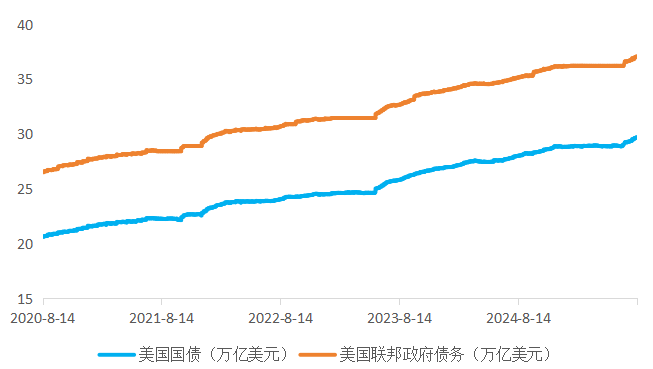
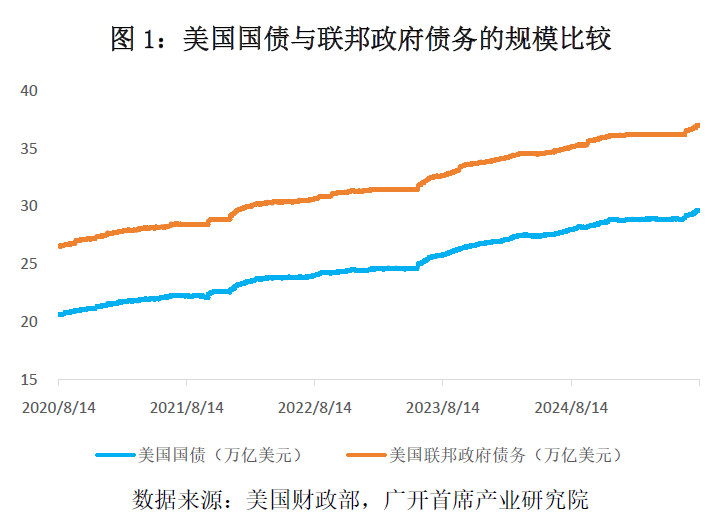
Core Viewpoint - The U.S. federal government debt has surpassed $37 trillion, raising global market concerns, with the growth rate of debt showing both acceleration and deceleration trends [1][2]. Group 1: Debt Growth Trends - The U.S. federal government debt has increased from $4 trillion in the 1990s to $37 trillion, with its GDP ratio rising from 58% to 126.8%, indicating that debt expansion is outpacing economic growth [3][4]. - The time taken to increase debt by $1 trillion has significantly decreased over the years, from approximately 4.8 years during the Clinton administration to less than 0.5 years during the Biden administration [4][5]. - The COVID-19 pandemic and other crises have led to explosive short-term debt growth, with $7 trillion added in just two years during the pandemic [4][5]. Group 2: Recent Debt Growth Deceleration - In 2025, the growth rate of U.S. federal government debt unexpectedly slowed, with the increase from $36 trillion to $37 trillion taking nearly 9 months, compared to faster growth in previous years [6][7]. - Factors contributing to this slowdown include the debt ceiling hitting its limit, which led to a temporary halt in bond issuance and required the government to rely on cash reserves and tax revenues [7][8]. - The Trump administration implemented spending restraint measures and reduced the number of federal employees, which contributed to a temporary decrease in debt growth [8][9]. Group 3: Future Debt Projections - If the current trend continues, the U.S. federal government debt could reach $57 trillion in the next decade, with the time to add $1 trillion potentially decreasing further [5][12]. - The debt ceiling crisis and temporary measures taken to manage debt will likely lead to a significant rebound in debt issuance once the ceiling is lifted, with projections of net issuance reaching $1.3 to $1.5 trillion in the latter half of 2025 [12][13]. Group 4: Implications of Rising Debt - The increasing federal debt poses risks to U.S. fiscal policy, potentially leading to reduced public spending and increased pressure on social programs, which could exacerbate social tensions [18][19]. - The U.S. credit rating is at risk of further downgrades due to high debt-to-GDP ratios, which could increase borrowing costs and reduce market confidence in U.S. financial stability [19][20]. - The reliance on tariffs for revenue generation may not sufficiently address the growing fiscal deficit, as tariff income is significantly lower than the rate of debt growth [14][15]. Group 5: Global Economic Impact - The expanding U.S. debt could have significant negative spillover effects on the global economy, particularly impacting trade dynamics and financial market stability [25]. - Long-term, the weakening of the dollar and U.S. debt as "risk-free assets" may prompt reforms in global economic governance and monetary systems, encouraging countries to enhance their economic resilience [25].
陶冬:欧盟只剩下生产公文和监管了
Di Yi Cai Jing· 2025-09-01 02:23
Group 1 - Overregulation and a risk-averse regulatory culture are institutional barriers to innovation in Europe [4][5] - The European Union is criticized for focusing on bureaucracy, taxes, and regulation, hindering reform and innovation [4][5] - The report led by former ECB President Draghi calls for increased investment and competitiveness in the EU, but achieving this is deemed nearly impossible [4] Group 2 - The U.S. federal government debt has surpassed $37 trillion, with a rapid accumulation of debt over the past few years [2][3] - Net interest payments on the national debt reached $880 billion last fiscal year, a 33.9% increase year-on-year, and are projected to hit $1.2 trillion this fiscal year [2] - The Trump administration's fiscal policies, including the "big and beautiful" act, have not effectively addressed the underlying fiscal imbalance, leading to increased deficits [2][3] Group 3 - The European economy is facing a structural crisis characterized by high debt, weak growth, and insufficient innovation [5] - The combination of high debt levels and low growth is squeezing fiscal space and undermining competitiveness [5] - There is a pressing need for structural reforms in labor markets, welfare systems, and capital markets in Europe, but current political conditions make these reforms increasingly unlikely [5]
日本国债为何被抛售?
2 1 Shi Ji Jing Ji Bao Dao· 2025-08-29 22:25
Group 1 - Japan's long-term government bonds are experiencing significant sell-offs, with the 30-year bond yield reaching a historic high of 3.22% as of August 27, marking the highest level since its introduction in 1999 [1] - The rise in bond yields is attributed to better-than-expected GDP growth in Q2 and potential interest rate hikes by the Bank of Japan, alongside political instability following the recent Senate elections [1][4] - A structural supply-demand imbalance in the bond market is evident, as the main buyers—pension funds, life insurance companies, and foreign investors—are unable to fill the gap left by the Bank of Japan's reduced bond purchases starting in March 2024 [1][2] Group 2 - The pressure to absorb government bonds is shifting to other investors, but Japanese pension funds and life insurance companies face restrictions that limit their ability to increase bond purchases, leading to a net sell-off of 130 billion yen in July [2] - Foreign investment has decreased significantly, with net purchases in July dropping by two-thirds compared to June, further exacerbating the lack of buyers in the bond market [2] - The auction bid rate for 20-year bonds in May was only 2.50 times, the lowest since 2012, prompting the Japanese government to revise its bond issuance plans, reducing the issuance of long-term bonds by over 3 trillion yen [3] Group 3 - The Japanese Ministry of Finance is struggling to implement effective measures to address the bond market issues, as further reductions in long-term bond issuance would necessitate increased short-term bond issuance, leading to higher interest payments [4] - The Bank of Japan is unlikely to change its stance on bond purchases due to significant accumulated losses and the current economic conditions, making it difficult to reverse the cooling trend in the long-term bond market [4] - Despite rumors of potential interest rate hikes due to pressure from the U.S., the Bank of Japan remains cautious, as rising rates could negatively impact corporate earnings and employee wage growth in the future [4]
特朗普无法扭转 美国政府债务增长势头
Sou Hu Cai Jing· 2025-08-27 17:07
Group 1 - The core viewpoint is that the U.S. federal government debt is on a long-term upward trajectory, with significant implications for fiscal policy and economic stability [1][2][6] - As of August 11, the U.S. federal government debt surpassed $37 trillion, which is $1 trillion more than the previous figure reached in a shorter time frame than expected [1][3] - The debt growth rate has shown a paradoxical trend, with a slowdown in the recent increase despite the overall long-term expansion of debt [3][4] Group 2 - The U.S. federal government debt consists of both public debt and internal government debt, with public debt accounting for approximately 80% of the total [2] - Historical trends indicate that since the 1990s, U.S. federal government debt has consistently increased, with acceleration during economic crises [2][6] - Future projections suggest that if the current pace continues, the federal debt could reach or exceed $57 trillion in the next decade, with the potential for even faster growth [3][4] Group 3 - Factors contributing to the recent slowdown in debt growth include the debt ceiling reaching its limit, spending constraints, and increased tariff revenues, although the latter's impact is minimal compared to the overall debt increase [4][5] - The Trump administration's policies, including tax cuts and increased military spending, have exacerbated the fiscal deficit, leading to a projected additional $4.1 trillion in federal debt over the next decade [5][6] - The increasing debt burden will likely lead to higher interest payments, potentially nearing $2 trillion annually if the debt continues to grow at the projected rates [1][6] Group 4 - The expanding federal debt poses risks to the U.S. credit rating, with potential downgrades from rating agencies if debt levels continue to rise [6][7] - The Federal Reserve may face pressure to lower interest rates significantly to manage the debt burden, which could lead to inflationary pressures and undermine the dollar's value [7][8] - The reliance on tariffs as a revenue source is expected to persist, despite its limited effectiveness in addressing the growing fiscal deficit [7][8] Group 5 - The implications of rising U.S. debt extend globally, potentially leading to negative spillover effects on international trade and economic recovery, particularly impacting major trading partners like China [8][9] - Long-term, the systemic weakening of the dollar and U.S. Treasury securities could prompt a shift towards a more diversified global economic governance and monetary system [9]
特朗普无法扭转美国政府债务增长势头
Di Yi Cai Jing· 2025-08-27 12:53
Core Viewpoint - The rapidly expanding federal government debt in the United States has become a significant concern for the economy, with the total surpassing $37 trillion as of August 11, raising questions about the pace and implications of this growth [1][13]. Summary by Sections Long-term Debt Trends - The U.S. federal government debt, officially termed "total outstanding public debt," includes both public and internal government debt, with the public debt portion representing approximately 80% of the total [2]. - Since the 1990s, the U.S. federal government debt has shown a continuous increase, with acceleration in growth rates, particularly during economic crises such as the subprime mortgage crisis and the COVID-19 pandemic [4]. Future Projections - If the current trend continues, the U.S. federal government debt could reach $57 trillion in the next decade, with the interval for adding $1 trillion potentially shortening significantly [5]. - The debt growth rate has unexpectedly slowed in 2025, primarily due to political and economic factors rather than effective fiscal management [6]. Factors Influencing Debt Growth - The debt ceiling has constrained bond issuance, leading to temporary measures that reduced the debt increase rate in early 2025 [7]. - The government has implemented spending restraint and personnel reductions to manage costs, but these measures have had minimal impact on overall spending [8][11]. - Increased tariff revenues have partially offset the debt gap, with significant growth in tariff income observed in 2025 [9][12]. Implications of Rising Debt - The increasing debt burden will lead to higher interest payments, potentially nearing $2 trillion annually if the debt exceeds $57 trillion [13]. - Public spending will be significantly constrained, with necessary cuts likely affecting social programs, infrastructure, and education [15]. - The U.S. credit rating faces ongoing risks of downgrades, which could lead to increased market volatility and affect economic stability [16]. - The Federal Reserve may face pressure to lower interest rates to manage debt servicing costs, potentially leading to a return of quantitative easing policies [15]. Global Impact - The rising U.S. debt has a dual effect on the global economy, causing short-term negative spillovers while potentially prompting reforms in global economic governance in the long term [18][19].
黄金如何择时?
2025-08-25 14:36
Summary of Key Points from the Conference Call Industry Overview - The discussion primarily revolves around the **gold market** and its pricing dynamics in the context of macroeconomic factors and investor behavior [2][3][4]. Core Insights and Arguments 1. **Impact of Real Interest Rates**: High real interest rates typically negatively affect gold prices. However, post-2008 quantitative easing and rising government debt have raised concerns about the safety of dollar assets, diminishing the suppressive effect of interest rates on gold [2][3]. 2. **Geopolitical Factors**: The Russia-Ukraine conflict has intensified global concerns regarding the safety of dollar assets, thereby increasing the demand for gold as a safe-haven asset, which has led to a rise in gold prices despite high bond yields [3][4]. 3. **Demand Dynamics**: - **Industrial Demand**: Remains stable but is limited due to high costs, thus not a core driver of gold prices [4]. - **Jewelry Demand**: Primarily from Asian countries like India and China, has seen a decline of approximately 10% due to rising gold prices [6]. - **Investment Demand**: Central bank purchases are crucial, with significant buying from countries like China, which holds about 2,300 tons of gold [6][10]. 4. **Cryptocurrency Influence**: Virtual currencies, particularly Bitcoin, have a diversion effect on gold investments. The expansion of Bitcoin ETFs often coincides with a decline in gold ETFs, indicating a shift in some investor preferences [5][10]. 5. **Federal Reserve's Stance**: Recent dovish comments from the Federal Reserve may have a positive but limited impact on gold prices. Despite increased expectations for rate cuts, gold prices have not significantly surged [6][8]. 6. **Trading Structure**: The trading dynamics, particularly the influence of Asian investors, have been pivotal in recent price movements. For instance, significant purchases by domestic investors have been noted, but speculative funds have not fully exited the market, creating short-term resistance for gold prices [9][10]. Other Important Considerations 1. **Long-term Outlook**: The long-term trend of dollar overproduction and credit decline is favorable for gold. Historical cycles indicate that gold prices have the potential to rise significantly compared to current levels [10]. 2. **Investment Timing**: Current conditions may require investors to bear high holding costs for gold. Monitoring the rapid decline in ETF shares could signal a better buying opportunity in the future [11]. This summary encapsulates the essential insights from the conference call regarding the gold market, its pricing mechanisms, and the broader economic context influencing investor behavior.
强调美联储独立性银价涨超1%
Jin Tou Wang· 2025-08-13 09:05
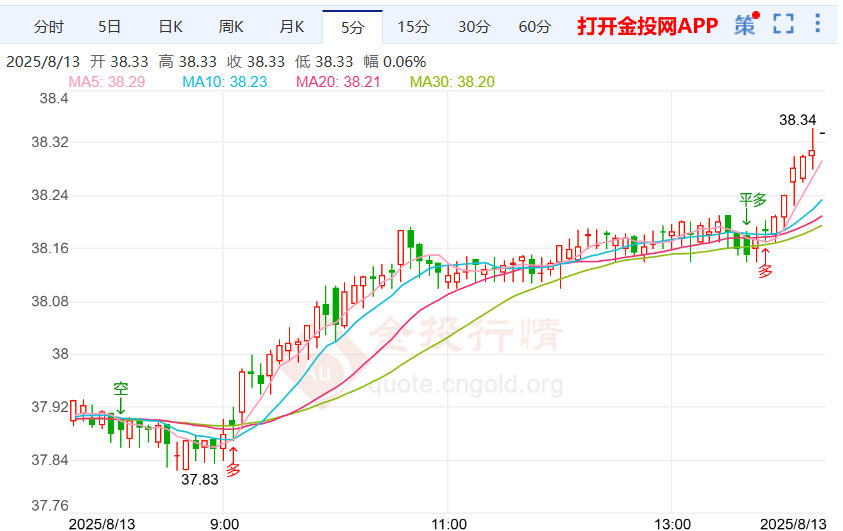
Group 1 - London silver is currently trading above $38.20, with a recent price of $38.32, reflecting a 1.10% increase from the opening price of $37.88 [1] - The highest price reached today was $38.35, while the lowest was $37.83, indicating a bullish short-term trend for London silver [1] Group 2 - President Trump suggested that interest rates should be lowered by at least 3%, bringing them to a range of 1.25% to 1.50% [3] - Analysts warn that the ongoing political tension between Trump and the Federal Reserve could undermine investor confidence, potentially leading to a surge in silver prices [3] - The uncertainty surrounding the Federal Reserve's leadership is contributing to increased market volatility, with concerns about the independence of the Fed worsening the situation [3] Group 3 - Swissquote's senior analyst Ipek Ozkardeskaya emphasized that attacks on the Federal Reserve's independence could have severe consequences, including a potential collapse of the dollar and U.S. Treasury bonds [4] - Ozkardeskaya highlighted that the Fed's credibility is crucial for its ability to support financial markets through bond purchases, and losing this credibility would severely impact the dollar and U.S. debt [4] - Investors are advised to closely monitor safe-haven assets, as significant actions from the Federal Reserve may be anticipated in the fall [4] Group 4 - London silver has shown a slight rebound, stabilizing near the 10-day moving average, with the RSI indicator trending upwards [6] - The support level for silver is around $37.50, with potential upward movement towards $38.40-$38.50 if it stabilizes above the $38 mark [6] - Key support levels to watch are $37.65 and $37.35, while resistance levels are at $38.05 and $38.30 [6]
新周期来了吗?
Sou Hu Cai Jing· 2025-08-06 02:56
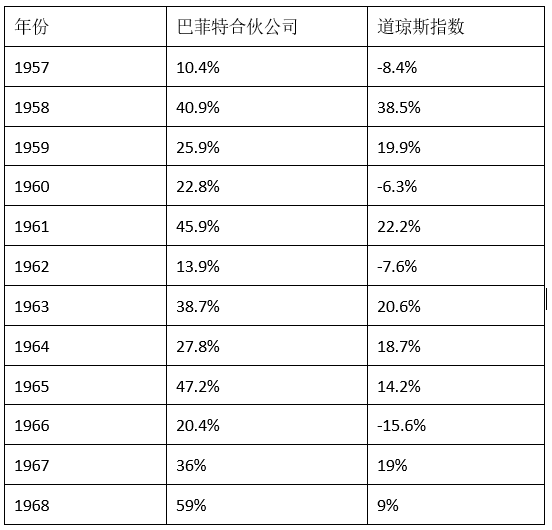
Core Insights - Buffett's early investment returns significantly outperformed the Dow Jones index from 1957 to 1968, showcasing his exceptional investment acumen during a "super cycle" in the stock market [1][2] - The "super cycle" periods are characterized by substantial wealth creation, with the most notable returns concentrated in these phases [2][4] Super Cycle Analysis - The first super cycle (1949-1968) was marked by explosive growth post-World War II, driven by the Marshall Plan and a baby boom that boosted demand [4] - The second super cycle (1982-2000) was fueled by the resolution of inflation issues, leading to a strong economic recovery and significant stock market returns, with the Dow Jones Industrial Average achieving an average annual real return of 15% [4] - The third super cycle (2009-2020) followed the global financial crisis, characterized by quantitative easing and zero interest rate policies, resulting in one of the longest bull markets in history [4] Characteristics of Super Cycles - Super cycles are driven by low or declining funding costs, initial low yields, strong economic growth, and regulatory reforms that lower market risk premiums [5][6] - The current economic environment is shifting towards a "post-modern cycle," influenced by geopolitical changes and new investment paradigms [9][10] Current Economic Cycle - The post-modern cycle is characterized by rising funding costs, slowing economic growth, a shift from globalization to regionalization, and increasing labor and commodity costs [11][12] - Geopolitical tensions and a move towards a multipolar world are expected to increase uncertainty and risk premiums in the market [13] Investment Opportunities and Challenges - The evolving economic landscape presents new investment opportunities and challenges, particularly in sectors related to carbon reduction, regional development, and artificial intelligence [9][10][14]