
AI概念

Search documents
英伟达暴涨,科技股全线拉升!史诗级IPO,大消息
Zhong Guo Ji Jin Bao· 2025-12-20 00:23
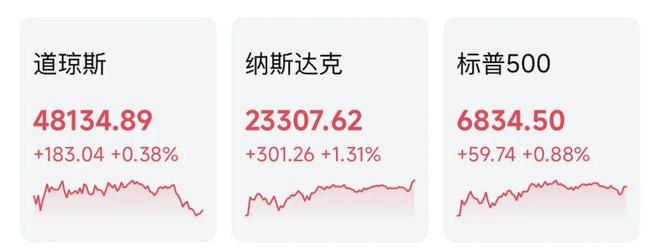
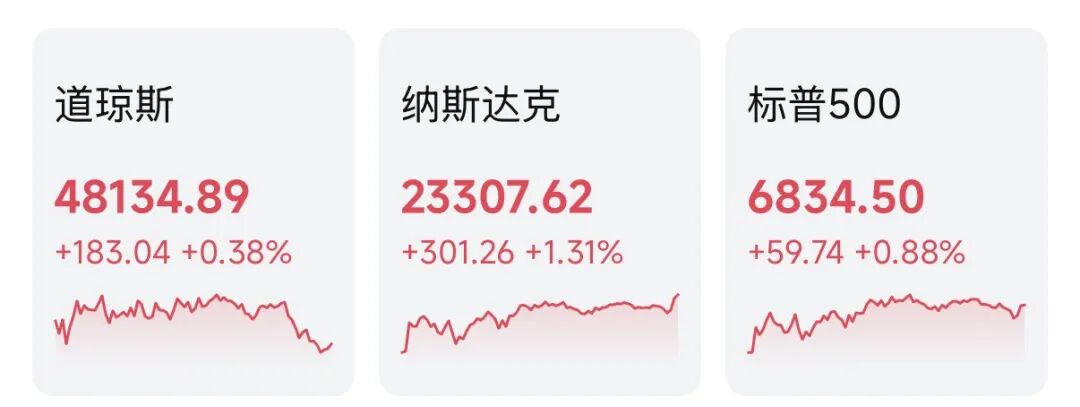
Market Performance - On December 19, U.S. stock indices collectively rose, driven by strong performance in AI-related stocks, with the Dow Jones up 0.38% at 48,134.89 points, the Nasdaq up 1.31% at 23,307.62 points, and the S&P 500 up 0.88% at 6,834.5 points [1] - For the week, the S&P 500 saw a slight increase of 0.1%, the Nasdaq rose by 0.5%, while the Dow Jones experienced a decline of 0.7% [1] Federal Reserve Insights - New York Fed President Williams indicated that there is no urgent need for further rate cuts given recent employment and inflation data, reinforcing market expectations for a pause in rate cuts [3] Options Market Activity - Over $7.1 trillion in nominal value of options contracts are set to expire, marking a historical high, known as "Quadruple Witching Day," which typically increases market trading volume and volatility [3] - Approximately $5 trillion of this risk exposure is linked to the S&P 500, with an additional $880 billion related to individual stocks, representing about 10.2% of the total market capitalization of the Russell 3000 index [3] AI Stocks Performance - Nvidia shares rose by 3.93% to $180.99, with a total market capitalization of $439.81 billion [5] - AMD shares increased by 6.15% to $213.43, with a total market capitalization of $34.75 billion; the CEO visited China to discuss business development and cooperation [8] - Micron Technology shares surged by 6.99% to $265.93, reaching a historical high, with a total market capitalization of $299.3 billion; the stock has risen 10.28% this week and 12.45% this month, aiming for a fifth consecutive month of gains [10] Nvidia's Investment in Intel - The U.S. Federal Trade Commission approved Nvidia's investment in Intel, which amounts to $5 billion, seen as significant support for the domestic semiconductor industry, though it raises concerns about competitive dynamics, particularly for TSMC and AMD [7] - Bernstein noted that Nvidia's valuation relative to the Philadelphia Semiconductor Index is unusually attractive, suggesting a favorable outlook for future returns [7] SpaceX IPO Developments - Morgan Stanley is emerging as a competitive investment bank for SpaceX's potential IPO, leveraging its long-standing relationship with CEO Elon Musk [12] - The underwriting arrangements for SpaceX's IPO are still being finalized, with several major banks, including Goldman Sachs and JPMorgan, competing for key underwriting roles [12]


英伟达暴涨 科技股全线拉升!史诗级IPO 大消息
Zhong Guo Ji Jin Bao· 2025-12-20 00:20
拉长来看,本周标普500指数小幅上涨0.1%,纳指上涨0.5%,而道指则下跌0.7%。 纽约联储主席威廉姆斯明确表示,鉴于最近的就业和通胀数据,目前没有再次降息的紧迫性,这进一步强化了市场对短期内暂停降息的预期。 据香港万得通讯社,据高盛数据,本交易日将有超过7.1万亿美元名义价值的期权合约到期,创下历史最高纪录。这一天被称为所谓的"四巫日",即股指 期货、股指期权、个股期货和个股期权同时到期的日子,这种集中到期通常会放大市场交易量和波动性。在这次创纪录的到期事件中,约5万亿美元的风 险敞口与标普500指数挂钩,另有8800亿美元与个股相关。高盛指出,虽然12月的期权到期通常是全年规模最大的,但本次的规模超过了以往所有记录, 其名义风险敞口相当于罗素3000指数总市值的约10.2%。 AI概念股强势 英伟达、AMD大涨,美光科技创历史新高 美东时间12月19日,美股AI概念股强势,多个热门股收涨。 美东时间12月19日,在英伟达等AI概念股的强势带动下,美股三大指数集体收涨。截至收稿,道指涨0.38%,报48134.89点;纳斯达克指数涨1.31%,报 23307.62点;标普500指数涨0.88%,报683 ...
2025年公募基金定增整体浮盈比例超32%,百利天恒、寒武纪成热门标的
Xin Hua Cai Jing· 2025-12-18 11:06
Core Insights - The A-share market has shown structural opportunities since 2025, with public funds increasingly participating in the directed issuance market due to an improving policy environment [1] - As of December 17, 2023, public funds have participated in 85 A-share companies' directed issuance projects, with a total allocation amount of 34.088 billion yuan, representing a 14.24% increase from the previous year's 29.84 billion yuan [1] - The overall floating profit from these projects has reached 11.224 billion yuan, with a floating profit ratio of 32.93% [1] Group 1: Investment Trends - The leading innovative drug company, Bai Li Tianheng, attracted significant interest, with 11 public funds participating and a total allocation of 2.556 billion yuan, making it the top individual stock [1] - AI concept leader, Hanwujing, followed closely with 8 public funds participating and a total allocation of 2.525 billion yuan [1] - Five other stocks, including Zhongtai Securities, Haohua Technology, Aisux, Shengmei Shanghai, and Xinyuan Co., each received allocations exceeding 1 billion yuan, with the electronics sector dominating these investments [1] Group 2: Profitability and Institutional Performance - Among the 85 stocks in which public funds participated, 77 are currently in a floating profit state, indicating significant profitability [2] - The basic chemical industry stock, Jinghua New Materials, has shown exceptional performance with a floating profit ratio exceeding 200%, attracting 4 public funds with a total allocation of 0.045 billion yuan and a current floating profit exceeding 1.05 billion yuan [2] - Notable public funds like Nuon Fund and Yinhua Fund have achieved floating profit ratios of 80.81% and 73.60%, respectively, through targeted investments in specific stocks [2] Group 3: Market Outlook - The directed issuance market is closely linked to the secondary market, with expectations of a favorable supply-demand dynamic in the future [2] - The financing projects related to mergers and acquisitions have emerged as a new growth point in the directed issuance market, with average returns significantly higher than the overall market average, highlighting their investment value [2]

财经资讯AI速递:昨夜今晨财经热点一览 丨2025年12月18日
Xin Lang Cai Jing· 2025-12-17 23:56
Group 1: Market Overview - US stock market indices closed lower, with the Nasdaq dropping nearly 2% due to concerns over Oracle's data center project financing issues, which led to a decline of over 5% in its stock price [1][13] - The downturn in the market has prompted a rotation of funds from high-valuation growth stocks to value-oriented sectors, as investors express doubts about the monetization of significant investments in AI [1][13] Group 2: Hainan Free Trade Zone - Hainan has officially launched its free trade zone operations, aiming to create a "zero tariff" environment for imported goods, making them more affordable and accessible for residents [2][14] - The existing management methods for personnel and express deliveries will remain unchanged, and the real estate market is expected to stabilize gradually [2][14] Group 3: Financial Sector Developments - China International Capital Corporation (CICC) has announced a merger with Dongxing Securities and Xinda Securities, with the combined entity expected to exceed 1 trillion yuan in total assets, enhancing its competitive position in the investment banking sector [3][15] - Vanke has proposed a plan to extend the maturity of 37 billion yuan in medium-term notes to alleviate short-term liquidity pressures, following a previous adjustment for a 20 billion yuan bond [6][16] Group 4: Agricultural Sector Challenges - Charoen Pokphand Seeds, backed by the Thai Chearavanont family, is facing challenges in its A-share listing due to policy restrictions and the loss of its largest customer, resulting in declining revenues and net profits [5][15] Group 5: Debt Restructuring - Sunac China has announced a comprehensive restructuring of approximately 9.6 billion USD in offshore debt, expected to be effective by December 23, 2025, aimed at alleviating debt risks and supporting long-term operations [8][17] Group 6: Commodity Market Insights - Silver prices have surged to a new high of over 66 USD per ounce, driven by supply-demand imbalances, expectations of monetary easing from the Federal Reserve, and significant inflows of global capital [18] - Lithium stocks have rebounded strongly in the market, despite concerns over the cancellation of mining rights in Yichun, with the main lithium carbonate futures contract rising by 7.61% [7][16]
国内GPU巨头沐曦股份今日上市,会重演摩尔线程的炒作行情吗?
Sou Hu Cai Jing· 2025-12-17 00:11
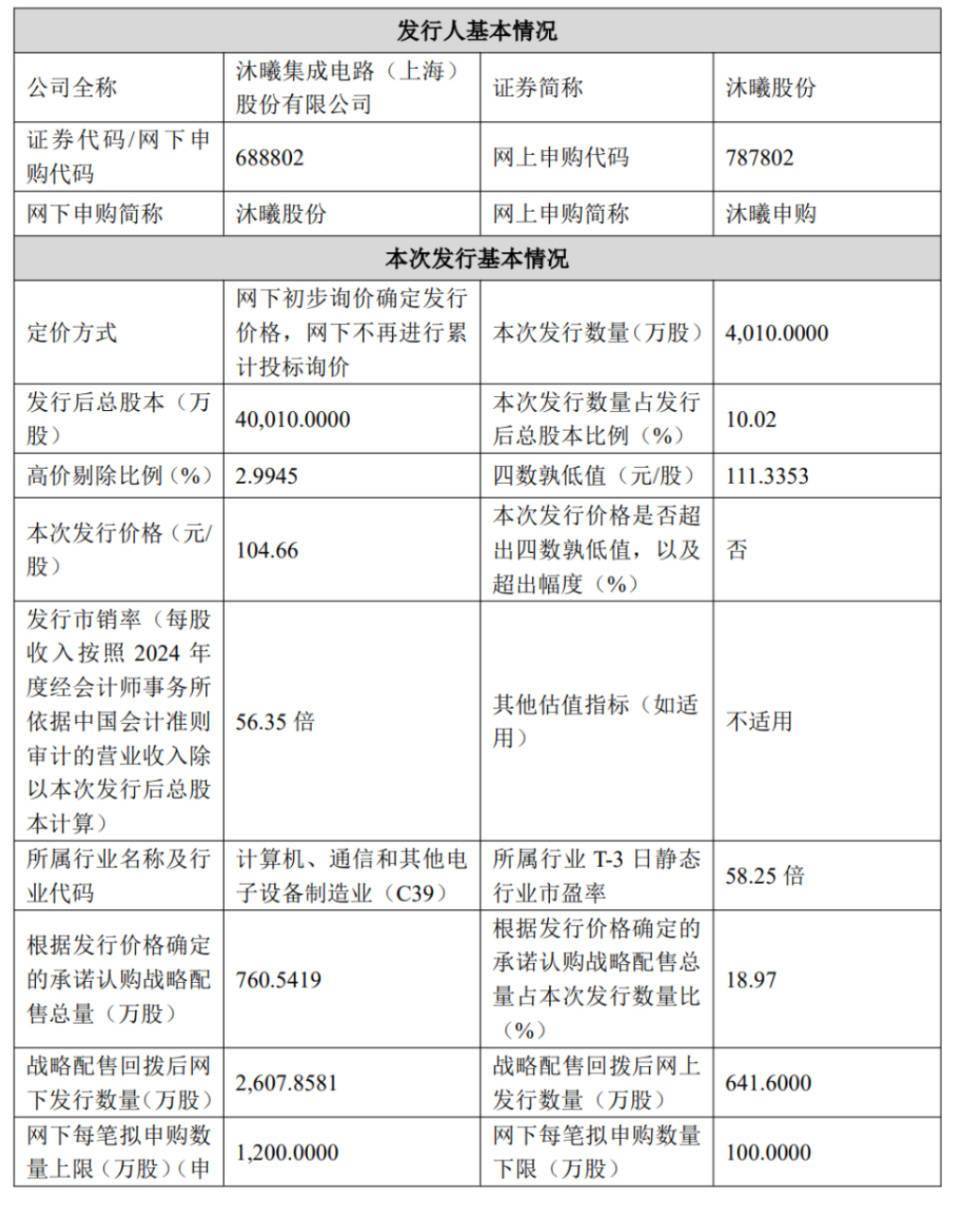
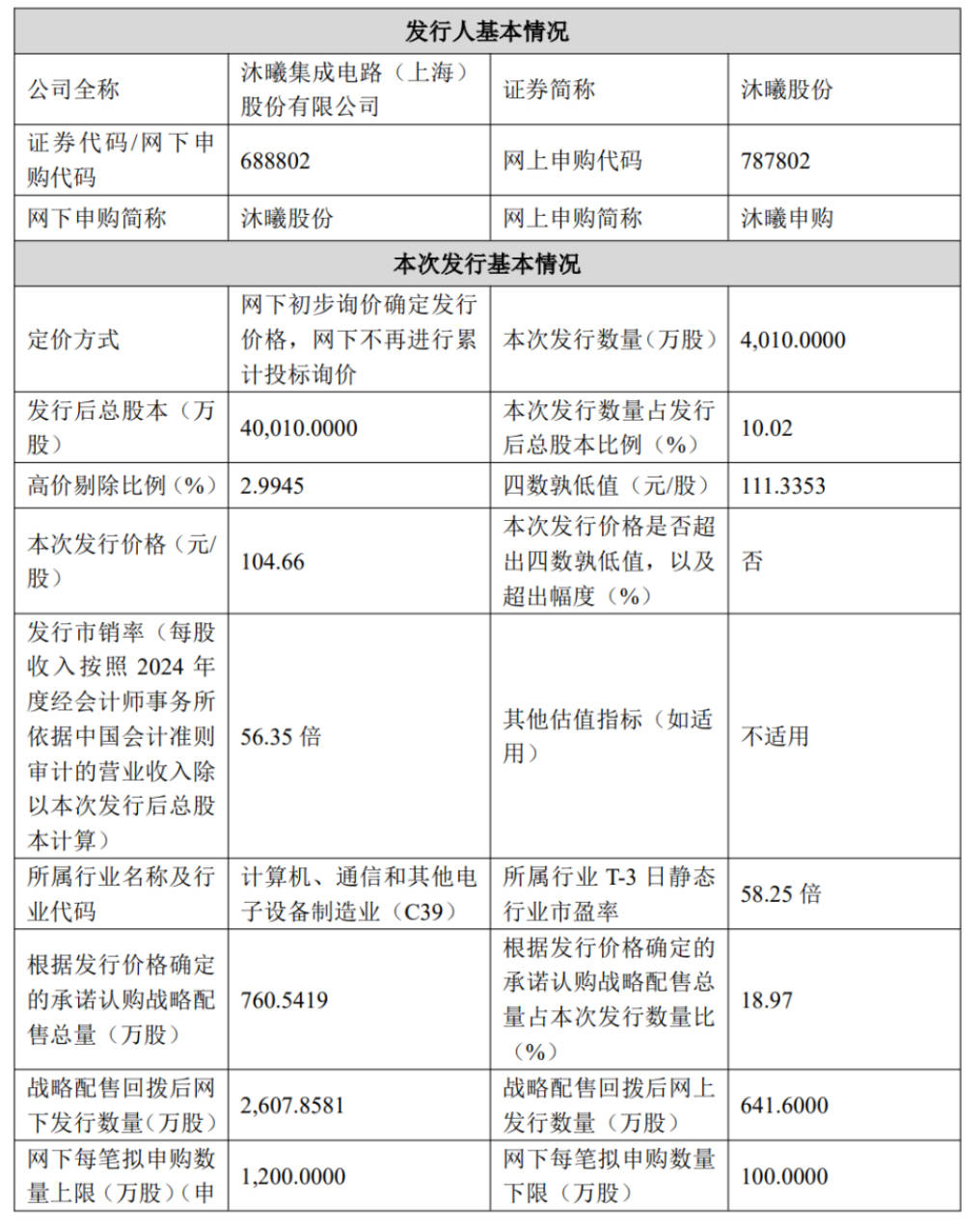
摩尔线程在12月5日正式登陆科创板市场,上市首日股价大涨了425%,随后继续冲高至每股941.08元。在短短一周时间内,摩尔线程从 114.28元的发行价格大幅飙升至941.08元的历史新高,累计涨幅巨大。 继摩尔线程之后,又一家国产GPU巨头 沐曦股份正式上市,此时距离摩尔线程上市只有12天时间,沐曦股份的上市会重演摩尔线程的炒 作行情吗? 其中,最重要的是市场环境变化。在高度活跃的市场氛围下,新股更容易获得市场资金的炒作,在牛市行情下,新股获得的估值溢价往 往远高于熊市或震荡市场。 | 发行人基本情况 | | | | | --- | --- | --- | --- | | 公司全称 | 沐曦集成电路(上海) | 证券简称 | 沐曦股份 | | 股份有限公司 | | | | | 证券代码/网下申 | 688802 | 网上申购代码 | 787802 | | 购代码 | | | | | 网下申购简称 | 沐曦股份 | 网上申购简称 | 沐曦申购 | | 本次发行基本情况 | | | | | 定价方式 | 网下初步询价确定发行 价格,网下不再进行累 | 本次发行数量(万股) | 4.010.0000 | | 计 ...
国内GPU巨头沐曦股份正式上市,会重演摩尔线程的炒作行情吗?
Sou Hu Cai Jing· 2025-12-16 23:25
| 发行人基本情况 | | | | | --- | --- | --- | --- | | 公司全称 | 沐曦集成电路(上海) | 证券简称 | 沐曦股份 | | 股份有限公司 | | | | | 证券代码/网下申 | 688802 | 网上申购代码 | 787802 | | 购代码 | | | | | 网下申购简称 | 沐曦股份 | 网上申购简称 | 沐曦申购 | | 本次发行基本情况 | | | | | 定价方式 | 网下初步询价确定发行 价格,网下不再进行累 | 本次发行数量(万股) | 4,010.0000 | | 计投标询价 | | | | | 发行后总股本(万 | 40,010.0000 | 本次发行数量占发行 | 10.02 | | 股) | | 后总股本比例(%) | | | 高价剔除比例(%) | 2.9945 | 四数孰低值(元/股) | 111.3353 | | 本次发行价格(元/ | 104.66 | 本次发行价格是否超 出四数孰低值,以及 | 合 | | 股) | | | | | 发行市销率(每股 | | 超出幅度(%) | | | 收入按照 2024 年 | | | | | 度经会 ...
A股崩了!全市场超4300股下跌,到处都是泡沫,破裂警报拉响!
Sou Hu Cai Jing· 2025-12-16 10:46
Group 1 - The A-share market experienced a significant decline, with major indices dropping: Shanghai Composite Index fell by 1.11%, Shenzhen Component Index by 1.51%, and ChiNext Index by 2.1%, with over 4,300 stocks closing in the red, representing more than 90% of the market [1] - Analysts pointed out that the current market downturn is a result of accumulated "virtual fire" from speculative trading in AI concepts, micro-cap stocks, and high-valuation tech sectors, indicating a lack of solid economic data to support the market [3][5] - The technology sector was identified as the first domino to fall in this sell-off, with a Goldman Sachs report suggesting that the biggest opportunities in the stock market next year will not be in AI, leading to a rapid decline in previously crowded AI trades [3] Group 2 - Global risk appetite is reversing, with upcoming U.S. employment and inflation data raising concerns about the Federal Reserve potentially re-evaluating interest rate hike expectations, prompting investors to retreat from high-valuation, low cash flow assets [5] - The current market decline is viewed as a reckoning for "false prosperity," highlighting that price increases without earnings support, such as in micro-cap stocks and AI concepts, are unsustainable [5][6] - The A-share market is at a crossroads between confidence and reality, with a need for effective policy signals to restore economic expectations; otherwise, reliance on sector rotation or emotional trading may not prevent further declines [6]
博时基金市场异动陪伴12月16日:沪深三大指数跌超1%,创业板指跌超2%
Xin Lang Cai Jing· 2025-12-16 08:03
♨博时基金市场异动陪伴 市场表现: MACD金叉信号形成,这些股涨势不错! 责任编辑:江钰涵 ♨博时基金市场异动陪伴 市场表现: 12月16日,沪深三大指数跌超1%,创业板指跌超2%。 12月16日,沪深三大指数跌超1%,创业板指跌超2%。 解析: ‼今日A股市场调整,创业板指数跌幅较深,或是海内外多重压力共同作用的结果。外部看,隔夜美股 因AI概念股持续抛售而收跌,全球科技板块情绪受挫传导至A股相关板块。同时,美联储官员暗示货币 政策已达"良好位置",叠加日本央行加息预期扰动,全球流动性宽松预期受限,或边际压制成长板块估 值。国内层面,市场正处于重要会议后的政策细则等待期,增量政策的落地节奏尚不明朗。加之临近年 底,部分资金倾向于获利了结或转向防御,市场整体情绪趋于谨慎。 ‼最新公布的11月份宏观经济数据呈现出"外需有韧性,内需待巩固"的复杂图景。一方面,出口同比增 长5.7%,展现出超预期韧性;规模以上工业增加值在装备制造和高技术制造业支撑下保持稳定;CPI同 比涨幅扩大及PPI环比转正,也显示价格压力有所缓解。另一方面,社会消费品零售总额同比增速放 缓,固定资产投资同比降幅扩大,其中房地产开发投资下滑显 ...

迟来的美国非农与强势的金银
Xin Lang Cai Jing· 2025-12-16 05:29
热点栏目 自选股 数据中心 行情中心 资金流向 模拟交易 客户端 撰文:嘉盛集团资深分析师Jerry Chen 美联储的降息和扩表决定并未激发市场热情,投资者在本周关键的非农和通胀数据出炉之前保持谨慎。 美国三大指数周一全线下跌,AI概念股延续过去一个月的低迷表现,而特斯拉同期上涨14%逼近历史高 点,两者形成鲜明对比。受益于特斯拉的表现和SpaceX的估值,马斯克身价达到6000亿美元。 值得注意的是,纳斯达克交易所拟申请推出24小时,以方便海外投资者的美股交易需求。纽约证券交易 所和芝加哥期权交易所也有类似的计划。数据显示,截至今年二季度海外投资者所持有的美股总市值超 过18万亿美元,约占美股总市值的26%。 美元指数隔夜跌至两个月低点,帮助黄金连续五天上涨并站上4300美元,不过金价连续两天从日内高点 4350上方回落,暗示该位置的显著压力。白银周一则延续强劲涨幅收盘突破64美元。 非美货币隔夜涨跌互现,欧元四连阳后升至1.1753,澳元则连续三天高位回调跌至0.6641。日本央行本 周的加息预期拖累美/日跌破155关口。 WTI原油收低于56.54美元,刷新两个月新低。目前一盎司白银的价格已经超过了一 ...


2026年海外宏观展望:弱复苏与再平衡
GOLDEN SUN SECURITIES· 2025-12-16 04:33
Group 1 - The core view of the report indicates a "weak recovery + rebalancing" for the global economy in 2026, supported by four factors: balance sheet repair, loose monetary policy, fiscal expansion, and the AI investment wave, while constrained by high interest rates, tariff impacts, and difficulty in achieving synchronization across economies [1][19]. - The report highlights that the global economic recovery is expected to be more evident in quarter-on-quarter improvements rather than year-on-year increases, reflecting a gradual upward trend but with weak momentum [2][53]. - The analysis suggests that the economic performance of developed countries is likely to gradually recover, while emerging markets will remain relatively stable, indicating a convergence in economic performance across different regions [2][53]. Group 2 - The report anticipates that the Federal Reserve will likely only implement two rate cuts in 2026, aligning with the economic fundamentals, but there is a concern regarding the potential loss of the Fed's independence due to political influences surrounding the upcoming leadership change and midterm elections [3][55]. - It is noted that the macro environment is favorable for U.S. equities due to recovery and rate cuts, but the current valuations are at levels reminiscent of the 2000 internet bubble, which may limit upside potential [4][9]. - The report emphasizes that while U.S. Treasury yields may not decline significantly due to economic fundamentals, the change in Fed leadership and potential for unexpected rate cuts could create downward pressure on yields [4][36]. Group 3 - The report discusses the expected stabilization of the U.S. dollar due to a more balanced economic performance between the U.S. and Europe, although it is unlikely to see significant strength, with the Chinese yuan projected to appreciate slightly [4][38]. - Gold is expected to continue its upward trend, but the pace may slow due to high valuations, with a focus on the potential for industrial metals like silver and copper to outperform [4][41]. - The outlook for oil prices suggests a continuation of a weak trend due to oversupply, with Brent crude oil expected to stabilize around $60 per barrel, contingent on geopolitical factors not escalating [4][44].