人工智能

Search documents
金元证券每日晨报-20260320
Jinyuan Securities· 2026-03-20 02:05
Market Overview - The A-share market showed a decline with the Shanghai Composite Index at 4006.55 points, down 1.39%. The Shenzhen Component Index fell to 13901.57 points, down 2.02%, and the ChiNext Index decreased to 3309.10 points, down 1.11% [10] - In the Asia-Pacific market, the Hong Kong Hang Seng Index dropped 2.02% to 25500.58 points, while the Hang Seng Tech Index fell 2.19% to 4996.28 points. The KOSPI Index in South Korea decreased by 2.73% to 5763.22 points, and the Nikkei 225 Index in Japan fell 3.38% to 53372.53 points [10] - European markets also experienced declines, with the UK FTSE 100 down 2.35% to 10063.50 points, Germany's DAX 30 down 2.82% to 22839.56 points, and France's CAC 40 down 2.03% to 7807.87 points [10] - In the US market, the Dow Jones Industrial Average fell 0.44% to 46021.43 points, the Nasdaq Composite decreased by 0.28% to 22090.69 points, and the S&P 500 also dropped 0.28% to 6606.49 points [10] International News - US President Trump met with Japanese Prime Minister Fumio Kishida, discussing military actions against Iran and asserting that the US would not deploy more troops to the Middle East [9] - The US SEC released a document clarifying which types of cryptocurrencies can be considered securities and how non-securities can become investment contracts under specific conditions [11] Domestic News - The People's Bank of China emphasized the need for a moderately loose monetary policy, utilizing various monetary policy tools to maintain liquidity and stabilize financial markets [11] - The Ministry of Industry and Information Technology held a roundtable meeting focusing on enhancing the self-sufficiency of critical materials and promoting innovation in key sectors [11] - The China Securities Regulatory Commission held a meeting with representatives from various investment institutions to discuss the "14th Five-Year Plan" for the capital market [11] - The Hong Kong Securities and Futures Commission set limits on the number of active projects that a sponsor can manage simultaneously, capping it at six [11] Important Announcements - Dinglong Co., Ltd. announced the completion of its 300-ton KrF/ArF photoresist production project [12] - Tunnel Co., Ltd. participated in a 3.5 billion yuan subscription for China Energy Construction's private placement [12] - China Jushi aims to achieve a revenue of 18.881 billion yuan by 2025, with record sales in fiberglass yarn and electronic cloth [12]
首家互联网保险公司业绩出炉!坚定看好互联网车险,积极布局权益资产
券商中国· 2026-03-20 01:12
Core Viewpoint - In 2025, ZhongAn Online reported a total premium of 35.735 billion yuan, a year-on-year increase of 6.9%, and an adjusted net profit of 1.8 billion yuan, a significant increase of 198.3% [2]. Group 1: Business Performance - The health ecosystem generated a total premium of 12.682 billion yuan, up 22.7% year-on-year, while the digital life ecosystem led with 15.973 billion yuan, showcasing strong performance in emerging sectors like pet insurance and low-altitude economy [3]. - The auto ecosystem saw a total premium increase of 34.6%, with new energy vehicle insurance premiums skyrocketing by 206.2% [5]. - The company achieved an underwriting profit of 1.412 billion yuan, marking a 42.5% increase and continuing its streak of five consecutive years of underwriting profitability [2]. Group 2: Consumer Finance Business - The consumer finance segment reported a total premium of 4.32 billion yuan, down 10.6% year-on-year, accounting for 12.1% of total premiums [4]. - The comprehensive cost ratio for this segment increased from 90.1% in 2024 to 97.0% in 2025, indicating rising costs [4]. - The company plans to further reduce the scale of its consumer finance business while maintaining asset quality through improved operational and risk control mechanisms [4]. Group 3: Investment Strategy - As of December 31, 2025, the total investment assets amounted to approximately 40.302 billion yuan, with fixed-income investments making up 70% of the portfolio [6]. - The total investment income for the year reached 2.124 billion yuan, a 59.1% increase from 1.335 billion yuan in 2024 [6]. - The company aims to maintain a conservative investment strategy focused on low-risk fixed-income assets while exploring opportunities in equity investments, which increased to 9% of the portfolio [7]. Group 4: Digital Banking and AI Strategy - ZhongAn Bank, a subsidiary, became the first digital bank in Hong Kong to achieve profitability, with a net profit of 17.27 million HKD and over 1 million retail users [8]. - The company has integrated AI across its operations, with over 20 billion calls to its AI model in 2025, enhancing efficiency in product design, underwriting, and claims processing [9]. - The management emphasizes that AI is a core capability rather than just a tool, aiming to leverage it for sustainable growth while managing risks [10].



深度解读英伟达芯片路线图
半导体行业观察· 2026-03-20 00:56
Core Insights - Nvidia has established itself as a dominant supplier in the GenAI revolution, showcasing a clear roadmap for its hardware and software developments in the AI sector [2][3] - The 2023 roadmap reveals Nvidia's annual update plan for its AI system components, with products like GX200 and Rubin R200 GPU accelerators set for release by 2025 [3][4] - Nvidia's market share in AI computing remains substantial, with projections indicating that the company will capture a significant portion of the server market revenue by 2025 [5] Roadmap Developments - The 2023 roadmap marks the first detailed annual update plan for Nvidia's AI systems, including products like Blackwell GPUs and Vera Arm server CPUs [3][4] - Nvidia's 2026 roadmap includes advancements in GPU technology, with the introduction of the "Feynman Ultra" GPU and updates to the ConnectX-10 SmartNIC [4][6] - The roadmap emphasizes the importance of these developments for OEMs and ODMs, as they are crucial for the deployment of AI training and inference systems [4][5] Market Projections - The server market is projected to reach between $420 billion and $450 billion by 2025, with Nvidia expected to generate approximately $190 billion from system material costs [5] - Machines equipped with Nvidia GPUs are anticipated to generate revenues between $275 billion and $325 billion, indicating a market share of 61% to 77% for Nvidia technology [5] - The profitability of AI systems is heavily skewed towards Nvidia, as evidenced by its gross, operating, and net profit margins [5] Technical Specifications - The Rubin R200 GPU is designed to deliver 50 petaflops of FP4 performance, significantly outperforming previous models [9] - The upcoming "Rubin Ultra" GPU is expected to double the GPU chip count and achieve 100 petaflops of FP4 performance, with advanced memory capabilities [16][19] - Nvidia's NVLink technology is set to evolve, with NVLink 6 offering 3,600 GB/sec bandwidth and NVLink 7 projected to reach 7,200 GB/sec [18][21] Future Innovations - Nvidia plans to introduce the "Kyber" rack, which will support a higher number of GPU slots and enhance overall system performance [16][21] - The integration of advanced memory technologies and chip stacking in future products like the Feynman GPU is expected to significantly boost throughput [23] - The roadmap indicates a strategic focus on optimizing both copper and optical interconnects to enhance system efficiency and performance [22][20]

全球芯片制造,格局生变
半导体行业观察· 2026-03-20 00:56
Core Insights - The semiconductor foundry demand structure revolves around the decision of "in-house or outsourced" manufacturing, with integrated device manufacturers (IDMs) retaining internal capabilities while increasingly relying on external foundries. By 2025, the U.S. will remain the only region with a structural demand surplus, depending on Asian foundries to support domestic device companies [2] - The COVID-19 pandemic and escalating geopolitical tensions have exposed the structural vulnerabilities of supply chains characterized by regional specialization and high concentration. Since 2022, the CHIPS Act and various national investment plans have accelerated global capacity expansion, but progress varies by country and region [2] - The semiconductor demand is projected to grow at a compound annual growth rate (CAGR) of approximately 6.7%, driven by the server, automotive, and industrial markets, which will similarly boost foundry revenues [2] Group 1 - Global semiconductor wafer demand has returned to a growth trajectory supported by long-term global expansion, with foundry capacity rapidly increasing due to ongoing investments in advanced and mature fabs [5] - During the pandemic, capacity utilization reached high levels but has since significantly declined. A new growth cycle in semiconductors is forming, led by memory, logic, and power devices, although the wafer density remains low due to strong demand for advanced process nodes [5] - China’s share of global foundry capacity is steadily increasing, while shares from Taiwan, Japan, Europe, and the U.S. are relatively declining, highlighting China's growing structural importance in the global foundry ecosystem [5] Group 2 - In 2022, capital expenditure for open foundries peaked at $66 billion, approximately 50% of their revenue, but is expected to decline to about 34% by 2025 as the investment cycle slows [8] - The open foundry ecosystem, led by TSMC, has maintained strong profitability over the past five years, with gross margins around 41% and operating and net profit margins at 22% and 21%, respectively [8] - The interpretation of Moore's Law has evolved, focusing more on higher core counts, heterogeneous integration, and multi-chip architectures, as frequency and power improvements approach practical limits [8]


先进封装,碰壁了
半导体行业观察· 2026-03-20 00:56
Core Insights - The semiconductor packaging industry is facing increasing challenges as advanced packaging technologies evolve, particularly due to the complexities introduced by artificial intelligence and high-performance computing designs [2][3] - Mechanical and process control issues are becoming significant bottlenecks in scaling up packaging technologies, moving beyond traditional interconnect density limitations [2][3] Group 1: Packaging Challenges - Warping has emerged as a critical issue, affecting assembly and alignment, and is often a manifestation of material and structural imbalances present from the start [5][6] - The mismatch in thermal expansion coefficients (CTE) and stiffness imbalances in layered structures contribute to warping, complicating the packaging process [6][7] - As packaging sizes increase, the economic and yield advantages of wafer-level processes diminish, leading to a shift towards panel-level processes [7][10] Group 2: Material Considerations - Glass substrates offer advantages such as stability and thermal matching with silicon, but they also introduce brittleness and different failure modes, particularly at edges [10][11] - The sensitivity of copper hybrid bonding to contamination and stress increases as interconnect spacing decreases, complicating manufacturing processes [12][13] - The integration of back-end processing into precision budgets is becoming essential as device thickness decreases, impacting overall yield and quality [16][17] Group 3: Supply Chain and Economic Factors - The shortage of substrates is not merely a supply issue but reflects the limitations of traditional substrate platforms in meeting the demands of advanced packaging technologies [19][20] - The industry is exploring new platforms that can support larger components and higher integration levels while managing the mechanical complexities introduced by these advancements [19][22] - The transition to larger modules and tighter chip integration necessitates a holistic view of factors such as substrate selection, carrier strategies, and process sequences to ensure repeatable manufacturing and economic viability [22][23]
财政部发布财政收支情况,北证50下跌
Soochow Securities· 2026-03-20 00:50
Market Performance - On March 19, 2026, the North Exchange 50 index fell by 3.33%[1] - The average market capitalization of the 299 constituent stocks in the North Exchange is 2.844 billion[12] - Trading volume on the North Exchange reached 16.503 billion, an increase of 1.349 billion from the previous trading day[12] Fiscal and Taxation Insights - In January-February 2026, the total public budget revenue was 4.4154 trillion, a year-on-year increase of 0.7%[7] - The revenue from securities transaction stamp duty surged by 110% to 49.9 billion, reflecting a significant increase in market activity[7] - Total public budget expenditure was 4.6706 trillion, up 3.6% year-on-year[7] Industry Developments - The Ministry of Industry and Information Technology emphasized the strategic importance of new materials for high-quality development, focusing on AI applications in material innovation[6] - The low-altitude economy is projected to reach a market size of 3.5 trillion by 2035, with eVTOL technology identified as a key growth driver[9] Company Announcements - Minshida reported a 9.16% increase in total revenue to 445 million for 2025, with net profit rising by 26.70% to 127 million[21] - Guoyuan Technology announced the lifting of restrictions on 21,400 shares, representing 0.016% of total equity[22] - Knight Dairy provided a guarantee of 32.95 million for its subsidiary, with the total external guarantee balance at 67.21% of the latest audited net assets[23]
渤海证券研究所晨会纪要(2026.03.20)-20260320
BOHAI SECURITIES· 2026-03-20 00:45
Macro and Strategy Research - The A-share market has shown a good start to the year, with a focus on reallocation opportunities as major indices adjusted recently, with the Shanghai Composite Index down 2.97% and the ChiNext Index down 0.25% [2] - Fixed asset investment in January-February increased by 1.8% year-on-year, with infrastructure investment rising significantly by 11.4%, driven by policy funding and project releases [2] - Consumer retail sales grew by 2.8% year-on-year in January-February, indicating a need for stronger consumer demand [2] Industry Research - Domestic cloud service providers have raised prices, with demand for computing power continuing to be released; for instance, Alibaba Cloud increased some product prices by up to 34% [9] - The Shanghai government plans to provide 1 billion yuan annually in computing power vouchers to establish the largest computing power scheduling platform in the country [9] - The AI computing sector is expected to see significant growth, driven by applications like OpenClaw, which have increased token usage, reflecting high demand for inference services [10] Company Research: Kelaiying (002821) - Kelaiying is a leading technology-driven CDMO service provider, focusing on small molecule CDMO and exploring emerging businesses, with a stable shareholding structure and experienced management team [6] - The company has established multiple advanced R&D centers to enhance its capabilities in small molecule drug development and production, with a steady increase in commercial projects expected from 2023 to 2024 [6] - Emerging business areas are being actively developed, leveraging the company's extensive experience in the pharmaceutical industry to create a one-stop custom service platform for innovative drugs [7] Company Research: Small Molecule CDMO - The small molecule CDMO sector is experiencing steady growth, with the company enhancing its capabilities in peptide and oligonucleotide CDMO, driven by market demand [7] - The company is focusing on ADC and has a robust order book, with international service capabilities continuously improving [7] - Clinical CRO business is also seeing a return to growth, with new projects being undertaken in various disease areas [7] Company Valuation - Under a neutral scenario, the company is expected to have EPS of 3.15, 3.65, and 4.28 yuan per share for 2025-2027, with a PE ratio of 27.27 for 2026, and an "overweight" rating is given [8]
全球大公司要闻 | 阿里净利润大幅下滑,三星豪掷110万亿押注AI芯片
Wind万得· 2026-03-20 00:44
Group 1 - Alibaba reported Q3 FY2026 revenue of 284.84 billion yuan, a 2% year-on-year increase, but adjusted net profit decreased by 67% to 16.71 billion yuan, slightly below market expectations. Alibaba Cloud revenue grew by 36%, with AI-related product revenue showing triple-digit growth for the tenth consecutive quarter. The term "AI" was mentioned 85 times in the report, and the cloud intelligence group's revenue also increased by 36% [3] - Samsung Electronics plans to invest over 110 trillion won in R&D and facilities by 2026, focusing on AI chip development and creating an integrated industry system for storage, foundry, and advanced packaging. The company will supply HBM4 chips to OpenAI for its self-developed AI processors [4] - Qatar Energy estimates a revenue loss of approximately 20 billion dollars due to damage to two LNG production lines and one GTL facility from recent attacks, with repairs expected to take up to five years [4] Group 2 - TSMC is accelerating its 2nm process capacity expansion in response to the growing demand for high-end chips driven by AI applications, anticipating that AI-related chip demand will be a core driver of its performance over the next three years [7] - Ant Group launched the "Ant Tianjian 2.0 - Lobster Guardian" AI security protection system, offering free services to the first 100 partner companies [7] - China National Offshore Oil Corporation (CNOOC) reported a 6.14% year-on-year decrease in revenue to 219.50 billion yuan for 2025, with net profit down 37.13% due to adjustments in the global container shipping market [7] Group 3 - Apple saw a 23% year-on-year increase in sales in the Chinese market in the first nine weeks of 2026, with the new iPhone 17e selling 23,000 units in the first five days, outperforming previous models [10] - Amazon launched its AI voice assistant Alexa+ in the UK, with a free trial period, and plans to invest 42 billion yuan in logistics and technology in Poland over the next three years [10] - Nvidia announced a long-term partnership with Qnity Electronics to develop advanced semiconductor manufacturing materials and packaging technologies for AI and high-performance computing [11] Group 4 - Toyota's GAC Toyota will launch the pure electric model Platinum 7 on March 29, with a starting price of 156,800 yuan and a maximum range of 710 km [15] - SK Hynix's stock price fell due to the Samsung strike and overall semiconductor market volatility, as the company advances AI chip factory construction [15] - LG Group will adjust production capacity at its joint battery factory with General Motors, shifting from automotive batteries to energy storage LFP batteries [15]



美国的“阳谋”:让英伟达充当AI基建的“小发改委”
Guan Cha Zhe Wang· 2026-03-20 00:31
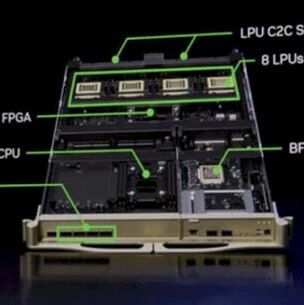
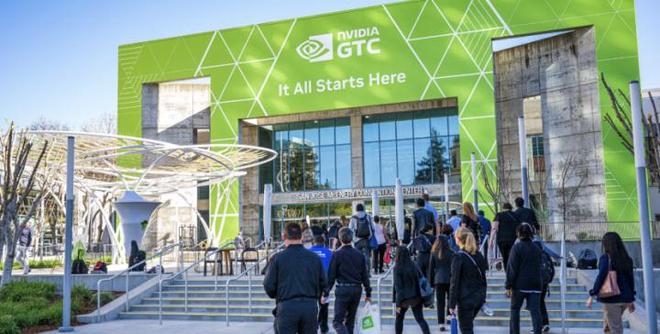
Core Insights - The article discusses NVIDIA's significant role in shaping the AI industry, particularly highlighted during the GTC 2026 event, where CEO Jensen Huang emphasized the company's vision of AI as a multi-layered "five-layer cake" with energy as the foundational element [3][9][19] Group 1: Product and Technology Developments - NVIDIA introduced several new products at GTC 2026, including the Vera CPU, Rubin GPU, and Groq LPU, which collectively represent a new system architecture philosophy aimed at optimizing both high throughput and low latency [4][5] - The Vera CPU, designed for high single-core performance, signifies NVIDIA's ambition to move beyond being just a GPU company to becoming a complete machine provider [5] - The introduction of the Nemotron alliance aims to ensure that AI models from various companies are optimized for NVIDIA hardware, reinforcing the company's ecosystem [7] Group 2: Infrastructure and Energy Considerations - Huang highlighted that energy is the "absolute constraint" determining how much intelligence a system can produce, indicating NVIDIA's focus on energy efficiency and planning for future power needs [9][19] - The company is developing the "Vera Rubin Space-1" space data center system, addressing potential future limitations of terrestrial power and cooling for AI computing [9] - NVIDIA's infrastructure strategy includes a comprehensive approach that encompasses not just chips but also land, power delivery, cooling systems, and network architecture, which Huang refers to as "AI factories" [6] Group 3: Market Position and Strategic Influence - NVIDIA's influence extends to the AI infrastructure investment landscape, with Huang predicting a demand of at least $1 trillion by 2027, comparable to national infrastructure spending [11] - The company controls GPU supply allocation, which significantly impacts the AI capabilities of major cloud service providers like AWS and Azure, effectively determining their business limits [12] - Huang's remarks suggest that NVIDIA is not just a company but acts as a "market coordinator" for the AI industry, aligning its commercial interests with broader national strategic goals [14][19]
华尔街分析师力挺长牛!纷纷上调美光目标价!
美股IPO· 2026-03-20 00:24
Core Viewpoint - Micron Technology's stock price fell after earnings release, despite analysts praising its performance guidance, indicating a cautious investor sentiment following significant capital expenditure plans [3][4]. Group 1: Earnings and Stock Performance - Micron's earnings and guidance exceeded expectations, leading to a nearly 7% drop in pre-market trading after a historic rise of over 350% in the past 12 months [3]. - The company anticipates capital expenditures exceeding $25 billion for the current fiscal year, up from a previous market expectation of $22.4 billion, with further increases expected by fiscal year 2027 [3]. Group 2: Analyst Opinions - Wells Fargo analyst Aaron Rakers raised the target price for Micron from $470 to $550, citing strong structural growth prospects in the memory market [3]. - Bank of America analyst Vivek Arya also increased the target price from $400 to $500, highlighting that memory prices may remain elevated due to several factors, including the importance of memory in the token economy and limited cleanroom availability until fiscal year 2027-2028 [5]. - Canadian Imperial Bank of Commerce analyst Srini Pajjuri noted that concerns over peak gross margins and rising capital expenditures contributed to the stock's decline, but the long-term outlook remains very positive [6]. Group 3: Market Dynamics - The demand for artificial intelligence remains strong, with structural drivers such as the increasing share of direct current solid-state drives (eSSD) and high bandwidth memory (HBM) playing a significant role in the current upcycle [6]. - Analysts expect prices to remain healthy until 2027, with significant potential for earnings multiple expansion as sustainability becomes evident [6].