
消费升级

Search documents
乳业板块活跃 三元股份股价走出“3连板”
Zheng Quan Ri Bao Zhi Sheng· 2025-11-12 10:37
Core Viewpoint - The dairy sector remains active, with significant stock price movements, particularly for Sanyuan Foods, which has seen a notable increase in its stock price and strong financial performance [1][2]. Group 1: Stock Performance - The dairy sector rose by 0.44% as of November 12, with Sanyuan Foods hitting a "limit up" and achieving a "three consecutive limit up" in stock price [1]. - Sanyuan Foods reported a cumulative stock price deviation of over 20% in three consecutive trading days, indicating abnormal trading activity [1]. - Other companies in the sector, such as *ST Tianshan and Ketaobiotech, also experienced stock price increases, with some exceeding 10% and 5% gains, respectively [1]. Group 2: Financial Performance - For the first three quarters of the year, Sanyuan Foods achieved a revenue of 4.871 billion yuan and a net profit of 236 million yuan, marking a year-on-year increase of 124.84% [1]. - The company's net cash flow from operating activities reached 329 million yuan, reflecting a significant year-on-year growth of 387% [1][2]. Group 3: Market Trends and Strategic Positioning - Sanyuan Foods benefits from a strong market position as a regional dairy leader, supported by a growing interest in the food and beverage sector and a favorable investment environment [2]. - The company has focused on low-temperature dairy products, leveraging its "100% self-owned milk source" and "T+0 listing" as key selling points [2][3]. - The recent popularity of traditional dairy products, such as "milk skin candy," has positively impacted market sentiment and capital interest in the dairy sector [3]. Group 4: Industry Insights - The dairy industry is undergoing structural upgrades, with products that have technical barriers and cultural significance gaining competitive advantages [3]. - Sanyuan Foods' strategic focus on core business and low-temperature products aligns well with current consumer trends that prioritize quality and experience [3].

今年“双11”大宗消费稳健增长
Xin Hua Cai Jing· 2025-11-12 10:23
Core Insights - The "Double 11" shopping festival has shown robust growth in major consumer categories such as mobile communications, home appliances, and complete computers, becoming a significant driver of overall market consumption [1][2] - High-priced products have seen a notable increase in sales growth, indicating a shift in consumer purchasing behavior towards higher-value items [1][2] Group 1: Sales Performance - Meituan's flash purchase platform reported that from October 31 to November 11, transaction volume, number of orders, and per capita spending all reached new highs, with per capita spending increasing by nearly 30% [1] - Traditional high-priced categories like mobile phones and liquor saw sales growth exceeding 100% year-on-year, reflecting a strong consumer willingness to purchase high-value goods through instant retail channels [1] Group 2: Consumer Trends - Data from "What Worth Buying" indicated that from October 16 to November 11, the top five categories by GMV were mobile communications, home appliances, household electrical appliances, residential furniture, and complete computers, all of which are typical major consumer goods [1] - There was a rapid growth of over 30% in quality lifestyle products such as outdoor footwear and clothing, indicating a sustained consumer pursuit of quality living [1] Group 3: Technological Impact - JD.com reported explosive growth in 3C digital AI products during the "Double 11" period, with new mobile phone sales increasing by over four times year-on-year, and AI products like tablets and speakers also seeing over 100% growth [2] - The home appliance and furniture sector experienced a 150% increase in sales of new products, with "delivery and installation" service orders rising by over 90%, highlighting a growing consumer demand for comprehensive service offerings [2] Group 4: Market Dynamics - Experts attribute the steady growth in major consumer categories to the ongoing recovery of consumer confidence and continuous innovation in retail models [2] - The deep integration of online and offline retail models has provided consumers with a more convenient and efficient shopping experience, creating new growth opportunities for brands and physical stores [2]
最新发声:坚决防止市场大起大落、急涨急跌
Sou Hu Cai Jing· 2025-11-12 06:04
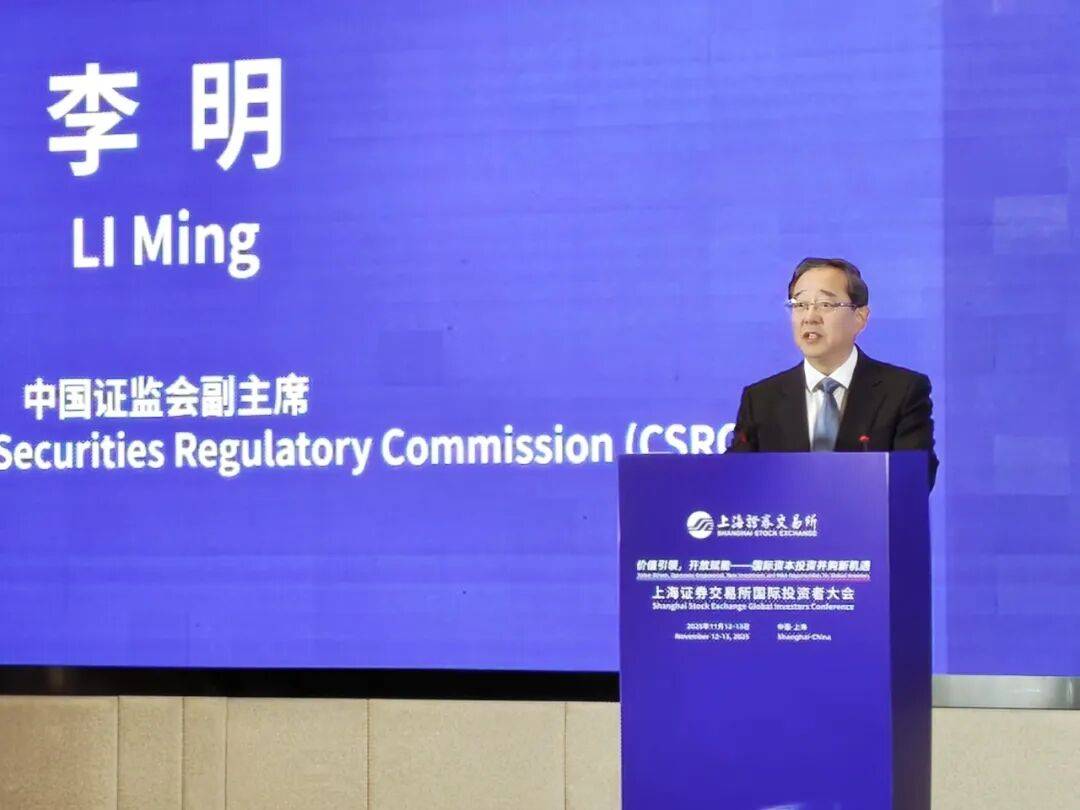
Core Insights - The Shanghai Stock Exchange International Investor Conference has commenced, aiming to bridge communication between international investors and domestic regulatory bodies, exchanges, listed companies, and financial institutions to capture new investment and merger opportunities [1][1] - The theme of this year's conference is "Value Leading, Open Empowerment - New Opportunities for International Capital Investment and Mergers" [1] Group 1: Regulatory and Market Environment - The China Securities Regulatory Commission (CSRC) emphasizes the stability and potential of the Chinese economy, asserting that the capital market operates smoothly and has a solid foundation for long-term growth [4] - The CSRC plans to enhance the inclusiveness and adaptability of capital market systems, aiming to improve the convenience for foreign institutions participating in the Chinese capital market [4][5] Group 2: Local Government Initiatives - Shanghai's government aims to attract more domestic and foreign institutions to operate in the city, enhancing the quality of financial services to the real economy [7] - The city is focused on creating a market-oriented, law-based, and international business environment to facilitate investment [7] Group 3: Exchange Development Goals - The Shanghai Stock Exchange (SSE) aims to build a world-class exchange by optimizing key systems related to issuance, refinancing, and mergers to direct capital towards advanced technologies and future industries [9] - SSE is committed to expanding cross-border investment channels and enriching its international product offerings to enhance global competitiveness [9] Group 4: Investment Trends - The investment landscape in China is characterized by three main themes: innovation, restructuring, and international expansion, which are seen as drivers of consumption upgrades [11] - International investors are increasingly recognizing the vibrancy of the Chinese economy, with a focus on sustainable growth driven by innovation [13]

每日市场观察-20251112
Caida Securities· 2025-11-12 05:59
Market Performance - On November 11, the Shanghai Composite Index fell by 0.39%, the Shenzhen Component Index dropped by 1.03%, and the ChiNext Index decreased by 1.4%[3] - The total trading volume in the Shanghai and Shenzhen markets exceeded 1.99 trillion yuan, a decrease of over 180 billion yuan compared to the previous trading day[1] Sector Analysis - The sectors with the highest gains included commerce, real estate, banking, chemicals, steel, and building materials, while electronics, communications, computers, and non-bank financials saw the largest declines[1] - The number of stocks that rose in the two markets exceeded 2,780, with themes like cultivated diamonds, perovskite batteries, and geothermal energy leading the gains[1] New Energy Sector - The new energy sector, particularly photovoltaic and energy storage, has attracted significant market interest, with the installed capacity of photovoltaic power generation reaching 1.125 billion kilowatts, a year-on-year increase of 45.7%[2] - Wind power saw an addition of 61.09 million kilowatts, with a cumulative installed capacity of 582 million kilowatts, reflecting a year-on-year growth of 21.3%[2] Fund Flow - On November 11, the net outflow from the Shanghai Stock Exchange was 6.869 billion yuan, while the Shenzhen Stock Exchange experienced a net outflow of 13.722 billion yuan[4] - The top three sectors for capital inflow were chemical raw materials, general equipment, and chemical products, while the largest outflows were from semiconductors, communication equipment, and securities[4] Industry Developments - In October, the sales of new energy vehicles in China exceeded 50% of total vehicle sales for the first time, reaching 51.6%[10] - The cumulative production and sales of new energy vehicles from January to October were 13.015 million and 12.943 million units, respectively, with year-on-year growth of 33.1% and 32.7%[10] Fundraising Activity - This week, 39 new public funds are expected to be launched, a slight increase of 5.41% from the previous week, with equity products making up over 70% of the new offerings[14] - The average fundraising period for new funds has decreased from 19 days to less than 17 days, indicating growing investor interest in public fund products[14]
刚刚!证监会重磅发声!
天天基金网· 2025-11-12 05:30
Core Viewpoint - The Shanghai Stock Exchange International Investor Conference aims to enhance communication between international investors and domestic regulatory bodies, promoting new investment and merger opportunities in China [3][5]. Group 1: Regulatory Insights - The China Securities Regulatory Commission (CSRC) emphasizes the stability and potential of the Chinese economy, stating that the capital market is operating healthily and reforms will enhance inclusivity and adaptability [5][6]. - The CSRC plans to deepen reforms in financing and investment, focusing on long-term capital market development and expanding the scale of equity investments from social security, insurance, and pension funds [5][6]. Group 2: Local Government Initiatives - The Shanghai Municipal Government aims to attract more domestic and international institutions to operate in Shanghai, enhancing the city's status as an international financial center [8][10]. - The government will focus on high-quality reforms and innovation to improve financial services for the real economy, while ensuring financial risk prevention [8][10]. Group 3: Exchange Strategies - The Shanghai Stock Exchange (SSE) plans to optimize key systems related to issuance, refinancing, and mergers to guide capital towards advanced technologies and future industries [10]. - SSE will promote a market ecosystem that encourages rational, value, and long-term investments, while expanding institutional openness and cross-border financing channels [10]. Group 4: Investment Trends - Huatai Securities highlights three main lines of development in China: innovation, restructuring, and international expansion, driven by consumer upgrades [12]. - Temasek emphasizes the dual drivers of innovation and mergers in China's economic transformation, focusing on long-term investments in companies with strong fundamentals [14].

单场1200万人次!京东11.11家电家居“比价值班间”直播比价成热点
Quan Jing Wang· 2025-11-12 03:16
Core Insights - JD.com achieved record sales during the 11.11 shopping festival, with a 40% increase in the number of users placing orders and nearly a 60% increase in order volume [1] - The home appliance and home goods categories saw significant growth, with over 2000 brands achieving more than 100% year-on-year sales growth [1][2] - Innovative products and consumer demand for quality living drove explosive growth in various categories, including a 150% increase in sales for new home appliance products [2][3] Sales Performance - JD.com’s 11.11 sales reached new heights, with major brands like Midea, Haier, and Gree each surpassing 1 billion in sales [1] - The Leader Lazy Three-Tub Washing Machine series sold 55,000 units during the event, with total sales exceeding 200,000 units and sales revenue surpassing 1 billion [3] - The sales of large-capacity refrigerators increased by 50%, while the sales of self-cleaning range hoods and gas water heaters saw year-on-year growth of 200% and 240%, respectively [3] Consumer Trends - There is a notable shift towards premium and innovative products, with high demand for items like AI smart beauty devices and portable shavers, which saw sales increases of 300% and 450% respectively [4] - The trend of home improvement continues, with smart sofas and beds experiencing over 500% growth in sales [4] - Seasonal factors influenced sales, with electric blankets and cotton quilts seeing over 120% growth due to colder weather [4] Service Innovations - JD.com launched a government-enterprise joint subsidy initiative, resulting in a 70% increase in users benefiting from full-cycle subsidies [5] - The integrated delivery and installation service saw a 90% increase in orders, highlighting consumer preference for convenience [5] - The introduction of the "Home Decor Master" service provided personalized support for home decoration, leading to a threefold increase in service users [5]


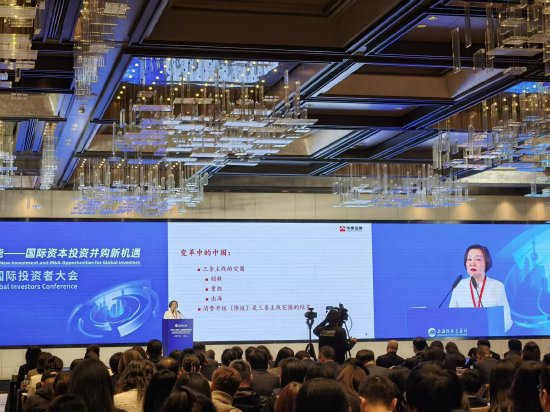
华泰证券梁红:变革中的中国有创新、重组、出海三条主线,2026年各行业盈利增速均将有所回升
Xin Lang Zheng Quan· 2025-11-12 02:27
Group 1 - The Shanghai Stock Exchange International Investor Conference was held on November 12, highlighting three main themes in the current transformation of China: innovation, restructuring, and going global, with consumption upgrade being a result of these themes [1] - Liang Hong, Chairman of Huatai Securities Institutional Business Committee, predicts that the macroeconomic trend in China for 2026 will show nominal growth recovery, particularly in dollar-denominated nominal growth, with productivity improvement becoming a more significant narrative than the downturn in real estate [3] - It is expected that the net profit growth rate for non-financial companies in 2026 will be approximately 13%, with profit growth across various industries anticipated to rebound [3]

关注“双十一”丨京东发布“双十一”消费数据 河南下单量增速居全国第二位
He Nan Ri Bao· 2025-11-11 23:21
Core Insights - JD.com reported significant consumer activity during the "Double Eleven" shopping festival, particularly in Henan province, which ranked fourth nationally in user numbers and second in order growth rate, indicating a robust consumer base and strong purchasing momentum [1][2] - The purchasing power within Henan is diverse, with Zhengzhou being the strongest city on the JD platform, while Puyang showed the highest growth rate in purchasing power, reflecting a varied consumption landscape [1] - The fastest-growing product category in Henan was action cameras, with a remarkable growth rate of 498%, followed by air conditioning sets, digital cameras, and down jackets, all exceeding 100% growth [1] - High-value consumer electronics such as air conditioners, mobile phones, and refrigerators had an average spending of over 4,800 yuan per person, indicating a trend towards smart, quality, and health-oriented products [1] - Different generational preferences were noted, with Gen Z favoring digital peripherals, while millennials and Gen X focused on maternal and infant products, and the elderly preferred health care appliances and kitchen tools, highlighting the structural shifts in family consumption in Henan [1] Industry Trends - The consumer trend in Henan is shifting from price-driven purchases to value-oriented decisions, characterized by rapid growth, improved structure, and clear preferences [2] - The ongoing optimization of the consumption environment and enhancement of supply quality are expected to further unleash Henan's consumption potential, positioning it as a key driver of regional economic growth [2]
车企为何纷纷造“大车”
Ren Min Ri Bao· 2025-11-11 21:58
Core Insights - The trend of producing "large cars" in the Chinese automotive market is gaining momentum, with models exceeding 5 meters in length receiving positive market feedback [2][3] - This phenomenon is driven by changes in consumer demand due to rising income levels, larger family sizes, and the need for more spacious and comfortable vehicles [2][7] - The automotive industry is responding to this demand with a focus on larger vehicles, particularly in the SUV segment, which is expected to see significant sales growth in the coming years [3][7] Demand Side - Economic development and consumption upgrades are fundamental drivers of the demand for larger vehicles, as consumers increasingly seek more space and quality in their vehicles [7] - Changes in family structure, such as the implementation of the two-child policy, have led to a rise in multi-person households, making larger vehicles a necessity for many families [7] - The shift towards replacement purchases has led consumers to prefer larger, higher-equipped vehicles that enhance their quality of life [7] Supply Side - The production of "large cars" is supported by technological advancements and a robust automotive industry infrastructure in China, particularly in the electric vehicle sector [8] - Domestic brands have gained a competitive edge in electric and intelligent vehicle technologies, allowing them to overcome traditional cost barriers associated with larger vehicles [8] - The profitability of producing larger SUVs is enhanced by their higher price points and the ability to maintain cost control despite increased dimensions [8] Market Dynamics - The market for large SUVs is experiencing a global trend, but the growth in China is particularly pronounced, driven by consumer preferences for larger vehicles [8] - The increasing size of vehicles is creating challenges in urban environments, particularly regarding parking and road space utilization [9][10] - Experts suggest that future urban planning should consider the implications of larger vehicles on parking and road usage, advocating for smarter city planning and flexible pricing strategies [11]
“双11” 逻辑变了!不用再做“数学题”
Zhong Guo Zheng Quan Bao· 2025-11-11 15:10
Core Insights - The 2025 "Double 11" shopping festival showcases a vibrant consumer market with significant sales growth across major e-commerce platforms, indicating a recovery in overall consumption [1][2] - The competition among platforms has shifted from merely focusing on sales volume to enhancing user retention, merchant empowerment, and technological implementation [1][4] Group 1: Sales Performance - Taobao Tmall achieved over 1 billion yuan in sales within the first hour for 80 brands, while over 30,000 brands saw their sales double [2] - Douyin e-commerce reported a 500% year-on-year increase in sales through live streaming, with over 41,000 merchants participating [2] - Fliggy's travel products surpassed 1.6 million units sold, reflecting a shift in consumer behavior towards service-oriented purchases [3] Group 2: Consumer Trends - The current "Double 11" emphasizes rational purchasing, experiential shopping, and diverse scenarios, moving away from simple price competition [1][6] - There is a notable rise in service-oriented consumption, with consumers increasingly opting for experiences over physical goods [3][6] - Personalized consumption is on the rise, with new brands and niche products gaining traction, indicating a shift towards more individualized consumer preferences [6][7] Group 3: Technological Advancements - AI and instant retail capabilities are becoming core competitive advantages for platforms, enhancing user experience and operational efficiency [4][5] - Taobao Tmall is leveraging AI to optimize traffic distribution and improve search relevance and recommendation accuracy [4] - JD.com is utilizing its "super supply chain" and AI models to enhance logistics and service delivery, ensuring timely fulfillment even in rural areas [4] Group 4: Membership Economy - The value of membership programs is becoming increasingly evident, with high-value users showing strong loyalty and engagement, shifting the focus from traffic-driven growth to deep user engagement [7]