
数字孪生

Search documents
重磅分享!VR-Robo:real2sim2real助力真实场景下的机器人导航和运动控制
具身智能之心· 2025-07-08 09:31
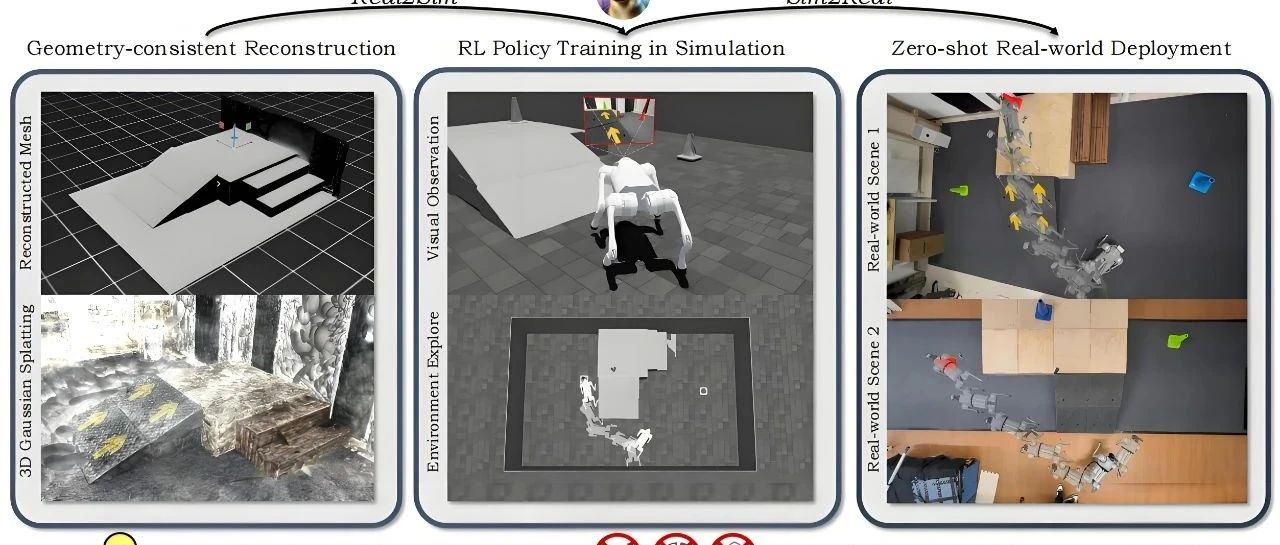
Core Viewpoint - The article discusses the limitations of foot robots in real-world applications due to the gap between simulation and reality, particularly in high-level tasks requiring RGB perception. It introduces a "Real-Sim-Real" framework that enhances visual navigation and motion control through a digital twin simulation environment [2]. Group 1 - The movement control of foot robots benefits from the combination of reinforcement learning and physical simulation, but is hindered by the lack of realistic visual rendering [2]. - The proposed "Real-Sim-Real" framework utilizes multi-view images for 3D Gaussian splatting (3DGS) scene reconstruction, creating a simulation environment that combines photo-realism with physical interaction characteristics [2]. - Experiments in the simulator demonstrate that the method supports the transfer of reinforcement learning strategies from simulation to reality using pure RGB input, facilitating rapid adaptation and efficient exploration in new environments [2]. Group 2 - The framework shows potential applications in home and factory settings, indicating its relevance for practical deployment in various environments [2]. - The paper titled "VR-Robo: A Real-to-Sim-to-Real Framework for Visual Robot Navigation and Locomotion" is linked for further reading [3]. - Additional project details can be found on the provided project link [3].

8点1氪:青岛大学回应宿管离世事件并公示采购7217台空调;特朗普宣布征收日韩25%关税;猫眼回应周杰伦演唱会500元只能看大屏
36氪· 2025-07-08 00:04
Group 1 - Qingdao University announced the procurement of 7217 air conditioners for student dormitories, following the unfortunate death of a dormitory staff member, which was suspected to be due to heatstroke [3] - The procurement project includes the installation of over 7300 air conditioners with 1st-level energy efficiency and remote control features, as per the announcement made in March [3] - The contract for the air conditioner procurement was signed on June 23, 2025, with Qingdao Haiyuan He Commercial Trading Co., Ltd. as the supplier [3] Group 2 - Star Material announced on July 7 that it has submitted an application for the public issuance of H-shares and listing on the Hong Kong Stock Exchange [2] Group 3 - Romoss, a well-known power bank brand, announced a shutdown due to a recall of 491,700 units, resulting in estimated direct losses exceeding 40 million yuan, with monthly losses potentially reaching 200 million yuan [5] - The official flagship store of Romoss on various platforms has been closed, indicating significant operational challenges [5] Group 4 - Xiaomi reported a surge in air conditioner sales in Northeast China and Inner Mongolia, with sales reaching up to 20 times that of the same period last year due to high temperatures [8][9] Group 5 - Huayou Cobalt expects a net profit increase of 55.62% to 67.59% for the first half of 2025, driven by integrated operations and rising cobalt prices [18] - Guoli Co., Ltd. anticipates a net profit increase of 130.91% to 158.08% for the same period, attributed to the booming electric vehicle industry and effective cost management [19] - Yanjing Beer forecasts a net profit growth of 40% to 50% for the first half of 2025, supported by systemic reforms and enhanced market vitality [20]

强强联合!五粮液携手西门子开启数字化建设新篇章
Zhong Jin Zai Xian· 2025-07-07 09:00
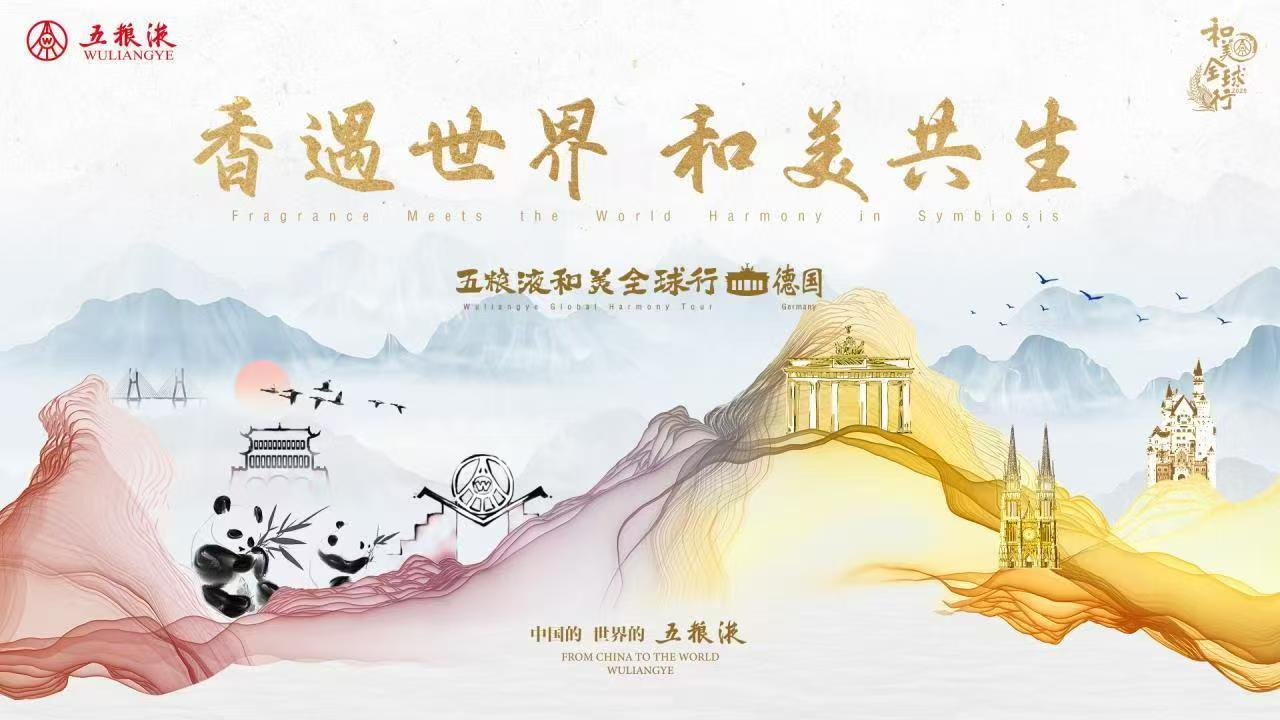
Core Insights - The collaboration between Wuliangye Group and Siemens marks a significant step towards enhancing the "Digital Wuliangye" initiative, focusing on digital transformation and sustainable practices [1][6]. Group 1: Partnership Development - Wuliangye Group's chairman led a delegation to Siemens' R&D center and headquarters, resulting in a consensus to deepen cooperation [1][6]. - A strategic cooperation agreement was signed between Wuliangye and Siemens (China) to establish a long-term partnership in areas such as digital planning, electrification, automation, and low-carbon solutions [6]. Group 2: Technological Advancements - The delegation explored Siemens' advancements in artificial intelligence, sustainable energy, and cybersecurity, gaining insights into digital twin technology, flexible manufacturing, and AI applications [5][6]. - Both companies discussed the integration of digitalization and low-carbon initiatives to enhance their collaboration and drive industry leadership in automation and digital transformation [6]. Group 3: Cultural and Market Expansion - Wuliangye aims to elevate its global presence through the "He Mei Global Tour," enhancing cultural engagement and marketing strategies to integrate traditional Chinese liquor culture into global consumer experiences [8]. - Future initiatives will focus on deepening industry cooperation, creating immersive consumer experiences, and expanding innovative service scenarios to strengthen the global liquor supply chain [8].


摩尔线程20250706
2025-07-07 00:51
Summary of the Conference Call for Moores Threads Company Overview - Moores Threads focuses on GPU-related products, established in 2020, targeting AI, digital twin, and scientific computing applications [3][4] Product Lines - The product lines cover three main areas: AI intelligent computing, graphics acceleration, and smart SoC [2] - Key products include: - AI computing products: training/inference cards, super node servers, and cross-edge computing clusters [4] - Graphics rendering products: S3,000 series graphics cards for industrial design and digital twin applications [4] - Smart SoC products: A140 computing box and E300 module for AI PC edge applications [5] Financial Performance - Projected revenue for 2024 is 438 million RMB, a year-on-year increase of approximately 2.5 times [2][10] - AI intelligent computing business contributes 77.63% of total revenue, with expectations to achieve profitability by 2027 [2][11] - Average gross margin for 2024 is 70.71%, with AI intelligent computing business gross margin exceeding 70% and desktop graphics cards at 18.99% [14] Sales and Market Presence - In 2024, the company sold three clusters and 2,058 graphics cards, with average prices of 6.113 million RMB for clusters and 60,000 RMB for computing cards [12] - 99.5% of revenue comes from the domestic market, with a direct sales model accounting for 41% and a distribution model for 59% [13] Supply Chain and Inventory - Following entry into the US Entity List in October 2023, the supply chain shifted from wafer production to raw material procurement, with inventory increasing from 275 million RMB to 647 million RMB [15] - Prepayments rose from 76 million RMB to 567 million RMB, indicating preparation for future growth [15] Research and Development - Cumulative R&D expenses exceeded 3.6 billion RMB from 2020 to 2024, significantly higher than revenue in 2024 [16] - The workforce has seen limited growth, with 1,126 employees by the end of 2024, but R&D personnel constitute over 78% of the total [18] Management Team - The management team primarily consists of former Nvidia executives, including CEO Zhang Jianzhong, who previously held senior positions at Nvidia [8] Competitive Landscape - The company’s Musa architecture competes with Nvidia's CUDA and AMD's CDNA, providing a unified GPU acceleration framework [6] - The latest chip series, Pinghu, achieves FP32 computing power of 32 TFlops, about half of Nvidia's H100, and has overcome challenges in high-efficiency interconnects [7] Industry Insights - The domestic chip industry is expected to recover in Q4 2024, despite current pressures from US restrictions on Southeast Asian AI chip imports [21] - Recommended companies for investment include Haiguang, Cambrian, and Longxin Zhongke, which are positioned to benefit from domestic computing center projects [22] Risks - Key risks include uncertainties from US-China relations, underperformance of fundamentals, and intensified market competition [26]
从3D到元宇宙空间,网上山东抗日战争纪念馆焕新六大亮点抢先看
Qi Lu Wan Bao· 2025-07-06 12:38
Core Viewpoint - The online Shandong Anti-Japanese War Memorial Hall has undergone a comprehensive upgrade and will officially open to the public on July 7, coinciding with the 80th anniversary of the victory in the Chinese People's Anti-Japanese War and the World Anti-Fascist War [1] Group 1: Upgrade Focus - The upgrade focuses on three dimensions: technology application, content system, and experience model, aiming to create a new platform for red culture dissemination that combines historical depth with contemporary relevance [3] - The new museum achieves a systematic upgrade from traditional exhibitions to immersive experiences and from one-way communication to interactive red education [3] Group 2: Technological Enhancements - The project has improved user experience significantly by upgrading the technical engine to the latest version, allowing for seamless browsing across multiple devices without the need for large downloads [6] - The upgrade employs WebGL 3D graphics rendering and cloud rendering technology, enabling smooth operation on computers, mobile devices, and VR equipment [6] - The immersive experience allows visitors to participate in real-time interactions and collaborative tasks, breaking traditional time and space barriers [6] Group 3: Historical Representation - High-precision 3D scanning and modeling allow for 360-degree panoramic displays of precious historical artifacts, enhancing the detail and engagement of the exhibits [7] - The new exhibits include nearly 100 panels, over 30 books, 20 videos, and more than 10 artifacts, expanding the museum's focus from historical display to contemporary relevance [11] Group 4: Interactive Experience - The upgrade features innovative interactive experiences designed for younger audiences, including holographic projections for "time-space dialogues" and interactive games that simulate historical battles [13] - An AI digital guide named "Guan Guan" has been introduced, capable of answering historical questions and customizing visitor routes based on interests [14] - A historical knowledge graph system has been launched, integrating over 5,000 historical nodes for dynamic visualization and intelligent retrieval [15] Group 5: Cultural Impact - The new museum's exploration of innovative forms and broad audience engagement is seen as significant, enhancing historical recognition and national sentiment among visitors, particularly youth [16]

人间福气姑苏聚 且看古今锦绣诗
Su Zhou Ri Bao· 2025-07-06 00:34
Core Viewpoint - Suzhou, a city with over 2500 years of history, is undergoing a profound self-reform, integrating cultural heritage into modern life and revitalizing its cultural essence in unprecedented ways [1] Group 1: Cultural Heritage and Archaeology - The "811" plan for cultural strength has led to the implementation of regional civilization exploration projects, revealing archaeological findings that substantiate Suzhou's historical significance [2] - The Suzhou Archaeological Museum showcases 1200 artifacts, highlighting the city's role as a cultural hub in Jiangnan [2] - The "CIM+ digital twin ancient city" platform allows for the preservation and digital representation of ancient structures, making history accessible and interactive [3] Group 2: Urban Renewal and Economic Revitalization - The transformation of historical streets like Shiquan Street into vibrant commercial areas reflects a shift towards a "main operator economy," blending traditional and modern elements [4] - The 32nd block integrates cultural heritage protection with urban renewal, enhancing the quality of life for residents while preserving historical narratives [5] - Suzhou's systematic urban renewal approach aims to create a livable and attractive environment, balancing heritage conservation with modern urban needs [6] Group 3: Intangible Cultural Heritage and Modern Engagement - Suzhou actively promotes intangible cultural heritage through events that blend traditional practices with contemporary expressions, engaging younger generations [7] - The upcoming "Non-Heritage New Year" event in 2025 aims to elevate Suzhou's cultural presence globally, attracting significant tourist interest and online engagement [8] - The city is fostering cross-cultural dialogues through initiatives like the "Suzhou Embroidery Future Talent Innovation Program," bridging traditional crafts with modern design [7][8]
B2B电商平台推荐:数商云——企业数字化转型的深度赋能者
Sou Hu Cai Jing· 2025-07-04 16:06
Core Insights - The article highlights the transition of B2B e-commerce from "information matching" to "full-link digitalization" by 2025, with the global market size exceeding $14.9 trillion, and China accounting for over 35% of this market, maintaining a compound annual growth rate of over 18% [2] - Traditional B2B platforms face three major pain points: rigid technical architecture leading to insufficient high concurrency processing, delayed response to industry customization needs, and low supply chain collaboration efficiency [2] - Shushangyun emerges as a key choice for enterprises to overcome growth bottlenecks through its "cloud-native + microservices" technology foundation, vertical industry solutions, and ecological service capabilities [2] Technical Architecture - Shushangyun employs a distributed microservices architecture, allowing for elastic scaling and high concurrency processing, supporting up to 5,000 orders per second with a stable response time of 300 milliseconds [3] - The introduction of quantum computing and digital twin technologies enhances decision-making in procurement, with a reported 300% increase in procurement efficiency and an 18.7% reduction in overall costs for certain enterprises [4] - A multi-chain blockchain architecture facilitates trust in cross-border transactions, reducing average transaction cycles from 14 days to 3 days and decreasing dispute rates by 92% [4] Core Functions - Shushangyun's SKU management capabilities enable precise operations, achieving a 99.5% inventory accuracy rate and a 0.8% out-of-stock rate for a certain automotive parts enterprise [6] - The order management system transitions from a linear model to an intelligent decision-making loop, improving order processing efficiency by 50% and customer satisfaction by 30% for a specific electronic components company [9] - The supply chain finance module integrates deeply into transaction processes, reducing financing cycles from 30 days to 7 days and financing costs by 20% for a building materials company [10] Industry Adaptability - Shushangyun addresses the complexities of industrial product transactions with a three-dimensional collaborative platform, achieving a 98.3% match rate for model queries [11] - In the agricultural sector, blockchain traceability technology has connected over 5,000 farmers with 300+ buyers, increasing transaction volume by 40% and reducing loss rates to 5% [14] - The medical industry benefits from compliance and efficiency solutions, with a 40% improvement in business compliance for a pharmaceutical company through a drug traceability module [17] Enterprise Adaptability - Shushangyun offers standardized products for small enterprises with annual transaction volumes below $5 million, enabling rapid deployment and a 60% reduction in IT investment [19][20] - For larger enterprises with transaction volumes exceeding $500 million, customized development services are available, enhancing inventory synchronization from 2 hours to 5 minutes [23] - The company has established an ecological service system integrating technology, data, and finance, with over 500 standardized interfaces for seamless integration with other systems [25] Future Outlook - Shushangyun is advancing in three strategic areas: developing immersive 3D virtual exhibition halls, integrating carbon footprint tracking into supply chain systems, and exploring quantum computing applications for supply chain optimization [28][29][30] - The company positions itself as a partner in digital transformation, providing comprehensive support from platform construction to operational optimization, enabling enterprises to seize market opportunities and achieve sustainable development [30]

第五批山东省软件产业高质量发展重点项目公布
Qi Lu Wan Bao· 2025-07-04 09:14
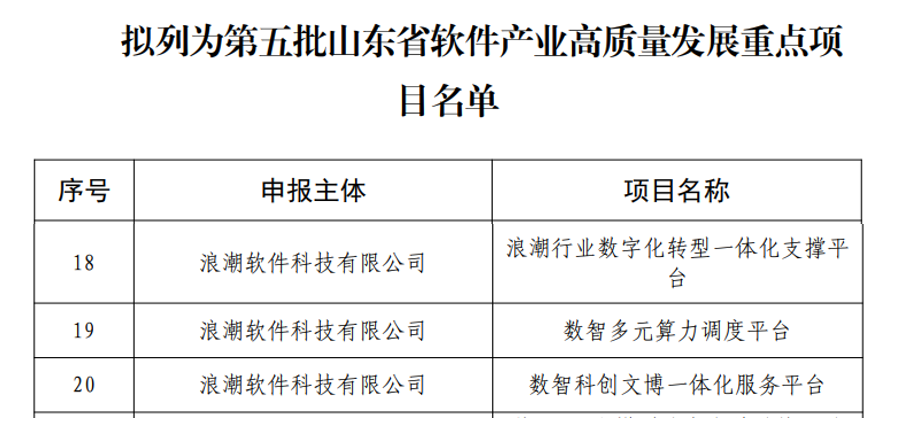
Core Insights - The article highlights the recognition of three major projects by Inspur Software Technology Co., Ltd. in the fields of industry digital transformation, intelligent computing resource scheduling, and the integration of digital and physical innovation [1][2] Group 1: Industry Digital Transformation - The "Yanyu" industry digital transformation integrated support platform is centered around an industry large model accelerator, integrating functions such as digital monitoring, trusted data governance, and intelligent operational decision-making [1] - The platform supports private deployment through corpus governance and lightweight model transformation, aiming to enhance the quality and collaborative efficiency of data governance [1] Group 2: Intelligent Computing Resource Scheduling - The intelligent multi-dimensional computing resource scheduling platform optimizes traditional resource scheduling frameworks and constructs an intelligent scheduling engine for heterogeneous computing resources like CPU and GPU [1] - This platform has been applied in government sectors such as emergency management, forestry, and natural resources, accumulating a set of relevant algorithm models [1] Group 3: Cultural Heritage and Technology Integration - The integrated service platform for scientific innovation and cultural heritage includes two main modules: technology management and cultural heritage services [2] - The technology management module covers the entire process of technology business management, decision support, innovation services, and popular science promotion, while the cultural heritage service module focuses on building a big data and safety supervision platform for cultural relics [2] - The platform aims to promote the integration of technological innovation and cultural heritage protection through the utilization of data elements [2] Group 4: Impact and Future Directions - The recognition of these projects demonstrates the technical strength of Inspur Technology and has positive implications for the development of the software industry in Shandong Province [2] - The company plans to continue investing in core technology research and deepen the integration of artificial intelligence, big data, and digital twin technologies with the real economy [2]

瑞纳智能(301129) - 301129瑞纳智能投资者关系管理信息20250704
2025-07-04 08:22
Group 1: AI Smart Heating System - The AI smart heating system integrates "big data + cloud computing + AI modeling + hydraulic simulation + digital twin" technologies, enabling precise load forecasting and intelligent scheduling control, which can reduce heat consumption and carbon emissions by 10%-30% and electricity consumption by 30%-50% [1] - The system includes several subsystems such as a central control platform, heat network monitoring system, room temperature analysis system, and energy consumption analysis system, covering all aspects of heating operation management [1] Group 2: Contract Energy Management Projects - Multiple contract energy management projects signed last year have been audited by a third party in the first half of this year, demonstrating significant energy-saving effects through the AI smart heating system [2] - The successful implementation of these projects enhances the company's performance and builds a positive brand reputation [2] Group 3: Regional Expansion Strategy - The company continues to deepen its presence in traditional markets like Shandong while focusing on potential regions such as Northwest and North China, leveraging technical expertise and service systems to capture project opportunities [3] - The aim is to actively explore the market through technological innovation and professional services, ultimately rewarding investors with better performance [3] Group 4: High Gross Margin Reasons - The high gross margin is attributed to sustained R&D investment creating technological barriers, resulting in high added value and strong pricing power for products [4] - Most products are self-manufactured, effectively lowering production costs, and a direct sales model to state-owned heating companies reduces intermediaries, further enhancing profit margins [4] Group 5: Industry Policy Changes - Recent government reports emphasize urban renewal and infrastructure improvements, providing strong momentum for the smart heating industry [5] - Policies since 2024 have promoted the transition from traditional heating models to AI smart heating solutions, with the company focusing on integrating IoT, big data, and AI technologies to lead the industry towards low-carbon, green, and intelligent development [5]
从实物资产到数据资产:数字化如何重新定义新时代企业价值
3 6 Ke· 2025-07-04 02:15
Group 1 - The core idea of the article is the transition from tangible to intangible assets, emphasizing that the most valuable companies today rely on data, digital ecosystems, and algorithms rather than physical assets [2][7][30] - The shift from heavy assets to insights has disrupted traditional economic value rules, allowing companies like SaaS startups to revolutionize industries without owning physical infrastructure [2][29] - Digital twins are increasingly mapping the physical world, enabling real-time data collection and optimization, which redefines capabilities in the digital age [6][22] Group 2 - The importance of this transition lies in the fact that intangible assets are now more valuable than tangible ones, shifting board discussions from physical assets to API architecture scalability [7][30] - Digitalization is not merely about faster decision-making but enhancing overall enterprise cognition through embedded intelligence in every value chain segment [16][19] - The four powerful forces shaping modern business due to digitalization are novelty, volatility, disruption, and scope, which require organizations to adapt rapidly to changes [22][23][28] Group 3 - Digitalization creates feedback loops where every action generates signals that influence product roadmaps and operational responses [17][19] - The governance of enterprises in a dynamic world must focus on adaptive architectures and capability-centered planning rather than strict control [30][38] - The rise of digital neural systems allows organizations to connect intentions with impacts, enhancing real-time visibility and decision-making processes [42]