资产配置

Search documents
资金结构发生质变 港股成配置“必选项”
Zhong Guo Zheng Quan Bao· 2025-11-09 20:15
□本报记者 王鹤静 国海富兰克林基金总经理、投资总监、基金经理徐荔蓉入行已有二十余年的时间,这位投资老将始终坚 守在市场一线,保持着对市场的紧密跟踪和敏锐嗅觉。此次在接受中国证券报记者采访时,徐荔蓉分享 了自己及投研团队近期对于港股市场的最新观察。 在徐荔蓉看来,当前无论是基于资金结构、资产质量,还是外资风向、市场预期等因素判断,港股市场 正在经历根本性的价值重估。当"跨过香江去,夺取定价权"不再是口号,近一年来内资充分释放的流动 性正汹涌奔向港股市场,迅速占领优质资产的权重高地,逐步以合围之势夺取港股定价权。 投资者结构生变 近年来,关于南向资金对港股市场定价权的讨论几度升温又沉寂。直到近来,徐荔蓉发现,这一趋势已 变得尤为显著。 徐荔蓉表示,港股市场过去是典型的离岸市场,十分容易受到海外因素的影响。离岸市场的典型特征是 资金只对核心资产定价,其余资产都被边缘化且缺乏流动性。主流资金覆盖的范围十分有限,也不愿意 接触非核心资产标的,外资在港股市场覆盖的只有一两百只个股。 "随着过去这一年A股市场流动性充分释放,南向资金开始涌向港股市场,并且逐步占据港股市场交易 量的半壁江山,定价权正在慢慢向内资投资者转移。 ...
1200万如何投资,想退休了
集思录· 2025-11-09 13:57
Core Viewpoint - The article discusses the investment strategies and considerations for individuals looking to retire with a certain amount of savings, specifically focusing on a case where an individual has saved 12 million and is contemplating retirement while managing family expenses of 250,000 to 300,000 annually [1]. Investment Strategy - Defensive Layer: 40% allocation suggested, including 6% in money market funds, 20% in large time deposits, and 14% in bond funds [4]. - Core Layer: 35% allocation suggested, including 13% in CSI 300, 10% in dividend stocks, and 12% in S&P 500 [4]. - Satellite Layer: 25% allocation suggested, including 8% in CSI 500, 9% in NASDAQ 100, and 8% in gold [4]. Personal Experiences and Recommendations - One individual shared their experience of achieving a 30% annual return from 2007 to 2018, but cautioned against investing for those who are not experienced, suggesting that simply saving in a bank might be a safer option [3]. - Another individual emphasized the importance of adapting investment strategies to changing market conditions and maintaining a balanced portfolio of stocks and bonds [6]. - A different perspective suggested that with 12 million in savings, one could potentially live off the returns without needing to invest aggressively, as a 2.5% return would cover annual expenses [9]. Alternative Investment Ideas - A suggestion was made to invest in a strategy involving futures trading, where the individual could manage risk while generating income through premium collection [8]. - Another proposed a diversified portfolio focusing on high-dividend stocks and a mix of U.S. and satellite investments, with an emphasis on annual rebalancing [10].


全球资产配置每周聚焦(20251031-20251107):美元流动性持续紧张,海外调整A股相对坚挺-20251109
Shenwan Hongyuan Securities· 2025-11-09 13:16
Group 1: Market Overview - The US government shutdown has led to a tightening financial environment, causing global equity markets to mostly decline[4] - The overnight general collateral repurchase rate fluctuated between 4.14% and 4.24%, significantly above the Federal Reserve's 3.9% excess reserve rate[4] - Despite global market adjustments, the CSI 300 and Hang Seng Index recorded positive returns, indicating strong investor confidence in Chinese assets[4] Group 2: Fund Flows - As of November 5, 2025, both domestic and foreign capital flowed into the Chinese stock market, with foreign capital inflows of $20.14 billion and domestic inflows of $68.98 billion[4] - In the past week, overseas active funds saw an outflow of $6.18 billion, while passive funds experienced an inflow of $26.31 billion[4] Group 3: Valuation Metrics - The valuation percentile of the Shanghai Composite Index is at 89.5%, second only to the S&P 500, but still lower than US equities in absolute terms[4] - The risk-adjusted return percentile for the CSI 300 increased from 79% to 83%, indicating improved relative performance[4] Group 4: Risk Sentiment - The S&P 500 closed at 6728.80, below the 20-day moving average, with a put-call ratio of 1.19, reflecting increased hedging demand[4] - The implied volatility structure of the CSI 300 options showed a significant decline, indicating cautious sentiment in the market[4] Group 5: Economic Data - The probability of a 25 basis point rate cut by the Federal Reserve in December has risen to 66.90%, up from 63.00% the previous week[4] - The US September existing home sales increased by 4.1%, marking five consecutive months of marginal improvement[4]
英国前财政部长吉姆·奥尼尔:金价告诉了我们什么
Di Yi Cai Jing· 2025-11-09 12:31
Core Viewpoint - The article presents a conflicting perspective on gold prices, highlighting both bearish and bullish arguments regarding the recent price movements and future trends in the context of monetary policy and inflation expectations [1][2][3]. Bearish Arguments - The rapid increase in gold prices, surpassing even the tech-driven Nasdaq index, is characterized as a typical bubble behavior, suggesting that any minor developments could exacerbate the "fear of missing out" sentiment [1]. - Historical context indicates that gold is traditionally viewed as a hedge against inflation and a monetary anchor, but the sudden surge in prices in 2025 raises questions about its sustainability, especially with the decline of the dollar and falling U.S. bond yields [1][3]. Bullish Arguments - The article recalls past experiences where concerns over rising government debt led to increased interest in gold, suggesting that current economic conditions may similarly drive investors towards gold as a safe haven [2]. - The strategic decisions of major foreign exchange reserve holders, particularly China and Russia, to increase gold holdings are seen as a move towards establishing an alternative to the dollar-based international monetary system [3]. Market Dynamics - The article discusses how gold prices tend to benefit when real interest rates decline across major economies, indicating that if central banks are perceived to be increasing monetary easing without significant improvements in inflation, gold prices may rise accordingly [3]. Conclusion - The article concludes with an acknowledgment of uncertainty regarding the future direction of gold prices, emphasizing the importance of remaining open-minded to various market signals and developments [4].
北银理财首席投资官:低票息时代,更要资产配置
Sou Hu Cai Jing· 2025-11-09 08:11
Core Viewpoint - The Chief Investment Officer of Beiyin Wealth Management, Sun Junjie, emphasizes that in a low interest rate environment, the diversification of asset allocation is an inevitable trend, focusing on the effectiveness and timeliness of the allocation [2] Group 1: Asset Allocation Strategy - Diversified asset allocation should involve early and in-depth planning for overseas markets, capital markets, commodity markets, and REITs markets [2] - For equity market allocation, specific strategies such as IPO strategies, hedging strategies, quantitative strategies, private placement strategies, and fund of funds (FOF) strategies should be detailed [2] - The active use of derivatives for hedging is recommended to reduce volatility [2]
怎么看央行购金越来越少?
雪球· 2025-11-09 04:57
Core Viewpoint - The People's Bank of China (PBOC) has increased its gold reserves for 12 consecutive months, reaching 74.09 million ounces by the end of October, indicating a long-term recognition of gold assets. However, the monthly gold purchases have decreased, with October's purchases being less than 1 ton, marking the lowest increase since the resumption of purchases in November 2024 [3][4]. Group 1: Central Bank's Gold Purchasing Strategy - The PBOC's continued purchases at gold prices near $4,000-$4,400 demonstrate that these levels are within an acceptable range for the bank, suggesting a long-term price center for gold has shifted from $3,500 to potentially above $4,000 [4]. - The gradual reduction in gold purchases reflects a cautious strategy by the PBOC, which tends to increase purchases when prices are low and decrease them as prices rise. This indicates that if gold prices experience unexpected adjustments, the PBOC is likely to increase purchases again, limiting downward pressure on gold prices [4]. - The reduced purchasing volume is seen as a tactical adjustment rather than a strategic shift, maintaining the long-term investment logic in gold [4]. Group 2: Market Dynamics and Future Outlook - The decrease in the PBOC's gold purchase increment suggests that short-term reliance on the central bank alone may not be sufficient to drive significant gold price increases, necessitating attention to other core factors such as global capital flows and ETF holdings [5]. - The market's attitude towards the PBOC's gold purchases has become more rational, indicating that as long as the purchasing actions continue, even at lower volumes, they will not be perceived as negative signals. Historical trends show that temporary halts in purchases lead to short-term volatility but do not alter the long-term trend [5]. - Investors are encouraged to focus on long-term trends and core driving factors rather than short-term fluctuations in purchase volumes, while also considering market volatility as an opportunity for tactical adjustments to enhance returns [5].

金价暴跌背后:美国搅动市场,全球央行分化加剧,机会与陷阱并存
Sou Hu Cai Jing· 2025-11-08 06:18
Core Insights - Recent fluctuations in international gold prices have surprised many investors, with prices recently peaking near $4,400 before dropping to around $4,000, raising questions about whether to buy the dip or avoid becoming the last buyer [1] Central Bank Actions - Central banks worldwide have shifted their strategies regarding gold, with some countries considering reducing their gold holdings while others, like South Korea, are looking to increase their reserves. India is also repatriating gold to its national treasury [3] - The total amount of gold held by global central banks now exceeds that of U.S. Treasury bonds, indicating a declining confidence in the U.S. dollar [3] U.S. Economic Uncertainty - The return of Trump to the White House has created turmoil in the U.S. financial markets, with calls for the replacement of Federal Reserve Chair Powell and pressure for interest rate cuts, increasing uncertainty around fiscal and monetary policies [5] - This uncertainty raises concerns about the stability of the U.S. dollar, prompting global investors to be wary of holding dollars [5] Market Dynamics - The current market environment has led to increased demand for gold as a safe-haven asset, with more individuals purchasing gold bars and exploring gold-related investment channels. However, high gold prices have deterred many ordinary consumers, resulting in a decline in gold jewelry sales in the third quarter [7] - The dual role of gold as both an investment and a consumer good has created a complex market atmosphere, where demand for gold as a protective asset contrasts with reduced consumer purchases due to high prices [7] Analyst Perspectives - Analysts are divided on the future of gold prices, with some predicting further increases while others fear a significant drop. Historically, gold bull markets are often followed by deep corrections [9] - Despite differing opinions, many analysts agree that gold's status as a "safe haven" asset is unlikely to change in the near term [10] Investment Strategy - For ordinary investors, focusing solely on price fluctuations can lead to confusion. It is suggested to view gold as a stable asset for portfolio diversification rather than a quick profit opportunity [12] - Given the ongoing internal and global uncertainties, both central banks and individual investors are advised to maintain a cautious approach to risk management, recognizing gold's enduring significance in turbulent times [12]
每日钉一下(美元降息落地,对市场有啥影响?)
银行螺丝钉· 2025-11-07 14:01
Core Viewpoint - The article discusses the impact of the recent interest rate cut by the Federal Reserve on various markets, emphasizing the positive effects on global assets, particularly in the context of U.S. dollar-denominated bonds and equities [5][6]. Group 1: Federal Reserve Interest Rate Cut - The Federal Reserve announced a 25 basis point interest rate cut in October 2025, aligning with market expectations, but indicated that a December rate cut is not guaranteed, creating uncertainty in the market [5]. - Following the announcement, the global stock market saw an overall increase of approximately 28%, with the A-share market rising over 50% and the Hong Kong Hang Seng Index increasing over 55% [5][6]. Group 2: Market Reactions and Expectations - The positive market reactions to the interest rate cut were observed even before the official announcement, as markets had anticipated the cut, leading to a rise in asset prices [7]. - The article compares this anticipation to a child expecting a birthday gift, highlighting that market movements often reflect expectations prior to actual events [7]. Group 3: Future Interest Rate Trends - The article suggests that U.S. interest rates are likely to continue decreasing, driven by the substantial debt burden of $38 trillion in U.S. Treasury bonds, which incurs annual interest payments exceeding $1 trillion [8][9]. - It is projected that the 10-year U.S. Treasury yield, currently around 4%, may eventually return to historical averages of 2%-3%, although the timing of this adjustment remains uncertain [10][11]. Group 4: Long-term Considerations - The article warns that while interest rates may decline in the short term, there will be a cyclical nature to interest rate movements, with potential future increases that could negatively impact non-dollar assets [11]. - Historical patterns indicate that interest rates have fluctuated in cycles of approximately 3-5 years, suggesting that investors should remain vigilant about future rate changes [11].

民生加银公募FOF,以专业之力重塑资产配置新格局
Jiang Nan Shi Bao· 2025-11-07 12:29
Core Insights - The current global economic landscape is undergoing significant adjustments, leading to increased market volatility and making single-asset investment models inadequate for investors seeking stable growth [1] - The asset management industry is experiencing structural changes, with the overall AUM in China projected to reach 170.13 trillion yuan by mid-2025, reflecting a growth of approximately 4.27% from the end of 2024 [1] Group 1: Asset Management Trends - The asset management industry is shifting from a "single track" approach to a "diverse collaboration" model, with asset allocation concepts becoming mainstream [1] - The diversification of investment products is evident, with bank wealth management products at 30.67 trillion yuan, public funds at 34.39 trillion yuan, and pension funds managed by fund companies at 6.10 trillion yuan [1] Group 2: Scientific Asset Allocation - Scientific asset allocation can effectively buffer the impact of single-asset volatility on overall investments, creating a "defensive net" for portfolios [2] - Dynamic adjustments in asset allocation allow for risk control while seizing investment opportunities across different markets and stages, balancing long-term risk and return [2] - FOF (Fund of Funds) is emerging as a crucial tool for investors to achieve scientific asset allocation, offering dual diversification across different funds and asset classes [2] Group 3: New Product Launch - Minsheng Jianyin Fund is set to launch a new product, Minsheng Jianyin Multi-Asset Stable Allocation 3-Month Holding Period Mixed FOF, from November 24 to December 8, aimed at meeting investor demand for stable allocation and flexible holding [3] - The new product will adopt a "multi-asset, multi-strategy" allocation approach, expanding beyond traditional stock and bond allocations to include overseas assets and commodities [3] - The product will implement dynamic risk hedging and portfolio optimization based on in-depth analysis of asset correlations, aiming to control volatility while enhancing long-term return potential [3]
央行重启国债买卖,债市春山在望?
Jiang Nan Shi Bao· 2025-11-07 08:43
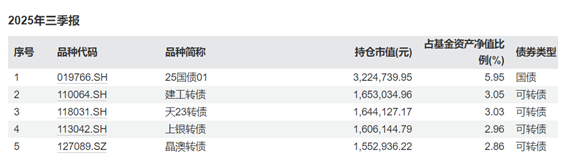
Group 1 - The People's Bank of China has resumed the operation of government bond trading, which had been suspended since January 2025, with a net injection of 20 billion yuan in the open market as of November 4, 2025 [1] - The resumption of government bond trading is seen as a signal to support long-term liquidity in the banking system and to stabilize macroeconomic operations in Q4 2025 and Q1 2026 [1] - Analysts from CITIC Securities suggest that the resumption of bond trading indicates a continuation of loose monetary policy, with expectations of a slight decline in the 10-year government bond yield in the short term [1] Group 2 - The current market conditions suggest that bond funds may be a necessary addition to asset allocation for investors looking to solidify their portfolios [2] - Bond funds, particularly pure bond funds, have a low correlation with equity assets and provide stable coupon income, which can reduce portfolio volatility [2] - The recent ratings indicate that the Huian Yongfu 90-Day Holding Period Short-Duration Bond Fund A has received multiple five-star ratings, making it a preferred choice for investors [2][3] Group 3 - As of September 30, 2025, the Huian Yongfu 90-Day Holding Period Short-Duration Bond Fund A has achieved positive returns for 13 consecutive quarters, with a maximum drawdown of approximately -0.3% [3] - The Huian Jiacheng Bond Fund A has outperformed its benchmark significantly, with a one-year return of 18.00%, exceeding the benchmark by 17.43% [3] - The fund's strategy focuses on maintaining a low duration and increasing the allocation to convertible bonds, with 85.19% of its net asset value invested in convertible bonds as of the end of Q3 2025 [3]