
贸易保护主义

Search documents
美股前瞻 | 三大股指期货齐跌 “特马”再度开撕 今晚鲍威尔领衔央行行长们“炸场”
智通财经网· 2025-07-01 12:29
1. 7月1日(周二)美股盘前,美股三大股指期货齐跌。截至发稿,道指期货跌0.12%,标普500指数期货跌0.29%,纳指期货跌0.37%。 个股消息 | ■ US 30 | 44,041.50 | 44,137.00 | 44,022.50 | -53.30 | -0.12% | | --- | --- | --- | --- | --- | --- | | ■ US 500 | 6,186.80 | 6,208.30 | 6,186.60 | -18.10 | -0.29% | | ■ US Tech 100 | 22,595.10 | 22,704.10 | 22,594.80 | -83.90 | -0.37% | 2. 截至发稿,德国DAX指数跌0.68%,英国富时100指数跌0.27%,法国CAC40指数跌0.38%,欧洲斯托克50指数跌0.32%。 | 德國DAX30 | 23,766.67 | 23,975.25 | 23,746.57 | -161.69 | -0.68% | | --- | --- | --- | --- | --- | --- | | 英國富時100 | 8,737.67 ...



欧盟只给30天时间,要求中方放开稀土出口,话音刚落,中方宣布新禁令
Sou Hu Cai Jing· 2025-07-01 11:19
Core Points - The EU is facing a severe shortage of rare earth magnets, impacting European companies significantly, as highlighted by the EU ambassador to China, Jorge Toledo [1] - China's new regulations require rare earth companies to report technical personnel and impose travel restrictions, indicating a strategic move to strengthen its control over rare earth resources [5] - The European automotive supply chain is under pressure due to the shortage of rare earth magnets, with some suppliers halting production and inventory levels critically low [3] Group 1: EU's Concerns and Responses - The EU has set a 30-day deadline for China to address the rare earth magnet export issue, reflecting the urgency of the situation [1] - The European automotive sector is experiencing production halts due to the shortage of rare earth magnets, with some companies having only 2 to 4 weeks of inventory left [3] - The EU's reliance on Chinese supply chains is juxtaposed with its attempts to exert pressure on trade rules, creating a complex relationship [3][6] Group 2: China's Strategic Moves - China controls over 60% of global rare earth production and 92% of refining supply, giving it significant leverage in the market [5] - The new regulations from China are seen as a long-term strategy to manage its rare earth resources and technology, moving from material export to technology control [5] - China's dual strategy of strict compliance and combating smuggling aims to balance strategic security with global supply chain stability [5][6] Group 3: Broader Implications - The EU's Critical Raw Materials Act aims for 10% domestic rare earth mining and 40% domestic processing by 2030, but faces challenges due to a lack of core technology outside of China [6] - The EU's trade policies, including tariffs on electric vehicles and restrictions on public procurement from Chinese companies, reflect a protectionist stance while simultaneously seeking cooperation [6] - The ongoing dialogue between EU leaders and China may influence the future dynamics of this resource competition, emphasizing the need for mutual understanding and strategic trust [6]
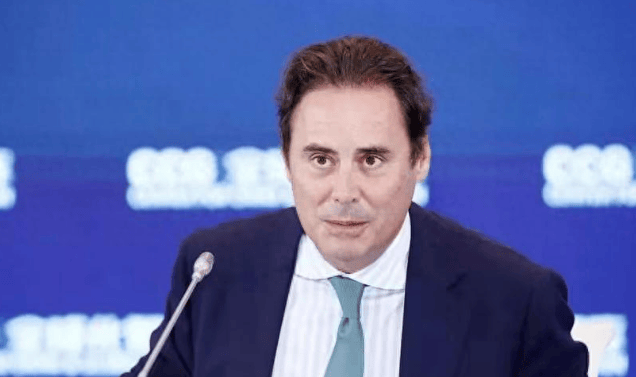
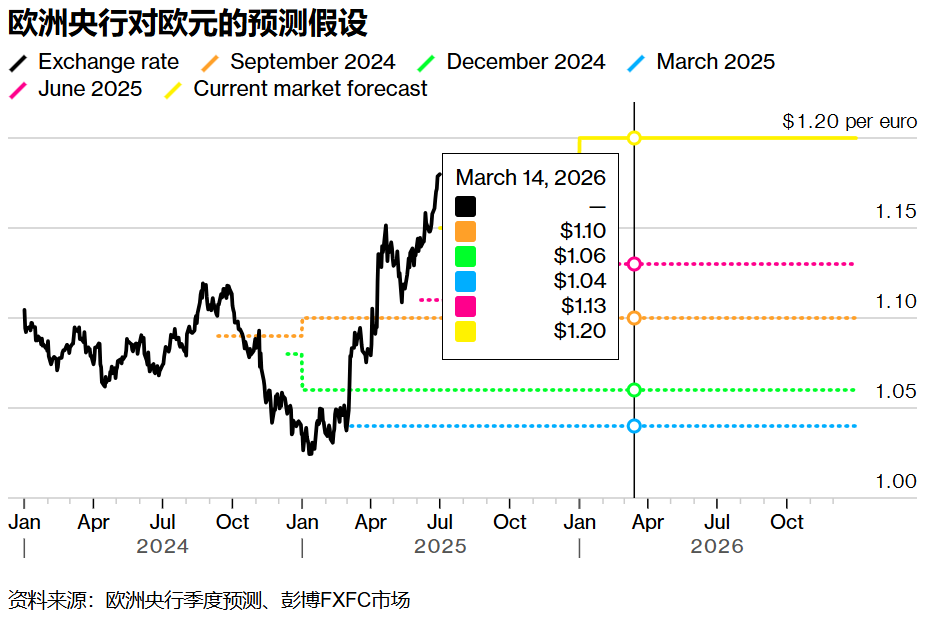
欧央行官员内部分歧:欧元兑美元若突破1.20或成分水岭 汇率波动牵动货币政策走向
智通财经网· 2025-07-01 10:49
Group 1 - The European Central Bank (ECB) Vice President Luis de Guindos expressed concerns about the euro's exchange rate, stating that a rise above 1.20 against the dollar could complicate monetary policy, while the current range of 1.17 to 1.20 is manageable [1] - The euro has appreciated by 13.8% against the dollar this year, reaching a high of 1.1755 on June 30, primarily due to concerns over U.S. tariff policies and a crisis of confidence in dollar assets [1] - ECB President Christine Lagarde previously described the euro's strong performance as "counterintuitive but reasonable," indicating that the exchange rate is just one of many factors in policy considerations [1] Group 2 - Within the Eurozone, there are differing views on the exchange rate; Latvian central bank Governor Martins Kazaks warned that rapid euro appreciation could create dual deflationary pressures by lowering import costs and weakening export competitiveness [4] - Lithuanian central bank Governor Gediminas Šimkus also cautioned against the speed of unilateral appreciation, which could disrupt inflation control targets, despite the current exchange rate not breaching historical ranges [4] - In contrast, German central bank Governor Joachim Nagel expressed confidence in the current euro exchange rate, viewing it as close to long-term averages and emphasizing that the management board is more focused on overall inflation dynamics rather than a single exchange rate indicator [4] Group 3 - The ECB has broken its silence on exchange rate discussions, which is rare, especially after initiating a monetary easing cycle in June 2024 and lowering benchmark rates eight times since then [4] - The central challenge for the ECB is balancing inflation reduction with economic growth amid expectations of further rate cuts in September [4] - De Guindos highlighted the need to be vigilant about trade protectionism and geopolitical risks that could impact price stability, particularly the potential lagging effects of U.S. tariff policies on the European economy [4][5] Group 4 - As the July 9 deadline for tariff exemptions approaches, uncertainty remains in U.S.-EU trade negotiations, with the ECB predicting inflation could stabilize at the 2% target by 2027, but short-term risks are skewed to the downside [5] - The volatility of the euro exchange rate is not only a focal point for financial markets but also serves as an important indicator for the ECB's policy direction [5] - De Guindos emphasized that exchange rate issues should be viewed within a broader economic fundamentals framework, highlighting the importance of monitoring all factors affecting inflation [5]
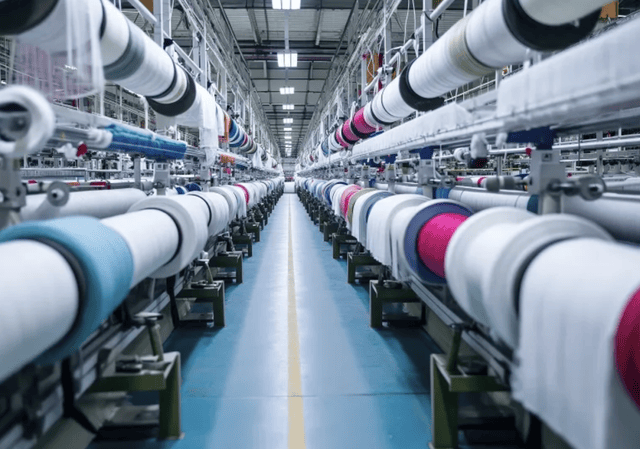
中国纺织机械遭印度限制,或波及全球纺织供应链
Sou Hu Cai Jing· 2025-07-01 10:07
Group 1 - The Indian government will implement comprehensive import restrictions on 371 types of Chinese goods starting March 2025, affecting various sectors including textiles, toys, consumer electronics, and telecommunications [1] - This move is a result of a notification from the Indian Ministry of Heavy Industries on August 28, 2024, which mandates that all products exported to India must comply with Indian standards and bear the mandatory Bureau of Indian Standards (BIS) mark [1][3] - India has been actively promoting the "Make in India" initiative to enhance its position in the global supply chain, with a focus on supporting domestic manufacturing and small enterprises, particularly in the context of its trade relationship with China [3] Group 2 - India's reliance on imports from China for upstream products has significantly increased, particularly for goods intended for further export, while exports to China have been declining at an average rate of 2% annually since 2017 [4] - In the fiscal year 2024, India exported goods worth $16.65 billion to China while importing goods worth $101.74 billion, highlighting a structural dependency on the Chinese supply chain, especially in high-tech and industrial sectors [4] - In the textile machinery sector, China accounted for $1.207 billion in exports to India in 2024, representing 25.76% of global exports, with a significant portion of India's textile machinery components, particularly knitting and non-woven machinery, being sourced from China [6] Group 3 - The trade imbalance between India and China has raised concerns within India regarding economic stability and industrial self-reliance, prompting the government to reassess its trade strategies and industrial policies [7] - The Indian textile industry is worried about the BIS standards, as it plans to introduce tens of thousands of high-speed machines that largely depend on imports, which could hinder its expansion plans during a critical period aimed at achieving $100 billion in exports and $250 billion in revenue by 2030 [7][9] - With 90% of high-speed looms in India relying on imports, the inclusion of textile machinery under the BIS standards poses significant challenges for the development of the Indian textile industry [9]
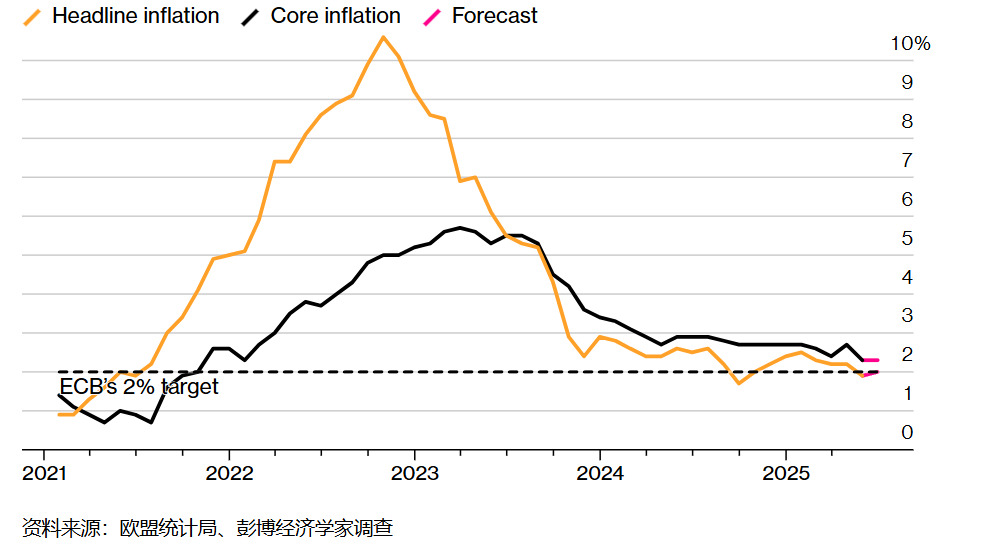
欧央行官员警告:欧美关税僵局可能加剧通缩压力 9月或迎最后一次降息
Zhi Tong Cai Jing· 2025-07-01 06:31
Group 1 - The current inflation situation in the Eurozone faces multiple downward pressures, with a warning that the recent rapid rise of the euro against the dollar and energy market volatility due to Middle Eastern geopolitical conflicts may cause inflation rates to deviate from the 2% target [1] - The probability of inflation remaining below the target level has exceeded the upside risks, according to the Lithuanian central bank governor [1] - Despite forecasts indicating that inflation will stabilize at 2% by 2027, current price trends remain uncertain, influenced by geopolitical risks and aggressive trade protectionism policies from the Trump administration [1] Group 2 - The likelihood of maintaining interest rates unchanged in the July meeting is the most probable policy option, aligning with market expectations [3] - Since the start of the current easing cycle in June 2024, the European Central Bank has consecutively lowered the benchmark interest rate eight times, with expectations for further rate cuts in September [3] - The average tariff rate on European goods exported to the U.S. is currently 10%, and the impact of existing trade barriers on the real economy has not yet fully manifested [3]
特朗普关税大限将至,欧洲港口陷入“末日囤货”式拥堵
Xin Jing Bao· 2025-07-01 03:41
Core Points - The impending tariff deadline set by Trump on July 9 is causing significant congestion in major European ports, with delays expected to last for several months [1][3] - The congestion is exacerbated by labor shortages, strikes, low water levels in the Rhine River, and increased risks in the Red Sea shipping routes [1][4] - The European ports are facing a dual challenge of increased cargo from Asia and the urgency to ship goods to the U.S. before the tariff deadline [4] Tariff Impact - Trump's tariffs include a 10% baseline tariff and 50% tariffs on steel and aluminum, affecting approximately 70% of EU exports to the U.S., valued at around €380 billion (approximately $430 billion) [3] - The EU has prepared retaliatory measures targeting U.S. products worth about €210 billion, with additional products under negotiation valued at €950 billion [3][4] - If the tariffs are implemented, EU exports to the U.S. could decrease by more than half [4] EU Internal Dynamics - There is a division within the EU regarding the approach to U.S. tariffs, with some countries advocating for a quick agreement to avoid escalation, while others, like France, prefer a tougher stance [6] - The proposed "Swiss cheese agreement" suggests a compromise involving lower tariffs on certain goods while imposing higher tariffs on others [6] Broader Economic Implications - The congestion in European ports reflects Trump's strong position in tariff negotiations, but it may also signal potential economic repercussions for the U.S. if agreements are not reached [8] - The ongoing trade tensions and port congestion are not limited to Europe, as similar issues have been reported in U.S. ports like Seattle-Tacoma and Oakland [8]
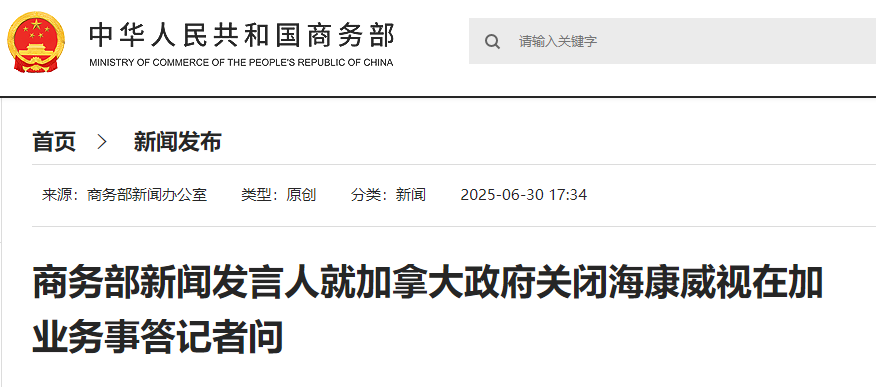
加拿大“封杀”海康威视?商务部:坚决反对
Zheng Quan Shi Bao· 2025-06-30 12:20
Group 1 - The Canadian government has ordered Hikvision to cease operations in Canada, citing national security concerns, which has been met with strong opposition from the Chinese government [1][3] - The Chinese government emphasizes that it encourages enterprises to conduct international business according to market principles and local laws, and criticizes Canada's lack of transparency in its national security review process [1][2] - Hikvision has expressed strong disagreement with the Canadian government's decision, claiming it lacks evidence and is discriminatory against Chinese companies [4] Group 2 - The Chinese government urges Canada to correct its actions and stop politicizing trade issues, advocating for a fair and non-discriminatory environment for all companies, including Chinese enterprises [2][3] - Hikvision asserts that it has always adhered to business ethics and local laws in its global operations, calling for respect for the rule of law from the Canadian government [4]

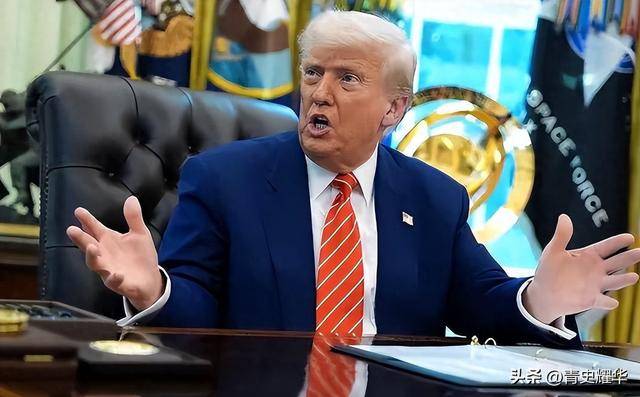
突发!还有10天,特朗普突然全面终止关税谈判,再逼鲍威尔辞职!
Sou Hu Cai Jing· 2025-06-29 03:26
Core Points - The article discusses the abrupt termination of trade negotiations between the U.S. and Canada by Trump, coinciding with his call for Fed Chair Powell to resign, highlighting escalating trade tensions and political interference in economic matters [1][21][34] Trade Relations - Canada plans to implement a 3% digital services tax on U.S. tech companies, expected to generate approximately CAD 2 billion annually, which Trump perceives as a direct attack on the U.S. [3][6] - Trump's reaction included a complete halt to trade negotiations and a threat to impose tariffs on Canadian goods within a week, leading to a significant drop in the Canadian dollar [5][6] - Canada has previously responded to U.S. tariffs by imposing a 25% tariff on U.S. automobiles not compliant with the USMCA and has also levied tariffs on U.S. goods worth about $43 billion [11][13] Economic Impact - The breakdown of U.S.-Canada trade talks is expected to negatively impact the Canadian economy, particularly the labor market, as indicated by Barclays forex strategist Skylar Montgomery Koning [7] - The Canadian trucking industry, which relies on cross-border trade for about 70% of its cargo, is experiencing a decline in orders, leading to layoffs [19] Federal Reserve Dynamics - Trump has expressed dissatisfaction with Powell's leadership, labeling him as "stupid" and "stubborn," and indicated a preference for a successor who is more inclined to lower interest rates [21][23] - Powell's term has 11 months remaining, but Trump may announce a replacement sooner, which could undermine the Fed's independence and create uncertainty in U.S. monetary policy [25][36] Global Economic Uncertainty - The escalation of the U.S.-Canada trade conflict could disrupt global supply chains, leading to shortages and price increases, affecting U.S. exports and employment [34][36] - Other countries, including the EU and Mexico, may respond with their own tariffs, further intensifying global trade tensions [36][38]
彭森:改革与发展,是中国应对外部冲击关键之策
Zhong Guo Xin Wen Wang· 2025-06-28 08:41
Core Viewpoint - The article emphasizes China's approach to stabilizing its economy amidst global economic uncertainties through reform and development strategies [1]. Group 1: Economic Response to External Challenges - Since April, the U.S. has implemented "reciprocal tariffs," disrupting global supply chains and challenging multilateral trade orders [2]. - China's foreign trade dependence on the U.S. has decreased from over 20% to around 12%, indicating a strategic reduction in reliance on a single market [2]. - In Q1, China's GDP grew by 5.4%, surpassing last year's growth rate and this year's target of 5% [2]. Group 2: Reform and Policy Initiatives - China has introduced various macroeconomic policies to stimulate economic activity and enhance competitiveness, including the "Promotion Law of Private Economy," which establishes the legal status of the private sector [3]. - New measures aimed at creating a unified national market and market-oriented resource allocation have been implemented to provide systemic support for economic stability [3]. Group 3: Manufacturing Transformation and High-Quality Development - The perception of "Made in China" is evolving, with a shift towards high-end and high-tech manufacturing, as evidenced by a Deutsche Bank report [4]. - China's manufacturing scale is approximately double that of the U.S. and four times that of Japan and Germany, with significant improvements in quality and structure [4]. - Key sectors such as high-speed rail, shipbuilding, and industrial robotics have seen substantial domestic production, with over 50% of global orders in these areas [4]. Group 4: Future Directions for Manufacturing - External pressures may accelerate China's efforts to enhance its industrial structure and upgrade its manufacturing capabilities [5][6]. - Future manufacturing strategies will focus on upgrading traditional industries, advancing strategic emerging industries, and fostering innovation in AI, quantum technology, and life sciences [6].
澳前贸易与投资部长:中澳自贸协定成果充分证明自由贸易有效性
Zhong Guo Xin Wen Wang· 2025-06-27 21:06
"世界再一次站在了十字路口。"罗布表示,当前民粹主义、孤立主义、民族主义与保护主义抬头,并以 保护经济安全的名义出现。这些思潮也许能短期内带来情绪上的满足感,提供某种"报复"的幻觉,但筑 起贸易壁垒、推行出口管制,最终将破坏全球投资,切断无数供应链,抑制经济增长与创新,并加剧公 众的不安与焦虑。 罗布表示,应将包括中澳自贸协定在内的现有自由贸易协定提升到更高水平,坚定表明对开放世界的支 持。如,将《全面与进步跨太平洋伙伴关系协定》(CPTPP)与《区域全面经济伙伴关系协定》(RCEP)整 合起来,推动构建亚太自由贸易区。 (文章来源:中国新闻网) 中新社悉尼6月28日电 (记者薄雯雯)澳大利亚前贸易与投资部长安德鲁·罗布(Andrew Robb)27日在悉尼表 示,中澳自由贸易协定取得的成果令人瞩目,充分证明了自由贸易有效性。面对当前贸易保护主义抬 头,应坚定表明对开放世界的支持。 罗布当晚出席以"同合作·共致远"暨中澳自贸协定签署十周年纪念为主题的澳大利亚中华经贸文化交流 促进会(华贸会)第五届第三次年会,并发表主旨演讲。 2015年6月,罗布代表澳大利亚政府与中方正式签署自由贸易协定。罗布在演讲中向所有为 ...