全球化

Search documents
信达证券:药明康德TEDIS业务高景气带动业绩高增长,上调全年业绩指引
Xin Lang Cai Jing· 2025-07-29 09:12
Core Viewpoint - The report from Cinda Securities highlights that WuXi AppTec's TEDIS business is driving significant growth, leading the company to raise its full-year performance guidance [1] Financial Performance - In H1 2025, the company is expected to achieve a net profit attributable to shareholders of approximately 8.56 billion yuan, representing a year-on-year increase of 101.9% [1] - In Q2 2025, the adjusted net profit attributable to shareholders is projected to be 3.64 billion yuan, reflecting a year-on-year growth of 47.9% [1] Business Growth Drivers - The strong growth in the company's chemical business is primarily driven by the high demand in the TEDIS segment [1] - The demand for peptides and oligonucleotides remains robust, with a rich order backlog [1] - The company plans to increase its peptide solid-phase synthesis capacity to over 100,000 liters by the end of 2025, indicating a positive outlook for the TEDIS business in the next 1-2 years [1] Global Market Position - Approximately 85% of the company's revenue comes from overseas clients, establishing it as a fully globalized and competitive leader in the CRDMO sector [1] - Despite geopolitical concerns, the business growth from U.S. clients remains strong in H1 2025, alleviating market worries and reinforcing the company's stable position in the global supply chain [1]


美的集团董事长方洪波:以丹纳赫为镜,锻造企业韧性
首席商业评论· 2025-07-29 06:44
Core Viewpoint - The article discusses the challenges faced by Chinese enterprises in a highly competitive environment characterized by homogenization, price wars, and rising costs, emphasizing the need for a systematic methodology to navigate these challenges and achieve sustainable growth [1][5]. Group 1: The Need for Systematic Methodology - The concept of "cost reduction and efficiency enhancement" has shifted from a strategic choice to a survival necessity for enterprises [1]. - The high failure rate of mergers and acquisitions highlights the urgency for Chinese companies to adopt a comprehensive approach to overcome cyclical challenges [1]. Group 2: The Danaher Model - The book "The Danaher Model" dissects the success strategies of Danaher, known as the "king of mergers and acquisitions," showcasing the Danaher Business System (DBS) as a key driver of its success [1][10]. - Danaher's approach to mergers evolved from opportunistic acquisitions to a strategy focused on industry upgrades, demonstrating that a company's boundaries are defined by its core capabilities rather than capital [7][11]. Group 3: Midea Group's Implementation - Midea Group began learning from international best practices, specifically the Toyota Production System, but found limited success until adopting the DBS framework [3]. - Midea established its own Midea Business System (MBS) to enhance operational efficiency, achieving significant improvements in factory performance and efficiency, with an average annual increase of approximately 15% [4][3]. Group 4: Globalization and Local Adaptation - Midea's global strategy involves establishing 17 R&D centers and 22 manufacturing bases, focusing on local needs while integrating global resources [8]. - The article emphasizes the importance of balancing localization and integration in a globalized business environment, as demonstrated by Midea's efforts to create a "second home market" [8][10]. Group 5: Lessons for Chinese Enterprises - The Danaher Group serves as both a mirror and a measuring stick for Chinese companies, illustrating the importance of adhering to fundamental principles such as process efficiency and factual respect [11]. - The article concludes that embracing change, maintaining common sense, and undergoing global refinement are essential for Chinese enterprises to navigate future uncertainties [11].




20cm速递|创业板医药ETF国泰(159377)涨超1.0%,政策边际优化或驱动行业估值修复
Sou Hu Cai Jing· 2025-07-29 03:40
Group 1 - The core viewpoint of the articles highlights the positive impact of the National Medical Insurance Administration's discussions on supporting enterprises in "anti-involution," overseas expansion, and differentiated innovation, which benefits the high-quality development of the medical device industry [1] - The collection prices are expected to remain moderate, promoting stabilization and improvement in corporate profitability [1] - Policies are expected to stimulate innovation and research and development (R&D) activities, leading to the introduction of new products that facilitate domestic substitution and open up growth opportunities [1] Group 2 - The medical and biological industry is entering a phase where innovative drugs are realizing their results, with significant R&D catalysts that are not affected by trade wars, becoming a key investment theme for 2025 [1] - Companies that are expanding into emerging markets show great potential, and specific segments like insulin and orthopedics are expected to experience new growth following the clearing of collection prices [1] - The industry is witnessing an acceleration in concentration, with mergers and acquisitions likely to become more active [1] Group 3 - The ChiNext Medical ETF (159377) tracks the Innovation Medicine Index (399275), which can have a daily fluctuation of up to 20% [1] - This index selects listed companies focused on innovative drug R&D, production, and related services from the ChiNext market, characterized by high R&D investment and technological leadership [1] - The index aims to reflect the overall performance of listed companies in the innovative pharmaceutical industry [1]

市场竞争日趋白热化 一汽解放打响“质量攻坚战”
Zheng Quan Ri Bao· 2025-07-28 17:00
Core Viewpoint - The commercial vehicle industry is experiencing intensified competition, with both traditional players and new entrants like BYD and Geely recognizing the sector's potential, as highlighted by the chairman of FAW Jiefang, Li Sheng [1] Group 1: Company Performance - FAW Jiefang achieved eight industry-leading performances in the first half of the year, including being ranked first in brand value for 14 consecutive years and holding the largest market share in the domestic heavy-duty truck market [1] - The company aims to explore sustainable development through multiple initiatives, including enhancing quality, breaking through core technologies, and expanding globally [1] Group 2: Quality Improvement - The company has initiated a quality improvement campaign led by Li Sheng, with a target to reduce quality issues by 30% annually, aiming for a total reduction of 65% in three years [2] - FAW Jiefang has implemented comprehensive quality control across all processes, from design to service, embedding "quality first" into its corporate culture [2] - The powertrain division has undergone reforms to enhance control over key components, with the 15L6SV3 natural gas engine demonstrating industry-leading fuel consumption [2] Group 3: New Energy Transition - The transition to new energy vehicles is seen as crucial for breaking growth bottlenecks, with the company targeting to lead in new energy sales for heavy-duty trucks this year [3] - FAW Jiefang has established a sustainable business model through partnerships for charging networks and battery swapping technology, addressing the challenges of new energy commercial vehicles [3] - The company is committed to continuous product innovation, with plans for the J7 series and new global products set to launch in the coming years [3] Group 4: Global Expansion - FAW Jiefang is shifting its global strategy from trade exports to localized operations, with expectations that overseas sales will match domestic sales within five years [4] - The company has already established four overseas subsidiaries and plans to complete eight by the end of the year, with a factory in Uzbekistan now operational [4] - FAW Jiefang's overseas sales (excluding Russia) increased by 60% in the first half of the year [4] Group 5: Pricing Strategy - In response to market price competition, FAW Jiefang has chosen to focus on value rather than price, maintaining stable pricing despite industry-wide price cuts [4][5] - The company has implemented mechanisms to balance dealer interests and prevent price dumping, while also introducing differentiated products to avoid price wars [5] Group 6: Ecosystem Collaboration - FAW Jiefang is enhancing its ecosystem through collaborations that provide added value to customers, such as free vehicle inspections and maintenance reminders during charging [5] - The company is developing a comprehensive service system covering the entire lifecycle of vehicles, ensuring customers have a seamless experience from purchase to resale [5][6] Group 7: Long-term Strategy - FAW Jiefang is adopting a steady approach to navigate industry changes, emphasizing long-term competitiveness over short-term sales fluctuations [6]

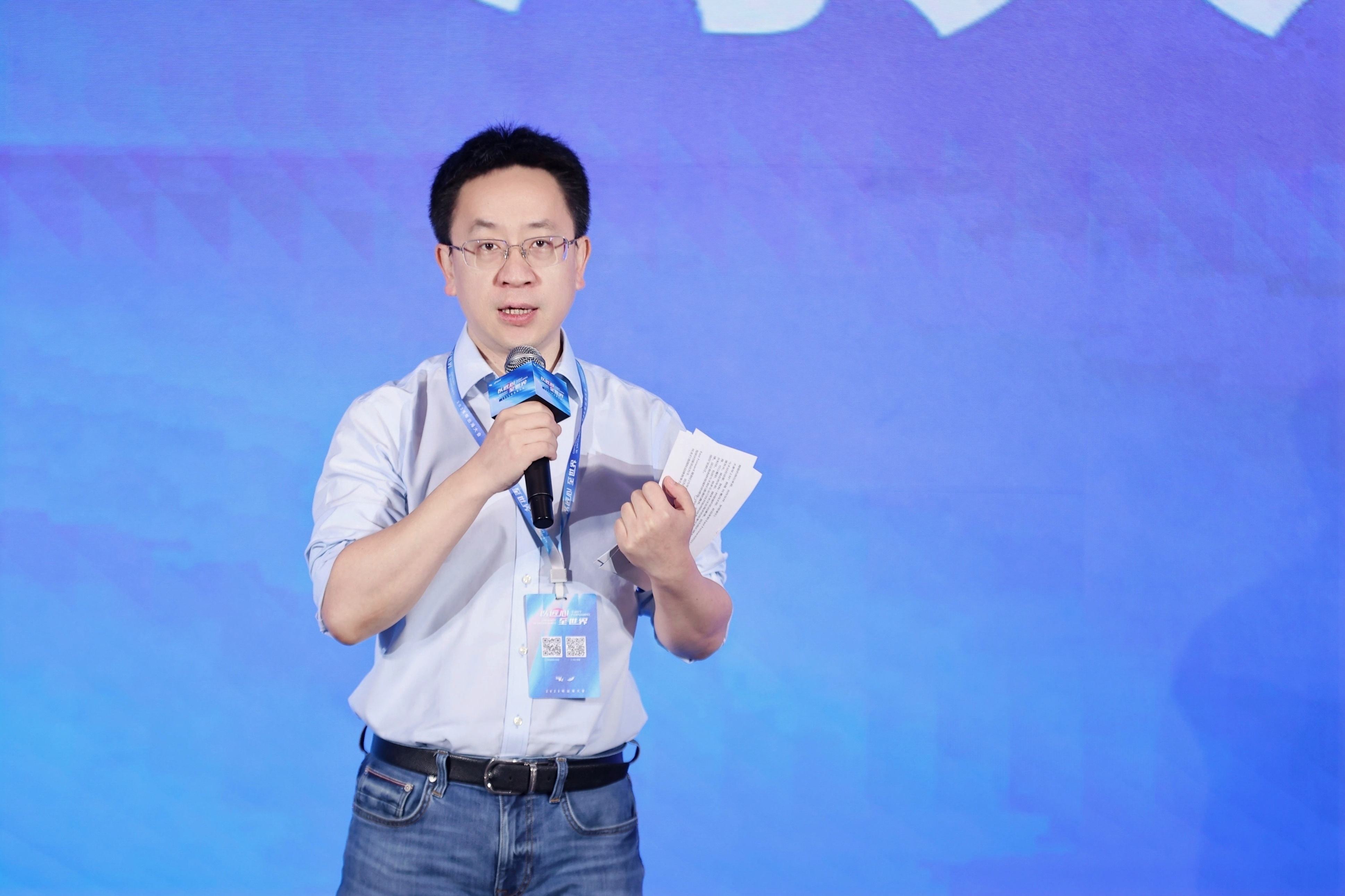
36氪CEO冯大刚发表主办方致辞 | 2025出海大会
3 6 Ke· 2025-07-28 08:20
Core Insights - The East Forward 2025 conference, focusing on globalization and overseas expansion, will take place in Hangzhou, highlighting the shift of Chinese brands from "Made in China" to "Created in China" and "Belief in China" [1][3][4] Group 1: Conference Overview - The conference will feature a main venue and sub-venues, including a "Country Cooperation Matching Meeting" focusing on investment in BRICS nations [1] - Topics will cover popular overseas sectors such as consumption, technology, e-commerce, finance, and new energy, with over 10 keynote speeches and 5 roundtable discussions [1] - The event aims to provide a sustainable path for companies to navigate globalization challenges and enhance their overseas capabilities [1] Group 2: Key Themes and Concepts - The theme "From Craftsmanship to the World" emphasizes the importance of patience, determination, and empathy in achieving success in international markets [4] - The conference will showcase successful case studies, such as DeepSeek and Black Myth: Wukong, which exemplify the application of technology and cultural understanding in building international brand competitiveness [4][5] Group 3: Location Significance - Hangzhou was chosen for its recent successful overseas cases and its reputation as a city that values craftsmanship, with many passionate entrepreneurs eager to make their mark globally [6] - Qiantang has a history of foreign investment cooperation and successful overseas ventures, making it a strategic location for the conference [6] Group 4: Agenda and Participation - The agenda includes a full day of brand sharing sessions, with a parallel session focused on practical cooperation in the UAE market [6][7] - The event will retain networking opportunities for brands interested in the UAE market, with representatives from various trade organizations attending [7] Group 5: Company Evolution - Over the past 15 years, the company has transitioned from bringing foreign enterprises to China, to supporting domestic startups, and now aims to assist numerous companies in their global expansion efforts [7]
宏观经济深度研究:地缘的围墙,创新的阶梯
工银国际· 2025-07-28 05:26
Economic Impact of Geopolitical Fragmentation - The 2007-2008 financial crisis marked a significant turning point in globalization, leading to increased geopolitical fragmentation since 1975[2] - Geopolitical fragmentation index shows that a one standard deviation negative shock can reduce global GDP by approximately -0.4%, peaking within one to two years[5] - Emerging economies, particularly in Southeast Asia and Latin America, are more severely impacted by external shocks compared to developed regions[5] Sectoral and Regional Variations - Industries closely tied to global markets, such as manufacturing and finance, face the most significant disruptions due to geopolitical risks[5] - The spillover effects of geopolitical factors are most pronounced in the US-EU region, affecting global economic dynamics[5] - In contrast, sectors like agriculture and real estate, which are more localized, experience relatively minor impacts[5] Innovation as a Response to Geopolitical Risks - Higher exposure to external political risks correlates with increased innovation activities, such as patent filings and R&D spending[8] - Private sector initiatives drive innovation in response to geopolitical uncertainties, highlighting the importance of market incentives[8] - Medium-innovation firms, which are sensitive to external risks, tend to increase R&D efforts more than both high-tech giants and low-innovation firms[8] Long-term Implications for Economic Growth - Strengthening domestic innovation capabilities can help mitigate risks associated with global supply chains and enhance resilience[8] - Countries that can achieve technological advancements and industry upgrades within a regional framework are likely to excel in future global competition[8]
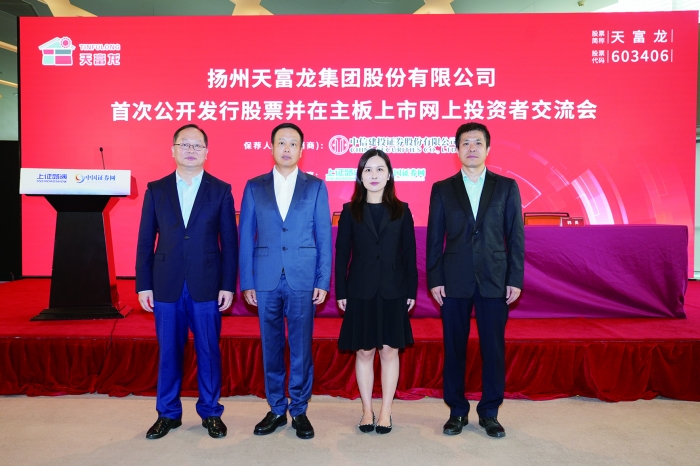
天富龙:聚焦数字化、全球化、绿色化 专注差别化涤纶短纤维领域创新发展——扬州天富龙集团股份有限公司首次公开发行股票并在主板上市网上投资者交流会精彩回放
Shang Hai Zheng Quan Bao· 2025-07-27 18:48
Company Overview - The company focuses on the research, production, and sales of differentiated polyester staple fibers, expanding its product range to include recycled colored polyester staple fibers and differentiated composite fibers, covering various applications in business, travel, home, healthcare, and clothing [2][4] - The main products include high-quality, full-spectrum recycled colored polyester staple fibers and functionally rich differentiated composite fibers, with applications in automotive interiors, home textiles, construction, footwear materials, healthcare, and filtration materials [5][4] Financial Performance - Sales revenue for differentiated composite fibers in 2022, 2023, and 2024 is projected to be approximately 1.48 billion, 1.79 billion, and 2.48 billion CNY, respectively, showing consistent growth due to increased production from the "Zhuhai Project" and adjustments in product structure [6] - Revenue from recycled colored polyester staple fibers for the same years is expected to be around 996.65 million, 1.07 billion, and 1.17 billion CNY, with a focus on customized products in the automotive interior sector [7] - The company's gross profit from main business operations for the same period is estimated at 469.27 million, 583.42 million, and 599.87 million CNY [8] - The net profit attributable to the parent company, after excluding non-recurring gains and losses, is projected to be 338.50 million, 420.06 million, and 450.94 million CNY, with a compound annual growth rate of 15.42% [9] - The comprehensive gross profit margin for the company is expected to be 18.86%, 18.31%, and 16.50% over the same period [10] Research and Development - The company has increased its R&D expenses to approximately 93.26 million, 117.34 million, and 136.20 million CNY, maintaining a stable proportion of around 3.5% of operating income [11] - Future R&D plans include establishing a research center and developing seven technology platforms to enhance technical competitiveness and support the transition from physical to chemical recycling methods for polyester [14] Market Development - The company aims to strengthen its market presence by leveraging existing manufacturing bases and expanding into new markets, including Guangdong and Southeast Asia, through specialized marketing personnel [15] - The company has established long-term cooperative relationships with major clients in various sectors, ensuring stable revenue growth [25] Industry Context - The company operates within the "C28 Chemical Fiber Manufacturing" industry, specifically in "C2822 Polyester Fiber Manufacturing" [17] - China is a major global supplier of polyester staple fibers, accounting for 61.62% of the world's production in 2022, with production increasing from 9.15 million tons in 2016 to 11.93 million tons in 2023 [21] - The competitive landscape of the polyester staple fiber industry is characterized by high concentration, with the top four companies holding approximately 43% of the market share as of the end of 2023 [24]
周专题:25Q2 家用电器板块公募基金配置比例环比下滑,黑电板块配置比例环比上行
HUAXI Securities· 2025-07-27 10:36
Investment Rating - The industry rating is "Recommended" [5] Core Insights - In Q2 2025, the public fund allocation ratio for the home appliance sector decreased by 15.4% to a market value of 99.56 billion yuan, with a public fund allocation ratio of 3.85%, down by 0.72 percentage points [9] - Among the sub-sectors, the black appliance segment saw an increase in public fund allocation, while the white and small appliances experienced declines [12] - TCL Electronics expects a net profit of approximately 950 million to 1.08 billion HKD for H1 2025, representing a year-on-year growth of 45% to 65% due to its focus on globalization and high-end product development [16][17] -泉峰控股 anticipates a net profit of approximately 90 million to 100 million USD for H1 2025, reflecting a 50% year-on-year increase driven by revenue growth and contributions from high-margin brands [18] Summary by Sections 1. Weekly Topic: Q2 2025 Home Appliance Sector Fund Allocation - The public fund holding market value for the home appliance sector was 99.56 billion yuan, down 15.4% [9] - The allocation ratios for sub-sectors were as follows: white appliances (3.05%), small appliances (0.30%), black appliances (0.20%), appliance components (0.26%), kitchen and bathroom appliances (0.02%), and lighting equipment (0.01%) [12] 2. Key Company Announcements - TCL Electronics projects a significant increase in net profit for H1 2025, driven by advancements in high-end display technologies and improved product competitiveness [16] -泉峰控股 expects a substantial profit increase due to growth in its proprietary brand business and favorable currency effects [18] 3. Data Tracking 3.1 Raw Material Data - LME copper price increased by 1.3% and aluminum price by 2.5% as of July 25, 2025 [19] 3.2 Shipping Rates and Exchange Rates - The CCFI composite index decreased by 3.24% as of July 25, 2025, with a slight decline in the USD to RMB exchange rate [24] 3.3 Real Estate Data - In the first half of 2025, the sales area of commercial housing decreased by 3.5%, with significant declines in construction and new starts [26]
关税战尘埃落定,中国税率意外成全球最低,美国何去何从?
Sou Hu Cai Jing· 2025-07-27 08:04
Group 1 - The article highlights that China has the lowest average import tariff rate among major global economies at 3.1%, significantly lower than the United States at 19.3% and other countries like Canada and Australia [1][8] - The effectiveness of tariffs as a traditional trade protection measure is being challenged in the context of globalization and interconnected supply chains, leading to unintended consequences for countries imposing high tariffs [1][8] - The U.S. tariff strategy against China has resulted in increased costs for American consumers and businesses, ultimately harming the U.S. economy rather than achieving its intended goals [1][3] Group 2 - Chinese manufacturers have demonstrated remarkable adaptability by relocating production lines to countries like Vietnam, Malaysia, and Mexico to circumvent high tariffs while continuing to supply the U.S. market [3] - Europe is taking a more cautious approach towards China, focusing on finding alternative suppliers and building strategic reserves rather than severing ties with China, due to its reliance on Chinese markets for key industries [6] - The global economic landscape is undergoing significant changes, with China's supply chains proving resilient and indispensable despite the ongoing tariff conflicts initiated by the U.S. [8]

美股正经历前所未有的变化
第一财经· 2025-07-26 10:41
Core Viewpoint - The article discusses the shifting perception of the U.S. market as a safe haven for global investors, highlighting the potential risks and changes in market dynamics due to recent U.S. trade policies and economic conditions [1][2][4]. Group 1: Observations on Market Dynamics - Observation 1: The "American exceptionalism" in capital markets is breaking down, as evidenced by the U.S. stock market's negative response to trade tensions, contrasting with the positive reactions of Asian and European markets [6][10][12]. - Observation 2: The Dow Jones Industrial Average, historically the most stable index, has become the most volatile due to its heavy reliance on manufacturing and consumer sectors, which are adversely affected by trade policies [16][21][22]. - Observation 3: The U.S. stock market increasingly reflects the performance of global companies and a few tech giants, rather than the U.S. economy itself, as many companies derive significant revenue from international markets [23][25][31]. Group 2: Impact of Trade Policies - Observation 4: International investors can no longer rely on the U.S. dollar's appreciation as a source of profit, as the dollar index has weakened and the U.S. economy faces challenges that may hinder its competitiveness [32][34][35]. - Observation 5: The outflow of capital from U.S. assets is evident, with significant withdrawals from long-term bond funds and a shift towards European debt, indicating a loss of confidence in U.S. markets [35][36].