
城中村改造

Search documents
城市更新专家解读
2025-08-05 03:15
Summary of Conference Call on Urban Renewal in Guangzhou Industry Overview - The conference call focuses on urban renewal, specifically the transformation of urban villages in Guangzhou, China, with significant government involvement and funding from policy banks. Key Points and Arguments 1. **Funding and Financial Support** - Guangzhou has secured 409.6 billion yuan in loans from policy banks, which constitutes approximately 80% of the total funding for urban village renovations [1][5][6]. - The government allows urban renewal projects to apply for special bonds as capital, addressing some funding challenges [1][6]. 2. **Urban Renewal Progress** - The city has initiated a large-scale urban village transformation since 2020, with significant acceleration noted in 2023 and 2025, particularly after the high-quality development conference [2][3]. - By 2025, 52 new model projects have been confirmed, with rapid progress in preliminary work [1][2]. 3. **Compensation Schemes** - Compensation for residents includes physical resettlement (up to 280 square meters), monetary compensation, and housing vouchers, with a high acceptance rate among citizens [1][2][10]. - The standard for physical resettlement has been set at a maximum of 280 square meters, with any excess compensated monetarily [8][12]. 4. **Impact on Real Estate Market** - The transformation of urban villages is expected to positively influence the secondary real estate market, particularly if all 52 projects are fully developed and released [17][18]. - The quality of land available for future auctions is anticipated to improve due to the urban renewal efforts [17]. 5. **Challenges and Future Directions** - Despite progress, challenges remain in the secondary market, with limited land supply affecting auction quality [18]. - The government aims to enhance the speed of urban renewal projects through continued leadership and support [7][19]. 6. **Changes in Resettlement Methods** - The acceptance of housing vouchers is gradually increasing, although monetary compensation remains more prevalent [10]. - The government has implemented a unified standard for physical resettlement, which has improved resident cooperation with urban renewal projects [15]. 7. **Policy Shifts** - The 2025 urban renewal policy emphasizes high quality, public welfare, and operational efficiency, moving from a focus on investment to a focus on sustainable development [13]. - The policy aims to revitalize existing assets and improve living conditions through infrastructure upgrades and community engagement [13]. 8. **Construction and Demolition Relationship** - There is currently no clear relationship between demolition and construction phases, with many projects still in the initial stages of resettlement housing construction [19]. - Future coordination among multiple projects could lead to positive outcomes in housing supply and market dynamics [19]. Additional Important Content - The urban renewal projects are expected to stimulate new private investments and consumer spending, contributing to economic growth [16]. - The government’s approach to urban renewal is characterized by a balance between public needs and market dynamics, aiming to enhance community trust and participation [20][21]. - The overall sentiment among residents has improved, with increased cooperation observed in urban renewal initiatives [15].
天津城市更新项目贷款余额增长50.56%
Ren Min Ri Bao· 2025-08-04 23:06
Group 1 - The core focus of Tianjin's financial regulatory authority is on urban renewal, technological innovation, and ecological governance, with an emphasis on supporting vulnerable groups such as the elderly and children, as well as new citizens [1] - As of the end of June, financial institutions in Tianjin supported 33 urban renewal projects with a loan balance of 34.178 billion yuan, an increase of 11.477 billion yuan, representing a growth of 50.56% since the beginning of the year [1] - Policy banks in Tianjin provided 15.325 billion yuan in special loans for 16 urban village renovation projects, supporting the renovation of 36,000 housing units [1] Group 2 - Financial institutions have been proactive in addressing the financing needs of affordable housing projects, with a total of 26 projects supported and a loan balance of 5.591 billion yuan, reflecting a 15% increase since the start of the year [1]
楼市早餐荟 | 贵州:2025年计划改造城中村6268户;光明地产15亿元公司债发行申请已获上交所受理
Bei Jing Shang Bao· 2025-08-04 01:37
Group 1 - Guizhou plans to renovate 6,268 urban villages and 10,022 dilapidated urban houses by 2025 to improve housing conditions and stabilize the real estate market [1] - Bright Realty's application for a 1.5 billion yuan corporate bond has been accepted by the Shanghai Stock Exchange, with the bond being privately placed and underwritten by CITIC Securities and Guotai Junan [2] - Joy City announced that its wholly-owned subsidiary provided a guarantee of up to 271.5 million yuan for a joint venture, with the loan amounting to 960 million yuan and maturing on December 31, 2027 [3] Group 2 - China Merchants Shekou has repurchased approximately 4.48 million shares, totaling around 430 million yuan, with a repurchase price cap of 15.68 yuan per share [4] - The top 100 real estate companies in China acquired land worth 578.3 billion yuan from January to July 2025, reflecting a year-on-year increase of 34.3% [5]

丰台又推介11宗“好房子”宅地,多集中于三四环
Cai Jing Wang· 2025-08-01 11:33
Core Viewpoint - The introduction of 11 residential land plots in Fengtai District aims to meet diverse and personalized housing demands, enhance housing supply quality, and stimulate consumer activity [1][6]. Group 1: Land Plot Details - The 11 plots are categorized into three types: five for shantytown redevelopment, five for urban village redevelopment, and one for primary development [2]. - Specific plots include the Yuegezhuang Village plot (2.18 hectares, 58,000 square meters), the Changxindian plot (4.25 hectares, 46,800 square meters), and the Zhangguozhuang plot (approximately 47,700 square meters) [3][4]. Group 2: Location and Infrastructure - All plots are strategically located within Fengtai District, close to essential amenities such as education and healthcare, and within approximately 1 kilometer of transit stations [1][4]. - The plots are situated in key areas or emerging growth zones, offering advantages of prime location, mature infrastructure, and planned development [4]. Group 3: Market Implications - The high inventory in Fengtai District presents competition among new projects, but well-located and high-quality developments can still succeed [6]. - The increase in land supply is expected to broaden the choices in the new housing market, contributing to the ongoing enhancement of housing quality and stimulating consumer demand [6].
贵州:2025年推动城中村改造6268户、城市危旧房改造10022套
Zheng Quan Shi Bao Wang· 2025-08-01 07:20
Group 1 - The core viewpoint of the article is the implementation of a special action plan by the Guizhou Provincial Government to boost consumption, particularly in the housing sector [1] - The plan aims to meet housing consumption needs by promoting the renovation of 6,268 urban village homes and 10,022 urban dilapidated houses by 2025 [1] - The government will adjust the land value-added tax pre-collection rate to alleviate pressure on real estate companies [1] Group 2 - The initiative emphasizes the principle of "demand-driven purchasing," which includes acquiring existing residential properties for use as affordable housing to stabilize the real estate market [1] - High-quality residential design guidelines will be introduced to promote the development of "good housing" projects [1] - The plan also focuses on developing tourism-related real estate projects, such as summer resorts and wellness properties, targeting markets in regions like Guangdong-Hong Kong-Macau, Chengdu-Chongqing, and the Yangtze River Delta [1]
从“握手楼”到新家园!广州海珠新市头村旧改首批房源摇珠分房
Sou Hu Cai Jing· 2025-07-28 16:27
Group 1 - The new urban renewal project in Xinshi Tou Village, located in the core area of Guangzhou's new central axis, has made significant progress, with the first batch of 66 reconstructed houses entering the lottery phase for villagers [1][4] - The project, which started in July 2019, achieved a signing rate of over 50% within 10 days and reached 90% within 3 months, completing all house demolitions and land leveling in 8 months [4] - The project has been closely supervised by a dedicated team from the local party branch, ensuring community involvement in key decisions such as housing location, layout, and decoration standards [4][6] Group 2 - The reconstructed housing types include single rooms of approximately 44-49 square meters, one-bedroom apartments of about 60 square meters, two-bedroom apartments ranging from 68-80 square meters, and larger three and four-bedroom units [6] - The successful transformation of Xinshi Tou Village has improved living conditions for residents, moving them away from cramped urban village environments to new residential spaces [6] - The revitalization of Xinshi Tou Village contributes to the overall vibrancy of the Haizhu District along Guangzhou's new central axis [6]

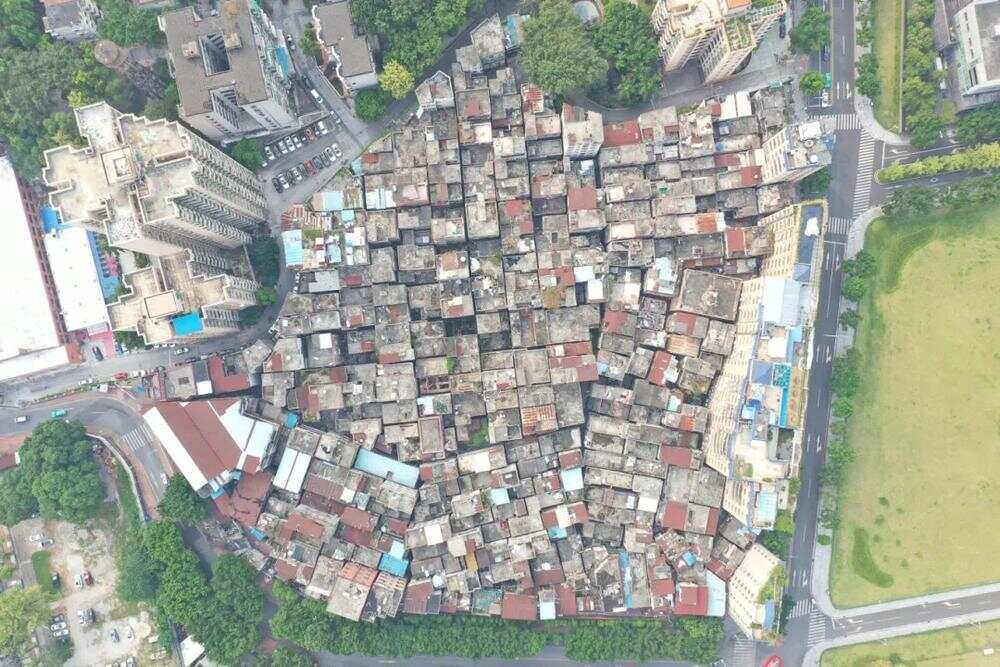
城改持续推进叠加重大项目开工建设,下半年基建投资有望提速
Guotou Securities· 2025-07-27 13:32
Investment Rating - The report maintains an investment rating of "Outperform the Market-A" [4] Core Viewpoints - The ongoing urban renewal and the commencement of major projects are expected to accelerate infrastructure investment in the second half of the year [1][20] - The central government has emphasized the importance of urban village renovations and has set ambitious targets for the renovation of old urban residential areas, with 58,000 new projects planned for 2024 and 25,000 for the first half of 2025 [1][17] - The report suggests focusing on low-valuation state-owned enterprises in the infrastructure sector, as their fundamentals and operational metrics are expected to improve due to ongoing reforms and market conditions [9][11] Summary by Sections Industry Dynamics - The State-owned Assets Supervision and Administration Commission (SASAC) has called for state-owned enterprises to actively participate in urban development and infrastructure projects, emphasizing the need for safety and reliability in infrastructure [1][16] - The National Development and Reform Commission (NDRC) has allocated 735 billion yuan for central budget investments, focusing on modern infrastructure and urbanization projects [2][18] - Infrastructure investment growth rates for the first half of 2023 were reported at 4.60% for narrow definitions and 8.90% for broader definitions, with expectations for acceleration in the latter half of the year [9][20] Market Performance - The construction industry saw a weekly increase of 5.62%, outperforming major indices such as the Shenzhen Composite Index and the Shanghai Composite Index [21] - The municipal engineering sector experienced the highest growth within the construction industry, with a weekly increase of 14.33% [21] Company Announcements - Major contracts were awarded, including China Power Construction winning contracts worth approximately 57.52 billion yuan for a pumped storage power station [32] - China State Construction reported new contracts totaling 2.5 trillion yuan for the first half of 2025, reflecting a year-on-year increase of 0.9% [32] Valuation - As of July 25, the construction and decoration industry had a price-to-earnings (P/E) ratio of 11.65 and a price-to-book (P/B) ratio of 0.85, indicating a slight increase from the previous week [24] - The report highlights that the construction industry ranks 27th in P/E valuation among major sectors, suggesting potential for valuation improvement [24][25] Key Focus Stocks - The report recommends focusing on low-valuation state-owned enterprises such as China State Construction, China Railway, and China Communications Construction, which are expected to benefit from improved operational metrics and market conditions [11][12][28]






成都优化调控政策,新房、二手房成交持续回落
Xiangcai Securities· 2025-07-27 10:30
Investment Rating - The industry investment rating is maintained as "Buy" [1] Core Viewpoints - The report highlights that Chengdu has optimized its housing fund loan policies and canceled sales restrictions, aiming to promote a stable and healthy development of the real estate market [3][9] - The supply side focuses on improving quality and revitalizing existing stock, with measures to promote balanced regional development and enhance living conditions in non-core areas [3][9] - The demand side has seen a reduction in the down payment ratio for second homes and a phased cancellation of sales restrictions, which is expected to stimulate market activity [4][10] Weekly Data Tracking - New home transactions in 30 major cities showed a week-on-week increase of 22.6% but a year-on-year decrease of 8.5%, indicating ongoing pressure in the market [5][11] - Second-hand home transactions also faced challenges, with a year-on-year decline of 7.1% in the latest week, marking the first negative growth this year [5][11][12] Investment Suggestions - The report suggests focusing on two main areas for investment: leading real estate companies with strong land acquisition capabilities and well-structured land reserves, such as Poly Developments, and top real estate agencies benefiting from active second-hand home transactions, like I Love My Home [6][22]
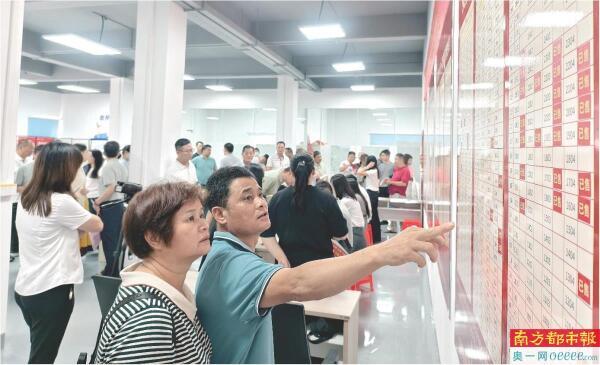
51户房票权益人置换96套安置房
Nan Fang Du Shi Bao· 2025-07-24 23:09
Core Viewpoint - The second batch of centralized selection for resettlement housing in the Jinshan Lake area of Huicheng District has been successfully completed, marking significant progress in the urban renewal project [2][6]. Group 1: Selection Process - The selection event took place on July 22, with 51 households successfully exchanging housing vouchers for 96 resettlement units [2]. - Each household had a time limit of 5 minutes for selection, ensuring an efficient and orderly process [3]. - The selection was conducted under strict supervision to maintain fairness and transparency, with immediate verification of housing availability [3][4]. Group 2: Resident Feedback - Residents expressed satisfaction with the selection process, highlighting its efficiency and the flexibility of the housing voucher policy [4]. - The availability of various housing options and the surrounding amenities, such as schools and hospitals, were noted as significant advantages of the resettlement housing [4][6]. Group 3: Project Overview - The Jinshan Lake area urban renewal project is one of the largest in Huicheng District, aiming to improve living conditions and provide high-quality residential options [6][7]. - The resettlement housing is built to high standards and is strategically located near essential services and educational institutions, promoting a comprehensive living environment [6][7]. Group 4: Future Plans - The project team is committed to accelerating the construction of resettlement housing and associated facilities to ensure timely delivery for residents [6][7].
21评论丨城市更新是构建房地产发展新模式的切入点
2 1 Shi Ji Jing Ji Bao Dao· 2025-07-23 22:33
Core Viewpoint - The recent Central Urban Work Conference emphasizes the need for a shift in urban development strategies, focusing on quality improvement and efficiency in existing urban areas rather than large-scale expansion, reflecting a transition in China's urbanization process from rapid growth to stable development [1][2]. Group 1: Urban Development Principles - The conference introduced "Five Transformations" as key principles for urban development, which include a human-centered approach, efficient and intensive development, emphasis on distinctive growth, increased governance investment, and coordinated methods [2]. - The rapid growth of the real estate sector is seen as a necessary outcome of the previous expansion phase, and the focus is now shifting towards updating existing urban structures rather than relying on real estate for financing [2][3]. Group 2: Real Estate Development Model - The meeting highlighted the need to accelerate the construction of a new real estate development model, which includes steady progress in the renovation of urban villages and dilapidated housing [2][3]. - The rental and purchase housing supply model has shown significant results in first and second-tier cities, with rental housing accounting for 10% to 15% of the market share and continuing to grow [2]. Group 3: Urban Village and Dilapidated Housing Renovation - The focus on urban village renovation is aimed at improving quality rather than large-scale demolition, with an emphasis on safety, public facilities, and social governance [4][5]. - The criteria for urban village renovation include the presence of safety hazards, mature renovation plans, and balanced funding, indicating a move away from the old model of large-scale demolition [4][6]. Group 4: Integration of New Citizens - The renovation efforts aim to integrate the 260 million migrants into urban life, providing them with affordable housing and access to public services, thereby enhancing urban vitality and consumption [5][6]. - The focus on improving living conditions in urban villages is expected to stabilize the housing market by addressing the needs of new citizens and enhancing their living environment [7]. Group 5: Urban Renewal as Growth Driver - The Ministry of Housing and Urban-Rural Development's guidelines for urban renewal projects provide a clear technical roadmap from planning to execution, indicating a structured approach to urban development [7]. - Financial and fiscal support for urban renewal is anticipated to stimulate new growth dynamics in cities, reinforcing the role of real estate as a pillar industry and a significant consumer market [7].