通胀风险

Search documents
美联储会议纪要:多数官员倾向年内进一步降息 但对通胀风险保持警惕
智通财经网· 2025-10-08 22:25
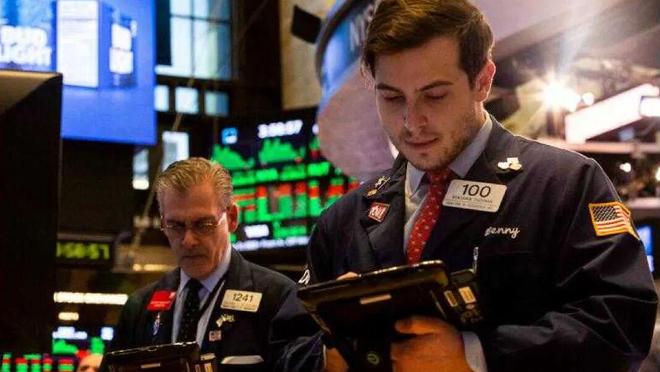
会后,多位美联储高官相继发声。副主席杰斐逊与鲍曼认为劳动力市场的强劲表现支持进一步降息;米 兰则认为中性利率水平低于此前估计,美联储需更快降息。特朗普及其政府成员也多次呼吁立即降息。 市场方面,联邦基金期货显示投资者普遍预期,美联储将在10月和12月再次降息。纪要最后强调,决策 者将继续在促进就业与控制通胀目标之间寻求平衡。值得注意的是,本次会议召开于美国政府关门前两 周,而政府停摆已导致关键经济数据的发布被迫中止。 智通财经APP获悉,周三,美联储9月会议纪要显示,多数官员认为在今年剩余时间内进一步降息是合 适的,但同时强调通胀风险仍偏向上行,显示决策层在货币政策上持谨慎态度。 纪要指出,"多数委员认为,在今年余下时间继续放松货币政策可能是适当的。"不过,"多数与会者强 调,通胀前景仍存在上行风险。"会上,美联储以11票对1票的结果决定将基准利率下调25个基点至 4.00%至4.25%区间,这是今年首次降息。唯一的反对票来自新任理事米兰,他主张降息50个基点。 会议公布的最新预测显示,按中值计算,美联储官员预计年内还将有两次各25个基点的降息,但委员会 内部分歧明显,19位与会者中有6人预计2025年仅会降 ...
美联储施密德:利率“已得到适当调整”,应关注通胀风险
Sou Hu Cai Jing· 2025-10-06 22:52
Core Viewpoint - Kansas City Fed President Esther George expressed a preference against further interest rate cuts, emphasizing the need to monitor the risks of high inflation while balancing between overly tight and overly loose monetary policy [1] Summary by Relevant Sections Interest Rate Decisions - George supported the Fed's decision to lower rates by 25 basis points in September, viewing it as appropriate risk management amid a cooling labor market [1] - She indicated that the overall employment market remains healthy despite the rate cut [1] Inflation Concerns - Inflation remains a significant concern, with service sector inflation stabilizing around 3.5%, well above the Fed's 2% target [1] - A worrying trend noted by George is the broadening scope of price increases, with nearly 80% of categories in official inflation statistics showing price rises as of August, up from 70% at the beginning of the year [1] Policy Calibration - George believes that the impact of tariffs on inflation is relatively mild, suggesting that current policy is appropriately calibrated rather than indicating a need for substantial rate cuts [1]
10.6黄金高开涨破3900 看刷历史新高
Sou Hu Cai Jing· 2025-10-06 07:38
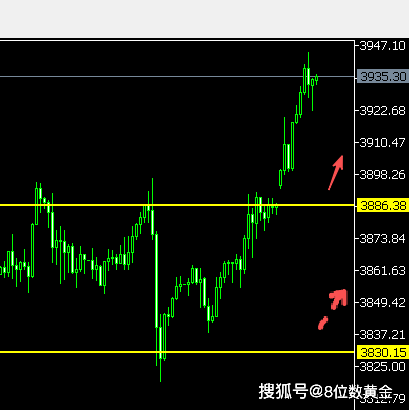
Core Viewpoint - Gold prices reached a new historical high last week, experiencing significant volatility with two sharp declines followed by recoveries, ultimately rising by $130 to around $3900, indicating a bullish trend and potential for further gains [1][3][11]. Price Movement - Gold prices have been on an upward trajectory, recently breaking through the $3900 mark and reaching above $3920, with expectations to challenge $3950 and possibly $4000 [5][6][7]. - The market has seen a four-month consecutive rise, with a notable increase of $400 in September alone, contributing to an overall gain of over $1000 this year [11]. Market Dynamics - Recent market movements were influenced by unexpected labor market data and a government shutdown in the U.S., which heightened fear and drove gold prices higher [13]. - The U.S. Federal Reserve's hawkish stance regarding inflation risks has also contributed to market fluctuations, with the dollar and U.S. Treasury yields strengthening [13]. Technical Analysis - Key support levels are identified at $3886 and $3830, with expectations for potential rebounds from these levels [8][11]. - Investors are advised to focus on entry and exit points for trading, emphasizing the importance of experience and risk management in achieving stable profits [14]. Broader Economic Context - The ongoing U.S. government shutdown and potential layoffs in the labor market are expected to impact economic stability, further influencing gold prices [14]. - The market remains sensitive to global economic indicators, particularly those related to the U.S. Federal Reserve's monetary policy decisions [14].

加央行会议纪要:通胀风险有所减弱 政策重心转向应对经济疲软
智通财经网· 2025-10-01 23:12
Group 1 - The Bank of Canada has indicated that inflation risks have diminished but are not entirely eliminated, with ongoing uncertainties related to trade tensions and their impact on costs [1][2] - The central bank decided to lower interest rates to 2.5% for the first time since March, shifting focus towards addressing economic weakness as inflationary pressures ease [1] - The Canadian economy contracted by 1.6% in Q2, with exports plummeting by 27%, and the unemployment rate rose to 7.1% in August, reflecting a challenging labor market [1] Group 2 - Structural changes in demand and supply due to U.S. tariffs complicate the assessment of idle capacity in the Canadian economy, potentially weakening the job market and impacting business investment [2] - Despite the cancellation of retaliatory tariffs, concerns remain about the restructuring of global trade leading to efficiency losses and increased costs, with U.S. tariffs possibly affecting Canadian prices [2] - The Bank of Canada plans to cautiously adjust policies while balancing economic downturn risks and inflationary pressures, preparing to respond to new information as it arises [2]
全线跳水!
中国基金报· 2025-10-01 11:15
Group 1 - The U.S. government shutdown has led to a decline in the stock market, with S&P 500 futures down 0.6% and Nasdaq 100 futures down 0.75% [2] - The shutdown threatens to interrupt the S&P 500's 14% increase this year, raising concerns about the resilience of the labor market [5] - Research indicates that the shutdown could increase the U.S. unemployment rate from 4.3% to 4.7%, with potential mass layoffs by Trump exacerbating economic pain [5] Group 2 - Historical data shows that the stock market generally reacts mildly to government shutdowns, but defense contractors and airlines may face higher volatility due to reduced government revenue and federal employee travel [5] - Citigroup emphasizes that the duration of the shutdown is critical; longer shutdowns typically weaken stocks and strengthen bonds [6] - The Congressional Budget Office estimates that approximately 750,000 federal employees will be forced to take leave due to the shutdown [6] Group 3 - The absence of key economic data, particularly the non-farm payroll report, raises concerns among investors about the labor market's health [6] - Historically, stock markets have tended to rise during government shutdowns, with the S&P 500, mid-cap 400, and small-cap 600 indices averaging over 3% gains during the last five shutdowns [6]

AvaTrade爱华每日市场报告 2025-09-29
Sou Hu Cai Jing· 2025-09-30 06:40
Market Overview - Global major stock markets continued to rise, supported by unexpectedly strong U.S. consumer spending data, alleviating concerns about economic resilience and improving overall risk sentiment [1] - U.S. stock indices saw slight gains, with the Dow Jones and Russell 2000 indices performing particularly well, while European markets also recorded widespread increases [1] Key Market Movements - S&P 500 Index rose by 0.28% to 6,715.50 points - Dow Jones Index increased by 0.65% to 46,247.29 points - Nasdaq 100 Index gained 0.36% to 24,815.75 points - Russell 2000 Index climbed 0.97% to 2,434.32 points - The rise in U.S. consumer spending data eased direct concerns about growth resilience, supporting the stock market [5] - U.S. Treasury yields remained relatively stable after earlier fluctuations, providing breathing room for the market and improving sentiment towards risk assets [5] Commodity Prices - WTI crude oil rose by 0.45% to $65.21 per barrel, driven by supply risks from ongoing export restrictions in Russia and concerns over Middle Eastern supply [5] - Gold futures increased by 1.02% to $3,775.30 per ounce, supported by ongoing uncertainties regarding Federal Reserve policy and inflation risks [5] European Market Performance - The FTSE 100 Index rose by 0.77% to 9,284.83 points - DAX (Germany) increased by 0.87% to 23,739.47 points - CAC 40 (France) gained 0.97% to 7,870.68 points - The European Stoxx 50 Index rose by 1.01% to 5,449.70 points, reflecting strong performance in energy and commodity stocks due to rising oil prices [5] Notable Stock Movements - Electronic Arts (EA) surged approximately 15% on reports of a potential acquisition offer, sparking speculation and interest in the gaming sector [5] - Boeing (BA) rose about 4% following reports that the FAA may ease some production restrictions on the 737 MAX and 787 aircraft, improving delivery prospects [5] - NIO (NIO) fell approximately 6% due to ongoing losses and pricing pressures in the Chinese electric vehicle market, overshadowing optimism regarding policy support [5] Upcoming Focus - Market attention is shifting towards macroeconomic data, including key U.S. inflation (PCE), consumer confidence, and manufacturing data, which will test market confidence in the Federal Reserve's next steps [6] - The commodity market may remain volatile in response to oil supply disruptions and demand hopes, with gold potentially attracting safe-haven funds if inflation surprises or geopolitical tensions escalate [6]

9月30日外盘头条:特朗普会见国会两院领导人 劳工统计局称政府关门时将暂停运作 瑞士拟投资美国...
Xin Lang Cai Jing· 2025-09-29 21:49
Group 1: Labor Statistics and Government Shutdown - The U.S. Bureau of Labor Statistics will suspend all operations during a government shutdown, including data collection and publication [4][5] - The Labor Department's emergency plan indicates that economic data scheduled for release during the funding interruption will not be published, and any technical issues will not be addressed on the website [4] Group 2: Political Developments - Vice President Vance stated that the U.S. is heading towards a government shutdown due to significant disagreements between Democrats and Republicans regarding funding agreements [7] - The meeting between President Trump and congressional leaders highlighted the increasing likelihood of a government shutdown within two days [7] Group 3: Swiss Investment in U.S. Gold Refining - Switzerland is reportedly planning to invest in the U.S. gold refining industry in an attempt to persuade the Trump administration to lower the recently imposed 39% import tariff [9][10] - This tariff is the highest among developed countries and has negatively impacted Swiss exports to the U.S. and suppressed growth expectations [10] Group 4: AI Developments - Anthropic announced the launch of its latest AI model, Claude Sonnet 4.5, which is designed to be more capable in programming and practical business applications [9][11] - The model has been recognized as the "best programming model globally" based on industry benchmark tests [11] Group 5: Federal Reserve Insights - New York Fed President Williams indicated that inflation risks have decreased while employment risks have increased, suggesting a potential slight reduction in interest rates [13] - Fed Governor Milan's argument for significant rate cuts has not gained support on Wall Street, with skepticism regarding the rationale behind his claims [15]

美联储再降息前景不明,今年两票委犹豫,鲍曼和米兰坚持
Hua Er Jie Jian Wen· 2025-09-25 19:33
Core Viewpoint - The Federal Reserve is experiencing deepening divisions regarding further interest rate cuts, with some officials expressing concerns about aggressive easing potentially hindering inflation from returning to the 2% target, while others advocate for faster cuts due to perceived economic weaknesses [1][5]. Group 1: Divergent Views on Rate Cuts - Kansas City Fed President Jeff Schmid and Chicago Fed President Austan Goolsbee are cautious about further rate cuts, fearing that excessive easing could impede inflation from falling to the Fed's 2% target [1]. - Schmid believes the current policy stance is slightly restrictive and in an appropriate position, while Goolsbee warns against multiple aggressive cuts based solely on employment data [1][3]. - In contrast, Fed Vice Chair Michelle Bowman and newly appointed Governor Stephen Miran are pushing for more aggressive rate cuts, arguing that inflation is close enough to the target and the labor market is weaker than expected [1][5]. Group 2: Emphasis on Inflation and Employment - Schmid emphasizes the necessity of a moderately tight policy, expressing concerns that inflation may remain sticky and could rise to 3% instead of falling to the 2% target [2]. - Goolsbee highlights the risk of stagflation, indicating that the current environment shows signs of such pressures, complicating the Fed's dual mandate of managing inflation and employment [3]. - Bowman points out that the labor market is more fragile than anticipated, suggesting that the committee should take decisive action given the low average job growth since April [5]. Group 3: Calls for Aggressive Easing - Miran advocates for immediate and substantial rate cuts, suggesting a reduction of 150 to 200 basis points to reach a neutral rate, arguing that the current 4% to 4.25% rate is overly restrictive [5]. - He was the only official to vote against the recent 25 basis point cut, favoring a 50 basis point reduction instead, reflecting a more aggressive stance on monetary policy [5].
大有期货:美联储降息预期有支撑 贵金属大涨后待整理
Jin Tou Wang· 2025-09-25 07:07
Macro News - The U.S. has initiated a Section 232 investigation into imports of medical devices, robots, and industrial machinery, potentially leading to tariff actions against these industries [1] - The U.S. has officially reduced tariffs on EU automobiles to 15% [1] - A Chinese central bank advisor has called for fiscal support for the real estate sector, and China has announced measures to promote service exports [1] - Federal Reserve Chairman Powell indicated that inflation risks are skewed to the upside while employment risks are skewed to the downside, describing the current situation as challenging [1] - Powell stated that there are no significant financial stability risks at present [1] - Fed Vice Chair Bowman suggested that the Fed may act slowly in supporting the job market, but may need to accelerate rate cuts if demand weakens and layoffs begin [1] - President Trump condemned Western nations' recognition of Palestine during a speech at the United Nations, highlighting the U.S.'s isolation in its support for Israel [1] - S&P Global's survey revealed that the U.S. September composite PMI fell from 54.6 to 53.6, with manufacturing PMI dropping from 53.0 to 52.0, and service PMI slightly declining from 54.5 to 53.9, indicating a slowdown in business activity for the second consecutive month [1] Institutional Perspectives - Recent inflation risks in the U.S. are skewed to the upside while employment risks are skewed to the downside, despite the Fed Chair emphasizing the weakening job market [2] - There is a divergence of opinions within the Fed regarding inflation concerns, with some officials believing that despite Trump's tariff measures not raising prices as expected, inflation risks remain [2] - The Fed's hesitance has caused short-term volatility in precious metals, but no clear trend reversal is evident [2] - Economic data indicates a slowdown in U.S. business activity for two consecutive months, with the OECD slightly upgrading its U.S. economic forecast but still expecting significant growth deceleration compared to last year [2] - Market expectations suggest that the U.S. will implement significant rate cuts within the year, providing some support for precious metals, which may require consolidation after recent gains [2]
美股又跌了,中国资产大涨!阿里巴巴狂飙8%
Di Yi Cai Jing Zi Xun· 2025-09-24 23:24
Market Overview - US stock market experienced a decline for the second consecutive day, with the Dow Jones falling by 171.50 points (0.37%) to 46121.28, the Nasdaq down 0.34% to 22497.86, and the S&P 500 decreasing by 0.28% to 6637.97 [2] - The materials sector led the decline, while the energy sector rose due to a significant increase in oil prices [2] Key Company Performances - Tesla shares increased by 4.0%, while Microsoft rose by 0.2%. In contrast, Amazon fell by 0.2%, Apple and Nvidia dropped by 0.8%, and Google decreased by 1.8% [2] - Oracle's stock fell by 1.7% amid reports of the company planning to raise $15 billion through bond issuance [2] Economic Data - The Nasdaq China Golden Dragon Index rose by 2.8%, with Alibaba increasing by 8.2%, JD.com and Baidu rising over 5%, and Pinduoduo up by 1.9%. However, NetEase saw a decline of 1.8% [3] - In August, new home sales in the US increased by 20.5% from July, reaching an annualized total of 800,000 units, surpassing market expectations [3] - The Mortgage Bankers Association reported a 0.6% increase in mortgage applications due to a decline in the average rate for 30-year fixed mortgages [3] Federal Reserve Insights - Fed Chair Jerome Powell's cautious remarks have injected a degree of caution into the market, particularly regarding the labor market, leading some investors to take profits [3] - Powell indicated that asset prices appear to be at "relatively high valuation levels," and emphasized the need for a balance between addressing inflation risks and labor market weaknesses [3][4] - San Francisco Fed President Mary Daly suggested that further rate cuts may be necessary due to slowing economic growth and consumer spending [4] Bond Market - The yields on long-term US Treasury bonds have risen, with the 10-year yield increasing by 3.1 basis points to 4.14%, and the 2-year yield rising by 3.2 basis points to 3.60% [4] Commodity Market - International oil prices reached a seven-week high, with WTI crude oil rising by 2.49% to $64.99 per barrel and Brent crude increasing by 2.48% to $69.31 per barrel [5] - Gold prices fell from record highs, with COMEX gold futures for September delivery dropping by 1.28% to $3732.10 per ounce [5]