
高端化

Search documents
第三产业用电占比稳步提升 ——广东深圳用电结构反映经济结构优化
Zhong Guo Dian Li Bao· 2026-02-09 02:22
1月29日,从南方电网深圳供电局获悉,2025年深圳全社会用电量1272.15亿千瓦时,同比增长4.71%。 其中,第二产业用电量589.27亿千瓦时,同比增长2.28%;第三产业用电量467.32亿千瓦时,同比增长 7.24%;居民生活用电量214.96亿千瓦时,同比增长6.20%。第一、二、三产业及居民用电占比分别为 0.05%、46.3%、36.7%和16.9%,第三产业和居民生活用电占比稳步提升。 作为经济社会运行的"晴雨表",这一系列电力数据生动反映出深圳在服务业和居民消费驱动的内需发展 方面取得显著成效,电量增长正从工业驱动向"工业+服务业"双轮驱动转变,经济结构持续优化,消费 活力不断增强。 专精特新用电快速增长 日前,比亚迪集团迎来电力扩容。截至目前,南方电网深圳供电局通过"电等产能"服务,满足企业日益 增长的用电需求。据统计,2025年深圳汽车制造业用电量同比增长23.98%,成为深圳打造"新一代世界 一流汽车城"的生动注脚。 随着深圳持续推进产业结构优化,以电动汽车、半导体、机器人、无人机等为代表的专精特新行业用电 需求快速增长。2025年,医药制造业,计算机、通信和其他电子设备制造业,仪 ...
2026年中国电力铁塔行业供需、产业链及代表企业洞察:朝着高端化、智能化、绿色化方向高质量发展[图]
Chan Ye Xin Xi Wang· 2026-02-09 01:34
Core Insights - The demand for electric power towers in China is projected to reach 502.2 million tons by 2025, with maintenance and replacement demand at 100.5 million tons, leading to a total production increase to 638.8 million tons, indicating a positive supply-demand trend in the industry [8][9]. Electric Power Tower Industry Overview - Electric power towers are essential structures for supporting overhead transmission lines and maintaining safe distances between conductors and other objects. They are categorized by use (transmission, distribution, visual), structure (steel pipe, angle steel, concrete), voltage (ultra-high, high, medium, low), and form (straight, corner, terminal) [1][2]. Industry Development History - The electric power tower industry in China has evolved from using wood and cement to modern steel structures, with significant growth following the introduction of high-voltage lines and the first ultra-high voltage project in 2006, which enhanced equipment and technology levels [3]. Industry Policies - The industry is guided by clear policies covering planning, market cultivation, and technical standards. Key policies include the release of the T/EJCCCSE179-2025 standard for ultra-high voltage towers and initiatives to enhance the electricity service environment, which aim to promote high-quality development in the sector [4][5]. Industry Chain - The electric power tower industry chain consists of upstream raw materials (carbon steel, alloy steel, cables), midstream manufacturing (companies like Hongsheng Huayuan and Qingdao Dongfang Tower), and downstream demand from contractors and power companies driven by grid upgrades and new energy projects [6]. Current Industry Status - The supply-demand scale of electric power towers in China has shown significant fluctuations, with a notable increase in demand and production in 2020 due to the launch of ultra-high voltage projects. The market is expected to recover with the ongoing upgrades of old grids and new energy integration [7][8]. Market Size - The market size for electric power towers is driven by both new construction and maintenance needs, with projections indicating a total market size of 590.65 billion yuan by 2025, comprising 492.16 billion yuan from new projects and 98.49 billion yuan from maintenance [9][10]. Competitive Landscape - The electric power tower manufacturing industry exhibits a "low-end dispersed, high-end concentrated" competitive structure, with many small enterprises in the low-end market and a concentration of larger firms in the high-end market due to high barriers to entry [11]. Development Trends - The industry is transitioning towards smart monitoring and digital twin integration, with a focus on lightweight and green low-carbon materials. Innovations include the use of high-strength materials and environmentally friendly coating technologies to reduce carbon footprints and enhance operational efficiency [14].



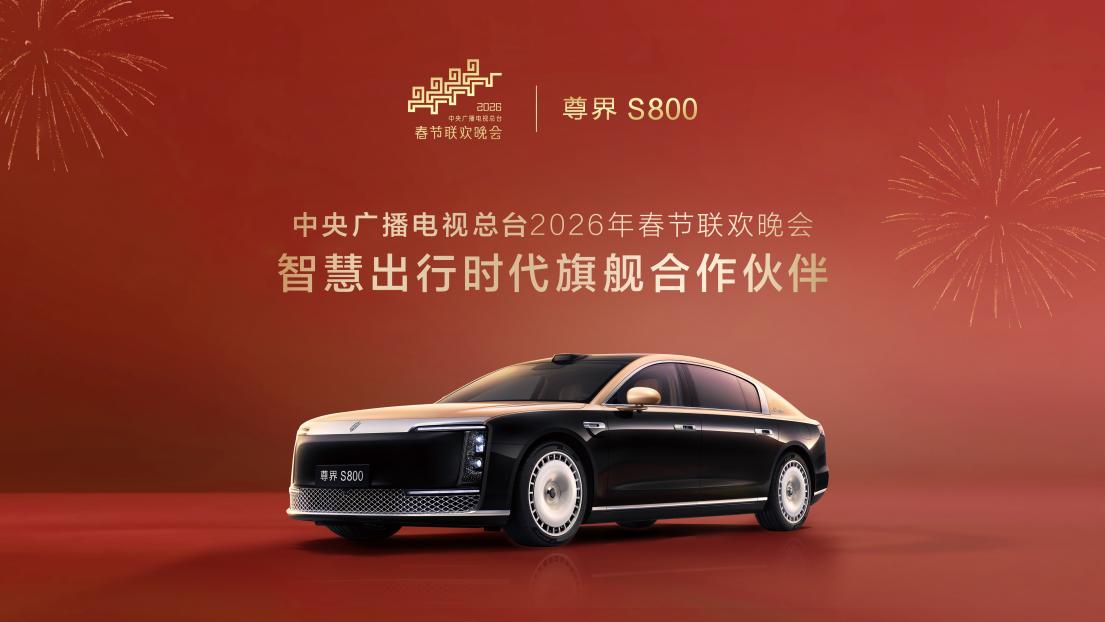
智驭新程,共映团圆 | 尊界S800成为总台《2026年春节联欢晚会》智慧出行时代旗舰合作伙伴
Zhong Guo Qi Che Bao Wang· 2026-02-09 01:15
近年来,中国汽车产业正从"规模扩张"转向"价值提升",高端化、智能化成为核心赛道。本次总台春晚,尊界S800首次以"智慧出行时代旗舰合作伙 伴"的身份,深度融入这一年度盛典。借助总台春晚的全球影响力,尊界S800将向世界展现中国汽车工业在高端化征程上的全新形象,助力中国汽车品牌在 全球价值链中持续向上突破。 总台春晚作为陪伴全球华人走过数十载的"文化符号",早已成为承载民族情感、传递时代声音的重要载体;尊界S800作为中国高端汽车品牌的新时代旗 舰车型,则代表了当前智慧出行时代的前沿思考。二者的携手,既是"文化标杆"与"智造标杆"的同频共振,也是传统节日IP与新时代产业力量的双向赋能。 尊界S800深度融合尖端科技与美学,在设计、体验、性能与安全四大核心维度,重塑豪华轿车价值标准。自2025年5月30日上市以来,该车持续领跑百 万级豪华轿车细分市场,实力印证强劲竞争力。 尊界S800亮眼成绩的背后,离不开位于合肥的尊界超级工厂的坚实支撑——这座由江淮与华为联手打造的世界级智能工厂,是专为尊界品牌打造的匠 心标杆工厂。工厂实现了冲压、焊装、涂装、总装全流程的高度自动化与数字化生产;借助自研算法及工业级监控机器人 ...
8点1氪丨韩交易所误发超400亿美元比特币;全球手机均价首破2900元;微信恢复千问与元宝红包口令复制
3 6 Ke· 2026-02-09 00:05
Group 1 - Bithumb, a South Korean cryptocurrency exchange, mistakenly issued 620,000 bitcoins worth over $40 billion due to a manual input error during a promotional event, with 99.7% of the mistakenly issued bitcoins recovered within 20 minutes [2] - The global average selling price (ASP) of smartphones is projected to exceed $400 for the first time by Q4 2025, reaching $424, driven by a trend towards higher-end devices [2] - Major smartphone brands like Xiaomi, OPPO, and vivo are expected to raise prices for new models starting in the second half of 2025, with Xiaomi's CEO indicating that the Xiaomi 14 will be the last flagship model starting at 3999 yuan [3] Group 2 - LABUBU, a product line from Pop Mart, achieved annual sales exceeding 100 million units, with total product sales across all categories surpassing 400 million units [5] - The 2026 Milan-Cortina Winter Olympics gold medal has reached a record material value of $2,210, driven by fluctuations in precious metal markets [5] - Multiple express delivery companies in China announced they will operate during the Spring Festival, although some will charge a "resource adjustment fee" due to increased operational costs [6] Group 3 - Seris plans to divest significant assets by establishing a new company with the Chongqing government, resulting in a loss of control over its blue electric vehicle assets [6] - The iMaiTai app will undergo maintenance from February 8 to 9 to improve user experience due to high traffic [7] - The first Apple section in a duty-free store at the Zhuhai port has opened, marking Apple's entry into the duty-free market in China [8] Group 4 - OpenAI is reportedly developing a custom version of ChatGPT for the UAE in collaboration with G42, tailored for government use [14] - Apple is preparing to allow third-party AI voice control applications to integrate with its CarPlay system, enabling users to interact with AI chatbots through their vehicle interface [15] - Anthropic is finalizing a funding round expected to exceed $20 billion, potentially doubling its valuation to nearly $350 billion [15]

靖江船舶“舰队”抱团远航
Xin Hua Ri Bao· 2026-02-08 22:06
"船舶产业的发展,从来不是孤军奋战的征程,而是同舟共济的远航。"江苏新时代造船有限公司总经理 刘海金说。在此背景下,靖江牵头成立船舶产业发展联盟恰逢其时,标志着靖江造船正大步迈向更加紧 密、协同、融合的"舰队式"发展新阶段。 靖江市委书记申强表示,靖江造船要更好地发挥产业联盟的作用和价值,架好供需对接的桥梁,搭好联 合攻关的平台,当好产业协同的纽带,推动船舶总装企业需求与配套企业供给精准匹配,并整合产学 研、海内外等创新资源,实现"卡脖子"环节自主可控,助推企业抱团参与国际竞争、共拓海外市场。 省工信厅副厅长、省国防科工办主任李锋表示,省工信厅将持续助力支持靖江造船成为规模更大、特色 更强、竞争力更优的区域特色优势产业,希望靖江坚定信心、因地制宜、做强特色,早日建成全球最 大、最强、最好的船舶产业集聚区,为江苏建成世界级船舶海工产业集群作出更大贡献。 本报讯(顾介铸靖宣)"中国造船第一县"靖江市近日举行船舶产业发展联盟揭牌仪式,相关企业当场签署 3个产业链合作项目协议,决定进一步整合集聚船舶海工装备产业优势资源,提升产业链配套能力,加 快打造自主可控、高效协同的现代化产业体系。这个联盟由靖江船舶产业链各环节重 ...
【新春走基层】春节前夕“赶单”忙
Xin Lang Cai Jing· 2026-02-08 02:59
Core Insights - The company, Changde Zoomlion Hydraulic Co., Ltd., is recognized as a national-level "specialized and innovative" small giant enterprise, emphasizing the importance of quality in production [2] - The company has adopted a philosophy that prioritizes technology and product quality, focusing on breakthroughs in green, intelligent, and high-end technologies to address foreign supply chain challenges [2] - The company’s hydraulic valve products for engineering and agricultural machinery are now being exported overseas, with a full order book for the upcoming Spring Festival [2] Production Environment - The production facility is characterized by high levels of activity, with workers engaged in various processes such as CNC machining, heat treatment, and grinding, all aimed at fulfilling hydraulic valve orders [2] - Prominent slogans in the workshop highlight the commitment to quality, stating that "output without quality assurance is ineffective labor" and "do not accept, manufacture, or pass on unqualified products" [2] - The use of advanced equipment and technology is evident, with precision grinding and quality checks being integral to the production process [2] Intelligent Manufacturing - The implementation of intelligent manufacturing is showcased through the use of AGV (Automated Guided Vehicles) for transporting components and real-time data feedback from smart detection equipment [5] - The production system allows for visual tracking of production progress, quality checks, and order status, ensuring timely and quality deliveries [5] - Workers are dedicated to maintaining stable product quality while meeting delivery deadlines, reflecting a strong work ethic and commitment to excellence [5]

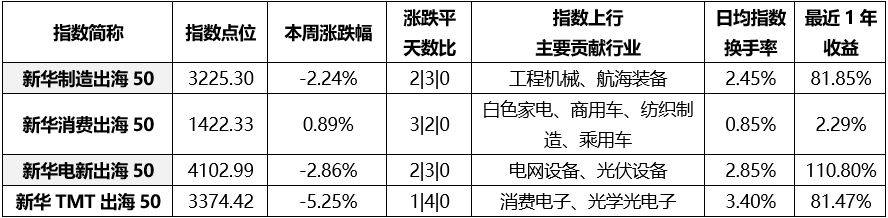
新华指数丨工程机械板块景气度上升 新华出海消费指数同步飘红
Xin Hua Cai Jing· 2026-02-06 13:36
Core Viewpoint - The A-share market is experiencing a structural trend, with the engineering machinery sector showing strong resilience supported by solid fundamentals, indicating a dual development opportunity of "domestic demand recovery + export breakthrough" [1] Industry Overview - The engineering machinery industry is closely tied to infrastructure investment and the overall economic climate, encompassing various machinery used in large projects such as construction, road building, and mining [1] - The industry is expected to see a market size of $23.4 billion in 2024, accounting for 11.0% of the global market, with projections to grow to $57.0 billion by 2030, reflecting a compound annual growth rate (CAGR) of approximately 16% [3] Sales and Demand - Excavator sales, a core product in the engineering machinery market, are projected to reach 235,257 units in 2025, marking a 17% year-on-year increase, with December 2025 sales expected to hit 23,095 units, a 19.2% increase [2] - The domestic market is expected to see excavator sales of 118,518 units in 2025, up 17.9%, while overseas sales are projected to exceed 116,739 units, a 16.1% increase, indicating a "dual-wheel drive" growth pattern [2] Export Performance - Excavator exports are anticipated to reach 76.64 billion yuan in 2025, a significant increase of 31.1%, highlighting the global competitiveness of Chinese excavator products [3] - Emerging markets and traditional markets are both contributing to export growth, with regions like Asia, Europe, and Africa maintaining high growth rates, while Latin America and Oceania markets are seeing growth rates around 30% [3] Company Performance - Leading companies in the sector, such as Sany Heavy Industry, XCMG, and Zoomlion, have shown robust performance with significant revenue and profit growth in 2025 [5] - Sany Heavy Industry reported a revenue of 66.104 billion yuan, a 13.27% increase, and a net profit of 7.136 billion yuan, up 46.58% [5] - XCMG achieved a revenue of 78.157 billion yuan, an 11.61% increase, and a net profit of 5.977 billion yuan, up 11.67% [5] - Zoomlion reported a revenue of 37.156 billion yuan, an 8.06% increase, and a net profit of 3.920 billion yuan, up 24.89% [5] Market Dynamics - The engineering machinery sector is undergoing a technological innovation wave focused on "intelligent, high-end, and green" development, with leading firms increasing R&D investments to drive industry upgrades [4] - The overall recovery in the industry is reflected in the performance of A-share engineering machinery stocks, with significant market capitalization growth among leading companies [4]
江苏2025年全社会用电量近9000亿千瓦时 用电结构改变见证新质生产力崛起
Zhong Guo Dian Li Bao· 2026-02-06 01:33
Group 1: Energy Consumption Growth - In 2025, Jiangsu's total electricity consumption reached 889.5 billion kilowatt-hours, representing a year-on-year growth of 4.8% [1] - The growth reflects the vitality of Jiangsu as an economic powerhouse and indicates a new landscape of productivity driven by energy transformation [1] Group 2: Transition to Green Energy - 2025 marks a critical year for Jiangsu's energy transition, with total installed capacity of renewable energy generation exceeding 100 million kilowatts, making it the first province in the Yangtze River Delta to achieve this milestone [2] - New energy sources contributed 94% of the total new electricity generation of 37.9 billion kilowatt-hours in 2025, highlighting the shift towards a greener and low-carbon energy structure [2] - The number of enterprises consuming green electricity in Jiangsu increased by 210.28% year-on-year, indicating a growing trend among companies to enhance international competitiveness through green energy [2] Group 3: Electric Vehicle Infrastructure - The first integrated "wind-solar-storage-charging-swapping" highway service area in the country was fully operational before New Year's Day, enhancing green transportation infrastructure [3] - The charging volume from Jiangsu Electric Power's charging stations reached 1.03 billion kilowatt-hours in 2025, a year-on-year increase of 15.5%, making it one of the fastest-growing segments in provincial electricity consumption [3] Group 4: Industrial Transformation and Upgrading - During the 14th Five-Year Plan period, Jiangsu's strategic emerging industries grew significantly, with their output value increasing from 36.8% in 2020 to 41.8% in 2024 of the total industrial output [4] - In 2025, electricity consumption in related manufacturing industries grew by 11.2%, outpacing the overall growth rate of the manufacturing sector by 7.6 percentage points [4] - The electricity consumption of the computer, communication, and other electronic device manufacturing sector surpassed 50 billion kilowatt-hours for the first time, indicating a structural shift towards high-end and intelligent industries [4]
2026开门红 | 湖北大明逆势突围,不锈钢月销量突破13000吨
Xin Lang Cai Jing· 2026-02-05 12:18
Core Insights - In January 2026, Hubei Daming Stainless Steel achieved a record monthly sales volume of over 13,000 tons, marking a significant milestone despite a challenging market environment characterized by an 8% fluctuation in stainless steel futures prices and intensified competition [1][8] Market Challenges and Responses - The stainless steel market at the beginning of 2026 is facing three major challenges: uneven demand recovery, increased cost volatility, and a restructured competitive landscape. These factors have created significant difficulties in inventory management and pricing strategies for companies [9][12] - The industry is experiencing a compression of profit margins for generic products due to increased competition, while there is a growing demand for customized products in high-end equipment and new energy sectors, exacerbating supply-demand conflicts [9][12] Strategic Initiatives - Hubei Daming is leveraging the group's advantages in regional collaboration and resource sharing to focus on high-end and customized solutions, aiming to provide satisfactory products and services to various industry clients [12][15] - The company has established an efficient coordination mechanism within its production technology department to address the production pressure from increased industry output, optimizing production plans and processes to ensure seamless operations [5][12] - The logistics department has implemented a strategy of "online layout + logistics optimization," which simplifies order flow and shortens delivery cycles, effectively addressing common industry challenges such as slow raw material arrivals and difficulties in finished product shipments [5][12] Collaborative Efforts - The close collaboration and efficient coordination among multiple departments have ensured timely delivery of regular orders and successfully managed several urgent customized orders, which have been crucial in achieving the sales breakthrough [7][15] Future Outlook - Hubei Daming aims to build on this record sales achievement in 2026 by continuing to enhance technological innovation and service upgrades, deepening its focus on niche markets, and expanding its cooperation scope to provide higher quality products and professional services to its customers [15]
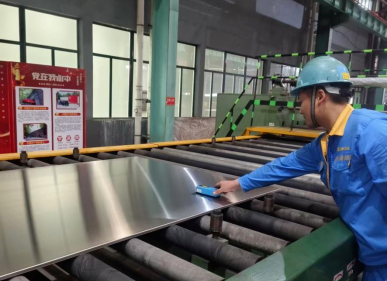
太钢不锈:公司以深化改革创新为动力
Zheng Quan Ri Bao Wang· 2026-02-05 12:17
Core Viewpoint - The company is committed to deepening reform and innovation to drive high-end, intelligent, green, and efficient development in the steel industry, enhancing the quality and sustainability of its products [1] Group 1 - The company aims to increase the gold content, new material content, and green content of its steel products [1] - The company leverages its advanced stainless steel national key laboratory to focus on the research and development of "bottleneck" materials and cutting-edge products [1]
