
AI服务器

Search documents
国瓷材料20260201
2026-02-02 02:22
Summary of Guoci Materials Conference Call Company Overview - Guoci Materials is a significant global supplier of MLCC (Multi-layer Ceramic Capacitor) ceramic powders, having broken through technological monopolies to achieve mass production of high-end MLCC powders. The company is expected to enter a golden development period due to increasing demand in sectors such as new energy vehicles and AI servers [2][4]. Key Points Industry and Market Trends - The demand for exhaust catalytic materials has surged due to the implementation of National VI and Euro VII emission standards, presenting opportunities for domestic substitution. Guoci Materials is increasing its penetration in commercial vehicles and starting to scale in passenger vehicles, which is expected to enhance its performance in domestic substitution [2][5]. - The precision ceramics business, which includes applications in new energy vehicles and low-orbit satellites, is experiencing rapid growth. Revenue from this segment reached 213 million yuan in the first half of 2025, marking a year-on-year increase of 39.8% [2][7]. Financial Performance - In the first half of 2025, the electronic materials segment reported a gross margin of 32.97%, while the catalytic segment achieved a gross margin of 41.8%. The biomedical segment accounted for 52.18% of revenue, indicating significant growth potential [2][6]. - Since 2012, Guoci Materials has seen a steady increase in revenue, with a compound annual growth rate (CAGR) of 27.67% and a net profit CAGR of over 20%. As of the first three quarters of 2025, the company reported revenue of 3.284 billion yuan and a net profit of 489 million yuan [4][10]. Research and Development - The company invested 229 million yuan in R&D in the first three quarters of 2025, representing 6.97% of its revenue. This investment is crucial for maintaining its competitive edge in the industry [2][11]. - Guoci Materials is actively developing solid-state electrolytes and silicon ball materials for next-generation high-frequency and high-speed copper-clad laminates, which are expected to become new growth points [2][9][28]. Risks and Challenges - Investors should be aware of several risk factors that could impact the company's business development and financial performance, including the execution of emission standards, fluctuations in raw material prices, intensified industry competition, changes in downstream demand, and discrepancies in data statistics [4][29]. Future Outlook - Guoci Materials is expected to achieve revenues of 910 million yuan in 2026 and further increase to 1.136 billion yuan in 2027, indicating a positive growth trajectory [2][8]. Strategic Initiatives - The company is expanding its footprint in the biomedical sector through acquisitions, targeting the growing domestic dental implant market and high-end dental equipment [2][6][24]. - Guoci Materials is enhancing its overseas market presence through strategic acquisitions, such as the stake in South Korea's Speedent and the acquisition of Germany's Dekma, which will facilitate a comprehensive service across the material and equipment supply chain [2][24]. Conclusion - Guoci Materials is well-positioned in various high-growth sectors, with a strong focus on R&D and strategic acquisitions. The company is expected to benefit from favorable market trends and increasing demand across its product lines, while also facing potential risks that need to be managed effectively.

中泰期货晨会纪要-20260202
Zhong Tai Qi Huo· 2026-02-02 01:36
Report Industry Investment Rating No relevant content provided. Core Viewpoints of the Report - Overall, different industries and commodities show diverse trends. Some are affected by geopolitical factors, some by supply - demand relationships, and others by policy changes. For example, geopolitical tensions impact the energy sector, while supply - demand imbalances influence agricultural and industrial products [17][39]. - In the financial market, the style of stock index futures may shift, and the bond market may continue its short - term rebound. In the commodity market, various commodities such as black metals, non - ferrous metals, and energy chemicals have their own specific trends and influencing factors [15][16]. Summary by Relevant Catalogs Macro - Information - Politically, China emphasizes the development of future industries, and the US has political and economic policy changes such as the nomination of a new Fed chair and government budget issues [8][13]. - Economically, China's January 2026 PMI data shows a decline, and the global precious metal market experiences a significant drop. The global storage chip manufacturers take measures to control customer hoarding [8][9][11]. - Financially, the Chinese government makes adjustments to the capital market, including promoting the development of the North Exchange and the New Third Board, and amending relevant regulations for listed companies and public funds [10]. Macro - Finance Stock Index Futures - The index style may shift, with short - term weight stocks potentially outperforming. The current inventory form is in a passive replenishment state, and the PMI data is affected by multiple factors. Although the domestic export is supported by electromechanical products, the short - term market style may change [15]. Treasury Bond Futures - The bond market sentiment improves, and the short - term rebound trend may continue. The capital market is stable after a tight - then - loose period, and the current bond market is affected by supply and other factors [16]. Black Metals Steel and Iron Ore - In the short term, steel and iron ore will fluctuate and consolidate. The current macro - policy has little impact on the market, and the supply - demand relationship of iron ore is relatively loose. The downstream situation and inventory levels affect steel prices [17]. Coking Coal and Coke - The prices of coking coal and coke may fluctuate and consolidate in the short term. The production and inventory of coal and coke change, and the medium - term supply may be affected by policies. The supply - demand contradiction may improve during the Spring Festival [19]. Ferroalloys - For silicon iron, the medium - long - term multi - allocation idea remains unchanged. For manganese silicon, it is recommended to wait and see. The price difference between the two should be bought at low levels. The market is affected by cost and supply - demand factors [19]. Soda Ash and Glass - It is recommended to wait and see for now. The supply of soda ash is high, and there is an expectation of new capacity. The glass market has expectations of production line changes, and the current market is affected by inventory and price adjustment attempts [20]. Non - Ferrous Metals and New Materials Lithium Carbonate - In the short term, it will fluctuate strongly under policy influence. The demand in the first quarter may remain stable, and the supply is restricted, resulting in increased destocking [23]. Industrial Silicon - It will run strongly in the short term but is still under pressure due to pessimistic expectations. The supply - demand relationship may improve in February, but the sustainability is uncertain [24]. Polysilicon - It will run weakly and fluctuate under strict position - limit supervision. The policy affects the market, and the supply - demand relationship is weak, with high inventory pressure [25]. Agricultural Products Cotton - It is in a high - level and strong consolidation state. The short - term supply is loose, but the long - term supply is expected to decrease. The market is affected by factors such as holidays, policies, and inventory [27][30]. Sugar - The domestic sugar market is under supply pressure, and the demand is not strong during the peak season. It is recommended to conduct short - term trading in the low - level range. The global sugar supply is in an oversupply situation [31][32]. Eggs - Before the Spring Festival, the spot price of eggs may weaken. The futures contract for the post - Spring Festival off - season is under pressure. The market is affected by inventory and consumption factors [33]. Apples - The futures price may run strongly. The current market is affected by factors such as inventory, sales, and price [34]. Red Dates - The market is expected to fluctuate weakly. The supply is large, and the demand is stable. It is necessary to pay attention to the sales area's sales rhythm and purchaser's mentality [36]. Pigs - The supply and demand are both increasing, but the supply increase is greater. The short - term contract should be operated with a short - selling strategy. The market is affected by factors such as inventory, sales, and demand [37]. Energy and Chemicals Crude Oil - The price was supported by geopolitical premiums in January. Although there are negotiation signals, the fundamental supply is in excess. It is advisable to try short - selling at high prices [39]. Fuel Oil - The price follows the trend of crude oil, which is mainly affected by geopolitical factors. The supply - demand relationship has marginal improvement, and the inventory is at a high level [40]. Plastics - Polyolefins have high supply pressure and weak downstream demand. Although the upstream loss may support the price, the new capacity expectation restricts the rebound space [41][42]. Synthetic Rubber - It may maintain a strong trend driven by the cost of butadiene. It is advisable to buy on dips and pay attention to the weakening opportunity of the RU - BR price difference [43]. Methanol - The long - term supply - demand pattern is improving, but there is a risk of short - term callback. It is necessary to pay attention to the port inventory and the development of geopolitical conflicts [44]. Caustic Soda - The caustic soda futures should be treated with a bullish and fluctuating mindset. The current production and inventory are at high levels, and the market is affected by factors such as the price of liquid chlorine and the overall commodity market [45]. Asphalt - It will be closely monitored for the change of discount. It may fluctuate strongly in the short term, following the trend of crude oil [45][46]. Polyester Industry Chain - Due to the seasonal off - season, the near - end fundamentals are weak. It is advisable to consider positive spreads between May and September contracts of PX, PTA, or MEG [47]. Liquefied Petroleum Gas (LPG) - The price support logic is weakening, and it is advisable to try short - selling at high prices. The supply and demand of upstream and downstream have changed, and the market is affected by factors such as import cost and season [48]. Pulp - The spot market transaction is weak, and the price has回调. However, the short - term price has support. It is advisable to establish long positions at low prices if the downstream purchasing intention improves [49]. Logs - The fundamental situation is bullish and fluctuating. The spot price is temporarily stable, and the market may fluctuate due to the influence of commodity sentiment [50]. Urea - The urea futures should be operated with a short - selling strategy in the short term. The spot market price is stable or slightly declining, and the market is affected by factors such as futures price changes and supply - side factors [51].
工业富联:25年业绩坚实,AI业务稳步向前-20260201
Guolian Minsheng Securities· 2026-02-01 07:30
Investment Rating - The report maintains a "Buy" rating for the company [3] Core Views - The company is expected to achieve significant growth in 2025, with a projected net profit increase of 51%-54% year-on-year, reaching between 351 billion to 357 billion yuan [8] - The cloud computing business is identified as a key growth driver, with CSP server revenue expected to grow over 1.8 times year-on-year in 2025 [8] - The company is positioned as a leading global OEM for AI servers, benefiting from a strong market share and a robust customer base [8] Financial Projections - Revenue is projected to grow from 609.135 billion yuan in 2024 to 1,386.818 billion yuan in 2027, with growth rates of 27.9%, 33.9%, 35.5%, and 25.4% respectively [3][9] - Net profit attributable to shareholders is forecasted to increase from 23.216 billion yuan in 2024 to 82.264 billion yuan in 2027, with growth rates of 10.3%, 52.5%, 76.8%, and 31.4% respectively [3][9] - Earnings per share (EPS) is expected to rise from 1.17 yuan in 2024 to 4.14 yuan in 2027 [3][9] Business Segments - CSP AI server revenue is anticipated to grow over three times year-on-year in 2025, with a quarterly growth rate exceeding 50% in Q4 [8] - The high-speed switching equipment business is projected to see a revenue increase of 13 times year-on-year for products over 800G in 2025 [8] - The precision component business is expected to achieve double-digit growth in shipment volume, reinforcing the company's diversified business foundation [8]

国联民生研究:2026年2月金股推荐
Guolian Minsheng Securities· 2026-01-31 11:01
Group 1 - The market is currently experiencing a trend of upward movement followed by narrow fluctuations, with volatility initially rising and then declining, indicating a need for digestion of previous gains [1] - The ETF outflows, particularly from the CSI 300, have put pressure on broad indices, with large-cap stocks underperforming compared to small-cap stocks [1] - There is an acceleration in thematic rotation, with some themes experiencing sharp rises and subsequent pullbacks, suggesting a short-term advantage for small-cap and growth stocks, but a need for rebalancing in the future [1] Group 2 - The gold stock recommendation logic for February 2026 includes companies benefiting from AI upgrades, solid growth in nickel powder business, and strong positions in the photovoltaic and alloy powder sectors [17] - Specific companies highlighted include BQX New Materials, which is expected to see rapid growth due to a significant expansion in production capacity and strong demand from major clients [17] - Industrial Fulian is noted for its deep integration with leading clients in the AI server market, with expectations of maintaining high growth rates due to its comprehensive supply chain capabilities [17] Group 3 - Financial data for the recommended stocks shows significant expected growth in earnings per share (EPS) for companies like BQX New Materials and Industrial Fulian, with projected EPS increasing from 0.33 to 2.09 and from 1.17 to 3.27 respectively from 2024 to 2026 [19] - The price-to-earnings (PE) ratios for these companies are also projected to decrease significantly, indicating potential for upward valuation adjustments [19] - Tencent Holdings is expected to see strong growth in advertising revenue and new game releases, contributing to its overall performance in 2026 [18]




洁美科技:将择机调整产品价格
Zheng Quan Ri Bao Zhi Sheng· 2026-01-30 12:08
Group 1 - The core viewpoint of the article is that the company, Jie Mei Technology, is considering adjusting its product prices in response to market conditions and rising costs from downstream customers due to increased demand in emerging applications such as AI servers, electric vehicles, robotics, drones, and wearable devices [1] Group 2 - The company typically evaluates industry conditions and fluctuations in raw material prices before making pricing decisions [1] - There is a sustained growth in demand for electronic components driven by the booming sectors of AI, new energy vehicles, robotics, drones, and wearable devices [1] - Downstream customers have begun to raise prices for the company's products, prompting the company to monitor market changes and customer pricing trends closely [1]

受益于存储价格持续上涨,江波龙2025年扣非利润预增超578%
Jin Rong Jie· 2026-01-30 10:41
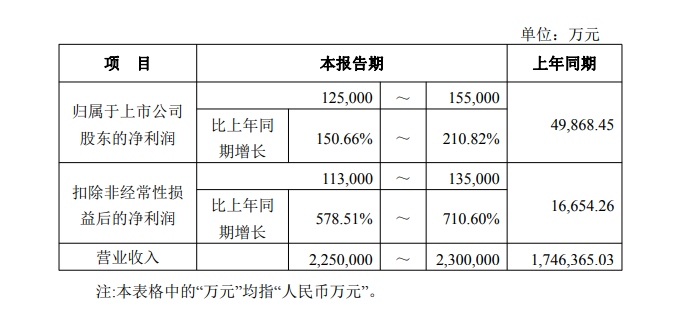
Core Viewpoint - Jiangbolong Electronics is expected to achieve significant growth in its 2025 performance forecast, driven by a recovery in the storage industry and the company's technological and product advantages [1] Financial Performance - The company anticipates a net profit attributable to shareholders of between 1.25 billion to 1.55 billion yuan, representing a year-on-year increase of 150.66% to 210.82% [1][2] - The expected non-recurring net profit is projected to be between 1.13 billion to 1.35 billion yuan, showing a substantial year-on-year growth of 578.51% to 710.6% [1][2] - Revenue is forecasted to be between 22.5 billion to 23 billion yuan, compared to 17.464 billion yuan in the same period last year [1][2] Industry Dynamics - The demand for AI servers and the shift of original manufacturers towards enterprise-level products are driving up storage product prices [1] - Jiangbolong has successfully turned a profit in the first half of the year, with a steady increase in profitability in the second half, particularly in Q4 where the non-recurring net profit is estimated to be between 650 million to 870 million yuan [1] - The company has achieved mass application of several main control chips and completed the first tape-out of the UFS4.1 main control chip, positioning itself as one of the few companies globally with self-research capabilities in this generation of main control chips [1] Market Outlook - The market perceives that server demand is the primary driver for storage needs, but the upgrade cycle of smartphones, particularly iPhones, is also contributing to the current storage price increases [3] - The global HBM market is projected to grow from 5.61 billion dollars in 2024 to 57.09 billion dollars by 2034, with a compound annual growth rate of 26.1% [3] - Major manufacturers like Micron have sold out their HBM capacity for 2025, and enterprise SSD demand is expected to increase by over 30% [3] Future Catalysts - The ongoing storage upgrade cycle for iPhones is expected to continue, with anticipated enhancements in storage parameters for new models in 2026, further driving up storage prices [4] - Continuous upgrades in server computing power are likely to sustain long-term demand for HBM, providing support for Jiangbolong's future development [4] - Recent supply chain research indicates that DRAM and NAND flash prices have entered an upward trend since the end of 2025, which may continue into early 2026, benefiting related companies in the storage industry [4]

贵金属价格变动,电子元器件掀涨价潮,现存贵金属相关企业超六万家
Sou Hu Cai Jing· 2026-01-30 09:14
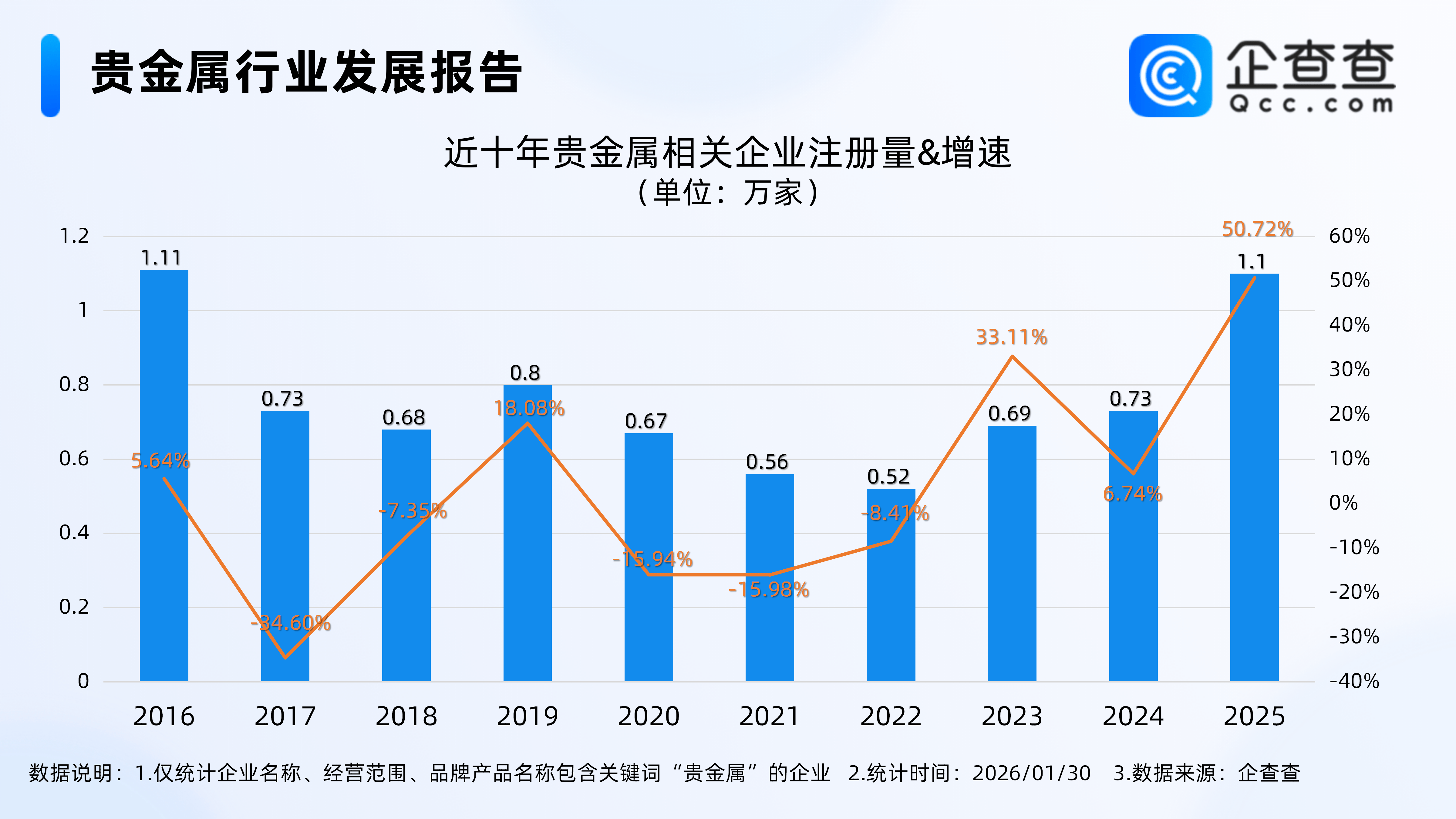
Core Insights - The recent surge in precious metal prices has led to systemic cost pressures in the electronic components industry, resulting in widespread price increases ranging from 5% to 30% [1][4] - Unlike previous cycles driven by short-term supply and demand changes, this price increase, starting in late 2025 and fully launching in early 2026, is characterized by its unprecedented breadth and depth [1] - The primary demand drivers for this price increase are identified as AI servers, new energy vehicles, and high-end industrial applications, making price hikes a necessity rather than an option [1] Group 1: Current Status of Precious Metal Companies - As of January 30, there are 64,900 existing precious metal-related companies in China [4][7] - The registration volume of related companies has shown fluctuations over the past decade, with a notable increase in registrations starting from 2023, growing by 33.11% and 6.74% in 2023 and 2024 respectively [4] - The total registration volume is expected to rebound to 11,000 in 2025, marking a 50.72% year-on-year increase [4] Group 2: Capital Distribution of Precious Metal Companies - The majority of precious metal-related companies have registered capital of 1 million yuan or less, accounting for 26.59% of the total [7] - Companies with registered capital of 10 million yuan or more make up 30.4% of the total, with those between 10 million and 50 million yuan representing 20.36% [7] Group 3: Regional Distribution of Precious Metal Companies - The highest concentration of precious metal-related companies is found in South China, accounting for 31.77% of the total [9] - East China and Central China follow, with 24.75% and 13.67% of companies respectively [9]
国资重组+“反内卷”双轮驱动,建材ETF(159745)猛吸金
Mei Ri Jing Ji Xin Wen· 2026-01-30 06:53
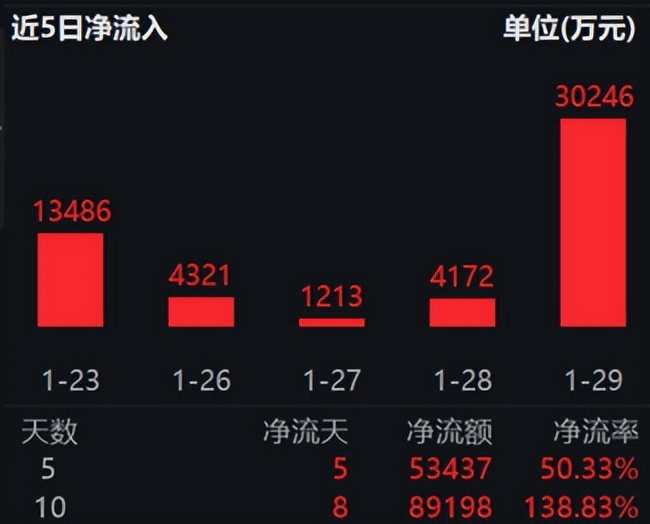
Core Viewpoint - The construction and building materials industry is undergoing a significant restructuring and value reassessment driven by the deepening "anti-involution" policies, accelerated state-owned enterprise (SOE) restructuring, and improving expectations in the real estate chain [1] Group 1: Policy Environment - The strategic restructuring of SOEs aims to merge similar entities and reduce homogeneous competition among construction SOEs, while the "anti-involution" policy promotes supply-side reforms in traditional building materials, enhancing industry concentration and optimizing competition [3] - The State-owned Assets Supervision and Administration Commission (SASAC) has indicated a strong push for strategic and professional restructuring of SOEs, which is expected to reduce internal competition and enhance overall profitability [3] - The implementation of the "anti-involution" policy has led to significant production capacity adjustments in the cement industry, with over 280 clinker production lines replaced and 150 million tons of outdated capacity withdrawn annually, creating a foundation for industry profitability recovery [3] Group 2: Industry Structure - Traditional building materials leaders are expected to benefit from supply clearing and cost transmission, leading to a recovery in profitability, while new materials serving sectors like renewable energy and AI are experiencing independent growth [4] - In the traditional sector, leading companies in waterproof materials and cement are expected to consolidate their market positions and improve profitability due to their strong pricing power amid rising raw material costs [4] - New materials, such as electronic-grade fiberglass, are positioned for growth driven by demand from consumer electronics, electric vehicles, and AI servers, indicating a clear second growth curve for the industry [4] Group 3: Demand Side - Although long-term population trends may pressure overall construction demand, short-term real estate policies are expected to stabilize demand for building materials, particularly in the consumer segment [5][6] - Recent signals from policy levels have indicated a recovery in the second-hand housing market, which is expected to stabilize demand for construction materials [6] - New demands from urban renewal and major national projects are anticipated to provide additional growth opportunities for the construction materials sector [6] Group 4: Supply Side - Rising prices of upstream raw materials are prompting certain segments of the building materials industry to initiate a price increase cycle, benefiting leading companies with pricing power [7][8] - The transition to green and intelligent production is becoming a new industry standard, raising entry barriers and investment costs, which may favor stronger companies capable of upgrading [8] Group 5: Investment Strategy - The construction materials sector is diverse, and investing through the building materials ETF (159745) allows for efficient exposure to leading companies across the entire industry chain [9][10] - The ETF tracks the CSI All-Share Construction Materials Index, providing balanced exposure to key sub-sectors and benefiting from both traditional sector recovery and new material growth [10] - The current period of industry transformation presents a unique opportunity for investors to capitalize on the shift from disordered expansion to a more optimized and concentrated market structure [10]
嘉利国际盘中跌近7% 公司拟折价近10%配售股份 筹资用于扩充海外产能
Zhi Tong Cai Jing· 2026-01-30 06:19
Group 1 - The core point of the article is that 嘉利国际 (Gala International) experienced a significant drop in stock price, falling nearly 7% during trading and closing down 5.34% at HKD 2.48, with a trading volume of HKD 10.97 million [1] - 嘉利国际 announced a plan to place 65.832 million shares at a price of HKD 2.37 per share, which represents a discount of approximately 9.9% compared to the closing price on the last trading day [1] - The net proceeds from the share placement are expected to be around HKD 152 million, which the company plans to use to expand its production capacity for server enclosures overseas, particularly in Thailand [1] Group 2 - The specific uses of the raised funds include purchasing new machinery, constructing its own factory in Thailand, and engaging in related mergers and acquisitions [1]
1月30日证券之星午间消息汇总:央行出手!公开市场净投放3525亿元
Sou Hu Cai Jing· 2026-01-30 03:45
Macro News - The central bank conducted a net injection of 352.5 billion yuan today through a 4.775 trillion yuan reverse repurchase operation at a rate of 1.40%, maintaining the previous rate [1] - The National Bureau of Statistics plans to improve the statistical system conducive to the construction of a unified market by 2026, focusing on enhancing statistical monitoring in various sectors [1] - President Trump declared a national emergency, threatening to impose tariffs on goods from countries supplying oil to Cuba [1] Industry News - Shanghai announced plans to build a commercial aerospace industry worth 100 billion yuan in the Minhang district, aiming for a total industry scale of around 100 billion yuan by 2027 [2] - The "Rocket Star City" will cover an area of approximately 9.3 square kilometers, focusing on the entire chain of commercial aerospace from R&D to application [2] - China has achieved a breakthrough in ground-space laser communication with a speed of 120 Gbps, marking a significant advancement in its business application capabilities [3] - The European chemical industry is facing severe pressure, with a reported closure of 37 million tons of capacity, representing 9% of total capacity, and a drastic reduction in annual investments [4] Sector Insights - UBS maintains a bullish outlook on gold, raising its price targets for March, June, and September 2026 to $6,200 per ounce, with a year-end forecast of $5,900 per ounce [5] - Galaxy Securities highlights lithium as a key mineral for energy transition, predicting a long-term positive trend despite short-term oversupply expectations [5] - Aijian Securities notes that the current price increase cycle is driven by dual demand from servers and smartphones, with AI server demand expected to remain strong [5]