
新消费

Search documents
FT中文网精选:“新消费热”中的冷思考
日经中文网· 2025-07-10 02:36
Group 1 - The article discusses the contrasting performance between "new consumption" and "old consumption" sectors in the Chinese capital market, highlighting the rapid rise of stocks related to new consumption, such as Pop Mart, Laopu Gold, and Mixue Ice City, while traditional sectors like liquor and dairy are underperforming [3]. - New consumption is defined as a new model of consumer goods and services centered around the needs of the younger generation, characterized by the rise of domestic brands, spiritual and self-satisfying consumption, and high growth trends [3]. - The article attributes the rapid rise of new consumption to multiple driving factors, including generational shifts, internet promotion, and economic development alongside consumption downgrading [3].


港股开盘,恒生指数开跌0.11%,恒生科技指数开跌0.26%;生物医药概念回升,新消费概念走弱;绿地香港(00337.HK)涨超14%,公司上半年合约销售29.72亿元;网易(09999.HK)跌超2%。
news flash· 2025-07-10 01:25
Group 1 - The Hang Seng Index opened down by 0.11%, while the Hang Seng Tech Index opened down by 0.26% [1] - The biopharmaceutical sector showed a rebound, whereas the new consumption sector weakened [1] - Greenland Hong Kong (00337.HK) saw a significant increase of over 14%, with contract sales reaching 2.972 billion yuan in the first half of the year [1] - NetEase (09999.HK) experienced a decline of over 2% [1]
主动权益基金强势回归 最牛基金收益率超过被动产品34%
Zheng Quan Shi Bao· 2025-07-09 21:58
Core Insights - Active equity funds have significantly outperformed passive index funds this year, with the best-performing active fund achieving nearly 100% returns, surpassing the highest index fund by nearly 34 percentage points [1][2] - The strong performance of active equity funds is attributed to the ongoing structural market trends, allowing fund managers to leverage their stock-picking abilities [1][4] Performance Comparison - As of July 8, all top ten performing equity funds are active products, primarily focused on Hong Kong stocks, pharmaceuticals, and the Beijing Stock Exchange [2] - The average return for ordinary stock funds is 9.06%, while stock index funds average 6.29%, indicating a clear advantage for active funds [3] Market Trends - The success of active equity funds is linked to favorable market conditions, particularly in sectors like pharmaceuticals and Hong Kong stocks, where active managers have demonstrated superior stock selection [4] - A diverse range of active funds, including those focused on dividends and cyclical stocks, have also shown strong performance [4][5] Future Outlook - Fund managers anticipate multiple investment opportunities across various sectors in the second half of the year, driven by domestic growth policies and a supportive liquidity environment [6] - Key investment themes include technology, new consumption, and cyclical dividend stocks, with specific focus areas such as AI applications and agricultural recovery [6][7]
沪指3500点得而复失,买方这样看市场分歧和后续走势
Di Yi Cai Jing· 2025-07-09 12:55
Market Overview - The Shanghai Composite Index attempted to break through the 3500-point mark on July 9 but ultimately closed at 3493.05 points, reflecting a slight decline of 0.13% [2] - The market showed mixed performance with the Shenzhen Component Index down 0.06% and the ChiNext Index up 0.16% [2] - Year-to-date gains for the three major indices are 4.22%, 1.61%, and 2.01% respectively [2] Fund Flow Analysis - There was a significant divergence in fund flows, with a net outflow of 285.94 billion yuan on July 9, following a net inflow of 65.68 billion yuan on July 8 [3] - The retail, media, and coal sectors saw the highest net inflows, while the electronics sector experienced a substantial net outflow of 51.40 billion yuan [3] - A total of 41 stocks had net inflows exceeding 1 billion yuan, with notable inflows into stocks like Kuaishou Technology and Chinese Online [3] Sector Performance - The banking sector showed strong performance, with over 80% of bank stocks rising, and several banks reaching historical highs [2] - The market's overall performance was characterized by more stocks declining than advancing, with 1856 stocks rising and 3327 falling on July 9 [2] - The multi-financial sector continued its strong trend, while the overall market saw increased trading activity with a total turnover of 1.53 trillion yuan [2] Market Sentiment and Future Outlook - Analysts suggest that the market's current state reflects high sentiment but lacks strong catalysts for sustained upward movement, leading to increased sector and theme rotation [1][4] - The market is expected to face challenges in breaking through the 3500-point psychological barrier due to accumulated selling pressure above this level [5] - The need for a combination of policy, funding, and sentiment factors to drive the market higher is emphasized, with a significant increase in trading volume required for a breakthrough [5][9] Investment Themes - The current market environment is marked by structural opportunities, particularly in sectors like technology and manufacturing, which are expected to perform well in the coming months [6][9] - The focus on small-cap stocks has been notable, with a positive feedback loop potentially driving indices higher as macro variables change [6] - The potential for resource sectors to perform well in July and August is highlighted, alongside a continued emphasis on technology growth and high-quality companies in manufacturing [7][9]
百亿私募半年“答卷”,梁文锋的幻方进入量化新“四大天王”
2 1 Shi Ji Jing Ji Bao Dao· 2025-07-09 12:36
Group 1 - The core viewpoint of the articles highlights the strong performance of billion-level private equity firms in the first half of 2025, with an average return of 10.93% among 50 firms, and 94% of them achieving positive returns [1][2] - Among the billion-level quantitative private equity firms, all 32 firms with performance data reported profits, with an average return of 13.72%, indicating a significant advantage in this sector [1][5] - The emergence of new leading quantitative firms, referred to as the "Four Kings," is noted, with management scales between 60 billion to 70 billion, while Lingjun has fallen to the second tier [1][6] Group 2 - The subjective private equity firms showed an average return of 5.51%, with some firms like Shenzhen Rido Investment and Shanghai Harmony Huiyi Asset Management performing well [3][4] - The market environment is described as resilient despite external disturbances, with a positive outlook for the second half of 2025, focusing on sectors like artificial intelligence, new consumption, innovative pharmaceuticals, and dividend assets [1][8] - The quantitative private equity sector has seen a significant increase in management scale, with 39 firms now classified as billion-level, and over 2300 new quantitative products registered in the year [7][8] Group 3 - The overall sentiment among billion-level private equity firms for the second half of 2025 is optimistic, driven by the resilience of Chinese manufacturing and trade, as well as the influx of international capital into the Hong Kong market [8][9] - Investment opportunities are expected to expand from new consumption and innovative pharmaceuticals to technology and cyclical industries, with a focus on AI, domestic semiconductor equipment, and high-end manufacturing [9]
泸州老窖(000568):以消费者为中心,数字化赋能供应链,提升竞争壁垒
Guoxin Securities· 2025-07-09 08:22
Investment Rating - The investment rating for the company is "Outperform the Market" [5] Core Views - The report highlights that the company is focusing on consumer-centric strategies and digital transformation to enhance its competitive barriers, despite facing short-term growth pressures and valuation discounts [1][3][15] - The company is actively reducing inventory and promoting sales, with a long-term growth potential supported by its proactive management and digital initiatives [3][18] Summary by Sections Market Performance - The company's stock price has underperformed the liquor sector by 21% from H2 2023 to H1 2025, with a projected PE decline of 45% due to slowing revenue and performance growth [1][19] - The current PE is close to levels seen in early 2013, indicating potential investment opportunities [1][19] Competitive Barriers - The company is characterized as management-driven, with strong organizational and channel advantages, having successfully navigated previous industry adjustments through deep reforms [1][35] - The product portfolio includes a wide range of price points, with significant growth potential from major products [1][35] Digital Transformation - The company is leveraging technology to enhance supply chain efficiency and consumer engagement, with significant growth in online sales and membership assets projected for 2024 [2][17] - The digital transformation is seen as essential for adapting to changing consumer demands and improving channel management [2][17] Growth Logic - The company is focusing on multiple price points and national expansion, with strong performance expected from its high-end products and low-alcohol offerings [2][17] - Short-term strategies include concentrating on key markets while preparing for broader national growth in the long term [2][17] Financial Forecasts - Revenue projections for 2025-2027 are estimated at 30.59 billion, 30.84 billion, and 33.33 billion yuan, with corresponding net profits of 13.03 billion, 13.20 billion, and 14.54 billion yuan [3][4] - The report anticipates a dividend yield of 5.4% in 2025, supporting the company's valuation [3][4]

A股,14点之后,突然一波小跳水来了,因为什么?
Sou Hu Cai Jing· 2025-07-09 08:04
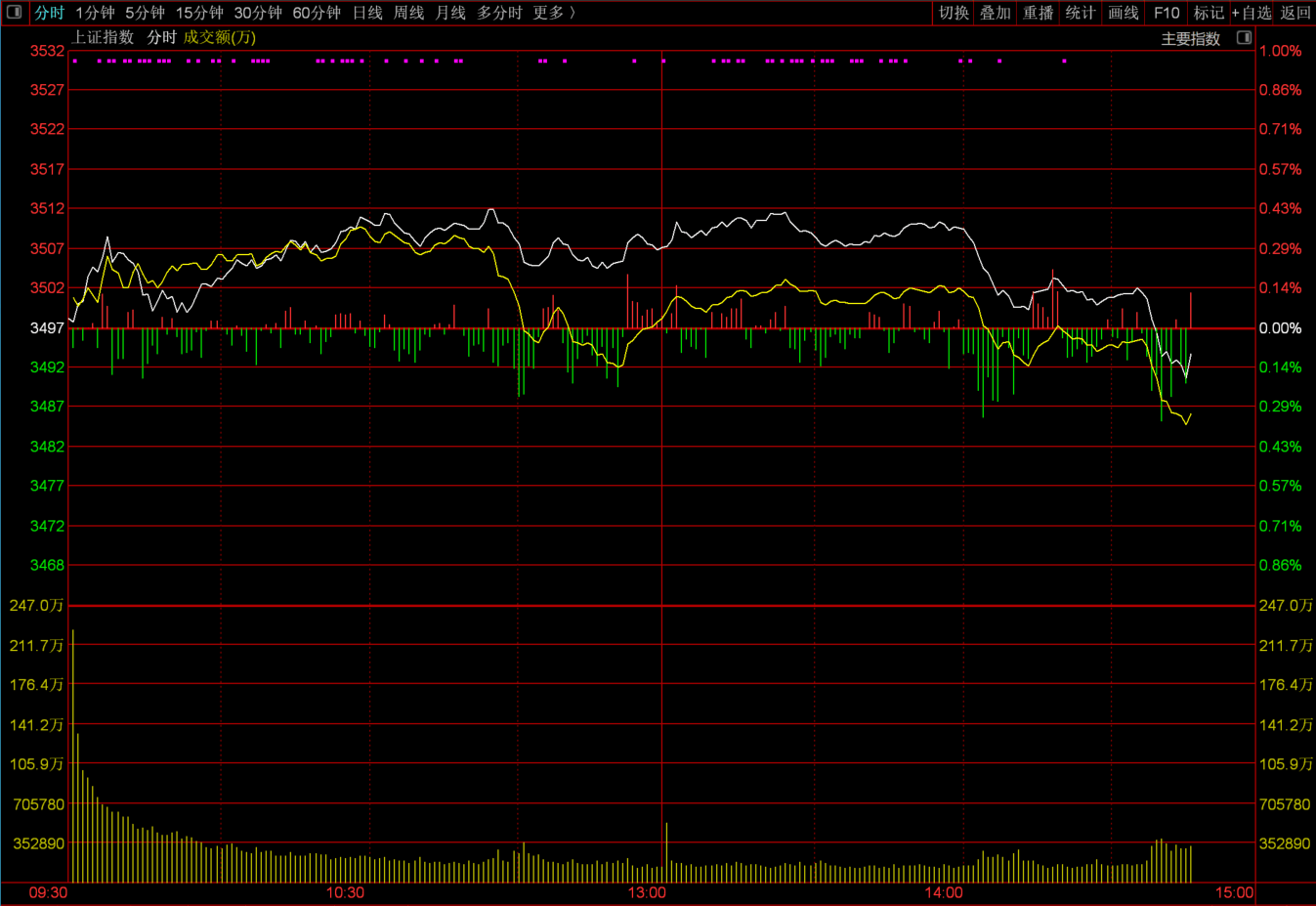
Group 1 - The Consumer Price Index (CPI) for June shows a year-on-year increase of 0.1% and a month-on-month decrease of 0.1%, indicating a stable recovery in consumer confidence despite recent fluctuations [1] - The CPI data reflects a significant change from the previous year's trend of sharp declines and volatility, suggesting a rare stability and signs of recovery in the last four months [1] - The overall economic performance in the first half of the year is positively reflected in consumer spending, with expectations for a stable economy in the second half, especially if trade conditions improve [2] Group 2 - A-shares experienced a sudden drop in the afternoon session, despite the index showing an upward trend earlier, indicating a lack of strong market sentiment [4] - The drop was primarily triggered by the securities sector, where a lack of upward momentum led to a collective decline in major indices [5] - The 3500-point level on the Shanghai Composite Index is seen as a critical threshold, with historical trends suggesting difficulty in maintaining levels above this point, yet current market dynamics may challenge this pattern [7]
年内超700只基金增聘基金经理;两家公募首次发行QDII产品
Sou Hu Cai Jing· 2025-07-09 07:20
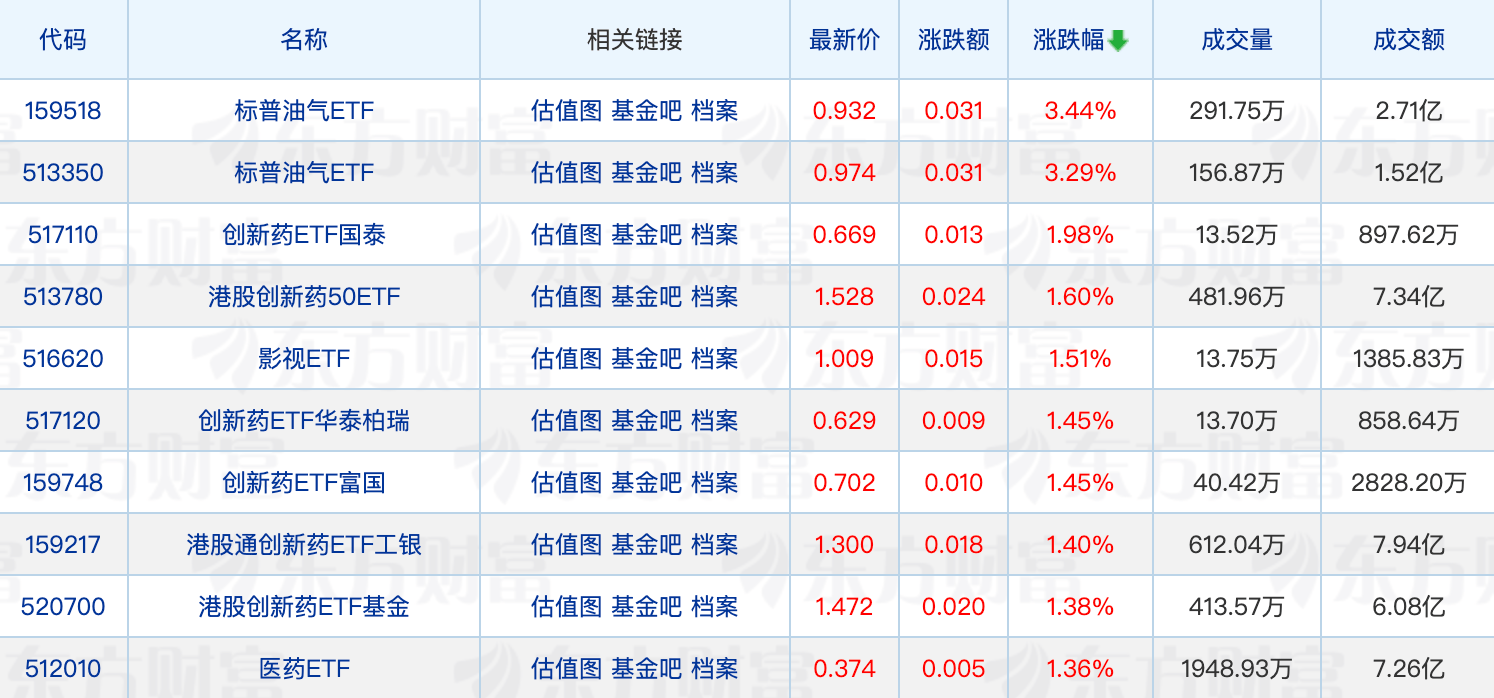
Group 1 - Yimin Fund appointed Wang Rui as the new Chief Information Officer on July 8, 2023 [1] - Over 700 funds have hired additional fund managers this year, with an increasing number of funds being managed by three or four managers [2] - Two public funds have launched their first QDII products, focusing on the Hong Kong stock market, particularly in the consumption and technology sectors [3] Group 2 - Yin Tao, a fund manager at Minsheng Jia Yin Fund, expressed optimism about the market, noting that risk appetite is gradually increasing despite the lack of strong economic stimulus [3] - Growth sectors such as AI, robotics, new consumption, and innovative pharmaceuticals have seen several funds yield over 50% returns in the first half of the year [3] Group 3 - The market experienced a slight decline, with the Shanghai Composite Index down 0.13% and the Shenzhen Component Index down 0.06%, while the ChiNext Index rose by 0.16% [4] - The total trading volume in the Shanghai and Shenzhen markets reached 1.51 trillion yuan, an increase of 512 billion yuan compared to the previous trading day [4] Group 4 - The S&P Oil & Gas ETF led the gains with an increase of 3.44%, while several innovative pharmaceutical-related ETFs also performed well [5] - Gold-related ETFs experienced a decline, with the highest drop being 2.25% [7] Group 5 - The summer film season is set to feature 94 films, with expectations for significant year-on-year growth in box office revenue due to an increase in both quantity and quality [8] - The export of television dramas is anticipated to generate substantial incremental revenue, and interactive gaming is emerging as a high-potential market [8]
宽基ETF,净流入!
Zhong Guo Ji Jin Bao· 2025-07-09 06:09
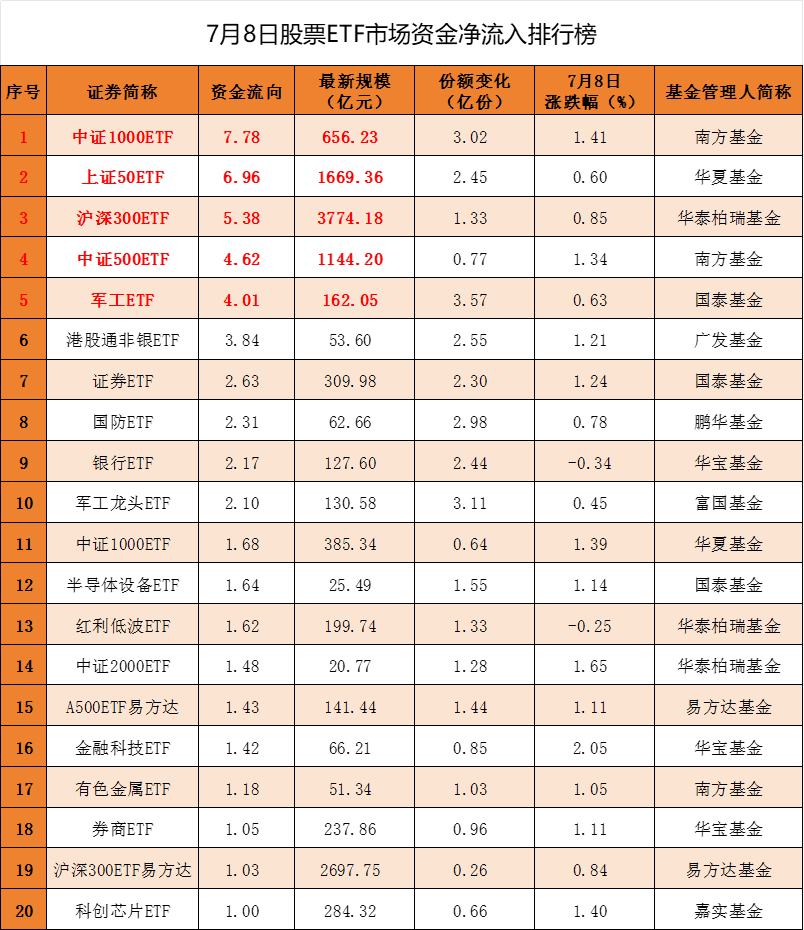
Group 1 - The A-share market experienced a significant rise on July 8, with major indices strengthening and the Shanghai Composite Index approaching 3500 points [1] - Various sectors, including anti-involution concept stocks, PCB, innovative pharmaceuticals, and gaming, showed strong performance [1][2] - The overall net inflow of funds into stock ETFs was 0.79 billion yuan, with the total market size of stock ETFs reaching 3.63 trillion yuan as of July 9 [4] Group 2 - The top-performing ETFs in terms of net inflow included the CSI 1000 ETF with 10.46 billion yuan, and the Shanghai 50 ETF and CSI 300 ETF both exceeding 5 billion yuan [5][6] - The leading fund companies, such as E Fund and Huaxia Fund, saw substantial net inflows into their ETFs, indicating strong investor interest [8] - Conversely, the ChiNext ETF experienced a net outflow of 6.73 billion yuan, with other thematic ETFs like gaming and semiconductor ETFs also facing outflows [10][11] Group 3 - Analysts predict that the market may experience a range-bound movement in the second half of the year, with potential upward breakthroughs by year-end based on policy direction and economic conditions [12] - There is optimism regarding sectors such as technology innovation, innovative pharmaceuticals, and new consumption [12]
沪指重返3500点!这些方向开始领跑
Sou Hu Cai Jing· 2025-07-09 04:54
Group 1 - A-shares have shown a structural market characteristic, with strong performance in consumer sectors such as food and beverage, and retail, as well as certain technology sectors like AI applications and innovative pharmaceuticals [2][4] - The top five performing industries in A-shares include agriculture, media, food and beverage, electrical equipment, and retail, indicating a growing interest in agricultural assets and a recovery in consumer spending [2] - The bottom five performing industries in A-shares are electronics, steel, basic chemicals, non-ferrous metals, and storage chips, with the decline in non-ferrous metals linked to proposed US tariffs on copper [2] Group 2 - In the Hong Kong market, the healthcare sector has seen a rise due to active innovative drug concepts, despite potential US tariffs on pharmaceuticals [3] - The top three performing industries in Hong Kong include healthcare, industrial, and energy, while the bottom three are materials, information technology, and real estate, reflecting external pressures from US tariff policies and global tech supply-demand imbalances [3] - The current market characteristics indicate that A-shares are driven by policy and sectoral improvements, while Hong Kong stocks are more influenced by external factors such as US tariffs and global technology cycles [4] Group 3 - Short-term market hotspots are concentrated around policy-driven sectors and improving industry conditions, with a focus on performance in the upcoming earnings reports [4] - The breakthrough of the Shanghai Composite Index above 3500 points is expected to further boost market confidence, with potential policy signals from the July Politburo meeting influencing capital flows [4]