
有效投资

Search documents
宏观专题分析报告:2026年财政政策展望:投资于人
SINOLINK SECURITIES· 2025-11-23 08:50
Economic Growth and Policy Focus - The economic growth target for 2026 is set around 5%, emphasizing the shift towards domestic demand, particularly in the areas of livelihood and consumption[2][9]. - The "14th Five-Year Plan" aims for a per capita GDP growth rate of approximately 4.4% annually, with a potential GDP growth rate of around 5% during this period[8]. Fiscal Policy and Budget - The general public budget deficit rate for 2026 is projected to be 4.2%, with a deficit scale of 6.18 trillion yuan, an increase of 520 billion yuan from 2025[3][15]. - In a more optimistic scenario, the deficit rate could rise to 4.5%, with a total deficit of 6.62 trillion yuan, reflecting an increase of 960 billion yuan[16]. Social Welfare and Consumer Support - Fiscal spending on child-rearing subsidies is expected to be between 100 billion to 120 billion yuan in 2026, alongside an expansion of free preschool education costing over 50 billion yuan[3][10]. - The increase in urban and rural residents' basic pensions is anticipated to exceed 1,000 billion yuan, with a minimum increase of 50 yuan per person[11]. Investment and Infrastructure - Effective investment will be expanded, focusing on urban renewal and basic public service construction, with an estimated 200 billion yuan allocated for urban renewal projects[4][28]. - The issuance of special bonds for equipment upgrades is expected to remain at 200 billion yuan, supporting the modernization of key industries[5][34]. Debt Management and Corporate Support - The issuance of special refinancing bonds is projected to reach 2 trillion yuan in 2026, aimed at alleviating debt pressure on local governments[35]. - The new local government special bond limit is expected to reach 5 trillion yuan, with 1.6 trillion yuan allocated for debt repayment and 2.9 trillion yuan for project construction, marking an increase of 1 trillion yuan from 2025[36].
铁路、核电“开闸”,民资可持股10%以上,国家发改委:项目有收益,民资有意愿
Sou Hu Cai Jing· 2025-11-18 14:53
民间资本投资再有新领域。 日前,国务院办公厅印发《关于进一步促进民间投资发展的若干措施》(简称"民间投资13条"),围绕拓宽投资空间、强化服务保障等方面推出13条具体举 措。 倍受关注的点是,明确鼓励民间资本参与铁路、核电、跨省输电通道、油气管道等一批重大基础设施项目,并提出"民间资本持股比例可在10%以上"的量化 指标。 这意味着,民营企业不再仅是项目建设的参与者,更有望以股东身份进入重大基础设施领域,分享其长期稳定的投资回报。 长期以来,民营企业参与重大项目建设一直是社会关注的热点,但受制于项目少、准入门槛高、融资渠道窄等多重障碍,民间资本在铁路、核电等国有资本 主导的领域中往往难以实质性进入。 与此同时,根据国家统计局数据,当前民间投资形势受房地产拖累,2025年1-10月民间投资增速为-4.5%,其中房地产开发投资同比下降14.7%。 在这一背景下,"民间投资13条"的出台不仅是对民间投资短期下滑的积极应对,更是要通过激发民营企业的活力,增强经济发展的内生动力,进一步释放内 需潜力。 制造业韧性强劲 在我国固定资产投资中,基建、制造业与房地产长期占据主导地位。国有部门高度集中于基建,而民间资本则主要在 ...


“两重”建设效应持续放大(锐财经)
Ren Min Ri Bao· 2025-11-17 19:25
Core Viewpoint - The State Council's recent meeting emphasizes the importance of advancing the "Two Major" construction within the context of the 14th Five-Year Plan, aiming to enhance effective investment and promote economic growth [2][6]. Group 1: Investment and Economic Growth - The "Two Major" construction focuses on national strategic implementation and key area safety capability building, targeting sectors such as technological self-reliance, urban-rural integration, and ecological safety [3][4]. - In 2024, China plans to issue 700 billion yuan in special long-term bonds to support 1,465 major projects, with total investment expected to exceed 1.2 trillion yuan [3]. - For 2023, 800 billion yuan has been allocated to support 1,459 projects, including significant infrastructure and ecological restoration initiatives [3][4]. Group 2: Infrastructure Development - High-standard farmland construction is a key area, with over 1 billion mu (approximately 66.7 million hectares) completed nationwide [4]. - In 2024, over 400 billion yuan has been allocated to support the construction and renovation of 1.8 million mu (approximately 120,000 hectares) of high-standard farmland [4]. Group 3: Investment Trends - From January to October 2023, infrastructure investment in key areas has seen significant growth, with internet and related services up by 20% and water transportation by 9.4% [5]. - Private investment in infrastructure has increased by 4.5%, accounting for 22.6% of total infrastructure investment, marking a 1% increase from the previous year [5]. Group 4: Strategic Implementation - The meeting highlighted the need for a coordinated approach to project planning and execution, emphasizing the integration of "hard investment" and "soft construction" to address systemic challenges [6][7]. - A robust project coordination mechanism is essential for ensuring quality and safety in engineering, alongside effective asset management and funding allocation [6].
第十四届全国政协委员尹艳林:让有钱且愿消费的人顺利消费 个税起征点可提高,最高边际税率可下调 让有关群体少缴税、多收入
Mei Ri Jing Ji Xin Wen· 2025-11-17 14:29
10月28日,《中共中央关于制定国民经济和社会发展第十五个五年规划的建议》(以下简称《建议》) 正式发布。记者注意到,此次《建议》在投资、消费等领域出现多个新提法。这些新提法背后有怎样的 深意?在我国经济迈向"十五五"的关键节点,如何破解消费率偏低、内需动力不足的深层矛盾?面对复 杂严峻的国内外环境,深化改革的突破口究竟在哪里? 带着这些关乎经济发展全局的核心问题,近日,《每日经济新闻》记者(以下简称NBD)专访了第十 四届全国政协委员尹艳林。尹艳林深耕宏观经济领域多年,曾长期任职于国家发改委和原中央财经领导 小组办公室,对中国经济体制改革、供需结构调整等议题有着深刻洞察和独到见解。他对扩大内需、全 国统一大市场等领域的问题,都提出了具体的改革方向和建议。 新型城镇化仍然是经济增长的重要引擎 NBD:《建议》在"十五五"时期经济社会发展的主要目标中提出,全要素生产率稳步提升,居民消费率 明显提高,内需拉动经济增长主动力作用持续增强。这对今后几年的经济发展会产生哪些影响? 尹艳林:全要素生产率稳步提升对应高质量发展阶段的创新驱动逻辑。创新发挥作用,首先就表现在全 要素生产率的提升。这一表述是从供给端突出科技进步 ...
展望“十五五” | 专访尹艳林:让有钱且愿消费的人顺利消费;个税起征点可提高 最高边际税率可下调 让有关群体少缴税、多收入
Mei Ri Jing Ji Xin Wen· 2025-11-16 14:29
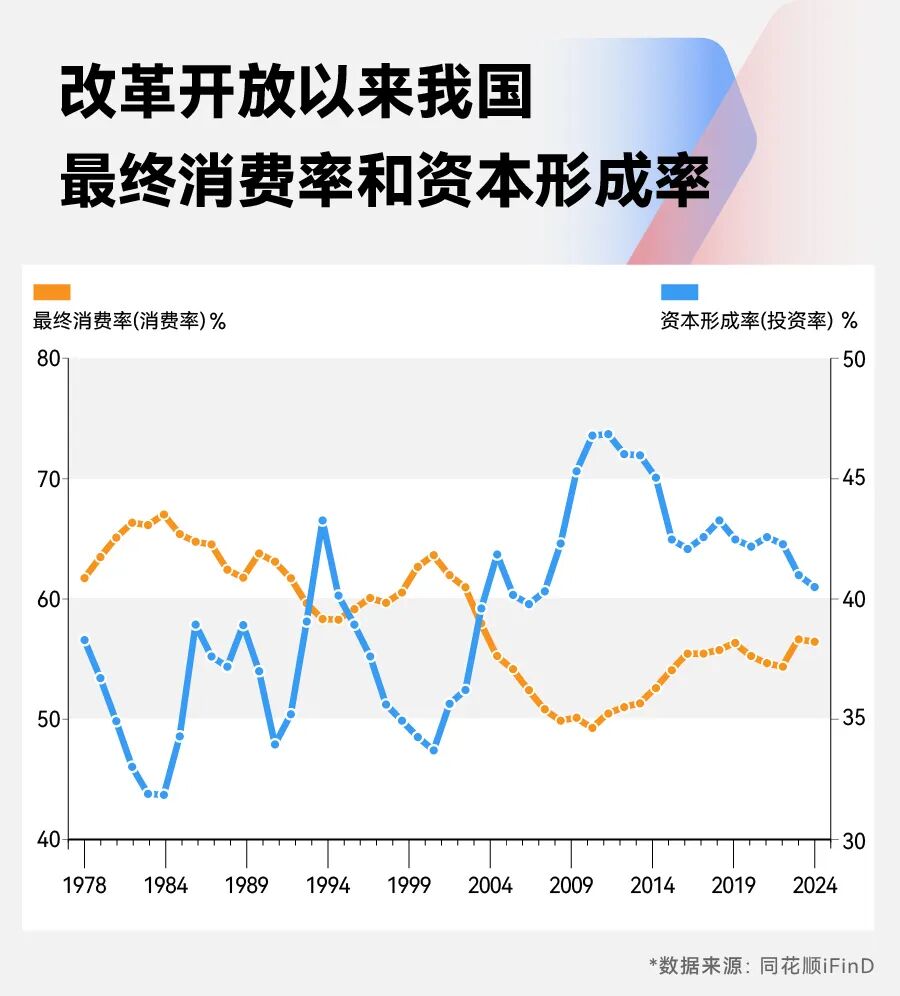
Core Viewpoint - The "15th Five-Year Plan" emphasizes the need for reforms to boost domestic consumption and address structural issues in the economy, particularly in the context of low consumption rates and insufficient domestic demand [1][2]. Investment and Consumption - The plan highlights the importance of increasing total factor productivity and significantly raising the household consumption rate, which is currently low compared to developed countries [2][5]. - The relationship between investment and consumption is dynamic; as investment rates decline, consumption rates are expected to rise, indicating a need for a balanced approach to both [6]. Urbanization and Economic Growth - New urbanization is identified as a crucial engine for economic growth, with millions of rural residents still needing to transition to urban areas, necessitating substantial investment in public services [8][9]. - The urbanization rate in China has reached 67%, but there remains a significant gap between registered and actual urban populations, indicating ongoing opportunities for investment [8]. Consumer Demand and Restrictions - The removal of unreasonable restrictions on major consumer goods like automobiles and housing is seen as a direct method to stimulate consumption among those with purchasing power [8][10]. - The central government is expected to push for these changes, although implementation may vary by locality due to differing regional conditions [10]. Taxation and Disposable Income - Increasing the personal income tax threshold and optimizing tax rates are proposed as effective measures to enhance disposable income for middle-income groups, thereby stimulating consumption [11][12]. - The current tax burden on middle-income earners is considered heavy, and adjustments could lead to significant increases in consumer spending [12]. Investment Strategy - The plan calls for a combination of investments in both physical infrastructure and human capital, emphasizing that investments should directly benefit the population [20][21]. - Effective investment is defined not solely by financial returns but also by its ability to stimulate demand and improve public welfare [23][25]. Private Sector Engagement - The government aims to increase the share of private investment, particularly in sectors traditionally dominated by state-owned enterprises, to enhance market competition and innovation [26][27]. - Legal and institutional reforms are necessary to ensure that private enterprises can compete fairly and access resources [26]. Market Integration - The plan stresses the need to eliminate barriers to building a unified national market, addressing deep-seated issues of market segmentation and local protectionism [31][33]. - Reforms in fiscal, statistical, and assessment systems are essential to facilitate this integration and improve government efficiency in market regulation [34][35].
展望“十五五” | 专访尹艳林:让有钱且愿消费的人顺利消费;个税起征点可提高,最高边际税率可下调,让有关群体少缴税、多收入
Mei Ri Jing Ji Xin Wen· 2025-11-16 12:35
每经记者|张蕊 每经编辑|陈星 10月28日,《中共中央关于制定国民经济和社会发展第十五个五年规划的建议》(以下简称《建议》)正式发布。 记者注意到,此次《建议》在投资、消费等领域出现多个新提法。这些新提法背后有怎样的深意?在我国经济迈向"十五五"的关键节点,如何破解消费率 偏低、内需动力不足的深层矛盾?面对复杂严峻的国内外环境,深化改革的突破口究竟在哪里? 带着这些关乎经济发展全局的核心问题,近日,《每日经济新闻》记者(以下简称NBD)专访了第十四届全国政协委员尹艳林。 尹艳林深耕宏观经济领域多年,曾长期任职于国家发改委和原中央财经领导小组办公室,曾对中国经济体制改革、供需结构调整等议题有着深刻洞察和独 到见解。 他直言不讳当前面临的一些问题背后是深层次的体制问题,坦言当前改革进入深水区的特征更加明显。他对扩大内需、全国统一大市场等领域的问题,都 提出了具体的改革方向和建议。 新型城镇化仍然是经济增长的重要引擎 NBD:《建议》在"十五五"时期经济社会发展的主要目标中提出,全要素生产率稳步提升,居民消费率明显提高,内需拉动经济增长主动力作用持续增 强。这对今后几年的经济发展会产生哪些影响? 尹艳林:全要素生 ...
全方位机制创新拓展“十五五”有效投资空间
Guo Ji Jin Rong Bao· 2025-11-10 01:47
Core Viewpoint - The article emphasizes the shift in China's investment strategy from quantity-driven to quality-driven investments during the 14th Five-Year Plan, focusing on effective investment that enhances efficiency, vitality, and innovation [1][5]. Group 1: Reflection on "Scale-Driven" Investment Model - The "scale-driven" investment model has not fundamentally changed, leading to structural contradictions and risks, such as decreasing investment efficiency and accumulating debt risks [2][3]. - Local governments often pursue large projects to boost GDP without considering investment returns, resulting in underutilized infrastructure and "zombie parks" [2][3]. - The investment structure shows a bias towards hard infrastructure over soft investments, leading to insufficient funding in education, healthcare, and other public services [3]. Group 2: Necessity of Expanding Effective Investment - Effective investment is defined as investments that stimulate current demand, enhance long-term growth, and generate positive social benefits [5]. - It serves as a stabilizing force for the macro economy amid challenges such as insufficient effective demand and external uncertainties [5][6]. - Effective investment is crucial for building a modern industrial system and fostering new productive forces, particularly in technology and innovation [6]. Group 3: Directions and Focus of Effective Investment - Investment should prioritize technology innovation and industrial upgrading, with increased support for research institutions and strategic emerging industries [9]. - Emphasis on improving public services and welfare, particularly in education and healthcare, to support common prosperity [10]. - Focus on green and low-carbon initiatives, including renewable energy and energy efficiency projects, to create new growth advantages [11]. Group 4: Institutional and Mechanism Innovations - Innovations in investment decision-making and project management are essential to ensure effective allocation of financial resources [12][14]. - A collaborative regulatory framework is necessary to enhance the efficiency of public investment and ensure accountability [15]. - The establishment of a favorable business environment is critical for encouraging private investment and ensuring sustainable economic growth [16].
解题“十五五”投资,首编“全口径政府投资计划”怎么做
2 1 Shi Ji Jing Ji Bao Dao· 2025-11-08 12:02
Group 1 - The core viewpoint emphasizes the importance of expanding domestic demand as a strategic foundation during the 14th Five-Year Plan period, focusing on enhancing consumer spending and investment efficiency [1][2][6] - The government aims to optimize the investment structure by stimulating private investment and increasing government investment in consumption-related sectors to promote a virtuous cycle of investment and consumption [2][12] - There is a recognition of the need to invest in both physical assets (infrastructure, machinery) and human capital (education, healthcare) to support sustainable economic growth and improve living standards [6][9][11] Group 2 - The government plans to implement significant landmark projects in urban renewal, new energy systems, and major water conservancy projects, while ensuring that infrastructure investment continues to grow appropriately [8][14] - The strategy includes enhancing the quality of public services and addressing the needs of an aging population, thereby increasing demand for services in healthcare, elderly care, and cultural tourism [7][8] - The government will focus on improving the investment environment for private enterprises, ensuring fair competition, and providing financing support to stimulate private sector investment [15][16]
解题“十五五”投资,首编“全口径政府投资计划”怎么做
21世纪经济报道· 2025-11-08 11:54
Core Viewpoint - The article emphasizes the importance of expanding domestic demand as a strategic foundation during the "15th Five-Year Plan" period, focusing on enhancing consumer spending and effective investment to drive economic growth [1][5]. Group 1: Consumer Spending - The government aims to boost resident consumption by optimizing the environment, innovating consumption scenarios, and removing unreasonable restrictions in the consumption sector [1][2]. - Measures will be taken to enhance residents' income share in national income distribution, with a focus on increasing government funding for social welfare [1][6]. - The article highlights the need to address the challenges of paid leave and improve mechanisms to ensure its implementation [1]. Group 2: Effective Investment - The government plans to optimize investment structure by stimulating private investment and enhancing the role of government investment in driving consumption-related sectors [2][10]. - There is a focus on improving investment efficiency, particularly in transportation and energy sectors, to address issues of "heavy investment, light returns" [2][10]. - The article discusses the importance of deepening investment and financing system reforms, utilizing new policy financial tools, and enhancing public-private partnerships [2][10]. Group 3: Investment in People - The article stresses the significance of investing in human capital alongside physical assets, highlighting the need for investments in education, healthcare, and skills training [5][6]. - It points out that the return on investment in physical assets has been declining, necessitating a shift towards enhancing human capital to foster new productivity [6][8]. - The government is encouraged to prioritize public funding for comprehensive development across all demographics and life stages [8][12]. Group 4: Infrastructure and Major Projects - The "15th Five-Year Plan" will see the implementation of significant landmark projects in urban renewal, strategic transportation, and new energy systems [7][10]. - The government aims to maintain appropriate growth in infrastructure investment while ensuring it does not exceed necessary levels [7][10]. - Key projects will also focus on service consumption areas such as elderly care, healthcare, and cultural tourism to meet the evolving needs of the population [7][10]. Group 5: Policy Recommendations - The article suggests that local governments should shift from traditional competition models to optimizing human capital and creating a conducive environment for investment [8][14]. - It emphasizes the need for clear delineation between government and private investment roles to stimulate private sector participation [12][14]. - The article advocates for enhancing the investment environment for private enterprises, ensuring fair competition, and providing necessary support for risk management [14][15].

财政部:积极培育新兴产业和未来产业 持续推动制造业转型升级
智通财经网· 2025-11-07 10:56
Core Viewpoint - The report emphasizes the acceleration of new growth momentum in China's economy through enhanced fiscal policies, support for innovation, and investment in key industries, while ensuring the stability of employment and market expectations [1][3]. Group 1: Fiscal Policy and Economic Growth - The fiscal policy is increasingly proactive, focusing on stabilizing employment, businesses, and market expectations, while promoting economic recovery [3][4]. - A total of 300 billion yuan in special bonds is allocated to support the replacement of consumer goods, which is expected to stimulate significant retail sales [4][15]. - The central government plans to increase its technology funding to 398.12 billion yuan in 2025, a 10% increase from the previous year, focusing on core technology and strategic industries [5][21]. Group 2: Investment and Consumption - The government aims to enhance domestic demand by boosting consumption and effective investment, with a focus on key sectors and weak links [13][16]. - The issuance of special bonds has accelerated, with 5.55 billion yuan issued in the first half of the year, completing 42.7% of the annual target [16]. - The manufacturing sector is expected to see a 10.3% increase in industrial investment, driven by government support for technological upgrades [17]. Group 3: Employment and Social Welfare - The central government allocated 667.4 billion yuan for employment support, with 6.95 million new urban jobs created in the first half of the year [27][28]. - Education spending increased by 5.9% to 2.15 trillion yuan, with a focus on improving quality and access to education [29][30]. - Basic public health service funding reached 804.35 billion yuan, enhancing health management and disease prevention efforts [32][33]. Group 4: Risk Management and Financial Stability - The government is implementing measures to mitigate financial risks, including the management of local government debt and the promotion of real estate market stability [7][9]. - A comprehensive approach to fiscal management is being adopted, including reforms in tax systems and budget execution to ensure effective use of resources [7][12]. Group 5: Innovation and Technology - The report highlights the importance of integrating technological innovation with industrial development, with a focus on enhancing research capabilities and supporting key technology projects [20][21]. - Funding for basic research is set to increase by 12.1%, emphasizing the need for original innovation and support for research institutions [21][22]. Group 6: Environmental and Social Development - The government is committed to ecological protection and sustainable development, with significant funding allocated for pollution control and ecosystem restoration [38][39]. - Social welfare programs are being expanded, with increased support for vulnerable populations and efforts to improve living standards [34][35].