贸易保护

Search documents
浙商早知道-20250616
ZHESHANG SECURITIES· 2025-06-15 23:30
Group 1: Key Recommendations - The report recommends Li Auto-W (02015) due to the resilient performance of the L series and the launch of the i8 model, which is expected to initiate a new product cycle [4] - The sales of the i series models are anticipated to exceed expectations, driven by enhanced charging infrastructure and product design that alleviates range anxiety [4] - Revenue projections for Li Auto from 2025 to 2027 are estimated at RMB 1700.09 billion, RMB 2255.53 billion, and RMB 2907.42 billion respectively, with net profit forecasts of RMB 89.89 billion, RMB 149.26 billion, and RMB 195.33 billion, reflecting year-on-year growth rates of 11.9%, 66.1%, and 30.9% [4] Group 2: Industry Insights - The traditional Chinese medicine (TCM) industry is characterized by high cash reserves and stable profit growth, similar to the banking sector, with minimal impact from overseas situations [6] - The report anticipates a significant improvement in revenue and profit growth for the TCM industry in Q2 2025 compared to Q1, with continued growth expected in H2 2025 [6] - The report highlights a shift in market perception towards TCM, emphasizing its value in a context of trade protection and economic slowdown, suggesting that TCM's configuration value deserves attention [6] Group 3: Consumer Sector Analysis - The consumer sector, particularly in dining and beverage, is expected to recover, with leading brands in fast food and tea drinks projected to see positive same-store sales growth in Q2 and Q3 of 2025 [7] - The report notes that despite ongoing pressure on domestic consumption, the restaurant sector remains a relatively safe investment, with opportunities for valuation increases [7] - The analysis indicates that the market's focus on growth rates, regardless of low base effects, reflects a willingness to invest in growth stories within the consumer sector [7]

高盛:特朗普加码钢铝关税引发白银大涨
news flash· 2025-06-05 10:01
高盛:特朗普加码钢铝关税引发白银大涨 金十数据6月5日讯,特朗普政府宣布将钢铝关税从25%提高至50%之后,白银迎来了强势上涨。因为这 一消息令市场预期美国政府可能会对其他关键金属(如白银)采取类似贸易保护措施,从而推升对白银 的避险和替代性需求。高盛期货交易员Robert Quinn称,美国提升钢铝关税的消息引发了白银期货市场 显著的多头建仓。白银期货总持仓量激增28亿美元,为过去一年中最大的两日增幅。尽管EFP(期货与 现货价差)波动较大,但整体趋于升水,表明市场对近期现货紧张的预期增强。同时,白银价格的上涨 推动了程序化趋势追踪资金入场做多。此外,期权市场也表现出看涨姿态:三个月隐含波动率飙升; 25-Delta认沽-认购偏度(Put-Call Skew)回落,表明投资者更愿意持有看涨期权;5 Delta与25 Delta认购 期权比例反弹,显示对极端上涨的押注增加。 ...

中国商务部回应美上调进口钢铝关税
Zhong Guo Xin Wen Wang· 2025-06-05 09:54
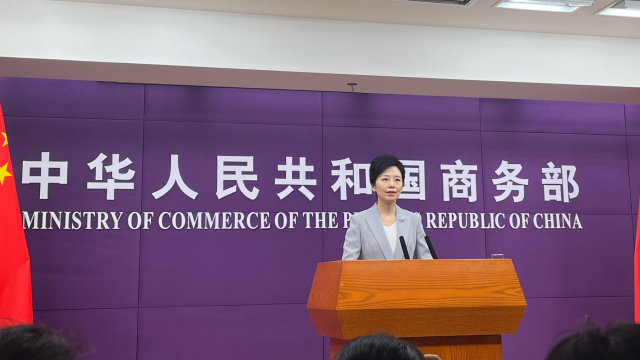
中新社北京6月5日电 (尹倩芸)就美方宣布上调进口钢铝关税,中国商务部新闻发言人何咏前5日表示, 此举不仅损人害己,无助于维护产业安全,还将严重扰乱全球产业链供应链稳定。 当地时间6月3日,美国白宫发表声明称,美国总统特朗普宣布将进口钢铁和铝及其衍生制品的关税从 25%提高至50%。 5日举行的新闻发布会上,何咏前表示,中方已多次强调,232关税是典型的单边主义和保护主义行径, 早已被世贸组织争端解决机制裁定违反世贸规则。此次美方再一次提高钢铝及其衍生制品关税,已遭到 多个国家反对。 何咏前说,中方敦促美方尊重经济规律,摒弃零和思维,停止泛化和滥用国家安全概念,与各方一道维 护以规则为基础的多边贸易体制,通过平等对话解决各自关切,共同维护全球产业链供应链稳定。 对此,何咏前表示,中方反对美301关税的立场是明确的、一贯的。美301关税措施是典型的单边主义和 贸易保护做法。此前,世贸组织专家组已裁决美301关税措施违反世贸规则。美301关税措施最终成本由 美国企业和消费者承担,这是典型的"损人不利己"行为。 何咏前说,中方敦促美方彻底取消包括301关税在内的各种对华限制措施,与中方共同维护日内瓦经贸 会谈共识精 ...
商务部:敦促美方彻底取消包括301关税在内各种对华限制措施
Di Yi Cai Jing· 2025-06-05 08:56
Group 1 - The Chinese government urges the U.S. to respect economic laws, abandon zero-sum thinking, and stop the broad and abusive use of the "national security" concept [1] - The U.S. has increased tariffs on steel and aluminum imports from 25% to 50%, effective from April 4 [1] - The Chinese Ministry of Commerce criticizes the U.S. for its unilateral and protectionist actions, stating that the increased tariffs will disrupt global supply chains and do more harm than good [1] Group 2 - The U.S. Trade Representative's Office has extended the exemption period for the 301 investigation into China's technology transfer and intellectual property practices until August 31, 2025 [3] - The Chinese government maintains a consistent opposition to the 301 tariffs, labeling them as unilateral and harmful to both U.S. businesses and consumers [3] - The Chinese government calls for the complete removal of all restrictions on China, including the 301 tariffs, to promote healthy and stable U.S.-China economic relations [3][4] Group 3 - The Chinese government expresses strong dissatisfaction with the U.S. for implementing new restrictions that undermine previously established agreements [4] - The Chinese government warns that if the U.S. continues to harm China's interests, it will take strong measures to protect its legitimate rights [4] Group 4 - In response to questions about China's export controls on rare earths, the Chinese government states that such measures are common international practices due to the dual-use nature of these materials [5] - The Chinese government has implemented export controls on seven categories of heavy rare earths, effective from April 4, to safeguard national security and fulfill international obligations [5] - The Chinese government emphasizes its commitment to responsible governance and willingness to engage in bilateral dialogues to promote compliant trade [5]

美国钢铝关税涨至50%,汽车和建筑业承压
日经中文网· 2025-06-05 03:01
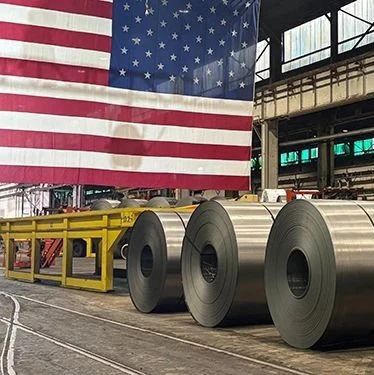
Core Viewpoint - The increase in tariffs on steel and aluminum products by the Trump administration is expected to significantly impact the U.S. steel industry, leading to higher domestic steel prices and potential profit losses for companies reliant on steel imports [1][2]. Group 1: Tariff Impact - The Trump administration raised tariffs on steel and aluminum from 25% to 50%, aiming to protect domestic industries and reduce reliance on imports [1]. - U.S. steel prices have reached twice the global average, with the average price per ton at $901 as of May 26 [2]. - Ford Motor Company anticipates a $1.5 billion profit reduction due to increased costs from tariffs, despite sourcing 85% of its steel domestically [2]. Group 2: Industry Response - The U.S. steel industry is facing challenges with reduced supply and rising fixed costs, leading to deteriorating profits for major companies [3]. - Cleveland-Cliffs announced the suspension of operations at six domestic blast furnaces and mines due to these challenges [3]. - U.S. Steel has reported consecutive quarterly losses, indicating that while rising steel prices are beneficial, decreased demand from sectors like automotive may worsen profitability [3]. Group 3: Supply Chain Concerns - The reliance on global supply chains means that companies dependent on imported specialty steel may face increased burdens due to tariffs [2]. - There are concerns that rising product prices could lead to reduced demand, negatively impacting the performance of large steel companies [2][3].

特朗普一句话,韩国钢铁股全线大跌!港股、A50下跌,黄金走高,原油大涨近3%!发生了什么?
Mei Ri Jing Ji Xin Wen· 2025-06-02 02:57
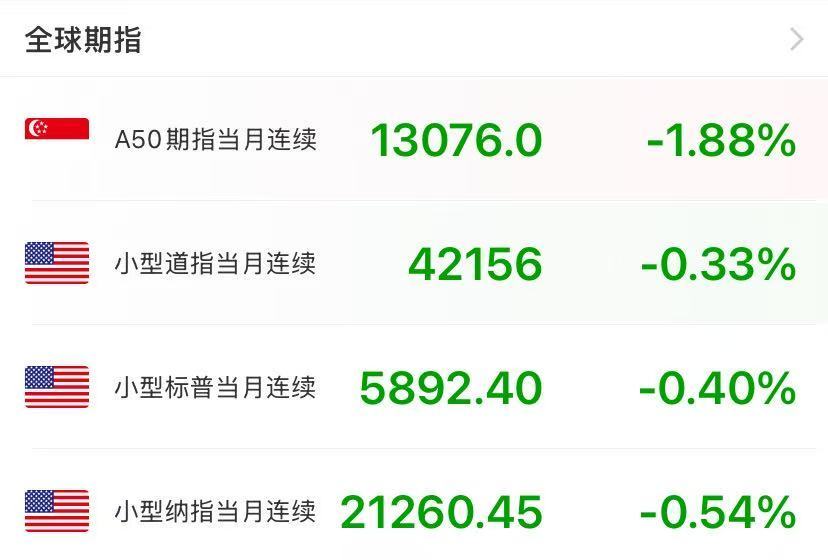
Group 1: Global Trade and Geopolitical Risks - The global trade situation has escalated due to the Trump administration's decision to increase steel tariffs from 25% to 50%, which has negatively impacted market confidence and led to a rise in geopolitical risks due to the Russia-Ukraine conflict [1][11][15] - The U.S. government debt levels are rising, and the uncertainty surrounding tariffs has caused U.S. Treasury bonds to experience their first monthly decline of the year in May [5] Group 2: Market Reactions - Asian stock markets opened lower, with the Hang Seng Index dropping 2.46% and the Hang Seng Technology Index falling nearly 3% [3][2] - The S&P futures declined by 0.4%, and the FTSE China A50 Index futures fell by nearly 2% [2] Group 3: Commodity Prices - Gold prices increased by 0.47% to $3331 per ounce, while Brent and WTI crude oil prices surged over 2% due to heightened geopolitical tensions [4][5] - The dollar index decreased by 0.22%, contributing to the rise in precious metals [5][13] Group 4: Impact on Steel Industry - The South Korean steel sector faced significant declines, with major companies like Hyundai Steel and POSCO experiencing drops in stock prices [6][7] - Hyundai Steel has entered an "emergency state" due to the tariff increase, which affects 35% of its exports to the U.S. [11][12] - Approximately 1,800 small and medium-sized steel and aluminum enterprises in South Korea are expected to be severely impacted by the U.S. tariffs, prompting government support plans [12] Group 5: European Steel Industry Concerns - The German Steel Federation expressed concerns that the U.S. tariffs would exacerbate the already struggling European steel industry, increasing direct export burdens and potentially leading to a loss of market access [13][14]
德国钢铁联合会主席:美加征关税给欧洲钢铁行业带来巨大压力
news flash· 2025-06-01 23:36
美国总统特朗普5月30日表示,美国将从6月初起把进口钢铁和铝的关税从目前的25%上调至50%。对于 美方的这一决定,德国钢铁联合会主席里佩尔当地时间6月1日发表书面声明称,美方这一举动使得跨大 西洋贸易冲突再次升级,将会给欧洲钢铁行业带来巨大压力。德国钢铁联合会主席里佩尔在声明中表 示,近年来欧洲钢铁行业本就不景气,美方加征关税的举动一方面将加大德国对美国市场的直接出口负 担。另一方面,其间接影响则更加严重:传统的钢铁供应方因高昂的关税而面临失去美国市场准入的威 胁,并转向欧盟市场,这将进一步加剧欧洲本已不小的内部压力。里佩尔表示,欧盟委员会必须在严格 的贸易保护和明智的谈判之间保持平衡。具体而言,现在需要及时为欧洲钢铁行业提供有效的贸易保护 手段。同时,与美国进行双边钢铁协议谈判也很重要,德国钢铁联合会全力支持欧盟委员会与美方的谈 判。(央视新闻) ...
整理:每日全球大宗商品市场要闻速递(5月28日)
news flash· 2025-05-28 07:16
Energy - The UAE Energy Minister stated that OPEC+ is making every effort to balance the market and ensure sufficient investment in supply. Without OPEC+, especially the G7, the situation would descend into chaos [2] Precious Metals and Mining - The Governor of Florida signed a bill recognizing gold and silver as legal tender [3] - The Brazilian government announced an extension of trade protection measures for the steel industry, maintaining a 25% tariff on 19 steel products and expanding this measure to four additional products [3] - France and Indonesia signed a strategic defense cooperation agreement and agreements in agriculture and critical minerals [3] Agriculture - The Mexican Ministry of Agriculture announced an agreement with the U.S. to reopen Mexican beef exports to the U.S. [3] - Canada is projected to export 896,968 tons of canola seed by March 2025 [3] Oil and Gas - A Reuters survey indicated that Saudi Arabia's crude oil prices for Asia may drop to a six-month low in July [4] - Chevron received limited permission to continue operations in Venezuela from the U.S. [4] - The Australian Environment Department approved the Woodside LNG project extension in the northwest until 2070 [4] - Oman’s oil revenue for Q1 2025 is expected to decline by 13% year-on-year to 1.468 billion rials [4]
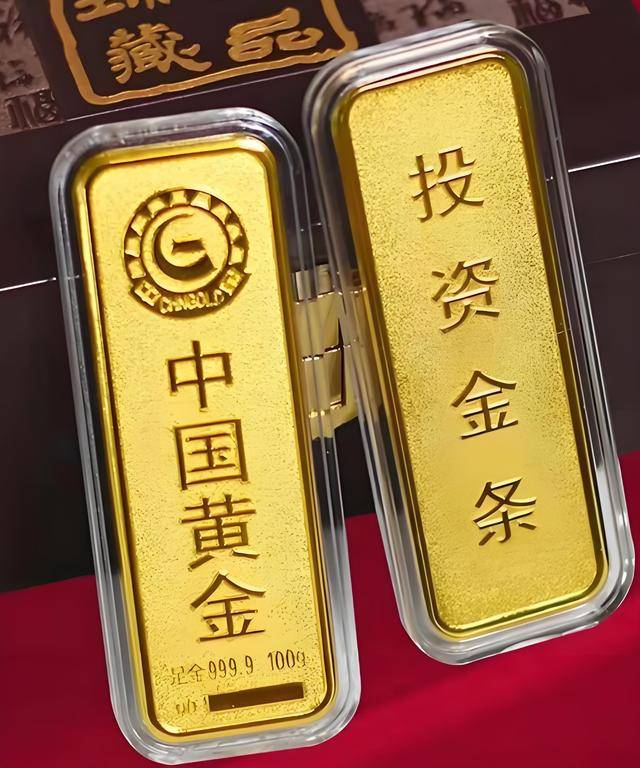
大批黄金运回中国,提前为美债暴雷做准备?中国还防了特朗普一手
Sou Hu Cai Jing· 2025-05-22 13:25
Group 1: Gold Import and Economic Strategy - China's gold imports surged to 127.5 tons, marking a nearly one-year high, despite international gold prices nearing $3,500 per ounce, reflecting a strategic move rather than a market reaction [3][5] - The increase in gold reserves is seen as a response to concerns over the financial systems of major economies, particularly with $6 trillion in U.S. debt maturing in June and uncertainty surrounding interest rate decisions [5][6] - The proportion of gold in China's foreign exchange reserves rose from less than 3% in 2020 to 5.8% in April 2023, indicating a strategy to strengthen the "gold-RMB" linkage for financial security [10][12] Group 2: Trade Relations and Regional Integration - China and ASEAN announced an upgrade to their free trade agreement to version 3.0, aiming for deeper economic integration and addressing global trade protectionism [13][15] - The new agreement is expected to cover over 90% of goods with zero tariffs, significantly reducing trade costs and optimizing China's foreign trade structure [15] - The collaboration includes establishing a "super factory" and "super market" that serves over 2 billion people, enhancing regional supply chains and market resilience [15][16] Group 3: Financial and Trade Defense Strategy - The simultaneous actions of increasing gold reserves and deepening trade ties with ASEAN are part of a broader strategy to fortify financial security and reshape trade structures [18][20] - The strategy aims to create a dual support system for financial and industrial resilience, reducing reliance on single markets and enhancing resource allocation flexibility [20][21] - The potential for increased use of RMB in ASEAN trade settlements could promote the internationalization of the currency, especially in light of upcoming financial pressures [21][23]