
国产替代

Search documents
ETF周度配置指南2026.01.16(总02期)
申万宏源证券上海北京西路营业部· 2026-01-21 02:27
本周市场情绪高亢,遭遇政策调控,融资保证金比例上调,结合中国证监会2026年系统工作会议精神,向市场传递了精准信号。近期陆续有年 度业绩预告披露,未来市场可能持续关注业绩高增方向的投资机会。同时一季度海外映射催化相对较多,主题投资机会仍存。当前市场处于上涨 斜率加速且量能快速放大后的波动阶段,市场后续出现大落风险的概率较低,调整反而可能孕育机会,我们仍坚持优选长期趋势占优品种的建 议。 宏源证券 | ETF周度配置指南 ETH周度 配置指南 2026.01.16 (总02期) 本周市场情绪高亢,遭遇政策调控,融资保证金比例上调,结合中国证监会2026年系统工作会议 精神,向市场传递了精准信号。近期陆续有年度业绩预告披露,未来市场可能持续关注业绩高增 方向的投资机会。同时一季度海外映射催化相对较多,主题投资机会仍存。当前市场处于上涨斜 率加速且量能快速放大后的波动阶段,市场后续出现大落风险的概率较低,调整反而可能孕育机 会,我们仍坚持优选长期趋势占优品种的建议。 风险提示:本材料非产品宣传推介材料,不构成任何投资建议。投资者不应以该等信息取代其独立判断或仅根据该等信息做出决 策。申万宏源证券对本材料拥有最终解释 ...

半导体板块强势,龙芯中科20%涨停,海光信息创新高
Zheng Quan Shi Bao Wang· 2026-01-21 02:25
Core Viewpoint - The semiconductor sector is experiencing a strong performance driven by geopolitical tensions, which provide a window for domestic semiconductor alternatives, particularly in advanced packaging and memory chip concepts [1] Group 1: Market Performance - The semiconductor sector saw significant gains on the 21st, with notable performances from companies such as Longxin Zhongke, which hit a 20% limit up, and Haiguang Information, which rose over 13% to reach a new high [1] - Jianghua Microelectronics achieved a consecutive three-day limit up, while companies like Lanke Technology and Tongfu Microelectronics increased by over 8% [1] Group 2: Industry Insights - CITIC Securities pointed out that geopolitical friction is creating opportunities for domestic semiconductor alternatives, with companies like Huawei, Cambricon, and Haiguang rapidly improving the performance of next-generation computing chips and cabinets [1] - The demand surge for AI and supply-side contractions are contributing to a price increase in memory chips, leading to a performance explosion for global memory industry chain enterprises [1] Group 3: Investment Opportunities - The construction of memory production lines and the increase in domestic production rates are expected to accelerate, presenting investment opportunities in supporting semiconductor equipment and packaging sectors within the domestic memory chain [1] - As the logic of domestic substitution strengthens and memory capacity expands, a new capital expenditure cycle is anticipated, benefiting domestic equipment, components, and materials significantly [1]


未知机构:招商医药爱博医疗重磅收购点评拟收购德美医疗不低于51股权拓展至运动医学-20260121
未知机构· 2026-01-21 01:55
【招商医药】爱博医疗重磅收购点评:拟收购德美医疗不低于51%股权,拓展至运动医学领域 【招商医药】爱博医疗重磅收购点评:拟收购德美医疗不低于51%股权,拓展至运动医学领域 事件:爱博医疗1月20日公告与德美联合等签订《 查找图书 》,拟通过并购贷款及自由资金出资方式收购德美 医疗不低于51%股权;公司预估本次拟收购的标的公司整体估值不超过人民币10 亿元。2023-2025年收入分别为 1.78/2.36/2.86亿元,净利润(调整后)分别为-707/929/2360万元。 标的公司德美医疗是国内运动医学头部企业,已入选第四批国家高值医用耗材集采A组,处于行业第一梯队; 拥有临床专家资源,销售网络覆盖全国及东南亚、拉丁美洲、中东、欧洲等海外区域,在研发、生产制造、境内 外销售渠道等方面与公司存在一定的协同性。 国内运动医学市场以进口产品主导,国产替代空间广阔,德美医疗产品线全面覆盖运动健康领域,贯穿术前预 防、手术治疗及术后康复等关键环节。 事件:爱博医疗1月20日公告与德美联合等签订《 查找图书 》,拟通过并购贷款及自由资金出资方式收购德美 医疗不低于51%股权;公司预估本次拟收购的标的公司整体估值不超过 ...

半导体早参丨存储大厂资本开支大增270%;大摩将欧洲半导体行业评级上调至“增持”
Mei Ri Jing Ji Xin Wen· 2026-01-21 01:29
截至1月20日收盘,沪指跌0.01%,报收4113.65点;深成指跌0.97%,报收14155.63点;创业板指跌 1.79%,报收3277.98点。科创半导体ETF(588170)跌0.42%,半导体设备ETF华夏(562590)跌 0.44%。 3、通富微电发布2025年度业绩预告,预计归属于上市公司股东的净利润11亿元~13.5亿元,比2024年同 期增长62.34%~99.24%。2025年内,全球半导体行业呈现结构性增长,公司积极进取,产能利用率提 升,营业收入增幅上升,特别是中高端产品营业收入明显增加。同时,得益于加强经营管理及成本费用 的管控,公司整体效益显着提升。此外,公司准确把握产业发展趋势,围绕供应链及上下游布局产业投 资,取得了较好的投资收益,增厚了公司2025年业绩。 中信建投指出,地缘政治摩擦为国产半导体提供了替代窗口期,华为、寒武纪、海光等新一代算力芯 片/机柜性能快速提升,生态逐步完善。受AI需求爆发、供给侧收缩等多重因素影响,存储芯片正处于 价格上升期,推动全球存储产业链企业迎来业绩爆发。存储产线建设及国产化率提升有望进入加速阶 段,看好配套半导体设备、封测等国内存储链投资机遇 ...
存储大厂资本开支大增270%;大摩将欧洲半导体行业评级上调至“增持”
Mei Ri Jing Ji Xin Wen· 2026-01-21 01:27
截至1月20日收盘,沪指跌0.01%,报收4113.65点;深成指跌0.97%,报收14155.63点;创业板指跌 1.79%,报收3277.98点。科创半导体ETF(588170)跌0.42%,半导体设备ETF华夏(562590)跌 0.44%。 隔夜外盘方面,截至收盘,道琼斯工业平均指数跌1.76%;纳斯达克综合指数跌3.54%;标准普尔500种 股票指数跌2.06%。费城半导体指数跌1.68%,恩智浦半导体跌2.70%,美光科技涨0.62%,ARM涨 1.31%,应用材料跌2.68%,微芯科技跌2.05%。 行业资讯: 1、DRAM大厂南亚科总经理李培瑛表示,DRAM供给持续吃紧,为顺应产业趋势,今年资本支出将达 500亿元新台币(约合110亿元人民币),同比增幅超过270%,为公司史上最大手笔。支出主要用于扩 充新厂产能,预计2028年上半年将开出2万片新产能。 2、摩根士丹利将欧洲半导体行业评级从"持股观望"上调至"增持"。 3、通富微电发布2025年度业绩预告,预计归属于上市公司股东的净利润11亿元~13.5亿元,比2024年同 期增长62.34%~99.24%。2025年内,全球半导体行业呈现结 ...
半导体行业景气上行,核心设备工艺与国产替代现状如何?
Mei Ri Jing Ji Xin Wen· 2026-01-21 01:12
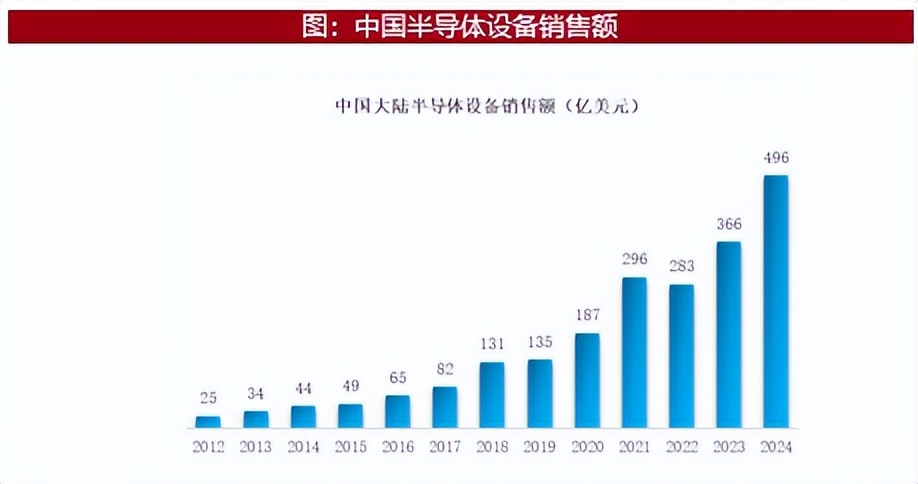
Core Insights - The semiconductor equipment sector is expected to experience strong growth driven by AI and advanced process demands, particularly in GPU-related revenues [1] - The global semiconductor equipment market has shown stable growth, primarily due to the increasing demand for consumer electronics [1] - China's semiconductor equipment market has rapidly grown, capturing approximately 40% of the global market share, driven by both rising chip demand and the need for self-sufficiency in the domestic semiconductor industry [4][2] Semiconductor Equipment Market Overview - Wafer manufacturing equipment accounts for about 90% of the semiconductor equipment market, with thin film deposition, etching, and lithography each contributing around 20% [2] - The growth of the Chinese semiconductor equipment market significantly outpaces the global average due to the rising demand for semiconductor chips [2] Chip Manufacturing Process - The chip manufacturing process involves multiple steps, including purification of industrial sand, pulling of silicon rods, and various processes like polishing and cutting to create wafers [6] - Thin film deposition methods include CVD, PVD, and ALD, with ALD being the most advanced due to its precision at the atomic level [6] Lithography Technology - Lithography is a critical process in chip manufacturing, with high technical barriers; the fourth-generation lithography machines operate at a wavelength of 193 nm [7] - The EUV lithography machines, which are essential for advanced processes, are currently monopolized by overseas companies, particularly ASML, which holds over 80% of the market share [7] Investment Opportunities - The semiconductor equipment sector has transitioned from a focus on self-sufficiency to a landscape influenced by overseas computing power, with significant capital expenditure changes in foreign storage companies impacting the domestic sector [8] - The semiconductor equipment ETF (159516) is highlighted as a strong investment tool, offering exposure to leading companies in the equipment and materials sectors, and is positioned well to capitalize on the industry's cyclical growth [8]
都在盯着国家队
Xin Lang Cai Jing· 2026-01-21 01:09
来源:硬核姬老板 周二(1月20日)题材有所熄火,算力硬件、商业航天、可控核聚变等泛科技板块集体下跌。 但非常有意思的点在于,上午冲高回落后大家好像没有特别慌,很多人都是"艾玛,终于跌了"的心态。 真。情绪可控。 不过有几个小发现可以和大家分享一下。 从上周三顶部的4万亿成交到1月19日全场成交2.73万亿,1月20日盘中看着成交额还在缩。 看了下融资余额。 截至1月19日,市场融资余额合计2.71万亿元,较前一交易日减少85.01亿元,为新年以来首次下降。 1月19日也是融资保证金回归到100%的首个交易日。 降温效果立竿见影。 另外上周主流宽基ETF净流出后,大家开始将视为国家队动向,每日盯着申赎情况看。 如果按照这个思路,那么续上周后,本周流出力度相对减弱,前期被砸的老登股,比如银行、券商、长 电等等也开始企稳,目前舆论风向改为处罚网络吹票的大V。 一、都在盯着国家队 周一(1月19日)的量能缩了不少。 如果转成震荡的话,那么依旧是回到了重行业轻指数的行情。 大浪淘沙,AI应用还有戏吗 这点很明显是规范市场行为,也验证了之前大家一致性预期: 这是温柔的点刹,并不代表不让市场涨。 游资非常敏锐的,感受到了 ...
研判2026!中国植物炭黑行业产业链图谱、发展现状、竞争格局及未来发展趋势分析:技术迭代驱动高端替代,行业规模有望突破18亿元[图]
Chan Ye Xin Xi Wang· 2026-01-21 01:08
Core Insights - The article discusses the growth and development of the plant-based carbon black industry in China, highlighting its potential to replace traditional carbon black due to its eco-friendly properties and increasing market demand [1][5][9]. Group 1: Industry Overview - Plant-based carbon black is produced from agricultural and forestry waste through pyrolysis, offering a natural low-carbon alternative to traditional carbon black, which is derived from fossil fuels [1][5]. - The total production capacity of carbon black in China is projected to reach 9.02 million tons per year by 2024, with a production rebound to 6.6673 million tons in 2024, reflecting a year-on-year growth of 6.55% [1][7]. - The market size for plant-based carbon black is expected to reach 1.48 billion yuan in 2024, with a forecast to exceed 1.8 billion yuan by 2025, driven by environmental standards and consumer preferences [1][9]. Group 2: Industry Chain - The upstream of the plant-based carbon black industry relies on agricultural waste such as wood chips and coconut shells, with raw material and energy costs accounting for over 60% of total costs [6]. - The midstream involves production processes including pre-treatment, pyrolysis, and quality control, with leading companies leveraging continuous production and advanced modification technologies [6][10]. - The downstream applications span food, industrial, and environmental sectors, with increasing demand for natural ingredients in food and rapid growth in the environmental sector due to carbon reduction policies [6][10]. Group 3: Competitive Landscape - The competitive landscape of the carbon black industry is becoming more concentrated, with leading companies like Heimao Co., Longxing Chemical, and Jinneng Technology dominating the market [9][10]. - By 2024, Jinneng Technology is expected to lead the industry with a production capacity of 820,000 tons per year, followed by Shanxi Sanqiang New Energy and Shanxi Anlun Chemical [9][10]. - The industry is characterized by a low overall concentration, with many small to medium-sized enterprises focusing on lower-end markets, while leading firms are expanding their market share through technological advancements and international certifications [9][10]. Group 4: Development Trends - The plant-based carbon black industry is expected to evolve along three main lines: technological upgrades, application expansion, and industry consolidation [11][12]. - Technological innovations will focus on green and efficient production methods, with a shift towards high-value products through advanced activation and modification techniques [11][12]. - The application scope is broadening from traditional uses to include new sectors such as renewable energy materials and high-end cosmetics, driven by consumer preferences for natural products [13][14]. - The industry is likely to see increased consolidation as stricter environmental and food safety standards push smaller players out, while leading firms expand through mergers and acquisitions [14].


爱博诺德(北京)医疗科技股份有限公司关于签订《投资意向书》的自愿披露公告
Shang Hai Zheng Quan Bao· 2026-01-20 18:18
Core Viewpoint - Aibono Medical (Beijing) Technology Co., Ltd. has signed a Letter of Intent with Demei United (Chongqing) Medical Technology Co., Ltd. to acquire at least 51% of the latter's equity, aiming to gain control over the company and expand its presence in the sports medicine sector [2][4]. Group 1: Transaction Overview - The acquisition is intended to leverage Aibono Medical's existing strengths in research and management to foster growth in the high-potential sports medicine segment, which is experiencing increasing market demand due to rising health awareness and fitness participation [6][7]. - Demei Medical is recognized as a leading enterprise in sports medicine in China, holding 276 patents and having established modern production and R&D facilities, which enhances its competitive edge [2][12]. - The transaction is not classified as a related party transaction or a major asset restructuring as per regulatory definitions [4][9]. Group 2: Investment Intent and Financial Aspects - The investment will be financed through a combination of acquisition loans and the company's own funds, with the total investment amount to be determined based on due diligence results [8][14]. - The estimated valuation for the acquisition of Demei Medical is projected to be no more than RMB 1 billion, based on the company's technological advancements and business performance [14][15]. - Demei Medical has a comprehensive product line covering pre-surgery prevention, surgical treatment, and post-surgery rehabilitation, positioning it well for future growth in the domestic market, which is currently dominated by imported products [6][11]. Group 3: Strategic Implications - The acquisition aligns with Aibono Medical's dual strategy of internal growth and external expansion, aiming to cultivate new profit growth points and solidify long-term performance [7][15]. - The transaction is expected to enhance Aibono Medical's operational synergies in R&D, manufacturing, and sales channels, thereby improving overall performance and shareholder returns [15].
超8亿元商誉压顶 多宁生物三闯港交所
Bei Jing Shang Bao· 2026-01-20 16:57
Core Viewpoint - Dongning Bio is attempting to enter the capital market with a "profit turnaround" narrative, having reported a net profit of 14.257 million yuan in the first three quarters of 2025 after consecutive losses from 2019 to 2022, but faces challenges due to high goodwill of 843 million yuan resulting from aggressive acquisitions [1][2][5]. Financial Performance - In 2023 and 2024, Dongning Bio reported revenues of 814 million yuan and 843 million yuan, with net losses of 315 million yuan and 27.5 million yuan respectively; however, in the first three quarters of 2025, the company achieved a revenue of 658 million yuan and a net profit of 14.257 million yuan [2][4]. - The company's main business segments include biological process solutions and laboratory products and services, with the former contributing over 70% of revenue in recent years [2][3]. Business Segments - The biological process solutions segment generated revenues of 626 million yuan, 638 million yuan, and 507 million yuan from 2023 to September 2025, accounting for 77%, 75.7%, and 77.1% of total revenue respectively; the share of reagent and consumable income increased significantly, reaching 55.4% of total revenue in 2025 [3][4]. - The overseas market has been a key growth driver, with revenues from international operations increasing from 69.52 million yuan in 2023 to 112 million yuan in the first three quarters of 2025, contributing to 17.1% of total revenue [3][4]. Strategic Plans - Dongning Bio plans to use part of the IPO proceeds to expand its global market presence, including establishing local production lines and hiring overseas personnel [4][6]. - The company aims to continue strategic acquisitions and equity investments to enhance its product and service offerings and broaden sales channels [6][7]. Risks and Challenges - The company faces potential risks related to high goodwill of 843 million yuan, which could lead to significant impairment losses if future acquisitions do not meet performance expectations [5][6]. - Despite the positive turnaround in profitability, the sustainability of this profit and the ability to manage goodwill risks remain critical for the company's long-term competitiveness and successful IPO [7].