自动驾驶

Search documents
广州:加快推进国家5G车联网先导区建设 支持在公共交通领域率先探索自动驾驶示范应用
Zheng Quan Shi Bao Wang· 2026-01-08 09:27
Core Viewpoint - The Guangzhou Municipal Government has issued a plan to accelerate the construction of a strong advanced manufacturing city from 2024 to 2035, focusing on smart connected vehicles and intelligent transportation applications [1] Group 1: Smart Connected Vehicles - The plan supports the establishment of demonstration zones for smart connected vehicles based on broadband mobile internet [1] - It emphasizes the acceleration of the national 5G vehicle networking pilot zone construction [1] - The initiative includes the development of intelligent cockpit solutions and in-vehicle infotainment systems, as well as advanced driver assistance systems [1] Group 2: Autonomous Driving Applications - The plan encourages the public transportation sector to explore autonomous driving demonstration applications [1] - It aims to create world-class demonstration application cases in the field of autonomous driving [1] - The establishment of closed testing zones and several semi-open and fully open testing areas for smart connected vehicles is supported [1] Group 3: Road Testing and Development - The plan promotes the acceleration of road testing for smart connected vehicles [1] - It includes support for tire pressure monitoring and air conditioning control systems as part of the vehicle technology development [1]
汽车行业双周报(20251222-20260102):2026年或是特斯拉Robotaxi无人化商业运营&FSD无监督版本落地之年-20260108
Hua Yuan Zheng Quan· 2026-01-08 09:07
Investment Rating - The investment rating for the automotive industry is "Positive" (maintained) [1] Core Insights - The year 2026 is anticipated to be significant for Tesla's Robotaxi and FSD (Full Self-Driving) with the potential for unmanned commercial operations and the rollout of the unsupervised version of FSD [3][9] - Key focus areas include the expansion of the Robotaxi fleet, the performance of Cybercab, and the evolution of FSD software versions [5][32] Summary by Sections Robotaxi Operations - Tesla's Robotaxi operations in Austin and California have a larger operational area compared to Waymo, with plans to expand to more states in 2026 [11][14] - The average fare for Tesla Robotaxi is approximately $1.4 per mile, significantly lower than Waymo's $2.5, indicating a pricing advantage [18] - As of January 3, 2026, Tesla's Robotaxi fleet consists of 40 vehicles in Austin and 132 in California, with a notable increase in registered vehicles and drivers since the service launch [21][25] FSD Software Development - The FSD V14 version shows significant improvements in safety and performance, with a focus on cautious driving behavior, especially around vulnerable road users (VRUs) [36][44] - The mileage for safe, no-intervention driving (MPI) has increased to over 1000 miles for V14, compared to 230 miles for V13, indicating substantial progress in FSD capabilities [49] - Future hardware upgrades, including AI5 and AI6, are expected to enhance computational power and reduce control latency, further improving the FSD system [58][59] Investment Opportunities - Investors are encouraged to focus on Robotaxi service providers, leading autonomous driving companies with data accumulation similar to Tesla, high-performance autonomous driving chip suppliers, and key suppliers of control systems and sensors [5][32]

【快讯】每日快讯(2026年1月8日)
乘联分会· 2026-01-08 08:38
Domestic News - The Ministry of Industry and Information Technology and seven other departments have issued an implementation opinion to accelerate the integration of artificial intelligence in industrial mother machines and industrial robots, focusing on developing new-generation AI numerical control systems and conducting tests for intelligent connected vehicles [7] - Hefei's 14th Five-Year Plan emphasizes the growth of emerging industries, particularly in sectors like "chip, display, automotive, and integration," aiming to enhance the scale and advantages of leading industries, including smart connected new energy vehicles [8] - Geely Auto has obtained an L3-level autonomous driving road test license in Hangzhou, which is the largest in terms of area and mileage in the country, allowing access to over 7,000 traffic data points [9] - Dongfeng Motor plans to start localized production of passenger vehicles in Turkey within the year, targeting a market with an annual sales volume of approximately 1.4 million vehicles [10] - Li Auto has launched a total of 3,900 Li Supercharging stations across 286 cities in China as of January 4, 2026 [11] - BAIC and Horizon Robotics have established a joint venture, Zhiyu Technology, focusing on core technologies for intelligent driving [12] - Baidu's Apollo Go has received the first full unmanned testing license in Dubai, marking a significant milestone in autonomous driving [13] - Intramco has partnered with Leap Motor to apply its charging products in Leap Motor's future European factory for electric vehicles [14] International News - Turkey's automotive market is projected to reach a record high of 1.37 million units in 2025, reflecting a year-on-year growth of 10.5% despite high taxes and tightening financing conditions [16] - Ford plans to launch a new driver assistance system by 2028, which will allow drivers to completely disengage from monitoring while driving [17] - Mercedes-Benz will introduce both fuel and electric versions of the next-generation S-Class, with separate platforms for each, indicating a strategic shift in their electric vehicle lineup [18] - Mobileye intends to acquire the humanoid robot manufacturer Mentee Robotics for $900 million, aiming to enhance its capabilities in autonomous driving and robotics [19] Commercial Vehicles - Henan Province will exempt hydrogen fuel trucks from tolls on expressways until the end of 2027, and electric trucks will receive a 50% toll discount [21] - Foton's Oumark has launched the "Zhi Nuan Core" thermal management system for electric trucks, addressing winter operational challenges with advanced temperature control technologies [22] - The Long-distance company has introduced its 3.0 generation product matrix, focusing on AI integration and high-efficiency solutions for various commercial vehicle segments [23] - Chongqing has released policies to support the development of intelligent connected new energy commercial vehicles from 2025 to 2027, including incentives for R&D and financing [24]




何小鹏:2026年中国和美国将迎来真正的自动驾驶元年
Zheng Quan Shi Bao Wang· 2026-01-08 08:00
Core Viewpoint - Xiaopeng Motors' CEO He Xiaopeng announced that the second-generation VLA can achieve L4 autonomous driving capabilities and Robotaxi's driverless functions simultaneously, predicting that 2026 will mark the true beginning of autonomous driving in China and the United States [1] Group 1 - The second-generation VLA is distinct from existing Robotaxi solutions, as it learns extensively to understand the physical world like humans, providing a superior solution for achieving full-scene L4 autonomous driving [1] - The Robotaxi equipped with the second-generation VLA software has successfully passed venue tests conducted by third-party testing organizations and is set to begin public road testing soon [1]

让自动驾驶安全有序进化
Ren Min Ri Bao· 2026-01-08 07:35
Core Insights - The commercialization of autonomous driving is advancing with the recent approval of two L3 conditional autonomous driving models in China, marking a significant transition from technology validation to mass production application [1][2] - L3 level corresponds to conditional automation where the driving task can be delegated to the automated system under specific conditions, representing a critical threshold from assisted driving to autonomous driving [1][2] - The approval of L3 models indicates that their safety operation capabilities have undergone preliminary verification, necessitating updates in traffic accident liability, insurance product design, and human-machine co-driving ethical standards [1][2] Group 1: Industry Development - The development of autonomous driving technology is not a solitary technical advancement but involves integrating safety as a fundamental aspect of industry evolution, adhering to the principle of "safety first, gradual progress" [2][3] - The path of development includes the initial deployment of function-specific unmanned vehicles in logistics and delivery, gradually moving towards cautious testing of passenger-carrying autonomous vehicles in more complex environments [2][3] - As autonomous driving technology matures, the transition from closed to open roads indicates an increasing proximity to large-scale application [2][3] Group 2: Safety and Responsibility - The autonomous driving sector has a very low tolerance for error; without a solid safety foundation, any efficiency gains or innovations could be illusory [3] - Public trust in autonomous driving is fragile and can be easily undermined by incidents such as system failures or misrepresentations of technology capabilities [3] - Establishing a robust safety framework and clarifying responsibility boundaries among manufacturers, software providers, and drivers are essential for the stable and orderly development of the industry [2][3] Group 3: Future Outlook - The current advancements in autonomous driving are opening up significant commercial opportunities and will greatly impact people's travel and daily lives [3] - Companies that have received approval emphasize that technical approval is just the starting point, with the ultimate goal being the safe return of passengers [3] - The industry has accumulated experience and advantages in technology innovation and safety regulation, suggesting a patient and steady approach is necessary for building a reliable safety infrastructure [3]
汽车行业2026十大趋势:国央企整车企业迎来发展机遇、具身智能进入量产前夜
Xin Hua Cai Jing· 2026-01-08 07:18
Core Viewpoint - The Chinese automotive industry is at a critical juncture in the transition towards electric and intelligent vehicles, with three distinct industry curves coexisting: traditional fuel vehicles, electric intelligent vehicles, and future industries represented by autonomous driving. The year 2026 is anticipated to be a pivotal turning point for the industry, characterized by structural transformation driven by policy, market growth, technological breakthroughs, and global competition [1]. Group 1: Trends in the Automotive Industry - Trend 1: The "old-for-new" policy is expected to become a normalized tool, addressing the growing gap in vehicle replacement as the annual scrappage rate remains significantly lower than new car sales. This policy is projected to enhance market demand and support steady domestic consumption and industrial production [2]. - Trend 2: New automotive players are driving an upgrade in export structure, with Chinese automotive exports experiencing significant growth, becoming a "second growth curve." These companies are shifting from single vehicle exports to localized production, enhancing China's brand value and technological image in the global market [3]. - Trend 3: A clear differentiation is emerging between "mass-market pure electric" and "high-end range-extended" vehicles, with structural changes in market demand as the penetration rate of new energy vehicles exceeds 50%. The mainstream configuration for high-end SUVs/MPVs remains "large battery long-range range-extended" [4]. Group 2: Market Dynamics and Competitive Landscape - Trend 4: The industry is transitioning to a "late-stage mass market," where consumers prioritize brand reputation, after-sales support, and residual value certainty. Resources are increasingly consolidating around leading technology firms, enhancing conversion efficiency in mainstream price segments [5]. - Trend 5: State-owned enterprises are poised for growth opportunities as regulatory bodies strengthen the assessment of their new energy businesses, driving resources towards electric intelligence. These enterprises hold advantages in manufacturing systems and compliance, particularly in the realm of conditional autonomous driving [6]. - Trend 6: The penetration of new energy commercial vehicles is accelerating, with heavy-duty and light-duty trucks entering a rapid growth phase. The total cost of ownership for heavy trucks is now within a 1.5-2 year recovery period, while urban electric vehicle infrastructure is fully mature [7]. Group 3: Technological Advancements and Future Prospects - Trend 7: High-perception intelligent cockpit configurations are reshaping purchasing decisions, with smart features becoming a core competitive differentiator. The integration of advanced displays and intelligent seating systems is driving a new wave of competition in the market [8]. - Trend 8: Intelligent driving architecture is transitioning to an "end-to-end" model, enhancing the integration of perception and decision-making processes. The "equalization of intelligent driving" is facilitating advanced driving assistance features in lower-priced models [9][10]. - Trend 9: Three major commercial scenarios for autonomous driving are on the verge of mass production, including Robotaxi, mining autonomous vehicles, and unmanned logistics vehicles, with significant cost reductions and operational efficiencies being realized [11]. - Trend 10: Embodied intelligence is approaching mass production, with humanoid robots transitioning to dual-core intelligence. The automotive industry is well-suited for this technology due to the high degree of technical reuse, with several manufacturers planning to launch production in 2025 [12]. Overall, the Chinese automotive industry is expected to exhibit characteristics of multiple technological pathways, market structure differentiation, and accelerated intelligence implementation, supported by policy guidance and technological innovation, leading to high-quality development [13].
英国汽车协会影响与影响力报告
SMMT· 2026-01-08 07:13
Investment Rating - The report does not explicitly provide an investment rating for the automotive industry. Core Insights - The automotive industry in the UK is undergoing rapid transformation in the 2020s, with significant challenges such as geopolitical and economic uncertainties, zero-emission transitions, and global supply chain complexities [5][6] - Despite these challenges, the UK automotive industry maintains a global leadership position in advanced manufacturing, engineering excellence, and sustainability [5][6] - The industry's contribution to employment, investment, and exports is substantial, with unparalleled potential for driving growth and decarbonization [5][6] Summary by Sections Introduction - The report emphasizes the importance of the SMMT in advocating for the automotive industry and supporting businesses to realize their potential [6][8] Data and Impact - SMMT's influence is critical in providing funding to manufacturers and opening new global markets, ensuring the industry's voice reaches the highest levels of government [7][12] Industry Insights - The report highlights the ongoing tightening of regulations regarding zero-emission vehicles (ZEVs) and the impact of tax changes on vehicle owners [9][10] - SMMT continues to support its members through technical guidance, training, business development, networking, and market intelligence [10][11] Future Outlook - The report outlines the ongoing transformation within the industry, showcasing resilience, creativity, and determination in adapting to new challenges [11][12] Membership and Services - SMMT membership provides access to a wealth of services aimed at developing and supporting the automotive industry, enhancing competitiveness, and influencing policy and regulations [5] Global Engagement - SMMT's international activities include trade missions and collaborations that enhance the global image and competitiveness of the UK automotive sector [44][45]
东方证券:英伟达(NVDA.US)发布自动驾驶开源模型 预计Robo-X规模化进展有望加速
Zhi Tong Cai Jing· 2026-01-08 07:08
Core Insights - Nvidia has launched an open-source AI model platform, Alpamayo, aimed at enhancing autonomous driving capabilities, which is expected to accelerate the penetration of high-level autonomous driving and Robo-X services [2][3] Group 1: Nvidia's Innovations - Nvidia's CEO Jensen Huang introduced the open-source VLA (Vision-Language-Action) model platform, Alpamayo, at CES 2026, along with simulation tools and an open dataset containing over 1,700 hours of driving data, creating a comprehensive autonomous driving ecosystem [2] - Alpamayo, as a reasoning VLA model, can progressively solve complex problems and generate reasoning traces similar to human thought processes, enabling safe driving in complex environments and explaining safety decisions [2][3] Group 2: Market Trends and Projections - The current stage of Robotaxi services is approaching a break-even point per vehicle, with leading companies like Loongbo and Pony.ai achieving or nearing this milestone, indicating a potential increase in revenue and profitability for Robotaxi businesses [3] - The deployment costs for unmanned logistics vehicles have dropped below 100,000 yuan, making them a cost-effective alternative to manual labor, with predictions of nearly 40,000 units shipped in China by 2025 and 100,000 units by 2026 [3] Group 3: Opportunities for Suppliers - Nvidia's development of a global L4-level autonomous driving and Robotaxi ecosystem includes partnerships with various operators and suppliers, suggesting a growing demand for high-level autonomous driving components such as smart driving chips, LiDAR, domain controllers, and electronic control systems [3] - The expansion of Nvidia's autonomous driving ecosystem is expected to create ongoing opportunities for suppliers of both hardware and software in the autonomous driving sector [3] Group 4: Investment Recommendations - The launch of the open-source autonomous driving model Alpamayo is anticipated to benefit automotive companies, component suppliers, and mobility service providers, with specific investment targets identified in the report [4]


东方证券:英伟达发布自动驾驶开源模型 预计Robo-X规模化进展有望加速
Zhi Tong Cai Jing· 2026-01-08 07:05
Core Insights - Nvidia has launched the open-source AI model platform Alpamayo for autonomous driving at CES 2026, which is expected to enhance the penetration of advanced autonomous driving and Robo-X services [1][2] - The platform includes simulation tools and an open dataset with over 1,700 hours of driving data, aiming to create a comprehensive autonomous driving ecosystem [1] - Nvidia's CEO Jensen Huang announced that the NVIDIA DRIVE AV system will first be integrated into the Mercedes CLA, with plans for a self-driving taxi service testing in 2027 [1] Group 1: Technology and Innovation - Alpamayo, as a reasoning VLA model, can solve complex problems and generate reasoning traces similar to human thought processes, enabling safe driving in complex environments [2] - The introduction of Alpamayo is expected to accelerate the iteration of autonomous driving technology and promote the deployment of advanced autonomous driving and Robotaxi/Robovan services [2] Group 2: Market Trends and Projections - The Robotaxi sector is approaching a break-even point for individual vehicles, with leading companies like Luobo Kuaipao and Pony.ai achieving or nearing this milestone [3] - The deployment costs for unmanned logistics vehicles have dropped below 100,000 yuan, making them a cost-effective alternative to human labor [3] - Predictions indicate that the shipment volume of unmanned delivery vehicles in China will reach nearly 40,000 units in 2025 and is expected to double to 100,000 units in 2026 [3] Group 3: Ecosystem Development - Nvidia is building a global L4-level autonomous driving and Robotaxi ecosystem, collaborating with various operators and suppliers in the industry [4] - The demand for advanced autonomous driving components such as intelligent driving chips, LiDAR, domain controllers, and electronic control systems is anticipated to grow rapidly as the ecosystem expands [4] Group 4: Investment Opportunities - The launch of the Alpamayo platform is expected to benefit automotive companies, component suppliers, and mobility service providers [5] - Key investment targets include component suppliers like Jingwei Hirain (688326.SH), Desay SV (002920.SZ), and vehicle manufacturers such as XPeng Motors (09868) and Pony.ai (02026) [5]
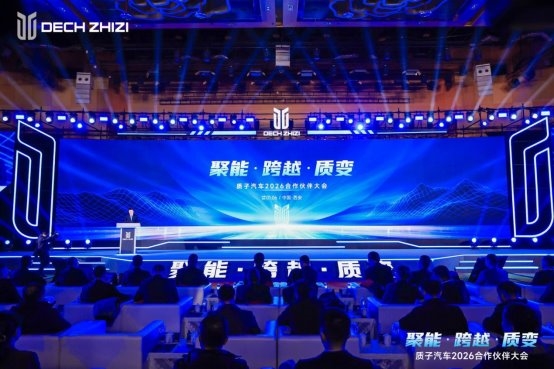
聚能·跨越·质变—— 质子汽车召开2026合作伙伴大会
Sou Hu Wang· 2026-01-08 06:27
Core Insights - The Proton Automotive 2026 Partner Conference was held in Xi'an, marking the company's transition from an "industry newcomer" to a "leader" in the commercial vehicle sector [1][4] - The company aims to achieve over 8,000 vehicle sales in 2025 and has begun overseas sales of hydrogen energy products [1] - The strategic focus has shifted from "price wars" to "value wars," emphasizing product-driven and market-driven approaches [4] Group 1: Strategic Development - The conference featured a strategic development report by Wang Zhao, highlighting the shift in the new energy commercial vehicle market from policy-driven to market-driven dynamics [4] - Proton Automotive plans to embrace artificial intelligence and commercialize autonomous driving, transforming trucks into "intelligent mobile robots" [4] - The company aims to maximize asset returns over the entire product lifecycle, focusing on creating high-quality products without weaknesses [4] Group 2: Research and Marketing - The Vice President of Proton Automotive, Chao Pengxiang, presented the 2026 technology blueprint and product roadmap [5] - The marketing report by Vice President Lv Wenya emphasized channel ecosystem development, regional segmentation, and structured incentives [5][11] Group 3: Financial Partnerships - The conference included a signing ceremony for strategic cooperation agreements with multiple banks, indicating strong confidence from financial institutions in Proton Automotive's future [12][14] - These partnerships are expected to provide significant financial support for technology development, capacity expansion, and market exploration [12] Group 4: Recognition and Community Engagement - The conference recognized outstanding partners with various awards, reinforcing the collaborative spirit and shared success within the ecosystem [17] - The launch of the "Caring for Truck Drivers" initiative highlights the company's commitment to supporting the community and acknowledging the importance of truck drivers [13]