降本增效

Search documents
博腾股份(300363) - 2025年10月24日投资者关系活动记录表
2025-10-26 13:14
Group 1: Market Demand and Growth - The biotech client segment is experiencing a mild recovery, driven by capital market improvements, technological breakthroughs, and ongoing clinical applications [2] - The Chinese market has seen a year-on-year growth of 21%, significantly faster than the first half of the year, attributed to increased project delivery pace [3] - The overall market demand outlook remains optimistic, with significant contributions from late-stage clinical projects [2] Group 2: Financial Performance and Cost Management - The company has achieved a strong recovery in overall profitability this year, with effective high-value commercialization projects and cost reduction measures [2] - Expenses have decreased by 13% year-on-year in the first three quarters, with further cost reduction potential anticipated [3] - The gross profit margin is expected to continue improving if market demand remains stable and production capacity utilization increases [2] Group 3: Capacity and Production - The main production capacity for small molecule APIs is distributed across several locations, with ongoing improvements in utilization rates in Chongqing and Jiangxi [4] - There are structural differences in capacity utilization, with some facilities operating at saturation while others require optimization [4] - The company is focusing on enhancing existing capacity utilization rather than expanding new capacity [4] Group 4: Strategic Focus and Future Outlook - The company aims to identify key market opportunities amid changing customer demand and supply chain strategies [3] - The cardiovascular, renal, and metabolic (CVRM) sectors are highlighted as areas with significant potential for small molecule demand [3] - Continuous organizational and process reforms are being implemented to enhance operational efficiency and competitiveness [4] Group 5: Talent and Recruitment - The overall employee count has seen a stable increase, with some structural adjustments to meet company needs [4] - The talent supply environment is characterized by a need for suitable candidates that align with the company's requirements [4]

第三季度净利润创近11个季度单季新高 山东钢铁拟启动收购案增厚业绩
Zheng Quan Ri Bao Wang· 2025-10-26 12:29
Core Viewpoint - Shandong Steel has reported significant improvements in its financial performance for Q3 2025, with total revenue reaching 54.828 billion yuan and a net profit of 1.4 billion yuan, marking a substantial increase compared to the previous year [1][2] Financial Performance - In the first three quarters of 2025, Shandong Steel produced 7.7048 million tons of pig iron, 11.0101 million tons of crude steel, and 11.5437 million tons of finished steel products [2] - The company's gross margin increased by 4.97 percentage points year-on-year, while the net profit margin rose by 3.34 percentage points [2] - The net profit for Q3 alone reached 1.27 billion yuan, the highest quarterly performance in nearly 11 quarters [1] Strategic Initiatives - The company has implemented a series of reform measures aimed at enhancing operational resilience, which have begun to yield positive results [2] - Shandong Steel is focusing on cost reduction and efficiency improvement as key survival strategies in the steel industry, which is currently undergoing deep adjustments [2] - A three-tier cost control system has been established, achieving a cost reduction of over 60 yuan per ton of steel [2] Capital Operations - Shandong Steel plans to acquire 100% of the equity of Linyi Steel Group Yingshan Steel Co., Ltd. for 714 million yuan, which is expected to enhance the company's performance by integrating stable revenue and profit contributions from the acquired entity [4] - The acquisition will eliminate previous capacity mismatches and enhance product structure, thereby strengthening the company's core competitiveness [4] - The transaction will be financed through cash, ensuring no dilution of existing shares, and is anticipated to improve operational efficiency [4] Industry Context - The steel industry is experiencing a rebound in profitability, supported by the implementation of "anti-involution" policies [5] - Shandong Steel's focus on optimizing costs and upgrading product structures is expected to enhance production efficiency and market competitiveness [5][6]

“失去的30年”,如何重塑日本餐企?
虎嗅APP· 2025-10-25 13:16
Core Viewpoint - The article discusses how Japanese restaurants, particularly conveyor belt sushi chains like Sushiro and Hamazushi, have thrived in China amidst a challenging domestic dining environment, leveraging lessons learned from Japan's "lost 30 years" of economic stagnation [4][15]. Group 1: Performance of Japanese Sushi Chains - Sushiro and Hamazushi have become popular in China, with long wait times and impressive market performance, as evidenced by Sushiro's parent company Food & Life's stock price increasing 2.7 times over two years [4]. - The average customer spending at Sushiro is around 120 RMB, while Hamazushi is about 80 RMB, which is relatively high compared to other domestic dining options like Haidilao and Green Tea [7]. - Sushiro's table turnover rate can reach 10 to 15 during peak times, allowing for a quick return on investment, reportedly within 1 to 1.5 years [7]. Group 2: Cost Control and Efficiency - Japanese sushi chains have developed operational efficiencies that allow them to thrive despite high ingredient costs, with raw material costs accounting for 40-50% of total costs in Japan [9]. - Technological advancements have significantly reduced waste rates in conveyor belt sushi restaurants from around 13% to 1%, enhancing profitability [11]. - The business model of conveyor belt sushi has evolved to prioritize efficiency, with a focus on minimizing service time and maximizing table turnover [12]. Group 3: Impact of Japan's Economic History - The "lost 30 years" in Japan led to a culture of cost-cutting and efficiency, shaping the operational strategies of successful restaurant chains like Sushiro and Salvia [15][17]. - Salvia's success is attributed to simultaneous optimization of store layouts and supply chains, allowing for faster service and reduced operational costs [16]. - The vertical supply chain model has been crucial for Japanese restaurants, enabling them to maintain quality and lower prices by controlling the entire production process [17]. Group 4: Unique Business Models and Innovations - The article highlights the importance of "performance" in the dining experience, where Japanese restaurants excel in creating engaging environments that enhance customer satisfaction [21]. - Innovations in the sushi industry, such as automated systems for order processing and freshness management, have contributed to operational efficiency and customer experience [10]. - The emergence of new dining concepts in Japan, such as conveyor belt barbecue, indicates a trend towards innovative dining experiences that could be adapted in other markets [13]. Group 5: Challenges and Opportunities for Chinese Restaurants - Chinese restaurants looking to expand into Japan must understand the cultural differences and adapt their business models accordingly, as Japanese dining culture emphasizes a unique customer experience [39][40]. - The article suggests that successful Chinese brands entering Japan should focus on performance and customer engagement to differentiate themselves in a competitive market [42]. - The long-term stability of restaurant operations in Japan, despite lower profit margins, presents an opportunity for brands willing to invest in the market [46].


天山铝业(002532):降本增效持续,20万吨产能建设顺利
HUAXI Securities· 2025-10-25 12:57
Investment Rating - The investment rating for Tianshan Aluminum (002532) is "Buy" [1] Core Views - The company has achieved a revenue of 22.32 billion yuan in the first three quarters of 2025, representing a year-on-year growth of 7.34%. The net profit attributable to shareholders reached 3.34 billion yuan, up 8.31% year-on-year [2] - The company continues to focus on cost reduction and efficiency improvement, with a significant increase in gross profit margin from 20.25% in Q2 2025 to 27.23% in Q3 2025, driven by rising aluminum prices and lower electricity costs [3] - The company is progressing well in its capacity expansion, with a 200,000-ton electrolytic aluminum capacity under construction, expected to be operational by the end of November 2025 [4] Summary by Sections Financial Performance - In Q3 2025, the company reported a revenue of 6.994 billion yuan, a decrease of 0.25% year-on-year and a decrease of 5.53% quarter-on-quarter. However, the net profit attributable to shareholders was 1.256 billion yuan, showing a year-on-year increase of 24.30% and a quarter-on-quarter increase of 22.41% [2] - The company forecasts revenues of 30.8 billion yuan, 33.8 billion yuan, and 37.5 billion yuan for 2025, 2026, and 2027, respectively, with corresponding net profits of 5.03 billion yuan, 6.16 billion yuan, and 7.16 billion yuan [5] Profitability and Efficiency - The gross profit margin is expected to improve from 23.3% in 2024 to 26.3% in 2027, reflecting ongoing cost control measures and operational efficiencies [5] - The earnings per share (EPS) are projected to be 1.08 yuan, 1.32 yuan, and 1.54 yuan for 2025, 2026, and 2027, respectively [5] Capacity Expansion - The company is undertaking a green low-carbon energy efficiency upgrade for its 1.4 million tons of electrolytic aluminum capacity, with the construction of an additional 200,000 tons of electrolytic aluminum capacity progressing smoothly [4]

国产基因测序仪龙头,前三季再亏1.2亿元
Shen Zhen Shang Bao· 2025-10-25 12:16
Core Insights - BGI Genomics reported a revenue of 1.869 billion yuan for the first nine months of the year, a slight decrease of 0.01% compared to the same period last year [1] - The company incurred a net loss of 120 million yuan for the first nine months, with a non-recurring net loss of 228 million yuan [1] - As of the end of Q3, the net cash flow from operating activities was -289 million yuan [1] Financial Performance - In Q3, BGI Genomics achieved a revenue of 755 million yuan, representing a year-on-year growth of 14.45% [1] - The net loss for Q3 was 16 million yuan, with a non-recurring net loss of 25.39 million yuan [1] - The latest gross margin was 53.32%, down 5.81 percentage points from the same period last year [1] - The latest debt-to-asset ratio was 23.69%, an increase of 4.06 percentage points compared to the same period last year [1] Research and Development - The company reduced its R&D expenditure to 447 million yuan in the first three quarters, a decrease of 24.25% year-on-year [1] - R&D spending accounted for 23.94% of total revenue, down 7.66 percentage points year-on-year [1] - BGI Genomics stated that it is focusing on cost reduction and efficiency improvement, leading to a decrease in R&D investment [1] Ownership Structure - As of September 30, 2025, major shareholders include Shenzhen BGI Technology Holdings Group Co., Ltd. with 36.73% ownership, and other investors with smaller stakes [2] - CPE Investment reduced its stake by 0.59 percentage points in Q3 2025 compared to the previous half-year report [2]

蒙娜丽莎(002918):需求压力仍在,盈利持续改善
GOLDEN SUN SECURITIES· 2025-10-25 11:56
Investment Rating - The report maintains a "Buy" rating for the company [6]. Core Views - The company is experiencing demand pressure, but profitability is showing continuous improvement. The revenue for the first three quarters of 2025 is 2.98 billion yuan, a year-on-year decline of 16.7%, while the net profit attributable to the parent company is 81 million yuan, down 42.7% year-on-year. In Q3 alone, revenue reached 1.06 billion yuan, a year-on-year decline of 14.2%, but net profit increased by 48.8% year-on-year [1][2]. Financial Performance Summary - **Revenue and Profitability**: The company's revenue from distribution channels for the first three quarters is 2.49 billion yuan, down 7.8% year-on-year, while strategic project revenue is 490 million yuan, down 44.1% year-on-year. The Q3 distribution revenue accounted for 85% of total revenue, an increase of 9.3 percentage points year-on-year [1]. - **Profit Margins**: The gross margin for the first three quarters is 27.1%, a decrease of 0.5 percentage points year-on-year, while the net margin is 3.2%, down 0.8 percentage points year-on-year. In Q3, the gross margin improved to 31.0%, up 2.0 percentage points year-on-year, and the net margin rose to 8.7%, an increase of 3.8 percentage points year-on-year [2]. - **Cash Flow**: As of the end of September, the company's receivables totaled 590 million yuan, a decrease of 42.6% year-on-year. The net operating cash flow for Q3 is 270 million yuan, a year-on-year increase of 96.2% [3]. Future Earnings Forecast - The company is expected to generate revenues of 3.98 billion yuan, 4.13 billion yuan, and 4.38 billion yuan for the years 2025, 2026, and 2027, respectively. The net profit attributable to the parent company is projected to be 112 million yuan, 146 million yuan, and 189 million yuan for the same years, indicating a compound annual growth rate of 29.9% over three years [3].
“AI+制造业”有何机遇和挑战,汽车产业这么看
Di Yi Cai Jing· 2025-10-25 06:25
Core Insights - The automotive industry is integrating AI across the entire manufacturing chain, but several bottlenecks remain, including the lack of model generalization [1][4][5] Application of AI in Automotive Manufacturing - AI is primarily applied in quality inspection, data collection, and support for office and logistics functions [2][3] - Companies like Changan Automobile focus on AI for visual quality inspection and precision measurement, while BYD is leveraging AI for data processing and technical perception [2][3] Challenges in AI Implementation - The complexity of AI applications in precision manufacturing is high due to the industry's need for accuracy and safety, leading to difficulties in model generalization and reuse [4][5] - Current AI applications are often point-to-point, focusing on specific environments or processes, which complicates the integration of AI tools across different scenarios [4][5] Talent and Organizational Issues - There is a gap in understanding between IT professionals and business experts, which hinders AI application [5] - Companies need to establish clear organizational structures and collaborative mechanisms to facilitate AI integration [5] Data Management and Governance - Effective data collection and governance are crucial for advancing AI applications in automotive production [5][6] - The automotive sector must enhance data credibility and processing to support AI initiatives [5] Drivers for AI Investment - AI is recognized for its potential to reduce costs and improve efficiency in manufacturing, but significant resources must be allocated to digital technology and AI model development [6][7] - Different manufacturing sectors exhibit varying levels of AI application demand, with automotive manufacturing facing unique challenges due to frequent model changes [6][7] Policy and Industry Support - Multiple provinces are releasing policies to promote AI development, with the automotive industry identified as a key area for AI-driven industrial advancement [8] - The Guangdong province has launched an action plan focusing on AI's role in enhancing the quality of manufacturing, particularly in the automotive sector [8]
国际复材(301526):玻纤头部企业 技术底蕴深厚
Xin Lang Cai Jing· 2025-10-25 00:41
Core Viewpoint - The industry is experiencing significant improvement in supply-demand structure, leading to enhanced profitability and market concentration, with the top three companies holding over 60% market share [1] Industry Summary - The industry benefits from effective capacity regulation and structural optimization, with demand steadily expanding, resulting in a significant improvement in supply-demand dynamics and product prices [1] - The industry is projected to see a substantial increase in demand driven by sectors such as wind power, new energy, and electronics, with a notable demand surge expected in the first half of 2025 [1] - The industry has seen a 13.5% year-on-year increase in main business revenue and a 142.5% increase in industrial profits in the first half of 2025 [1] Company Summary - The company is a leading player in the fiberglass industry, with strong technological capabilities, a rich product matrix, and a global marketing network, enhancing its competitive edge [2] - The company has achieved breakthroughs in various technical fields, maintaining a leading position in high-modulus wind power yarn and LDK electronic yarn [2] - The company focuses on high-end products across multiple sectors, including wind power, thermoplastics, thermosets, and electronics, with a comprehensive global sales system [2] - The company has a market share exceeding 25% in the wind blade sector and has developed advanced products in the electronic yarn field, addressing the long-term reliance on imports for key materials [2] - The company has established stable partnerships with industry leaders, enhancing its growth potential through technological innovation [2] Profit Forecast and Investment Recommendation - The company is expected to maintain steady sales growth, with significant growth potential in its advantageous products like LDK electronic yarn, and continuous improvement in product structure and cost management [3] - A target price of 7.20 yuan is set for 2026, based on a 30 times valuation, with a "buy" rating recommended [3]
洛阳钼业前三季度净利润超去年全年
Zheng Quan Ri Bao· 2025-10-24 17:48
Core Viewpoint - Luoyang Molybdenum Co., Ltd. reported significant growth in revenue and net profit for the first three quarters of 2025, driven by increased copper production and sales, alongside rising copper prices [1][2]. Financial Performance - The company achieved a revenue of 145.485 billion yuan and a net profit of 14.28 billion yuan, marking a year-on-year increase of 72.61%, setting a historical record for the same period [1]. - In Q3 alone, the net profit attributable to shareholders reached 5.608 billion yuan, reflecting a 96.4% year-on-year growth [1]. Production and Sales - Copper production reached 543,400 tons, a 14.14% increase year-on-year, with a completion rate of 86.25% against production guidance [1]. - Copper sales amounted to 520,300 tons, up 10.56% year-on-year [1]. Market Conditions - The average domestic copper price in the first three quarters was 78,266 yuan per ton, an increase of 4.22% year-on-year, indicating a general upward trend in prices [2]. - Global copper supply remains tight, with several mining supply issues reported, while refined copper smelting capacity is expected to expand rapidly from 2023 to 2026 [2]. Strategic Developments - The company plans to invest 1.084 billion USD in the second phase of the Jinshan Mining project, expected to produce an additional 100,000 tons of copper annually upon completion in 2027 [2]. - Luoyang Molybdenum is focusing on establishing lean operational production methods and building a global platform organization to drive future growth [3]. Personnel Changes - Recent organizational upgrades include the appointment of Peng Xuhui as President and CEO, and Branko Buhavac as Vice President and Chief Commercial Officer [2].

又一家货代巨头:启动成本削减计划!裁员1000-1500人!
Xin Lang Cai Jing· 2025-10-24 15:49
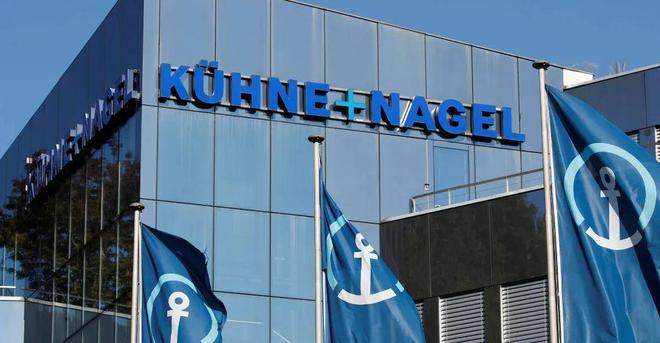
Group 1 - Kuehne+Nagel has announced a cost-cutting plan to address profit margin pressures and overcapacity in the freight logistics market [1][6] - For the first nine months of 2025, Kuehne+Nagel reported a net revenue increase of 3% to 18.5 billion Swiss francs, with EBIT at 1 billion Swiss francs and net profit at 761 million Swiss francs [1] - In Q3 2025, Kuehne+Nagel's performance declined, with net revenue slightly above 6 billion Swiss francs, a 7% year-on-year decrease, EBIT down 37% to 285 million Swiss francs, and net profit down 39% to 206 million Swiss francs [3] Group 2 - Kuehne+Nagel has lowered its profit forecast for 2025 for the second time this year, now expecting profits to exceed 1.3 billion Swiss francs, down from a previous range of 1.45 billion to 1.65 billion Swiss francs [3] - The company's results were negatively impacted by adverse exchange rates and a sharp decline in U.S. transport volumes since the announcement of tariffs by Trump [4] - The global logistics industry is facing pressures for transformation and cost reduction due to trade policies, geopolitical factors, and changing demand [8]