多品牌战略

Search documents
安踏体育(02020):业绩表现超预期,长期成长路径清晰
Changjiang Securities· 2025-09-04 23:30
Investment Rating - The investment rating for Anta Sports is "Buy" and is maintained [5]. Core Views - Anta Sports achieved a revenue of 38.54 billion yuan in H1 2025, representing a year-on-year increase of 14.3%. The operating profit margin (OPM) was 26.3%, up 0.6 percentage points year-on-year, and the net profit attributable to shareholders was 7.03 billion yuan, also up 14.5% year-on-year, indicating performance exceeded expectations. The company plans to distribute an interim dividend of 3.53 billion yuan, with a payout ratio of 50% [2][4]. Summary by Sections Performance Overview - In H1 2025, Anta's revenue from its brands was as follows: Anta brand revenue increased by 5% to 16.9 billion yuan, FILA brand revenue increased by 9% to 14.2 billion yuan, and other brands saw a significant increase of 61% to 7.4 billion yuan. The company is experiencing steady growth in the domestic market due to a multi-channel store model, and overseas market expansion is gradually showing results [6]. Gross Profit Margin (GPM) and Operating Profit Margin (OPM) - The GPM for Anta and FILA brands decreased by 1.7 percentage points and 2.2 percentage points respectively. The decline in Anta's GPM is attributed to increased costs in professional categories and a higher proportion of online business. However, the OPM for Anta and FILA brands increased by 1.5 percentage points and decreased by 0.9 percentage points to 23.3% and 27.7% respectively. Government subsidies contributed positively to Anta's OPM performance [6]. Long-term Growth Path - Despite short-term pressures from increased competition and ongoing investments, Anta's long-term growth trajectory remains clear. The company is accelerating its international expansion, and the recent acquisition of the Wolf Claw brand is expected to enhance its brand portfolio. Projections for net profit attributable to shareholders for 2025-2027 are 13.4 billion yuan, 15 billion yuan, and 16.8 billion yuan, representing year-on-year growth of 13%, 12%, and 12% respectively [6][8].

国货美妆下半场 海外市场成关键
Bei Jing Shang Bao· 2025-09-04 16:11
Core Viewpoint - The performance of various domestic beauty brands in the first half of the year shows a mixed picture, with some brands experiencing growth while others struggle with declining revenues and profits as the industry faces intensified competition and the end of the traffic dividend era [1][3][5]. Financial Performance - Up to now, several domestic beauty brands have reported their half-year results, with Proya, Shangmei, Mao Geping, and Shuiyang showing increases in both revenue and net profit [1]. - Shangmei's revenue reached 4.108 billion yuan, a year-on-year increase of 17.3%, with a net profit of 524 million yuan, up 30.65% [3]. - Mao Geping reported revenue of 2.588 billion yuan, a 31.3% increase, and a net profit of 670 million yuan, up 36.1% [3]. - Shuiyang's revenue was 2.5 billion yuan, growing 9.02%, with a net profit of 123 million yuan, up 16.54% [3]. - Proya's revenue was 5.362 billion yuan, a 7.21% increase, and a net profit of 799 million yuan, up 13.8%, but growth rates have slowed compared to previous years [3][4]. - Conversely, Beitaini and Yixian E-commerce continue to face growth challenges, with Beitaini's revenue down 15.43% to 2.372 billion yuan and net profit down 49.01% to 247 million yuan [4][5]. Strategic Adjustments - Beitaini is focusing on strategic adjustments and operational optimization, emphasizing high-value products and quality growth, which has led to improved gross margins and cash flow despite short-term revenue impacts [4][5]. - Yixian E-commerce is pursuing a strategic transformation driven by innovation, aiming to enhance product competitiveness through collaborative innovation among multiple brands [4][5]. - Proya is adopting a multi-brand strategy, acquiring various brands to strengthen its market position, including cosmetic brands and medical supplies [5][6]. Market Trends - The domestic beauty industry is witnessing a shift from high marketing-driven growth to a focus on strategic brand positioning and international expansion as the traffic dividend diminishes [5][9]. - Brands are increasingly looking for overseas growth opportunities, with Proya planning to issue H-shares for international expansion and Beitaini establishing regional headquarters in Thailand [9][10]. - Water Sheep is also pursuing a high-end transformation by acquiring luxury brands to enhance its market presence [6][10]. Competitive Landscape - The beauty industry is facing intensified competition, with brands needing to adapt to changing consumer behaviors and market dynamics [5][9]. - The low-price competition strategy adopted by Shangmei has raised concerns about its long-term sustainability as consumer rationality increases [7][9]. - Experts suggest that domestic beauty brands must enhance their brand structure and user value to compete effectively on a global scale [10].





财报里的国货美妆下半场:谁掉队,谁逆袭
Bei Jing Shang Bao· 2025-09-04 13:40
Core Insights - Several domestic beauty brands have reported mixed results for the first half of the year, with some achieving revenue and net profit growth while others struggle with stagnation or losses [1][3][4] Group 1: Performance Overview - Up to mid-2025, companies like Proya, Shangmei, Mao Geping, and Shuiyang have shown revenue and net profit growth, while Betaini, Huaxi Biology, and Yixian E-commerce continue to face challenges [1][3] - Shangmei achieved revenue of 4.108 billion yuan, a 17.3% increase year-on-year, and a net profit of 524 million yuan, up 30.65% [3] - Mao Geping reported revenue of 2.588 billion yuan, a 31.3% increase, and a net profit of 670 million yuan, up 36.1% [3] - Shuiyang's revenue reached 2.5 billion yuan, growing 9.02%, with a net profit of 123 million yuan, up 16.54% [3] - Proya's revenue was 5.362 billion yuan, a 7.21% increase, and net profit was 799 million yuan, up 13.8% [4] - Betaini's revenue fell to 2.372 billion yuan, down 15.43%, with a net profit decrease of 49.01% to 247 million yuan [4] - Yixian E-commerce reported revenue of 1.92 billion yuan, a 22.48% increase, but a net loss of 22.97 million yuan [4] - Huaxi Biology's revenue dropped 19.57% to 2.261 billion yuan, with a net profit decline of 35.38% to 221 million yuan [4] Group 2: Strategic Responses - Companies are adapting to the end of the traffic dividend era by focusing on multi-brand strategies and high-end product offerings [6][9] - Proya is pursuing a multi-brand strategy, acquiring various brands to strengthen its market position [7] - Shuiyang is focusing on high-end transformation, acquiring international brands to enhance its premium offerings [7] - Betaini is also working on a multi-brand approach, with significant growth in its high-end anti-aging brand [8] - Shangmei is leveraging price advantages in the budget market, but this has led to concerns about entering a price war [8] Group 3: International Expansion - Domestic beauty brands are increasingly looking for growth opportunities overseas [9][10] - Proya plans to issue H-shares for international expansion and has announced overseas acquisitions in various beauty segments [9] - Betaini is establishing regional headquarters in Thailand and expanding its product presence in local markets [9] - Yixian E-commerce has launched a global innovation R&D center and is expanding into Southeast Asia and North America [10] - Shuiyang is also pursuing a global strategy, focusing on brand and supply chain globalization [10]


索菲亚:公司坚持索菲亚、米兰纳、司米、华鹤多品牌的战略布局
Zheng Quan Ri Bao Wang· 2025-09-04 06:48
Core Viewpoint - The company emphasizes a multi-brand strategy with brands such as Sophia, Milan, Simi, and Huahuo, aiming to create a differentiated brand matrix that caters to various consumer segments, which is expected to support long-term stable growth [1] Group 1 - The company is committed to a strategic layout involving multiple brands [1] - The core strategy focuses on building a brand matrix that covers different consumer groups [1] - The differentiated competitive advantage of these brands is anticipated to translate into advantages in niche markets [1]

蔚来李斌最新闭门会讲话曝光
21世纪经济报道· 2025-09-04 05:24
Core Viewpoint - NIO is facing significant challenges in achieving profitability by Q4, with CEO Li Bin emphasizing the need for a combination of long-term strategy and short-term execution to overcome skepticism and achieve delivery and efficiency goals [3][10][12]. Group 1: Financial Performance - In Q2, NIO delivered 72,056 vehicles, a year-on-year increase of 25.6% and a quarter-on-quarter increase of 71.2%, with revenue reaching 19.01 billion yuan, up 9.0% year-on-year and 57.9% quarter-on-quarter [6][9]. - The company aims for a monthly delivery of 50,000 vehicles in Q4, with a total quarterly target of 150,000 vehicles, requiring an average monthly production capacity of 56,000 vehicles across its three brands [10][11]. - NIO's gross margin is expected to recover to 16%-17% in Q4, with Q2 gross margin at 10.3% and non-vehicle business gross margin at approximately 8% [11][12]. Group 2: Strategic Initiatives - Li Bin has implemented a CBU (Core Business Unit) mechanism to ensure that each R&D project has clear investment return expectations and undergoes evaluation upon completion, enhancing short-term operational awareness while maintaining long-term goals [7][12]. - The company is focusing on product competitiveness, emphasizing the importance of technology routes, product planning, and product definition to adapt to market demands [12][13]. Group 3: Market Trends and Product Strategy - The electric vehicle market is at a turning point, with pure electric vehicle sales increasing by 24.5% year-on-year, while range-extended vehicles saw an 11.4% decline, indicating a shift in consumer preference [13]. - NIO's multi-brand strategy aims to cater to a broader customer base, with NIO positioned as a high-end technology brand, Lido focusing on family users, and Firefly targeting high-end small cars [13][14]. Group 4: Organizational Changes and Challenges - NIO has undergone significant organizational changes to improve efficiency, with a focus on enhancing R&D and operational capabilities, which has led to faster product releases and improved delivery timelines [14][27]. - The company acknowledges the need for a cultural shift within the organization to adapt to external pressures and internal challenges, emphasizing the importance of collective effort in overcoming difficulties [27][28].


老白干酒(600559):降费增效延续 经营韧性凸显
Xin Lang Cai Jing· 2025-09-04 00:29
Core Viewpoint - The company reported its 2025 semi-annual results, showing stable revenue growth and improved profitability despite a weak macroeconomic environment [1][4]. Financial Performance - In 25H1, the company achieved revenue of 2.48 billion yuan, a year-on-year increase of 0.5%, and a net profit attributable to shareholders of 320 million yuan, up 5.4% year-on-year [1]. - For Q2 2025, revenue was 1.31 billion yuan, down 2.0% year-on-year, while net profit was 170 million yuan, a slight increase of 0.2% year-on-year [1]. Product and Brand Strategy - The company continues to advance its multi-brand strategy, with the white liquor segment generating 2.47 billion yuan in revenue in 25H1, a 0.7% increase year-on-year [2]. - The main brand, Laobai Ganjiu, reported revenue of 1.28 billion yuan, up 2.0% year-on-year, while Wulingjiu saw a 7.0% increase to 530 million yuan [2]. - The company focuses on core products priced between 100-300 yuan, effectively countering the impact of weak high-end product sales [2]. Cost Management and Profitability - The gross margin for 25H1 was 68.0%, an increase of 2.1 percentage points year-on-year, attributed to effective cost control [3]. - The net profit margin improved to 12.9%, up 0.6 percentage points year-on-year, indicating enhanced profitability [3]. - However, cash flow from operations was under pressure, with a net cash flow of -50 million yuan, a decline of 120.5% year-on-year [3]. Internal Reforms and Future Outlook - The company is deepening internal reforms to enhance operational efficiency, including the transfer of equity from subsidiaries to the headquarters [4]. - The company is expected to see net profits of 810 million yuan, 890 million yuan, and 1.01 billion yuan for 2025-2027, with corresponding EPS of 0.88 yuan, 0.98 yuan, and 1.11 yuan [4]. - A target price of 22.88 yuan is set based on a 26x valuation for 2025, maintaining a "buy" rating [4].

充电宝召回风波只伤了安克的“皮毛”
经济观察报· 2025-09-03 13:32
Core Viewpoint - The impact of the recent battery recall and stricter regulations on power banks at Chinese airports on Anker's business is significant, but the company's revenue from the Chinese market has remained below 4% over the past five years, indicating limited exposure to this market [1][3]. Group 1: Recall and Financial Performance - Anker faced a global recall of over 2.2 million power banks due to safety risks, while also navigating fluctuating tariff policies in the U.S. Despite these challenges, Anker reported a year-on-year increase in revenue and profit for the first half of the year [2][4]. - In the first half of the year, Anker's total revenue reached 12.866 billion yuan, with approximately 6.8 billion yuan coming from charging and energy storage products. The gross margin for these products decreased from 43% to 40.6% due to a 43% increase in operating costs, which outpaced the 37% revenue growth [2][4][8]. Group 2: Market Adjustments - Anker has shifted its strategic focus towards the European market, which saw a revenue increase of 67% year-on-year, helping to mitigate the impact of declining sales in North America. The revenue share from Europe rose to 27%, narrowing the gap with North America [5]. - The company increased its inventory by 64% to 5.3 billion yuan, accounting for 28% of total assets, as a proactive measure against potential tariff impacts [6][5]. - Anker has strengthened its offline direct sales channels, with revenue from independent sites and offline channels growing at over 43%, while sales on Amazon increased by 27% but represented less than 50% of total revenue [7]. Group 3: Diversification and Product Lines - Anker's multi-brand strategy initiated in 2016 has allowed it to expand beyond charging products into areas such as smart home devices and audio products, with charging products contributing over half of its revenue [7]. - The home and audio segments accounted for 25% and 22% of revenue respectively, with gross margins close to 50%, partially offsetting the decline in margins from charging products [8].

充电宝召回风波只伤了安克的“皮毛”
Jing Ji Guan Cha Wang· 2025-09-03 12:53
Core Viewpoint - The global recall of charging batteries due to safety risks has significantly impacted Anker Innovations, which managed to report revenue and profit growth despite facing challenges from recalls and changing tariff policies [1][2]. Group 1: Financial Performance - Anker's total revenue for the first half of the year was 12.866 billion yuan, with charging and energy storage products generating approximately 6.8 billion yuan [1]. - The gross margin for charging and energy storage products decreased from 43% to 40.6% due to a higher increase in operating costs (43%) compared to revenue growth (37%) [1]. - Anker's operating cash flow turned negative, dropping from 840 million yuan to -1.132 billion yuan, a decline of 235% year-on-year [4]. Group 2: Market Impact - Anker recalled over 2.2 million charging batteries globally, with significant recalls in the U.S. (1.158 million), China (710,000), and Japan (417,000) [1][2]. - The impact of the recall on Anker's operations was mitigated by the fact that the Chinese market contributed less than 4% of its revenue over the past five years [2]. - The North American market saw a revenue growth rate drop from 41% to 23%, with its share of total revenue decreasing from 48% to 44%, marking a six-year low [2]. Group 3: Strategic Adjustments - Anker shifted its strategic focus towards the European market, achieving a revenue increase of 67% to 3.427 billion yuan, which helped offset the decline in North America [3]. - The company increased its inventory by 64% to 5.3 billion yuan, accounting for 28% of total assets, in anticipation of tariff changes [3]. - Anker has been strengthening its offline direct sales channels, with revenue from independent sites and offline channels growing at over 43%, while Amazon sales grew by 27% [5]. Group 4: Diversification and Product Expansion - Anker has diversified its business since 2016, expanding into three major categories: charging storage, smart innovation (home), and smart audio-visual [6]. - The home and audio-visual segments contributed 25% and 22% of revenue, respectively, with gross margins close to 50%, helping to offset the decline in charging product margins [6].
海尔智家“九子夺嫡”,定位重叠抢市场“同室操戈”
Sou Hu Cai Jing· 2025-09-03 08:10
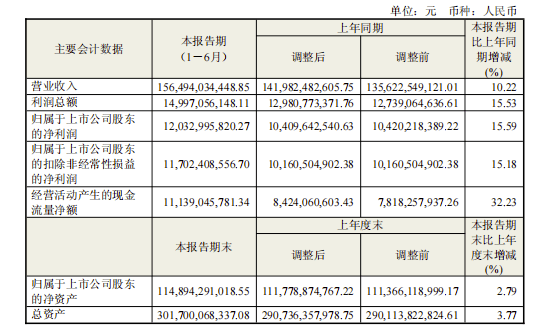
Core Viewpoint - Haier Smart Home reported strong financial performance in the first half of 2025, with revenue of 156.49 billion yuan, a year-on-year increase of 10.2%, and a net profit of 12.03 billion yuan, up 15.6%, marking a historical high. However, internal competition among its nine brands is causing significant inefficiencies and market share dilution [1][2][3]. Financial Performance - Revenue for the first half of 2025 reached 156.49 billion yuan, compared to 141.98 billion yuan in the same period last year, reflecting a growth of 10.22% [2]. - Net profit attributable to shareholders was 12.03 billion yuan, up from 10.41 billion yuan, representing a growth of 15.53% [2]. - Operating cash flow net amount increased by 32.23% to 11.14 billion yuan [2]. - The company's total assets were 301.70 billion yuan, a 3.77% increase from the previous year [2]. Domestic Market Analysis - The overlapping brand positioning among Haier, Casarte, and Leader has led to intense internal competition, with all three brands targeting similar consumer segments in the refrigerator market [3][5]. - Casarte's high-end refrigerators and Haier's mid-range offerings have similar features, making it difficult for consumers to distinguish between them, leading to potential market share loss [3][5]. - In the washing machine segment, similar issues arise with overlapping product features and pricing strategies among the brands, resulting in a fragmented market presence [4][5]. International Market Dynamics - In the overseas market, brands like GE Appliances and Candy are also experiencing internal competition, with overlapping product lines and target demographics, particularly in Europe and North America [6][7]. - The European market saw a 24.07% revenue growth for Haier Smart Home, but much of this growth was attributed to brand cannibalization rather than effective market differentiation [6][7]. Internal Competition and Resource Allocation - The internal competition among the nine brands is leading to resource wastage and pressure on profitability, with R&D expenses increasing by 11.73% but lacking significant technological breakthroughs [9][10]. - The company's gross margin was 26.9%, only slightly improved from the previous year, largely due to price wars among its brands [10]. - The lack of clear brand differentiation is causing marketing inefficiencies, with similar promotional activities leading to consumer confusion [9][10]. Strategic Recommendations - Haier Smart Home should consider consolidating its brands and clarifying their market positions to reduce internal competition and enhance overall market effectiveness [12][13]. - By integrating supply chain resources and optimizing operations across its brands, the company could lower costs and improve responsiveness to market demands [12][13].

安踏还要继续追赶耐克|氪金·大消费
36氪· 2025-09-03 00:11
Core Viewpoint - Anta Sports has shown strong revenue growth in its latest financial report, but concerns about future growth potential for its core brands, Anta and FILA, have led to a decline in stock prices despite positive earnings [4][5][6]. Financial Performance - In the first half of 2025, Anta Group achieved revenue of 38.54 billion RMB, a year-on-year increase of 14.3%, with a net profit of 7.03 billion RMB, up 14.5% [4][9]. - Anta's main brand revenue grew by 5.4% to 16.95 billion RMB, while FILA's revenue increased by 8.6% to 14.18 billion RMB, both reaching historical highs [4][9]. - The overall revenue from other brands surged by 61.1% to 7.41 billion RMB [4][9]. Market Reaction - Following the financial report, Anta's stock price fell by 8.27% within four days, indicating market skepticism regarding the sustainability of growth for its core brands [5][6]. Gross Margin and Online Sales - Anta Group's gross margin decreased by 0.7 percentage points to 63.4%, attributed to changes in online discount strategies and an increase in online sales proportion, which rose by 2.4 percentage points to 36.2% [7][9]. Competitive Landscape - The decline in gross margins is not unique to Anta; other domestic sports brands like Li Ning and Xtep have also reported similar trends due to increased discounting and competitive pressures [11][13]. - Nike and Adidas are undergoing strategic adjustments in the Chinese market, with Nike reporting a significant drop in profits in the Greater China region [14][15]. Brand Strategy - Anta is focusing on diversifying its retail strategy by segmenting its store network and introducing a new store format called "Super Anta," aimed at providing a wide range of products at competitive prices [25][26]. - FILA is also experiencing a recovery, with its first financial report under new management showing positive growth, although its gross margin declined by 2.2 percentage points due to increased costs [28][29]. Future Outlook - Anta's management acknowledges that the growth of its main brand has not met initial high single-digit growth targets, primarily due to underperformance from franchise partners and insufficient online sales during key promotional periods [21][22]. - The company is exploring new market opportunities, including expansion into Southeast Asia, although specific revenue contributions from overseas markets have not been disclosed [19][20].