
财政支出

Search documents
财政数据点评:财政缺口扩大,国债需否增发?
Huafu Securities· 2025-07-27 06:01
Revenue and Fiscal Performance - In June, general public budget revenue was 1.89 trillion, with a year-on-year growth rate of -0.3%, marking a decline of 0.4 percentage points from the previous month[3] - Non-tax revenue in June fell by 3.7% year-on-year, with the decline widening by 1.5 percentage points compared to May, primarily due to a high base from the previous year[3] - Tax revenue in June showed a slight year-on-year increase of 1.0%, recovering by 0.4 percentage points from May but still below April levels[3] Expenditure and Budget Deficit - June fiscal expenditure grew by only 0.4% year-on-year, a significant drop of 2.2 percentage points from May, continuing a downward trend for the second consecutive month[4] - Cumulative fiscal expenditure for the first half of the year increased by 3.4% year-on-year, significantly outpacing revenue growth by 3.7 percentage points, indicating stable support for total consumption and investment demand[4] - The budget deficit for the first half of the year reached 2.57 trillion, an increase of 0.5 trillion year-on-year, raising the need for government bond financing[4] Government Fund and Debt Issuance - Government fund budget revenue in June rebounded sharply by 28.9% year-on-year, with land transfer fees contributing significantly to this increase, rising by 36.5 percentage points from May[5] - Government fund expenditure surged by 79.2% year-on-year in June, driven by accelerated issuance of special government bonds, with total expenditure growth for the first half of the year reaching 30%[5] - The overall budget deficit for government funds in the first half of the year reached 2.68 trillion, a substantial increase of 1.1 trillion year-on-year[5] Future Outlook and Risks - The fiscal revenue shortfall is expected to widen further, potentially triggering the issuance of special government bonds if three conditions are met, including low inflation and continued pressure on tax revenue[6] - The financing progress for government bonds has already reached 55.2% of the annual plan, significantly higher than the same period in 2024 and 2023[6] - Risks include the possibility of fiscal expansion being lower than expected, which could impact the effectiveness of consumption and investment stimulus measures[6]
财政部详解上半年财政数据:税收收入逐步回升,支出加力
Di Yi Cai Jing· 2025-07-25 12:00
Group 1: Fiscal Performance Overview - The overall fiscal performance in the first half of 2025 is stable, with increased fiscal spending supporting economic stability [1] - National general public budget revenue reached 11.5566 trillion yuan, a year-on-year decrease of 0.3%, while general public budget expenditure was 14.1271 trillion yuan, an increase of 3.4% [1] - The broad fiscal expenditure (including general public budget and government fund budget) grew by 8.9%, significantly higher than the broad fiscal revenue growth of -0.6% [1] Group 2: Tax Revenue Trends - National tax revenue for the first half of 2025 was approximately 9.29 trillion yuan, down 1.2% year-on-year, which is lower than the economic growth rate of 5.3% [2] - The decline in tax revenue is attributed to multiple factors, including falling industrial product prices, economic downturn, and tax reduction policies [2] - Tax revenue decline has been narrowing since April, with major tax categories showing stable growth, including domestic value-added tax and personal income tax [3] Group 3: Government Fund Revenue - Local government land transfer revenue was 1.4271 trillion yuan, down 6.5%, but this decline is less severe compared to earlier months [4] - The narrowing decline in land sales revenue reflects improvements in the real estate market due to various supportive policies [5] Group 4: Debt Issuance and Financing - The issuance of government bonds reached a record high of 7.88 trillion yuan in the first half of 2025, an increase of 35.28% year-on-year [5] - Net financing from government bonds was 7.66 trillion yuan, up 4.32 trillion yuan year-on-year [6] Group 5: Social Spending and Policy Focus - Social security and employment spending reached 2.4504 trillion yuan, growing by 9.2%, indicating a strong focus on social welfare [7] - The government is committed to increasing the "people's livelihood" content in fiscal spending and improving the efficiency of fund usage [8] Group 6: Debt Management and Risk Mitigation - The implementation of debt replacement policies has alleviated liquidity pressure on local governments and promoted economic development [9] - The fiscal department is focused on ensuring the effective implementation of various debt support policies to sustain economic stability [9]
今年以来财政运行总体平稳 财政支出力度持续加大
Sou Hu Cai Jing· 2025-07-25 11:01
Group 1 - The overall fiscal operation in China is stable, with a total public budget revenue of 11.56 trillion yuan in the first half of the year, a year-on-year decrease of 0.3%, but the decline has narrowed by 0.8 percentage points compared to the first quarter [1] - Tax revenue is gradually recovering, with a total tax revenue of 9.29 trillion yuan in the first half, down 1.2% year-on-year, but showing monthly growth for three consecutive months starting from April [1] - Major tax categories such as domestic VAT, domestic consumption tax, and individual income tax have shown stable growth rates of 2.8%, 1.7%, and 8% respectively [1] Group 2 - Non-tax revenue growth has slowed, with a total of 2.27 trillion yuan in the first half, a year-on-year increase of 3.7%, which is a decline of 5.1 percentage points compared to the first quarter [2] - Local public budget revenue has increased by 1.6% in the first half, with 27 out of 31 provinces achieving growth [2] Group 3 - Fiscal expenditure has increased, with total public budget expenditure reaching 14.13 trillion yuan in the first half, a year-on-year growth of 3.4% [3] - Key areas such as social security and employment, education, and health have seen significant increases in expenditure, with growth rates of 9.2%, 5.9%, and 4.3% respectively [3] - The issuance and use of bond funds have accelerated, with 2.43 trillion yuan spent on government special bonds in the first half, driving a 30% increase in government fund budget expenditure [3]
数览中国经济半年报“含金量” 我国财政运行总体呈现平稳态势
Yang Shi Wang· 2025-07-25 09:03
Core Insights - The overall fiscal operation in China is stable in the first half of the year, with a slight decline in public budget revenue and a gradual recovery in tax revenue [1][3] Group 1: Fiscal Revenue - National general public budget revenue reached 115,566 billion yuan, a year-on-year decrease of 0.3%, with the decline narrowing by 0.8 percentage points compared to the first quarter [1] - Tax revenue for the first half was 92,900 billion yuan, down 1.2% year-on-year, but monthly tax revenue has shown growth for three consecutive months starting from April [1][3] - Major tax categories showed stable growth, with domestic VAT, domestic consumption tax, and individual income tax increasing by 2.8%, 1.7%, and 8% respectively [3] Group 2: Non-Tax Revenue - National non-tax revenue amounted to 22,700 billion yuan, with a year-on-year growth of 3.7%, but the growth rate fell by 5.1 percentage points compared to the first quarter [5][6] - Non-tax revenue saw declines in May and June, with decreases of 2.2% and 3.7% respectively [5] - Revenue from state-owned resources (assets) increased by 4.8%, while administrative fees grew by 1%, but the growth rate decreased by 4.5 percentage points compared to the first quarter [6] Group 3: Regional Revenue Performance - Most regions maintained revenue growth, with local general public budget revenue increasing by 1.6% in the first half [8] - Revenue growth varied by region, with eastern, central, western, and northeastern regions growing by 1.3%, 1.3%, 2%, and 5.7% respectively [8] - Out of 31 provinces, 27 achieved revenue growth [8] Group 4: Fiscal Expenditure - National general public budget expenditure reached 141,300 billion yuan, a year-on-year increase of 3.4% [10] - Expenditures in social security and employment, education, science and technology, and energy conservation and environmental protection all grew by over 5% [10] - Local government special bonds and ultra-long-term special treasury bonds contributed to a 30% increase in government fund budget expenditure, totaling 24,300 billion yuan [10]

日本!突发黑天鹅
Zhong Guo Ji Jin Bao· 2025-07-20 16:10
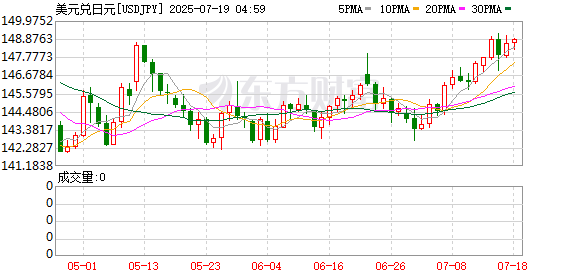
Core Viewpoint - The ruling coalition in Japan is projected to lose its majority in the House of Councillors, which could further weaken Prime Minister Shigeru Ishiba's leadership and disrupt financial markets [2][3]. Group 1: Election Results and Implications - Exit polls indicate that the ruling coalition may secure only 32 to 51 seats out of 125 contested, falling short of the 50 seats needed to maintain a majority in the 248-seat upper house [2]. - Ishiba stated he would continue as Prime Minister, believing the Liberal Democratic Party (LDP) can still remain the largest party in both houses [2]. - If the ruling coalition loses control of the upper house, it would mark the first time since the LDP's establishment in the 1950s that the government holds a minority in both houses [2]. Group 2: Market Reactions and Investor Sentiment - The election outcome may complicate Ishiba's policy agenda and U.S. trade negotiations, potentially leading to his resignation [3]. - Investors are increasingly uncertain about the government's ability to manage fiscal spending, contributing to rising Japanese bond yields, which have reached their highest levels in over 20 years [3]. - The stock and bond markets will be closed on Monday due to a national holiday, with the forex market expected to react first to the election results [3]. Group 3: Public Sentiment and Policy Challenges - Many opposition parties advocating for tax cuts and increased social welfare have resonated with voters, particularly amid rising consumer prices [5]. - The LDP is perceived to be on the defensive regarding key public issues, with most households favoring a reduction in consumption tax to alleviate inflation pressures [5]. - If Ishiba remains in power, the stock market may face downward pressure, while a potential resignation could lead to increased likelihood of tax cuts and a market rebound [5]. Group 4: Legislative Challenges Ahead - Should the ruling coalition lose its majority, Ishiba will need to rely on opposition support for legislation, facing pressure to compromise on tax issues [6]. - Japan must reach an agreement with the U.S. by August 1 to avoid a significant increase in tariffs on exports, which could negatively impact Japan's GDP by 0.9% [6].
特朗普点名“DOGE”调查特斯拉(TSLA.US)补贴 马斯克强硬回应:全都砍掉!
智通财经网· 2025-07-01 15:47
Group 1 - The public dispute between President Trump and Tesla (TSLA.US) CEO Elon Musk escalates, focusing on government subsidies and fiscal spending [1] - Trump suggests that Musk has received the largest subsidies in history and calls for an investigation by the Department of Government Efficiency (DOGE) [1] - Musk responds by advocating for the elimination of all subsidies immediately, highlighting his opposition to Trump's fiscal spending proposal [1] Group 2 - Musk expresses dissatisfaction on social media during the voting period, criticizing lawmakers who support record debt growth despite promises to cut government spending [2] - He threatens to ensure the defeat of these lawmakers in the upcoming primaries and hints at the possibility of forming a new political party [2] - Musk references a past interview where he stated that the removal of electric vehicle subsidies would significantly enhance Tesla's competitive advantage [2]

5月财政收入端表现偏弱,财政支出节奏有所放缓
Dong Fang Jin Cheng· 2025-06-30 09:16
Revenue Performance - In May 2025, the national general public budget revenue grew by only 0.1% year-on-year, a decrease of 1.8 percentage points from April's 1.9%[1] - The broad fiscal revenue in May saw a year-on-year decline of 1.2%, slowing down by 3.9 percentage points compared to the previous month[2] - Tax revenue increased by 0.6% year-on-year in May, down from 1.9% in April, while non-tax revenue fell by 2.2% compared to a growth of 1.7% in April[3] Expenditure Trends - In May, the national general public budget expenditure grew by 2.6% year-on-year, a slowdown of 3.2 percentage points from April's 5.8%[4] - Cumulative general public budget expenditure from January to May reached 38.0% of the annual budget, exceeding the average of 37.4% over the past five years[5] - Infrastructure-related expenditures in May decreased by 7.7% year-on-year, a decline of 9.9 percentage points from the previous month[6] Government Fund Insights - Government fund revenue in May fell by 8.1% year-on-year, a significant drop of 16.2 percentage points from the previous month, primarily due to a decline in land transfer income[7] - The land transfer income in May decreased by 14.6% year-on-year, a sharp decline from April's growth of 4.3%[8] - Government fund expenditure in May grew by 8.8% year-on-year, but this was a significant decrease from April's 44.7% growth rate[9]
财政部公布!9.6万亿元
Jin Rong Shi Bao· 2025-06-23 02:01
Group 1: Fiscal Revenue - From January to May, the national general public budget revenue was 96,623 billion yuan, a year-on-year decrease of 0.3%, with the decline narrowing by 0.1 percentage points compared to January to April [1] - Tax revenue for the same period was 79,156 billion yuan, down 1.6% year-on-year, with the decline narrowing by 0.5 percentage points; non-tax revenue was 17,467 billion yuan, up 6.2% year-on-year, with the growth rate narrowing by 1.5 percentage points [1] - In May, the general public budget revenue growth rate was 0.1%, slowing by 1.8 percentage points from the previous month, with tax revenue growth dropping from 1.9% to 0.6% and non-tax revenue turning negative at -2.2% [2] Group 2: Fiscal Expenditure - From January to May, national general public budget expenditure was 112,953 billion yuan, a year-on-year increase of 4.2%, with the growth rate falling by 0.4 percentage points [1] - In May, general public budget expenditure grew by 2.6% year-on-year, slowing by 3.1 percentage points from the previous month, with significant declines in infrastructure spending, which fell by 7.7% [4] - Key areas of expenditure such as social security and employment saw a year-on-year increase of 9.2%, while education and health spending grew by 6.7% and 3.9%, respectively [4] Group 3: Economic Analysis - The slowdown in revenue is attributed to factors such as the decline in the Producer Price Index (PPI), the unsustainable high growth of non-tax revenue, and weakened land transfer income [1] - The analysis indicates that the increase in value-added tax revenue reflects a trend of economic recovery, supported by robust growth in the equipment manufacturing sector [2] - The government is expected to accelerate bond issuance to support fiscal expenditure, especially in light of the revenue slowdown and strong expenditure performance in the first four months [5]
流动性跟踪:跨季资金面或无忧
Tianfeng Securities· 2025-06-22 08:44
Group 1 - The overall liquidity in the market is balanced and loose, with DR001 falling below the 1.4% policy rate, and state-owned banks' net financing reaching a year-high of 4.55 trillion yuan [1][11][27] - Historical trends indicate that at the end of June, funding rates typically rise, but the central bank often increases liquidity support, especially during a month with significant fiscal spending [21][27] - Concerns for the upcoming cross-quarter period include a high maturity of interbank certificates of deposit exceeding 4 trillion yuan, and a recent reduction in deposit rates by major banks, which may lead to deposit outflows [26][27] Group 2 - Next week, the market will see over 10 trillion yuan in reverse repos maturing, along with the continuation of MLF operations, indicating ongoing liquidity support from the central bank [2][33] - Government bond net payments are expected to increase significantly, with a net payment of 7.498 trillion yuan, indicating a substantial fiscal activity [4][31] - The interbank certificate of deposit maturity will be 11.092 trillion yuan, which remains substantial, and attention will be paid to the pressure of renewing these deposits as the quarter-end approaches [6][31] Group 3 - The average daily net financing from state-owned banks has been rising, with a significant increase noted this week, indicating a robust liquidity position [5][27] - The issuance of interbank certificates of deposit remains stable, with no significant upward pressure on rates, suggesting a controlled liquidity environment [6][27] - The second quarter has seen an acceleration in fiscal bond issuance, which is expected to provide additional liquidity support as the quarter-end approaches [27][39]
5月财政数据点评:财政支出节奏放缓
GOLDEN SUN SECURITIES· 2025-06-22 07:17
Report Industry Investment Rating No relevant content provided. Core Viewpoints - In May, the year-on-year growth rate of broad fiscal revenue turned negative again, and the intensity of fiscal expenditure dropped significantly. The sustainability of fiscal stimulus after June needs to be observed, and it may be necessary to increase the budget to expand the deficit [1][4]. Summary by Catalog Fiscal Revenue - **General Fiscal Revenue**: In May, the year-on-year growth rate of broad fiscal revenue was -1.2%, turning negative again (April: 2.7%). From January to May, the cumulative year-on-year growth rate of broad fiscal revenue was -1.3% [1][8]. - **General Public Budget Revenue**: In May 2025, the year-on-year growth rate of general public budget revenue was 0.1% (April: 1.9%), tax revenue was 0.6% (April: 1.9%), and non-tax revenue was -2.2% (April: 1.7%). Central revenue grew by 0.4% year-on-year, while local revenue decreased by 0.1% [1][10]. - **Tax Revenue Structure**: In May, tax revenue increased by 0.56% year-on-year. Among the four major taxes, domestic VAT increased by 6.1% (April: 0.9%), and personal income tax increased by 12.3% (April: 9.0%). Corporate income tax increased by only 0.02% (April: 3.97%), indicating pressure on corporate profit growth. Real estate-related taxes decreased by 8.6% year-on-year, with the decline widening [2][12]. - **Government Fund Revenue**: In May, the year-on-year growth rate of government fund revenue was -8.1% (April: 8.1%), turning negative again. Without incremental policies, it is difficult to significantly improve government fund budget revenue in the short term [2][14]. Fiscal Expenditure - **General Public Budget Expenditure**: In May, the year-on-year growth rate of general public budget expenditure was 2.6% (April: 5.8%), with the growth rate declining [3][16]. - **Government Fund Expenditure**: In May, the year-on-year growth rate of government fund expenditure was 8.8% (April: 44.7%), showing a significant decline [3][16]. - **Expenditure Structure**: In May, infrastructure-related fiscal expenditures contracted overall, with a year-on-year growth rate of -7.69% (April: 2.15%). Expenditures on social security, science and technology, and culture and tourism had relatively high growth rates [3][16]. Fiscal Deficit - As of May, the cumulative broad fiscal deficit was 3.30 trillion yuan. Assuming a nominal GDP growth rate of 4% this year, the current cumulative broad deficit ratio is 2.4%, higher than most of the same periods in the past five years and close to 2022. It is necessary to observe whether fiscal expenditure in June can maintain a high intensity [4][21]. Policy Outlook - To maintain the pace of fiscal stimulus, it may be necessary to increase the budget to expand the deficit. After the Politburo meeting on April 25, monetary policy was implemented first, but incremental fiscal policies have not been introduced. Incremental fiscal policies are expected in the second half of the year, and attention should be paid to the Politburo meeting at the end of July and policy implementation in August and September [4][22].