
降准

Search documents
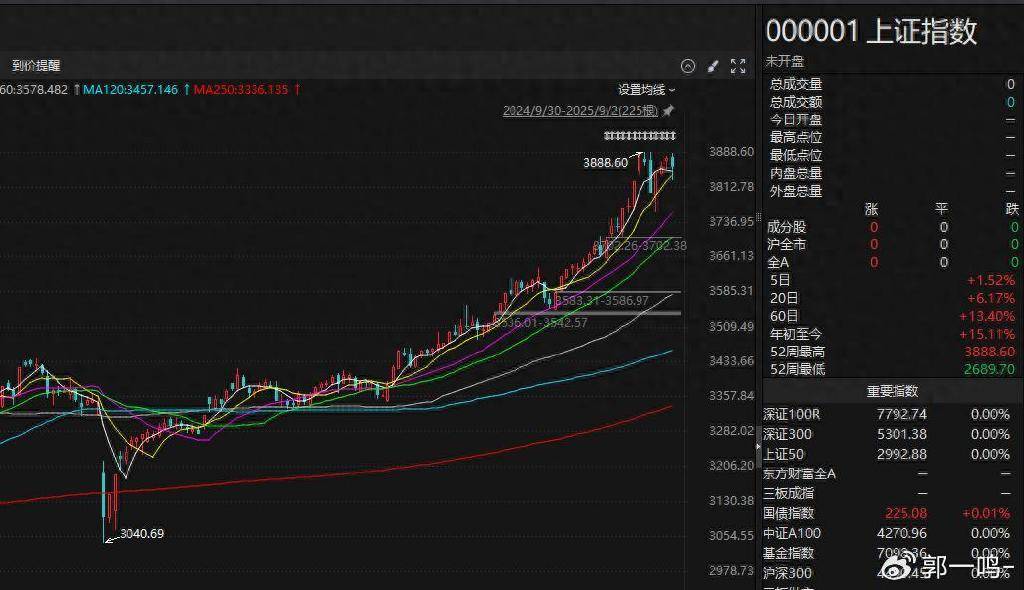
9.3 A股反攻!
Sou Hu Cai Jing· 2025-09-03 02:52
Core Viewpoint - The recent sharp decline in the A-share market, particularly the 2.85% drop in the ChiNext Index, is not indicative of the end of a bull market but rather a typical shakeout behavior during an upward trend, suggesting a potential for short-term rebound [1][4]. Market Adjustment Factors - The market adjustment on September 2 was influenced by multiple factors, including technical pressure from accumulated profit-taking after a prolonged upward trend since April [3]. - There was a significant rotation of funds from high-valuation growth sectors, particularly in technology, to undervalued defensive sectors such as banking and utilities, amplifying market volatility [3]. - The negative sentiment from the substantial decline in U.S. tech stocks and the market's cautious stance ahead of the Federal Reserve's September meeting contributed to the adjustment [3]. Long-term Market Support - Despite the recent downturn, the core logic supporting a medium to long-term positive outlook for the market remains intact, driven by ongoing policies in sectors like "Artificial Intelligence+" and measures aimed at stabilizing growth and boosting consumption [5]. - The rapid decline is seen as a quick release of risks, effectively digesting profit-taking and eliminating localized bubbles, which can accumulate strength for future upward movement [5]. Short-term Market Outlook - In the short term, there is potential for a technical rebound following the recent sharp decline, supported by ample policy tools for growth stabilization and expectations of possible interest rate cuts [7]. - The anticipated easing of the Federal Reserve's monetary policy and a weaker dollar may enhance the attractiveness of RMB assets, potentially leading to a continued inflow of northbound capital [7]. - The significant trading volume of 2.87 trillion yuan during the decline indicates a release of short-term selling pressure, with stabilization in key sectors providing support for the market [7]. - The emotional release from the sharp drop may lead to a stabilization of market sentiment, allowing for a recovery of quality stocks that were oversold [7].

8月MLF净投放3000亿元,央行政策或将更注重“落实落细”
Sou Hu Cai Jing· 2025-08-23 00:16
Core Viewpoint - The central bank will conduct a 600 billion yuan Medium-term Lending Facility (MLF) operation next week, with a net MLF injection of 300 billion yuan in August, marking six consecutive months of increased liquidity support [1] Group 1: Monetary Policy Actions - The total net liquidity injection for August has reached 600 billion yuan, the highest monthly figure since February of this year, combining 300 billion yuan of MLF and 300 billion yuan of reverse repos [1] - This action signals the continuation of a loose monetary policy aimed at supporting credit and market expectations [1] Group 2: Future Outlook - The space for reserve requirement ratio (RRR) cuts within the year is limited, suggesting a shift in policy focus towards more precise implementation and transmission of monetary policy while maintaining ample liquidity [1]
央行连续三个工作日开展千亿级逆回购操作
Xin Hua Wang· 2025-08-12 06:28
Group 1 - The central bank has increased open market operations to maintain liquidity stability at the end of the month, conducting a 150 billion yuan reverse repurchase operation with a bid rate of 2.10% on March 29, resulting in a net injection of 130 billion yuan for the day [1] - The central bank's actions aim to stabilize market interest rates around policy rates amid increased volatility due to overseas uncertainties and seasonal factors [1][3] - On March 29, short-term Shibor rates mostly declined, with the overnight rate down by 21.9 basis points to 1.727%, and the 7-day rate down by 4.3 basis points to 2.145% [1] Group 2 - Since mid-February, interbank certificate of deposit rates have been rising, but there are signs of stabilization due to increased pressure on banks' liabilities and negative impacts from fund and wealth management redemptions [2] - The overall yield curve for interbank certificates of deposit has steepened, indicating higher costs for banks' liabilities and a clearer demand for long-term funds, suggesting a potential for reserve requirement ratio (RRR) cuts by the central bank [2] - The central bank's recent loan market quoted rates (LPR) remain unchanged for two consecutive months, with the 1-year LPR at 3.7% and the 5-year LPR at 4.6% [2] Group 3 - Seasonal tightening of liquidity is observed due to macro-prudential assessment (MPA) evaluations, but overall liquidity remains relatively ample [3] - The central bank's release of liquidity across periods is seen as a normal operation to stabilize inter-period funding prices and market expectations [3] - The State Council has emphasized maintaining stable monetary policy to support the real economy while avoiding excessive liquidity injections [3]
专家:降准最快或在本周五落地 全面降准概率大
Xin Hua Wang· 2025-08-12 06:27
Group 1 - The State Council has decided to lower the reserve requirement ratio (RRR) to enhance banks' lending capacity and support the real economy, particularly sectors severely impacted by the pandemic and small to medium-sized enterprises [1][2] - The recent RRR cut is seen as a timely and necessary measure to stabilize market expectations and promote counter-cyclical monetary policy, thereby stabilizing the overall economy [1] - Analysts expect the RRR cut to lead to a decrease in financing costs for the real economy, as it will lower banks' funding costs and potentially guide down the Loan Prime Rate (LPR) [2] Group 2 - The RRR cut is anticipated to be implemented soon, with April 15 being a potential date, coinciding with the maturity of medium-term lending facilities (MLF) [2] - There is a possibility of a simultaneous "comprehensive and targeted" RRR cut or a combination of RRR and interest rate cuts, as the domestic interest rate space remains sufficient [2] - The RRR cut does not exclude the possibility of a policy interest rate cut, which could help stabilize the real estate market and further reduce financing costs for the real economy [2]
稳字当头 货币政策多箭齐发
Xin Hua Wang· 2025-08-12 06:27
Core Viewpoint - The People's Bank of China (PBOC) is set to enhance support for the real economy through various monetary policy tools, including potential reserve requirement ratio (RRR) cuts and targeted lending programs, in response to economic pressures and to stabilize growth [1][2][3]. Group 1: Monetary Policy Tools - The PBOC plans to utilize RRR cuts and other monetary policy tools to boost credit supply, particularly for sectors severely impacted by the pandemic, such as small and micro enterprises [2][3]. - The PBOC has announced two new targeted lending programs: a 200 billion yuan technology innovation re-lending program and a 40 billion yuan inclusive pension re-lending program, aimed at supporting high-tech and small enterprises as well as enhancing pension services [4][5]. Group 2: Financial Support Data - In the first quarter of 2022, the total social financing increased by 12.06 trillion yuan, which is 1.77 trillion yuan more than the same period last year, indicating a strong push from the financial system to support the real economy [1]. - New yuan loans reached 8.34 trillion yuan in the first quarter, an increase of 663.6 billion yuan compared to the previous year, marking a statistical high point [1]. Group 3: Interest Rates and Lending Costs - The average interest rate for newly issued corporate loans in March was 4.37%, down by 8 basis points from December of the previous year, reflecting a trend of decreasing loan rates [1]. - The PBOC aims to lower overall financing costs for the real economy, which is expected to stabilize market confidence and ensure economic operations remain within a reasonable range [2][3]. Group 4: Structural Support for Specific Sectors - The PBOC's targeted re-lending programs are designed to alleviate financing difficulties for technology innovation enterprises and expand the supply of basic pension services [4]. - As of the end of March, the balance of re-lending for agriculture and small enterprises reached 1.85 trillion yuan, with significant year-on-year increases in both agricultural and small enterprise re-lending [5].
“小号”降准内涵丰富 宽信用值得更多期待
Xin Hua Wang· 2025-08-12 06:27
Group 1 - The central bank announced a 0.25 percentage point reserve requirement ratio (RRR) cut, marking the first instance of such a reduction in the history of comprehensive RRR cuts [2] - The current economic downward pressure is increasing, and the RRR cut reflects proactive macroeconomic policy while balancing multiple policy objectives [2][6] - The liquidity in the banking system is currently ample, reducing the urgency for a significant RRR cut [2][3] Group 2 - There is ongoing debate regarding the potential adjustment of the Loan Prime Rate (LPR) in April, with differing opinions on whether it will be lowered [4][5] - Some analysts believe that external constraints and the limited RRR cut make a reduction in the LPR unlikely, while others suggest a possible synchronized decrease of 5 basis points for both one-year and five-year LPRs [5][4] - The focus of monetary policy is expected to shift towards "broad credit," with the ultimate goal of enhancing credit availability [6][7] Group 3 - The government is expected to implement measures to stabilize credit growth, including reducing corporate financing costs and supporting key sectors like manufacturing and green industries [7] - Recent meetings have encouraged large banks to lower their provision coverage ratios and have prompted discussions on adjusting deposit interest rate ceilings for smaller banks [7] - These initiatives aim to enhance banks' lending capabilities and provide more financial support to the real economy, particularly to sectors severely impacted by the pandemic [7]
“靶向”支持力度加大 降准降息仍有空间
Xin Hua Wang· 2025-08-12 06:26
Core Viewpoint - The impact of the Federal Reserve's unexpected tightening and imported inflation pressure on China's monetary policy is significant, with potential for further rate cuts and the introduction of new tools to support economic stability and assist enterprises [1] Group 1: Domestic and External Factors - Domestic inflation is expected to remain moderate, providing room for monetary policy adjustments, while the spillover effects of the Fed's rate hikes have peaked [2] - The overall inflation pressure in China is manageable despite structural price increases in commodities and tight supply-demand conditions in some agricultural products [2] - The focus of monetary policy will remain on stabilizing growth and ensuring adequate liquidity to support the real economy [2] Group 2: Interest Rate Dynamics - The impact of the potential interest rate differential between China and the U.S. is diminishing, and a temporary interest rate inversion will not hinder macroeconomic policy [3] - There is still room for further rate cuts and reserve requirement ratio (RRR) reductions, contingent on economic performance [4] - The likelihood of a decline in the 5-year LPR is higher than that of the 1-year LPR, as the latter does not show strong necessity for a decrease [5] Group 3: Policy Tools and Measures - There is a need for additional policy tools to address uncertainties, with potential for new structural tools to be introduced [6] - Historical precedents suggest that monetary policy tools can extend beyond traditional measures like RRR cuts and interest rate reductions [7] - The People's Bank of China may consider reintroducing tools like the Pledged Supplementary Lending (PSL) to provide stable long-term funding for specific sectors [7]
降准至零对金租行业有何影响?
Jin Rong Shi Bao· 2025-08-08 07:52
Core Viewpoint - The People's Bank of China has introduced a series of monetary policy measures, including a reduction in the reserve requirement ratio for auto finance and financial leasing companies from 5% to 0%, aimed at enhancing credit supply in specific sectors such as automotive consumption and equipment upgrading [1] Group 1: Impact on Financial Leasing Industry - The reduction in the reserve requirement ratio will release more long-term liquidity, significantly enhancing the funding capacity of financial leasing companies [1] - Although the overall amount of released funds may not be substantial due to the nature of financial leasing companies not accepting deposits, the policy reflects the government's recognition of the importance of supporting equipment upgrades [1] - Financial leasing companies like Jiangsu Jinzu expect to release approximately 1.3 billion yuan in incremental funds due to the new policy, which will aid in business expansion and support for equipment updates [2] Group 2: Market Dynamics and Opportunities - The new policy is expected to increase the overall activity in the financial leasing market, attracting more enterprises to engage in financial leasing, thereby expanding market size and increasing investment in equipment upgrades [3] - The State Development and Reform Commission has estimated that the equipment upgrading market could exceed 5 trillion yuan annually, indicating a significant growth opportunity for the leasing industry [5] - Financial leasing companies are encouraged to optimize their service offerings and focus on supporting key sectors such as clean energy and traditional manufacturing through tailored financial solutions [6][7] Group 3: Policy Support and Strategic Focus - The central bank has increased the re-lending quota for technological innovation and equipment upgrading from 500 billion yuan to 800 billion yuan, aiming to provide low-cost, sustainable funding support for key areas [4] - Companies are expected to enhance their service capabilities by extending lease terms and customizing repayment plans based on industry characteristics, thereby improving cash flow for clients [6][7]

政府债发行换挡 降准预期升温
Zhong Guo Zheng Quan Bao· 2025-08-08 07:31
Core Viewpoint - The central bank's recent actions indicate a stable short-term liquidity environment, but potential disturbances may arise due to increased government bond issuance and other factors, leading to a higher probability of a reserve requirement ratio (RRR) cut in the future [1][5][6] Group 1: Liquidity Status - The central bank conducted a 20 billion yuan reverse repurchase operation with a bid rate of 1.80%, reflecting a relatively ample short-term liquidity situation [1] - Since the beginning of May, the central bank's reverse repurchase operations have consistently maintained at a low level of 20 billion yuan, indicating a stable liquidity environment in the banking system [2] - May is traditionally a month with high tax payments, yet the market liquidity has remained stable, with tax payment impacts not being significantly pronounced [2] Group 2: Potential Disturbances - Experts suggest that the market may face increased disturbances due to rising government bond issuance, corporate dividend repatriation, and mid-year assessments, although overall liquidity is expected to remain balanced and slightly loose [3][4] - The net payment for government bonds during the week of May 27-31 reached 546.6 billion yuan, significantly higher than the previous week, marking the highest weekly net payment in 2024 [3] Group 3: Monetary Policy Outlook - Discussions around a potential RRR cut have resurfaced due to the increased issuance of government bonds, with experts suggesting that the central bank may adopt proactive measures to mitigate the impact on liquidity [5][6] - The central bank has indicated that there is still room for an RRR cut, and the combination of various monetary policy tools is likely to support the smooth issuance of government bonds [5] - Some analysts believe that the timing of an RRR cut may coincide with the accelerated issuance of government bonds to facilitate their successful placement [6]
七月贷款市场报价利率维持不变,经济运行稳健政策观望期持续
Sou Hu Cai Jing· 2025-07-22 00:43
Group 1 - The Loan Prime Rate (LPR) remains unchanged for July 2025, with the 1-year LPR at 3.0% and the 5-year LPR at 3.5%, consistent with the levels set after a reduction in June 2025 [1] - Market expectations indicated a high probability of the LPR remaining stable due to unchanged policy rates and recovering economic data reducing the urgency for rate cuts [2] - The pricing mechanism for LPR remains stable, as the Medium-term Lending Facility (MLF) rate and reverse repurchase operation rate have not been adjusted, limiting the downward space for LPR [2] Group 2 - The economic policy is currently in an observation phase following the June LPR reduction, with the GDP growth rate for the first half of the year at 5.3%, leading to a decreased necessity for further rate cuts [3] - Commercial banks are experiencing pressure on net interest margins, which are at historical lows of 1.54%, limiting the motivation to compress interest spreads further [4] - The interest rate differential between China and the U.S. is constraining domestic rate cuts, especially with the Federal Reserve maintaining high rates [5] Group 3 - Mortgage rates remain low, with the average first-home loan rate at 3.90% and second-home loan rate at 4.81%, showing a decline compared to the previous year [6] - The reduction in LPR has eased the repayment pressure for borrowers, with a typical monthly payment decrease of 54.32 yuan for a 1 million yuan loan over 30 years [7] - Current corporate loan rates are around 3.2%, indicating manageable financing costs for businesses [8] Group 4 - Short-term adjustments to the LPR are limited, with expectations of stability if economic data continues to improve in Q3 2025; however, a reserve requirement ratio cut is more likely than a rate cut [8] - There remains potential for a medium to long-term reduction in LPR if the Federal Reserve initiates rate cuts or if domestic demand weakens [8] - Regulatory measures may shift towards reducing non-interest costs and enhancing fiscal support to stimulate the economy [8]